


Jesus makes it clear that there is a distinct relationship between love, keeping His commandments, and bearing fruit. God’s law, authentic Christian love, and life in abundance are inseparable. The unity helps us reject popular cultural patterns with false promises of fulfillment.
At the Last Supper, Jesus said: “I do as the Father has commanded me, so that the world may know that I love the Father.” (Jn 14:31) Jesus links obedience to the Father to the manifestation of His love.
If the obedience of Christ is the measure of His love for the Father, then our love for Him brings us into the heart of the Blessed Trinity: “He who has my commandments and keeps them, he it is who loves me; and he who loves me will be loved by my Father, and I will love him and manifest myself to him.” (Jn 14:21)
The indwelling of the Blessed Trinity is the furnace of all Christian love. Authentic love involves deliberate and often painful choices to follow God’s commandments. Saint Peter says, “For it is better to suffer for doing right, if that should be God’s will, than for doing wrong” (1 Pet 3:17).
Many unpleasant tasks express love. Mothers know it is not pleasant to change a baby’s diaper or to discipline a child in love. Mother Teresa reminds us to “love until it hurts,” echoing the words of the Lord: “Greater love has no man than this, that a man lay down his life for his friends” (Jn 15:13).
The fruit of obedience is a transformative friendship with the Lord. St. Ignatius of Loyola began as a rough and restless soldier, but in Christ, he found true freedom and became a soldier for Christ. St. Damien of Molokai struggled with a volatile and unruly temperament. But in Christ, he transformed that weakness into apostolic zeal for the sick lepers on that isolated island near Hawaii.
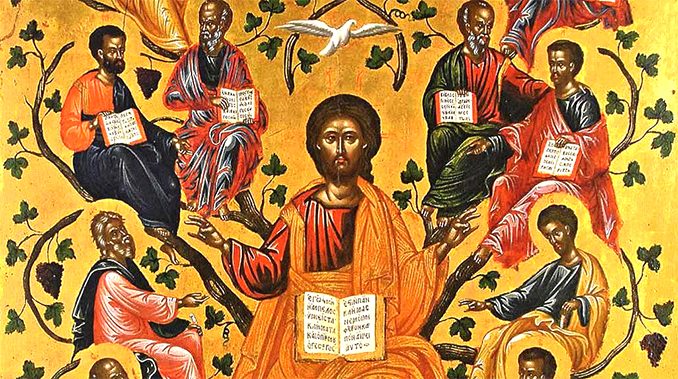
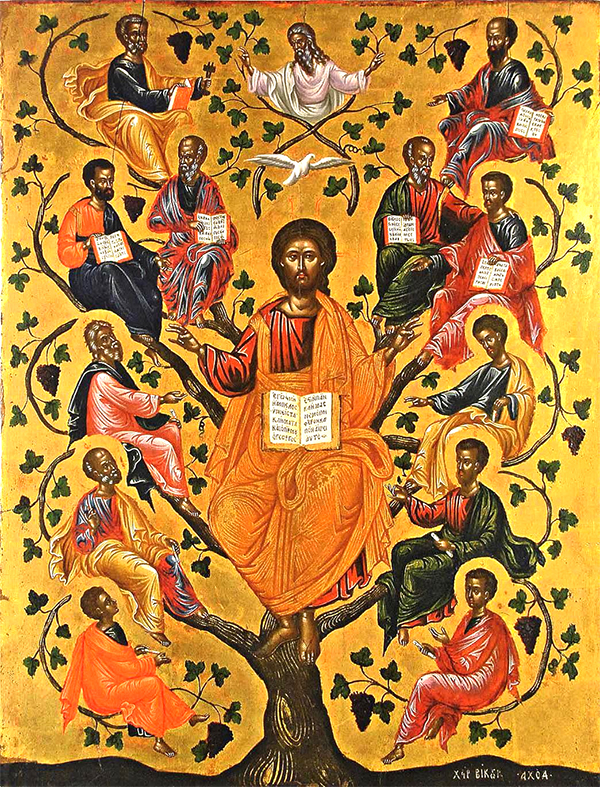
Fruitfulness is the final link in the chain of Christian love. To love is to obey Christ; obedience brings us life in Him, and the indwelling of the Blessed Trinity, and that indwelling always bears fruit. Jesus illustrates this transformation through the image of the vine: “I am the true vine, and my Father is the vinedresser. Every branch of mine that bears no fruit, he takes away, and every branch that does bear fruit he prunes, that it may bear more fruit” (Jn 15:1-2).
Life in Christ is never merely self-centered or narcissistic—it is always fruitful.
Mary is the model of obedience and Christian love. Mary’s “yes” to God brought the Savior into the world. Mothers who take the risk of trusting and obeying God’s will bear fruit in abundance. Children are among the clearest signs of a family’s generosity and trust in God’s providence. Openness to life breaks down barriers of selfishness and, God willing, brings new life into the world.
When we begin to compromise or even reject the commandments of God, we distort human love, and we inhibit our freedom. We stigmatize God’s law as uncomfortably restrictive, and we view God’s will as a burden rather than a saving path. A once-popular bumper sticker captures the sentiment: “How much can I get away with and still get to heaven?”
But God’s law does not enslave us; it liberates us. A drug addict is a slave. In recovery, he becomes a free man. With God’s grace, we are not slaves to our passions or sinful inclinations.
When the unity of love, life, and responsibility is weakened, the consequences appear in a growing disregard for the dignity of human life at its most vulnerable stages. The social consequences of moral disorder extend beyond the family itself. A culture that loses sight of this unity becomes less open to life, less attentive to the elderly and weak, and less aware of the sacredness of every human person.
Every Western society (and beyond) is undergoing a sharp demographic decline with fewer children and a rapidly aging population. Wars and rumors of wars flourish where lawlessness and contempt for human dignity prevail.
The damage to our souls is worse. Jesus warns us clearly about what happens when we detach ourselves from Him (cf. Jn 15:1-11): “He prunes away every barren branch…” “No more than a branch can bear fruit of itself apart from the vine, can you bear fruit apart from me.” “…apart from me you can do nothing.”
When life is separated from Christ, it does not become freer or fuller—it becomes spiritually unfruitful. We lose the life of His saving grace.
Jesus warns: “If a man does not abide in me, he is cast forth as a branch and withers; and the branches are gathered, thrown into the fire and burned” (Jn 15:6). The admonition stings. God’s laws are not policy papers open to finesse and negotiation in response to cultural demands and ideologies. Certain actions are wrong not because they violate Church policy, but because they threaten our salvation and require repentance and a good Confession. No one is exempt from the judgment seat of God.
Christian love forever remains the Way of the Cross. God’s law, Christian love, and the fullness of life are inseparable from the sacrificial and obedient love of Jesus on the Cross. Obedience, however painful, nourished by the devout reception of Holy Communion, leads us into friendship with Him.
Every day, we should ask ourselves how we can make our lives, families, workplaces, and the world a better place in His love. (In response to the challenge, a 95-year-old lady once responded, “I pray a daily rosary for you, Father.”) The indwelling of the Blessed Trinity always bears fruit: a clear conscience and peace of soul.
The first principle of the moral life is to do good and avoid evil. “If a man loves me, he will keep my word, and my Father will love him, and we will come to him and make our home with him” (Jn 14:23).
If you value the news and views Catholic World Report provides, please consider donating to support our efforts. Your contribution will help us continue to make CWR available to all readers worldwide for free, without a subscription. Thank you for your generosity!
Click here for more information on donating to CWR. Click here to sign up for our newsletter.

❤️🎶👍💯🙏
The first principle of the moral life is to do good and avoid evil. “If a man loves me, he will keep my word” (Fr Pokorsky). These word of Christ are the true line of demarcation between good and evil.
Nice article, something to be read and meditate about at least weekly or more importantly daily.