No Picture
News Briefs

Vatican’s Korea diplomat to help bridge the gap between North and South

March 9, 2018 CNA Daily News 0

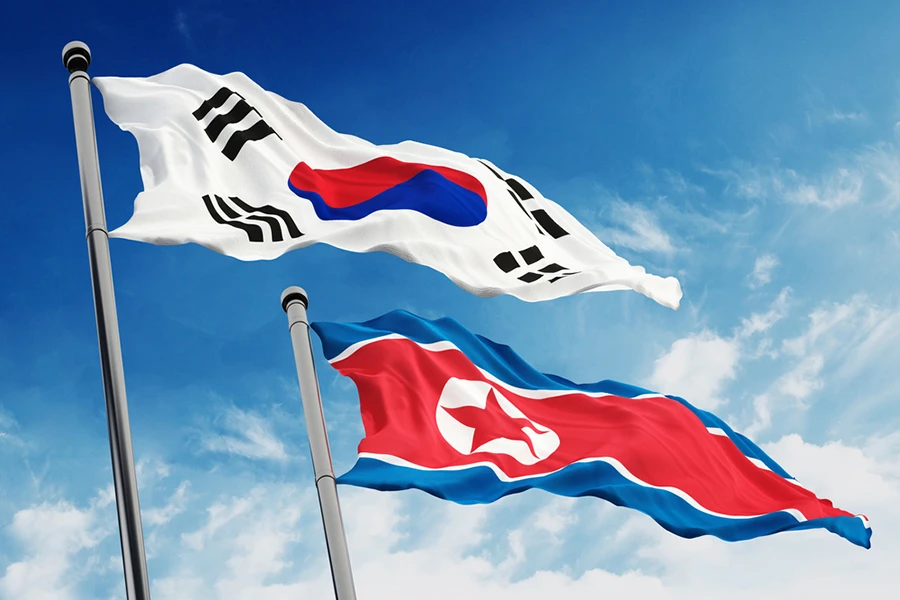
Seoul, South Korea, Mar 9, 2018 / 04:14 pm (CNA/EWTN News).- The Vatican’s recent diplomatic appointment to South Korea gained added significance as President Donald Trump announced that he will meet with North Korea’s Kim Jong-un for nuclear negotiations within the next two months.

Pope Francis’ appointed Monsignor Alfred Xuereb to serve as the Apostolic Nuncio to Korea beginning March 19.

“As the pope continually shows his concern for the reconciliation of the two Koreas and [prays for] peace on the Korean Peninsula, the new nuncio will play an active role in bridging the gap between the two Koreas and working for peace in the region,” said the Acting Apostolic Nuncio to Korea, Monsignor Marco Sprizzi, according to UCA news.

Monsignor Xuereb, who previously served as a private secretary to both Pope Francis and Benedict XVI, will be consecrated a bishop as he takes up his first diplomatic posting for the Vatican.

Although he lacks the diplomatic experience of his predecessors in the Korean nunciature, the Maltese cleric is reported to be close to Pope Francis.

“Monsignor Xuereb is one of the closest allies of Pope Francis and reads the pope’s thinking very well,” continued Monsignor Sprizzi.

Trump announced March 8 that he had accepted an invitation to meet with North Korean dictator Kim Jong-un to negotiate the North’s nuclear weapons program. Trump will be the first sitting U.S. president to meet face to face with a North Korean leader.

Trump followed up yesterday’s announcement with calls to Chinese President Xi Jinping and Japanese Prime Minister Shinzo Abe to discuss the prospect of dialogue between the U.S. and North Korea and to confirm a shared commitment to maintaining sanctions until tangible steps toward denuclearization are taken, according to the White House.

South Korean President Moon Jae-in helped to facilitate the upcoming meeting between the U.S. and North Korea. Moon sent his National Security Advisor Chung Eui-yong to Pyongyang on Monday and then quickly on to Washington to convey the North Korean leader’s invitation to Trump.

Moon is a practicing Catholic who has pledged himself to peaceful dialogue on the Korean peninsula. Shortly after taking office in Seoul, Moon commissioned a Korean envoy to meet with Pope Francis in Rome last May to advocate for Vatican support for Korean reconciliation.

Catholic bishops in South Korea have long advocated for a peaceful solution on the Korean peninsula. In response to North Korea’s nuclear provocations, the bishops appealed for peace talks in an official statement in Aug. 2017.

“The ultimate and genuine peace on the Korean Peninsula can never be achieved by nuclear armament. Therefore we urge the authorities of North and South Korea to open dialogue for peace and to cooperate with the surrounding countries of Korea in search of a stable system to guarantee peace on the Korean Peninsula.”

The Korean bishops continued, “we encourage the faithful Catholics in Korea to implore the intercession of the Blessed Virgin Mary to bring peace on the Korean Peninsula … We desperately ask our brothers and sisters in the world for their care, prayers, discernment, and cooperation to resolve this crisis on the Korean Peninsula peacefully.”

[…]

No Picture
News Briefs

Syria is a new ‘massacre of the innocents,’ nuncio says

March 9, 2018 CNA Daily News 1

Vatican City, Mar 9, 2018 / 03:54 pm (CNA/EWTN News).- As the number of civilian victims in Syria’s bloody civil war continues to climb, Cardinal Mario Zenari, apostolic nuncio in Syria, said the situation is “hell on earth,” especially for vulnerable children.

Referring to a statement recently made by the regional director of the United Nations Children’s Fund (UNICEF), Zenari said Syria is currently “one of the most dangerous places for children.”

“It’s terrible. I always say, it’s a massacre of the innocents,” he said, and recalled how a few years ago near Damascus, where the nunciature is located, he met a 10-year-old girl who had both of her legs amputated after being hit by shrapnel from a mortar shell.

He recalled another story of a 15-year-old girl who was on her way back from school with a friend when a splinter from an explosion tore through her cheek and up through her head, killing her instantly.

There is “so much suffering,” Zenari said, adding that Pope Francis’ Christmas message for 2017 was “one of the most touching for me,” because it was entirely dedicated to the suffering of children.

From a humanitarian perspective, the situation is “out of control,” he said, and one could write “a book of lamentations” on the Syrian crisis alone.

Zenari, who has served as apostolic nuncio since 2008 and was named a cardinal by Pope Francis in 2016, spoke at a March 9 event for the “Open Hospitals” project, developed by the AVSI organization in 2016 in partnership with the Gemelli Foundation and the pontifical charity branch “Cor Unum.”

The project aims to provide medical care for those living in poverty and supports the activities of four non-profit hospitals in Syria.

Since the beginning of the country’s civil war in 2011, more than 13.5 million Syrians, including 6 million children, have been affected by a dire humanitarian crisis, with the majority of the population living in situations of food insecurity and without access to basic supplies.

According to U.N. estimates, some 11.5 million people, 40 percent of whom are children, do not have access to adequate medical care. Hospitals have routinely been targeted in the fighting, and since the beginning of the war, nearly two-thirds of Syria’s medical staff have fled the country.

With money needed to pay for staff, general management, monthly bills, and the renewal of old facilities, patients increasingly file into the few hospitals that are left with both routine healthcare needs and war injuries, making the financial strain near crippling.

As of November 2017, roughly one million euros (nearly $1.2 million) had already been raised by the Open Hospitals project to support the four hospitals with whom they partner.

In his speech for the March 9 event, Cardinal Zenari showed a 2-minute video portraying images of buildings destroyed by shelling and people injured in bombings, many of them small children with bloody face, covered in dust.

The social fabric of society is being “attacked,” he said, and “the deep wounds, above all in these children, are worse than what is seen.”

The number of civilian victims of the war has drastically increased in recent weeks, after Russian-backed Syrian forces on Feb. 18 launched a series of deadly airstrikes and artillery fire on besieged Easter Ghouta enclave, which sits just northeast of Damascus.

Home to some 400,000 people, Eastern Ghouta is the last rebel-held area east of Damascus and has been a target of Syrian President Bashar al-Assad’s forces since 2013 in a bid to drive the rebels out.

According to the Syrian Observatory for Human Rights, some 900 civilians have died so far in the fighting. Although the U.N. Security Council demanded a 30-day ceasefire go into effect Feb. 24, fighting has continued, and efforts to get humanitarian aid into areas where citizens are trapped were recently halted due to fear of chemical attacks.

Cardinal Zenari said that of all the world disasters he’s witnessed, “I have never seen so much violence as in Syria,” and likened the situation to the 1994 Rwandan genocide.

At times, Zenari said he asks himself, “Does the Lord not see this?” However, he said he is consoled when he thinks of the Jesus’ own suffering and death, because “Jesus in his passion sweat blood, from his whole body…(the) blood of the entire Church, the blood of the martyrs.”

“We are in the eighth year of the Passion” in Syria, he said.

He lamented the fact that no agreements have yet been reached to put an end to the violence, saying that so far the discussions either fail to yield a deal, or a deal is made but falls apart.

The cardinal also pointed to the millions who have fled Syria and are now living in other countries, including a high number of youth. Because of this, he said, Syria is rapidly becoming “a society without youth, a Church without youth.”

He closed his hour-long address with an appeal for prayer, asking attendees to pray for “our dear friends, brothers and sisters in Syria.”

[…]

No Picture
News Briefs

Mississippi governor: stronger abortion ban protects unborn children

March 9, 2018 CNA Daily News 0

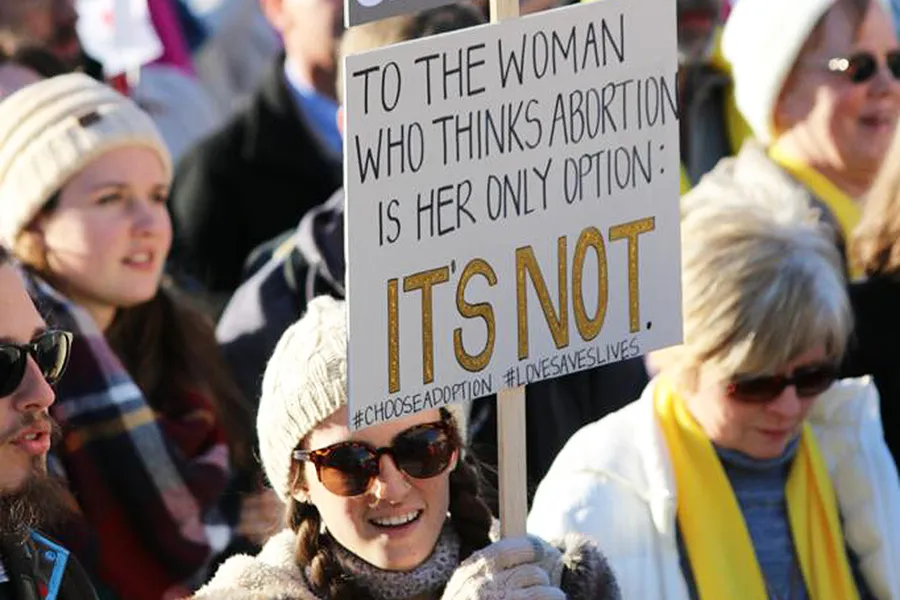
Jackson, Miss., Mar 9, 2018 / 03:10 pm (CNA/EWTN News).- The Mississippi legislature has passed one of the strongest restrictions on abortion in the U.S., barring most abortions 15 weeks into pregnancy.

“As I have repeatedly said, I want Mississippi to be the safest place in America for an unborn child,” Gov. Phil Bryant said on Twitter March 6. “House Bill 1510 will help us achieve that goal.”

The Senate voted to pass the bill by a 35-14 vote.

The bill had been modified to remove criminal penalties involving jail time. Physicians who violate the law will lose their state medical licenses and receive a civil penalty of up to $500, National Public Radio reports.

The amended bill passed the Republican-controlled House by a vote of 75-34. An earlier version of the bill passed the House by a Feb. 2 vote of 79-31, with some Democratic support.

In a Feb. 8 message, Bishops Joseph Kopacz of Jackson and Louis Kihneman of Biloxi said the state’s legislature is “to be commended for voting to protect unborn human life.”

State records indicate about 200 abortions a year are performed on women 15 to 20 weeks pregnant, backers of the bill have said. Their bill allows exceptions for when a woman’s life is in danger or when an unborn child has a severe abnormality.

State Rep. Becky Currie, the bill’s sponsor, said the bill is appropriate because most women discover they are pregnant months before the pregnancy reaches 15 weeks.

The passage of the bill drew other praise.

“Mississippians are committed to protecting the lives of unborn children, and this law will be a major step in accomplishing that goal,” Lt. Gov. Tate Reeves said, according to the Clarion Ledger. “I am committed to making Mississippi the safest place in America for an unborn child.”

Both Mississippi and North Carolina currently bar abortion at 20 weeks into pregnancy, measured from a woman’s last menstrual period. Other states start from a date two weeks later.

The state’s only abortion clinic, Jackson Women’s Health Organization, does not perform abortions as late as 20 weeks and so it did not challenge the existing law, clinic owner Diane Derzis told the Associated Press. The clinic does perform abortions three weeks past the legislation’s ban limit. If the bill becomes law, it will refer women seeking these abortions to out-of-state clinics.

Derzis told the Clarion Ledger she was not surprised by the Senate vote, adding that Bryant “has never seen an abortion bill he didn’t like.”

“We will be planning to sue,” she said, adding that pro-life groups are passing abortion restrictions in hopes of national changes through a U.S. Supreme Court decision.

According to Derzis, she and her allies are in “a very fragile place right now.”

“Roe is clearly in danger and that’s what they’re preparing for … They hope by the time they get to the Supreme Court they will have changed the Supreme Court,” she said.

It is unclear whether such abortion limits will pass scrutiny in federal court.

In their Feb. 8 message, Mississippi’s Catholic bishops lamented the failure of the U.S. Senate to pass the Pain-Capable Unborn Child Protection Act, which would bar abortion 20 weeks after fertilization.

“We Catholic Bishops of Mississippi wish to reaffirm the sacredness of human life from conception until natural death. With Pope St. John Paul II, we recognize abortion as ‘a most serious wound inflicted on society and its culture by the very people who ought to be society’s promoters and defenders’,” the bishops said, citing St. John Paul II’s 1995 encyclical Evangelium vitae.

Legislators “have a duty to make courageous choices in support of life, especially through legislative measures,” they said.

“We ask continued prayer for a culture of life to prevail in our society, and we urge those who voted against this legislation – especially those who are Catholic – to reconsider.”

[…]

No Picture
News Briefs

Students ‘hack’ away at global problems during Vatican hackathon

March 9, 2018 CNA Daily News 1

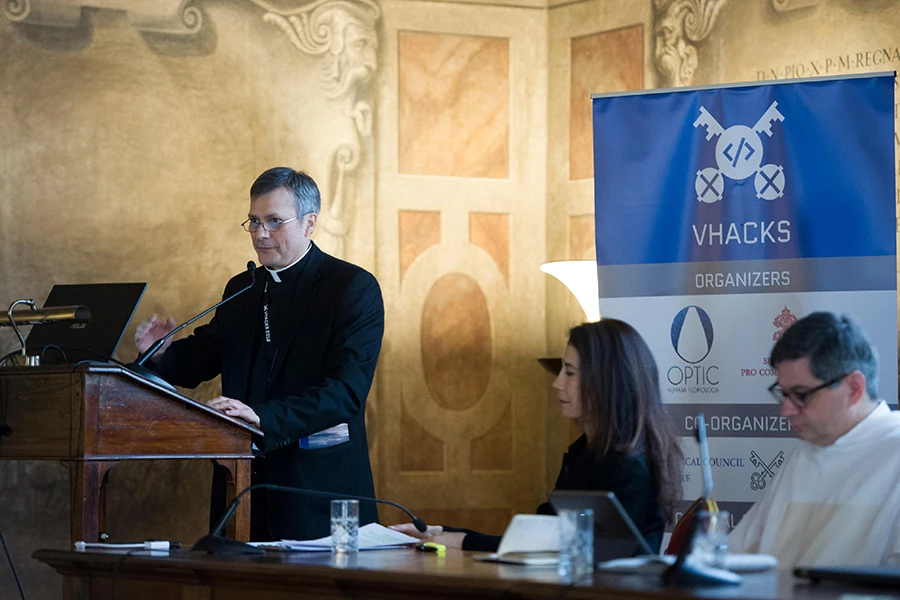
Vatican City, Mar 9, 2018 / 01:58 pm (CNA/EWTN News).- A March 8-11 “hacking marathon” at the Vatican is in full swing, with 120 students of different backgrounds, faiths, and disciplines working to “hack” into global social problems in 36 hours of innovative brainstorming.

“VHacks” is the first-ever Vatican hackathon, and the young participants and organizers have said that the location is an integral part of the event’s impact and appeal.

“It still sounds so strange: a hackathon at the Vatican,” said Cameron, a 21-year-old participant. “And that’s what makes it so amazing – the fact that you wouldn’t expect it.”

Cameron is an electrical engineering student at Harvard and on the organizing committee of VHacks. He told CNA that fact that VHacks is taking place at all says a lot “about how the Vatican, especially with Pope Francis’ style, is embracing technology a little bit more than it has before.”  

Hailing from 60 different countries, participants work in teams to tackle challenges related to the broader themes of social inclusion, interfaith dialogue, and refugees and migrants.

Each team chooses a challenge to “hack” during the conference, working nearly round-the-clock to come up with creative, technological solutions. At the end, all the teams will present their solutions to judges who choose the top projects and the final winners.

Ibrahim, 21, is from Pakistan and is studying industrial engineering and management at Jacobs University in Bremen, Germany.

He told CNA that the themes of VHacks are good in and of themselves, “but to have [the event] at such an important place just adds to it and adds to how serious we are in figuring out and solving these problems.”

A Muslim, he considers the Vatican a “landmark,” and a “sacred place,” which adds to the overall environment of the hackathon. “I think this is an extremely amazing initiative,” he said.

Hailing from Buenos Aires in Argentina, Sebastian, 24, told CNA that he has participated in hackathons before, but this one is “on another scale,” and that’s what first piqued his interest.

As a Catholic, he was also glad to see the Church getting involved in something like a hackathon, he said, noting that he has been invited to different hackathons before but decided against participating because compared to VHacks, “something was always missing.”

Lucy, 29, told CNA that she is really excited by “how invested this hackathon is in the human perspective and understanding what the user’s needs are.” She is a master’s student studying human-centered design thinking at Georgetown University.

Her team members, who all came from Georgetown, a partner in the event, chose the migrants and refugees challenge. “When you think about refugees in the big scope, it seems like there’s no point of entry that’s going to succeed,” she said.

“So how do we as individuals or as groups find an entry into that? I really think it is through this human-centered design” that VHacks is focused on.

The hackathon is also interspersed with educational opportunities, including panels and workshops on topics related to the themes. Participants can also avail themselves of advice and guidance from experienced “mentors” present to help throughout the conference.

“It’s not just a hackathon but a learning experience and a team-building experience,” Lucy said.

The event will conclude with Mass and sightseeing in St. Peter’s Basilica March 11, followed by attendance at the Pope’s Sunday Angelus and his papal blessing in St. Peter’s Square.

Dominican Fr. Eric Salobir, a co-chairman of VHacks and a consultor for the Secretariat of Communications, told CNA that having the hackathon at the Vatican is very symbolic, and allows big issues to be tackled from the global perspective offered by the Church.

Salobir is also the founder of the OPTIC network, a disruptive technology think-tank which frequently collaborates with the Holy See.

Explaining the term hackathon, Cameron clarified that while the words “hack” or “hacking” can have negative connotations, the phrase in this case is used to mean “hacking into a problem that has no clear start.”

“It just comes down to finding an entry point and saying, ‘This is where we’re going to start looking at it.’”

He acknowledged that it is unrealistic to think that solutions to these problems can possibly be found in just 24 or 36 hours. But what they want to do is “plant a seed” and create something to expand on in the future.

The environment of the hackathon, which lacks the usual pressures found in a career setting, makes it really “conducive to innovation,” he stated.  

In the end, it is hoped that some of the new ideas produced will be brought to fruition by the corporations, foundations and private donors sponsoring the hackathon.

A lofty goal, Salobir said they even hope to have some examples “of how technology can help to solve problems” in place by the time of the synod on the youth in October. “We hope to be able to show very practical, useful solutions,” he said.

“We saw from our experiences [putting on hackathons] in San Francisco and Paris that the students are incredibly creative in the way to use technology positively, in a way the older generations cannot imagine. They were born in this time of digital technology and sharing economy and they can provide a lot.”

“I have no clue what they will do practically, I have just the experience of other hackathons. But at other hackathons they really came with amazing ideas. I hope that this time it will be the same and they will really blow our minds with their creativity.”


[…]

No Picture
News Briefs

Pope Francis: We abandon God through sin, but he never abandons us

March 9, 2018 CNA Daily News 2

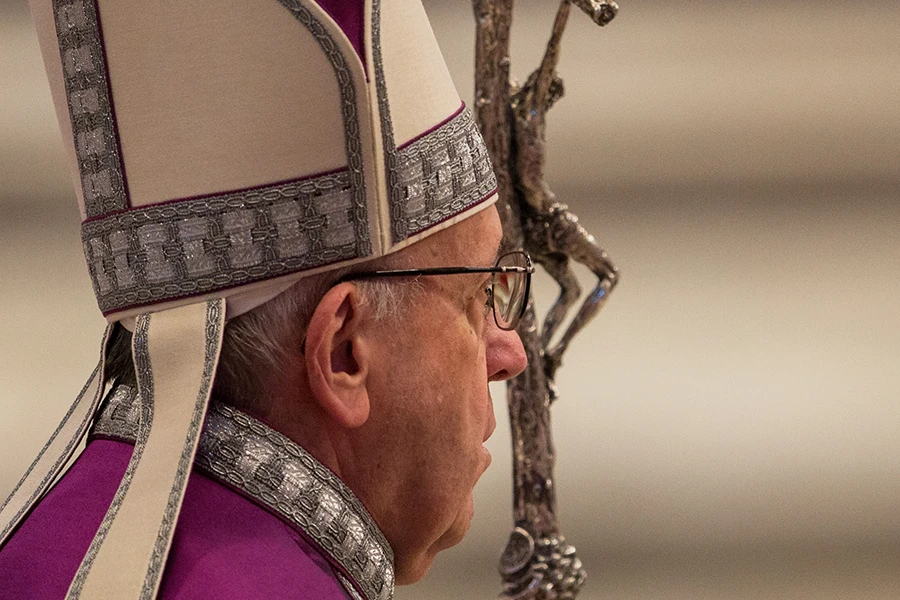
Vatican City, Mar 9, 2018 / 12:09 pm (CNA/EWTN News).- At his annual Lenten penitential service on Friday, Pope Francis said that it is not God who abandons us when we sin, but we who separate ourselves from him by choosing to sin, and that no matter what we do, God never stops loving us.

“We know that the state of sin distances us from God. But in fact, sin is the way that we distance ourselves from him. Yet that does not mean that God distances himself from us,” the Pope said March 9.

“The state of weakness and confusion that results from sin is one more reason for God to remain close to us,” he continued. “The certainty of this should accompany us throughout our lives.”

Pope Francis gave a brief homily during an annual Lenten penitential service in St. Peter’s Basilica. He reflected on a passage from the first letter of John, which speaks about God’s love for his children.

God’s love is greater than anything we can imagine, reaching beyond even the worst sins we find within us, he said.

“His is an infinite love, one that knows no bounds,” he reflected. “The words of the Apostle are a reassuring confirmation that our hearts should trust, always and unhesitatingly, in the Father’s love: ‘No matter what our hearts may charge us with, God is greater than our hearts’ (1 Jn. 3:20).”

Following the homily, Pope Francis led a silent examination of conscience. Then, as in other years, the Pope was the first to go and make his confession to a fellow priest before hearing the confessions of several others.

Other priests were also available throughout the basilica to hear individual confessions.

The penitential service also marked the beginning of the “24 Hours for the Lord” initiative held yearly on the fourth Friday and Saturday of Lent.

Led by Pope Francis, “24 Hours for the Lord” is a worldwide initiative that points to confession as a primary way to experience God’s merciful embrace. It was launched in 2014 under the auspices of the Pontifical Council for the Promotion of the New Evangelization.

The event gives Catholics an opportunity to go to confession and take part in Eucharistic adoration at participating churches. This year’s theme is “With you is forgiveness” taken from Psalm 130.

Earlier on March 9, Pope Francis spoke to participants in the Apostolic Penitentiary’s annual course on the internal forum, which is attended primarily by young priests, seminarians, and penitentiary priests specifically appointed to hear confessions and administer penance.

This year, ahead of the Synod of Bishops on youth, the course focused on the relationship between sacramental confession and vocational discernment.

In his speech, Francis noted how young priests have an “advantage – so-to-speak” when it comes to hearing the confessions of other young people, a proximity of age “favors even sacramental dialogue.”

On the other hand, there are limitations and challenges to being at the beginning of their ministry and therefore lacking in the experience of an older confessor, he said.

With these thoughts in mind, he asked, how do we go about listening to sacramental confessions, especially of the young, when it comes to vocational discernment?

“First of all, I would say that it is always necessary to rediscover, as St Thomas Aquinas says, the instrumental dimension of our ministry,” he said. “The priest confessor is not the source of Mercy or of Grace; he is certainly the indispensable tool, but always just an instrument!”

Being intentionally aware of this can help keep priests from becoming what Francis called “masters of consciences” instead of humbly listening to the Holy Spirit. He emphasized that seeing oneself as an instrument is not a lessening of the priest’s role in confession, but “the full realization of [the ministry].”

The Pope also stressed that confessors should listen carefully to any questions before offering answers, and when these two elements come together in sacramental dialogue, it can help to open up the journey of prayer and prudence that is vocational discernment.

Concluding, he encouraged the present and future confessors to be “witnesses of mercy, humble hearers of young people and God’s will for them, always respectful of the conscience and freedom of those who approach the confessional.”

He reminded them to entrust penitents to Mary, “who is the Refuge of sinners and Mother of mercy.”

[…]