No Picture
News Briefs

Smartphones are driving a rise in teen sexting

March 12, 2018 CNA Daily News 0

Washington D.C., Mar 12, 2018 / 03:04 am (CNA).- Teen sex may be down, but widespread access to smartphones is driving an increase in teen sexting, recent research has found.

According to an analysis of studies by JAMA Pediatrics, as many as one in se… […]

No Picture
News Briefs

What a new TV show gets wrong about ‘Living Biblically’

March 12, 2018 CNA Daily News 1

Denver, Colo., Mar 12, 2018 / 02:02 am (CNA/EWTN News).- These biblical commandments probably sound familiar: Thou shalt not kill. Thou shalt not steal. Thou shalt not commit adultery.

These might not: Do not shave your beard with a razor. Do not wear garments of mixed fibers. Stone adulterers.

In a new T.V. show on CBS, main character Chip Curry, a film critic for a New York paper and soon-to-be father, sets out to improve his moral life by following every law in the Bible – all 613 of them – as literally as he possibly can, with the help of his ‘God squad’, which includes a rabbi and a Catholic priest.

The premise of the show is based on the 2007 New York Times bestseller A Year of Living Biblically, in which author A.J. Jacobs describes his real-life journey of taking the Bible as literally as possible for a year.

While the results in the show and the book are largely comical and portrayed in good humor (at one point a pebble is chucked at a cheating spouse), following every law ever given by God to the letter is nearly impossible, and not what Catholics are called to do, biblical scholar Andre Villeneuve told CNA.

“Good luck if you really want to try to live the Old Testament completely literally,” Villeneuve, who has a doctorate in biblical studies and teaches at St. John Vianney Seminary in Denver, Colo., told CNA.

“It would mean you would have to stone your son if he’s rebellious and doesn’t listen to you. You would have to stone adulterers. You would have to check every time you approach a woman that she’s not on her period because you’re not allowed to touch her,” he said, “a lot of these things that have to do with purity which are really frankly awkward and would be really problematic, if not impossible, to observe.”

The problem with such literal fundamentalism, he said, is that it doesn’t read and interpret the Bible in light of salvation history and in light of the intent of the laws given by God.

“The 613 commandments in the Old Testament, in the Hebrew Bible, they were given to Jews to begin with, so it’s ridiculous for anyone, whether a Catholic or Christian, to say they’re going to live by all of these commandments, because they were never given to Gentiles,” he said.

Some of these commandments still stand, however – most notably, the 10 Commandments. When Christ came and established a new covenant, the apostles decided which laws were still meant to be followed by Christians, and which laws pertained only to Jews, Villeneuve said.

“What the (apostles) did is…they saw the law as divided into three categories – the moral laws, the ceremonial laws, and the judicial laws,” he said. “So what has been considered to be universal and perennial and never to be changed are the moral laws, which are the 10 Commandments and their interpretation.”

The ceremonial laws related to Jewish worship, or the judicial laws related to matters such as what kind of compensation you can expect if your neighbor’s animal comes onto your property, are not binding for Christians.

Catholics can distinguish what laws of the Bible to follow and what it means to follow them by reading the Catechism and following the teachings and traditions of the Church, Villeneuve noted.

“The easy answer … is that today we have the Catechism of the Catholic Church, and the third part is called Life in Christ, or the Moral Law. That’s where you can see the Catholic interpretation of the Ten Commandments in light of jesus’ teaching, and the apostles and the teachings of the Church,” he said. “It’s essentially extracting what is universal about the commandments without taking up all the specific commandments that were given to Jews in their times and culture.”

Even the Jews do not follow and interpret all of the 613 commandments in the Hebrew Bible exactly literally, Villeneuve noted.

As an example, he pointed out that the law “an eye for an eye, a tooth for a tooth” may seem cruel at face value, but it was never interpreted literally, even by the Jewish people.

“It doesn’t mean literally gouging out an eye, it means what is an eye worth as far as livelihood, quality of life … and therefore your neighbor should compensate you by so much, by paying you back,” he said. “It’s read and interpreted in a way that’s not literal.”

“The bottom line is that the fundamentalist reading of scripture doesn’t work; even the Jews don’t live that way,” Villeneuve added.

“We don’t read scripture in a vacuum, we don’t believe in ‘sola scriptura’ (the Protestant doctrine of ‘scripture alone’), but it’s always read in light of Christian tradition and the teachings of the Church and the magisterium.”

[…]

No Picture
News Briefs

Capuchins raise funds for victims of Papua New Guinea earthquake

March 11, 2018 CNA Daily News 0

Denver, Colo., Mar 11, 2018 / 04:01 pm (CNA/EWTN News).- As Papua New Guinea begins to recover from a major earthquake, the Capuchin Province of St. Conrad is raising funds in an effort to help those affected by the devastation.

Capuchins have served as missionaries in the country since 1955, and several of the missionaries currently in Papua New Guinea belong to the St. Conrad province, based in Denver, Colo.

“Sadly, dozens of our people lost their lives, mainly caused by landslides. Four young girls were crushed by a falling wall as they slept in their home in Mendi town. Also in Mendi, a young couple and their first-born child were killed by a landslide,” reported Bishop Don Lippert of Mendi, himself a Capuchin.

“Telephone and internet communications are severely limited and in many places access to water and electricity has been interrupted. Many roads have been blocked by major landslides,” Bishop Lippert continued.

He added that “Reports from the remote parishes paint a grim picture of major loss of infrastructure. The diocese’s network of schools and health centers has sustained serious damages throughout the rural, mountainous area.”

Capuchin missionaries to Papua New Guinea built some of the country’s first schools, hospitals, and medical clinics.

On Feb. 26, the Papua New Guinea highlands were struck by a 7.5 magnitude earthquake, causing over 100 deaths and countless more injuries. The epicenter of the quake was in Enga province, in the vicinity of Wabag.

Days later, on March 6, Papua New Guinea was again hit by a 6.7 magnitude aftershock, leaving the country without electricity and access to communication systems. Over a dozen more deaths occurred during the aftershock, raising the initial death toll to approximately 117.

The Papua New Guinea Red Cross estimated that upwards of 143,000 people have been affected by the earthquake, leaving as many as 17,000 displaced from their homes. Many people are relying on air-drops for their food and water supply.

The earthquake has also damaged much of the islands’ infrastructure through landslides

The governor of the Southern Highlands Province, William Powi, said that the local government has reached its limit for relief efforts, saying, “it is beyond the capacity of the provincial government to cope with the magnitude of destruction and devastation,” according to the New York Times.

Although the islands have a long journey ahead in rebuilding their devastated communities, the Capuchins hope that their funding campaign will give the islands the aid they need.

Pope Francis recently expressed his concern over the situation, invoking “divine blessings of strength and consolation” to those affected by the disaster.

[…]

No Picture
News Briefs

Cardinal Karl Lehmann, influential German prelate, dies at 81

March 11, 2018 CNA Daily News 0

Vatican City, Mar 11, 2018 / 07:21 am (CNA/EWTN News).- Cardinal Karl Lehmann, Archbishop Emeritus of Mainz and one of the most prominent leaders in the German Church known for his ecumenical work, died at his home Sunday morning at the age of 81.

In a statement following the prelate’s March 11 death, president of the German Bishops Conference Cardinal Reinhard Marx said in wake of Lehmann’s passing, “the church of Germany is bowing humbly in front of a personality who influenced the Catholic church worldwide.”

Marx praised the many accomplishments and longstanding contributions of his predecessor, who he said “tirelessly” to build bridges of understanding, reconciliation and dialogue.

After retiring from his role as head of the Mainz diocese in 2016, Lehmann last year suffered a stroke last year and his health has been in decline ever since.

In a March 11 CDU party press release on the cardinal’s death, German Chancellor Angela Merkel said she was sad to hear of the prelate’s passing, and voiced gratitude “for our good conversations and meetings over the years.”

She called the late prelate “an exceptionally gifted mediator, between the German Catholics and Rome, in the spirit of the economical movement between the Christian churches, but also between Christians and believers of other religions.”

Born in Sigmaringen, Germany, May 16, 1936, Lehmann played a leading role in advancing the Catholic Church’s dialogue with Lutherans and Evangelicals, in particular. And with 20 years as head of the German Bishops conference, he is widely considered to be one of the most influential leaders in the German Church.

After completing seminary, Lehmann was ordained a priest for the Archdiocese of Freiburg Oct. 10, 1963, and held doctorates in both philosophy and theology from Rome’s Pontifical Gregorian University.

For three years, from 1964-1967, he was an assistant to Jesuit Fr. Karl Rahner at the University of  Münster helping with the latter’s seminar on the Christian vision of the world and the philosophy of religion.

He graduated from the Gregorian University in 1967, and the same year continued to assist Fr. Rahner with his role in the Chair of Dogmatic and the History of Dogmatic at the Westfälischen Wilhelms University of Münster.

After completing his doctoral studies, writing his thesis on themes associated with Christ’s resurrection and Christian Revelation, Lehmann then taught dogmatic theology at the Johannes Gutenberg University in Mainz.

In 1969 became a member of the Central Committee of German Catholics and the Jaeger-Stählin working committee of Evangelical and Catholic Theologians. In 1975 he was named a scientific consultant for the Catholic part of the working committee, and in 1989 became its president.

Lehman later taught at the Albert Ludwig University, Freiburg im Breisgau, and for 10 years, from 1974-1984, was a member of the International Theological Commission.

At the time, the future cardinal also edited the official publication of the documents from the Joint Synod of the Dioceses in the Federal Republic of Germany for the 1971-1975 Synod of Würzburg.

In June 1983, he was appointed Bishop of Mainz and received episcopal ordination that October. A year later, he became a member of the circle for dialogue between representatives of the German Bishops Conference and those from the Council of the Evangelical Church in Germany.

From March 1986-1988 he also became a member and later president of the Lutheran-Catholic dialogue between the World Lutheran Federation and the Pontifical Council for the Promotion of Christian Unity.

The two entities in 2017 signed their latest joint-statement to mark their shared commemoration of the 500th anniversary of the Protestant Reformation. In a major ecumenical move, Pope Francis traveled to Lund, Sweden from Oct. 31-Nov. 1, 2017, for a joint-commemoration of the landmark anniversary.

In addition to his role in helping advance ecumenism, Cardinal Lehmann was elected president of the German Bishops Conference in 1987 – a position he held for 20 years, being reconfirmed in the role in 1993, 1999 and again in 2005.

In 1995 he was named Special Secretary of the First Special Assembly for Europe of the Synod of Bishops, and from 1988-1998 was a member of the Congregation for the Doctrine of the Faith.

The prelate received awards from universities and institutions all over the world, and was the author of several publications.

He participated in the conclave of 2005 that elected Benedict XVI as Pope, as well as the conclave of 2013 that elected Pope Francis, and is rumored to have been one of the cardinals pushing for Bergoglio’s election.

Lehmann was given a red hat by Pope John Paul II in 2001. He retired from his role as head of the Mainz diocese in 2016, and died the morning of March 11, 2018.

[…]

No Picture
News Briefs

Pope Francis: Christianity isn’t a ‘shortcut’; it takes faith, morals

March 11, 2018 CNA Daily News 1

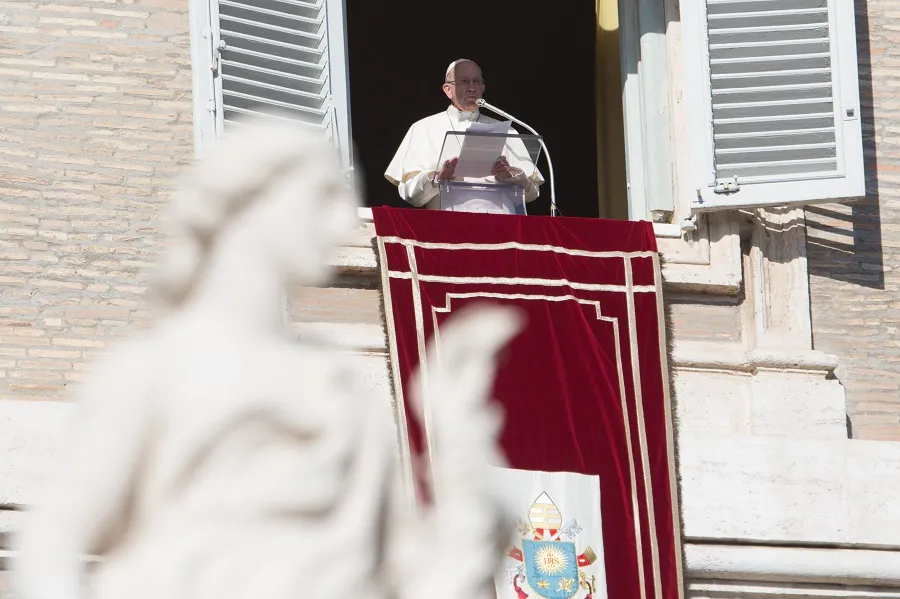
Vatican City, Mar 11, 2018 / 05:12 am (CNA/EWTN News).- On Sunday Pope Francis said that to be a Christian isn’t easy, but means having faith and striving to live a moral life even when it’s hard, trusting in God and his love during moments of weakness and anxiety.

“Christianity doesn’t offer easy consolations, it’s not a shortcut, but requires faith and a healthy moral life which rejects evil, selfishness and corruption,” the Pope said March 11.

A faithful and moral life, he said, “gives us the true and great hope in God the Father, rich in mercy, who has given us his only son, thus revealing to us his immense love.”

Pope Francis spoke to pilgrims in St. Peter’s Square for his Sunday Angelus address, which he focused on the day’s passage from John’s Gospel when Jesus speaks to Nicodemus, explaining what will happen to those who believe and walk in truth, and what will happen to those who don’t.

Jesus’ affirmation that “God did not send his Son into the world to condemn the world, but that the world might be saved through him,” synthesize the core of Christian message, Francis said.

Namely, this message is that “even when the situation seems desperate, God intervenes, offering man salvation and joy.” God, the Pope said, doesn’t stand aside, but “enters into the history of humanity to animate it with his grace and to save it.”

Christians, he said, are called to listen to this announcement and to reject the temptation to be too sure of themselves, wanting to “do without God,” and be “liberated” from him and his word.

“When we find the courage to consider ourselves for what we are, we realize that we are people called to deal with our fragility and our limits,” he said, noting that at times thinking about these weaknesses can lead people to be anxious for the future, or afraid of illness and death.

This, Francis said, is the reason many people look for “a way out,” turning to “dangerous shortcuts such as the tunnel of drugs, superstitions or ruinous magic rituals.”

However, Christianity offers a different path. Though it’s not easy, it leads to hope, he said, and pointed to the image of Jesus on the cross, which he said is the “greatest manifestation of God’s love.”

“It’s good to know our limits,” he said. Not to become discouraged, “but to offer them to God, and he helps us in the path of daily life. He takes us by the hand, but he never leaves us alone, never. Because of this we have joy.”

Turning again to the passage in the day’s Gospel where Jesus says that he didn’t come to condemn the world, but to save it, Pope Francis said if Christians root themselves in this affirmation, then “our trust is unshakable.”

To do this, he said, “is a matter of opening the heart.” And during Lent in particular, this means opening means increasingly opening oneself to God in a better way.

“Only in this way can we live a life animated by justice and charity, and become testimonies of this divine love; a love which is not only given to those who earn it, doesn’t ask for recompense, but is offered freely, without conditions.”

Jesus went to the cross “to heal us,” he said, and in off-the-cuff comments urged faithful to look to the crucifix and say: “God loves me. It’s true, there are sins, (but) God loves us in our weakness, in our infidelity, in our fragility…let’s look to the crucifix and go forward.”

Pope Francis closed his address asking that Mary would help obtain for each person this certainty that they are loved by God.

“(God) is close to us in moments when we feel alone, when we feel tempted to surrender to the difficulties of life,” he said, and prayed that those present would be able to communicate the message of Jesus, so that Lent would become “an experience of forgiveness, welcome and charity.”

After leading pilgrims in praying the Angelus, the Pope greeted pilgrims present from around the world, offering a special welcome the students, mentors and tech experts who participated in the March 8-11 first-ever Vatican “Hackathon.”

Speaking directly to the students, he told them “it’s beautiful to place intelligence, which is a gift from God, at the service of the truth and those most in need.”

[…]

No Picture
News Briefs

Analysis: What’s behind a sex scandal in the Italian Church

March 10, 2018 CNA Daily News 7

Rome, Italy, Mar 10, 2018 / 05:04 pm (CNA).- The recent outing of gay priests by a male prostitute has shocked the Italian Church and prompted several dioceses to address the issue of homosexual activity among their clergy.

Francesco Mangiacapra, a former lawyer who works as a prostitute, announced recently that in late February he forwarded to the Regional Ecclesiastical Tribunal of Campania a detailed record of his meetings and conversations with 34 priests and 6 seminarians.

The folder is 1,300 pages long, and contains Whatsapp conversations, texts, and photos. The priests involved are from the southern Italian region of Campania, surrounding the city of Naples.

Many priests and seminarians named in the dossier are from the Diocese of Teggiano Policastro, although the report was given to the Archdiocese of Naples.

Bishop Antonio De Luca of Teggiano-Policastro stressed that “the report on scandalous behaviours of some of the members of the clergy of many dioceses of Southern Italy causes great pain to our diocesan community.”

He added that the dossier was forwarded him by the curia of Naples, and this “will allow us to investigate the individuals named and to take the appropriate canonical initiatives established in these cases by the Holy See.”

Cardinal Crescenzio Sepe, Archbishop of Naples, underscored in a press release that “there are no names of priests belonging to the Archdiocese of Naples.” Beyond that, the Cardinal added, “the alleged fact are very grave.”

Cardinal Sepe concluded that if the allegations are proven true, “those who failed must pay and must be helped to repent of the evil they did.”

Since the news of the presentation of the dossier broke, Mangiacapra has appeared on several Italian television shows.

On one TV show, Mangiacapra said that his only aim is unmasking the “dirty life” of some the priests in Campania.

However, Mangiacapra’s modus operandi also sheds light on himself and on his work, giving the priest a lot of media exposure. This is the second scandal involving priests that has arisen from Mangiacapra’s allegations.

The prostitute is also the main witness and accuser in the investigation against Fr. Luca Morini, nicknamed Fr. Euro, a priest of the Italian diocese of Massa who is accused of cheating lay Catholics and priests, allegedly borrowing a huge amount of money later invested in diamonds and cocaine-filled parties.

The Italian Public Prosecutor will decide March 8 whether to indict Fr. Morini. The charges could be misappropriation, fraud and extortion.

The information about “Fr. Euro” came from a book by Mangiacapra, “Numero Uno. Confessioni di un marchettaro” (Number One. Confessions of a gigolo).

Both the Church and the Italian magistrates are now called to investigate and – in case Mangiacapra’s allegation are proven true – to punish those who are guilty.

However, both the dossier and the allegations against Fr. Euro seem to be part of Mangiacapra’s media campaign, which has led him to be a special guest on many radio and tv shows in Italy.

In many talk shows, Mangiacapra has advanced innuendos, violated the privacy of people investigated people and contributed to generate a “media circus” that is merely intended to attack the Catholic Church.

At the beginning of the dossier, Mangiacapra wrote: “I drafted this list of rotten apples not with the aim of digging up dirt on the Church, but rather with the aim of contributing to eradicate the rotten that would contaminate what is still good.”

Mangiacapra also attacked the “attitude of those bishops who have been already informed and that have not taken any measures,” saying a bishop should intervene when he hears allegations and not only when “a scandal breaks.”

Speaking in an Italian radio show, he added that “I am not going to sue anyone, but I did send a dossier to the Curia, since we are talking about sins, not about crimes.”

Was the Mangiacapra behaviour proper to tackle the issue? And what will happen in case these priests, whose names are now on newspapers, are found not guilty?

These questions are floating in Rome, and it is not the first time. Similar scandals have previously used to attack the Church, though investigations have not let to much.

In 2010, an undercover investigation by an Italian magazine generated the same scandal. The article denounced the habits of some homosexual Roman priests filmed while having intercourse.

The Vicariate of Rome, led at the time by Cardinal Agostino Vallini, delivered a strongly worded release condemning the behaviors of the involved priests and pledging to clean up the Church.

However, the cardinal also noted that “the intent of the article is evident: generate a scandal, defame all priests on the basis of declarations from one of the people interviewed claiming that ’98 percent of priests’ he knows are homosexual.”

These investigation led to the publication of a book (titled in English ‘Sex and the Vatican’): a sign that generating scandals about the Italian Church can offer further publicity.

Beyond the media campaigns, the problem of homosexual behaviour among priests has been addressed by Church in recent years.

In 2005, an instruction issued by the Congregation for Catholic Education – at that time entrusted with overseeing seminaries – stressed that “in accord with the Congregation for Divine Worship and the Discipline of the Sacraments, believes it necessary to state clearly that the Church, while profoundly respecting the persons in question, cannot admit to the seminary or to holy orders those who practise homosexuality, present deep-seated homosexual tendencies or support the so-called “gay culture.””

The instruction – drawing from previous documents of the magisterium – had been under study for while.

In the end, it is obvious that the Church is aware of homosexual behavior among its priests, and should be. But, in the Italian Church, it seems clear that other motives can be in play in the drama of public exposés.

[…]

No Picture
News Briefs

House of Representatives passes bill targeting sex traffickers

March 10, 2018 CNA Daily News 0

Washington D.C., Mar 10, 2018 / 04:00 am (CNA/EWTN News).- The House of Representatives passed a bill this week that aims to combat online trafficking, targeting the sites that host ads relating to sex work. The bill has received a mixed reception, however, with some arguing it may be ineffective at achieving its goal.

The “Fight Online Sex Trafficking Act” would allow survivors of human trafficking to sue websites like Backpage, where people post advertisements for prostitution. Some of these ads, supporters of the bill claim, are actually for people who are victims of traffickers.  

This new bill would amend the Communications Decency Act to allow lawsuits against websites like Backpage if they are found to be in violation of sex trafficking laws.

Knowingly promoting sex trafficking is currently a crime. Previously, however, the Communications Decency Act would have shielded the sites against these suits as websites were not considered to be liable for content posted by their users.

The bill was introduced by Rep. Ann Wagner (R-MO) and co-sponsored by a bipartisan Congressional group. It passed Tuesday by a vote of 388-25.

While the bill has clear bipartisan support, as well as support from some facets of the tech industry, the Department of Justice and a vocal minority of representatives from both parties have raised concerns that the legislation is unconstitutional and will be ineffective in actually fighting sex trafficking.

In a letter from Assistant Attorney General Stephen A. Boyd, the DOJ wrote that the bill’s requirements that prosecutors provide proof that a website benefited from sex trafficking, as well as evidence that the website knew the ad was for a minor or for someone who was coerced or otherwise forced into sex work, would make prosecution of the crime more difficult.

“While well intentioned, this new language would impact prosecutions by effectively creating additional elements that prosecutors must prove at trial,” said Boyd.

Rep. Justin Amash (R-MI), the chairman of the House Liberty Caucus, said on Twitter that a provision in the bill that would allow for companies to be held liable for posts made before the law was passed rendered the bill unconstitutional.

“The Constitution reads: ‘No Bill of Attainder or ex post facto Law shall be passed.’ Congress just passed this ex post facto law by a vote of 388-25,” said Amash, explaining that he voted against the bill.

<blockquote class=”twitter-tweet” data-lang=”en”><p lang=”en” dir=”ltr”>The Constitution reads: “No Bill of Attainder or ex post facto Law shall be passed.” (Art. I, §9)<br><br>Congress just passed this ex post facto law by a vote of 388-25. (I voted no, of course.) <a href=”https://t.co/xD42cnrjYt”>https://t.co/xD42cnrjYt</a></p>&mdash; Justin Amash (@justinamash) <a href=”https://twitter.com/justinamash/status/968621897087946752?ref_src=twsrc%5Etfw”>February 27, 2018</a></blockquote> <script async src=”https://platform.twitter.com/widgets.js” charset=”utf-8″></script>

Amash’s concerns were echoed by Rep. Bobby Scott (D-VA), who said in a statement on his website that he felt as though the bill went too far and would hinder efforts to fight sex trafficking online.

“There are laws already on the books that have been successfully used by the Department of Justice (DOJ) to send executives of websites that promote prostitution to federal prison,” said Scott.

“Further, the bill will apply not only to online advertisers of sex trafficking, which Congress already criminalized in 2015 when we passed the SAVE Act (see 18 U.S.C. 1591),  and punishes conduct that is much less serious than what is ordinarily viewed as ‘sex trafficking.’”

Wagner disputes these claims in a statement, saying the bill will be a tool to put more people in jail for sex trafficking, and will deter websites from posting these kinds of ads.

“FOSTA will produce more prosecutions of bad actor websites, more convictions, and put more predators behind bars. It will give victims a pathway to justice and provide a meaningful criminal deterrent, so that fewer businesses will ever enter the sex trade, and fewer victims will ever be sold,” she said.

Grace Williams, president of the group Children of the Immaculate Heart, which serves those affected by human trafficking, believes that the bill could be beneficial.

In an interview with CNA, Williams said that the evolving nature of human trafficking – and its new reliance on various social media apps and websites – makes it tricky for authorities to arrest those who are responsible.

“[T]he problem is all of these platforms are making it a lot easier to reach victims and making it a lot harder for law enforcement to track down and prosecute because there’s no image trail, no paper trail,” said Williams.

She said the bill appears to “give attorneys more means to to be able to pursue legal action” for these sites.

More importantly, Williams thinks the law will send an important message to websites.

“[W]e’re sending a message to online forums, and various websites that using people for sex is not okay, and especially when their liberty is compromised or not even present.”

[…]