No Picture
News Briefs

Charged with concealing abuse, Australian archbishop affirms innocence

April 11, 2018 CNA Daily News 2

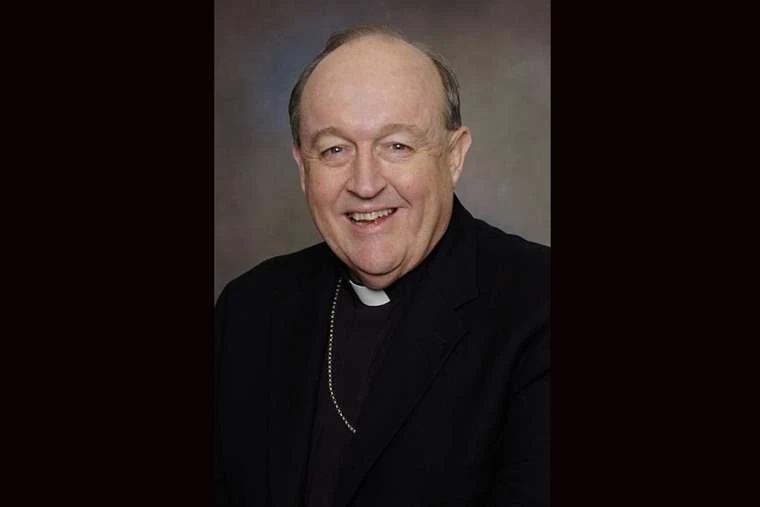
Newcastle, Australia, Apr 11, 2018 / 02:46 pm (CNA/EWTN News).- During court proceedings in Australia this week, Archbishop Philip Wilson of Adelaide maintained his innocence, denying allegations that he concealed a serious sexual abuse offense allegedly disclosed to him in the 1970s.

The local court in Newcastle heard Wilson’s defense April 11. The archbishop confirmed under oath that he had no memory of being told of sexual abuses involving two altar boys and a fellow priest in the Hunter region of New South Wales.

“From the time this was first brought to my attention last year, I have completely denied the allegation,” said Wilson in March 2015. He took a leave of absence during the initial charges.

“I would again like to express my deep sorrow for the devastating impact of clerical sex abuse victims and their families, and I give assurance that despite the charge, I will continue to do what I can to protect the children in our care in the Archdiocese of Adelaide,” he continued.

Wilson was accused in 2014 of ignoring cases of sexual abuse, and remains the most senior Catholic Church official to be charged with concealing abuse.

He has also been diagnosed with the early stages of Alzheimer’s disease. Wilson said that his current medication is helping his memory, “although it’s not perfect,” according to the Australian Associated Press.

The alleged scandal took place in the 1970s, involving a priest named Fr. Jim Fletcher who served in the Maitland diocese along with Wilson. At the time, Wilson had been ordained a priest for only one year.

The victims of the scandal, Peter Creigh and another altar boy who is unnamed for legal reasons, said they both had told Wilson of their abusive experience with Fletcher.

Creigh allegedly told Wilson in graphic detail of the abuse in 1976. However, Wilson said the conversation never took place, noting, “I don’t think I would have forgotten that.”

The second victim claimed he had told Wilson of the abuse in the confessional in 1976, but Wilson allegedly dismissed the boy with a penance, saying that he was lying. Wilson said he would never tell someone in the confessional that they were untruthful, and that he did not remember having seen the boy at all in 1976.

Fletcher was convicted of nine counts of sexual abuse and was jailed in 2006. He died within the year of a stroke. Wilson said he had no previous suspicions about the integrity of Fletcher’s character.

Wilson additionally told the court that if he had been notified of the scandal, he would have offered pastoral care to the victims and their families, and reported the event to his superiors.

The archbishop has attempted four times to have the case thrown out, which has been denied by local magistrate Robert Stone. If convicted, Wilson would face up to two years in jail.

Archbishop Denis Hart of Melbourne, president of the Australian bishops’ conference, said in 2015 that he hopes the matter will be resolved swiftly, noting that the presumption of innocence equally applies to Wilson.

“I urge people not to make any judgement until the charge against Archbishop Wilson has been dealt with by the court,” Hart said.

[…]

No Picture
News Briefs

Pope Francis admits ‘serious mistakes’ in Chile sex abuse case

April 11, 2018 CNA Daily News 3

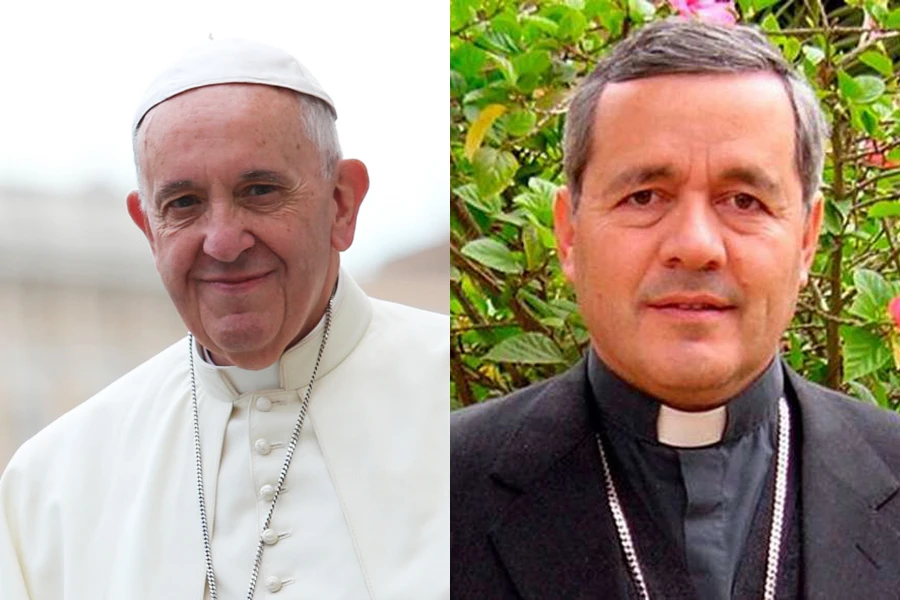
Vatican City, Apr 11, 2018 / 01:11 pm (CNA/EWTN News).- In a letter addressed to Chile’s bishops, Pope Francis admitted to making “serious mistakes” in handling the nation’s massive sex abuse crisis and asked for forgiveness. The pope summoned Chile’s bishops to Rome to address the issue, and invited victims to meet with him as well.

Referring to a recent investigation of abuse cover-up in Chile carried out by Maltese Archbishop Charles Scicluna, Pope Francis said that after a “slow reading” of the report, “I can affirm that all the testimonies collected speak in a stark manner, without additives or sweeteners, of many crucified lives and I confess that this has caused me pain and shame.”

Francis admitted to misjudging the severity of the affair, telling Chile’s bishops that “I have made serious mistakes in the judgement and perception of the situation, especially due to a lack of truthful and balanced information.”

He asked the bishops to “faithfully communicate” this recognition, and he apologized to all those he might have offended.

In addition, he summoned all of Chile’s 32 bishops to Rome to discuss the conclusions of Scicluna’s report in the third week of May, where they will discussion the conclusions of the report as well the pope’s own conclusions on the matter.

In his letter, signed April 8, Divine Mercy Sunday, Francis said he wants the meeting to be “a fraternal moment, without prejudices or preconceived ideas, with the sole objective of making the truth shine in our lives.”

The decision to summon an entire bishops’ conference to Rome is remarkably significant. Nothing of the nature has happened since April 2002, when John Paul II met with 12 of 13 U.S. Cardinals, eight of whom headed major dioceses, and two high-level representatives of the USCCB at the Vatican to address the abuse crisis in the United States, and told them they had handled the situation wrong.

In a tweet after an April 11 press conference on the letter in Chile, Jaime Coiro, spokesman for the Chilean bishops conference, said that in the coming weeks Pope Francis will also meet with some victims of abuse carried out by Chilean clergy, asking each one personally for forgiveness.

In comments to the media, Coiro recognized the damage done to minors who were abused, saying “we were not able to care for them adequately.” The coming weeks, he said, will be “an intense renewal of our vocation and mission” for the Church in Chile.

The pope’s letter comes after Scicluna made a Feb. 19-25 visit to the United States and Chile to investigate accusations of negligence on the part of Bishop Juan Barros of Osorno, who has been accused of covering up abuse of his long-time friend Fernando Karadima.

While on the ground, Scicluna interviewed some 64 people related to the accusations and compiled an report that is some 2,300 pages long, which he delivered to Pope Francis March 20.

In 2011, Karadima was found guilty by the Congregation for the Doctrine of the Faith of sexually abusing several minors during the 1980s and 1990s, and sentenced to a life of prayer and solitude.

Opponents of Barros have been vocal since his 2015 appointment to lead the Diocese of Osorno, with many, including a number of Karadima’s victims, accusing the bishop of covering up the abuse, and also also at times participating.

In addition to Barros, Karadima’s victims have also accused three other Chilean bishops who had been close to Karadima – Andrés Arteaga, Tomislav Koljatic and Horacio Valenzuela – of cover-up.

Despite the protests, Barros has maintained his innocence, saying he didn’t know the abuse was happening. Pope Francis has backed him, and has refused to allow Barros to step down from his post, though the bishop has submitted a letter of resignation multiple times.

Francis’ decision to send Scicluna to Santiago to investigate the accusations came after controversy flared during the pope’s Jan. 15-18 visit to Chile, during which he responded to a Chilean journalist who asked about the Barros issue, saying the accusations were “calumny,” because there was no proof.

The comment prompted uproar from Barros’ critics, several of whom are victims of  Karadima’s abuse. It also prompted Cardinal Sean O’Malley of Boston, one of the Pope’s nine cardinal advisors and head of the Pontifical Commission for the Protection of Minors, to release a statement saying the words were painful to victims.

In a conversation with journalists on the way back to Rome, Pope Francis apologized, but said there was no evidence condemning Barros, and that so far, no victims had come forward.

However, less than one week after the decision to send Scicluna to Chile was announced, one of Karadima’s victims, Juan Carlos Cruz, said in an interview with the Associated Press that in 2015 he had sent a letter to the pope through the Pontifical Commission for the Protection of Minors, alleging that Barros had seen Karadima’s abuse and had at times participated.

Members of the commission confirmed the news, and said the commission’s head, Cardinal Sean O’Malley of Boston, had indeed handed the letter to Pope Francis, raising the question of whether the pope actually read the letter.

Before going to Santiago Feb. 19 to interview witnesses related to the Barros accusations, Scicluna  stopped in New York to interview Cruz. He then went to Santiago to interview additional witnesses related to the Barros case.

Scicluna is a well-regarded Vatican expert on sex abuse appeals cases. In addition to heading the Archdiocese of Malta, in 2015 he was named by the pope to oversee a team in the Congregation for the Doctrine of the Faith charged with handling appeals filed by clergy accused of abuse. He served as the congregation’s Promoter of Justice for 17 years, and is widely known for his expertise in the canonical norms governing allegations of sexual abuse.

In addition to his interviews on Barros, Scicluna also met with alleged victims of abuse by the Marist Brothers, a move which seemingly broadened the scope of his mandate in the country.

In August 2017, the Marist Brothers reported that a member of the congregation had admitted to abusing 14 boys in Chile. Earlier this year, the Marist Brothers began a canonical investigation of allegations of sexual abuse in Chile by some of its members.

In his letter to Chile’s bishops, Pope Francis said now is an “opportune” time to “put the Church of Chile in a state of prayer.”

“Now more than ever we cannot fall back into the temptation of verbiage or stain in ‘universals,’ he said, and told the bishops to look to Christ in the coming days and weeks.

“Let us look at his life and gestures, especially when he shows compassion and mercy to those who have erred. Let us love in the truth, let us ask for wisdom of heart and allow ourselves to be converted.”

[…]

No Picture
News Briefs

Paul Ryan announces retirement from Congress

April 11, 2018 CNA Daily News 0

Washington D.C., Apr 11, 2018 / 09:48 am (CNA/EWTN News).- Speaker of the House Paul Ryan (R-WI) will not run for reelection this November, he announced on Wednesday. Ryan’s departure confirms rumors that began swirling in mid-December 2017. He will retire in January, at the conclusion of his term.

Ryan, who is a Catholic, was first elected to Congress in 1998, and became the speaker of the house in October of 2015. He has become known for his conservative views and was Mitt Romney’s running mate in the 2012 presidential election.

In his speech announcing his retirement, Ryan cited his three teenage children as one of the main reasons why he would be leaving Congress. His eldest daughter is 16 years old, he said, the same age he was when his father passed away.

“What I realize is, if I am here for one more term, my kids will only have known me as a weekend dad,” he said.

“I just can’t let that happen.”

Regardless, Ryan insisted that he has “no regrets” from his tenure in Congress, and that he put all of his being into his work. He insisted that the current political climate did not influence his decision to retire from Congress.

On Twitter, President Donald Trump offered praise for Ryan, even though the two have butted heads in the past. Trump said that Ryan was a “truly good man” who will “leave a legacy of achievement that nobody can question.”

<blockquote class=”twitter-tweet” data-lang=”en”><p lang=”en” dir=”ltr”>Speaker Paul Ryan is a truly good man, and while he will not be seeking re-election, he will leave a legacy of achievement that nobody can question. We are with you Paul!</p>&mdash; Donald J. Trump (@realDonaldTrump) <a href=”https://twitter.com/realDonaldTrump/status/984066131303583746?ref_src=twsrc%5Etfw”>April 11, 2018</a></blockquote> <script async src=”https://platform.twitter.com/widgets.js” charset=”utf-8″></script>
Former Speaker of the House Nancy Pelosi (D-CA) also offered praise for Ryan, saying in a statement that, “Despite our differences, I commend his steadfast commitment to our country. During his final months, Democrats are hopeful that he joins us to work constructively to advance better futures for all Americans.”

<blockquote class=”twitter-tweet” data-conversation=”none” data-lang=”en”><p lang=”en” dir=”ltr”>.<a href=”https://twitter.com/NancyPelosi?ref_src=twsrc%5Etfw”>@NancyPelosi</a> reacts to Paul Ryan's retirement. <a href=”https://t.co/ceagNZpH48″>pic.twitter.com/ceagNZpH48</a></p>&mdash; Sahil Kapur (@sahilkapur) <a href=”https://twitter.com/sahilkapur/status/984072202344640514?ref_src=twsrc%5Etfw”>April 11, 2018</a></blockquote>
<script async src=”https://platform.twitter.com/widgets.js” charset=”utf-8″></script>

Ryan has talked about his Catholic faith numerous times during his two decades in Congress. He spoke at this year’s March for Life in Washington, D.C. and has spoken out in favor of religious freedom and pro-life legislation.

He has clashed with leaders of the U.S. bishops on other issues, notably the 2017 tax reform bill. Ryan championed the bill, while leaders of the U.S. bishops’ conference called parts of it “unconscionable,” saying it “appears to be the first federal income tax modification in American history that will raise income taxes on the working poor while simultaneously providing a large tax cut to the wealthy.”

Ryan did not announce what his plans are once he leaves Congress.

[…]

No Picture
News Briefs

President of France calls on Catholics to engage politically

April 11, 2018 CNA Daily News 1

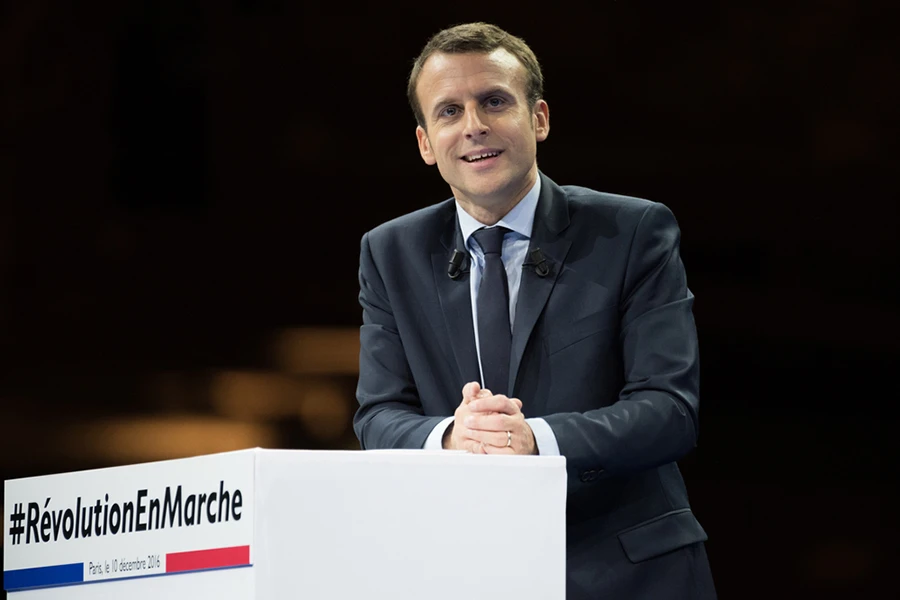
Paris, France, Apr 11, 2018 / 03:03 am (CNA/EWTN News).- French President Emmanuel Macron stressed the importance of a Catholic voice in the country’s political debates, particularly on bioethical issues, in an address to the French bishops April 9.

“What I want to call you tonight is to engage politically in our national debate and in our European debate because your faith is part of the commitment that this debate needs,” Macron told French bishops in a rare public meeting between Church and government leaders in France.

While France was once referred to as the “eldest daughter of the Church,” the country’s legal secularism has required strict neutrality of the state in religious matters since 1905.

In his speech Monday, however, Macron spoke of the important philosophical need for the Church’s voice.

“What strikes our country … is not only the economic crisis, it is relativism; it is even nihilism,” said Macron.

“Our contemporaries need, whether they believe or do not believe, to hear from another perspective on man than the material perspective,” he continued, “They need to quench another thirst, which is a thirst for absolute. It is not a question here of conversion, but of a voice which, with others, still dares to speak of man as a living spirit.”

Father Joseph Koczera, an American priest based in Paris, told CNA that in some ways, Macron’s speech “was quite remarkable.”

“This is a clear challenge to a particular style of French secularism that suggests that, [since] the state must remain neutral, perspectives informed by religion should not be invoked in political debates,” Koczera said.

Macron stressed that “Secularism does not have the function of uprooting from our societies the spirituality that nourishes so many of our fellow citizens.”

“To deliberately blind myself to the spiritual dimension that Catholics invest in their moral, intellectual, family, professional, social life would be to condemn me to having only a partial view of France; it would be to ignore the country, its history, its citizens; and affecting indifference, I would derogate from my mission,” he said.

Macron’s speech comes as bioethical debates continue in France, with parliament preparing to reform its bioethics laws.

“The new law will probably try to authorize two main things, against which most of French Catholics are fighting: euthanasia and IVF for single women and lesbian couples,” Guillaume de Thieulloy, editor of the French Catholic blog Le Salon Beige, told CNA.

Thieulloy pointed out that Macron has not spoken publicly about his views on euthanasia, but he supported the expanding of France’s in vitro fertilization law – which currently limit IVF to infertile heterosexual couples – during his 2017 presidential campaign.

In his speech, Macron praised the Church’s contribution to society, particularly its service to “the sick, the isolated, the decommissioned vulnerable, abandoned, disabled, prisoners, regardless of their ethnicity or religion.”

The French president also remarked on Catholic leaders’ coherence in seeing the human dimension of both bioethical and migrant issues.

“You consider that our duty is to protect life, especially when this life is defenseless. Between the life of the unborn child, that of being on the threshold of death, or that of the refugee who has lost everything, you see this common trait of deprivation, nakedness and absolute vulnerability,” said Macron.

“I believe in a political commitment that serves the dignity of man,” he said.

“The link between Church and State has deteriorated, and that it is important for us and for me to repair it,” he told French Catholic leadership.

Archbishop Georges Pontier of Marseille, president of the French bishops conference, offered remarks to President Macron in a separate speech. He highlighted euthanasia in his comments, quoting a long passage from Pope Benedict XVI’s encyclical, Caritas in Veritate:

“A particularly crucial battleground in today’s cultural struggle between the supremacy of technology and human moral responsibility is the field of bioethics, where the very possibility of integral human development is radically called into question … Faced with these dramatic questions, reason and faith can come to each other’s assistance. Only together will they save man. Entranced by an exclusive reliance on technology, reason without faith is doomed to flounder in an illusion of its own omnipotence.”

The archbishop questioned the president, “Can one describe as ‘care’ the act of giving death?” and emphasized that “society must offer opportunities for life, friendship, tenderness, compassion, solidarity.”

Only time will tell the effects of Macron’s speech, Father Koczera told CNA.

“The relationship between the Catholic Church and the French state is a very complex one,” he explained.

“Though many French Catholics have welcomed the President’s words, it remains to be seen what practical effect the speech will have. Particularly since last year’s presidential election, when many politically-engaged Catholics supported the unsuccessful campaign of François Fillon, the role of Catholics in public debates has seemed uncertain,” Koczera explained.

“On a practical level, it also makes a difference that a majority of French citizens are still baptized Catholics – even though the number who practice their faith is much smaller, the Church still plays a role in what some call the roman national, the historical narrative that provides a cohesive sense of national identity.”

Emmanuel Macron, a baptized Catholic, was elected president of France in May 2017. Upon his election, Pope Francis sent Macron a telegram urging him to strengthen France’s Christian roots and “respect for life.” Macron is the youngest president to ever be elected in France.

[…]