
The Dispatch
“Avengers: Infinity War” presents a villain for our times
The latest installment in the Marvel Cinematic Universe is about its villain far more than about its heroes. […]


The latest installment in the Marvel Cinematic Universe is about its villain far more than about its heroes. […]

New York City, N.Y., Apr 27, 2018 / 03:11 pm (CNA/EWTN News).- This week, nearly 100 financial advisers, fund managers and Catholic Chief Financial Officers gathered at the Second Annual Faith Consistent Investing Forum in Midtown Manhattan.
The two-d… […]
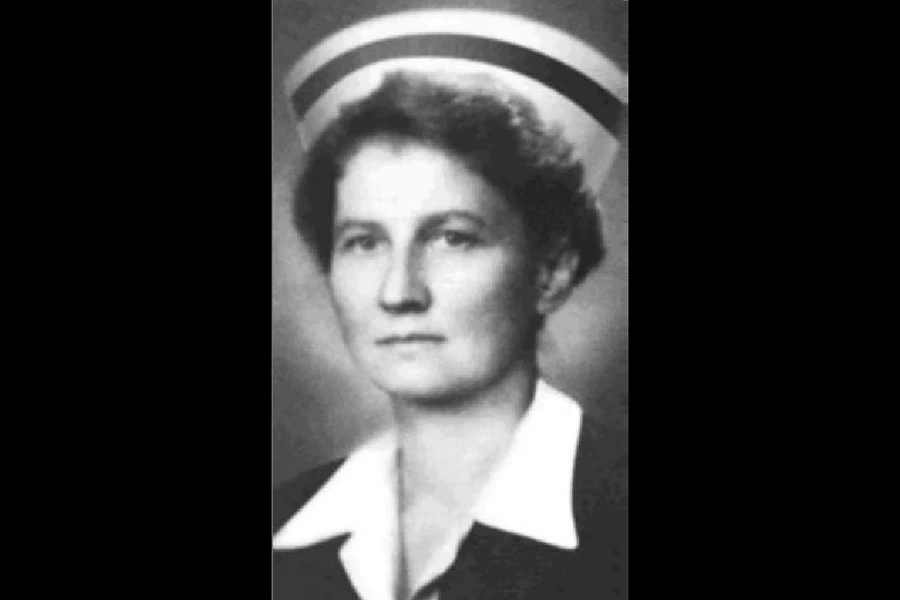
Krakow, Poland, Apr 27, 2018 / 01:32 pm (CNA/EWTN News).- Hanna Chrzanowska, a 20th-century Polish nurse and laywoman who will be beatified in Krakow Saturday, is a model of how to give of oneself for the good of others, said a priest involved with her canonization cause.
“The laity know well the reality of everyday life,” Fr. Pawel Galuszka said. “Hanna, as a nurse, knew in person and from experience the problems of the sick, alone, abandoned and disabled.”
A Polish priest responsible for the pastoral section of the beatification cause of Hanna Chrzanowska, Galuszka told CNA via email that “in today’s culture the logic of the market prevails… In every aspect of life we tend to calculate profit or utility.”
Chrzanowska, on the other hand, “teaches us how important it is to make a sincere gift of oneself, even sacrifice, for the good of the other. This is, and will be, the very legacy of Blessed Hanna Chrzanowska.”
Galuszka noted that St. John Paul II, then-Cardinal Karol Wojtyla, knew Chrzanowska during her life, and when he presided over her funeral said: “We thank you, Miss Hanna, for having been among us… a particular incarnation of Christ’s blessings from the Sermon on the Mount, above all that he said ‘blessed [are] the merciful.’”
“The bishop of Krakow [St. John Paul II] had no doubt that Hanna in a heroic way fulfilled the commandment of love of neighbor,” Galuszka noted.
Meeting Cardinal Wojtyla was one of the special moments in Chrzanowska’s life, the priest recounted, adding that the then-bishop of Krakow gave her “real moral and material help” during her organization of various parish infirmaries throughout the city and archdiocese.
“Equipped with a charismatic personality, she concentrated a significant group of collaborators and volunteers around her work, among them nurses, nuns, seminarians, priests, doctors, professors and students,” Galuszka said.
“With their help, she organized retreats for her patients that brought back the joy and the strength to face everyday life. Thanks to her efforts, the tradition of celebrating Holy Mass in the homes of the sick, and going to visit patients during pastoral visits, spread.”
Chrzanowska was born in Warsaw on October 7, 1902 to a family known for their charitable work. She finished high school at a school run by Ursuline sisters in Krakow and after graduating in 1922 attended nursing school in Warsaw.
She became an oblate with the Ursuline Sisters of St. Benedict.
From 1926-1929 she worked as an instructor at the University School of Nurses and Hygienists in Krakow. For 10 years she held the position of editor of the monthly “Nurse Poland” magazine, also publishing her own work in the field of nursing.
During this period, she also grew closer to God, joining in the work of the Catholic Association of Polish Nurses in 1937.
In 1939, Poland saw the outbreak of World War II. After the war and after the opening of a university school of maternity and nursing in Krakow, she worked as the head of the department dedicated to home nursing.
Chrzanowska was especially dedicated to the proper formation and preparation of her students, including offering advice and assistance while accompanying her students on visits to patients confined at home.
In 1966 she contracted cancer. Despite operations, the disease spread and eventually led to her death on April 29, 1973 in Krakow.
Her cause for canonization was opened Nov. 3, 1998, and her beatification Mass will take place at the Sanctuary of Divine Mercy in Krakow April 28.
Galuszka said that the miracle which paved the way for Chrzanowska’s beatification was the healing of a 66-year-old woman, who had suffered from a cerebral hemorrhage and mild heart attack.
The woman had become paralyzed in both legs and a hand and was considered to have no chance of surviving.
While in a coma, she had a dream that Hanna Chrzanowska appeared to her and said, “Everything will be fine.” Waking soon after, she surprised the doctors, because not only could she speak normally, but she could move her limbs, Galuszka said.
It was later discovered that on the same day she was miraculously healed, the woman’s friend, a nurse, had attended a Mass and prayed for her healing through the intercession of Venerable Hanna Chrzanowska.

Vatican City, Apr 27, 2018 / 06:20 am (CNA/EWTN News).- The Vatican’s annual financial report this year showed that monitoring systems put into place nearly five years ago continue to be effective, however, there is still room to grow in terms of prosecution for questionable activities.
In comments to journalists during a May 27 press briefing, Rene Bruelhart, president of the Vatican’s Financial Intelligence Authority (AIF), said the report for 2017 shows “a clear commitment from our side to continue to report in the most transparent way possible on our activities.”
Two keywords that can sum up the AIF activities for 2017, he said, are “consolidation and normalization,” particularly in terms of implementing a sustainable regulatory and reporting system, as well as growing relations with domestic and international bodies.
Bruelhart, a Swiss lawyer, was tapped to head the AIF after it was established by Benedict XVI in 2010 to supervise the Vatican’s financial activity and prevent and counter money laundering.
Carried forward under Francis, the AIF works alongside other financial entities in the Vatican, such as the Secretariat for the Economy and the Council for the Economy, both of which were established by Pope Francis as part of his ongoing reform of the Roman Curia.
With full autonomy the AIF also monitors and reviews actions carried out by the Administration of the Patrimony of the Holy See (APSA), which oversees the Vatican’s real estate, and the Institute for the Works of Religion (IOR), more often referred to as the “Vatican bank.”
Bruelhart was present alongside AIF director Tommaso Di Ruzza at a May 27 press briefing on the AIF’s 6th annual report, which covered 2017 and summed up their continued efforts to build relationships with other states and crack down on suspicious financial activity within the Vatican.
Most notably, the report detailed that it was the AIF which first flagged the diversion of significant funds from the Vatican’s Bambino Gesu Children’s hospital to renovate Cardinal Tarcisio Bertone’s apartment in Rome.
The case exploded in the media, and in October 2017 the former president of the hospital, Giuseppe Profiti, and former treasurer, Massimo Spina, were been charged with the illicit use of hospital funds in the amount of 422,005.16 euros ($480,600.58) to refurbish the flat.
In total for 2017, 150 Suspicious Activity Reports (SARs) were filed with the AIF, compared to last year’s 207. The reason for the decrease, according to AIF Director Tommaso Di Ruzza, is that the quality of the entity’s reporting system has improved, “showing a growing awareness and strengthening of the control functions of the reporting subjects.”
Of the 150 flagged transactions, 8 were submitted by the AIF to the Vatican Office of the Promoter of Justice during 2017, of which nearly all involved potential financial crimes with foreign individuals or entities either within or in connection with a foreign jurisdiction.
The potential crimes flagged include international fraud, including fiscal fraud and market abuse.
In only one case did the Vatican tribunal freeze an account after a questionable cross-border transaction amounting to roughly 1,757 euro, or $2,122, which took place in 2016, which the AIF said it had flagged and submitted in 2015.
According to the report, none of the activities or transactions reported in 2017 were related to terrorism.
Since 2015, the AIF has presented some 54 reports to the Promoter of Justice. When asked why there has not been a higher number of cases prosecuted in the Vatican courts, which in the past has been identified as an area of weakness, Bruelhart said it will take time to adequately develop the system put into place, and is up to the Promoter of Justice to determine how to act on reports submitted by the AIF.
It is unclear how many of the 54 transactions flagged and sent to the Promoter of Justice have been looked into or investigated. However, “it’s important to remember where we’re coming form,” Bruelhart said, noting that the current system has been built only within the past 5-6 years, and new entities have been established, including the secretariat and council for the economy.
“It has been a new world” for the Promoter of Justice, he said, adding that in his view, the chain of activities that has taken place “has moved in the right direction” and “a lot of progress” has been made.
Noting how the first conviction took place just last year, he said “work is ongoing” in this area, and he expects to see more progress in the future.
“There is a very good dialogue with the office of the promoter of justice,” he said, adding that “it’s about building a dialogue together,” but ultimately the office is the only one responsible for what they decide to do.
Responding to criticism that the Vatican’s financial reform has made little progress, Bruelhart pointed to all the steps that have been taken so far in the past six years, saying if each of them are broken down, one can see that “a lot has been done in a very very short amount of time.”
Change, he said, takes time and at times one needs to take a step back to fully appreciate the progress and continue to go forward. “Its a process, but there is life in this process,” he said.
In addition, the AIF in 2017 also cracked down on transparency and accountability for donations made for institutional and charitable purposes, as well as interactions with what they have dubbed “high risk states” which do not have proper monitoring systems in place.
The crack down on transactions for charity and donations comes after a law was introduced Nov. 22, 2017, on the “Registration and Supervision of Non-Profit Organizations.”
The AIF also signed an additional 19 Memoranda of Understanding (MoU) with foreign counterparts, bringing the bringing the number to 57, and exchanged information in some 282 cases.
In an April 27 press release on the AIF report, Di Ruzza stressed the importance of these relations, saying that “considering the potential risks linked to the universal projection of the Holy See, international cooperation is pivotal.”
These type of cross-border agreements are designed to crack down on money laundering and tax evasion, ensuring that the IOR does not become a tax haven.
Chicago, Ill., Apr 27, 2018 / 12:39 am (CNA).- Originally created as an organization to form disciples in the Chicago area, L’Alto Catholic Institute is now expanding to three new cities, with local teams working to instill a culture of disciples… […]

Nashville, Tenn., Apr 27, 2018 / 12:00 am (CNA/EWTN News).- A bill approving a memorial to the unborn was passed by the Tennessee Senate on Monday by a 23-3 vote.
If approved, the memorial will be privately funded but erected on the state’s capitol grounds, and will include the inscription: “Tennessee Monument to Unborn Children, In Memory of the Victims of Abortion: Babies, Women, and Men.”
The bill, HB 2381, is sponsored by Republican legislators Rep. Jerry Sexton and Sen. Steve Southerland and was first introduced in March.
Tennessee has some of the strongest pro-life laws in the nation, including legislation requiring women to receive in-person informed consent counseling, a 48-hour waiting period prior to getting an abortion, hospital admitting privileges for abortion doctors, and parental consent for teen abortions.
In 2014, the legislature passed a pro-life state constitutional amendment which says:
“Nothing in this Constitution secures or protects a right to abortion or the funding of an abortion. The people retain the right through their elected state representatives and state senators to enact, amend, or repeal statutes regarding abortion, including, but not limited to, circumstances of pregnancy resulting from rape or incest or when necessary to save the life of the mother.”
The amendment is currently being challenged in federal court.
If passed, the proposed monument will be the second such memorial to the unborn in the state of Tennessee. In 1994, the National Memorial for the Unborn was built in Chattanooga on the site of a closed abortion clinic. It is “dedicated to healing generations of pain associated with the loss of aborted and miscarried children” and includes a wall of names “where anyone who has lost a baby to abortion may come to honor their child and find forgiveness, hope, and healing.”
When the bill for the new memorial was first introduced, state Rep. Bill Dunn said the monument is in the same vein as other memorials to African slaves or victims of the Holocaust, which also “recognize the atrocities occurred because human beings were treated as less than human,” he said, according to Memphis Daily News.
“In both cases, the vulnerable and defenseless were subjected to the will of the powerful. The taking of life of the baby in the womb is related to this brand of inhumanity,” Dunn added.
“While the baby can be seen as the obvious victim, this memorial will also be for other victims, the women coerced into abortion, the fathers who can’t protect their unborn child, the brothers and sisters who lose a sibling and the society as a whole who becomes coarsened because life is cheapened.”
A version of HB 2381 passed the Tennessee House last week by a 63-15 vote. It will now be sent back to the House for approval of amendments before heading to the desk of Tennessee governor Bill Haslam (R).

Those who insist that women ought to be ordained as Catholic priests do not simply want to serve the Church—they want to change the Church. […]

Catamarca, Argentina, Apr 26, 2018 / 07:23 pm (ACI Prensa).- Residents of the Catatumbo region of Colombia, which borders Venezuela, are trapped in their own homes due to an ongoing conflict between two guerilla groups fighting over drug trafficking routes.
“People are trapped in their own homes and the people who dare to go out are intimidated by motorcycle riders who tell them, ‘You have to obey the order to strike.’ They simply cannot go out or open their businesses,” Bishop Gabriel Ángel Villa Vahos of Ocaña told RCN Radio April 23.
The National Liberation Army (ELN) and the People’s Liberation Army (EPL), two Marxist-Leninist guerilla insurgents, declared war some 40 days ago for control of the drug trafficking routes for about 62,000 acres of coca in Catatumbo, which is a sub-region in northeast North Santander.
The problem worsened with the “armed strike” decreed last week by the EPL which has restricted commerce and people’s free movement in the area.
The United Nations has estimated that the conflict has caused more than 4,000 people in the rural areas to leave the region since March 14, El Tiempo reports. It is estimated that there are more than 145,000 people affected in 11 townships.
Bishop Villa appealed to the armed groups to leave the civil population out of their confrontations, “because they are those most affected at this time.”
The bishop stressed that the government needs to make a major effort to address social problems. He said he hopes “there will be an immediate response to the emergency,” that respects the safety of civilians.
This article was originally published by our sister agency, ACI Prensa. It has been translated and adapted by CNA.

Does a religious group have a right to get actively and directly involved in politics? And is that a good idea? […]
Tucson, Ariz., Apr 26, 2018 / 03:28 pm (CNA).- The ‘not guilty’ verdict for a U.S. border agent who shot and killed a Mexican teen is “deeply troubling” and raises “serious issues of justice and accountability,” said… […]
© Catholic World Report