No Picture
News Briefs

Vermont bishop to form lay committee to review clergy files

October 10, 2018 CNA Daily News 1

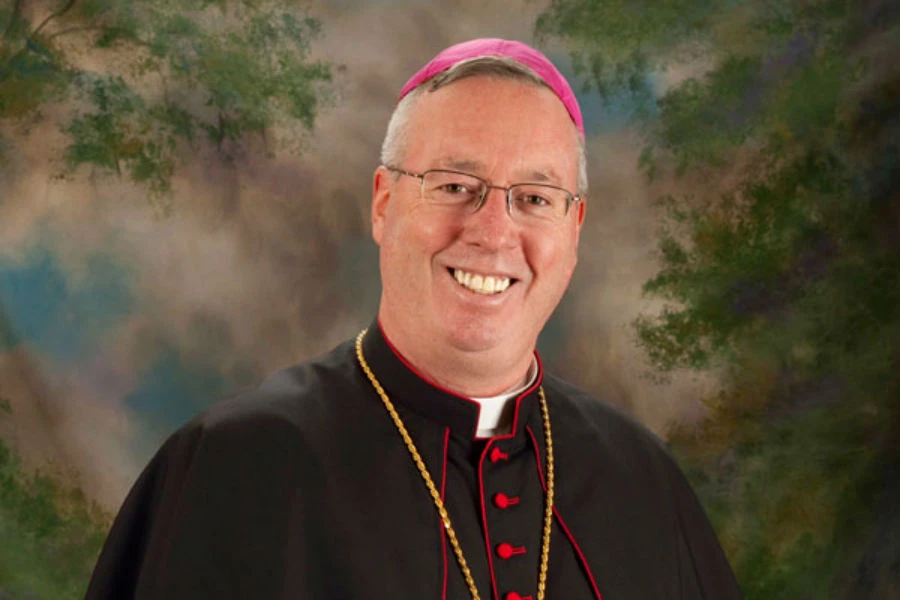
Burlington, Vt., Oct 10, 2018 / 04:00 pm (CNA).- The Diocese of Burlington, the only Catholic diocese in Vermont, is forming a lay committee to investigate personnel files relating to sexual abuse of minors by priests, Bishop Christopher Coyne announced in a statement Oct. 10. When is concludes its review, the committee will publicly release a list of accused priests.

The committee will examine the same files covered by a previous investigation conducted by the Vermont attorney general’s office in 2002. That investigation covered allegations relating to the years 1950-2000. The files do not include any contemporary accusations of sexual misconduct occurring after 2003, Coyne said.

The announcement comes one day after an article appeared online about Vermont attorney general’s decision that it “would not be prudent” to release the results of the 2002-2003 enquiry into clerical sexual abuse. According to BuzzFeed News, that investigation resulted in the names of 21 men being turned over to state authorities. In most cases, the accused were either deceased or no longer in ministry.

No charges for sexual crimes against minors were brought following the attorney general’s investigation.

There has only been one credible accusation of priestly sexual abuse in the Diocese of Burlington since 2002, which concerned an “at-risk adult.” No priests currently in ministry in the diocese have been accused of sexual abuse, according to the diocese.

The new lay-led committee will also examine files that were initially not fully investigated by the state in 2002, Coyne told CNA in a phone interview. These files contained allegations against deceased priests but were not deemed worthy of further investigation.

Coyne wants the committee to reexamine all the allegation in order to determine whether or not the names of the accused should be made public.

“There’s some files that are old, that the priests were deceased, there was no investigation,” he said. “They said, ‘You know, we’re not going to investigate this, there’s only one allegation, this was an old file, and the priest is deceased and he can’t clear his name.’”

“So there’s a few of those, and that’s what I want the committee to look at, and I want them to make a decision as to whether we’re going to release the names of priests that are deceased prior to 2002.”

He explained that other dioceses have only chosen to release the names of priests who either admitted to abuse, were the subject of a settlement, or had been made aware of the accusation prior to their deaths so they would have a chance to defend themselves.

Other files, he told CNA, include details of behavior that does not rise to the level of a criminal complaint, but is still “creepy” and a violation of boundary issues. Coyne wants the committee to examine these files to ensure that no additional action needs to be taken.

“(There was some behavior by a priest) that we said, ‘Okay, we can’t put you back in ministry,’ but we want to look at those files too and say, ‘You know, do we need to do anything here, have we done that right?’,” he explained.

Coyne told CNA that he is unsure as to why the report was not released in 2003, but suspects that the attorney general’s office was reluctant to release names in cases they would not be prosecuting.

“I wish I could give you an answer. I don’t know,” said Coyne. “They may have decided that since they couldn’t prosecute and they weren’t able to bring any charges against anyone that they couldn’t name names.”

Coyne is, however, “very confident” that his diocese has taken appropriate measures in responding to allegations of sexual abuse. Since 2002, the Diocese of Burlington has had a policy of immediately involving law enforcement following any allegation of clerical sexual abuse. 

“We went one step further in that as a matter of policy from that point on, any allegation that was deemed to be initially credible, namely that it had some sense of truth to it, was turned over to the authorities,” he told CNA. Even if the person making the complaint refuses to go to the police, the diocese would still take the matter to the authorities, he said.

The committee will also determine which details to include in the public list of the accused, such as birth, death, and ordination dates, and Coyne hopes to form the committee soon, so they can start work as quickly as possible.

“I think this is the way forward. I think every diocese has to do this, otherwise we’re going to continue to have these stories break every few months all over the country,” he told CNA.

“And every time it breaks, the cloud of guilt goes across all of us.”

[…]

No Picture
News Briefs

Catholic Relief Services caring for victims of Haiti earthquake

October 10, 2018 CNA Daily News 1

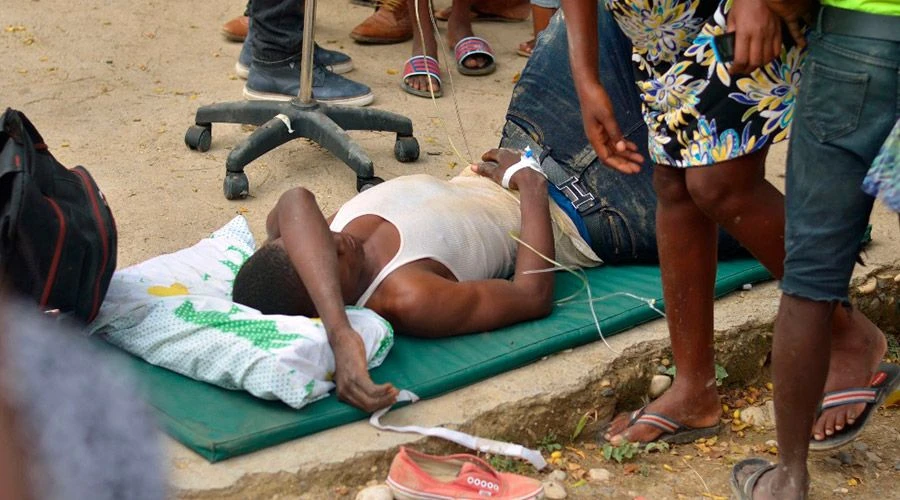
Port-au-Prince, Haiti, Oct 10, 2018 / 01:17 pm (ACI Prensa).- Catholic Relief Services, the U.S. bishops’ charitable outreach, is providing first aid and sending material aid to the areas affected by the 5.9 magnitude earthquake that struck Haiti Saturday.

The earthquake occurred at 8:12 pm Oct. 6 about 12 miles from the department of Porte-de-Paix. It lasted 53 seconds and was felt in eight out of ten of the country’s departments. A tsunami alert was not sent out after the earthquake.

Haiti’s Civil Defense department reported Oct. 8 that 15 people died, 333 were injured, and 7,000 homes were destroyed.

Beatriz Afanador, the CRS communications officer for Hispanoamerica and Latin America, told ACI Prensa via e-mail that a CRS team had already made an assessment of the emergency and that “a truck was due to arrive Oct. 9 with supplies including tarps for temporary shelters, hygiene kits with buckets, chlorine, shovels and other items.”

“The truck will be arriving sometime in the afternoon. Since the area is remote and extremely poor, a long term effort will have to be made to help them get the aid they need to rebuild or repair their homes and find the means to sustain themselves.”

CRS indicated in a communiqué that the most significant damage occurred in the departments of Nord Ouest and Artibonite.

“Most of the injuries in the Nord Ouest department were due to panic and resulting accidents. Due to the remote location and the available emergency medical services, the main hospitals in the affected areas report that they do not have the capacity to respond to the needs,” the statements says.

It was also reported that “the facade of the church in Plaissance was cracked, but there are no reports of damage to the main infrastructure. All the roads and bridges appear to be open at this time.”

Finally, CRS said that immediately after the earthquake there were reports of panic in many of the country’s cities.

“The injuries in Nord Ouest were mainly due to this reaction, including motorcycle accidents, cardiac arrest and premature birth. The population remains tense as rumors are circulating of a bigger earthquake,” the communiqué concludes.

CRS is currently working hand in hand with the Civil Defense, the Haitian Red Cross, and other NGOs that are aiding the affected areas.

[…]

No Picture
News Briefs

A synod summary from the Polish synod fathers – Oct 10

October 10, 2018 CNA Daily News 0

Vatican City, Oct 10, 2018 / 10:41 am (CNA).- The synod of bishops on young people, the faith, and vocational discernment is being held at the Vatican Oct. 3-28.

CNA plans to provide a brief daily summary of the sessions, provided by the synodal fathers from Poland.

Please find below the Polish fathers’ summary of the Oct. 10 session:


The sacramental life, the inspiration of the Holy Spirit, the Risen Christ, and accompanying young people in the discernment of their vocation – these are the main themes of the Synod’s morning session on October 10 .

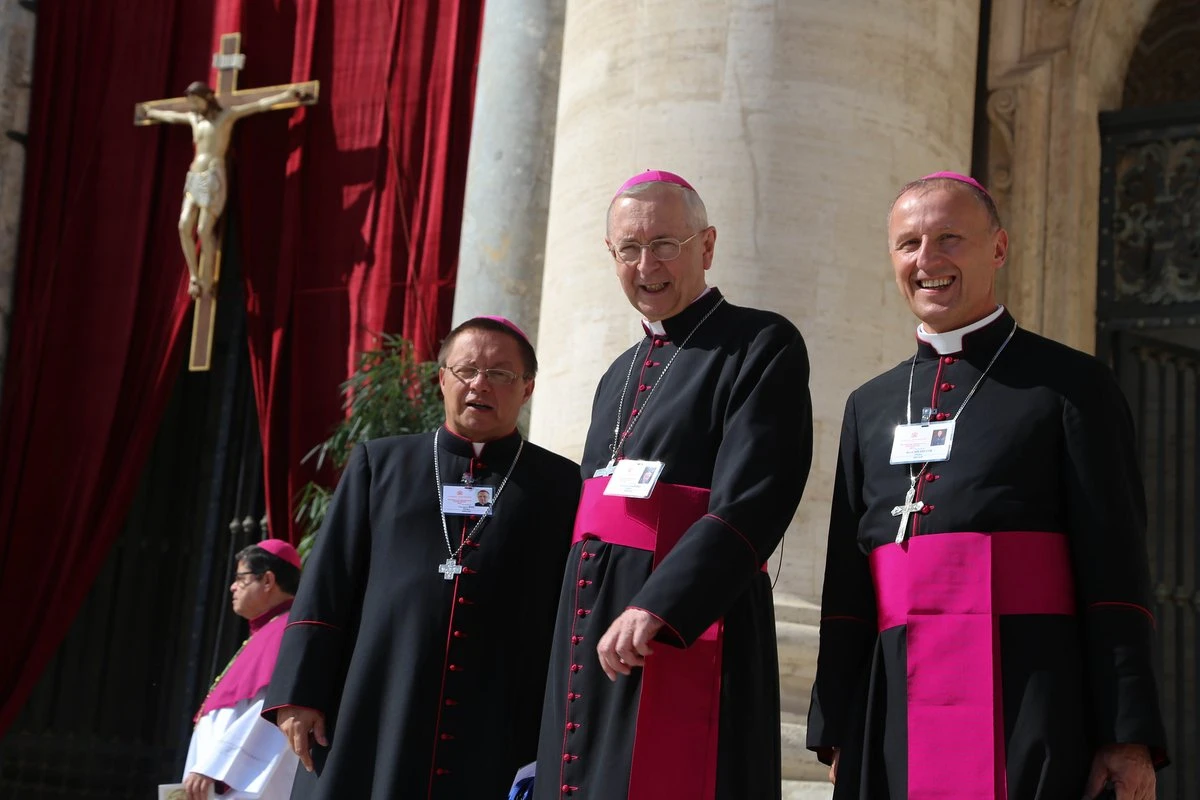
During the debates, the document of the assembly of bishops and the need to introduce a certain balance were discussed. “Synod Fathers said that this document lacks a theological perspective and the faith perspective. The document is predominantly sociological. It was pointed out that it contains no mention of the sacrament of Confirmation, which is the sacrament of the Holy Spirit, and yet it is He who rejuvenates the Church. There is almost nothing about the sacrament of the Eucharist, although the young show that they are sensitive to the sacraments, to the inspiration of the Holy Spirit. Many voices drew attention to the need for a new Pentecost. These voices are legitimate because the solutions we are to give must flow out of faith and not only come from sociology,” said Archbishop Grzegorz Ryś of Lodz.

During today’s session, the Risen Christ was also evoked. “If we can show that the Risen Christ and the presentation of Christ is an authentic testimony, then there will be fruit. In fact, young people do not expect material means or psychology from the Church; rather they expect authentic disciples. One of the young people said that the priest should know his own by name. Being a good pastor and educator implies a deep personal relationship, and all this must be the case within the sacramental life,” declared Auxiliary Bishop Marian Florczyk of Kielce.

Vocational discernment in the context of the accompaniment of the young was also discussed. “The path to the discernment and acceptance of a vocation requires different spaces of accompaniment that refer to what is human, what is social, what is related to education, and what concerns the spiritual life. In this field, there is another opportunity for pastors to work with young people. This path gives the young person the opportunity to recognize and assume a vocation,” noted Auxiliary Bishop Marek Solarczyk of Warszawa-Praga.

[…]