

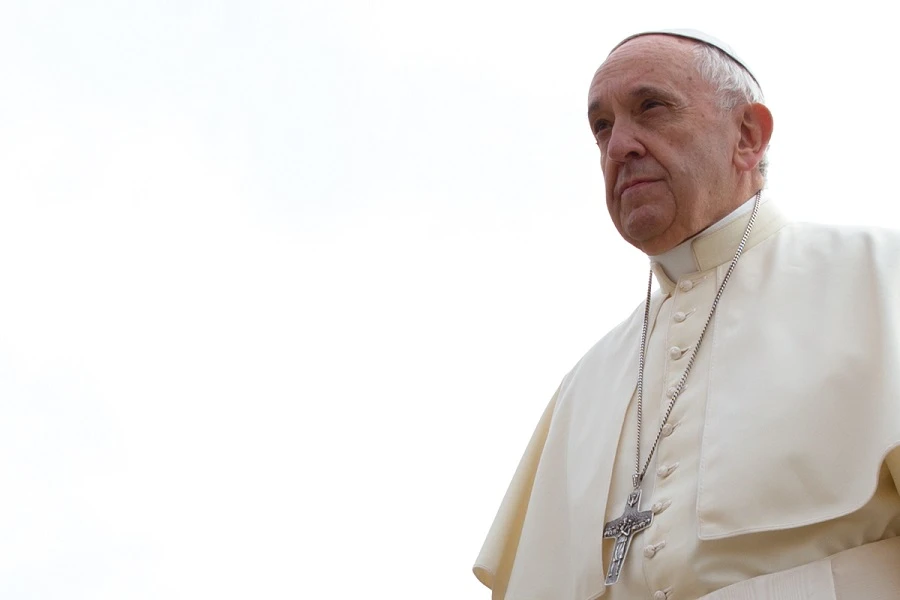
Vatican City, Sep 12, 2018 / 06:03 am (CNA/EWTN News).- Pope Francis has called for all the presidents of the Catholic bishops’ conferences of the world to meet at the Vatican in February to discuss the issue of sexual abuse of minors.
A statement from the pope’s cardinal advisory board Sept. 12 said, “The Holy Father Francis, after hearing the Council of Cardinals, decided to convene a meeting with the Presidents of the Bishops Conferences of the Catholic Church on the theme of ‘protection of minors.’”
The summit will take place at the Vatican Feb. 21-24, 2019.
According to the website GCatholic, there are 114 Conferences of Bishops and 21 eastern-rite Patriarchal Synods, Councils of Churches, and Assemblies of Ordinaries.
The announcement followed a three-day session of Pope Francis’ Council of Cardinals, commonly called the “C9,” which he created in 2013 to advise him regarding the governance and reform of the Roman Curia.
A major task of the nine cardinals has been revising the 1988 apostolic constitution, Pastor bonus, which regulates the government of the Roman Curia.
In their latest session Sept. 10-12, the Council made final adjustments to the draft of the new constitution, tentatively titled Praedicate evangelium, before turning it over to Pope Francis. It will still undergo a stylistic revision and review of the canonical elements before being published, the Vatican said.
Three members of the C9 were not present during the September meetings: Cardinal George Pell, who has been in Australia since summer 2017 undergoing a trial; and Cardinals Francisco Javier Errázuriz and Laurent Monsengwo Pasinya.
If you value the news and views Catholic World Report provides, please consider donating to support our efforts. Your contribution will help us continue to make CWR available to all readers worldwide for free, without a subscription. Thank you for your generosity!
Click here for more information on donating to CWR. Click here to sign up for our newsletter.

So they are meeting on a problem that currently has good stats but not meeting on the presence of active gays in the clergy like the orgy incident in Rome and the two priests caught in a sexual act in Miami with each other last week and the male prostitute in the Milan area two months ago who avers having had sinful contact with 36 priests. But the meeting is about the largely gay area that is currently quiet…abuse of minors. Well that sounds like we don’t need consultancy help.
Does anybody have any information about what is happening to Cardinal Pell? There’s been blank silence for quite some time, and considering that there seems to be a fair amount of evidence that he is being railroaded, I’m concerned.
I wish I could help you out there Leslie. It seems that for some reason things have stalled. As far as I know though: the trial is still going ahead. I have heard him speak a few times and met him once. I have always had grave fears as to there being a fair trial. He said himself once that he doesn’t go making things up. He simply upholds what the Church teaches, come fair weather or foul. There are those who hate him for it.
Stephen in Australia.
I should have mentioned. There is an Australian journal of conservative opinion. The name of it is Quadrant. When in a newsagents; I was amazed to see an essay in it, written very recently by Cardinal Pell. The essay is titled – The Church in a Post Christian World. It is dated: September 12Th 2018. Search Quadrant and you will be able to see it. However, unless you subscribe, you won’t be able to read it in full just yet. The whole matter is of great concern. Hope this has been some help.
Stephen.
39 mnutes ago..ny times…Di Nardo, president of Bishops facing accusation of transferring molestor…..
https://www.nytimes.com/aponline/2018/09/12/us/ap-us-clergy-abuse-dinardo.html
Bergoglio’s synod on “the protection of minors” is a sham. As we all know, the problem is not pedophilia but massive homosexuality among 50% to 70% of all priests and the priest-bishop-Cardinal homosexual networks that are strangling the Church. Still less does the Church need another synod to talk rather than to act. Again, as everyone should know, it was Bergoglio who unilaterally destroyed the bishop sexual abuse investigation-and-trial proceeding that his own sexual abuse commission had strongly recommended. Since Bergoglio has doubled down on his delay-deflect-and-deny strategy with this cynical synod announcement, it is time for the DOJ and the Attorney-Generals in all 50 states to treat him and the American PervChurch for what they are: criminals and moral degenerates.
Paul, I don’t doubt that there are men who are priests and who are gay. There are a few I’ve met that I suspect lean that way. I’ll give them the benefit of the doubt that they are faithful to their vow of chastity. You claim that 50 – 70% of priests are gay. From where do you get that statistic? I’ve been around priests all my life. My closest friend is a priest. I know he’s not gay and neither are the men I’ve known who are priests. Please tell me from where you get this statistic.
It might come from this much discussed and cited 2003 essay by Fr. Paul Mankowski, in which he states: “I would estimate that between 50 and 60 percent of the men who entered religious life with me in the mid-70s were homosexuals who had no particular interest in the Church, but who were using the celibacy requirement of the priesthood as a way of camouflaging the real reason for the fact that they would never marry.” Or perhaps from Sipes.
I think you are quite correct. The Bishop’s Conferences have no canonical authority at all. This is like a high school principal asking the Student Council to address the problem of incompetent teachers. Except that it doesn’t sound so obviously stupid.