No Picture
News Briefs

Pope tells Egypt’s authorities they have key role in brokering peace

April 28, 2017 CNA Daily News 0

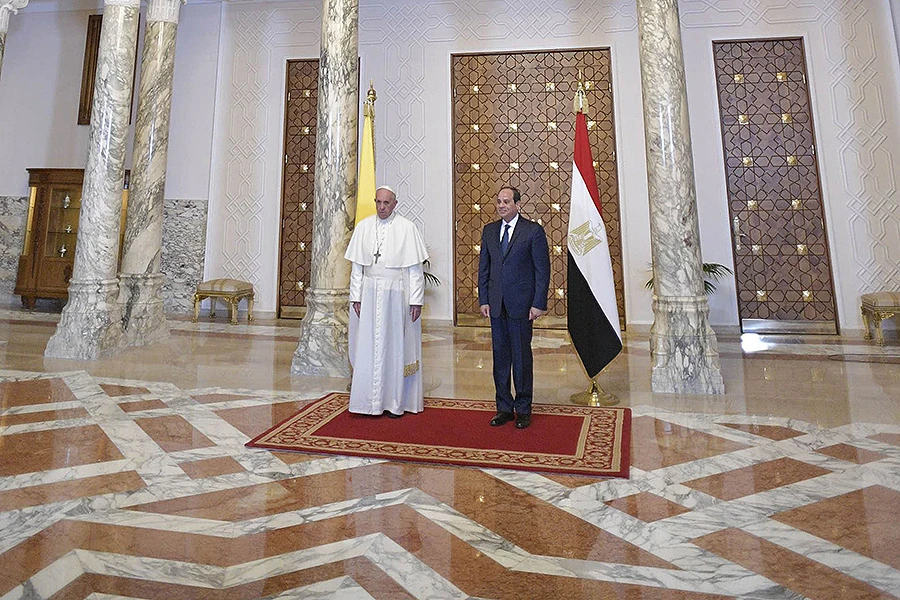
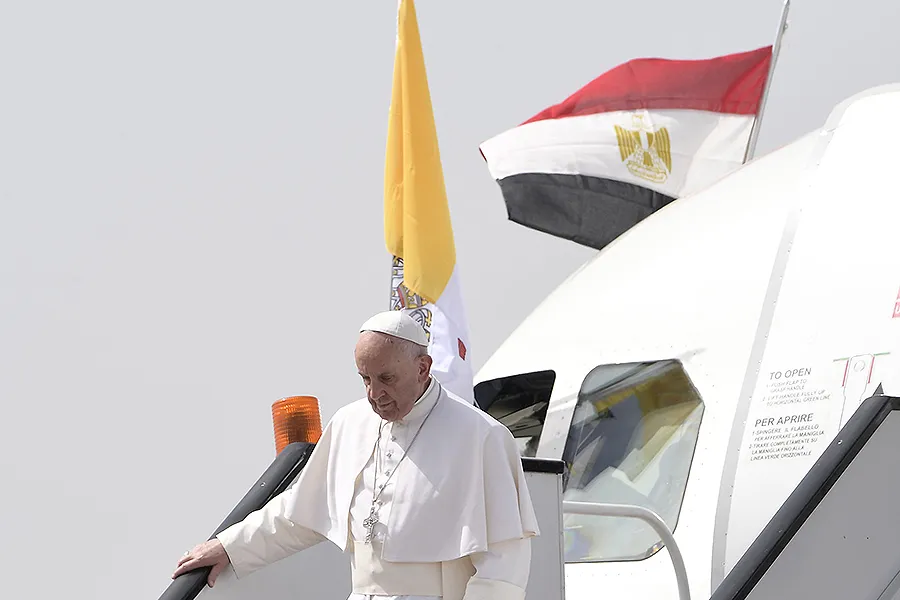
Cairo, Egypt, Apr 28, 2017 / 10:14 am (CNA/EWTN News).- Shortly after landing in Egypt on Friday, Pope Francis denounced violent fundamentalism in his speech to civil authorities, telling them they have a special role in helping quell extremism.

“Thanks to its history and its particular geographical location, Egypt has a unique role to play in the Middle East and among those countries seeking solutions to pressing and complex problems that need to be faced now in order to avoid the spread of worse violence,” the Pope said April 28.

“I am speaking of the blind and brutal violence caused by different factors: sheer desire for power, the arms trade, grave social problems and that religious extremism which uses the Holy Name of God to carry out unprecedented atrocities and injustices.”

Pope Francis spoke to political and civil authorities, including Egyptian president Abdel Fattah el-Sisi, after landing in Cairo for his two-day trip to the country.

The visit will focus largely on interreligious and ecumenical dialogue in a bid to both strengthen Catholic-Muslim relations and support Egypt’s persecuted Coptic community.

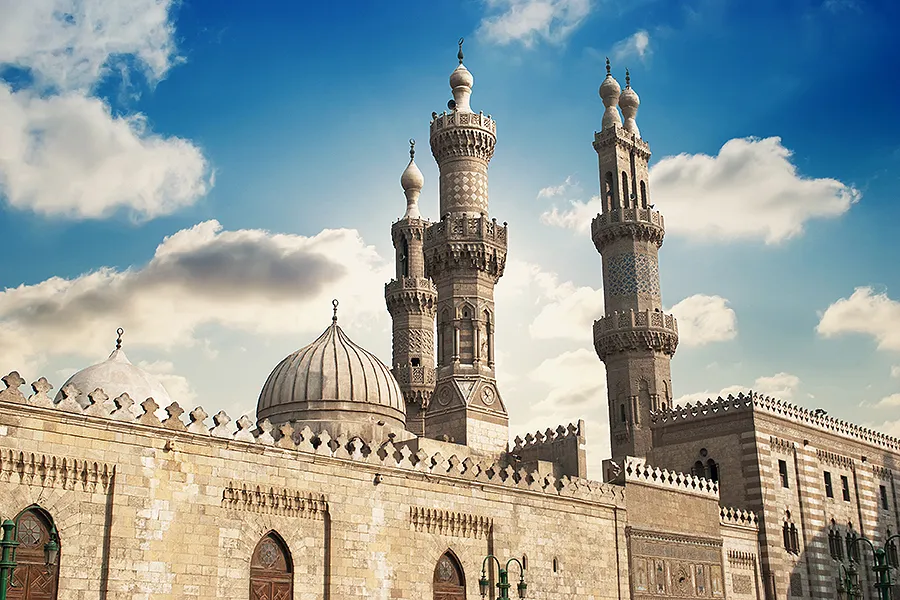
After touching down around 2 p.m. local time, the Pope stopped by the prestigious al-Azhar University and adjunct mosque, considered one of the highest authorities in Sunni Islam. There he addressed participants in the International Peace Conference before heading to his meeting with authorities.

In his speech to Egypt’s leaders, Francis voiced his gratitude for the invitation to come, saying that due to the country’s rich cultural and religious history Egypt is the misr um al-dunya, or “mother of the world,” a phrase commonly known by Egyptians.

He commented on how the Holy Family went to Egypt in order to find “refuge and hospitality” after fleeing Herod. This same hospitality, he said, can be felt by the millions of refugees from surrounding countries, including Sudan, Eritrea, Syria, and Iraq, who arrive and integrate into Egyptian society.

“This destiny and role of Egypt are also the reason that led the people to call for an Egypt where no one lacks bread, freedom and social justice,” the Pope said.

Because of this, Egypt has “a singular task, namely, to strengthen and consolidate regional peace even as it is assaulted on its own soil by senseless acts of violence.”

“Such acts of violence have caused unjust suffering to so many families – some of them are present among us – who mourn their sons and daughters,” he said, recalling the many youth, police, and Coptic citizens who have become “nameless victims of various forms of terrorist extremism.”

Among these victims, he said, are those affected by recent violence and threats that have prompted a Christian exodus from northern Sinai, and the death some 45 people killed by bombings in Tanta and Alexandria April 9.

“To the members of their families, and to all of Egypt, I offer my heartfelt condolences and my prayers that the Lord will grant speedy healing to the injured,” he said.

Pope Francis then offered his praise for various national projects aimed at building peace both within Egypt and beyond its borders, saying development, prosperity and peace “are essential goods that merit every sacrifice.”

He also spoke on the importance of keeping one’s focus on the human being above all else, because they are “the heart of all development.”

Pointing to the “fragile and complex” state of today’s world, which he has frequently dubbed a “third world war fought piecemeal,” Francis said a firm condemnation of violence is needed.

“It needs to be clearly stated that no civilized society can be built without repudiating every ideology of evil, violence and extremism that presumes to suppress others and to annihilate diversity by manipulating and profaning the Sacred Name of God,” he said, thanking el-Sisi for clearly speaking out on this.

“All of us have the duty to teach coming generations that God, the Creator of heaven and earth, does not need to be protected by men; indeed, it is he who protects them,” the Pope said, adding that God “never desires the death of his children, but rather their life and happiness.”

“He can neither demand nor justify violence; indeed, he detests and rejects violence.” The true God, he said, “calls to unconditional love, gratuitous pardon, mercy, absolute respect for every life, and fraternity among his children, believers and nonbelievers alike.”

The Pope said it is the duty of everyone, regardless of nation or religion, to unite in proclaiming that “history does not forgive” hypocrites who preach justice but practice injustice, or who talk about equality and then discard others.

“It is our duty to unmask the peddlers of illusions about the afterlife, those who preach hatred in order to rob the simple of their present life and their right to live with dignity, and who exploit others by taking away their ability to choose freely and to believe responsibly.”

Francis stressed that we are bound “to dismantle deadly ideas and extremist ideologies, while upholding the incompatibility of true faith and violence, of God and acts of murder.”

Egypt, which once saved other peoples from famine, is called “to save this beloved region from a famine of love and fraternity,” he said, explaining that this means issuing a harsh condemnation of all violence and terrorism.

By simultaneously building peace and fighting terrorism, Egypt will give proof that al-din lillah wal watan liljami (religion belongs to God and the nation to all), he said, referring to the motto of the nation’s 1952 revolution.

As the cradle of the three great monotheistic religions, the region, with the help of Egypt, the Pope said, “can and indeed will awake from the long night of tribulation, and once more radiate the supreme values of justice and fraternity that are the solid foundation and the necessary path to peace.”

“From great nations, one can expect no less!” he said, noting how this year marks the 70th anniversary of the establishment of diplomatic relations between the Holy See and Egypt.

Pope Francis voiced his hope that these relations will continue to be strengthened, particularly through his visit.

He closed with an appeal for peace, which he said is “a gift of God, but also the work of man” which must be “built up and protected.”

Offering his greetings to the various Christian groups present in Egypt, including Coptic Orthodox, Greek Byzantines, Armenian Orthodox, Protestants, and Catholics, the Pope prayed that St. Mark, who evangelized the region, would intercede for them in helping to establish unity.

“Your presence in this, your country, is not new or accidental, but ancient and an inseparable part of the history of Egypt,” he said. “You have shown, and continue to show, that it is possible to live together in mutual respect and fairness, finding in difference a source of richness and never a motive of conflict.”

[…]

No Picture
News Briefs

Pope Francis in Egypt: To kill in the name of God is blasphemy

April 28, 2017 CNA Daily News 0

Cairo, Egypt, Apr 28, 2017 / 09:22 am (CNA/EWTN News).- In his first speech in Egypt on Friday, Pope Francis denounced all forms of violence and hatred, saying that they are blasphemous when carried out in the name of God, or under the pretense of religion.

“Peace alone, therefore, is holy and no act of violence can be perpetrated in the name of God, for it would profane his Name.”

“Together, in the land where heaven and earth meet, this land of covenants between peoples and believers, let us say once more a firm and clear ‘No!’ to every form of violence, vengeance and hatred carried out in the name of religion or in the name of God,” he said April 28.

Pope Francis spoke to participants of an International Conference on Peace held at al-Azhar University as part of his April 28-29 visit to Cairo. The visit comes as the result of a recent thawing in relations between the Vatican and the university, which had been strained since 2011.

Grand Imam of the Mosque of al Azhar, Sheikh Ahmed Mohamed el-Tayyib, also spoke at the conference. He is considered by some Muslims to be the highest authority the 1.5-billion strong Sunni Muslim world and oversees Egypt’s al-Azhar Mosque and the University attached to it.

In his speech, Francis emphasized the role of religious leaders in ending violence and promoting peace, saying they are called “to unmask the violence that masquerades as purported sanctity” and is based not on “authentic openness” to God, but on selfishness.

“We have an obligation,” he continued, “to denounce violations of human dignity and human rights, to expose attempts to justify every form of hatred in the name of religion, and to condemn these attempts as idolatrous caricatures of God.”

The Pope explained that violence and faith, belief and hatred, are incompatible, asking those present to affirm this with him. “Together let us declare the sacredness of every human life against every form of violence, whether physical, social, educational or psychological,” he said.

Francis reflected on the historical value Egypt has placed on education, saying it is absolutely necessary for the future and the proper education of the next generations that they make decisions based on peace.

“To counter effectively the barbarity of those who foment hatred and violence, we need to accompany young people, helping them on the path to maturity and teaching them to respond to the incendiary logic of evil by patiently working for the growth of goodness,” he said.

In his speech, the Pope illustrated several points with symbolism taken from Mount Sinai, a mountain in Egypt believed to be the site of the biblical Mount Sinai.

Also called the “Mount of the Covenant,” Mount Sinai, he said, “reminds us above all that authentic covenants on earth cannot ignore heaven, that human beings cannot attempt to encounter one another in peace by eliminating God from the horizon, nor can they climb the mountain to appropriate God for themselves (cf. Ex 19:12).”

Mount Sinai is held to be the place where Moses received the Ten Commandments, according to both the Christian and Islamic traditions. At the center of these commandments, the Pope emphasized, “addressed to each individual and to people of all ages” is the command: “Thou shalt not kill.”

“Above all and especially in our day, religions are called to respect this imperative, since…it is essential that we reject any ‘absolutizing’ that would justify violence.  For violence is the negation of every authentic religious expression.”

Pope Francis also called out the increasing move toward secularism in society, saying that abandoning religion is not the answer to fundamentalism – religion itself holds the answer.

We are often caught between relegating religion to the private sphere or – on the other hand – not properly distinguishing between the religious and political. But religion is the antidote to a “banal and uninspired life” that has forgotten the existence of eternity, he said.

But religious faith must be “born of a sincere heart and authentic love towards the Merciful God,” otherwise it does not liberate mankind, but “crushes” it, he warned.

Continuing, Francis praised the cooperation between the Pontifical Council for Interreligious Dialogue and the Committee of al-Azhar for Dialogue for their work as a “concrete and encouraging example” of dialogue and encounter between different religions and cultures.

“National leaders, institutions and the media are obliged to undertake this urgent and grave task. So too are all of us who play a leading role in culture; each in his or her own area, we are charged by God, by history and by the future to initiate processes of peace, seeking to lay a solid basis for agreements between peoples and states,” he said.

“It is my hope that this noble and beloved land of Egypt, with God’s help, may continue to respond to the calling it has received to be a land of civilization and covenant, and thus to contribute to the development of processes of peace for its beloved people and for the entire region of the Middle East.”

[…]

The Dispatch

The Book that Made America

April 28, 2017 Danie Dreisbach 1

When asked to identify the “founding fathers,” Americans typically name a few prominent political leaders and military heroes—figures like George Washington, Thomas Jefferson, James Madison, and Alexander Hamilton. A more difficult question is: Who are […]

No Picture
News Briefs

Why the devil hates Mary – especially during exorcisms

April 28, 2017 CNA Daily News 1

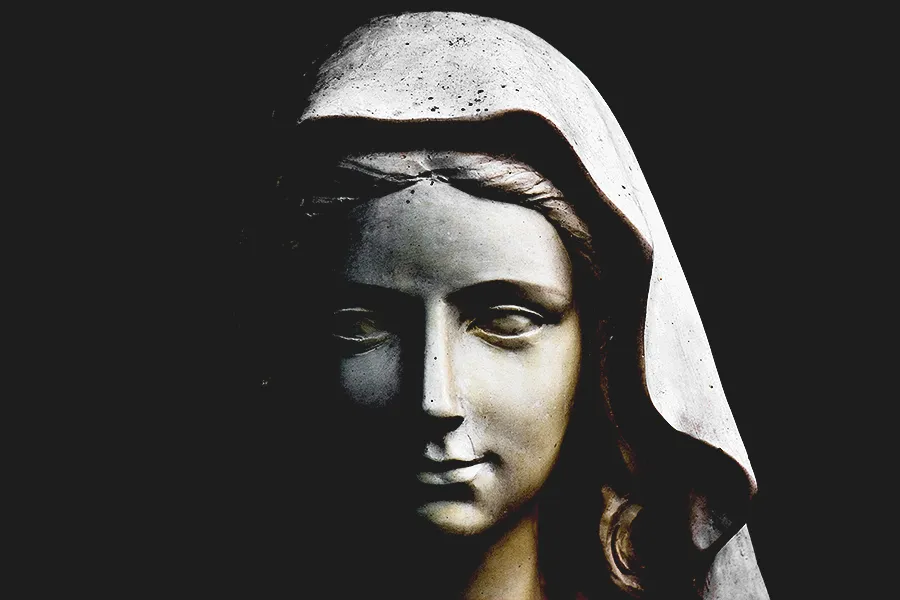
Mexico City, Mexico, Apr 28, 2017 / 03:02 am (CNA/EWTN News).- Italian priest Sante Babolin said that Satan is behind several recent attacks in various parts of the world against the Virgin Mary, noting that she is a powerful advocate for him during exorcisms.

“In my experience – so far I have performed 2,300 rites of exorcism – I can say that the invocation of the Most Holy Virgin Mary often provokes significant reactions in the person being exorcized,” he told Mexican weekly Desde la Fe.

Fr. Babolin, who also taught at the Gregorian University in Rome, said that “in face of the failure of the onslaught by non-believers, now, in order to offend and confound the Catholic people, the Virgin Mary, whom the devil hates, is being attacked.”

Desde la Fe noted the recent events of the Spanish drag queen Borja Casillas, who masqueraded as the Virgin Mary and mocked her in a performance, as well as a woman who dressed up as the Virgin Mary and simulated an abortion during a protest in Argentina.

The Italian exorcist said that “as proof of this hatred” of the devil toward the Mother of God, “while I was insistently invoking the Most Holy Virgin Mary, the devil answered me: ‘I can’t stand That One (Mary) any more and neither can I stand you any more.’”

Fr. Babolin also noted that “the Second Vatican Council declares that Mary, daughter of Adam, in accepting the divine message, became the Mother of Jesus, and embracing with her whole heart and without the hindrance of any sin the saving will of God, consecrated herself totally, as the servant of the Lord, to the person and work of her Son.”

The priest pointed out the passage in the book of Genesis – which is evoked in the Rite of Exorcism – where God says to the serpent that “she will crush your head.”  

In this ritual, he said, the exorcist says to the devil: “Most cunning serpent, you shall no more dare to deceive the human race, persecute the Church, torment God’s elect and sift them as wheat (…) The sacred Sign of the Cross commands you, as does also the power of the mysteries of the Christian Faith (…) The glorious Mother of God, the Virgin Mary, commands you; she who by her humility and from the first moment of her Immaculate Conception crushed your proud head.”

Fr. Babolin also said that “the strongest reactions” of the devil during the exorcism occur “when references are made to her apparitions.”

Because of this, he frequently pronounces the name of Holy Mary with her titles of Lourdes, Fatima or Guadalupe. In the latter case, he said, “I use this formula: ‘Holy Mary, Our Lady of Guadalupe, Queen of Tepeyac.’”

The exorcist warned that “the instrument the (the devil) normally uses to trap us is money, since it offers the possibility of satisfying the impulses that converge in pleasure and power.”

Satan “subjugates us to himself manipulating the truth and offering us his dazzling light, showing us his version of ‘freedom’ and promising us the instant gratification of our whims.”

“As far as interpersonal communication, the sense of sight overtakes the sense of hearing; and consequently the image over the word; that is to say, desire precedes reflection,” he said.

Fr. Babolin encouraged Catholics to denounce attacks on the faith as well as to organize and participate in prayer events, pray the Rosary, and participate in Masses at places where offenses were committed.

[…]

No Picture
News Briefs

Utah bishop exhorts faithful to evangelization, renewal

April 28, 2017 CNA Daily News 0

Salt Lake City, Utah, Apr 28, 2017 / 12:08 am (CNA/EWTN News).- The Bishop of Salt Lake city has urged Utah’s Catholics to be steeped in Catholic identity and to sow the Gospel’s seed within the community, leaving their comfort zone behind.

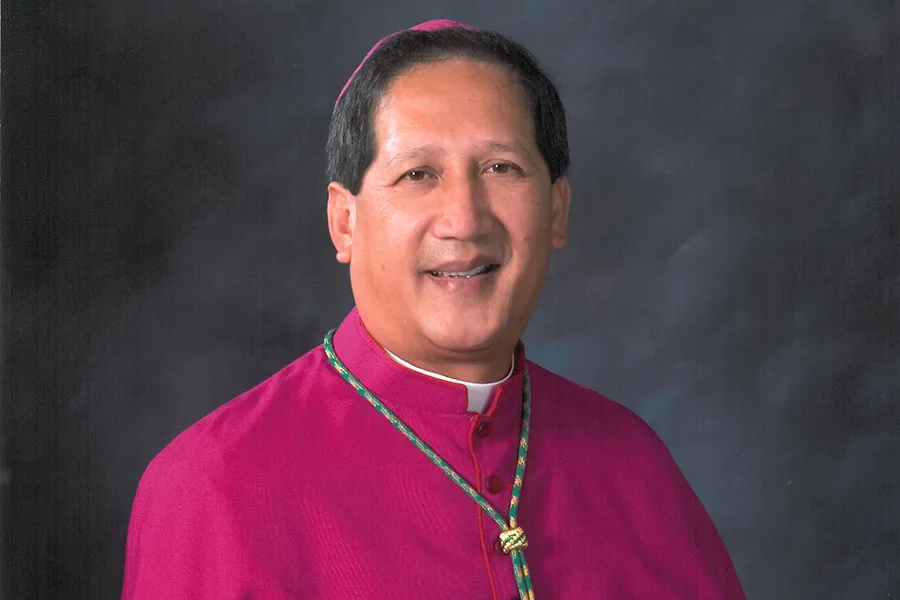
“Our Church needs more witnesses who can manifest the presence of God in our world,” Bishop Oscar Solis wrote in his April 21 pastoral letter A Springtime of the New Evangelization.

“It begins in our own conversion through personal encounter with Christ in our life. The love of God we experience compels us to go and share the joy of the Gospel and the beauty of our faith with others.”

Bishop Solis was installed as Bishop of Salt Lake City on March 7, and he is the first Philippines-born man to become a bishop in the United States.

Comparing the newness of spring to Christ’s Resurrection, the bishops challenged his diocese to spiritual rebirth and renewed commitment during the Easter season.

“The resurrection of Christ from the dead brings about new beginnings, offering an opportunity to see and experience things with our minds and hearts renewed.”

“Society today mocks our efforts to uphold the dignity of life,” said the bishop, acknowledging the “daunting task” ahead.

“I do not know, exactly, where this path will lead us,” he confessed, but said that “the mission of the Church today remains the same – to bring people closer to God in order to help them encounter Christ and rediscover the presence of God in their lives.”

Bishop Oscar Solis included an outline of priorities for the diocese to focus on, listing faith formation, Catholic identity, religious vocations, social justice, and ecumenism as necessary for the spiritual growth of the Salt Lake City diocese.

“For seeds of evangelization to grow and bear fruit, they must be planted and take root in the good soil of our parishes. Parishioners must be given the opportunity to receive the necessary formation to know, live and share their Christian faith,” he said.

Because “the present culture poses a serious challenge to the practice of our beliefs … it is necessary for every Catholic to learn more about the essential teachings of Christ and our Church,” he said. “Catechetical formation of our young children and teenagers is so important in this regard. It should bring about transformation of hearts and minds, so that they may fully live and share their faith confidently with great ardor, joy and enthusiasm.”

He explained that “we find our Catholic identity in the celebration of the Holy Mass and other Sacraments,” and these “channels of God’s graces” lead to “nourishment, forgiveness and other spiritual gifts.” He said then there must be a renewed call “for vibrant and uplifting Sunday liturgical celebrations and other forms of worship.”

“The scarcity of priests and religious is a serious concern,” he reflected, encouraging everyone to “generate greater enthusiasm in promoting vocations to the priesthood and religious life in order to attend adequately to the spiritual needs of the people. Let us cultivate vocations within the family and in schools accompanied by constant prayers of petition, invitation and witness of our life so that more men and women may be inspired to pursue this path of life.”

He said that “beyond knowing Christ and learning about God’s commandments and the teachings of the Church,” we must establish “a right personal relationship with God and with one another.”

“Justice and charity are the other important components of our mission of evangelization. Love for our neighbors and little ones reveals our love for God. Justice sets the right relationship among people that allows us to see in others, in the poor, the unemployed, the addicts, the sick, the least in our society, the undocumented and the refugees, the very face of Christ.”

Turning to ecumenism and interreligious dialogue, Bishop Solis encouraged a fostesring of “dialogue and encounter,” saying that “Courage and fidelity to our mission come along with mutual respect, understanding and harmony among diverse people and leaders of different faith denominations. Commitment to ecumenism, dialogue and unity is our big contribution to the world and humanity.”

The bishop identified the hatred within the world occurring between differences in “race or cultural traditions, religion or politics, gender and color of skin.” As an antidote, he proposed “dialogue tempered with charity that allows us to recognize” the dignity of life in refugees, unborn babies, the poor, and the suffering.

Bishop Oscar Solis emphasized that the Church’s very purpose is “to proclaim the Gospel by the way we believe, love and serve one another,”

“Therefore, we must not make the mistake of trying to hoard the fullness of God’s goodness within the walls of our Church. But be missionaries of mercy with compassionate hearts and the ability to heal wounds, to warm the hearts of others and be a brother or sister to one another.”

[…]

No Picture
News Briefs

Vatican praised, cautioned on dialogue with al-Azhar university

April 28, 2017 CNA Daily News 0

Rome, Italy, Apr 27, 2017 / 09:01 pm (CNA/EWTN News).- A leading scholar in the Arab world has applauded the goodwill of both the Vatican and the prestigious Islamic al-Azhar university Pope Francis will visit for aiming to increase Catholic-Muslim dialogue.

But she also issued a warning that goodwill isn’t enough for things to change.

“Dialogue is good, generally any dialogue is good. Any kind of debate and any steps to show goodwill, to show a commitment, to show a recognition of the other in principle is very good,” Mariz Tadros told CNA in an interview.

However, “the extent to which this will translate into a change in eliminating or reducing the appeal of militant Islam, that’s what I’m questioning.”

Tadros, who spoke over Skype from the U.K., is an author and scholar on persecution in the Arab world. She is currently a fellow at the Institute of Development Studies at Sussex University in the U.K.

She spoke ahead of Pope Francis’ April 28-29 visit to Cairo, where he is set to meet with Coptic Pope Tawadros II and the Grand Imam of the Mosque of al Azhar, Sheikh Ahmed Mohamed el-Tayyib, as well as Egypt’s president Abdel Fattah el-Sisi and the bishops of the local Catholic Church.

His visit comes as the result of a recent thawing in relations between the Vatican and the al-Azhar University, which had been strained since 2011. The imam of al-Azhar is considered by some Muslims to be the highest authority the 1.5-billion strong Sunni Muslim world and oversees Egypt’s al-Azhar Mosque and the prestigious University attached to it.

Dialogue picked up between the two after el-Tayyib visited the Vatican in May 2016 with a message condemning the acts of Islamic fundamentalism, culminating a year later in the Pope’s visit to Egypt this weekend.

However, in addition to the heightened prospect for dialogue, the trip will also have an inevitable undertone of the very real risks Christians still face in Egypt, particularly from extremist factions of militant Islam.

While Catholic-Muslim dialogue has picked up over the past year, so have attacks against Coptic Christians.

According to His Grace Bishop Angaelos, general bishop of the Coptic Orthodox Church in the United Kingdom, there have been at least 40 reported murders of Christians in Egypt in the past four months alone.

In February 2015, Egyptian society was shocked by the grisly beheading 20 Orthodox Coptic faithful in Libya carried out by ISIS, the video of which was circulated online. The extremists have also claimed responsibility for several other high-profile attacks, including a bombing at St. Mark’s Coptic Orthodox Cathedral in Cairo in December that killed 29 people.

Most recently, ISIS claimed responsibility for twin bombings in Tanta and Alexandria April 9 that left some 45-people dead. The blasts took place on Palm Sunday, one of the holiest days in the Christian calendar commemorating Jesus’ entrance into Jerusalem before his Passion and Death.
 
With these attacks looming closely in the rear-view mirror, many are asking whether the Pope’s attention to dialogue with Islam, particularly his relationship with al-Azhar and his trip to Egypt, will make a difference.

The debate surrounding al-Azhar

According to Tadros, the prospect of any dialogue is good and shouldn’t be discouraged. However, she cautioned that despite the well-intentioned gesture of meeting with the Pope and cementing good relations with the Holy See, there is still cause for concern regarding al-Ahar – particularly the university’s duplicitous curriculum.

“When we look at institutions such as al-Azher, there have been many Egyptian non-Islamist Muslims, very progressive Muslims, who have sought to hold al-Azhar accountable for the duality of its discourse,” she said.

On one hand, “al-Azhar will sit with you and say we love you, we care for you, we’re all one citizenship, we’re all one people.” But on the other hand, “if you look at the syllabi, what they are teaching the generations of scholars that graduate from that university about the religious other, it is horrendous.”

What they are teaching is “undoubtedly a message that these are infidels, and at best they should be tolerated and at worst, killing them is not such a travesty.”

If one actually looks at what comes out of al-Azhar, “there’s a massive, massive disconnect between the public discourse and what is being taught to people across the country,” she said, explaining that there have been several moderate Muslim activists who have called on the university to reform their syllabi, including a man who was jailed for his activism, but who has recently been released.

While al-Azhar is seen by many militant Islamic groups as lacking legitimacy for not following the “right path” of Islam, others have criticized the university for failing to speak out strongly enough when condemning extremist groups such as ISIS.

Many have asked al-Azhar to put their money where their mouth is, so to speak, and declare ISIS as “un-Islamic.” In short, it’s no longer good enough to simply condemn what they are doing, but the entity itself must be recognized as not being faithful to the Muslim religion.

“As a Christian you can tell me, ‘if you lie that is not consistent with Christianity,’ but you are not telling me, ‘for shooting people in the name of Christianity, you no longer belong to Christianity.’ Do you see the difference?” Tadros said.

But when it comes to Al-Azhar, they have “consistently cowed away from declaring ISIS as not part of the Islamic community.”

Although some might say making such a declaration is playing into the game of name-calling and labeling one another as infidels, Tadros stressed that “unless you tell the broader international community that those who kill and maim and commit genocide in the name of Islam no longer are part of the Islamic community, they do not have the right to claim themselves as Muslim,” nothing will change.

That, she said, is “a very different story and they have cowed away from doing that.”

Tadros clarified that she is “in no way” saying that dialogue between Pope Francis and al-Tayeeb isn’t good or that it shouldn’t happen. “All I’m saying is let’s not count on that as a way of making militant Islam less appealing.”

She stressed that there are “a lot of Muslims” that have shown solidarity with Christians in Egypt, including speaking out on their behalf after the most recent bombings earlier this month, proving that not all Muslims espouse the radical views of ISIS or other like-minded branches.

However, while not all Muslims are extremists, she said history has proven that no matter how much dialogue is done, fundamentalism will never entirely disappear from Islam.

When asked if she thought this was a realistic eventual outcome of the dialogue between the Vatican and al-Azhar, she said “absolutely not.”

“I think that is the biggest myth that exists in the West and it’s a myth that history has dispelled and is it a myth, the perpetuation of which, only serves to increase the vulnerability of religious minorities in the Middle East. In fact, I would say it directly contributes to it.”

The growing threat of militant Islam “is one that we should not take lightly,” she said, “because they are networked.”

“Even though organizationally they follow different leaders, there are links between them, they are well-resourced, they are recruiting people globally from around the world, and they represent an existential threat to Christians and religious pluralism and all kinds of pluralism in the region.”

So while the importance of dialogue as an expression of finding common values and forging friendships across religions should be appreciated, it should only be valued to the extent that true goodwill and respect for the religious other result, she said.

“But I do support those who challenge their effectiveness in making militant Islam more appealing or undermining its power and influence and implications for Christian minorities.”

A history of persecution

Christian persecution has happened on and off for centuries in Egypt, but this intolerance recently spiked in the 1970s under President Anwar Sadat, who empowered radical Islamists, but was assassinated by fundamentalist army officers in 1981.

A period of higher tolerance ensued after Sadat’s death, but attacks targeting Christians picked back up during the Egyptian Revolution of 2011.

The 2011 revolution, part of the Arab Spring, had overthrown Hosni Mubarak, a military officer who had been Egypt’s president since 1981. The following year Morsi, of the Islamist movement the Muslim Brotherhood, became the first democratically elected Egyptian president.

On July 3, 2013, Egypt’s military ousted Morsi, and in August began a crackdown on the Muslim Brotherhood. Violence then spread across the country, with Islamists killing hundreds of people from August to October. Churches were vandalized, burned, and looted, as were the homes and businesses of Christians.

In January 2014, the interim government approved a new constitution, leading to the May 2014 election of Abdel Fattah el-Sisi as the country’s new president. The elections were boycotted by the Muslim Brotherhood as well as other political groups.

Tadros explained that part of the chaos after the revolution was due to “a complete breakdown in public safety and law and order” in which police left the streets and organized groups of “thugs” took over, meaning public safety was no longer a guarantee.

With a lack of secure borders given the crisis in Egypt and the collapse of nearby Libya, extremists became emboldened, and began smuggling and trading weapons with greater confidence and ease.

Radical Islam also began to take on different forms in this time, Tadros said, explaining that whereas previously terrorists were homegrown and committed smaller acts of violence, the rise of factions such as ISIS looking to impose maximum damage through suicide bombs is new.

“The fact that ISIS is now a player is a game-changer,” she said, explaining that with an increase in deadly attacks, there is greater need for security. However, she voiced doubt that the current state of emergency declared by el-Sisi in wake of the April 9 bombings will be effective in terms of protecting Copts.

From a scholarly and historic point of view, emergency law has done nothing, she said, noting that it was implemented by both Mubarak and Morsi when they were in power, “and in both cases it was not conducive to the well-being of the Egyptian population in general.”

Since his election el-Sisi has been praised for receiving representatives from both the Orthodox and Catholics, as well as Protestants.

However, even though the situation has “officially” improved under el-Sisi, who has said and done the right things, Tadros said the improvement is due not so much to el-Sisi’s efforts as it is to the fact that Morsi was driven from power.

“The situation under el-Sisi is very complicated, because on the one hand there is an improvement in the Copts’ everyday experience. Not directly as a consequence of any of el-Sisi’s policies by any stretch of the imagination, but it is an unintended outcome of ousting Morsi,” she said.

“Never in the modern history of the Copts have they been such a target of militant targeting as they are today,” she said, explaining that if fundamentalists want to target Copts, there is realistically little that can be done to stop them.

How can Christians be helped?

With Christians in Egypt increasingly becoming a target of systematic violence and a bleak prospect of effective help from the government, Tadros suggested several things that can be done now to help the 9 million-strong Coptic community in Egypt.

First, “security is crucial,” she said, explaining that the ability to ensure basic protection of schools, places of worship such as churches and monasteries, and faith-based organizations, “is extremely important.”

Another essential help is “drying out the sources of funding,” Tadros said, noting that currently “we do have a problem with Saudi Arabia, Qatar and other Arab countries funding Islamist movements.”

“They have to be named and shamed, and even if it goes to the point of economic sanctions against any country that funds Islamist movements, that would significantly help the Christians,” she said, adding that this is “one of those unintended outcomes: if you remove their sources of income, they can’t buy arms, and therefore their ability to strike is significantly decreased.”

A third option Tadros mentioned is the growth and promotion of solidarity among the different churches in the region. As an example, the scholar noted how Pope Francis called Coptic Pope Tawadros personally to offer his sympathies after the April 9 attacks.

“We need to see more of that,” she said, stressing the need for Christians of all rites and practices to band together, because “divided we fall, united we’re strong.”

Finally, she pointed to the importance of raising awareness in international Christian communities of the “existential threat” that Christians in the Middle East face.

“We’re no longer talking about what we saw in Egypt four or five years ago where it’s a number of Muslim mobs burning a number of houses,” she said. “We are now talking about a broader, new strategic plan to eliminate Christianity from the region.”

The global community, she said, needs to “raise awareness and sensitize their congregations of the need to support the churches in the Middle East” in various ways, such as through prayer and concrete initiatives that will help those who have lost everything to rebuild their lives.

Another important aspect is “strengthening local Christian civil society,” she said, “because sometimes Church leadership, such as in the case of Egypt, find themselves in a position where they can’t come out and criticize governments, there’s too much at stake.”

“So you need Christian civil society that play the role of monitoring the situation, raising alarm bells when they see signs of genocide and of strengthening local initiatives.”

Holding governments accountable is also part of the equation, she said, sometimes by “criticizing the government, and sometimes mobilizing against government policy if it’s not going to be conducive to citizenship.”

[…]