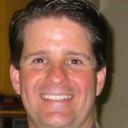
John Coverdale is a law professor at Seton Hall University Law School in New Jersey and has been an Opus Dei numerary (celibate member) for more than 50 years. He worked for Opus Dei in Rome from 1960-1968 and had regular contact with St. Josemaria Escriva, the founder of Opus Dei.
Coverdale wrote Uncommon Faith: the Early Years of Opus Dei, and is considered the leading American expert on Escriva’s life and work. He was contacted for input for the 2011 film There Be Dragons, which he said offered a “quite accurate” depiction of Escriva.
May 17 will mark the 20th anniversary of Escriva’s beatification, and the 10th anniversary of his canonization is this coming October. In light of these coming events, Coverdale reflected on his time as a member of Opus Dei, and shared stories of its founder.
 CWR: How did you get involved with Opus Dei?
John Coverdale: I lived in Milwaukee in the mid-1950s, at the time when Opus Dei was first getting started there. At the invitation of a friend, I began attending Opus Dei activities. Although the events were held in modest homes in not-particularly-nice neighborhoods, the priests and people I met had an attractive faith, which I found appealing.
Like most Catholic organizations, Opus Dei had a world headquarters in Rome. I studied…there, and earned a degree in philosophy from the Pontifical Lateran University. After I completed my studies, I was asked to work in our public relations office, and I agreed.
CWR: How did you get to know St. Josemaria, and what was he like?
Coverdale: I saw him at the public relations office daily. I found him to be a man of great faith, who loved God, loved Our Lady and those around him. He had a great personal concern for each person with whom he interacted, which surprised me, considering that we were a large international organization.
He was also quite funny. It wasn’t so much that he told jokes, but had that particular turn of phrase or lifting of the shoulders and eyebrows that could get the room laughing. If you watch old movies of him talking to groups, you’ll notice that people laugh a lot.
CWR: And didn’t he remain cheery despite having some significant health problems?
Coverdale: Yes. He had severe diabetes for 15 years, which gave him terrible headaches, and made him thirsty and weak. It culminated in one instance when the doctors changed the insulin he was receiving. After receiving an injection, he went down to join his community for dinner, but was physically overcome. During his attack, he saw Msgr. Alvaro del Portillo—or “Don Alvaro,” the man who would become his successor—and cried out “Alvaro, absolution!”
St. Josemaria thought he was dying and was requesting absolution. As Don Alvaro gave it to him, St. Josemaria fell to the floor and lost consciousness for 15 minutes. When he woke up, he didn’t have diabetes anymore. The doctors were amazed.
CWR: Was it a miraculous cure?
Coverdale: St. Josemaria never used the word miraculous. But his doctors said such a cure was unheard of. Josemaria wasn’t one for talking about miracles, despite the fact that there were many special interventions of God in his life. In fact, when Pope John Paul II canonized him 10 years ago, he referred to him as “the saint of ordinary life.”
What were some of the unique challenges St. Josemaria had to overcome in his life?
Coverdale: The first was overcoming hostility to his basic message, the universal call to sanctity. Today, it’s enshrined in the documents of the Second Vatican Council and considered to be a standard part of Church teaching. But in the early days of Opus Dei, many people did not accept this idea. Some thought it heretical. One convent in Barcelona burned his book, The Way. People thought if you really took your religion seriously and wanted to be close to God, you had to become a priest or religious.
Josemaria’s bishop in Madrid, however, defended Opus Dei. Josemaria warned him that his support for Opus Dei would cost him a promotion, becoming archbishop of Toledo and Primate of Spain. The bishop replied, “Josemaria, what I risk losing is my soul. I will not cease defending you.” He never received the promotion.
While some rejected Josemaria’s ideas altogether, others found The Way too challenging, and would leave. Josemaria would say, “They slip through my fingers like eels in the water.”
And the Spanish Civil War (1936-39) came along, and the few people he had were dispersed. Some were killed.
After the war ended, Josemaria again faced severe criticism and even calumny. People went to the families of Opus Dei members and warned them that their child who was a member was going to lose his soul.
He had no money. There was a struggle to find a place for Opus Dei in the Church’s legislation. There wasn’t a provision for those who dedicated their lives to God, sought sanctity, and received special formation, but [were not] priests or religious. He never found a satisfactory solution during his lifetime.
CWR: And the establishment of Opus Dei as a personal prelature 30 years ago was the solution?
Coverdale: Yes. It fits what we are. But at that time, personal prelatures didn’t exist.
Previous legislative solutions that Josemaria had to accept were more suitable to organizations such as the Holy Name Society or Knights of Columbus. These are good groups, but don’t require a vocation or special formation. They can’t have priests of their own.
Other formulas categorized us legislatively close to religious orders. While we have great love and respect for religious orders and their members, that’s not our vocation. Our vocation is to sanctify the world from within, not to renounce the world.
The personal prelature represents a grouping within the Church of people who are priests and laymen, but not called to be religious. We’re currently the only one. We would be delighted if there would be other personal prelatures, because what St. Josemaria wanted was to fit into the normal life of the Church and not be an exception.
CWR: What did St. Josemaria do during the Spanish Civil War?
Coverdale: Seven thousand priests and religious, most of whom were living in and around Madrid, Barcelona, and Aragon, were killed during the war. Many of Josemaria’s friends were among those who died. So, he went into hiding.
However, after a time, he felt compelled to reemerge into the world and exercise his ministry as a priest. He fled the Republican areas of Spain, crossed the Pyrenees mountains into France, then returned to the Nationalist areas of Spain under control of General Franco. There you were allowed to practice your religion.
CWR: Was he friends with Franco?
Coverdale: He was concerned about the souls of all, whether it be Franco or a street-sweeper. He was not close with Franco, but did meet with him on several occasions. Josemaria was careful to keep politics out of Opus Dei. I recall, for example, an incident when I was living in Rome. Juan Carlos, the man who is the King of Spain today, came with his father to visit Josemaria. Josemaria had a reception for the future king, and about 10 of us Opus Dei members participated. But Josemaria deliberately excluded any Spanish Opus Dei members from the gathering, as he didn’t want to be seen as trying to influence the political views of its members.
CWR: But there was much anti-Catholic violence during the Spanish Civil War.
Coverdale: Yes. The Republican or anti-Franco side was made up of different contingents. Some were classic liberals in the English sense, some socialists, some communists, and some anarchists. They all had in common an anti-Catholic, anti-clerical bent. Even before the war broke out, there had been violence toward the Church.
CWR: The 1960s brought much turbulence to the Church. Did Josemaria always remain faithful to Church leadership? How did he react to Vatican II?
Coverdale: He was absolutely loyal to the pope and his bishop, and insisted Opus Dei members be, too.
He did have some trouble adjusting to the changes in liturgy that came after Vatican II. Things were removed in the new rite which, for him, expressed piety and love of God. But for him, the Mass was terribly important. He put his heart and soul into it, and had been using a particular form for 40 years. He also sought out the best he could in terms of chalices and sacred vessels. He said, “Men give diamonds and pearls to the women they love, I will give my God the best I can.”
Although he didn’t ask for it, permission was given for him to celebrate the Tridentine Mass for the rest of his life.
CWR: Have you been pleased with Opus Dei’s growth during your lifetime?
Coverdale: Yes. Would I have liked it to have been a lot faster? Of course. Would I like there to be many more members? Yes. But we have to go at God’s pace, not mine.
I’m pleased to have seen it grow and expand in my lifetime to many new countries, including some of which, like Kazakhstan, that I’d never heard of. The story was that the bishop of Kazakhstan was making his ad limina visit with Pope John Paul II. The bishop was down about all the problems he was having, and the Holy Father said, “You should have Opus Dei in your diocese.”
The bishop admitted he didn’t know what Opus Dei was. At the Pope’s suggestion, he visited our headquarters and spoke to the man who was our prelate at the time, Msgr. Alvaro del Portillo. The bishop of Kazakhstan told Don Alvaro about his discussion with the Holy Father, and Don Alvaro said, “We’re going.”
Kazakhstan wasn’t on anybody’s list of countries to which we wanted to go. But if the Pope wanted it, that was good enough for us.
If you value the news and views Catholic World Report provides, please consider donating to support our efforts. Your contribution will help us continue to make CWR available to all readers worldwide for free, without a subscription. Thank you for your generosity!
Click here for more information on donating to CWR. Click here to sign up for our newsletter.