No Picture
News Briefs

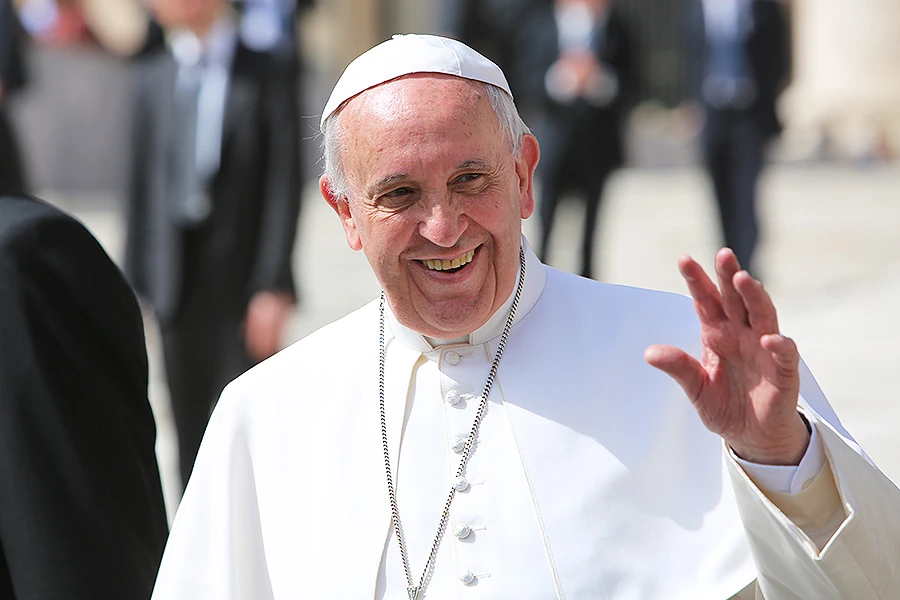
Commentary: Reading Pope Francis in love

April 9, 2018 CNA Daily News 13

Denver, Colo., Apr 9, 2018 / 11:43 am (CNA).- In his first homily as pope, Francis quoted Leon Bloy, the French convert, author, and mystic who has influenced some of modernity’s most significant literary voices. Gaudete et exsultate, the pope’s newly released apostolic exhortation, again turns to Bloy, invoking the writer’s famous observation that “the only great tragedy in life is not to become a saint.”

Bloy was right, of course, and most of the pope’s readers are likely disposed to agree with him. But there is another Bloy quote that readers of Gaudete et exsultate would do well to keep in mind: “Love does not make you weak, because it is the source of all strength.”

Gaudete et exsultate was certainly written with love: whatever one thinks of Pope Francis, there is ample evidence that he loves the Church, and he loves her members. It ought to be read in love as well. But before the document was even released, a predictable fractioning of the Lord’s body foretold the way the exhortation would likely be read: through the lenses of suspicion and criticism that have characterized much of the debate about Pope Francis.

Unsurprisingly, early responses to the exhortation have followed a familiar pattern.

Those who are sometimes critical of the pope have noted that the text lacks any mention of chastity, and complained that it seems to have an antinomian or anti-intellectual bent: criticizing those with “a punctilious concern for the Church’s liturgy, doctrine and prestige,” and taking special pains to condemn intellectual arrogance. Their response, in a few lamentable cases, has been the established refrain of Francis-bashing, which colors and discredits the legitimate questions being asked about many of the pope’s initiatives.   

Some of the pope’s progressive defenders have snapped up those same passages, seeming to revel in certitude that the pope must be talking about their “conservative” counterparts, and brandishing his words like weapons. They’ve also found consolation, and claimed bragging rights, in the passages of the pope’s exhortation that call for solidarity with migrants, claiming penumbras of endorsement for the “seamless garment” approach to the Catholic social teaching.

Doubtless, on Twitter, Facebook, and in some blogs and journals, these two camps will volley fire with newfound ammunition in their battle over Francis, and their war for the Church.

But all of that misses the point. In fact, all of that defies the point. Francis’ exhortation proposes that charity is the heart of holiness- a proposal that echoes his recent predecessors, and more important, echoes the words of Jesus. If Catholic leaders and pundits can’t receive an exhortation in charity, and discuss it in charity, then the need for the document is more profound than most of us care to admit.

As with all of Francis’ documents, Gaudete et exsultate contains ambiguous passages, which lend themselves to misinterpretation and misappropriation. It paints with a broad brush, and it is not systematic. This is frustrating. And sometimes, it stings.

But the document is an exhortation. It is written to exhort us.

“What follows is not meant to be a treatise on holiness, containing definitions and distinctions helpful for understanding this important subject, or a discussion of the various means of sanctification,” Francis wrote. “My modest goal is to repropose the call to holiness in a practical way for our own time, with all its risks, challenges and opportunities. For the Lord has chosen each one of us ‘to be holy and blameless before him in love.’”

The document is meant to call us sinners to repentance and conversion. To call the lukewarm- most of us- to holiness. Not all parts are relevant to all Catholics; it fails to mention some patterns of sinfulness altogether. It is written by a fellow sinner, and the author’s humanity, foibles and all, show through the text. But it’s written in love. Which means that we should receive it by examining our own hearts, to find the places where the exhortation exhorts us.

An exhortation like this should be received in quiet and penitential humility. If we’re second-guessing it, armchair-quarterbacking the things it should have said, we’ve missed the point. If we’re using it to smite our enemies, we’ve missed the point. If it leads us away from love, the biggest problem is with us, and not with the text.

“Let us ask the Holy Spirit to pour out upon us a fervent longing to be saints for God’s greater glory, and let us encourage one another in this effort,” Francis writes.

Let’s receive Gaudete et exsultate as it’s written. Let’s be strengthened by love- from the pontiff, from one another, and from the Lord. Let’s put aside the arguments for the moment, and ask the Lord to help us be the saints he calls us to become.  

[…]

No Picture
News Briefs

Pope Francis issues exhortation praising the “middle class” of holiness

April 9, 2018 CNA Daily News 2

Vatican City, Apr 9, 2018 / 09:56 am (CNA/EWTN News).- Pope Francis released an apostolic exhortation in which he aims to “repropose” the universal call to holiness – which he says is the mission of life for every person.

Published April 9, Gaudete et exsultate, or “Rejoice and be glad,” is Francis’ third apostolic exhortation. It is subtitled “On the call to holiness in the contemporary world.”

The 44-page exhortation explains that holiness is the mission of every Christian, and gives practical advice for living out the call to holiness in ordinary, daily life, encouraging the practice of the Beatitudes and performing works of mercy.

Francis mentioned the holiness “in those parents who raise their children with immense love, in those men and women who work hard to support their families, in the sick, in elderly religious who never lose their smile. In their daily perseverance I see the holiness of the Church militant. Very often it is a holiness found in our next-door neighbours, those who, living in our midst, reflect God’s presence. We might call them ‘the middle class of holiness.’”

Francis said that all Catholics that, like the saints, “need to see the entirety of your life as a mission,” and explained that this is accomplished by listening to God in prayer and asking the Holy Spirit for guidance in each moment and decision.

“A Christian cannot think of his or her mission on earth without seeing it as a path of holiness,” he stated, explaining that this path has its “fullest meaning in Christ, and can only be understood through him.”

Using the words of Pope Emeritus Benedict XVI, Francis wrote that “holiness is nothing other than charity lived to the full.” As a result, the measure of our holiness stems not from our own achievement, but “from the stature that Christ achieves in us.”

Therefore, Pope Francis said, to walk the path of holiness requires prayer and contemplation alongside action; the two cannot be separated.

The pope also touched on what he calls the “two enemies of holiness” – modern versions of the heresies of Pelagianism and Gnosticism, saying that these lead to “false forms of holiness.”

In the modern form of Gnosticism, Francis said, one believes that faith is purely subjective, and that the intellect is the supreme form of perfection, not charity.

This can lead Catholics to think that “because we know something, or are able to explain it in certain terms, we are already saints,” he said, when really, “what we think we know should always motivate us to respond more fully to God’s love.”

In contemporary Pelagianism, he said the common error is to believe that it is by our own effort that we achieve sanctity, forgetting that everything in fact “depends not on human will or exertion, but on God who shows mercy (Rom. 9:16).”

The pope explained that “the Church has repeatedly taught that we are justified not by our own works or efforts, but by the grace of the Lord, who always takes the initiative,” and that even our cooperation with the gift of divine grace is itself “a prior gift of that same grace.”

Some may be asked, through God’s grace, for grand gestures of holiness – as can be seen in the lives of many of the saints, Francis said – but many people are called to live the mission of holiness in a more ordinary way, and in the context of their vocation.

However large or small one’s call seems, Francis said that acts of charity are always undertaken “by God’s grace,” not as people “sufficient unto ourselves, but rather ‘as good stewards of the manifold grace of God’ (1 Peter 4:10),” he said.

The pope offered several practical recommendations for living out these “small gestures.” In addition to the frequent reception of the sacraments and attendance at Mass, he said that in the Beatitudes Jesus explains “with great simplicity what it means to be holy.”

He also said that a way to practice holiness is through the works of mercy, though he warned that to think good works can be separated from a personal relationship with God and openness to grace is to make Christianity into “a sort of NGO.”

The saints, on the other hand, show us that “mental prayer, the love of God and the reading of the Gospel” in no way detract from “passionate and effective commitment to their neighbors.”

The pope highlighted several qualities he finds especially important for living holiness in today’s culture, including: perseverance, patience, humility, joy, a sense of humor, boldness, and passion.

Boldness and passion, he said, are important in order to avoid despondency or mediocrity, which he said can weaken us in the ongoing spiritual battle against evil.  

In the journey toward holiness, “the cultivation of all that is good, progress in the spiritual life and growth in love are the best counterbalance to evil,” he said, emphasizing that the existence of the devil is not a myth or an abstract idea, but a “personal being that assails us.”

“Those who choose to remain neutral, who are satisfied with little, who renounce the ideal of giving themselves generously to the Lord, will never hold out” against temptation, he stated.

“For this spiritual combat, we can count on the powerful weapons that the Lord has given us: faith-filled prayer, meditation on the word of God, the celebration of Mass, Eucharistic adoration, sacramental Reconciliation, works of charity, community life, missionary outreach,” he listed.

About the importance of prayer on the path to holiness, the pope said that though “the Lord speaks to us in a variety of ways, at work, through others and at every moment… we simply cannot do without the silence of prolonged prayer.”

“Naturally, this attitude of listening entails obedience to the Gospel as the ultimate standard, but also to the Magisterium that guards it,” he stated, “as we seek to find in the treasury of the Church whatever is most fruitful for the ‘today’ of salvation.”

Cardinal Daniel DiNardo, president of the United States bishops’ conference, praised the exhortation in a statement released Monday, saying: “In this exhortation, Pope Francis is very clear – he is doing his duty as the Vicar of Christ, by strongly urging each and every Christian to freely, and without any qualifications, acknowledge and be open to what God wants them to be – that is ‘to be holy, as He is holy’ (1 Pet 1:15). The mission entrusted to each of us in the waters of baptism was simple – by God’s grace and power, we are called to become saints.”

[…]

No Picture
News Briefs

Pope: Relationship with Jesus is our own personal love story

April 8, 2018 CNA Daily News 0

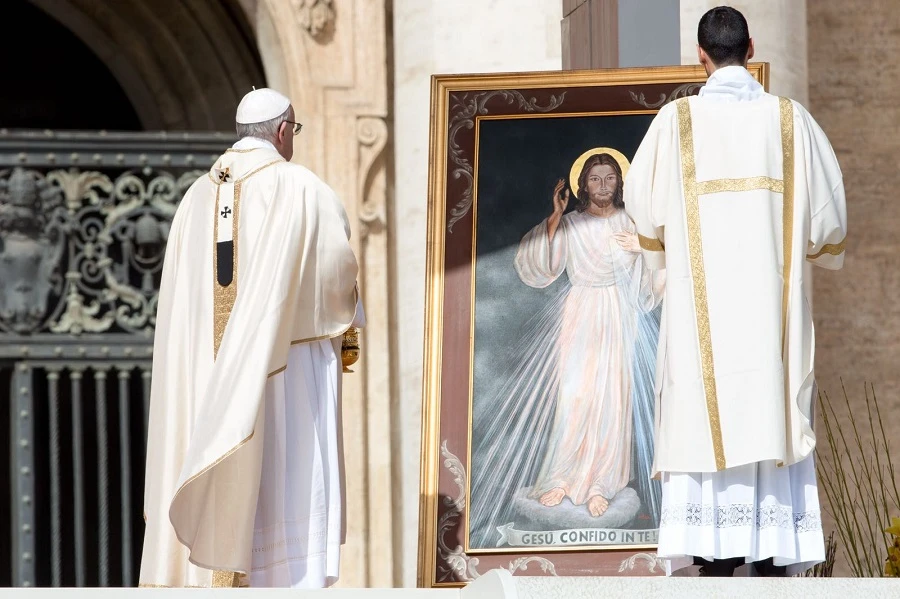
Vatican City, Apr 8, 2018 / 04:20 am (CNA/EWTN News).- On the Second Sunday of Easter, also known as Divine Mercy Sunday, Pope Francis said that our relationship with God is a personal one, filled with his love and mercy, where we proclaim like St. Thomas: “My Lord and my God!”

“To enter into Jesus’ wounds is to contemplate the boundless love flowing from his heart. It is to realize that his heart beats for me, for you, for each one of us,” the pope said April 8.

“Just like in a love story, we say to God: ‘You became man for me, you died and rose for me and thus you are not only God; you are my God, you are my life. In you I have found the love that I was looking for, and much more than I could ever have imagined.’”

Francis reflected on St. Thomas’ exclamation in the Gospel of John during his homily for Mass for Divine Mercy Sunday in St. Peter’s Square. He pointed out that it may feel strange at first to say “my Lord and my God.”

But he noted how God himself said, at the beginning of the Ten Commandments: “I am the Lord your God” showing that he desires a personal relationship with each one of us, to be possessed by us, just like a jealous lover.

The Mass also marked the start of an April 8-11 meeting in Rome of some-600 Missionaries of Mercy, who were first commissioned on Ash Wednesday 2016 during the jubilee. Their mandate was extended by Pope Francis at the close of the holy year and the meeting is focused on spiritual formation and fellowship-building.

“As today we enter, through Christ’s wounds, into the mystery of God, we come to realize that mercy is not simply one of his qualities among others, but the very beating of his heart,” Francis said.

“Then, like Thomas, we no longer live as disciples, uncertain, devout but wavering. We too fall in love with the Lord! Don’t be afraid of this word, in love with the Lord!”

How can we savor this love that Jesus bestows on us? How can we touch his mercy with our own hand? the pope asked. First, he said, is through the Sacrament of Confession, where we let ourselves be forgiven by God.

Francis outlined three roadblocks we put up in our hearts about confession: shame, discouragement, and believing we are unforgiveable.

“Before God we are tempted to do what the disciples did in the Gospel: to barricade ourselves behind closed doors,” he said. “They did it out of fear, yet we too can be afraid, ashamed to open our hearts and confess our sins.”

When we feel ashamed of our sins, this can be a gift, the pope said, because it is an invitation to our soul to let God overcome the evil in our lives, and we should not be afraid to experience shame, he said, but instead, “pass from shame to forgiveness!”

Another struggle we might face, he said, is one of resignation or discouragement, letting ourselves think: “I’ve been a Christian for all this time, but nothing has changed; I keep committing the same sins.”

“Then, in discouragement, we give up on mercy,” he continued. “But the Lord challenges us: ‘Don’t you believe that my mercy is greater than your misery? Are you a backslider? Then be a backslider in asking for mercy, and we will see who comes out on top.’”

When we fall into the same sin again and again, we may experience great sorrow, but even this sorrow is beneficial, because it “slowly detaches us from sin,” he said.

Thirdly, another “closed door” we may put up to keep ourselves from confession is not wanting to forgive ourselves, the pope said. Someone who has committed a grave sin may think that if they cannot, or do not want to, forgive themselves, how could God want to forgive them?

“This door, however, is only closed on one side, our own; but for God, no door is ever completely closed,” he said.

“As the Gospel tells us, he loves to enter precisely ‘through closed doors,’ when every entrance seems barred. There God works his wonders. He never chooses to abandon us; we are the ones who keep him out.”

“Let us today, like Thomas, implore the grace to acknowledge our God: to find in his forgiveness our joy, and in his mercy our hope,” he said.

Following the Mass, Pope Francis led faithful in praying the customary Regina Coeli prayer. In his brief message before the prayer, the pope thanked all the Missionaries of Mercy gathered in Rome for their meetings.

He also wished a happy Easter to those who are members of the Orthodox Church and are thus celebrating Easter today. “May the Risen Lord fill them with light and peace, and comfort the communities that live in particularly difficult situations,” he said.

Francis also denounced the use of chemical bombs, following an attack in Douma, Syria that killed over 40 men, women, and children, saying, “there is no such thing as a good war or a bad war. Nothing justifies the use of such bombs.”

[…]

No Picture
News Briefs

Remember the missionaries of mercy? Here’s what they’ve been up to

April 6, 2018 CNA Daily News 2

Vatican City, Apr 6, 2018 / 02:07 pm (CNA/EWTN News).- Hundreds of Pope Francis’ missionaries of mercy are gathering at the Vatican in coming days for formation and fellowship, for the first time since their mandate was extended at the end of the Jubilee of Mercy.

It has been two years since the missionaries were first commissioned on Ash Wednesday 2016 during the jubilee, and it has been nearly 18 months since the pope extended their mandate at the close of the holy year, allowing them to continue hearing confessions freely in every diocese throughout the world and lifting censures – ecclesiastical penalties – that normally require the permission of the pope.

The missionaries, who number over 1,000 and come from all over the world, have spent much of the past two years working to spread the message of God’s mercy and forgiveness through their daily activities and ministries, including talks, retreats, and social communications. An emphasis on confession is central to their work, which many of the missionaries say is greatly needed.

“I’m very grateful the Holy Father has continued our mandate, because not only is it needed, but also, it’s a joy to do this work as a priest,” Fr. John Mary Devaney told CNA April 6.

He said the missionaries originally got a letter informing them that their mandate would end with the close of the Jubilee of Mercy, and were surprised and delighted when Pope Francis published a letter the day after the end of the holy year saying their ministry would be extended.

Devaney said the majority of American Catholics he meets do not go to confession regularly. But when he has heard the confession of someone who has been away for decades, the experience was largely life-changing for the penitent.

The encounter with God’s mercy in a new or forgotten way is so powerful, he said, that “I have no doubt that they will continue to go to confession again.”

Devaney, who comes from the Archdiocese of New York, hosts the weekly program Word to Life on SiriusXM radio, and is just one of some 600 Missionaries of Mercy expected to come to Rome for an April 8-11 meeting focused on spiritual formation and building fellowship.

During the meeting, missionaries will have the opportunity to go to confession themselves and listen to talks dedicated to themes relevant to their ministry, such as confession as a sacrament of mercy, and sin and mercy in the life of the priest.

The event will open April 8 with Mass for Divine Mercy Sunday, which the missionaries will concelebrate alongside Pope Francis.

They will hear talks from Cardinal Robert Sarah, prefect of the Congregation for Divine Worship and the Discipline of the Sacraments; Archbishop Rino Fisichella, prefect of the Pontifical Council for the Promotion of the New Evangelization; and Archbishop Jose Octavio Ruiz Arenas, secretary for the Pontifical Council for the New Evangelization.

The missionaries’ work was placed under the jurisdiction of the Pontifical Council for the New Evangelization, from which they receive instruction and ongoing communication throughout the year.

According to Msgr. Graham Bell, an official working with the council, the main idea for the event is that it offer “ongoing formation” to the missionaries.

“It’s about the exercise of your ministry as Missionaries of Mercy. So it’s understanding how mercy works, how it functions in the life of persons, and in the life of priests,” he told CNA April 5, adding that the scope is simply “to make them better at what they do.”

What the council wants from the missionaries, he said, is to place a strong emphasis on the sacrament of confession, and to promote their ministry through specific activities, particularly during major liturgical seasons such as Lent and Advent.

And with no clear end in sight to the missionary mandate, Bell said the idea is to continue having meetings on a regular basis to offer formation and time to share stories. So far, from the feedback they council has received, the missionaries “have a very, very strong impact,” he said.

For Fr. Roger Landry, a missionary of mercy who works for the Holy See’s Permanent Observer Mission to the United Nations in New York, the ministry of mercy is always needed in the Church, but is especially crucial in the modern global context.

Landry told CNA that both St. John Paul II and Pope Francis have emphasized that “we are living in a ‘kairos of mercy,’ a time in which God’s loving forgiveness is especially crucial.”

This, he said, is because “we’re living at a time in which unexpiated guilt is wreaking so much havoc.”

“After two World Wars and the Cold War, the Holocaust, the genocides in Armenia, Ukraine, Cambodia, Rwanda, Bosnia and Darfur, after so many atrocities from tyrannical governments, after the waterfalls of blood flowing from more than two billion abortions worldwide, after the sins that have destroyed so many families, after so much physical and sexual abuse, after lengthy crime logs in newspapers every day, after the scourge of terrorism, after so much hurt and pain, the terrible weight of collective guilt crushes not only individuals but burdens structures and whole societies.”

The modern world, he said, is like “one big Lady Macbeth, compulsively washing our hands to remove the blood from them, [but] there is no earthly detergent powerful enough to take the blemishes away.”

People can speak to psychiatrists and psychologists, but their words and advise can only help deal with guilt, “not eliminate it,” Landry said.

“We can confess ourselves to bartenders, but they can only dispense Absolut vodka, not absolution, and inebriation never brings expiation.”

There is also the attempt by many to try to escape reality through “distractions and addictions” such as sports, drugs, entertainment, food, power, materialism, lust and many other things, Landry said, but stressed that none of this “can adequately anesthetize the pain in our soul from the suffering we’ve caused or witnessed.”

“We’re yearning for a second, third or seventy-times-seventh chance. We’re pining for forgiveness, reconciliation, and a restoration of goodness. We’re hankering for a giant reset button for ourselves and for the world.”

Landry said his mandate has also impacted his work at the Holy See’s Permanent Observer Mission to the U.N., much of which is already dedicated to the works of mercy, such as caring for the poor, defending the vulnerable, feeding the hungry and seeking to provide education and care for those suffering due to war.

In addition to his work at the U.N., Landry said bishops have also sought him out and asked him to come to their dioceses to speak and hear confessions, and “thanks be to God, there has been a lot of fruit.”

Similarly, Fr. John Paul Zeller, a friar with the Franciscan Missionaries of the Eternal Word and a missionary of mercy from Birmingham, Ala., said he has had the opportunity to travel around the United States and offer talks and retreats centered on mercy, and has seen enormous fruits.

One of the things he has emphasized the most is reaching out to people who have been far from the Church or who have had a bad experience in confession, and have either left the Church or refused to go back to the sacrament as a result.

In comments to CNA, Zeller noted that when they were first commissioned in 2016, Pope Francis told them that people had been “lambasted” at times by priests in the confessional, and that this experience did a lot of damage.

“I really took that to heart,” Zeller said, explaining that there have been multiple times he has stood in front of a group and apologized for these bad experiences, saying “if anybody here has had a bad experience in the confessional, from childhood until now, I beg you in the name of Jesus Christ, I beg you in Jesus’ name and as a representative of our Holy Father, I beg your forgiveness.”

The results have been profound, not only in people returning to the sacrament, but in those seeking him out for spiritual advice or guidance.

“So many people are starving for a shepherd, starving for someone to show them love, show them that they care and to listen to them,” he said, adding that “it’s been such a privilege” to be put into situations where he is able to offer help to a person in real need.

However, Zeller stressed that mercy doesn’t mean a lack of justice. These two virtues, he said, are not opposed, but rather, according to the logic of God, they are “the same thing.”

“Sometimes we come across as thinking mercy is just being all sappy and not firm with people and not clear with people…. [But] when we’re exercising mercy, we need to exercise the virtue of justice too.”

In addition to talks and retreats, Fr. Devaney has turned to media to get the message of mercy out.

Though his primary ministry is carried out at a hospital, Devaney said that he and another missionary of mercy – Nigerian Fr. Augustine Dada, who is currently one of the missionaries serving in New York – decided to offer a special program dedicated to mercy on his SiriusXM radio show for Lent.

Looking forward, the missionaries voiced hope that a full list of all the Missionaries of Mercy would be made public so that people would know where to find one if needed.

They also expressed a desire for additional instruction on the technicalities of how to lift censures –  penalties for certain delicts, or canonical “crimes” – which they have been given the faculty to remit. Some of the missionaries said they are uncertain about the process for remitting those penalties.

The missionaries were initially given the faculty to remit penalties for four of these types of delicts: profaning the Eucharistic species by taking them away or keeping them for a sacrilegious purpose; the use of physical force against the Roman Pontiff; the absolution of an accomplice in a sin against the Sixth Commandment, (“thou shalt not commit adultery”) and, in limited circumstances, a direct violation against the sacramental seal by a confessor.

In an April 2017 letter confirming their mandate, the pope added an additional delict to the list, allowing the missionaries to remit the penalty associated with recording what a priest or penitent says in confession, and the diffusion of that the recording online.

Fr. Zeller told CNA that while he was in Rome for the commissioning of the missionaries during the jubilee, he was able to visit the Apostolic Penitentiary, the Vatican court dealing with some cases of excommunication and with matters addressed in confession, where he got an explainer from an official on how remitting censures works.

For more than an hour, “I asked questions upon questions, and we went over the different censures,” Zeller said, adding that “to see how the Church deals with them and how much the Church deals with the salvation of souls was astounding to me.”

“I came away from there with a renewed sense of how much the Church cares about the soul,” he said, explaining that when the Penitentiary gets an inquiry from a priest involving a delict that incurred automatic excommunication, a response, remission, and penance are sent back within 24 hours.

“Nothing happens that quickly in the Church, nothing,” he continued. “Everything, on every level of the Church, everything takes so long…but when it comes to sin, when it comes to that restoring people to grace…I am just so grateful for…how much the Church cares about the salvation of souls.”

A response is  “sent out in less than 24 hours. That’s saying a lot,” Zeller emphasized. He said he has had the opportunity to explain the process to other priests, and hopes that in the future, better formation will be offered in seminaries for how to handle these delicts if they are confessed.

However, while remitting censures is a part of their mandate, the missionaries agreed that it is not the most important part.

Fr. Devaney told CNA that the circumstances that incur censures are rare, and that while they have been given the faculty to remit them, “the core and heart of what [Pope Francis] wants is for us to just go and renew Catholics, in particular, with God’s mercy.”


[…]

No Picture
News Briefs

Analysis: What to expect from a weekend conference on Church ‘confusion’

April 6, 2018 CNA Daily News 4

Vatican City, Apr 6, 2018 / 11:05 am (CNA).- Before he died, the late Cardinal Carlo Caffarra, emeritus Archbishop of Bologna, told friends that he wished for a conference that would gather bishops and other Catholics to reflect on the state of the Church.

The conference “Church, where do you go?,” scheduled for April 7 in Rome, can be considered the fulfillment of Cardinal Caffarra’s wish.
 
Not by chance, the conference is dedicated to his memory. Not by chance, the subtitle of the conference is “only the blind would deny there is confusion in the Church,” a passage of one of his latest interviews.
 
A number of significant topics that have arisen during Pope Francis’ pontificate will be discussed: the 50th anniversary of the Humanae Vitae; questions about the Church’s doctrine on matters of sexual morality; the issue of conscience, which was crucial during the 2015 synod on family, and the concept of “discernment,” which is sometimes used in arguments justifying more open access to communion for divorced and remarried Catholics.
 
The topics of discussion will also include the limits of the papal authority and infallibility.
 
There are all the ingredients of a rich food for thought.
 
Relators of the conference are Cardinals Raymond Leo Burke, Walter Brandmueller and Joseph Zen Zekiun; Bishop Athanasius Schneider; philosopher Marcello Pera; professors Renzo Puccetti and Valerio Gigliotti; and journalist Francesca Romana Poleggi.
 
The titles of the lectures touch critical issues, and also explore the possibility of correcting the pope, if his statements seem to contradict Catholic doctrine. This demonstrates the increasing preoccupation in some circles with the protection of the deposit of faith.
 
Though some presentation titles might seem harsh, the topics are real, and they are intended to be part of an attempt to respond to open issues, such as those put forth by the 2016 dubia of four cardinals, that asked the pope certain questions about the doctrine of the Church, in light of the different ways Amoris Laetitia was being interpreted.
 
The late Cardinal Caffarra was one of the signatories of those dubia, and his approach to the issue provides a good way to glimpse into the conference, beyond any possible vis polemica.
 
Cardinal Caffarra always underscored he was not against the Pope, but he was merely seeking clarity on issues of faith. His signature at the end of the dubia, and the following letter he sent to the Pope to solicit a response, was intended as a search for the guidance of Peter on questions on faith and doctrine.
 
The Apr. 7 conference will be concluded by a short video interview Cardinal Caffarra granted on the issue of Humanae Vitae, one of the increasingly controversial topics of the moment.
 
Presenting a book on the contribution of Cardinal Karol Wojtytla (then Pope John Paul II) to the preparatory commission of Humanae Vitae, Cardinal Gerhard Ludwig Mueller, emeritus prefect of the Congregation for the Doctrine of the Faith, stressed that overturning the teaching of the Bl. Paul VI encyclical would be “a crime against the Church,” and denounced the work of a “secret commission” to re-write Humanae Vitae.
 
The commission is a study group led by professor Gilfredo Marengo, that is said to be looking back to the genesis of the encyclical.
 
The genesis of Humanae Vitae is one of main topics of discussion, and Renzo Puccetti, one of the lecturers, described it very well in the book “I veleni della contraccezione” (“The poisons of contraception”) that explains how the contraceptive pill was invented, developed and spread, describes the work of the lobbies of demographic control and how Catholics responded with natural family planning, and describes the struggle between bishops, theologians, doctors, and association of lay people over contraception.
 
This struggle poisoned the years before and after the Second Vatican Council, but Paul VI resolved to staying faithful to the doctrine.
 
The rebellion that followed provides a lot of clues about what is going on now. The encyclical was strongly resisted by a group of theologians that grabbed the headlines, and the pope was subjected to strong pressures.
 
The first step was to question the authoritativeness of the encyclical, saying that norms of contraception were not mandatory, as the document did not present a solemn declaration of infallibility.
 
This is the reason why Cardinal Wojtyla, who took part the in the preparatory committee, recommended that Paul VI clearly express the infallibility, not of the encyclical, but of the teaching expressed in the encyclical, a part of deposit of faith that needed to be preserved to stay faithful to the Gospel.
 
If the story behind Humanae Vitae says a lot about how campaigns against Catholic teaching is carried on even nowadays, the issue of pope’s infallibility is another interesting topic.
 
Is Amoris Laetitia or any other Papal document beyond the possibility of any mistake? To this extent, it is worthy to note that Cardinal Walter Brandmueller, another of the speakers, wrote in 1992 a book titled “The Church and the right to be wrong” about the Galileo case.
 
Cardinal Brandmueller took the example of Galileo to stress that the Church does not claim any infallibility except in some, well defined cases. Things can be discussed, in the end. Noting this is also an indirect response to those who blame any critic of Amoris Laetitia as a critic of papal authority itself.
 
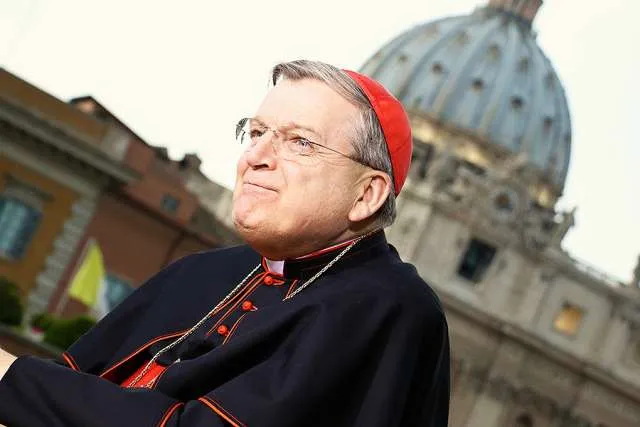
Cardinal Burke is a very well known personality, and on numerous occasions he has addressed the problems of confusion over Catholic teaching. and the need to tackle that issue for the sake of the faithful.
 
Cardinal Zen has become the loudest voice in the defense of the Church’s freedom in China. While a discussion on the China-Vatican deal on the appointment of bishops is underway, Cardinal Zen has expressed the concern of many Catholics of China, and decried a return to Ostpolitik, the label given to Holy See’s policy with Eastern bloc countries on the other side of the Iron Curtain.

Ostpolitik was a diplomacy of dialogue and concessions, developed in the 60s by Msgr. Agostino Casaroli, later St. John Paul II’s Secretary of State.

Ostpolitik was also strongly criticized from the Cardinals of the Church of Silence, i.e., Cardinal Stefan Wyszynski, Primate of Poland, and above all Cardinal Jozef Mindszenty, Archbishop of Budapest-Esztergom, that both considered the Holy See’s approach as amounting to too much dialoguing with the countries of the Soviet bloc.
 
Bishop Schneider of Astana, Kazakhstan, has been one of the strongest defenders of  Catholic teaching and a promoter of the Kazakhstani profession of truths on marriage.
 
Is the current approach on issues of doctrine and morality a replica of the Ostpolitik approach? Is the Church dialoguing too much with the world, giving up the primary task of evangelization?
 
Those are issues that will be explored during the April 7 discussion.
 
The conference will end with a declaration, which will likely restate the truth of faith regarding doctrine on marriage and sexuality.
 
According to the veteran Vatican watcher Sandro Magister, “this ‘declaratio’ will be the polar opposite of that ‘Kölner Erklärung’ – the declaration signed in Cologne in 1989 by German theologians now in the good graces of Francis – which concerned the principles later reaffirmed by John Paul II in the 1993 encyclical “Veritatis Splendor.”
 
It remains to be seen how much the conference will garner attention and make an impact. It is likely it will be labeled as an “anti-Francis” conference, but it is also likely that there will be a poor response to the hard-hitting questions raised during the lectures.


[…]