No Picture
News Briefs

Pope urges Catholics to be moved by joy of the resurrection

April 15, 2018 CNA Daily News 1

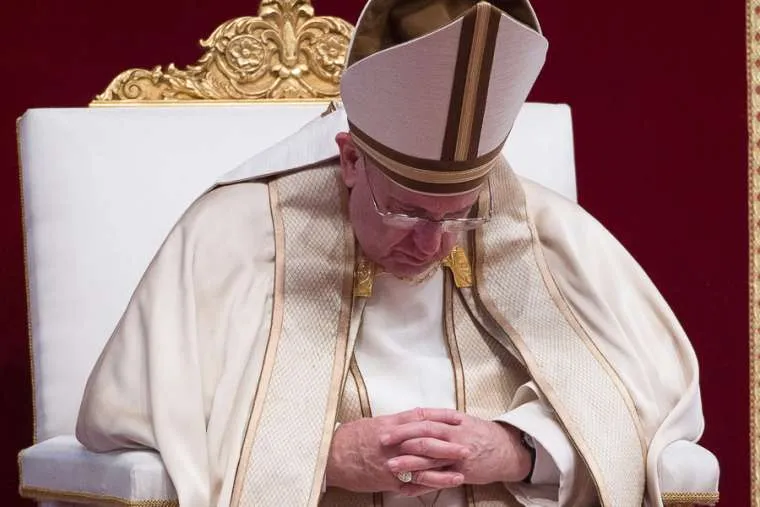
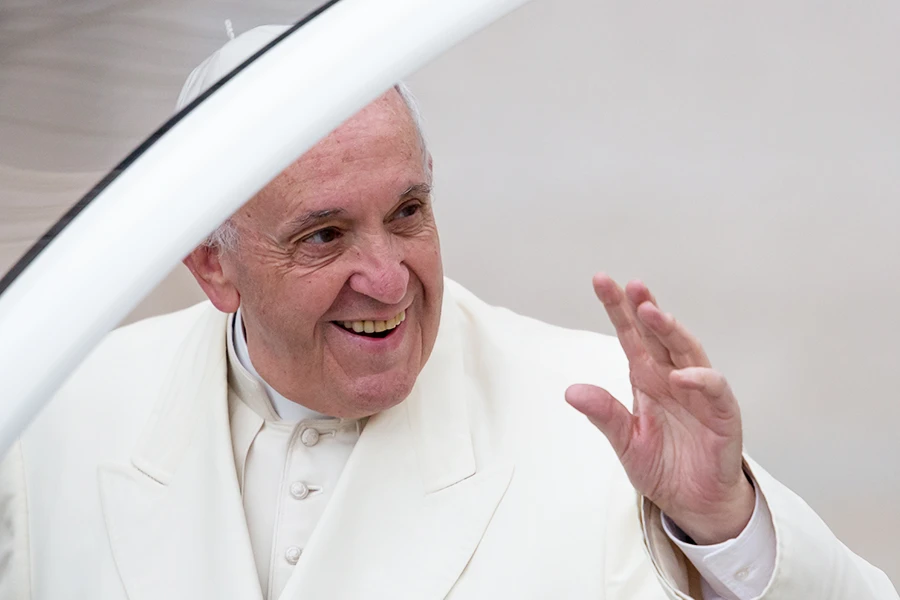
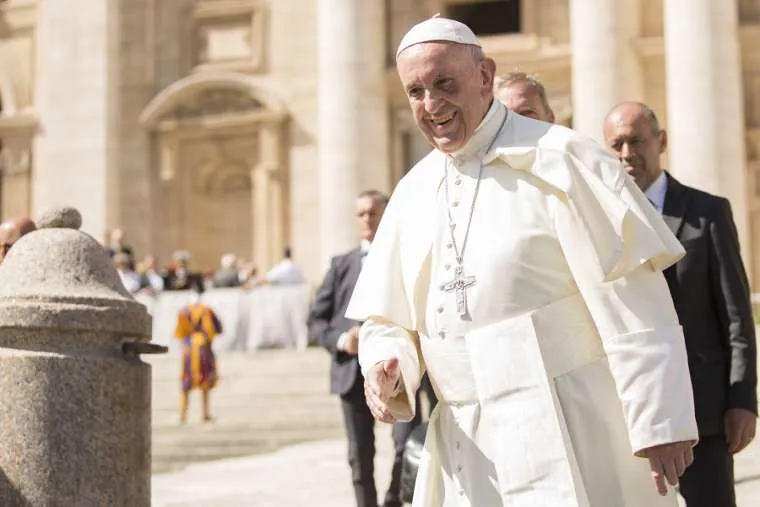
Rome, Italy, Apr 15, 2018 / 10:28 am (CNA/EWTN News).- On Sunday Pope Francis visited a Roman parish, telling Mass-goers to allow themselves to be moved by the immense joy of the resurrection, which overcomes sin and renews believers, allowing them to have a youthful heart.

Noting how the disciples had a hard time believing it was really Jesus who appeared to them in the day’s Gospel, Francis asked “why didn’t they believe? Why did they doubt?”

“There is a word in the Gospel that gives us an explanation: While they were still incredulous for joy and were amazed.”

The disciples, he said, couldn’t believe it was Jesus because “they couldn’t believe that there was so much joy, the joy that brings Christ.”

He said the same thing happens to each person when they receive news that seems too good to be true, and urged Catholics to allow the joy of Christ’s resurrection to enter their hearts and to be transformed by the renewal he offers.

Pope Francis spoke during his April 15 visit to the parish of St. Paul of the Cross in the western quarter of Rome. After arriving around 4 p.m. local time, he was greeted by the Vicar of Rome, Archbishop Angelo de Donatis; Bishop Paolo Selvadagi, auxiliary bishop for Rome’s western sector, and the pastor Fr. Roberto Cassano, among others.

During his visit, the pope met with and took four questions from youth involved in catechesis at the parish. He then met with the elderly, sick and the poor before hearing the confession of three parishioners and celebrating Mass.

In his homily, which focused on the day’s Gospel reading from Luke in which Jesus appears to the disciples after his resurrection, Francis noted that even though they doubted, the disciples knew Jesus had risen.

They knew, he said, because by that time they had heard the testimonies of Mary Magdalene, Peter and the disciples who met Jesus on the road to Emmaus, yet they still had a hard time believing Jesus when he appeared to them in the upper room.

“They knew…but that truth didn’t enter into their heart. That truth, yes, they knew, but they doubted, and the preferred to have that truth in the mind,” he said, noting that perhaps “it’s less dangerous to have truth in the mind than to have it in heart.”

Eventually the disciples believed, he said, explaining that this faith and the joy of Christ’s resurrection is “the renewed youthfulness that the Lord brings us.”

Sin makes the heart grow old and tired, he said, whereas faith makes the heart grow young. However, referring to the day’s second reading from the First Letter of Saint John, he said that when a person sins, “we have an advocate with the Father.”

The Father, he said, “forgives,” and Christ in his death and resurrection wants “to defend us” and make each person young again with the joy of being freed from sin and death.

Pope Francis closed his brief homily asking for the grace to believe that Jesus is truly alive and risen, because “other things are secondary” in life.

If a person does not believe that Christ is risen and present in the world, “we will never be a good Christian, we can’t be,” he said, and prayed for the grace to encounter the Risen Jesus in prayer, the Eucharist and the forgiveness of sins.

“Let us ask for the grace to be a joyful community,” he said, asking that each person would be “sure in the faith of encountering the Risen Christ.”

In his Q&A with youth before Mass, Pope Francis said his favorite bible verse is the calling of Matthew, because it shows “the strength Jesus has to change the heart.”

He also told the children that even if someone is not baptized, they are still a child of God. This, he said, goes for the good, the bad and even the mafia, who he said need to be prayed for “so that they return to God.”

When asked about how he felt after being elected pope, Francis said he didn’t feel anything special, but he had a strong sense of peace. “When the Lord calls you, he gives you peace, and you feel it when there is a true call from the Lord,” he said, explaining that this is also true when God calls one to a consecrated vocation.

Finally, the pope embraced a young boy named Manuele whose father recently died, and who was an atheist, but allowed each of his four children to be baptized in the Catholic Church. In his question, Manuele said his father was a good person, and asked if he was in heaven, even if he didn’t believe in God.

Pope Francis answered by praising Manuele’s courage to cry and to ask the question, and said that if a man can raise a child the way that Manuele’s father had, then this man is indeed a good person, and good people are never far from God.

“It’s a great witness that the child can say [his father] was good,” he said, explaining that God never abandons his children, and encouraged Manuele to talk to his father, because “surely God loved him.”

He then prayed an Our Father with the children before meeting briefly with the elderly, sick and poor of the parish, telling them that they are “the center of the Gospel.”

“I know that each one of you have many problems, sicknesses, pains, the family, each one has their own pain, their own wound, everyone, but may this not take your hope or your joy, because Jesus came to pay for our wounds with his wounds,” the pope said.

He closed his brief greeting by encouraging them to do good to those around them and led them in praying a Hail Mary. He then spent time greeting them personally before hearing confessions and saying Mass.


[…]

No Picture
News Briefs

Pope Francis: Every violation of the body is an ‘outrage’ to God

April 15, 2018 CNA Daily News 2

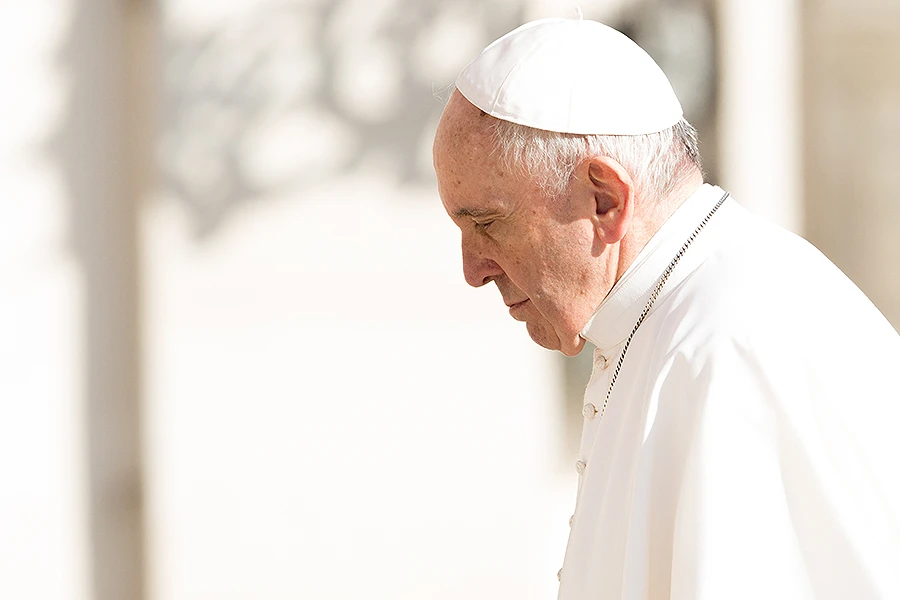
Vatican City, Apr 15, 2018 / 04:55 am (CNA/EWTN News).- On Sunday Pope Francis issued a moving prayer for all those whose bodies have been hurt or exploited, including those who have suffered abuse and those who are sick, pointing to the high-profile cases of Alfie Evans and Vincent Lambert.

“Every offense or wound or violence against the body of our neighbor is an outrage to God the creator,” the pope said April 15, pointing to the children, women and elderly “who are mistreated in the body. In the flesh of these people we find the flesh of Christ.”

“Mocked, slandered, humiliated, scourged, crucified, Jesus taught us love. A love which, in its resurrection, has shown itself as stronger than sin and death, and wants to redeem all those who experience in their own flesh the slavery of our times.”

Pope Francis spoke to pilgrims in St. Peter’s Square during his Sunday Regina Coeli address, which he prays during Easter instead of the Angelus.

He noted how when Jesus appears to the disciples in the day’s Gospel reading from Luke, at first they think he is a ghost. “But the Risen Jesus is not a ghost, he is a man with body and spirit,” and he shows the disciples this by eating a fish, the pope said.

Speaking directly about the body, Francis said the resurrection brings to light the Christian perspective about the body, which he said “is not an obstacle or a prison for the soul,” but is a gift created by God, and as such, “man is not complete if he is not a union of body and soul.”

The fact that Jesus rose from the dead in body and spirit means Christians should have a positive idea about the body, he said, noting that while the body can become an occasion for sin resulting from our “moral weakness,” it is also a “marvelous gift” that reflects our likeness to God.

Because of this, “we are called to have great respect and care for our bodies and that of others,” he said, adding that in a world where “too often arrogance against the weakest prevails and materialism suffocates the spirit,” today’s Gospel reading is an invitation to go deeper, and to be men and women full of wonder and joy for having met the Risen Lord.

After leading pilgrims in the Regina Coeli, Pope Francis made several pleas for prayer on behalf of those who are suffering either from illness, or from war.

He made an appeal for pilgrims to pray for “the people, such as Vincent Lambert in Francis, little Alfie Evans in England, and others in different countries who live, at times for a long period, in a serious state of illness, medically assisted for their basic needs.”

The reference was  to two specific cases currently circulating in the international news cycle. Alfie Evans, 23 months, suffers from an unidentified degenerative neurological condition, has been under continuous hospitalization since December 2016.

In February, the court ruled that Alder Hey Children’s Hospital, where Evans is receiving care, could legally stop treatment for Alfie against his parent’s wishes, arguing that continuing treatment is not in his best interest, and that his life support should be switched off.

Despite the desire for Alfie’s parents, Kate James and Tom Evans, to take their son to Bambino Gesu hospital in Rome, several judges have ruled in the hospital’s favor.

The case has drawn international attention, and protesters gathered outside the Liverpool hospital Thursday and Friday to peacefully oppose the decision.

Evans and James recently launched a new legal challenge, asking the Court of Appeal judges to continue life support and treatment for Alfie. The court officials posted their hearing for Monday, saying that a court judge has decided that Alfie could continue treatment, pending the hearing.

In the case of Vincent Lambert, a severely disabled Frenchman without a terminal illness, courts have decided that the Sebastopol Hospital in Reims can remove Lambert’s food and water April 19.

Lambert suffered severe head injuries after a tragic car accident in 2008, and as a result has been a quadriplegic and severely disabled for 10 years. Yet despite his injuries, other doctors and his parents have insisted that Lambert is not sick, nor is he in a coma. They argue that he breathes unassisted and his internal organs function normally.

However, despite these arguments, the hospital ruled that continuing to feed and hydrate Lambert constituted “unreasonable obstinacy” toward him, and said that his feeding tubes ought to be shut off.

These and similar cases “delicate situations, very painful and complex,” Francis said, and asked faithful to pray with him that every person who is sick would “always be respected in their dignity and cared for in a way suited to their condition, with the consent of family members, and of other healthcare workers.”

He also offered prayers for three Ecuadorean men who were recently kidnapped and killed along the Ecuador-Colombia border, voicing his closeness to their families and praying for peace and unity in the area.

Francis then prayed for areas of the world torn by conflict “despite the instruments available to the international community,” and pointed specifically to Syria, where conflict has again flared up in recent days.

A fresh round of threats began when the United States and their allies in France and the UK on Friday ordered a series of bombings on chemical facilities in Syria in retaliation for a chemical attack allegedly carried out last week by Syrian President Bahsar al-Assad which killed more than 40 civilians.

World leaders immediately reacted supporting both sides, with Syria promising retaliation, and U.S. President Donald Trump threatening further attacks if Assad does not stop using chemical weapons on civilians.

In his Regina Coeli address, Francis said he is “deeply troubled” by ongoing global conflict, and invited all men and women of goodwill to continue to “incessantly pray for peace.” He issued a fresh appeal to political leaders, “so that justice and peace will prevail” over violence.

[…]

No Picture
News Briefs

In wake of Francis apology, Chilean bishops to propose renewal plan

April 13, 2018 CNA Daily News 0

Santiago, Chile, Apr 13, 2018 / 11:00 am (CNA/EWTN News).- A renewal plan for the Church in Chile will be submitted to Pope Francis by Chilean bishops when they gather next month at the Vatican, the president of the Chilean bishops’ conference said.
 
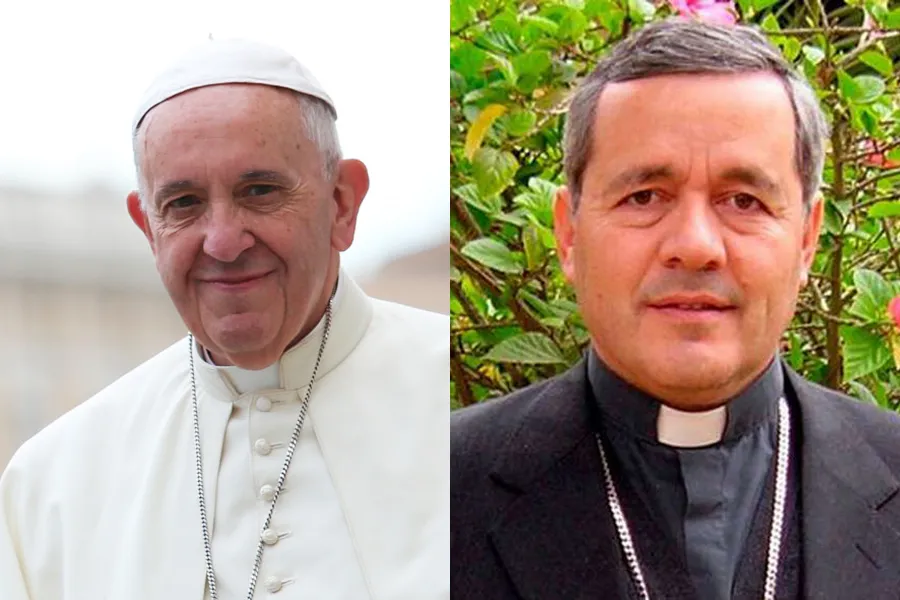
Bishop Santiago Silva Retamales spoke April 13 with Radio Cooperativa, outlining the steps Chilean bishops are ready to take in order to heal the scandal caused by the appointment of Bishop Juan Barros to Osorno.
 
Bishop Barros has a long association with Fr. Fernando Karadima, who was found guilty of multiple sex abuses. Barros was eventually accused of participating in Karadima’s abusive conduct, and of helping to cover it up.
 
Though Barros has maintained his innocence, his 2015 appointment to the Diocese of Osorno aggrieved victims, and has been controversial since it was announced.
 
Despite victims expressing their resentment, the Vatican initially defended the appointment, and Pope Francis sparked controversy by calling accusations against Barros “calumny” during his most recent trip to Chile. However, the pope sent Archbishop Charles J. Scicluna to Chile to investigate the situation, and the archbishop subsequently filed a report of 2,300 pages.
 
After reading the report, Francis sent a letter April 8 to the bishops of Chile, admitting he made “serious mistakes” in handling the crisis, and summoning the Chilean bishops to Rome.
 
The meeting between the Chilean bishops and the pope has not been officially scheduled yet; it is expected to take place during the third week of May.
 
In his interview with Radio Cooperativa, Bishop Silva stressed that the “bishops of Chile will likely propose a plan for the renewal of the Chilean Church.”
 
He added that “the Church must take over the situation, with much responsibility, in order to boldly look for solution to get out of the crisis and go forward.”

Bishop Silva also said that “It’s possible that the pope will ask some [bishops] to leave their diocese … there must be a drastic solution, strong and decisive, that is for certain.”
 
Bishop Silva also remarked that Chilean bishops “have always properly said to the Holy Father what they ought to say,” thus rejecting the claim that they had not fully reported the situation to Rome. The pope’s April 8 letter said that he had not always been able to access “truthful and balanced information” on the issue.
 
When the pope’s letter was published, Bishop Silva issued a statement saying that the country’s bishops “had not done what was needed,” and asked “forgiveness of those who have been harmed.”

[…]

No Picture
News Briefs

Bishops welcome papal exhortation on universal call to holiness

April 12, 2018 CNA Daily News 0

Vatican City, Apr 12, 2018 / 02:41 pm (CNA/EWTN News).- Following the publication of Pope Francis’s third apostolic exhortation, bishops in the English-speaking world have applauded Gaudete et exsultate for challenging Catholics to strive for holiness.

The exhortation, dated March 19, is on the call to holiness in today’s world.

Bishop James Conley of Lincoln termed Gaudete et exsultate “a pro-life call”, writing in his April 13 column for the Southern Nebraska Register that what he has read of it already “is wise, direct, and encouraging.”

“The idea that every single person, without exception, is created in the image of God means just that: that every human life has value and dignity, and that our choices must always endeavor to respect, protect and uphold that unique dignity,” the Nebraska bishop wrote.

“Again, as a long-time pro-life activist, I want to be clear: commitment to ending abortion will never justify blatantly disregarding the dignity of all people, especially those subject to injustice.”

The good news, he continued, is that “in decades of pro-life work, I have rarely, if ever, encountered Catholics who only take seriously the lives of the unborn. When I encounter pro-life people in this country, I notice that they are also the people running parish food pantries, giving sandwiches to the homeless even while they are praying at abortion clinics, adopting foster children, and caring for their neighbors.”

“The pope is right: we cannot uphold the sacredness of life for the unborn while disregarding it for those who are born. I thank God that the pro-life people I have met have not exhibited this attitude – that instead, they have been witnesses of charity and generosity.”

Pope Francis’ description of the Church as a field hospital is apt because there, “those who are closest to death are usually the first to be seen. This is not a rejection of the dignity of all, or a denial that all deserve to be treated with mercy and love, it is an affirmation of the extraordinary gift of human life,” the bishop wrote.

Bishop Conley noted that Francis is “right to call to accountability political leaders who profess support for the unborn, but do not exhibit compassion for other people suffering injustice. We need to insist that our politicians work to end abortion, and, at the very same time, that they work to protect the sovereignty of families, the rights of immigrants and laborers, and the dignity of the poor and the vulnerable. We ask our politicians to be consistent in their commitment to human dignity, which is why blind partisanship is inconsistent with our faith.”

Archbishop Eamon Martin of Armagh noted April 9 that in the exhortation, Pope Francis has reinforced the Second Vatican Council’s “essential teaching” of the universal call to holiness.

“The publication of today’s Apostolic Exhortation by Pope Francis is a great opportunity for all of us, lay, ordained and consecrated, to refocus our lives on what is the central point of our faith in Jesus,” Archbishop Martin stated.

Cardinal Daniel DiNardo of Galveston-Houston, president of the US bishops’ conference, wrote that “The mission entrusted to each of us in the waters of baptism was simple – by God’s grace and power, we are called to become saints.”

Pope Francis is in the exhortation clearly urging “every Christian to freely, and without any qualifications, acknowledge and be open to what God wants them to be – that is ‘to be holy, as [God] is holy.’”

Cardinal DiNardo pointed out that the Pope is encouraging this pursuit of holiness through the challenges of daily life.

“The Holy Father describes how holiness comes through the daily struggles each of us face. In the ordinary course of each day, the Pope reminds us, ‘We need to recognize and combat our aggressive and selfish inclinations, and not let them take root.’”

Other American pontiffs, like Archbishop Jose Gomez of Los Angeles, Bishop Michael Burbidge of Arlington, and Bishop Joseph Bambera of Scranton, have also stressed the importance of undertaking practical holiness through ordinary events.

Archbishop Gomez, in his April 10 column at The Angelus, called Gaudete et exsultate “a beautiful and practical reflection on the meaning of our Christian lives.”

“All of us, every baptized Catholic, need to understand how important we are, what our lives mean in the eyes of God, in the light of his beautiful plan for creation. The meaning of our lives is to be saints, to be holy,” the Los Angeles archbishop wrote.

“Pope Francis also wants us to know that holiness is personal, but it does not isolate us from others,” he added.

In the Arlington Catholic Herald, Bishop Burbidge wrote that the pursuit of holiness is a constant battle against the false promises of sin, which must be counteracted with a renewed commitment to prayer and the sacraments. He also said Catholics must foster works of mercy, joy, and community.

Pope Francis, he said, “invites all of us to examine and discern the concrete ‘risks, challenges and opportunities’ which we experience as we attempt to answer the call to holiness. He confidently and joyfully reflects on the places in our everyday lives where this call to holiness is tested, including our families, communities, Church, and use of digital media.”

Bishop Bambera agreed, adding that Pope Francis is encouraging Catholics to share compassion with the most vulnerable.

“The Holy Father calls all of us to bear witness to God in our everyday lives and in all that we do, in particular by treating everyone we encounter with dignity and respect, especially the most vulnerable and those in need of our compassion and assistance – the unborn, the poor and destitute, migrants and refugees,” he said in an April 10 statement.

[…]

No Picture
News Briefs

Full text of Pope Francis’ letter to Chilean bishops

April 11, 2018 CNA Daily News 7

Vatican City, Apr 11, 2018 / 04:16 pm (CNA/EWTN News).- In a letter addressed to Chile’s bishops, Pope Francis admitted to making “serious mistakes” in handling the nation’s massive sex abuse crisis and asked for forgiveness. The pope summoned Chile’s bishops to Rome to address the issue, and invited victims to meet with him as well.

Referring to a recent investigation of abuse cover-up in Chile carried out by Archbishop Charles Scicluna of Malta, Pope Francis said that after a “slow reading” of the report, “I can affirm that all the testimonies collected speak in a stark manner, without additives or sweeteners, of many crucified lives and I confess that this has caused me pain and shame.”

Francis admitted to misjudging the severity of the affair, telling Chile’s bishops that “I have made serious mistakes in the judgement and perception of the situation, especially due to a lack of truthful and balanced information.”

Please find below CNA’s translation of the full text of Pope Francis’ April 8 letter:


Dear brothers in the episcopate: The reception last week of the final documents which complete the report delivered to me by my two special envoys to Chile on March 20, 2018, with a total of more than 2,300 pages, moves me to write this letter. I assure you of my prayers and I want to share with you the conviction that the present difficulties are also an occasion to re-establish trust in the Church, a trust broken by our errors and sins and in order to heal the wounds that do not cease to bleed in the whole of Chilean society.

Without faith and without prayer, fraternity is impossible. Thus, on this second Sunday of Easter, on the day of mercy, I offer you this reflection with the desire that each one of you accompany me on the inner journey that I have been traveling in recent weeks, so that it would be the Spirit who would guide us with his gift, and not our interests, or even worse, our wounded pride.

Sometimes when so many evils frighten the soul and throw us listlessly into the world buttoned up in our comfortable “winter palaces,” the love of God comes out to meet us and purifies our intentions in order to love as free, mature, and judicious men. When the media shames us, presenting a Church almost always in the darkness of the new moon, deprived of the Sun of justice, we have the temptation of doubting the Paschal victory of the Risen One. I believe that like Saint Thomas the Apostle we must not fear doubt but rather fear the pretension of wanting to see without trusting the testimony of those who heard from the lips of the Lord the most beautiful promise.

Today I want to speak to you not of assurances, but rather of the one thing that the Lord offers us to experience every day: the joy, the peace of forgiveness of our sins and the action of his grace.

In that regard I wish to express my gratitude to His Excellency Charles Scicluna, the Archbishop of Malta and to Rev. Jordi Bertomeu Farnós, official of the Congregation for the Doctrine of the Faith, for his prodigious work in considerately and empathetically listening to the 64 testimonies he recently gathered both in New York and Santiago de Chile. I sent them to listen from the heart and with humility. Later on, when they delivered to me the report and, in particular, its juridical and pastoral assessment of the gathered information, they acknowledged before me of having felt overwhelmed with the pain of so many victims of grave abuses of conscience and power and, in particular, of the acts of sexual abuse committed by various consecrated men of your country against minors, those who were not taken seriously then and were even robbed of their innocence.

The most heartfelt and cordial gratitude we must express as pastors to those who with honesty, courage and the sense of the Church requested a meeting with my envoys and showed them the wounds of their souls. Bishop Scicluna and Rev. Bertomeu have told me how some bishops, priests and deacons, lay men and women of Santiago and Osorno came to Holy Name parish in New York or to the office of Sotero Sanz, in Providencia, with a maturity, respect and kindness that was overwhelming.

In addition, the days following that special mission, have witnessed another meritorious fact that we should keep very much in mind for other occasions, because not only has the climate of confidentiality achieved during the visit been maintained, but at no time has the temptation been yielded to to turn this delicate mission into a media circus. In that regard, I wish to thank the different organizations and media for their professionalism in treating such a delicate case, respecting the right of citizens to the information and the good reputation of the declarants.  

Now, after a careful reading of the proceedings of this “special mission,” I believe I can affirm that the collected testimonies speak in a stark way, without additives or sweeteners, of many crucified lives and I confess to you that that causes me pain and shame.

Taking all this into account, I am writing to you, meeting together in the 115th Plenary Assembly, to humbly request your collaboration and assistance in discerning the short, mid and long term measures that must be adopted to re-establish ecclesial communion in Chile, with the goal of repairing as much as possible the scandal and re-establishing justice.

I plan to call you to Rome to discuss the conclusions and the aforementioned visit and my conclusions. I have thought of that meeting has a fraternal moment, without prejudices or preconceived ideas, with the only goal of making the truth shine forth in our lives. Regarding the date, I entrust it to the Secretary of the Bishops’ Conference to show me the possibilities.

As for my own responsibility, I acknowledge, and I want you to faithfully convey it that way, that I have made serious mistakes in the assessment and perception of the situation, especially because of the lack of truthful and balanced information. Right now I ask forgiveness from all those I offended and I hope to be able to do so personally, in the coming weeks, in the meetings I will have with representatives of the people who were interviewed.

Abide in me: these words of the Lord resound again and again in these day. They speak of personal relationships, of communion, of fraternity which attracts and summons. United to Christ as the branches are to the vine, I invite you graft into your prayers in the coming days a magnanimity that prepares us for the aforementioned meeting and will then allow what we will have reflected on to be translated into concrete actions.

It maybe even be opportune to have the Church in Chile be in ongoing prayer. Now more than ever we cannot fall back into the temptation of verbiage or dwell in “generalities.” These days, let us look at Christ. Let us look at his life and his gestures, especially when he shows compassion and mercy to those who have erred. Let us love in truth, let us ask for wisdom of heart and let us be converted.

Waiting for news from you and asking His Excellency Santiago Silva Retamales, President of the Chilean Conference of Bishops, to publish this letter as quickly as possible, I impart my blessing and ask you to please keep praying for me.

[…]