No Picture
News Briefs

‘No opposition between sinicization and inculturation’ Parolin tells China media

May 13, 2019 CNA Daily News 5

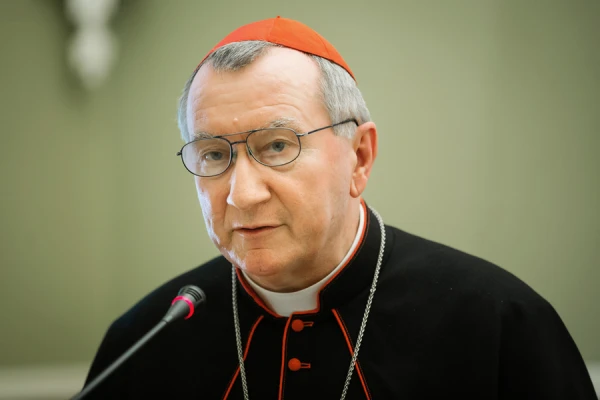
Vatican City, May 13, 2019 / 09:30 am (CNA).- In an interview with a Chinese state-run publication, Vatican Secretary of State Cardinal Pietro Parolin welcomed the opportunity for China and the Holy See to work together to “build a more secure and prosperous world.”

“The prospect opens up that two ancient, great and sophisticated international entities – like China and the Apostolic See – may become ever more aware of a common responsibility for the grave problems of our time,” Parolin said in an interview with the Global Times published May 12.

The Global Times is an English-language newspaper owned by the People’s Daily, the official newspaper of the Central Committee of the Communist Party of China.

The cardinal told the state-owned paper that “inculturation,” a Catholic missionary practice, and “sinicization,” a Chinese government campaign, can be “complementary” and “can open avenues for dialogue.”

“Inculturation is an essential condition for a sound proclamation of the Gospel which, in order to bear fruit, requires, on the one hand, safeguarding its authentic purity and integrity and, on the other, presenting it according to the particular experience of each people and culture,” he said.

“These two terms, ‘inculturation’ and ‘sinicization,’ refer to each other without confusion and without opposition.”

Parolin pointed to the example of 16th century Jesuit missionary, Matteo Ricci, as an outstanding witness of fruitful inculturation in China.

“For the future, it will certainly be important to deepen this theme, especially the relationship between ‘inculturation’ and ‘sinicization,’ keeping in mind how the Chinese leadership has been able to reiterate their willingness not to undermine the nature and the doctrine of each religion,” Parolin said.

Since coming to power in 2013, Chinese President Xi Jinping has mandated the “sinicization” of all religions in China, a move which the U.S. Commission on International Religious Freedom called  “a far-reaching strategy to control, govern, and manipulate all aspects of faith into a socialist mold infused with ‘Chinese characteristics.’’

The Chinese government is in the midst of implementing a five-year “sinicization plan” for Islam, a religion that has faced increased persecution in the country with at least 800,000 Uyghur Muslims held in internment camps.

In April 2019, the commission recommended that China continue to be designated as a Country of Particular Concern. This designation is reserved for nations in which the government “engages in or tolerates particularly severe religious freedom violations, meaning those that are systematic, ongoing, and egregious.”

Parolin said that there is “an increased trust between the two sides” since China and the Holy See signed a provisional agreement in September 2018 on the nomination of bishops, saying the accord provides “hope that we can gradually arrive at concrete results.”

“There is confidence that a new phase of greater cooperation can now be opened for the good of the Chinese Catholic community and the harmony of the whole society,” he said.

Parolin also said that it should not come as a surprise that there is criticism of the deal between the Holy See and the Chinese government, as this is what “generally happens in complex issues and when one faces problems of great importance.”

The agreement has been roundly criticized by human rights groups and some Church leaders, including Cardinal Joseph Zen Ze-kiun, Bishop Emeritus of Hong Kong.

Since the agreement was reached, there have been numerous instances of Catholic churches and shrines being demolished by government agents.

More recently, in the capital of Guangdong province, the Guangzhou Department of Ethnic and Religious Affairs offered a reward of 10,000 Chinese yuan (almost $1,500) for information on the activities of religious groups which could lead to the arrest of key leaders.

In March, U.S. ambassador-at-large for International Religious Freedom Sam Brownback said that “since this provisional deal [between the Vatican and China] was announced last year, the Chinese government’s abuse of members of Catholic communities has continued. We see no signs that will change in the near future.”

Parolin reiterated that dialogue is close to the heart of Pope Francis, who is particularly interested in dialogue on the pastoral level.

“The Holy Father asks Catholics in particular to undertake with courage the path of unity, reconciliation and a renewed proclamation of the Gospel. He sees China not only as a great country but also as a great culture, rich in history and wisdom,” he said.

The Vatican Secretary of State pointed to the fight against poverty, environmental and climatic emergencies, migration, and ethical scientific development as global issues in which China and the Vatican can work together in a spirit of positive cooperation with “the dignity of the human person be placed at the center.”

“The Holy See hopes that China will not be afraid to enter into dialogue with the wider world and that the world’s nations will give credit to the profound aspirations of the Chinese people. In this way, with everyone working together, I am sure that we will be able to overcome mistrust and build a more secure and prosperous world,” Parolin said.

[…]

No Picture
News Briefs

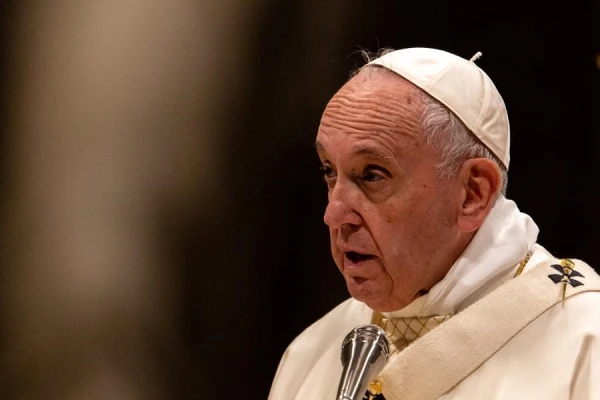
Confused about life? Listen to the Good Shepherd, Pope Francis advises

May 12, 2019 CNA Daily News 2

Vatican City, May 12, 2019 / 07:05 am (CNA).- On Sunday, Pope Francis advised listening to and speaking with Christ the Good Shepherd in prayer, so that one can be guided on the right paths of life.

“Listening to and recognizing [Jesus’] voice implies intimacy with him, which is consolidated in prayer, in the meeting heart to heart with the divine Master and Shepherd of our souls,” he said May 12.

“This intimacy with Jesus, this being open, talking with Jesus, strengthens in us the desire to follow him,” the pope continued, “to come out of the labyrinth of wrong paths, to abandon selfish behaviors, to set out on the new paths of fraternity and the gift of ourselves, in imitation of Him.”

Speaking before the Regina Coeli on “Good Shepherd Sunday,” Pope Francis reminded people that Jesus is the only Shepherd who speaks to us, knows us, gives us eternal life and keeps us.”

“We are his flock and we must only strive to listen to his voice, while with love he scrutinizes the sincerity of our hearts,” he said. “And from this continuous intimacy with our Shepherd comes the joy of following him, allowing us to lead to the fullness of eternal life.”

Jesus the Good Shepherd welcomes and loves, not only one’s strengths, but one’s faults, he said.

“The Good Shepherd — Jesus — is attentive to each of us, seeks us and loves us, addressing his word to us, knowing our heart, our desires and our hopes, as well as our failures and disappointments.”

He asked for the Blessed Virgin Mary’s intercession, especially for priests and consecrated, who, he said, are called “to welcome Christ’s invitation to be his most direct collaborators in the proclamation of the Gospel.”

After the Regina Coeli, Francis noted the celebration, in many countries, of Mother’s Day. He sent his warm greetings to all mothers and thanked them for “their precious work in raising their children and protecting the value of the family.”

The pope also recalled all the mothers who “look at us from heaven and continue to watch over us with prayer.”

Recalling the May 13 feast day of Our Lady of Fatima, “our heavenly mother,” he said “we entrust ourselves to her to continue our journey with joy and generosity.”

He also prayed for vocations to the priesthood and religious life.

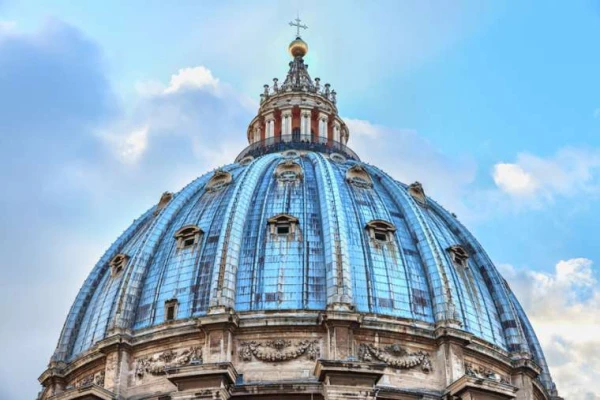
Earlier in the day, Pope Francis ordained 19 new priests in St. Peter’s Basilica. The men had been studying for the priesthood in Rome and are mostly Italian, with others coming from Croatia, Haiti, Japan, and Peru.

Eight are from the Priestly Society of the Sons of the Cross, one from the Family of Disciples. Eight were ordained for the Neocatechumenal Way.

Pope Francis gave the homily prescribed in the Ritual for the Ordination of Priests, to which he added a few of his own thoughts.

He recommended the new priests regularly read and meditate on the Scriptures, and advised they always prepare to give a homily with time in prayer and with “the Bible in hand.”

“Let your teaching be therefore nourishment to the People of God: when it comes from the heart and is born of prayer, it will be so fruitful,” he said.

He also told the new priests to be careful in their celebration of the Mass, asking them not to “mess it up with petty interests.”

“Aware of having been chosen among men and constituted in their favor to await the things of God, exercise in joy and charity, with sincerity, the priestly work of Christ, solely intent on pleasing God and not yourselves,” the pope said. “Priestly joy is found only on this path, seeking to please God who has elected us.”

The priest, he added, should be “close to God in prayer, close to the bishop who is your father, close to the presbytery, to other priests, as brothers… and close to the People of God.”

[…]

No Picture
News Briefs

Vatican issues norms for reports of abuse of minors, seminarians, and religious

May 9, 2019 CNA Daily News 3

Vatican City, May 9, 2019 / 04:01 am (CNA).- New Vatican norms for the Church’s handling of sex abuse, issued Thursday, place seminarians and religious coerced into sexual activity through the misuse of authority in the same criminal category as abuse of minors and vulnerable adults.

The norms also establish obligatory reporting for clerics and religious, require that every diocese has a mechanism for reporting abuse, and put the metropolitan archbishop in charge of investigations of accusations against suffragan bishops.

Pope Francis promulgated the law May 9 via a motu proprio, titled, “Vos estis lux mundi” (“You are the light of the world”). He approved its promulgation on an experimental basis for a period of three years. It will enter in effect June 1, 2019.

“The crimes of sexual abuse offend Our Lord, cause physical, psychological and spiritual damage to the victims and harm the community of the faithful,” the pope wrote, stating that the primary responsibility for improving the handling of these issues falls to the bishop, though it concerns all who have ministries in the Church or “serve the Christian People.”

“Therefore, it is good that procedures be universally adopted to prevent and combat these crimes that betray the trust of the faithful,” he said.

The norms regard what are called, in canon law, “delicts against the sixth commandment of the Decalogue,” consisting of sexual acts with a minor or vulnerable person; forcing someone to perform or submit to sexual acts through violence, threat, or abuse of authority; and the production or possession of child pornography.

The new law also concerns any actions intended to cover-up a civil or canonical investigation into accusations of child pornography use, sexual abuse of minors, or sexual coercion through abuse of power.

It establishes the so-called “metropolitan model” for the investigation of accusations against bishops and their equivalents, as proposed by Cardinal Blase Cupich at the November meeting of the U.S. bishops’ conference and the Vatican February summit on the protection of minors.

According to the new law, the metropolitan archbishop will conduct the investigation into a suffragan bishop with a mandate from the Holy See. The metropolitan is required to send reports to the Holy See on the progress of the investigation every 30 days and to complete the investigation within 90 days unless granted an extension.

The metropolitan archbishop may use the assistance of qualified laypeople in carrying out the investigation, though it is primarily his responsibility, the norms state. Bishops’ conferences may establish funds to support these investigations.

The document emphasizes that “the person under investigation enjoys the presumption of innocence.”

At the conclusion of the investigation, the results are sent to the competent Vatican dicastery, which will then apply the applicable penalty according to existing canon law.

In the event a report concerns a major archbishop, it will be forwarded to the Holy See.

One article states that Church authorities shall be committed to ensuring “that those who state that they have been harmed, together with their families, are to be treated with dignity and respect,” be welcomed, listened to, and supported, offered spiritual assistance, and medical and psychological assistance.

The norms also introduce obligatory reporting, requiring that every cleric or religious man or woman who has become aware of an accusation of abuse or cover-up report it “promptly” to the proper church authority.

The ‘motu proprio’ also states that it will be required that every diocese create a stable mechanism or system through which people may submit reports of abuse or its cover-up. The exact form of the system, which could also be an entire office, will be left to the discretion of the individual diocese, but must be established by June 2020.

“Even if so much has already been accomplished, we must continue to learn from the bitter lessons of the past, looking with hope towards the future,” Pope Francis wrote.

“In order that these phenomena, in all their forms, never happen again, a continuous and profound conversion of hearts is needed,” he said, “attested by concrete and effective actions that involve everyone in the Church.”

“This becomes possible only with the grace of the Holy Spirit poured into our hearts, as we must always keep in mind the words of Jesus: ‘Apart from me you can do nothing.’”

[…]