No Picture
News Briefs

Pope Francis says he hopes ‘seeds of peace’ will bear fruit in Africa
September 11, 2019 CNA Daily News 1

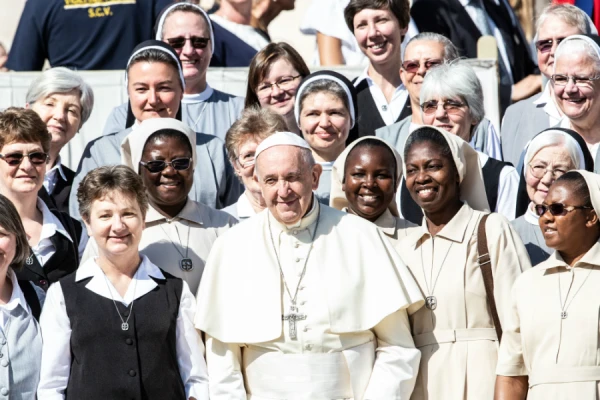
Vatican City, Sep 11, 2019 / 05:30 am (CNA).- Upon his return to the Vatican after a six-day trip to Africa, Pope Francis said Wednesday that he hopes the “seeds of peace” sown during his apostolic journey will bear fruit in Mozambique, Madagascar, and Mauritius.

“I thank God who allowed me to make this journey as a pilgrim of peace and hope,” Pope Francis said in St. Peter’s Square Sept. 11.

“The hope of the world is Christ, and his Gospel is the most powerful leaven of fraternity, freedom, justice and peace for all people. With my visit, in the footsteps of holy missionaries, I tried to bring this leaven, the leaven of Jesus, to the Mozambican, Malagasy and Mauritian populations,” he said.

Pope Francis said that the Church will continue to support the peace process in Mozambique, which advanced in August, and he thanked the Catholic community of Saint’Egidio for their continued contributions to this dialogue.

“In Mozambique I went to spread seeds of hope, peace and reconciliation in a land that has suffered so much in the recent past due to a long armed conflict, and that last spring was hit by two cyclones that caused very serious damage,” the pope said.

Mozambique fought a civil war from 1977 to 1992 between Frelimo, a socialist party that has ruled the country since it gained independence in 1975, and Renamo, an anti-communist organization. Renamo began a new insurgency in 2013, a conflict that only came to an end in August with the signing of a peace agreement in Serra da Gorongosa.

“The Church continues to accompany the peace process, which has taken a step forward on August 1st with a new agreement between the parties,” the pope said.

“Let us give thanks to God, and ask him that the seeds sown during this apostolic journey will bear abundant fruit for the people of Mozambique, Madagascar and Mauritius,” he said.

The pope reflected that there was much joy amid the rain during the Mass he celebrated in Maputo, Mozambique.

“My visit to Mozambique culminated in Mass, celebrated in the stadium in the rain, but we were all happy. The songs, the religious dances … so much happiness. The rain didn’t matter,” Francis said.

“And there resounded the appeal of the Lord Jesus: ‘Love your enemies’, the seed of true revolution, that of love, which extinguishes violence and generates fraternity,” he added.

After three days in Mozambique, Pope Francis traveled to Madagascar, where he visited the country’s “City of Friendship,” a town built through the leadership of an Argentine priest who sought solidarity with the poorest of the poor.

Pope Francis reflected that Madagascar is a country rich in natural resources and natural beauty, but marked by much poverty.

“I hope that, inspired by its traditional spirit of solidarity, the Malagasy people can overcome adversity and build a future of development by combining respect for the environment and social justice,” he said.

In his meeting with bishops in Madagascar, Pope Francis said that they renewed together a commitment to care for the poor and to be “sowers of peace and hope.”

Pope Francis ended his six-day trip to Africa on the island nation of Mauritius. “I chose it because it is a place of integration between different ethnic groups and cultures,” Pope Francis said, noting the different immigrants from India and other countries who have come to call the tourist destination home over the past two centuries.

Mauritius obtained its independence on March 12, 1968, after more than 200 years of colonization by the French and the British following years of Dutch and Portuguese settlements.

The country is made up of many different ethnic groups, primarily Indo-Mauritian, Creole, Sino-Mauritian, and Franco-Mauritian. The primary religion on the island is Hinduism, followed by Catholicism and Islam.

“There is strong inter-religious dialogue, and also friendship between the heads of different religious denominations. Something that would seem strange to us, but they thus experience the friendship that is natural,” Francis reflected.

The pope said that in Mauritius he found a beautiful bouquet of flowers upon entering the chancery. It was sent as a gift from the grand imam as a sign of brotherhood.

Francis said that he was also impressed to see Muslims and Catholics working together in an HIV treatment clinic in Mozambique run by the Community of Sant’Egidio, a lay movement centered on peace and helping the poor.

On his return flight to Rome, Pope Francis said during an in-flight press conference that he was touched by how the African people in the crowds lifted up their children for him to see.

“Africa is full of life,” Pope Francis said. “It is the treasure of the poor, the child.”
[…]

No Picture
News Briefs

9/11: When John Paul II grieved with America

September 11, 2019 CNA Daily News 0

Vatican City, Sep 11, 2019 / 03:28 am (CNA).- As three airliners smashed into the World Trade Center towers and the Pentagon, and Flight 93 crashed into a Pennsylvania field on September 11, 2001, Joaquín Navarro-Valls, at the time the director of the Vatican press office, delivered the news to Pope John Paul II.

“I remember that terrible afternoon as if it were yesterday. I called the Pope, who was at Castel Gandolfo, I gave him the news. He was shocked not only by the tragedy itself, but also because he could not explain how man could achieve this abyss of evil…” he recalled in a 2011 interview with Vatican Insider.

John Paul II, who had grown up to watch his native Poland overtaken first by Nazis and then by the Soviets, and who as Pope navigated the dangerous international waters of the Cold War, was no stranger to tragedy and war.

Still, the terror attacks on the United States shook him deeply.

“He was deeply shaken, saddened. But I remember that he asked himself how so heinous an attack could happen. His dismay, in front of those images went beyond pain,” Navarro-Valls recalled.

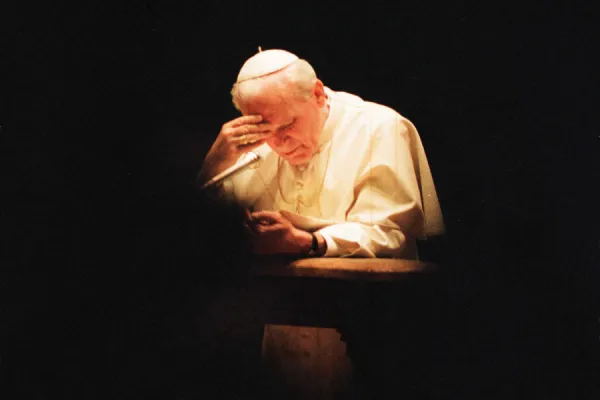
“He stayed for short time in front of the TV. Then he retired to the chapel, which is only a few steps away from the TV room. And he remained there a long time in prayer. He also wanted to get in touch with George Bush, to communicate his support, his pain, his prayer. But it was not possible to contact the president, who for security reasons was flying on Air Force One.”

Instead, Pope John Paul II decided to send his message of condolences and assurance of prayers via telegram, and was among the first of the world leaders to do so that day.

“I hurry to express to you and your fellow citizens my profound sorrow and my closeness in prayer for the nation at this dark and tragic moment,” the Pope wrote.

In a 2011 article in the National Catholic Register, James Nicholson, who was the new United States ambassador to the Holy See in 2001, recalled his first meeting with John Paul II, just two days after the terror attacks.

“The first thing the Pope said to me was how sorry he felt for my country, which had just been attacked, and how sad it made him feel. We next said a prayer together for the victims and their families.”

“Then the Pope said something very profound and very revealing of his acute grasp of international terrorism. He said, ‘Ambassador Nicholson, this was an attack, not just on the United States, but on all of humanity.’ And, then he added, ‘We must stop these people who kill in the name of God.’”  

September 11, 2001 was a Tuesday.  

The next day, Wednesday, is when the Pope is scheduled each week to address the pilgrims gathered in St. Peter’s Square.

While John Paul II normally used this as a time for catechesis on the family or other issues, he set everything aside on September 12 to address the tragedy from which the world was still reeling.

Below is the full text of his words to the United States:

I cannot begin this audience without expressing my profound sorrow at the terrorist attacks which yesterday brought death and destruction to America, causing thousands of victims and injuring countless people. To the President of the United States and to all American citizens I express my heartfelt sorrow. In the face of such unspeakable horror we cannot but be deeply disturbed. I add my voice to all the voices raised in these hours to express indignant condemnation, and I strongly reiterate that the ways of violence will never lead to genuine solutions to humanity’s problems.

Yesterday was a dark day in the history of humanity, a terrible affront to human dignity. After receiving the news, I followed with intense concern the developing situation, with heartfelt prayers to the Lord. How is it possible to commit acts of such savage cruelty? The human heart has depths from which schemes of unheard-of ferocity sometimes emerge, capable of destroying in a moment the normal daily life of a people. But faith comes to our aid at these times when words seem to fail. Christ’s word is the only one that can give a response to the questions which trouble our spirit. Even if the forces of darkness appear to prevail, those who believe in God know that evil and death do not have the final say. Christian hope is based on this truth; at this time our prayerful trust draws strength from it.

With deeply felt sympathy I address myself to the beloved people of the United States in this moment of distress and consternation, when the courage of so many men and women of good will is being sorely tested. In a special way I reach out to the families of the dead and the injured, and assure them of my spiritual closeness. I entrust to the mercy of the Most High the helpless victims of this tragedy, for whom I offered Mass this morning, invoking upon them eternal rest. May God give courage to the survivors; may he sustain the rescue-workers and the many volunteers who are presently making an enormous effort to cope with such an immense emergency. I ask you, dear brothers and sisters, to join me in prayer for them. Let us beg the Lord that the spiral of hatred and violence will not prevail. May the Blessed Virgin, Mother of Mercy, fill the hearts of all with wise thoughts and peaceful intentions.

Today, my heartfelt sympathy is with the American people, subjected yesterday to inhuman terrorist attacks which have taken the lives of thousands of innocent human beings and caused unspeakable sorrow in the hearts of all men and women of good will. Yesterday was indeed a dark day in our history, an appalling offence against peace, a terrible assault against human dignity.

I invite you all to join me in commending the victims of this shocking tragedy to Almighty God’ s eternal love. Let us implore his comfort upon the injured, the families involved, all who are doing their utmost to rescue survivors and help those affected.

I ask God to grant the American people the strength and courage they need at this time of sorrow and trial.

Below is the full text of Pope John Paul II’s prayers for the faithful and intentions on September 12, 2001:

Brothers and Sisters, in great dismay, before the horror of destructive violence, but strong in the faith that has always guided our fathers, we turn to the God of Abraham, Isaac and Jacob, salvation of his people, and with the confidence of children, pray that He will come to our aid in these days of mourning and innocent suffering.

Cantor:

Dominum deprecemur:  Te rogamus, audi nos.

1. For the Churches of the East and the West, and in particular for the Church in the United States of America so that, though humbled by loss and mourning, yet inspired by the Mother of the Lord, strong woman beside the cross of her Son, they may foster the will for reconciliation, peace, and the building of the civilization of love.

2. For all those who bear the name of Christian, so that, in the midst of many persons who are tempted to hatred and doubt, they will be witnesses to the presence of God in history and the victory of Christ over death.

3. For the leaders of nations, so that they will not allow themselves to be guided by hatred and the spirit of retaliation, but may do everything possible to prevent new hatred and death, by bringing forth works of peace.

4. For those who are weeping in sorrow over the loss of relatives and friends, that in this hour of suffering they will not be overcome by sadness, despair and vengeance, but continue to have faith in the victory of good over evil, of life over death.

5. For those suffering and wounded by the terrorist acts, that they may return to stability and health and, appreciating the gift of life, may generously foster the will to contribute to the well being of every human being.

6. For our brothers and sisters who met death in the folly of violence, that they find sure joy and life everlasting in the peace of the Lord, that their death may not be in vain but become a leaven bringing forth a season of brotherhood and collaboration among peoples.

The Holy Father:

O Lord Jesus, remember our deceased and suffering brothers before your Father.
Remember us also, as we begin to pray with your words:  Pater noster…

O Almighty and merciful God,
you cannot be understood by one who sows discord, you cannot be accepted by one who loves violence:  look upon our painful human condition tried by cruel acts of terror and death, comfort your children and open our hearts to hope, so that our time may again know days of serenity and peace.
Through Christ our Lord.
Amen.


[…]

No Picture
News Briefs

Paglia responds to controversy at JPII Institute

September 4, 2019 CNA Daily News 4

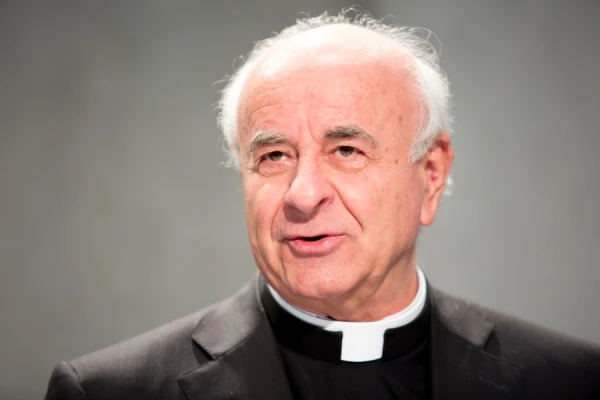
Washington D.C., Sep 4, 2019 / 06:00 pm (CNA).- Archbishop Vincenzo Paglia, grand chancellor of Rome’s Pontifical Institute John Paul II and president of the Pontifical Academy for Life, has responded to controversy over a plan to restructure the school’s faculty and curriculum.

“We will be able to address and overcome the concerns and the hesitancies that have greeted the renewed structure of the Academy, and I might add of its sister entity, the John Paul II Institute as well,” Paglia said Sept. 3 at Loyola Marymount University in California.

Paglia said that concern can be overcome through the “solid and loving theological basis” outlined for the Academy in a January letter from Pope Francis, written to commemorate the Academy’s anniversary.

In the letter, Paglia said, “the Pope recalls for us the great theological truth that must be our guiding principle—all of creation is brought into being by God’s love, a love that is so profound that itself it is a family, Father, Son, Holy Spirit, and that it is a family so fruitful that it has produced on Earth a family that mirrors it.”

Paglia emphasized that the school must “participate in dialogue with everyone” while working to fulfill its mission. 

In his address, Paglia spoke about the importance of a Catholic perspective in the study of bioethics, saying linguistic and cultural differences, as well as different theological and philosophical approaches, can condition the way subjects are studied and taught, even when they are foundational to the Catholic faith.

Paglia acknowledged the recent conflict which has engulfed the pontifical institute, following the approval of new statutes for the school in July, and reiterated the pope’s stated aims for its reform.

The new statutes were issued in response to a 2017 announcement by the pope that he would legally refound the institute to broaden its curriculum, from a focus on the theology of marriage and the family to an approach that will also include the study of the family from the perspective of the social sciences.

After the new statutes, students, alumni, and faculty raised concerns about the role of faculty members in the institute’s new governing structure, about the reduction of theology courses and the elimination of some theology disciplines, and about the dismissal of some faculty members, especially Fr. José Noriega and Msgr. Livio Melina.

Critics of the changes voiced their concern that the essential purpose of the institute was being diluted, and a group of 49 academics from universities around the world wrote to the administrators of the Institute asking for the reinstatement of the dismissed faculty.

Yesterday, it was reported that the vice-president of the Institute proposed a compromise between university administrators and concerned faculty members.

Noting an apparent “impasse” between faculty and administrators, Fr. Jose Granados suggested a “proposal for a constructive solution” in an Aug 27 letter to Paglia and the school’s president, Msgr. Pierangelo Sequiri.

Granados’ proposal is that a chair of fundamental moral theology, scheduled for elimination from the university’s faculty, be retained, and that a new chair be added to the university’s faculty to complement it.

In his speech Wednesday, Paglia reiterated Francis’ stated aims in refounding the school, saying that “the Pope wants the Academy, and the Institute, to widen its scope of reflection: not limiting itself to addressing specific situations of ethical, social or legal conflict;  articulate an anthropology that sets the practical and theoretical premises for conduct consistent with the dignity of the human person; and make sure it has the tools to critically examine the theory and practice of science and technology as they interact with life, its meaning and its value.”

Concluding his speech, Paglia said that “wisdom and boldness” were essential to both the Academy and Institute’s mission to “understand our heritage of faith with a rationality that is worthy of man.” 

“It is for this reason that the Academy, and the Institute, without in any way abandoning the tradition and accomplishments of their founders, will participate in dialogue with everyone,” Paglia said, “so that the development and use of the extraordinary resources that the Pope speaks of is oriented toward promoting the dignity of the person and the human family in the light of the passionate Divine love that brought it into being and will lead it safely home.”

[…]

No Picture
News Briefs

Burke and Brandmüller say Amazon synod challenges deposit of faith

September 4, 2019 CNA Daily News 1

Vatican City, Sep 4, 2019 / 05:45 pm (CNA).- Two cardinals have sent letters to fellow members of the College of Cardinals, raising concerns about the working document for an upcoming synod of bishops on the pan-Amazonian region.

“Some points of the synod’s Instrumentum laboris seem not only in dissonance with respect to the authentic teaching of the Church, but even contrary to it,” Cardinal Walter Brandmüller wrote to fellow cardinals in an Aug. 28 letter obtained by CNA.

“The nebulous formulations of the Instrumentum, as well as the proposed creation of new ecclesial ministries for women and, especially, the proposed priestly ordination of the so-called viri probati arouse strong suspicion that even priestly celibacy will be called into question,” the cardinal wrote.

Brandmüller said that the leaders of the pan-Amazonian synod have given him concern about its proceedings.

“The sole fact that Cardinal (Claudio) Hummes is the president of the synod and thus will exercise a grave influence in a negative sense, suffices to have a well founded and realistic concern, as much as in the case of bishops (Erwin) Kräutler, (Franz-Josef) Overbeck, etc.”

Hummes, a native of Brazil, was prefect of the Congregation for Clergy from 2006-2010. Bishop Krautel, 80, is the emeritus bishop of the Brazilian Prelature of Xingu in the Amazon, and has been a long time proponent of married priests. Bishop Overbeck, 55, is the Bishop of Essen. Overbeck is known in Germany as an advocate for a re-examination of the Church’s teaching on ordination and sexual morality.

Brandmüller, 90, was for three decades a professor of Church history, and was president of the International Commission for Contemporary Church History from 1998 until 2006. He was made a cardinal in 2010, but, at age 81, he had passed the age limit for participation in the election of a pope.

“We must face serious challenges to the integrity of the Deposit of the Faith, the sacramental and hierarchical structure of the Church and its Apostolic Tradition. With all this has been created a situation never before seen in the Church’s history, not even during the Arian crisis of the fourth and fifth century,” Brandmüller added.

Brandmüller said that all cardinals must consider how they will react to “any heretical statements or decisions of the synod.”

“I would hope, therefore, that Your Eminence, for your part, will seize this opportunity to correct, according to the teachings of the Church, certain positions expressed in the Instrumentum laboris of the pan-Amazonian synod,” the cardinal concluded.

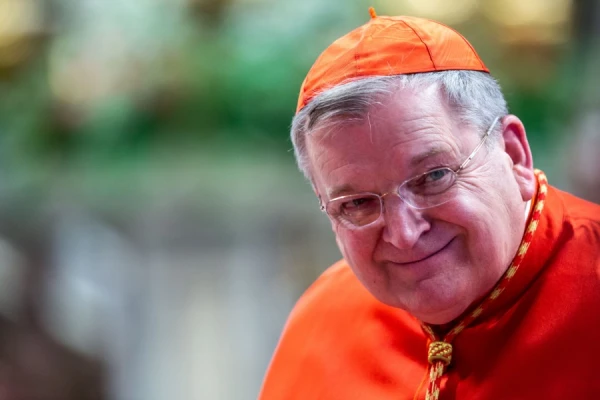
Also on Aug. 28, Cardinal Raymond Burke wrote to fellow cardinals, telling them that he “shares completely the deep concerns of Cardinal Brandmüller on the upcoming Synod on the Amazon, based upon its Instrumentum laboris.

Noting that the synod’s Instrumentum laboris “is a long document marked by language which is not clear in its meaning, especially in what concerns the Depositum fidei,” Burke added that it “contradicts the constant teaching of the Church on the relationship between the created world and God, the uncreated Creator, and man, created in the image and likeness of God to cooperate with him as guardian of the created world.”

Cardinal Burke also claims that the Instrumentum laboris “characterize the teaching regarding the unicity and universality of the salvation brought by Christ alive in the Church as relative to a particular culture and emblematic of what they call ‘petrified doctrine’ (n. 38).”

In the synod’s working document, Burke added, “the truth that God has revealed Himself fully and perfectly through the mystery of the Incarnation of the Redeemer, the Son of God, is obscured, if not denied.”

“Cardinal Brandmüller indicated in his letter the serious difficulties regarding the ordained ministry and perfect continence of the clergy. These proposals, as the cardinal indicates, attack the ‘hierarchical-sacramental structure’ and ‘the Apostolic Tradition of the Church.’”

The “disturbing propositions of the Instrumentum laboris” Burke said, “portend an apostasy from the Catholic faith.”

The synod is scheduled to take place in Rome, Oct. 6-27.


[…]

No Picture
News Briefs

Cardinal Roger Etchegaray, who oversaw the Jubilee Year 2000, dies at 96

September 4, 2019 CNA Daily News 0

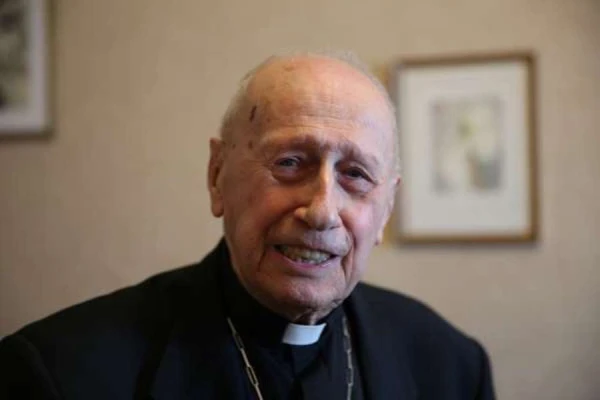
Vatican City, Sep 4, 2019 / 03:00 pm (CNA).- French Cardinal Roger Etchegaray, a frequent collaborator of Pope St. John Paul II, has died at 96.

Etchagaray, from the French Basque region, was born in Espelette on September 25, 1922.

He attended the Pontifical Gregorian University in Rome, obtaining licentiate in theology and a doctorate of canon law.

He was ordained a priest in 1947 and incardinated in the Diocese of Bayonne.

In 1961 he began working in the French bishops’ conference, and  from 1966 to 1970 was its  general secretary.

In 1969, Pope Paul VI appointed him an auxiliary bishop in the Archdiocese of Paris.

On Dec. 22, 1970 he became the Archbishop of Marseille. In 1975 he was elected president of the French episcopal conference.

In 1979, Pope St. John Paul II named him a cardinal.

In April 1984 Pope John Paul II named him the president of the Pontifical Council for Justice and Peace  and the president of the pontifical council Cor Unum, he retained this second post until 1995.

In 1994 he was taken with overseeing the Church’s observance of the Great Jubilee of the Year 2000.

He served often as de facto “ambassador” of John Paul II in delicate diplomatic missions: in 2003 he worked on behalf of the pope to avoid the U.S.-led invasion of Iraq that began the Second Gulf War.

On April 30, 2005, Benedict XVI approved his election as Vice Dean of the College of Cardinals.

In January 2017, he left the Vatican to return to his native Diocese of Bayonne.

After the death of Cardinal Pimiento Rodriguez , which occurred yesterday, he was, briefly, become the oldest living cardinal.


A version of this story was first published by ACI Stampa. It has been translated and adapted by CNA.

[…]

No Picture
News Briefs

Pope Francis condemns euthanasia as utilitarianism, not freedom

September 2, 2019 CNA Daily News 1

Vatican City, Sep 2, 2019 / 07:13 am (CNA).- Euthanasia is a way of treating the human person as an object; while it may appear to give freedom, it is really a rejection of hope, Pope Francis told an oncology association Sept. 2.

“The practice of euthanasia, which has already been legalized in several countries, only apparently aims to encourage personal freedom,” he said Sept. 2.

“In reality,” he continued, “it is based on a utilitarian view of the person, who becomes useless or can be equated to a cost, if from the medical point of view, he has no hope of improvement or can no longer avoid pain.”

“If one chooses death, the problems are solved in a sense; but how much bitterness behind this reasoning, and what rejection of hope involves the choice of giving up everything and breaking all ties!” he declared.

Pope Francis stated that medical technology is not being used for its right purpose, the service of the human person, when it “reduces him to a thing,” or makes distinctions between who is not deserving of treatment because of supposedly being “a burden” or “a waste.”

The contrary approach is a commitment to accompany a patient and his loved ones at all stages, trying to alleviate suffering through palliative care, or the family environment of hospice, he argued. This “contributes to creating a culture and practice more attentive to the value of each person.”

The countries with legal euthanasia are the Netherlands, Belgium, Colombia, Luxembourg, and Canada. Assisted suicide is legal in the Netherlands, Switzerland and Germany, and in the U.S. states of Washington, Oregon, Colorado, Hawaii, Vermont, Montana, Washington, D.C., New Jersey, California, and Maine (starting January 1, 2020).

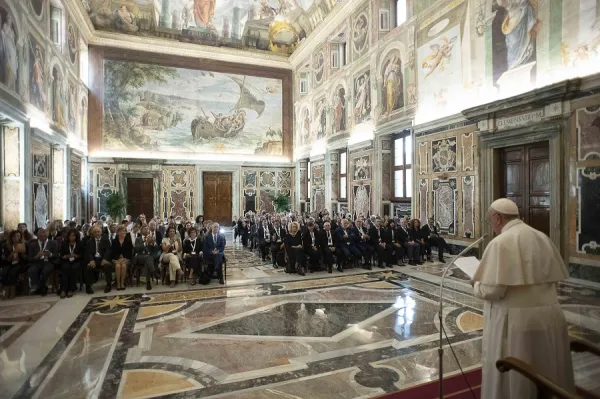
Pope Francis spoke about euthanasia Sept. 2, to a group of about 150 members of the Italian Association of Medical Oncology, in an audience at the Vatican.

He encouraged the medical personnel to “never lose heart for the misunderstanding you might encounter, or before the insistent proposal of more radical and hasty roads,” adding that their work includes raising awareness in a society “which is not very aware and is sometimes distracted.”

Francis described a sort of “Pandora’s box,” in which everything is explained except hope. “And we have to go look for this,” he said. “How to explain hope, indeed, how to give it in the most limited cases.”

In the audience, the pope praised the association’s focus on providing the best care for each individual patient, according to his or her unique biology, calling it “an oncology of mercy,” because personalizing care puts one’s attention on the individual, not only the illness, he argued.  

He encouraged the medical workers to take Jesus as their example, also stressing the importance of Christ for those who are sick. Jesus, he said, “helps them to find the strength not to interrupt the bonds of love, to offer their suffering for brothers, to keep friendship with God.”

“Inspire everyone to be close to those who suffer, to the little ones above all, and to put the weak in the first place, so that they can grow a more human society and relationships marked by gratuitousness, rather than opportunity,” he urged.

[…]