No Picture
News Briefs

Supreme Court LGBT decision puts pressure on religious employers, employees

June 16, 2020 CNA Daily News 4

Denver Newsroom, Jun 16, 2020 / 05:56 pm (CNA).- The U.S. Supreme Court’s decision that a federal ban on sex discrimination also protects sexual orientation and gender-identity will have far-reaching consequences for religions, employers and employees because it enshrines a certain view of sexuality and gender into law, according to legal and religious liberty experts.
 
“We’re going to have future litigation, in many other cases, on whether the anti-discrimination principle or the religious liberty principle trumps the other at the end of the day,” John Bursch, director of legal advocacy and senior counsel at Alliance Defending Freedom legal group, told CNA.

The Supreme Court ruled on Monday that employers cannot fire workers because of their sexual orientation or self-determined gender identity, while dissenting justices argued the Court was legislating from the bench.

Justice Neil Gorsuch wrote the majority opinion for the Court in a 6-3 decision, joined by Chief Justice John Roberts and Justices Stephen Breyer, Ruth Bader Ginsburg, Elena Kagan, and Sonia Sotomayor. They ruled that protections against sex discrimination in Title VII of the Civil Rights Act also applied to discrimination on the basis of sexual orientation and gender identity.

The decision considered a trio of discrimination cases before the Court, two of which involved employees who said they were fired because of their sexual orientation in Bostock v. Clayton County and Altitude Express, Inc. v. Zarda.

A third case, Harris Funeral Homes, Inc. v. EEOC, involved a man who lost his job at a Michigan funeral home after he had gender-transition surgery and returned to work dressed as a woman. The funeral home had sex-specific dress code policies for employees.

According to Bursch, who argued Harris Funeral Homes’ case before the Supreme Court, the majority opinion “really embraces the modern cultural view of human sexuality and what it means to be male and female,” he said.

“It accepts the precept that human sexuality is really irrelevant. It’s really about how you feel, and what’s in your head, and what you subjectively proclaim yourself to be, your gender.”
 
“That kind of thinking is dangerous, not only because it maligns those who hold the opposite view, like the Catholic Church, but also because it does great harm to those who hold that view of themselves. Anytime we reject god’s will for ourselves, including the bodies that he gave us, bad things happen,” he added.
 
Bursch said the opinion holds that disapproving of choices made related to sexual orientation or gender identity is “wrong” or “discriminatory” or “hateful.”
 
“If people start to imbibe that and start to agree with that, and the law says ‘but there’s an exception for religious beliefs,’ they’re going to start to think that those religious beliefs themselves are hateful, that they are discriminatory, that they are bigoted,” he said.
 
“The arc of history shows that when you’ve got something that society deems to be bigotry and hateful, it doesn’t last very long. And most of the time that’s a good thing,” he said.

However, he predicted this view will continue to lead some to castigate the Catholic Church and Catholic views on sexuality as being “hateful and bigoted.”

Churches themselves are exempt from Title VII legislation, but religiously motivated employers do not have the same protection. Bursch expects that the Religious Freedom Restoration Act will “certainly help” such employers, but it is unclear how safe they will be.

The U.S. bishops were also critical. Archbishop Jose Gomez, president of the U.S. Conference of Catholic Bishops, said in a June 15 statement that the is “deeply concerned” that the court “effectively redefined the legal meaning of ‘sex’ in our nation’s civil rights law.”

“This is an injustice that will have implications in many areas of life,” he said, voicing concern that the court’s opinion erased “the beautiful differences and complementary relationship between man and woman.”

“Every human person is made in the image and likeness of God and, without exception, must be treated with dignity, compassion, and respect,” he added. “Protecting our neighbors from unjust discrimination does not require redefining human nature.”

Tom Venzor, executive director of the Nebraska Catholic Conference, echoed Archbishop Gomez.

“The Church’s teaching on sexuality and the human person is and always has been motivated by love,” he said. “Those who feel they have the wrong body, or are attracted to persons of the same sex, are not cast out by the Church. The Church embraces them, seeks to understand their pain and suffering, and offers them a way to self-understanding, healing, and peace.  This is not offered by the bodily autonomy movement that has gained so much purchase in the last several decades. Regardless of any Supreme Court decision, that will continue to be a mission of the Church—institutionally and individually, at Mass and in our conversations, in public and in private.”
 
The Supreme Court case could have consequences for Christian employees.

Employees with traditional Christian views on marriage and gender identity could “absolutely” be perceived by their employers as a liability risk for creating a hostile work environment that is sexually discriminatory, Bursch said.

“If you had a Catholic employee who in a lunchroom conversation was asked what their views on gender identity were, and they explained John Paul II’s beautiful theology of the body, and the Church’s understanding about what it means to be created male and female and embracing your identity in Christ, not any identity you want to express in yourself, they could be deemed to have created a hostile environment to an employee who feels threatened by that language and disagrees with it. Now all of a sudden that Catholic employee is now on the chopping block”.

“There too we are going to have conflict and religious liberty differences that will have to be litigated in the courts,” Bursch said. “Far from solving any problems, this opens up Pandora’s Box, the next 20 years of court cases.”
 
Burch cited the case of former Atlanta fire chief Kelvin Cochran, who, in a long firefighting career, was appointed US Fire Administrator by President Barack Obama before working as Atlanta’s fire chief. He was fired after writing a book in his personal capacity that defended Christian views on sex.
 
Bursch said the Cochran case was “particularly scary to me because it involves non-work conduct.”

According to Bursch, the city of Atlanta considered Cochran’s views bigoted and unwelcome in the workplace and fired him. Though Cochran’s lawsuit ended in a settlement, the city’s approach will likely be used by others, Bursch said.

Some companies circulate surveys asking employees whether they are LGBT “allies.” This can prompt an employee to wonder if this means endorsing same-sex marriage and gender ideology in ways that conflict with his or her religious belief, and to respond “no.”

“You’re being set up then because you could be punished in the future for not getting on board with the program and creating a hostile argument,” Bursch warned.

“This isn’t hypothetical, this isn’t the boogeyman, we’re going to see more of those cases moving forward,” Bursch said. “The goal of those who are pushing this agenda is nothing less than to destroy the church and stop everyone from talking publicly about those issues.

Venzor suggested that business owners will suffer from high uncertainty in the wake of the decision, given that jurisprudence is rapidly changing.

“Business owners must be able to expect predictability from the law and the courts, and not radical, overnight shifts in what the law expects of them as participants in the free market,” he said. 

“Bostock already has and will violate the religious freedom of business owners, despite Justice Gorsuch’s claims that the case was not addressing those particular issues. Justice Anthony Kennedy, in Obergefell v. Hodges, underscored the fact that ‘reasonable and sincere people’ have held for millennia and continue to hold onto traditional views of marriage and human sexuality.”
 
“Yesterday, in Bostock, Justice Gorsuch told those same religious business owners that their religious values have no place in a 21st century ‘woke’ marketplace,” Veznor told CNA.
 
Justice Neil Gorsuch, writing for the Court’s majority, acknowledged religious freedom concerns for employers in the Court’s decision. Religious organizations and employers do have certain protections from discrimination lawsuits under the First Amendment and the Religious Freedom Restoration Act, which the decision noted.

However, the religious freedom question would be a matter of future consideration since “none of the employers before us today represent in this Court that compliance with Title VII will infringe their own religious liberties in any way,” Gorsuch wrote.


[…]

No Picture
News Briefs

After Supreme Court decision, Sen. Josh Hawley says religious conservatives have a ‘bad’ deal

June 16, 2020 CNA Daily News 0

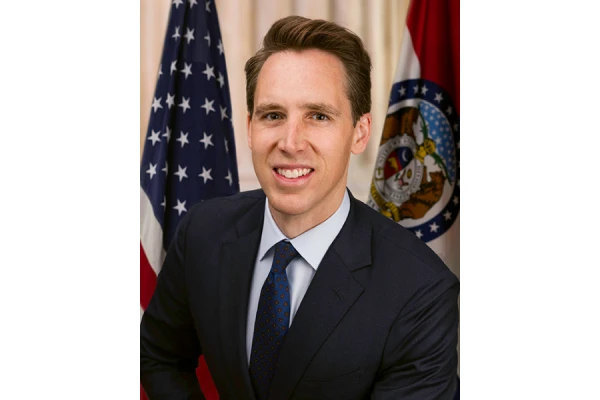
CNA Staff, Jun 16, 2020 / 04:28 pm (CNA).- Sen. Josh Hawley called Tuesday for religious conservatives to “stand up and speak out” for religious liberty in light of the recent Supreme Court decision in Bostock v. Clayton County.

The decision redefined discrimination in federal civil rights employment law to include gender identity and sexuality. 

In a June 16 floor speech, Hawley referred to the decision as “historic,” and “seismic,” adding that the decision marked the end of the “legal conservative project.”

The senator said religious conservatives have long voted for certain candidates under the presumption that they would appoint judges who would protect religious liberty. The Missouri senator classified himself as one of these “religious conservatives.”

“If this case makes anything clear, it is that the bargain that has been offered to religious conservatives for years now is a bad one,” said Hawley.

This unspoken bargain, he claimed, is that religious conservatives “go along with the (Republican) party establishment,” including supporting policies that, in his view, do not benefit lower- and middle-class workers, in exchange for “some judges on the bench who supposedly will protect your Constitutional rights to freedom of worship to freedom of exercise.”

Hawley was particularly critical of policies he said cut taxes on the rich and help out “multinational corporations,” while doing nothing to prevent jobs from going overseas.

“We are supposed to stay quiet about all of that and more because there would be pro-Constitution religious liberty judges. Except for they aren’t,” he said. “These judges don’t follow the Constitution.

“What (religious conservatives) sought together was protection for their right to worship, for their right to freely exercise their faith as the First Amendment guarantees, for the right to gather in their communities, for their right to pursue the way of life that their scriptures variously command and that the Constitution absolutely protects. That’s what they have asked for, that’s what they have sought all these years,” said Hawley.

The Supreme Court did not rule on the fate of churches and other religious institutions in its decision on Monday, writing that these topics were “questions for future cases.”

“No doubt they are,” said Hawley, saying these are “huge questions.” He added that he will “eagerly await” what the “super legislators across the street in the Supreme Court building” will have to say on this topic.

Hawley criticized his fellow legislators for failing to pass legislation on issues of critical importance.

“There’s only one problem with this piece of legislation,” Hawley said, referring to the Supreme Court’s decision.

“It was issued by a court, not by a legislature. It was written by judges, not by the elected representatives of the people. And it did what this Congress has pointededly declined to do for years now, which is to change the text and the meaning and the application and the scope of a historic piece of legislation.”

Hawley said that the other members of the legislature are “terrified” to put a vote on a potentially contentious issue on the record. He said that the legislature is now no longer accountable to the people who elected them, that in their refusal to pass legislation, “courts rush in.”

Now, said Hawley, is the time for religious conservatives “to bring forward the best of our ideas on every policy affecting this nation” and stop remaining silent on issues such as economics, trade, race, class, and “every subject that matters for what our founders called the general welfare.”

“The bargain which religious conservatives have been offered is not tenable,” said the Senator. “So I would just say it’s not time for religious conservatives to shut up. We’ve done that for too long. No, it’s time for religious conservatives to stand up and to speak out.”


[…]

No Picture
News Briefs

‘Let Michael be the miracle’ – The baby healed through Fr. McGivney’s prayers

June 16, 2020 CNA Daily News 0

Washington, D.C. Newsroom, Jun 16, 2020 / 01:10 pm (CNA).- Catholics have a whole host of saints to choose from in times of trouble or anguish. There’s St. Rita, patroness of the impossible, St. Dymphna, the patroness of anxiety, and when all else fails, there’s always the patron of lost causes himself, St. Jude.

But when the Schachle family of Dickson, Tennessee, needed a saint – and a miracle – they went a different route.

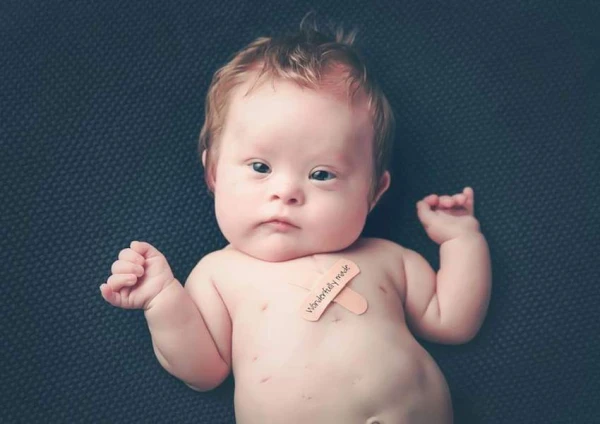
When Michelle Schachle found out that her 13th child not only had Down syndrome, but fetal hydrops–an uncommon, typically fatal condition where fluid builds up around the vital organs of an unborn child–she and her husband appealed to Fr. Michael McGivney, founder of the Knights of Columbus, for help.

The unborn Schachle was given “no hope” – the combination of fetal hydrops and Down syndrome meant that he had no chance of survival.

“The doctor that ran the neonatal high risk clinic at Vanderbilt University told us that she had been doing this for 30 years and she had never seen a child survive the diagnosis,” Daniel, the baby’s father, told CNA. Michelle had already had one stillborn child, and she was overcome with fear at the thought that would happen again.

Asking Fr. McGivney for his intercession was a no-brainer for the Schachle family. Daniel works for the Knights of Columbus and had previously been Grand Knight of his local council. The Schachles even dubbed their homeschool the “Fr. McGivney Academy.”

“We’ve worn out his prayer card over the years,” said Daniel. When it came time to invoke some spiritual help during a crisis, there was no question about what they would do next.

“We knew that (Fr. McGivney) looked out over our family, and we looked to him a lot and asked him to pray for us, anyways. So it was more of a natural, I would say, flow,” said Daniel. Michelle concurred, telling CNA that McGivney had answered prayers “many times” for their family.

When they prayed for their unborn baby, Fr. McGivney came through again – in a big way. With hundreds of people praying for McGivney’s intervention for her child, and following a quick pilgrimage to Fatima with the Knights of Columbus, Michelle’s next ultrasound showed no sign of fetal hydrops.

Her doctor that day, initially unaware that her patient was the woman she had heard about – the woman with the terminally ill baby – began to discuss what they would do when the baby was born. Michelle was confused by that development.

“And so I just looked at her and I said, ‘Doctor, I was told there was no hope’,” she told CNA. She said learning her son would likely survive his birth sent her into “a lot of shock” and that the rest of that day was a blur.

One thing Michelle clearly remembers, however, is being asked by her doctor what she would name her baby. Until that day, she and her husband had planned to name the baby Benedict, and had been referring to him as “Baby Ben.” But when she heard that her child had been healed, Michelle knew he had to be named Michael, in honor of McGivney.

“I just remember weeping and saying, ‘His name is Michael,’” said Michelle. “And we never called him Ben after that.”

On May 27, 2020, Pope Francis confirmed what the Schachles already knew: they had witnessed a miracle. After extensive medical examination, the unexplained healing of Michael was decreed a miracle that arose through the intercession of Fr. McGivney.

As a result of that miracle, McGivney will be beatified, and referred to as Bl. Michael McGivney.

The Schachles told CNA it had crossed their minds that their prayer could lead to the miracle needed to advance Fr. McGivney’s cause for canonization, but that was not their specific goal in asking for his intercession.

“I remember praying the whole, the entire trip (to Fatima), ‘let Michael be the miracle,’ but like in my heart of hearts, that meant he would live,” Michelle explained to CNA. “And I never thought beyond him living…I only wanted him to live.”

Daniel told CNA that he remembered thinking, “There’s gotta be a baby (who) survives this at some point. Why can’t it be ours?” along with “You know, Fr. McGivney needs a miracle. Why can’t it be Michael?”

During the investigation into Michael’s healing from fetal hydrops, the Schachles were repeatedly asked why they did not pray for Michael’s healing from Down syndrome as well. They explained that they viewed a child with Down syndrome as a “blessing” to their family, and that they were only concerned about him being born alive.

Despite the miraculous healing from fetal hydrops, the rest of Michelle’s pregnancy did not go entirely according to plan. She delivered her son in an emergency cesarean section after just 31 weeks gestation. Michael weighed only 3 pounds 4 ounces, and spent the first 10 weeks and one day of his life in the hospital.

Michael was born on May 15, 2015. They call him Mikey.

Even with Michael’s early arrival into the world, the hand of providence – and Fr. McGivney – was at work with the Schachle family.

Michael’s birthday, May 15, is the anniversary of the chartering of the first Knights of Columbus council. Michelle and McGivney have the same birthday. Both Michael and McGivney were born into families of 13 children – McGivney was the eldest, and Michael the youngest.

Michael was born with a heart defect commonly found in children with Down syndrome, and had heart surgery at just seven weeks old. He had another brush with death at six months old, when he came down with a respiratory illness that landed him in the hospital for six weeks.

But today, Michael is a happy and active five-year-old. He has no conditions related to his prematurity or fetal hydrops, and, by his family’s account, he’s thriving.

His parents told CNA that while their youngest “definitely knows he is special” and “knows that he is the king of the world,” he is not yet aware about the miraculous circumstances surrounding his birth. They say that Michael has strengthened their prayer lives, and has made a “big impression” on his doctors.

“There were times where (the doctors) were like, ‘We don’t know what’s going to happen and he’s going to make it or not,’” Michelle said to CNA. “And I’m like, ‘I don’t think you understand, God has big plans for this child.’” 

“When God shows up like that, it changes everything,” she said.


[…]

No Picture
News Briefs

Trump admin to allow homeless shelters to serve on basis of biological sex

June 15, 2020 CNA Daily News 1

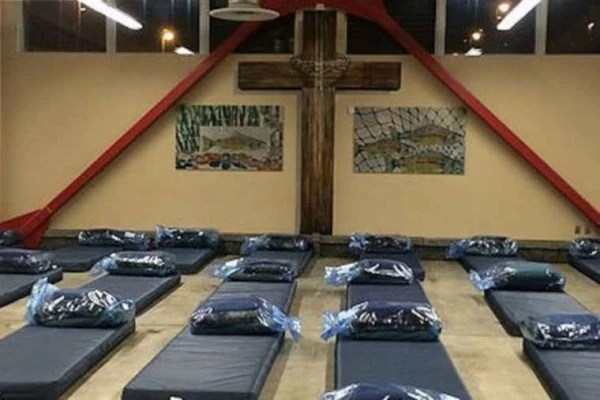
CNA Staff, Jun 15, 2020 / 03:32 pm (CNA).- The Department of Housing and Urban Development is set to roll back an Obama-era rule that requires single-sex homeless shelters to accommodate clients based on their gender identity.

The new rule will allow single-sex shelters to serve only those whose biological sex aligns with their residents, according to a report from the Washington Post.

According to the new rule, a shelter that denies access to a transgender client must recommend the client to another shelter. A shelter may still choose to serve transgender people, but if it does, the shelter must do so consistently.

Alliance Defending Freedom Senior Counsel Kate Anderson said that the proposed HUD rule allows shelters to live out their religious principles, which may conflict with admitting transgender people into a same-sex shelter.

“There is no need to force shelters to violate their faith or impose a blanket federal policy that forces vulnerable women to share space with men who claim a female identity,” said Anderson. “Some of the faith-based organizations we’ve represented in court have faced hostility—and even the threat of closure—by government officials who disagree with their religious beliefs. That’s why we are glad HUD is proposing a rule that at least returns this issue to local control and otherwise lets shelters set their own admissions policies to carry out their mission.”

The rule retains the HUD 2012 “equal access” rule, which mandated that homeless shelters be “open to all eligible individuals and families regardless of sexual orientation, gender identity, or marital status.”

The 2012 rule left room for single-sex shelters to deny housing to transgender clients. A 2016 study conducted by the Center for American Progress found that only 30% of female homeless shelters were willing to house biological males.

The ambiguity regarding the treatment of transgender and non-gender conforming clients prompted a 2016 rule, which required shelters to serve transgender people – even if their biological sex does not align with the rest of the shelter’s residents.

As evidence of unfair discrimination against transgender homeless people, the 2016 rule cited a report by the U.S. Interagency Council on Homelessness which stated that many transgender people face “dangerous conditions” in shelters that align with their biological sex. The report said that given the choice between a single-sex shelter that serves their biological sex or the streets, “many transgender shelter-seekers would choose the streets.”

In light of the safety and discrimination concerns for transgender people in shelters that align with their biological sex, the 2016 rule mandated that “In no case may a provider’s policies isolate or segregate transgender or gender nonconforming occupants.”

But the 2016 rule gave rise to concerns over communal bathrooms, showers, and sleeping areas, especially for women who have been abused.

Counsels for the US Conference of Catholic Bishops said that the 2016 regulations “purport to protect health and safety,” yet “they fail to advance, and in fact positively undermine, these and other legitimate interests, including expectations of privacy.”

The newly proposed HUD rule states that there is “anecdotal evidence that some women may fear that non-transgender, biological men may exploit the process of self-identification under the current rule in order to gain access to women’s shelters.”

The rule cites a pending civil complaint from nine California women that an all-women’s homeless shelter facilitated abuse by admitting a male who identified as a woman, according to the Washington Post report. 

“HUD does not believe it is beneficial to institute a national policy that may force homeless women to sleep alongside and interact with men in intimate settings,” the new rule says, “even though those women may have just been beaten, raped, and sexually assaulted by a man the day before.”

[…]

No Picture
News Briefs

Catholic summer camps take campfires virtual

June 14, 2020 CNA Daily News 0

Minneapolis, Minn., Jun 14, 2020 / 12:00 pm (CNA).- When it’s time for camp this summer, Catholic youth around the country will listen to inspirational talks, make friends in small groups, and sing praise and worship music around a bonfire– all in their very own living room and backyard.

In light of COVID-19 restrictions, many Catholic summer camps have had to close their doors this summer. But some of those camps aim to provide a camp experience to kids this summer, albeit virtually, and to keep themselves afloat while they do it.

“The Lord saw our hunger to reach the young people and he said, listen, I’m going to overcome this barrier,” said Dan DeMatte, founder and executive director of Catholic Youth Summer Camp (CYSC). The camp, based in Centerburg, OH, plans to offer both an in-person and a virtual camp experience this year.

Camp Wojtyla, based in Colorado, will offer a virtual program for kids and their families to engage in daily activities such as challenges, videos, and prayer. But as a wilderness camp, the idea of adapting Camp Wojtyla to an online format initially seemed odd.

“It is a little outside of our wheelhouse,” Eby told CNA. “We really do try to minimize screens. There’s not too much technology, or I guess modern technology, at our wilderness camp.”

Totus Tuus is a week-long catechetical day camp program run in dioceses around the country.

Cassie Zimmer, a 20 year old Totus Tuus missionary in the diocese of Marquette, will lead a team of six missionaries to deliver a completely virtual summer program. This summer marks her 3rd year teaching the program.

“We have to just kind of learn how to be good at doing videos,” said Zimmer. “I don’t even know if this is a Totus Tuus program, per say, it’s more of a Totus Tuus TV program.”

Adapting a Catholic summer camp to a screen requires immense creative genius.

The virtual program from CYSC will employ a box of materials delivered to each virtual camper’s door, which will contain materials for activities and games.

“Imagine your son or daughter pitching a tent in their bedroom or their backyard or their basement, and having all the aspects of catholic youth summer camp brought to them on a daily basis through the whole course of the week,” DeMatte said in a video promoting the camp to parents.

The kids at CYSC will even have a virtual cabin leader, who will remotely guide his or her small group through the same kind of activities a kid would expect at summer camp.

At Camp Wojtyla, campers will be encouraged to build a chapel out of materials they find outside, like flowers, rocks, and sticks. Every morning, they will be encouraged to pray there before plugging into the camp’s introductory video, called “gritty masters,” over breakfast. The video will explain the day’s activities, and will subtly encourage campers to do their dishes.

Campers will have the opportunity to join in a summer camp bonfire at the end of the week, though with some social-distancing modifications.

Virtual campers will be invited to build their own fire and join in livestreamed songs and chants– all the things that ought to culminate a summer camp experience.

“We try to take as much of our typical day to day program that is at camp and help people to live that out in their own home, with a virtual platform, that will allow for real experiences,” Eby told CNA.

Although the Totus Tuus program differs vastly in each diocese, Totus Tuus staff in the Diocese of Marquette, Michigan, will offer a weekly “data drop” to those who sign up for the program. The staff will be busy all summer recording and editing videos, employing everything from saint costumes to gorilla suits to keep campers engaged.

At first, 19 year old Ethan Wilcox, a seminarian who will teach the virtual program this year, doubted the viability of a virtual Totus Tuus program.

“I thought, there’s no way, how is this going to work?” said Wilcox.

But In spite of the limitations, many camp organizers are confident that virtual platforms, such as Zoom, will have a meaningful impact on kid’s lives.

“Kids are having encounters with Jesus. We’re had kids filled with the Holy Spirit and transformed over the Zoom platform,” DeMatte told CNA.

“If we buy into a lie that God can’t work powerfully over an online version of camp, then He’s not going to be able to work powerfully over an online version of camp.”

DeMatte compared those who lack faith that God will work over a virtual platform to the people of towns in the Gospels that lacked faith in Christ. Jesus never worked a miracle in those towns, DeMatte noted.

“The level of our faith we have determines the degree to which God’s power can be activated in people’s lives,” said DeMatte.

“With the new evangelization, technology is really something that the Church needs to look into,” said Wilcox. While he was quarantined at home due to the coronavirus, Wilcox broadcast videos of himself singing praise and worship music over Facebook Live and was overwhelmed by the response.

He sees technology as “a tool for the Church.”

“The Catholic Church has stepped up to meet people in the digital age,” said Grace Theoret, an 18 year old Totus Tuus missionary in the Diocese of Marquette. She described a plethora of digital Catholic conferences that were made available this spring.

The digital platform will allow many summer camps to reach a much wider audience than ever before.

In just eight weeks of virtual ministry this spring, DeMatte said that Damascus Catholic Mission Campus, the organization overarching CYSC, reached over 150,000 people. At Camp Wojtyla, Eby said she has seen a lot of families sign up for the virtual camp who had initially been waitlisted.

Emma Kate Callahan, a 21-year-old Totus Tuus missionary in the Diocese of Pueblo, CO, said that Totus Tuus is now able to virtually minister to four more parishes than it had originally planned for this summer.

Despite the potential for a wider reach of their ministry, some worry that the camps’ reliance on technology will compromise their potential for meaningful relationships.

“You don’t really have the same interactions online,” said Callahan. “You just can’t beat being face to face with a child and looking into their eyes and seeing the face of Jesus.”

This concern is shared by many parents, who wonder if online Catholic summer camp is a worthy investment.

“It’s hard to replace being in person with people, no matter how creative we are with content,” said Anna Witham, an early-childhood educator in Minnesota. “As an educator and a parent and a Catholic, it’s important for me to give my kids real experiences.”

“I’m a hard no on virtual summer camp,” Mary Walker, a youth minister in the Diocese of Arlington, VA, told CNA.

“Me and a few of my friends have decided that because we’re probably going back to virtual learning in the fall, that we need to have as few screens as possible during summer as possible to kind of reset and reboot,” she said.

“I’ve always been a parent who tries to limit screen time,” said Witham. “I hadn’t even thought to sign my kids up for anything like that because I feel like they needed a break from structured activities delivered via screen.”

Walker described how gross-motor skills, such as climbing a jungle gym or playing outside, facilitate learning fine motor skills, such as holding a pencil. Both she and Witham said that their kids’ summers will be full of bike-riding, hiking, playing outside, and imaginative play.

But Walker said that there’s a reason beyond spurning technology to opt out of Catholic summer camps.

“Parents are the primary educators of their children in matters of faith,” she told CNA. “And I think it’s prime time for parents to stand up and take ownership of that.”

In fact, many Catholic summer camps are embracing the fact that parents will be able to engage in the material alongside their children.

DeMatte said that Catholic Youth Summer Camp’s goal is “not to do the ministry for parents, but to facilitate the ministry for parents.”

“We were getting messages from families saying, this is the first time we’ve ever played together, or, this is the first time that dad has ever goofed off with the kids,” DeMatte told CNA. “And that’s revolutionary in a family.”

“What do we have? Families,” said Zimmer, who leads her six-person Totus Tuus team. “We can build up the family unit. We are gearing this towards hopefully being able to help the parents teach the kids.”

“There’s opportunity there to have the parents involved in the mission just as much as the kids are,” said 22 year old Ben Gregory, who is part of Zimmer’s team. “(It’s) likely there will be conversations happening amongst the families.”

By engaging the whole family, moreover, Catholic summer camps hope to simply stay afloat themselves. One summer without camp could threaten the existence of many programs.

“The summer camp industry, as a whole, is really in danger right now,” said DeMatte. “I think you’ll see a lot of camps close.” He described that 60%-75% or more of a summer camp’s revenue is generated over the summer. One summer’s campers, moreover, fuel the next year’s admissions.

“I hope that being in this environment with other Catholics, that for our campers and our families and all who are part of our mission, we can come together and say, ‘this isn’t going to be forever,’” said Eby. “We’ve got to keep the hunger, the desire, the flame.”

Regardless of how their camp is delivered, many Catholic summer camps share the determination to remain steadfast to their mission of sharing Christ.

“We don’t exist to run summer camps, we exist to proclaim the name of Jesus,” said DeMatte. “If we think of this from heaven’s perspective, God is like, ‘are you kidding me, you don’t think I can’t change kids’ lives through an online platform?’”


[…]