No Picture
News Briefs

Christians face the pandemic in Palestine
July 15, 2020 CNA Daily News 0

Rome Newsroom, Jul 15, 2020 / 01:25 pm (CNA).- Facing the global coronavirus pandemic, Palestine has “the special and unique challenges of being under colonialism and a touristic country,” a Palestinian Catholic from the Bethlehem area told CNA.

Rula Shomali, communications officer at the Latin Catholic Patriarchate of Jerusalem, told CNA that Palestinians, and especially Palestinians Christians, face unusual challenges while fighting the coronavirus pandemic.

“With a state of low income and poor resources, and a country that has fought colonialism for years, it is difficult to fight two colonizations at once; the Israeli occupation and COVID-19,” she said.

In recent weeks, coronavirus infections skyrocketed in the West Bank. As of July 9, there were 4,673 infected people and 22 deaths from COVID 19 in the West Bank. At the end of May, there had been only 400 infections and two fatalities. The renewed spread of the infection is jeopardizing the Palestinian Authority’s efforts to counter the epidemic.

Shomali said that “we are already living in a large open prison, having the checkpoints and the wall surrounding our area. Having to deal with its consequences everyday leaves us in the same situation that the lockdown and quarantine measures have imposed.”

She added that “as a Palestinian working in Jerusalem, I have to cross the checkpoint every day to pass from Bethlehem to Jerusalem. To be able to do so, I should have a specific and valid permit.”

“During the outbreak” – Shomali recounted – “all the permits stopped, and the checkpoint was closed. My colleagues and I weren’t able to reach our offices, and it took some time for the Patriarchate to arrange our coming to work.”

Working from home was also hard, because “our internet connection is very slow, and our laptops do not have access to everything we need. I had a three months old baby girl! (now she is six months!) which makes working from home harder than I thought. My other colleges have sisters and brothers who had exams and online classes with only one laptop at home, which made the progress of work slower.”

Three months of lockdown seemed at first to defeat the spread of the infection. But numbers in recent weeks show that the pandemic is still spreading in Palestine.

“One of Palestine’s current risk factors is the intense social mixing, us living in overcrowding urban slums and camps, inadequate sanitation, and our specific cultural and faith practices that let people interact frequently,” explained Shomali.

She stressed that “family gatherings at wedding and funerals are the major reason that prevented the Palestinian government from protecting its people from the second wave of COVID-19.”

In addition to that, “people find it difficult to change their social behaviors suddenly. Some think of it as inappropriate to meet someone and not shake hands, or congratulate someone and not to kiss, or to leave someone and not to hug. These are the things we were raised doing: social gatherings and crowding!”

The new outbreak of pandemic took place in an area in downtown Hebron, called H2, which is administered by the Israeli government. Shomali said that “the Palestinian government has no authority there, so many people held weddings and funerals uncontrollably.”

Shomali noted that Palestinian authority has taken preventive measures to counter the infection, “despite the Palestinian low-income economics, and the lack of major health facilities and tools.”

She said that “since March 2020, the Palestinian Ministry of Health and the government imposed a closure on the Bethlehem area and asked people to go under lockdown after returning a Greek group who was on tour in Bethlehem, that was found to be infected with COVID-19.”

The proclaimed state of emergency measures resulted in the closure of many organizations and institutions, and so many employees and workers lost their jobs. The government, Shomali, said, “implemented various protective measures” and at the same time “raised awareness through TV channels and social media.”

Shomali said that life in Palestine is “definitely harder. I live 10 minutes away from my parents, and I can’t visit them because of the restrictions and because of my fear of infecting them. Also, since March, I couldn’t reach my office. The business stopped in the Bethlehem area. We are facing a critical financial situation, as some of us stopped receiving salaries, and others received small percentages of it. We pay rent, have loans, bills, and other fees, besides our daily expenses of food, and other necessary needs for my toddler.”

Before the COVID pandemic, life in Palestine was “simple,” while “during the outbreak of COVID-19, we stuck at home, we worked and studied online.”

“Many families had a hard time doing so due to the lack of laptops or smartphones in the house and poor internet connection. Many lost their jobs and couldn’t afford to pay the bills, rent, and so. Our allowance for food and cleaning products increased, as we are home all the time, and it was during winter, so we needed more food! Besides all that, our anxiety increased, and we suffered sleep deprivation, it was hard to get a new routine during the pandemic.”

Shomali said that “many people couldn’t afford to buy their basic needs, as their business stopped, they lost their jobs – as Bethlehem is considered to be a tourist town and its income mainly depends on tourism.”

The coronavirus outbreak also affected the Latin Patriarchate of Jerusalem. “As well as struggling with the effects of decades of military and economic occupation, the pandemic left us with severe adverse impacts on our income, that many couldn’t pay school fees, which is one source the Latin Patriarchate of Jerusalem depends on for the salaries of its teachers and employees,” Shomali said.

Shomali also noted that “a big part of our challenge as Palestinians living in a small community is not only the social visiting and the risk of infecting each other but also misinformation and rumors spreading on social media which have generated panic and mistrust among people, who their attention was diverted from the outbreak response and prevention and the great work done by the health-care workers, to passing down rumors and false information.”
[…]

No Picture
News Briefs

Texas pro-life Democrat wins run-off primary election

July 15, 2020 CNA Daily News 0

CNA Staff, Jul 15, 2020 / 11:00 am (CNA).- A pro-life Texas state senator won his Democratic primary race on Tuesday, after being the target of aggressive negative campaigning – including ethnic slurs from pro-abortion groups.

Sen. Eddie Lucio (D) of Texas’ 27th district won his primary runoff against Sara Stapleton-Barrera on Tuesday, receiving 53.6% of the vote to Barrera’s 46.4%.

Lucio, of Mexican descent, has served in the Texas state senate since 1991. He has voted for legislation to ban dismemberment abortions, to bar taxpayer funding of abortion, and to improve Texas abortion reporting.

During his 2020 campaign, Planned Parenthood Texas Votes PAC and the pro-abortion Texas Freedom Network referred to him as “Sucio Lucio” in direct mail campaigns and online, literally meaning “dirty Lucio.” The term “sucio” has historically been used as an anti-Mexican slur.

Some critics of Lucio said the term was used in reference to his political tactics, but Lucio, along with his son who is a state representative, said it is offensive in the region of his South Texas district.

Rep. Eddie Lucio III in a press release condemned the “derogatory and racial slurs” against his father.

“These big special-interests groups from outside our border community should comprehend the deeper connotations behind the word ‘sucio’ (‘dirty Mexican’) and the association with a person of Hispanic descent,” he said.

Bishop Daniel Flores of Brownsville also issued a statement saying that the reference was “derogatory,” noting that “‘Sucio’ is an unacceptable word when associated with a Mexican American family name.”

Lucio advances to the general election, where he will face off with Republican nominee Vanessa Tijerina who was arrested in June and charged with possession of drug paraphernalia and a DWI.

In an interview with CNA last week, Lucio said his pro-life views were informed by his upbringing in a Catholic family of ten who attended St. Joseph parish in West Brownsville.

He told CNA that he was attacked for his pro-life views, but that he wouldn’t be deterred. “I don’t make any excuses for that, and I don’t apologize for that,” Lucio said.

He added that his pro-life views “from conception until natural death” bring him in opposition at times to both political parties, as Democrats “will support a woman’s right to an abortion” while Republicans may vote against expanding Medicaid or in support of the death penalty.

Susan B. Anthony List, which contributed mail and digital ads in Lucio’s favor, said they were “thrilled” over his victory, especially since Barrera supported abortion until birth.

Lucio, said the group’s president Marjorie Dannenfelser, “is a Democrat who has bucked his party’s abortion extremism” and who “will continue to faithfully represent the interests of pro-life Texans who believe in commonsense limits on abortion that protect unborn babies and their moms.”

[…]

No Picture
News Briefs

Cardinal Dolan blesses the remains of immigrants who died from coronavirus

July 15, 2020 CNA Daily News 0

CNA Staff, Jul 15, 2020 / 11:00 am (CNA).- Cardinal Timothy Dolan blessed July 11 the remains of over 200 Mexican immigrants who died from coronavirus complications in New York.

The Archbishop of New York led the liturgy on Saturday at Saint Patrick’s Cathedral in New York City. There were the cremated remains of 220 people, which are now being transported to Mexico for burial.


Today I prayed for and blessed the ashes of more than 230 Mexicans who died of the coronavirus. The Consul General, Jorge Islas Lopez, was here and the remains are being taken back to Mexico for burial. pic.twitter.com/otNgqP9U7X

— Cardinal Dolan (@CardinalDolan) July 11, 2020


“I send them our love and our sympathy and our prayer. These good people have become a part of our home and family but they never forget you back in Mexico. They love you very much,” said Dolan, according to ABC 7.

According to the New York Times, the state has more than 430,000 confirmed cases of coronavirus, over half of which occurred in New York City. As of Tuesday, coronavirus complications have caused 32,092 deaths across the state and 22,808 of those deaths occurred in the city.

The cardinal prayed over the immigrant’s remains and blessed them with holy water. Organizers noted that burying the dead is a corporal work of mercy.

The private service only included a small number of attendees as many of the deceased individuals did not have family here in the U.S.

Jorge Islas Lopez, the Consul General of Mexico, helped organize and attended the event. He will escort the ashes back to Mexico, where they will be reunited with the families. 

“Many of them died alone because they didn’t have family here. We planned with their families in Mexico and will lay them to rest with the dignity and respect they deserve,” Lopez said, according to ABC 7.

“These families suffered because they weren’t able to be with their loved ones at the time of death,” said Dolan. “And now to know that they’ve had God’s blessing here at the cathedral and that they’re going to be accompanied to their home in Mexico, with the hope of their eternal home in heaven and that we’ve sought the intercession of their madre, Our Lady of Guadalupe, it means a lot to me.”


[…]

No Picture
News Briefs

Statue of Virgin Mary beheaded at Tennessee parish

July 15, 2020 CNA Daily News 0

CNA Staff, Jul 15, 2020 / 10:40 am (CNA).- A third statue of the Blessed Virgin Mary has been attacked. The statue, at a parish in Chattanooga, Tennessee, was the third reported incident against a statue of Mary over last weekend. 

“What a strange time [we live in],” Bishop Richard Stika of Knoxville tweeted on July 13. “Over the weekend, an outdoor statue of the Blessed Mother was beheaded at St. Stephen Parish in Chattanooga.” 

On the morning of Saturday, July 11, Fr. Manuel Perez, pastor of St. Stephen Catholic Church in Chattanooga, was walking the church grounds and preparing for Mass when he noticed that the statue of the Blessed Virgin Mary had been knocked over. Upon further inspection, he noticed the head of the statue was nowhere to be found, although the body and pedestal of the statue remained. 

“Fr. Perez said that he looked around the church grounds to see if he could find a missing head and he couldn’t locate it,” Jim Wogan, director of communications for the Diocese of Knoxville, told CNA. 

The statue is about five feet tall and estimated to be worth about $2,000. There was no other damage to the church, and Wogan said that the statute was partly shielded by shrubbery. 

Wogan said he could not think of any reason why St. Stephen Catholic church would be targeted by vandals. 

“Anytime something like this happens, it’s disappointing and it’s concerning,” said Wogan. 

He added that there no local controversy around the church and there was no known motivation for the attack, “and that can be almost more troubling than knowing, sometimes.” 

The decapitation of the Blessed Mother statue at St. Stephen occurred on the same weekend as several other high-profile acts of vandalism at Catholic churches across the country, including the desecration of statues of the Virgin Mary. In Boston, a statue of Mary was set on fire, and in Brooklyn, a statue was tagged with the word “IDOL” in black spray paint. 

Wogan described the national atmosphere as a “very chaotic time in our history,” and said that “anger seems to be sort of a default setting for people right now.” 

“And I think our Bishop and our pastors would hope that people would remember the sort of example that is set in the Gospels–that, we’re to treat each other as we’d want to be treated,” he said.

Police investigation into the act, and the possibility that it was a hate crime, is ongoing. 

[…]

No Picture
News Briefs

Expert on abortion and mental health says Turnaway Study is ‘flawed’

July 14, 2020 CNA Daily News 0

Washington, D.C. Newsroom, Jul 14, 2020 / 07:00 pm (CNA).-  

A developmental psychologist told CNA that a study claiming most women do not regret their abortions is flawed, and does not accurately represent how women experience abortion.

The study, known as the Turnaway Study, is the subject of a new book titled “The Turnaway Study: Ten Years, a Thousand Women, and the Consequences of Having—or Being Denied—an Abortion,” by Diana Greene Foster, PhD. The book was published on June 2, 2020.

The Turnaway Study originated from Advancing New Standards in Reproductive Health (ANSIRH), which is based at the University of California, San Francisco. ANSIRH conducts scientific research domestically and abroad on topics related to reproductive health.

The study describes itself as “the first study to rigorously examine the effects of receiving versus being denied a wanted abortion on women and their children,” and studied women from 30 abortion clinics nationwide who either were denied an abortion because they were past the gestational limit; were initially denied an abortion as they were past the gestational limit but later received one; and those who received a first-trimester abortion.

In January 2020, the authors of the study reported that approximately 95% of women who had abortions did not regret their decision five years after the fact, even if they did initially experience regret.

“Even if they had difficulty making the decision initially, or if they felt their community would not approve, our research shows that the overwhelming majority of women who obtain abortions continue to believe it was the right decision,” said Corinne Rocca, PhD, MPH, an associate professor at the USCF’s Department of Obstetrics, Gynecology and Reproductive Sciences. Rocca is the first author of the Turnaway Study.

“This debunks the idea that most women suffer emotionally from having an abortion,” Rocca claimed.But Dr. Priscilla Coleman, a professor of human development and family studies at Bowling Green State University disagrees with the study’s conclusion and methodology. She told CNA she believes the methodology of the study is “highly problematic.”
 
“In any other field, you wouldn’t be able to publish this stuff,” Coleman told CNA. She said the “politically correct” conclusions found by the Turnaway Study are why it has received widespread acceptance. 

Coleman has testified as an expert on abortion and mental health in state and civil cases involving abortion, in state legislative hearings on abortion, before a U.S. Congressional committee, and to legislatures in the United Kingdom and Australia.

According to Coleman, the composition of the sample studied is one of the biggest flaws associated with the data.

“Initially, only 37.5% of the women who were invited to participate agreed to participate,” said Coleman. “And then, across the study period, 42% dropped out. So the final results are based on 22% of eligible women.”

Coleman was also critical of other research methods used by the authors of the Turnaway Study. As the legal limit to terminate a pregnancy varies from state-to-state, the study may have put two women who had abortions at considerably different points in their pregnancies together in the same research group. She said that many of these delineations were not made clear by the study’s authors, which further complicates their conclusions.

The sociologist also believes that the conclusions drawn by the Turnaway Study do not mesh up with other academic research on the topic.

“Most of the literature–the peer-reviewed scientific articles–indicate that a significant percentage of women are at risk for regretting their abortions,” she told CNA.

“Not every woman’s going to regret her abortion or have mental health problems, but there’s an increased risk. And so that’s something women have a right to know about prior to undergoing the procedure.”

Coleman explained that while the Turnaway Study has produced many academic articles about its results, they do not show the full picture of the risks of abortion, and that women deserve to know more about the risks that accompany the procedure.

Women “have a right to know what the broader scientific literature indicates,” said Coleman.

“There are hundreds of studies and if (women seeking abortions) are only given the results of the Turnaway Study, they’re not being informed, they’re being misled. And that’s problematic in my view.”


[…]

No Picture
News Briefs

Indoor events, public Masses again suspended by California governor’s order 

July 14, 2020 CNA Daily News 0

CNA Staff, Jul 14, 2020 / 05:41 pm (CNA).- With coronavirus cases spiking in California, the governor has issued new orders banning indoor events including public Masses in much of the state.

On Monday, Governor Gavin Newsom suspended all indoor activities at restaurants, entertainment venues, museums, and zoos throughout the entire state. In 30 counties seeing the bulk of new cases, houses of worship, gyms, and hairdressers will also be forced to halt indoor operations.

These counties, which house 80% of California’s population, also cover several Catholic dioceses.

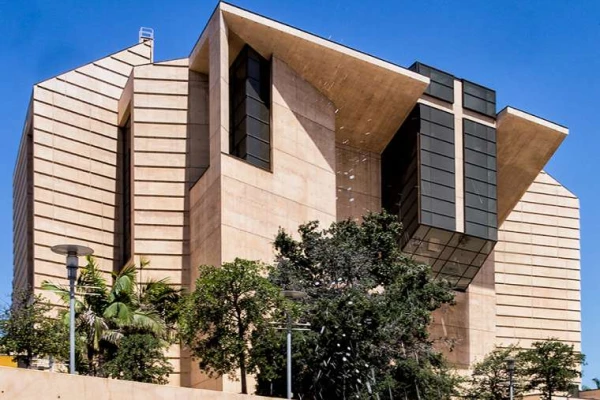
A July 13 letter from the Archdiocese of Los Angeles to local parishes called the development “discouraging.” It instructed priests to discontinue indoor Masses, but noted that outdoor Masses and other prayers services, such as adoration, will be permitted.

“Parishes may continue to celebrate Confessions, First Communions, Confirmations, Funerals, and Weddings outdoors on the parish grounds. Parishioners must wear face coverings and practice social distancing, even outdoors,” the letter says.

The governor’s directive will also close parish offices to the public, but it will permit a small number of essential staff to continue employment in the office as long as social distancing requirements are followed.

The Los Angeles archdiocese has encouraged parish offices to communicate with parishioners, answer questions via phone, and “reassure individuals and families that our parishes are still there for them in prayer and to help with any needs they may have.”

Other dioceses in the state issued similar statements.

“I know this feels very discouraging for many of the faithful and I share in that pain,” said Bishop Gerald Barnes of San Bernardino. “Please be assured of my prayers and my solidarity with the people at this moment.”

“Let us continue to turn to God to console us in this time of uncertainty and testing. He is always with us and our faith in Him will guide us through this pandemic.”

California is one of a number of states that has begun seeing a rise in coronavirus cases after easing pandemic prevention measures in May.

Since the pandemic began, California has seen over 330,000 confirmed cases of Covid-19 and 7,000 related deaths. There has been a 48% increase in cases in the past two weeks.

On Monday, California reported a 26% increase in COVID-19 related hospitalizations and a 19% increase in ICU patients during the last two weeks. The report stated that 72% of ventilators and 35% of ICU beds are still available.

Governor Newsom said Monday that the recent data is a cause for “caution and concern.” He said it is important that restriction decisions be based on local data and conditions.

“We’re moving back into a modification mode of our original stay-at-home order, but doing so utilizing what is commonly referred to as a ‘dimmer switch,’ not an ‘on and off switch,’” he said, according to NPR.

The Archdiocese of Los Angeles has also emphasized the dangers of the virus, encouraging parishioners to pray and take efforts to remain healthy.

“This is also a good time to remind all of our parishioners that the risk of coronavirus is real, and it is dangerous. While these Orders are discouraging and disappointing, this is the time to pray for one another, trust in Jesus, and focus on the care and love he has for each one of us,” the statement reads.

“May Jesus, through the intercession of Mary, Queen of the Angels, continue to bless our parishes and loved ones with good health, joy, and peace.”


[…]

No Picture
News Briefs

Man arrested on assault charges after incident at St. Louis statue

July 14, 2020 CNA Daily News 0

CNA Staff, Jul 14, 2020 / 05:36 pm (CNA).- A man in St. Louis has been charged with four counts of fourth-degree assault after police say he threw punches at people praying and defending a statue of St. Louis during a recent protest.

Terrence Page, 34, admitted to News 4 that he threw the punches, saying, “Real change doesn’t happen unless you take those risks.”
 
He said he thought there were KKK members defending the statue, and argued that “their presence alone is terrorism, because they instill fear.”

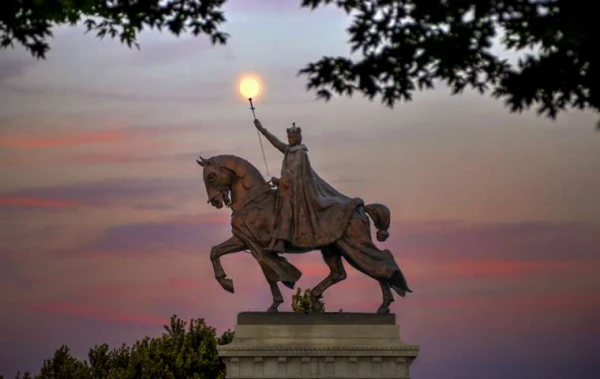
The incident took place June 27 near the Apotheosis of St. Louis statue, which sits in the city’s Forest Park in front of the Saint Louis Art Museum. It was erected in 1906 and depicts Louis IX of France, for whom the city is named.

In recent weeks, some protestors have called for the removal of the statue, as well as the renaming of the city. On June 27, some 200 people surrounded the statue in protest. One organizer said the statue “represents hate” and “is not a symbol of our city in 2020.”

Catholics defending the statue at the protest prayed the rosary and sang, and several police officers separated them from the protesters.

Videos posted online appear to show Page confronting counter-protestors, growing agitated, and punching at least person in the head repeatedly. Police say there were four victims of the assault. One of the individuals was later diagnosed with a concussion, according to local media.

Page defended his actions, telling News 4, “Maybe you can slap some sense into somebody sometimes. And they’ll think differently.”

St. Louis was King of France from 1226-70, and he partook in the Seventh and Eighth Crusades. He restricted usury and established hospitals, and personally cared for the poor and for lepers. He was canonized in 1297.

The Archdiocese of St. Louis released a June 29 statement defending the city’s namesake.

“For Catholics, St. Louis is an example of an imperfect man who strived to live a life modeled after the life of Jesus Christ. For St. Louisans, he is a model for how we should care for our fellow citizen, and a namesake with whom we should be proud to identify,”  the archdiocese said.

It highlighted St. Louis’ care and concern for his subjects, especially the poor— pointing to reforms that he implemented in French government, which focused on impartial justice, protecting the rights of his subjects, steep penalties for royal officials abusing power, and a series of initiatives to help the poor.


[…]

No Picture
News Briefs

Court denies Catholic priest’s motion asking for delay of prisoner’s execution

July 14, 2020 CNA Daily News 1

CNA Staff, Jul 14, 2020 / 04:01 pm (CNA).- The chief judge of a federal district court in Indiana denied Tuesday a motion to delay the execution of Dustin Honken, which is scheduled to take place Friday, until a treatment or vaccine for coronavirus is widely available.

Fr. Mark O’Keefe, OSB, filed the motion for an injunction, asking that the execution be delayed so he could fulfill his “sacred religious duty to minister Mr. Honken at his execution” while not risking his own “life and health.”

Jane Magnus-Stinson, chief judge of the US District Court for the Southern District of Indiana, denied the motion July 14, saying it was unlikely that O’Keefe could successfully argue that the execution would violate his religious freedom rights, as well as procedural rights.

Edward Wallace, an attorney for Fr. O’Keefe, responded that “The First Amendment bars the federal government from burdening an individual’s exercise of his religion unless there is a compelling government interest. Today’s ruling ignores the fact that there is no legitimate government interest in forcing a priest to choose between fulfilling his sacred duties and protecting his own and others’ lives and health.”

Wallace added that the executions of Honken and another inmate, Wesley Purkey, should not be carried out “in the midst of a global pandemic and a burgeoning outbreak in the federal prison population.”

Honken was convicted of the murder of five people, including a single mother and her two daughters aged ten and six years old, in 2004. His execution is scheduled July 17.

The motion to delay the executions were filed by Fr. O’Keefe and by Dale Hartkemeyer, who is the Buddhist minister to Purkey. They asserted that the scheduled executions put them at “serious personal risk due to potential exposure to the coronavirus,” and thus violate the Religious Freedom Restoration Act and the Administrative Procedure Act.

The Department of Justice argued that while the ministers’ “sincerely held religious beliefs require them to attend to the spiritual needs” of the inmates as they face execution, it “has imposed no substantial burden on the plaintiffs’ free exercise of those beliefs because the plaintiffs are ‘not themselves the subject of government regulation.’” It added that the supposed impediment to the scheduled execution, the pandemic, “is not one of the Government’s making.”

Magnus-Stinson wrote that “to show a government-created substantial burden” under RFRA, “a plaintiff must identify some government action with a ‘tendency to coerce individuals into acting contrary to their religious beliefs.’ The mere scheduling of an execution imposes no obligation or restriction on the religious advisor whom the condemned prisoner has selected to attend. And the plaintiffs’ claims as stated in their complaint rest entirely on the setting of Mr. Purkey’s and Mr. Honken’s execution dates during the pandemic. Accordingly, the plaintiffs have not shown more than a negligible likelihood of demonstrating a substantial burden on their religious beliefs, as required to prevail on their RFRA claims.”

The schedule executions of Honken and Purkey are pursuant to the Justice Department’s 2019 announcement that the federal bureau of prisons would resume executions for the first time since 2003.

Five executions were scheduled between July 13 and Aug. 28. The first was carried out July 14. Challenges against the other three executions have failed, but the fifth inmate, Wesley Ira Purkey, had his execution temporarily halted July 2 by the Seventh Circuit appeals court.

Fr. O’Keefe, 64, is a Benedictine monk of St. Meinrad Archabbey and professor of moral theology at Saint Meinrad Seminary and School of Theology. He also ministers to the incarcerated and to cloistered nuns.

He has ministered to Honken for a decade, and has been approved to administer him last rites shortly before his execution.

Earlier this month Cardinal Joseph Tobin of Newark had asked President Donald Trump to commute Honken’s death sentence. The cardinal had frequently visited Honken while he was Archbishop of Indianapolis, and he testified that Fr. O’Keefe “confirms that the spiritual growth in faith and compassion, which I had witnessed in our meetings some years ago, continues to this day.”

While acknowledging Honken’s crimes as “heinous”, Cardinal Tobin asserted that his execution “will do nothing to restore justice or heal those still burdened by these crimes.”

“His execution will reduce the government of the United States to the level of a murderer and serve to perpetuate a climate of violence which brutalizes our society in so many ways,” Tobin claimed, noting that the use of the death penalty makes the United States an “outlier” in the world.

While the Church teaches that capital punishment is not intrinsically evil, both Pope Francis and his immediate predecessors have condemned the practice in the West.

Regarding the execution of criminals, the Catechism of the Council of Trent taught that by its “legal and judicious exercise”, civil authorities “punish the guilty and protect the innocent.”

St. John Paul II called on Christians to be “unconditionally pro-life” and said that “the dignity of human life must never be taken away, even in the case of someone who has done great evil.” He also spoke of his desire for a consensus to end the death penalty, which he called “cruel and unnecessary.”

And Benedict XVI exhorted world leaders to make “every effort to eliminate the death penalty” and told Catholics that ending capital punishment was an essential part of “conforming penal law both to the human dignity of prisoners and the effective maintenance of public order.”

In August 2018, the Congregation for the Doctrine of the Faith issued a new draft of the Catechism of the Catholic Church’s paragraph regarding capital punishment.

Quoting Pope Francis’ words in a speech of Oct. 11, 2017, the new paragraph states, in part, that “the Church teaches, in the light of the Gospel, that ‘the death penalty is inadmissible because it is an attack on the inviolability and dignity of the person,’ and she works with determination for its abolition worldwide.”

Reasons for that teaching, the paragraph says, include: the increasing effectiveness of detention systems, growing understanding of the unchanging dignity of the person, and leaving open the possibility of conversion.

Fr. Thomas Petri, O.P., a moral theologian at the Dominican House of Studies in Washington, D.C., told CNA at the time that he thinks this change “further absolutizes the pastoral conclusion made by John Paul II.”

“Nothing in the new wording of paragraph 2267 suggests the death penalty is intrinsically evil. Indeed, nothing could suggest that because it would contradict the firm teaching of the Church,” Fr. Petri continued.

[…]