No Picture
News Briefs

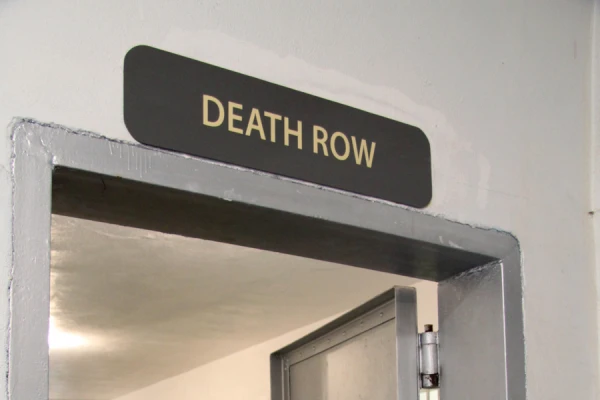
Second federal inmate executed after Supreme Court decision

July 16, 2020 CNA Daily News 0

CNA Staff, Jul 16, 2020 / 02:00 pm (CNA).- The second of five federal prisoners slated for execution was killed in the early hours of Thursday, July 16. 

Wesley Ira Purkey, 68, was originally scheduled to be executed Wednesday evening. The execution was delayed as a series of last-minute legal filings arguing that Purkey was not mentally competent enough to be executed.

The Supreme Court, in a 5-4 vote Thursday, let the execution proceed. Justices Stephen Breyer, Ruth Bader Ginsburg, Elena Kagan, and Sonia Sotomayor dissented and would have blocked the execution. 

The execution was held at the U.S. Penitentiary in Terre Haute, Indiana.

Purkey was sentenced to death in January 2004. His case was handled by the federal court system as he had kidnapped Jennifer Long, 16, in Kansas City, Missouri, and murdered her in Kansas, crossing state lines. Purkey confessed to Long’s murder while he was awaiting trial in Kansas for the murder of an 80-year-old woman with polio.

His lawyers argued that he should not be executed as he had dementia and claims of several other mental illnesses. 

On Wednesday, his attorney, Rebecca Woodman, described him as “a 68-year old, severely brain-damaged and mentally ill man who suffers from advanced Alzheimer’s disease and dementia.” 

“Though he has long accepted responsibility for his crime, he no longer has a rational understanding of why the government plans to execute him,” said Woodman.

Purkey apologized to Long’s family in his final words, saying “I deeply regret the pain and suffering I caused to Jennifer’s family. I am deeply sorry. I deeply regret the pain I caused to my daughter, who I love so very much. This sanitized murder really does not serve no purpose whatsoever.” 

Long was last seen getting into Purkey’s vehicle on January 22, 1998. Purkey claims to have sexually assaulted her before stabbing and dismembering her, and that he later burnt her body. Authorities were unable to find Long’s remains in the area where he claimed to have disposed of them. 

Purkey is the second federal prisoner to be executed this week, following the execution of Daniel Lewis Lee on Tuesday. All five of the condemned prisoners were convicted of the murders of children. 

Unlike in Lee’s case, where the family members of his victims were opposed to the death penalty, Long’s relatives were supportive–although they thought the process was too long. 

Long’s stepmother was critical of the numerous appeals. 

“All these appeals, some of them he put through several times. And then we sat in a van for four hours this morning while he did a bunch more appeals,” she said. “We just shouldn’t have to wait this long.” 

The resumption of federal executions has been controversial since plans were announced last summer. Prior to this week, the last federal execution was in 2003. 

The next scheduled execution is Dustin Lee Honken, who was sentenced to death in 2004 for the murders of five people, including two young girls and their mother. Honken is scheduled to be executed on July 17. 

Honken’s spiritual advisor, Fr. Mark O’Keefe, OSB, attempted to delay the execution due to the ongoing coronavirus pandemic. His request was denied.

Among the supporters of Honken’s bid for clemency is Cardinal Joseph Tobin of Newark, formerly the Archbishop of Indianapolis. Tobin personally asked President Donald Trump to commute Honken’s sentence to life in prison. 

In a letter to the president, Tobin explained that he had known Honken for seven years, and had witnessed his spiritual growth. Tobin wrote that Honken’s crimes are “heinous,” but that his execution “will do nothing to restore justice or heal those still burdened by these crimes.” 

“Instead, his execution will reduce the government of the United States to the level of a murderer and serve to perpetuate a climate of violence which brutalizes our society in so many ways,” Tobin wrote, noting that the use of the death penalty makes the United States an “outlier” in the world.  

“If his death sentence is commuted, Mr. Honken expects to spend his remaining days in prison,” Tobin wrote.

“By commuting this death sentence, you would help stem the tide of anger and revenge that threatens our country,” he told the president.

Other bishops have condemned the renewed use of the death penalty by the federal government after a 17-year moratorium. 

On July 7, Archbishop Joseph Kurtz of Louisville, Bishop William Medley of Owensboro, Kentucky, Bishop Oscar Solis of Salt Lake City, Bishop Thomas Zinkula of Davenport, Iowa, and Bishop Richard Pates who is the apostolic administrator of Joliet, Illinois, all joined more than 1,000 faith leaders in calling for a stop to scheduled executions of four federal death row inmates.

“As our country grapples with the COVID 19 pandemic, an economic crisis, and systemic racism in the criminal legal system, we should be focused on protecting and preserving life, not carrying out executions,” the faith leaders stated.

The Catechism of the Catholic Church paragraph 2267 on the death penalty was updated in 2018 with a statement from Pope Francis, calling the death penalty “inadmissible because it is an attack on the inviolability and dignity of the person.”

[…]

No Picture
News Briefs

Catholic universities welcome ICE reversal on international students

July 16, 2020 CNA Daily News 0

St. Paul, Minn., Jul 16, 2020 / 10:32 am (CNA).- A US Immigration and Customs Enforcement directive that would have forced thousands of international students to leave the country has been rescinded after it was challenged by a litany of lawsuits.

The directive, which was announced July 6, denied visas to international students with an exclusively online course load. It came after many colleges and universities announced plans to conduct the fall semester online, throwing the fate of international students into turmoil.

Catholic institutions praised the reversal of the directive.

The Association of Jesuit Colleges and Universities said in a statement that they were “heartened by the agreement” reached in the lawsuit between Harvard-MIT and the government.

“Our institutions’ ongoing advocacy stems from valuing global collaboration and having a keen awareness that the Jesuit mission of forming persons who are charged with making the world a better place is one that has no borders or boundaries,” said the AJCU.

President John J. DeGioia of Georgetown University, who signed an amicus brief in support of the Harvard-MIT lawsuit, told the university’s press that he was “thankful for the news” of the reversal. Previously he had called the ICE directive a “reckless action” on the part of the government.

The directive “creates new and unnecessary barriers for international students and puts their health, stability and academic progress at risk if they are unable to participate in classes in person,” DeGioia said. It failed to “recognize the invaluable contributions of our international students within our community and the impacts of this abrupt change during an ongoing pandemic.”

The Association of Catholic Colleges and Universities also spoke out against the directive, calling it a “heartless” policy.

“These are young people fully vetted by the U.S. government, given clearance to study here, and now partway through their programs. Sending them home, without a degree, would force them to start their lives over simply because a university is trying to keep its faculty and students safe as contagion levels continue to be unpredictable,” the ACCU stated. “There are difficult decisions to make in challenging times, but this is not one of those.”

Shivam Mishra came to the U.S. from Jamshedpur, India, to study accounting at the University of Dallas, a Catholic University in Dallas, Texas. Although the university plans to open for in-person classes in the fall, it is prepared to go online if it is overwhelmed with cases.

For Mishra, who is working towards a masters in accounting, the ICE mandate would have threatened his ability to earn his license as a Certified Public Accountant.

“I have invested my time, money, and then I was away from my family, my parents and everyone,” Mishra told CNA. “I came to the US just to have better opportunities.”

Rahul Ashok Lobo, a rising junior who is majoring in economics and political science at Notre Dame University, led the international student response to the university’s dealings with international students and the ICE mandate.

Lobo, who was born in India, grew up in the United Arab Emirates and Saudi Arabia, and now holds a passport from the United Kingdom, said that the policy changes “throw any sort of semblance of planning out the window.”

“Information hasn’t been very forthcoming recently, and that really leaves us and our imaginations to run wild in terms of what the fall semester is going to look like,” Lobo told CNA.

Even after the ICE policy was rescinded, Lobo said that a lot of uncertainty remains. Since the university has stressed the value of the in-person experience, it may continue to encourage international students, especially first year students, to take a leave of absence.

The ACCU also voiced concern for first year students.

“Yesterday’s decision resolved these issues for existing international students. We hope the administration will address the needs of new international students using the same flexibility during this pandemic,” the organization said in a statement.

Lobo said that not only are international students enriched by the campus experience, but the campus is enriched by a diverse student body. This fall, though, the campus will likely not be as diverse.

International students offer “a diversity of thought, opinion, background, and experience,” said Lobo.  “But the way things are looking, much of what Notre Dame prides in terms of diversity will simply be absent from fall semester on campus.”

Julie Sullivan, President of St. Thomas University in St. Paul, Minnesota, said in a statement that international students are an “integral and cherished part of the fabric of our community.”

“We are very grateful for the diverse, global perspectives our international students bring to the St. Thomas community, our state and our country,” Sullivan said.

[…]

No Picture
News Briefs

Anti-Catholic attacks merit national media scrutiny, Irish-American group says

July 15, 2020 CNA Daily News 1

CNA Staff, Jul 16, 2020 / 12:30 am (CNA).- National news media cannot ignore intolerance against Catholics, the Ancient Order of Hibernians has said, citing recent attacks on Catholic churches and vandalism of statues of saints.

The group cited an incident at Queen of Peace Catholic Church in Ocala, Florida, where a man crashed a minivan into the church and then lit it on fire with gasoline early on Saturday, July 11 while people were inside preparing for morning Mass.

“The Hibernians are appalled at the conspicuous lack of national news coverage, particularly among the national broadcast networks, surrounding this blatant attack. The absence of national reporting concerning such an egregious attack against a Catholic church is at stark variance with past coverage of similar despicable attacks against other faiths,” the group said July 13.

“This absence of coverage is particularly glaring given that this attack is only the latest in a wave of wanton destruction targeting Catholics including the vandalism of a Catholic church in Boston, a Catholic school in New York and the ongoing investigation of a fire that destroyed the historic 249-year-old San Gabriel Mission and over the same weekend.”

The Ancient Order of Hibernians was founded in 1836, based on similar groups in Ireland. It is the oldest and largest Irish Catholic organization in the U.S. and claims membership in all 50 states.

The Hibernians’ statement cited the ancient legal principle “silence implies consent,” criticizing the national media for showing “silence on the rising tide of anti-Catholic violence.”

“The Hibernians ask why such an outrageous attack targeting Catholics is less worthy of reporting than an attack on a house of worship of another faith or a public institution? The news media needs to take accountability for its apathy and blatant double standard and the creation of a shameful ‘hierarchy of outrage’ in which hate targeting Catholics is not ‘newsworthy’,” the group said.

The story of the attack and Shields’ arrest was covered by Fox News and the Associated Press, whose account was carried by the New York Times and Washington Post websites. However, a CNA review of ABC, CBS, NBC and CNN news websites found no additional coverage.

Stephen Anthony Shields, 24, of Dunnellon, Florida was apprehended by police and charged with attempted murder, arson, burglary, and evading arrest in connection with the Florida church attack.

According to local media, Shields told police he has been diagnosed with schizophrenia but is not currently taking prescribed medication. He said that he awoke on Saturday morning with a “mission.”

Shields also quoted scripture, especially the Book of Revelation, to officers, and told them his objections to the Catholic Church.

In 2019, Shields was arrested after swinging a crowbar at a woman and saying he wanted to kill her.

Also last weekend, in the Archdiocese of Los Angeles, the church of the Mission San Gabriel was destroyed by fire. The 18th century mission was founded by St. Junipero Serra, whom Pope Francis canonized during his 2015 visit to the U.S. The cause of the fire has not yet been determined.

Several statues of Serra have been torn down in recent unrest, with some critics claiming he committed violence against Native Americans. Demonstrators toppled his statues in Sacramento and San Francisco, while some institutions with statues of Serra have removed them from the public for safekeeping.

Serra was an advocate for native people and a champion of human rights, and was often at odds with Spanish authorities over the treatment of natives, according to historians. He helped convert thousands of native Californians to Christianity, and taught them new agricultural technologies.

Many natives showed an outpouring of grief at Serra’s death in 1784.

Archbishop Jose Gomez of Los Angeles defended the saint in his June 29 column for Angelus News, published before the fire at the mission.

“The real St. Junipero fought a colonial system where natives were regarded as ‘barbarians’ and ‘savages,’ whose only value was to serve the appetites of the white man. For St. Junipero, this colonial ideology was a blasphemy against the God who has ‘created (all men and women) and redeemed them with the most precious blood of his Son’,” Archbishop Gomez said.

Other acts of vandalism have also taken place recently at Catholic institutions. Several Catholic churches and cathedrals have faced graffiti and broken windows in recent riots.

Boston police are investigating an arson attack late July 11 on a statue of the Virgin Mary outside the church of St. Peter’s Parish in the Dorchester neighborhood of Boston. An unknown individual had set fire to plastic flowers in the hands of the statue, causing smoke and flame damage to the face, head, and upper body of the statue.

In the New York City borough of Queens, early Friday morning on July 10, a vandal spray-painted the word “idol” on the statue of the Virgin Mary at Cathedral Prep School and Seminary.

In a third incident, a statue of the Blessed Virgin Mary was beheaded last weekend at St. Stephen Catholic Church in Chattanooga, Tennessee.

[…]

No Picture
News Briefs

Report: 690 million people went hungry last year

July 15, 2020 CNA Daily News 3

CNA Staff, Jul 15, 2020 / 04:51 pm (CNA).- Almost 690 million people around the world were undernourished last year, according to a new United Nations report, continuing what experts say is a worrying increase in global hunger.

The number of people who went hungry in 2019 was up 10 million from the previous year, and up 60 million from five years ago, said a report entitled The State of Food Security and Nutrition in the World.

The report, released this month, was authored by international groups including the UN’s Food and Agriculture Organization, the UN’s International Children’s Fund, the World Health Organization, the World Food Programme, and the International Fund for Agricultural Development.

It warned that nearly 9% of the world’s population was undernourished last year, marking an increase in hunger despite international efforts to fight it.

The majority of people who went hungry in 2019 live in Asia, followed by Africa, the report said. Undernourishment is worse among women than among men, and the gender gap is growing.

The ongoing COVID-19 pandemic has worsened projections for nutrition and food security. Estimates suggest that the pandemic could add 100 million people to those who are undernourished this year.

In May, Catholic Relief Services launched a campaign to help address global hunger.

The agency warned that many countries were already experiencing a food crisis prior to the coronavirus pandemic. Now, unemployment, lockdowns, heightened food prices, and supply disruptions have made it even more difficult for impoverished families in many areas to get food.

CRS president and CEO Sean Callahan warned of a “shadow pandemic” of worsening hunger in vulnerable parts of the world.
“Now is the time for us to lead the way forward to ensure that these communities have the support they need to make it through this crisis and beyond,” he said.

“If we don’t provide adequate food to children now, it will impact them for the rest of their lives.”

The “Lead the Way on Hunger” campaign encourages Catholics to educate themselves and help fight global hunger through prayer, donations, efforts to raise awareness, and advocacy on behalf of foreign aid legislation.

Archbishop Bernard Hebda of St. Paul and Minneapolis, a member of the CRS board, praised the campaign as an expression of solidarity, work for the common good, and promotion of human dignity.

“We believe that each life, no matter how vulnerable, is precious,” the archbishop said.

Catholic Relief Services is active in many countries to help alleviate food insecurity. In Guatemala, the agency is helping offer packages of rice, corn, beans and oil for children who are at risk of undernutrition and often receive their only meal of the day through distribution programs at their schools, which have closed due to the pandemic. In the Philippines, CRS aided a home for people with disabilities to acquire a one-month supply of food and hygiene items.

Catholic Relief Services is also helping with instructions and supplies for hand-washing and sanitization, to help prevent the spread of the coronavirus.

[…]

No Picture
News Briefs

House committees reject pro-life amendments

July 15, 2020 CNA Daily News 1

CNA Staff, Jul 15, 2020 / 04:00 pm (CNA).- Efforts to remove abortion funding in next year’s federal budget failed in the House Appropriations Committee earlier this week.

Reps. Tom Cole (R-Okla.) and Andy Harris (R-Md.) offered pro-life amendme… […]