No Picture
News Briefs

US bishops approve use of coronavirus vaccines with ‘remote connection’ to abortion

December 14, 2020 CNA Daily News 0

CNA Staff, Dec 14, 2020 / 09:00 am (CNA).- The United States bishops’ conference has said that Catholics can take two of the three available COVID-19 vaccines, even though they were developed with a “remote connection” to “morally compromised” cell lines.

In a statemen released Monday, the bishops also said it is morally permissible in some circumstances to receive a third vaccine, developed in close connection with aborted cell lines, but that Catholics cannot allow the pandemic to “desensitize” or “weaken our determination” to oppose the evil of abortion. 

Bishop Kevin Rhoades of Fort Wayne-South Bend, the chair of the USCCB’s doctrine committee, and Archbishop Joseph Naumann of Kansas City in Kansas, chairman of the USCCB’s pro-life activities committee, outlined their concerns about the vaccines in statement dated December 11 and published on Dec. 14. Widespread rollout of coronavirus vaccine began in the United States on Dec. 14. 

“In view of the gravity of the current pandemic and the lack of availability of alternative vaccines, the reasons to accept the new COVID-19 vaccines from Pfizer and Moderna are sufficiently serious to justify their use, despite their remote connection to morally compromised cell lines,” said the bishops. 

Taking one of those vaccines, said the bishops, “ought to be understood as an act of charity toward the other members of our community.” 

In the statement Monday, the two bishops also outlined concerns regarding the three vaccinations produced by Pfizer, Moderna, and AstraZeneca, and outlined the position taken by the Church on other vaccinations developed either in part or entirely from cell lines from an aborted child. 

“The Holy See, through the Congregation for the Doctrine of the Faith and the Pontifical Academy for Life, has offered guidance on the question of whether it is morally acceptable to receive a vaccine that has been created with the use of morally compromised cell lines,” the bishops said. 

“Both the Congregation for the Doctrine of the Faith and the Pontifical Academy for Life emphasize the positive moral obligation to do good and in so doing to distance oneself as much as possible from the immoral act of another party such as abortion.”

The bishops also noted that “with regard to people involved in the development and production of vaccines, the Congregation for the Doctrine of the Faith explains that ‘in organizations where cell lines of illicit origin are being utilized, the responsibility of those who make the decision to use them is not the same as that of those who have no voice in such a decision.’”

In 1972, a female child was aborted in the Netherlands, and cells from her kidneys were extracted and developed into the cell line now known as “HEK293.” “HEK” stands for “Human Embryonic Kidney.” Cells from the HEK293 line have been commonly used in biologic research since the late 70s. 

The vaccinations produced by Pfizer and Moderna did not use HEK293 in their design, development, or production, but did use cells from the line in a confirmatory test, said the bishops. 

“While neither vaccine is completely free from any connection to morally compromised cell lines, in this case the connection is very remote from the initial evil of the abortion,” said the bishops. 

Conversely, the vaccine produced by AstraZeneca “should be avoided if there are alternatives available,” said the bishops, as this vaccine is “more morally compromised.” 

“The HEK293 cell line was used in the design, development, and production stages of that vaccine, as well as for confirmatory testing,” said Rhoades and Naumann. The two compared the AstraZeneca vaccine to the current rubella vaccine, which also was reliant on “morally compromised cell lines.” 

In the case of the rubella (German measles) vaccine, explained the bishops, the risk posed to an unborn child and the community at large by the illness outweigh the morality concerns related to the development of the vaccine. 

“In such a situation, parents are justified in having their children vaccinated against rubella, not only to avoid the effects of rubella on their children, but, secondarily and just as importantly, to prevent their children from becoming carriers of rubella, as the spread of rubella can lead to the infection of vulnerable pregnant women, thereby endangering their lives and the lives of their unborn children,” said the bishops. 

Rhoades and Naumann acknowledged that while Catholics should avoid the AstraZeneca vaccine in preference for one of the other two, it may not be possible for someone to do this without putting society at risk from the coronavirus. If this were to happen, a Catholic would be permitted to receive that vaccine. 

“It may turn out, however, that one does not really have a choice of vaccine, at least, not without a lengthy delay in immunization that may have serious consequences for one’s health and the health of others,” said the bishops. 

“In such a case, just as accepting a vaccination for rubella with a morally compromised vaccine is morally permissible because of the lack of alternatives and the serious risk to the public health, so it would be permissible to accept the AstraZeneca vaccine,” they said. 

A person who refuses to be vaccinated, said the bishops, has “a moral responsibility to undertake all the precautions necessary to ensure that one does not become a carrier of the disease to others, precautions which may include some form of self-isolation.”

While the vaccines for coronavirus are permissible to receive despite their moral flaws, it is imperative that Catholics “must be on guard so that the new COVID-19 vaccines do not desensitize us or weaken our determination to oppose the evil of abortion itself and the subsequent use of fetal cells in research,” they said. 

“For our part, we bishops and all Catholics and men and women of good will must continue to do what we can to ensure the development, production, and distribution of a COVID-19 vaccine without any connection to abortion,” said the bishops. 


[…]

No Picture
News Briefs

Biden makes further cabinet picks 

December 12, 2020 CNA Daily News 2

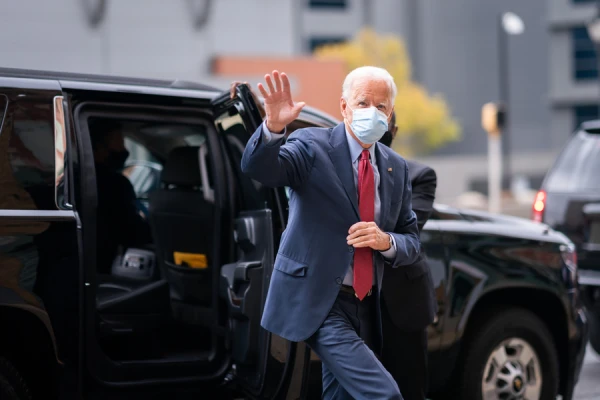
Washington, D.C. Newsroom, Dec 12, 2020 / 02:00 pm (CNA).- President-elect Joe Biden made several Cabinet appointments this week, offering insight into the possible policy priorities of his administration, and areas of concern for Catholic institutions.  

As CNA reported, Biden already appointed officials to the State Department and Department of Health and Human Services, sensitive departments which could have important repercussions on religious freedom issues both at home and abroad.

Biden’s selection of Obama-era officials Antony Blinken and Linda Thomas-Greenfield as Secretary of State and Ambassador to the United Nations could signal a continuance of that administration’s diplomatic approach to prioritizing LGBT rights while deemphasizing or taking a softer approach to promoting religious freedom.

Biden’s selection of California Attorney General Xavier Becerra as HHS Secretary has also raised serious questions about the possible effect his leadership could have on issues central to Catholic organizations.

Becerra was involved in two Supreme Court cases against pro-life groups and the Little Sisters of the Poor, and aggressively enforced California’s abortion coverage mandate. His office also continued fighting pro-life activist David Daleiden in court for his publishing of undercover conversations with Planned Parenthood officials.

Also this week, Biden tapped Rep. Marcia Fudge to be the Secretary of Housing and Urban Development. The agency oversees policy in a number of areas of concern to Catholics, including homeless shelters and fair housing practices.

Rules from that agency have drawn criticism from the U.S. bishops’ conference under both the Obama and Trump administrations.

In 2016, the Obama HUD required shelters partnering with the government to accept clients based on their gender identity and allow them equal access to facilities—through the Equal Access Rule. Under the rule, for instances, biological males identifying as female would have to be housed with women and have access to women’s bathrooms.  

The bishops said that the law “impeded” the ability of Catholic shelters to place clients based on their biological sex, and would threaten the security of women in single-sex housing.

Fudge supported keeping this rule, cosigning a July letter from members of Congress to the Trump administration asking them not to change it. She was also an original cosponsor of the Equality Act, which would make sexual orientation and gender identity protected classes in a number of areas, including housing.

This past summer, the USCCB was critical of the Trump HUD’s changes to federal fair housing rules. The conference said that the rule change—supposedly taken as an attempt to deregulate policy—weakened federal oversight against racial discrimination in housing practices.

Fudge has been hailed by groups like the National Fair Housing Alliance for her previous work to ensure equitable access to affordable housing.

Biden has also announced his pick of Susan Rice to head his Domestic Policy Council. Rice served in foreign policy circles in the Obama administration as Ambassador to the United Nations and then as National Security Advisor to President Obama.

Rice made promoting LGBT rights a priority in her work in the Obama administration, and has said that she is “pro-choice.” Planned Parenthood praised her appointment as UN ambassador, saying she would help bring “equality to women and women’s health around the world.”

In an August interview with NPR, Rice discussed her relationship with her son and areas of agreement and disagreement. “We disagree on things like choice. I’m pro-choice. He’s pro-life. That’s the kind of difference that we ought to be able to respect,” she said.

In 2016, Rice addressed an audience at American University about LGBT rights. Rice said that when the Supreme Court legalized same-sex marriage in 2015, she and her husband took a photo together outside the White House which was lit in rainbow colors.

“That Friday night of the landmark Supreme Court ruling, my husband I took a photo together that we cherish, outside of the White House lit up in the colors of the rainbow to celebrate what we’ve always known—that love is love is love,” she said.

Biden’s White House chief of staff will be Ron Klain, who previously served as his chief of staff when Biden was vice president.

In a June 11, 2019 op-ed in the Washington Post, Klain warned that the Supreme Court could overrule Roe v. Wade and “impose nationwide restrictions on abortion — even in pro-choice states — in the name of ‘fetal rights.’” During the campaign, Biden pledged to enact sweeping federal protections for unlimited abortion access in a bid to preclude future state limitations being placed on the practice.

Biden also made appointments to critical health care positions during the coronavirus pandemic. He tapped Vivek Murthy to be Surgeon General after he served in the position from Dec., 2014 until the end of Obama’s presidency.

Murthy supported the Obama administration’s contraceptive mandate; at his confirmation hearing in 2014, he was asked by Sen. Mike Enzi (R-Wyo.) if he believed “contraception coverage should be mandatory regardless of religion.”

Murthy did not confirm or deny that, but answered that “I respect people’s individual beliefs and religious beliefs” and that as surgeon general he would “bring the science, not just to the public, but to legislators as well” to make policy decisions.

On the subject of vaccine mandates, Murthy spoke out in 2015 of the need for parents to vaccinate their children against diseases such as measles and expressed concern about the spread of disease in areas where large religious communities refuse vaccinations.

“When you’re in a pocket with low vaccination rates, that’s when you find yourself at greater risk of getting measles,” Murthy said in an interview with CBS News.

Biden has also tapped two other Catholics as cabinet heads—Gen. Lloyd Austin who, if confirmed, would serve as the first Black Defense Secretary, and Denis McDonough, former White House chief of staff under Obama, to serve as Secretary of Veterans Affairs.


[…]

No Picture
News Briefs

US Supreme Court: government agents violating religious liberty liable for monetary damages

December 11, 2020 CNA Daily News 0

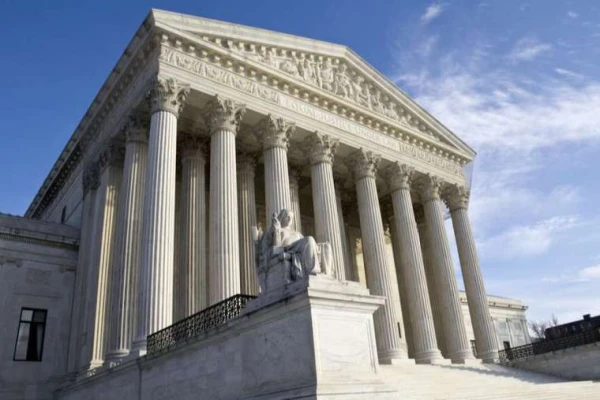
Denver Newsroom, Dec 11, 2020 / 05:02 pm (CNA).- Three Muslims who claim the FBI wrongly pressured them into becoming informants on Muslim communities may seek monetary damages as part of their lawsuit under a federal religious freedom law, the U.S. Supreme Court has ruled in a decision that strengthens legal action on religious freedom problems.

“This unanimous decision from the Supreme Court makes it clear that government actors have to take religious freedom seriously—they can’t change their tune and then avoid the consequences of their previous bad behavior,” Lori Windham, senior counsel at the Becket legal group, told CNA Dec. 11.

Windham said the court ruled that the Religious Freedom Restoration Act “gives religious claimants another way to protect their rights.”

“Again and again, we have seen cases where a government official violates someone’s religious freedom rights, then backs down when he or she has to go to court,” she said. “That leaves the religious person without any way to protect her rights in the future.”

The Becket Fund, a legal group focused on religious freedom issues, had filed an amicus brief in the Supreme Court case Tanzin v. Tanvir.

The case ruled on a lawsuit brought by three Muslim men, Muhammad Tanvir, Jameel Algibhah, and Naveed Shinwari, who said they were placed on the FBI’s No-Fly list in order to pressure them to act as informants on Muslim communities. They sought damages against individual officers, saying the matter falls under the Religious Freedom Restoration Act of 1993, which bars government from unlawfully burdening religious practice.

The Supreme Court sided with the plaintiffs 8-0. Justice Amy Coney Barrett, who is new to the court, did not participate because the cases were argued before she was confirmed.

The lawsuit dates to 2013. The Supreme Court did not rule on the facts of the case, but on whether the plaintiffs could seek monetary damages against officers.
“A damages remedy is not just ‘appropriate’ relief as viewed through the lens of suits against government employees,” said Justice Clarence Thomas in the court’s Dec. 10 opinion.

“It is also the only form of relief that can remedy some (religious freedom restoration act) violations,” he said. “For certain injuries, such as respondents’ wasted plane tickets, effective relief consists of damages, not an injunction.”

Thomas said that the agents may cite the doctrine of qualified immunity to argue they are shielded from lawsuits, as the constitutional rights allegedly violated were not clearly established at the time of their conduct. However, that was not before the court.

Congress could take other actions to shield government employees from liability, he said, “but there are no constitutional reasons why we must do so in its stead.”

The plaintiffs were all U.S. citizens or green card holders. Tanvir, the lead plaintiff, was a lawful permanent U.S. resident living in Queens. He was a long-haul truck driver who would often fly home after finishing a delivery route. In October 2010 he was turned away attempting to fly home from Atlanta. Two FBI agents took him to a bus station and his trip home took 24 hours.

Tanvir quit his job, but faced other problems trying to visit his ailing mother in Pakistan. He was not allowed to fly three separate times, after purchasing plane tickets. FBI agents allegedly told him he would be removed from the No Fly list if he became an informant.

The Trump administration has been generally supportive of the Religious Freedom Restoration Act, but in this case for its dismissal. The lawsuit would interfere with “sensitive matters of national security and law enforcement,” lawyers for the government argued.

Becket argued that government bodies commonly change harmful actions or policies as soon as they are challenged in court, then argue that because the harm has stopped those affected cannot bring a lawsuit.

“This doesn’t happen in every case, but when government officials have egregiously and knowingly violated someone’s religious freedom rights, they can be held accountable for their actions,” Windham commented. “If the case had gone the other way, it would mean there was no way to vindicate egregious violations of rights, so long as the government official backed down before the court rules.”

Windham said it was important to note that the court didn’t say how much the damages should be or decide whether the agents broke the law.

“This case just allows plaintiffs to have their day in court, and try to prove their claims,” she told CNA. “We have seen government actors violate religious freedom, and then back down, in cases involving free exercise on college campuses, churches using their own land for religious exercise, and prison inmates who want to worship or study religious materials. This decision makes it harder for government officials to get away with repeated violations of religious freedom.”


[…]

No Picture
News Briefs

Why in-person worship matters

December 11, 2020 CNA Daily News 3

Washington, D.C. Newsroom, Dec 11, 2020 / 02:00 pm (CNA).- After Virginia’s governor appeared to suggest that church attendance is immaterial to the act of worship, one theologian says that Catholics see worship differently.

On Thursday, Virginia Gov. Ralph Northam (D) asked religious leaders to consider holding liturgies outdoors or virtually during the Christmas season, as he announced new restrictions on public gatherings to control the spread of the coronavirus.

“The holidays are typically times of joy and community. We gather together, we celebrate our faith, and we celebrate with family,” Northam said. “But this year, we need to think about what is truly the most important thing. Is it the worship, or the building?” 

“To me, God is wherever you are. You don’t have to sit in the church pew for God to hear your prayers,” said the governor.

Northam, who has no formal theological education or training, added that “worship online is still worship.”

“So I strongly call on our faith leaders to lead the way and set an example for their members. Worship with a mask on is still worship. Worship outside or worship online is still worship,” he said.

Dr. Timothy O’Malley, director of education at the McGrath Institute for Church Life and academic director of the Notre Dame Center for Liturgy, told CNA on Friday that for Catholics to stay home out of caution during the pandemic might be laudable or necessary, but it is incorrect to say personal prayer, or even watching Mass online, can like-for-like replace attending a Mass in-person.

“You can’t just watch Mass and get the same thing out of attending the Mass,” he said. “The Eucharist alone makes that impossible, to receive the Body and Blood of Christ on Christmas is a gift. It requires presence.”

“In-person worship matters,” O’Malley said, and if Catholics are unable to attend Mass, they should consider the possibility to “worship together in smaller communities,” including as individual families in the home.

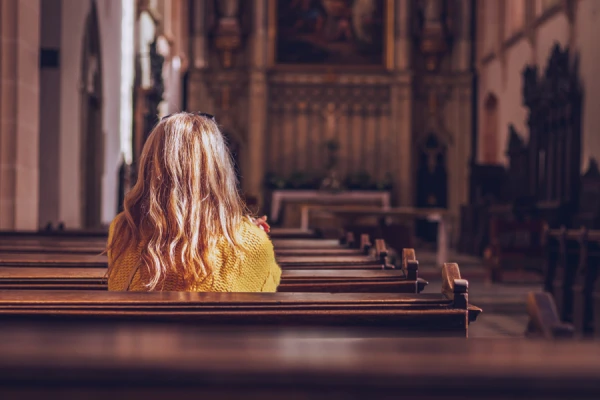
“For Catholics, matter matters,” he explained. “And that means the Church building is not just a container for human activity. It is a sacramental sign of the mystery being celebrated, the union of heaven and earth, the embodied memory of what Christ has accomplished on the cross.”

But, O’Malley said regarding Northam’s suggestions for outdoor liturgies, Catholic priests have historically offered Mass outdoors and, given the spread of the virus indoors, it might be a smart move for Christmas Mass.

“Much of the history of the liturgy has grown out of, at least initially, outdoor processions,” said O’Malley. “There is nothing intrinsically un-Catholic about outdoor Eucharistic liturgies. And in the time of a global pandemic, it may be wise to consider such opportunities.”

Churches were not subject to the Northam’s new gathering limits in Virginia, and the governor indicated that the exemption was due to the recent Supreme Court ruling in Diocese of Brooklyn v. Cuomo. In that ruling, a 5-4 Supreme Court majority halted the state’s restrictions that limited some indoor religious services to as few as 10 people.

“We are following suit with that,” Northam said on Thursday, noting that he would only encourage faith leaders and would not impose a legal mandate on them. He also imposed an indoor mask mandate on Virginians, but said the state would not be actively enforcing the order at churches.

In March, Northam’s public health restrictions made it a criminal offense to be at a non-essential gathering of more than 10 people—including inside a church. Local police stopped a Palm Sunday service at a Chincoteague Christian church that was attended by 16 people.

While both the Arlington and Richmond dioceses curbed Sunday Masses in the spring due to the spread of the virus, churches have been open again for Mass with the Sunday obligation still lifted during the pandemic.

O’Malley suggested that, for Catholics who are homebound during Christmas, they could perhaps pray the Liturgy of the Hours together.

“We can bend the knee before Christ in the creche. Worship in this sense, again, is not just thinking pious thoughts. It is using the material dimensions of Catholicism to enter into deeper communion with Christ,” he said.

In his letter Let us return to the Eucharist with joy released in September, the Prefect of the Congregation for Divine Worship and the Discipline of the Sacraments said Catholics must return to Mass “as soon as circumstances permit.”

Cardinal Robert Sarah said in his letter of televised or live-streamed services that “no broadcast is comparable to personal communication or can replace it. On the contrary, these broadcasts alone risk distancing us from a personal and intimate encounter with the incarnate God who gave himself to us not in a virtual way.”


[…]