No Picture
News Briefs

Knights of Columbus praise US listing of Nigeria as ‘Country of Particular Concern’

December 16, 2020 CNA Daily News 0

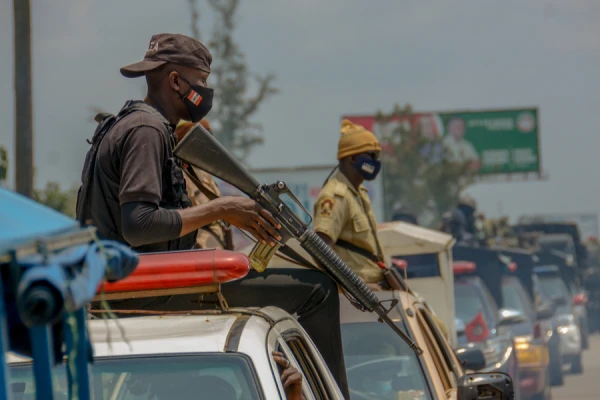
CNA Staff, Dec 16, 2020 / 02:30 pm (CNA).- The Knights of Columbus has praised the United States for listing Nigeria as among the worst countries for religious freedom, and calling renewed attention to the mass killings of Christians in Nigeria.

“Nigeria’s Christians have suffered grievously at the hands of Boko Haram and other groups,” Carl Anderson, Supreme Knight of the Knights of Columbus, stated on Wednesday, adding that the murders and kidnappings of Christians now “verge on genocide.”

Anderson made his statement after the State Department last week declared Nigeria is a “country of particular concern (CPC),” a formal designation reserved for the countries where the worst violations of religious freedom are taking place; the list China, North Korea, and Saudi Arabia.

U.S. Religious freedom ambassador Sam Brownback explained on Dec. 8 that the designation of Nigeria was given both for “religious-tinged violence” and terror groups operating in the country without an “adequate government response.”

The Knights of Columbus had been pushing the administration for months to draw attention to the plight of Christians in Nigeria.

“The Christians of Nigeria, both Catholic and Protestant, deserve attention, recognition and relief now,” Anderson said. “Nigeria’s Christians should be able to live in peace and practice their faith without fear.”

Anderson’s statement comes after news of another kidnapping of a Catholic priest, Fr. Valentine Ezeagu of the Congregation of Sons of Mary Mother of Mercy. He was kidnapped by four armed men in the southeastern state of Imo, while driving to his father’s funeral on Dec. 15.

At least eight priests and seminarians have been kidnapped in Nigeria in 2020, including an 18 year-old seminarian Michael Nnadi who was killed earlier in the year. Last week, hundreds of schoolboys in the country’s northwestern state of Katsina were kidnapped and remain missing; the terror group Boko Haram admitted culpability for the attack.

The country’s bishops have condemned the violence against Christians; Archbishop Ignatius Kaigama of Abuja stated on Dec. 15 that “[t]he level of incidents and the apparent impunity have become unacceptable and cannot be excused, for whatever reason.”

Anderson in August announced a new initiative of the Knights focused on religious persecution in Nigeria. Christians have suffered numerous attacks by militant Fulanis and Boko Haram, from killings to kidnappings to atrocities committed against women.

The group is funding the Institute for Ancient and Threatened Christianity (IATC), which collects evidence and testimonies of Christian victims of atrocities to assist with international determinations such as the State Department’s CPC designation.

A CPC designation carries with it certain punitive measures, although Brownback said the State Department waived the obligation for the President to act on those measures, with respect to Nigeria and several other countries.

Secretary of State Mike Pompeo explained on Dec. 10, “This is not the case that we want to call [Nigeria] out for the sake of punishment. We want to assist them in moving in the right direction.”


[…]

No Picture
News Briefs

Federal judge again rules against allowing Tennessee abortion waiting period

December 15, 2020 CNA Daily News 0

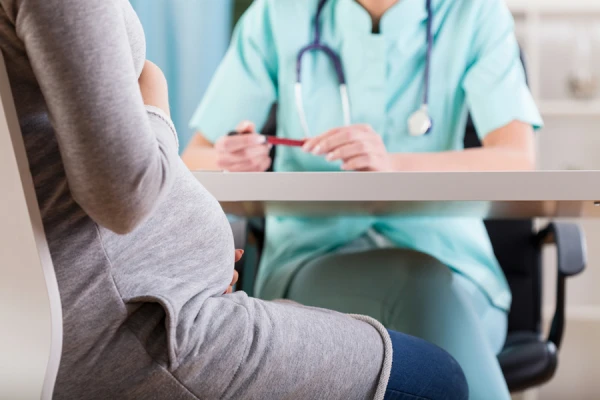
CNA Staff, Dec 15, 2020 / 03:25 pm (CNA).- A federal judge on Monday ruled against Tennessee for a second time this year, refusing to reinstate a 48-hour waiting period for abortions while the state appeals to a higher court.

In October, Judge Bernard Friedman ruled unconstitutional Tennessee’s mandatory 48-hour waiting period for women seeking abortion, which had been in effect since 2015.

Though waiting periods have been struck down before in state courts, this case marks the first time a federal court has struck down an abortion waiting period.

In the legal challenge brought by Planned Parenthood and the pro-abortion Center for Reproductive Rights, Friedman wrote that most women are already certain about their decision to have an abortion when they go in for their first appointment.

The judge said the regulation placed an “undue burden” on women’s “right to abortion.”

Tennessee Attorney General Herbert Slatery filed a motion in November in the U.S. District Court in Nashville asking Friedman to keep the waiting period law in place while the state seeks the opinion of the 6th U.S. Circuit Court of Appeals.

On Dec. 14, Friedman refused, reiterating his opinion that “the Tennessee statute constitutes a ‘substantial obstacle to a woman seeking an abortion’ and, thus, an undue burden.”

Tennessee Right to Life, a pro-life organization active in the state, decried the court’s October decision, contending that the waiting period had saved “countless unborn lives” and spared women the regret of abortion by allowing them extra time to identify life-affirming resources near them.

“Not only is this decision a slap at Tennessee’s abortion-vulnerable women, it is an affront to Tennessee’s voters who passed a 2014 constitutional amendment in which allowing a short waiting period was a key factor,” Brian Harris, president of Tennessee Right to Life, said at the time.

“Our organization remains committed to seeing a similar statute drafted and enforced during the next legislative session.”

Tennessee’s law required abortion doctors to inform a woman during her first appointment “that numerous public and private agencies and services are available to assist her during her pregnancy and after the birth of her child” if she chooses not to have the abortion.

Barring a medical emergency, a patient was then required to wait 48 hours before the second appointment and proceeding with the abortion.

Under Tennessee law, the district court’s striking down of the 48-hour waiting period would automatically bring a 24-hour waiting period into effect for the state, but Friedman also blocked the state from enforcing the 24-hour requirement.

At least 26 states mandate waiting periods for women seeking abortions, most of them 24 hours. Five states— Utah, Missouri, Arkansas, Oklahoma, and South Dakota— have a 72-hour waiting period in place.

In Iowa, the legislature passed a 72-hour waiting period during May 2017, which the Iowa Supreme Court in 2018 declared unconstitutional. The Iowa House and Senate passed a 24-hour waiting period requirement for abortion during June 2020, which also requires a woman to have the chance to view an ultrasound of the unborn child and to receive information on adoption.

In January 2020, the authors of a study from Advancing New Standards in Reproductive Health (ANSIRH) reported that approximately 95% of women who had abortions did not regret their decision five years after the fact, even if they did initially experience regret. Friedman cited that study in his opinion.

Dr. Priscilla Coleman, a professor of human development and family studies at Bowling Green State University who testified in the Tennessee case, told CNA that she disagrees with that study’s conclusion and methodology.

In addition, larger studies have turned up opposite conclusions. While it did not directly measure “regret,” a study by Dr. D. Paul Sullins of The Catholic University of America published in 2016 followed more than 8,000 women for over 13 years, and found that a significant increase in the relative risk of mental health disorders such as depression and anxiety for women who have abortions.


[…]

No Picture
News Briefs

US bill against Uyghur forced labor gets corporate lobbyist attention

December 14, 2020 CNA Daily News 0

CNA Staff, Dec 14, 2020 / 06:07 pm (CNA).- After legislation aiming to counter forced labor in the Chinese province of Xinjiang saw success in the U.S. House of Representatives, significant corporate lobbying has targeted the legislation in the Senate.

Critics have characterized the lobbying as an effort to weaken the bill, while several major companies have argued their policies already seek to remove forced labor from their supply chains.

The Uyghur Forced Labor Prevention Act passed the House on Sept. 22 by a vote of 406-3.

The legislation would treat all goods imported from China’s Xinjiang Uyghur Autonomous Region in the far west as being created with forced labor, unless certified otherwise by U.S. Customs and Border Protection. It would also require disclosures from businesses that engage with Chinese companies and would authorize sanctions on anyone determined to be responsible for labor trafficking of Uyghurs.

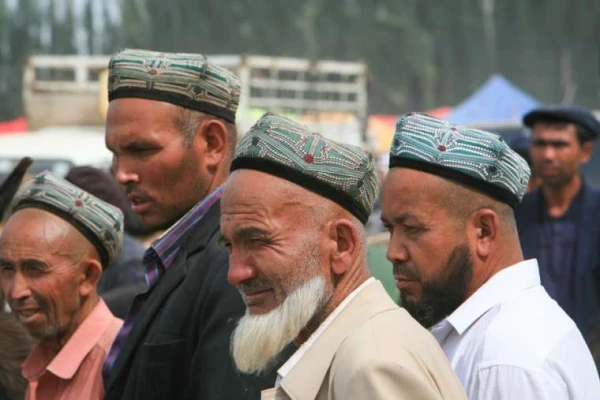
An estimated 1 million or more Uyghurs, members of a Muslim ethnoreligious minority group, have been detained in “re-education camps” in Xinjiang, which were first spotted on satellite imagery in 2017.

The Chinese government at one time denied the camps existed, but has since shifted to defending its actions as an appropriate terrorism prevention measure.

Those inside the camps are reportedly subjected to forced labor, torture, and political indoctrination. Women who have been imprisoned in the camps have told stories of forced abortions and sterilizations.

The Uyghur Forced Labor Prevention Act notes that the U.S. State Department determined in its 2019 human trafficking report that subsidies are offered to Chinese companies for opening factories near the internment camps.

If passed and signed into law, the bill would instruct the Secretary of State to determine whether the treatment of Uyghurs inside the internment camps constitutes genocide or other crimes against humanity, and to create a plan of response.

The Congressional-Executive Commission on China, a bipartisan group of legislators, issued a March report listing companies that have been suspected of using forced labor in Xinjiang. These include Adidas, Calvin Klein, Campbell Soup Company, Coca-Cola, Costco, H&M, Nike, Patagonia, and Tommy Hilfiger among others.

Some companies are lobbying to have their names removed from the forced labor prevention bill, which specifically accuses them of using forced labor from Xinjiang.

Lobbyists from multinational companies and the U.S. Chamber of Commerce have criticized the bill and dedicated resources to changing it, The New York Times and Washington Post reported last month.

The U.S. Chamber of Commerce joined seven other industry groups in a November letter saying they have a history of fighting forced labor. They advocated a comprehensive effort using the presidential administration, Congress, and foreign governments to address forced labor.

Critics of the bill worry it creates a “presumption of forced labor” which is difficult for accused companies to counter. Human rights advocates say that China has transferred Uyghur Muslims out of Xinjiang to work elsewhere in the country and it is difficult for any U.S. company with operations in China to ensure it isn’t benefiting from forced labor.

A March report from the Australian Strategic Policy Institute said O-Film Technology, a contractor for Apple, Microsoft and Google, among other companies, has received at least 700 Uyghur workers as part of a program that aims to “gradually alter their ideology.”

Foxconn Technology and other suppliers of Apple take part in similar employment programs.

Apple has suggested changes to the bill like extending compliance deadlines, releasing some supply chain information to congressional committees rather than to the public, and requiring the U.S. government to designate Chinese entities that help surveil or detain Uyghurs and other minority groups in Xinjiang, the New York Times reports.

Apple has disputed claims it wants to weaken the proposed law. The company said it backs stronger regulation and wants the Uyghur Forced Labor Prevention Act to become law, the New York Times reports. The company claims to have the strongest supplier conduct code in its industry, and its assessments include surprise audits.

“Looking for the presence of forced labor is part of every supplier assessment we conduct and any violations of our policies carry immediate consequences, including business termination,” Apple said in a statement.

“Earlier this year, we conducted a detailed investigation with our suppliers in China and found no evidence of forced labor on Apple production lines and we are continuing to monitor this closely.”

However, Cathy Feingold, director of the international department for the AFL-CIO labor union, countered that “What Apple would like is we all just sit and talk and not have any real consequences.”

“They’re shocked because it’s the first time where there could be some actual effective enforceability,” she told the Washington Post.

Xinjiang produces raw materials including cotton, coal, sugar, tomatoes and polysilicon. Its workforce includes apparel and footwear factory workers.

Nike has spent hundreds of thousands of dollars in 2020 to lobby Congress and government agencies on Xinjiang-related legislation, and Coca-Cola’s millions in lobbying expenditures include lobbying on the act. In March Nike said its products do not have sources in Xinjiang and it has confirmed its suppliers do not use yarn or textiles from the region.

Nike said that a factory in Qingdao, a major city in the eastern Shangdong province, stopped hiring new workers from Xinjiang in 2019, citing an independent audit’s reports that there were no Xinjiang employees there. However, the Australian Strategic Policy Institute report cited state media reports indicating around 800 Uyghur workers were there at the end of 2019 and made over seven million pairs of Nike shoes each year.

The Trump administration has taken action to block the import of some goods from the Xinjiang region and to sanction companies growing cotton in the area.

However, lawmakers sought additional action to respond to concerns that companies are profiting from the forced labor taking place in the internment camps, which have been compared to the concentration camps under Nazi Germany.

U.S. law already bars the importation of goods made with forced labor, but the law is rarely enforced and violations are hard to prove, the Washington Post said.


[…]