
No Picture
News Briefs

Baltimore Archdiocese sues insurers over abuse claims coverage
April 4, 2024 Catholic News Agency 1
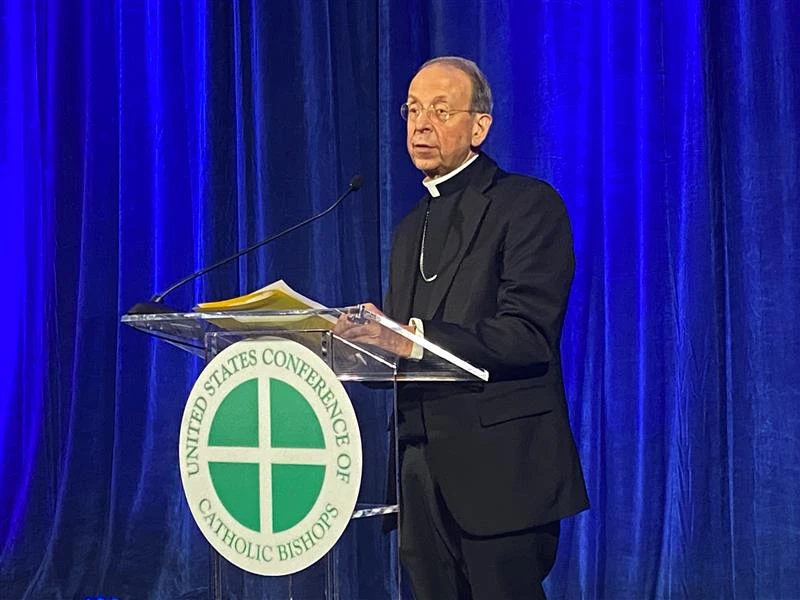
Archbishop William Lori of Baltimore, vice-president of the United States Conference of Catholic Bishops, at the USCCB’s fall meeting Nov. 15, 2023. / Credit: Joe Bukuras/CNA

CNA Staff, Apr 4, 2024 / 12:15 pm (CNA).

The Archdiocese of Baltimore is suing numerous insurers over their alleged failure to pay for abuse claims stretching back several decades.

The archdiocese filed for bankruptcy in September of last year ahead of a state law that ended the statute of limitations for civil lawsuits for negligence concerning child sexual abuse. The law opened the archdiocese up to abuse allegations stretching back decades.

With the Chapter 11 filing, “the archdiocese will be reorganized, victim-survivors will be equitably compensated, and the Church will continue its mission and ministries,” Archbishop William Lori said at the time.

In a new court filing last week, meanwhile, the archdiocese alleged that nearly two dozen insurers “have failed to acknowledge, or will fail to acknowledge” their obligations to “pay for the defense of the archdiocese” and its parishes.

The insurers have also allegedly failed to acknowledge their obligation to “indemnify the archdiocese and/or parishes, including the funding of any settlements or judgments.”

The 22 named insurers have contracted with the archdiocese at various times since 1956, the filing said. The archdiocese itself “timely paid all premiums” related to the policies.

The alleged refusal of the insurers to pay out the insurance claims “constitutes a breach” of the policy agreements, the archdiocese said. 

The filing asks the court to declare that the insurers are “obligated to pay in full” the “expenditures made by the archdiocese and parishes” pursuant to the claims. 

The archdiocese said it was requesting a trial by jury on the matter if the court deemed it necessary.

Lori said last year that the bankruptcy filing was “the best path forward to compensate equitably all victim-survivors, given the archdiocese’s limited financial resources, which would have otherwise been exhausted on litigation.”

“Staggering legal fees and large settlements or jury awards for a few victim-survivors would have depleted our financial resources,” the prelate said at the time, ”leaving the vast majority of victim-survivors without compensation while ending ministries that families across Maryland rely on for material and spiritual support.”

The archdiocese joined more than two dozen other U.S. dioceses that have filed for bankruptcy in recent years.

Most recently, the Diocese of Sacramento filed for bankruptcy after more than 250 lawsuits alleging abuse by Church officials. 

[…]

No Picture
News Briefs

Pro-abortion groups reach signature threshold to get amendment on Arizona ballot

April 3, 2024 Catholic News Agency 1
A sonogram picture of a fetus in the second trimester of a woman’s pregnancy. / Credit: Shutterstock

Washington, D.C. Newsroom, Apr 3, 2024 / 16:00 pm (CNA).

Pro-abortion groups that are trying to enshrine a right to abortion in the Arizona Constitution surpassed the required number of signatures to get their initiative on the November ballot.

The ad hoc coalition of pro-abortion organizations called Arizona for Abortion Access says it has collected more than 500,000 signatures — more than 120,000 more than is required to get the proposal on the ballot. The secretary of state’s office will still need to verify the signatures before the initiative will officially be on the ballot. 

The groups surpassed its goal more than three months before the state’s July 3 deadline to submit signatures. 

“We are well on our way to the November ballot thanks to all of you, and we won’t let up,” the coalition posted on X, formerly known as Twitter. “Arizonans deserve to have a say in our own health care decisions, once and for all.”

The Arizona for Abortion Access coalition includes well-known promoters of abortion, such as Planned Parenthood Advocates of Arizona and the American Civil Liberties Union of Arizona.

Current Arizona law permits elective abortions until the 15th week of pregnancy. The proposed constitutional amendment that will likely be on the ballot would extend elective abortion through the second trimester of pregnancy and legalize many abortions until the moment of birth.

The proposed amendment, which would add a new section to the state’s constitution, would declare that “every individual has a fundamental right to abortion.” It would prohibit the state from enacting restrictions on abortion until the point of viability. Although the amendment would allow some restrictions after viability, the state could not restrict post-viability abortions when the treating physician (who is often the abortionist) claims an abortion is necessary to protect the mother’s life, physical health, or mental health.

Under the proposed amendment, viability is defined as the point when the unborn child has “a significant “likelihood of … sustained survival outside the uterus without the application of extraordinary medical measures.” There is, however, no week-based limit, and viability would be determined by the treating physician or abortionist.

Arizona Right to Life, which opposes the proposed amendment, has warned that the proposal has “no restriction on the inhumane procedure of partial-birth abortion” and would “override parental rights” because “the necessity for parental consent would no longer be mandated if a 12-, 13-, or 14-year-old girl seeks an abortion.”

“[This proposal] eliminates almost every pro-life legislation in Arizona,” the organization warned. “The comprehensive undoing of laws safeguarding women and the unborn in Arizona would result from the loopholes, exceptions, and qualifications present in the language.​”

After the U.S. Supreme Court overturned Roe v. Wade in 2022, Arizona was one of nearly two dozen states to enact pro-life legislation by restricting abortion at the 15th week of pregnancy.

Several states have also enacted new pro-abortion legislation since the decision and some have approved amendments to their state constitutions. Since the Supreme Court decision, every pro-life proposal that has gone before voters in a ballot initiative has failed and every pro-abortion proposal that has received a vote via ballot initiative has passed.

[…]