No Picture
News Briefs

Mary points to Christ’s mercy, Pope Francis tells Fatima pilgrims

May 12, 2017 CNA Daily News 0

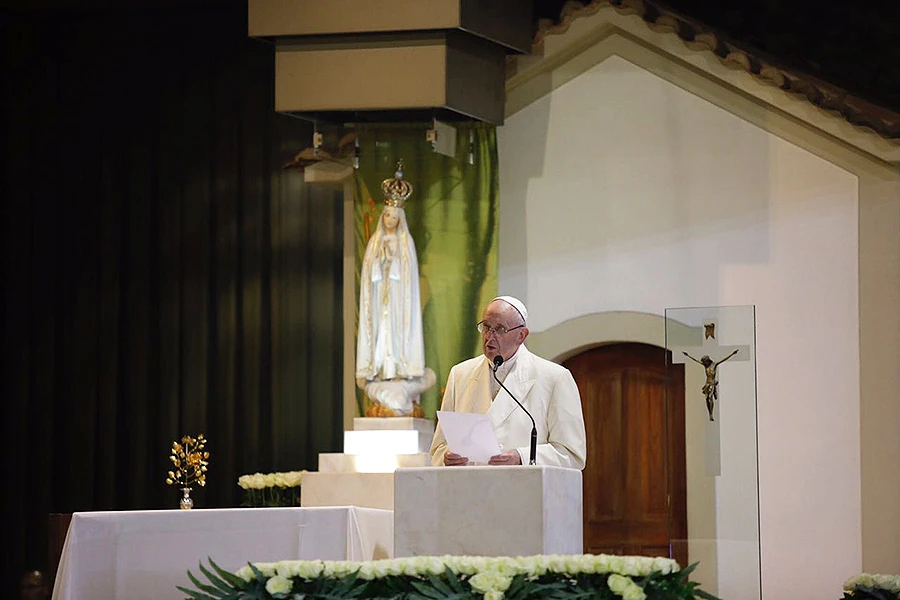
Fatima, Portugal, May 12, 2017 / 02:47 pm (CNA/EWTN News).- Pope Francis asked pilgrims in Fatima on Friday evening to think about the qualities the Virgin Mary possesses, being careful not to make her into something she is not – especially elevating her mercifulness above that of her Son.

“Pilgrims with Mary … but which Mary? A teacher of the spiritual life, the first to follow Jesus on the ‘narrow way’ of the cross by giving us an example, or a Lady ‘unapproachable’ and impossible to imitate?”

“The Virgin Mary of the Gospel, venerated by the Church at prayer, or a Mary of our own making: one who restrains the arm of a vengeful God; one sweeter than Jesus the ruthless judge; one more merciful than the Lamb slain for us?” Pope Francis asked May 12.

It is through Mary’s cooperation and participation in salvation that she also became a channel of God’s mercy, he explained, praying that with Mary, we might “each of us become a sign and sacrament of the mercy of God, who pardons always and pardons everything.”

“No other creature ever basked in the light of God’s face as did Mary,” he continued, and “she in turn gave a human face to the Son of the eternal Father.”

Pope Francis greeted pilgrims before leading the rosary at the Chapel of the Apparitions on the first night of his two-day pilgrimage to Fatima May 12-13 to celebrate the centenary of Mary’s appearance to three shepherd children in 1917.

During the visit to Fatima, the Pope will also say Mass, presiding over the canonization of two of the Fatima visionaries, Francisco and Jacinta Marto.

In his greeting, Francis said that we do a great injustice to God and his grace if we speak of his justice without speaking also of his mercy. “Obviously, God’s mercy does not deny justice, for Jesus took upon himself the consequences of our sin, together with its due punishment,” he said.

Because Christ redeemed our sin upon the cross, “we put aside all fear and dread, as unbefitting those who are loved,” he explained.

Speaking of the rosary he would pray shortly, he said that in the recitation of the prayer’s mysteries we can contemplate the moments of Mary’s life: the joyful, the luminous, the sorrowful, and the glorious, as they happen, the Pope said.

“Each time we recite the rosary, in this holy place or anywhere else, the Gospel enters anew into the life of individuals, families, peoples and the entire world.”

Quoting from his 2013 apostolic exhortation Evangelii gaudium, Pope Francis said that in looking at Mary we are able to believe again “in the revolutionary nature of love and tenderness.”

“In her, we see that humility and tenderness are not virtues of the weak but of the strong, who need not treat others poorly in order to feel important themselves.”

“Thank you for your welcome and for joining me on this pilgrimage of hope and peace,” he said, assuring those united with him, either physically or spiritually, that they have a special place in his heart.

He said that he felt Christ had entrusted them all to him, especially those most in need, as Our Lady of Fatima taught in one of her apparitions to the shepherd children.

“May she, the loving and solicitous Mother of the needy, obtain for them the Lord’s blessing!”

Ending his message with a prayer, Francis prayed that “under the watchful gaze” of the Virgin Mary they may all come to sing about the mercy of God with joy and gladness, crying out that the God would show to him and to each of them the mercy he has shown his saints.

“Out of the pride of my heart, I went astray, following my own ambitions and interests, without gaining any crown of glory!” he prayed. “My one hope of glory, Lord, is this: that your Mother will take me in her arms, shelter me beneath her mantle, and set me close to your heart. Amen.”

[…]

No Picture
News Briefs

Let’s be guided by Mary’s Immaculate Heart, Pope says in Fatima

May 12, 2017 CNA Daily News 0

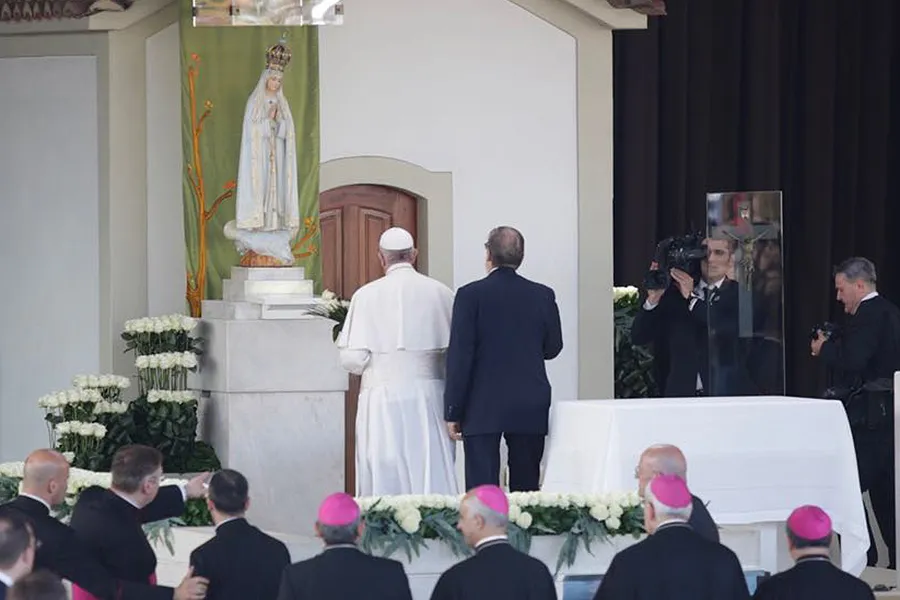
Fatima, Portugal, May 12, 2017 / 11:37 am (CNA/EWTN News).- During his first day in Fatima, Pope Francis led pilgrims in prayer, asking that the Immaculate Heart of Mary would watch over the joys and sorrows of all mankind as they make their earthly pilgrimage.

“In the depths of your being, in your Immaculate Heart, you keep the joys of men and women as they journey to the Heavenly Homeland. In the depths of your being, in your Immaculate Heart, you keep the sorrows of the human family, as they mourn and weep in this valley of tears.”

“In the depths of your being, in your Immaculate Heart, adorn us with the radiance of the jewels of your crown and make us pilgrims, even as you were a pilgrim,” he said May 12 at the Chapel of the Apparitions.

Pope Francis led the prayer to Mary at the beginning of his two-day pilgrimage to Fatima in Portugal May 12-13 to celebrate the centenary of Mary’s appearance to three shepherd children in 1917.

During the visit, the Pope will also lead the recitation of the rosary at the prayer vigil. In the morning on May 13 he will celebrate Mass, presiding over the canonization of two of the Fatima visionaries, Francisco and Jacinta Marto.

The prayer was prayed in five verses, while in between the assembly sang the refrain, in Latin: “Ave O Clemens, Ave O pia! Salve Regina Rosarii Fatimae. Ave O clemens, Ave O pia! Ave O dulcis Virgo Maria!”  

The Pope prayed the first four verses himself and for the last was joined by those present. The beginning of each verse was addressed to Mary by a different title, including “Mother of Mercy” and “Hail, life and sweetness, hail, our hope, O Pilgrim Virgin, O Universal Queen!”

“With your virginal smile, enliven the joy of Christ’s Church. With your gaze of sweetness, strengthen the hope of God’s children. With your hands lifted in prayer to the Lord, draw all people together into one human family,” he prayed.

The Pope’s prayer frequently recalled the traditional Marian prayer called ‘Hail, Holy Queen.’

“Hail Holy Queen, Blessed Virgin of Fatima, Lady of Immaculate Heart, our refuge and our way to God!” he said. “O clement, O loving, O sweet Virgin Mary, Queen of the Rosary of Fatima!”

He asked for the grace to follow the example of Bl. Francisco and Jacinta, and everyone who has devoted themselves to proclaiming the Gospel.

“Thus we will follow all paths and everywhere make our pilgrim way; we will tear down all walls and cross every frontier, as we go out to every periphery, to make known God’s justice and peace.”

Praying for the intercession of the “Lady robed in white,” he recalled all those who are robed in the “splendor of their baptism” and who desire to live in Christ.

“And so we will be, like you, an image of the column of light that illumines the ways of the world,” he prayed, “making God known to all, making known to all that God exists, that God dwells in the midst of his people, yesterday, today and for all eternity.”

“Show us the strength of your protective mantle. In your Immaculate Heart, be the refuge of sinners and the way that leads to God,” he said.

“In union with my brothers and sisters, in faith, in hope and in love, I entrust myself to you. In union with my brothers and sisters, through you, I consecrate myself to God, O Virgin of the Rosary of Fatima,” he concluded.

“And at last, enveloped in the Light that comes from your hands, I will give glory to the Lord for ever and ever. Amen.”

[…]

No Picture
News Briefs

This is the miracle that led to the Fatima children’s canonization

May 12, 2017 CNA Daily News 0

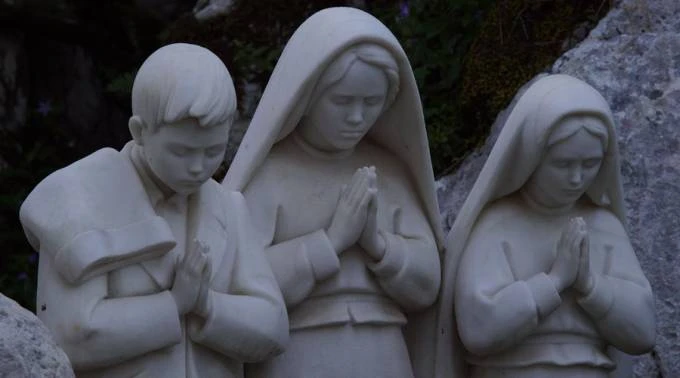
Fatima, Portugal, May 12, 2017 / 07:41 am (CNA/EWTN News).- Tomorrow, on the 100th anniversary of Mary’s first appearance at Fatima, Pope Francis will canonize Jacinta and Francisco Marto, two of the three shepherd children who witnessed the Marian apparitions.

A press conference preceding the Pope’s arrival highlighted the miracle that paved the way for their canonization. The miracle involved a Brazilian boy named Lucas, who was miraculously healed through the intercession of the shepherd children.

Jacinta and Francisco both died before age 10 and will become the youngest non-martyrs to be canonized. Sister Lucia, the third visionary, lived much longer, dying in 2005 at the age of 97. The Church is currently examining documents and collecting testimonies for her beautification cause.

In recounting the story of their son’s healing in the face of almost certain death, João Batista and his wife Lucila Yurie could not hold back tears.

“On March 3, 2013, before 8:00 pm, our son Lucas, who was playing with his little sister Eduarda, fell out of a window from a height of 20 feet. He was five years old,” related the boy’s father.

“His head hit the ground and he sustained a very serious injury, which caused a loss of brain tissue,” Batista said during the press conference at the Fatima Shrine.

Teetering between life and death, “he was given medical care in our city, Juranda, and given the severity of his condition, he was transferred to the hospital in Campo Mourao, Parana.”

“When we got there, Lucas was in a deep coma. His heart stopped twice, and they performed an emergency operation.”

It was at that moment that “we began to pray to Jesus and Our Lady of Fatima, to whom we have a great devotion,” Batista said.

<blockquote class=”twitter-tweet” data-lang=”en”><p lang=”en” dir=”ltr”>In 2013, their son Lucas fell 20 ft from window, had brain injury. Prayed for <a href=”https://twitter.com/hashtag/Fatima?src=hash”>#Fatima</a> kids intercession. Miracle. <br><br>Today, he's fine. <a href=”https://twitter.com/hashtag/EWTN?src=hash”>#EWTN</a> <a href=”https://t.co/zxxrQeUAzf”>pic.twitter.com/zxxrQeUAzf</a></p>&mdash; Alan Holdren (@AlanHoldren) <a href=”https://twitter.com/AlanHoldren/status/862728805336715265″>May 11, 2017</a></blockquote>
<script async src=”//platform.twitter.com/widgets.js” charset=”utf-8″></script>

“The next day we called the Carmelite convent of Campo Mouro to ask the sisters to pray for the boy,” he said. But the community was observing a period of silence, and so the message did not get to them.

As the days went by, Lucas became worse, his father recounted. On March 6, the doctors considered transferring him to another hospital, since their facility did not have the necessary care for a boy of his age.

“They told us that the chance of the boy surviving was low, and if he did survive, his recovery would be very slow,” likely dealing with “severe cognitive disabilities or even remaining in a vegetative state.”

On March 7, Batista said, “we called the convent again.” That time, they were able to get their prayer request to the sisters.

“One of them ran to the relics of Blessed Francisco and Jacinta, which were next to the tabernacle, and felt the impulse to pray the following prayer: ‘Shepherds, save this child, who is a child like you’…she also persuaded the other sisters to pray to the little shepherds to intercede for him.”

“And so they did,” Batista said. “In the same way, all of us, the family, began to pray to the little shepherds, and two days later, on March 9, Lucas woke up and began to speak, even asking for his little sister.” On the 11th, he left the ICU and was discharged from the hospital a few days later.

Since that time, Lucas “has been completely well and has no symptoms or after effects,” the child’s father said. “He has the same intelligence (as he did before the accident), the same character, everything is the same.”

“The doctors, some of them non-believers, said that his recovery had no explanation.”

Batista and his wife are grateful to the doctors who cared for their son, and to the postulator of the canonization cause of the little shepherds, “for all the care given throughout this process.”

But they are especially grateful to God. “We thank God for the cure of Lucas and we know with all the faith we have in our hearts, that this miracle was obtained through the intercession of the little shepherds Francisco and Jacinta.”

“We feel a great joy because this is the miracle that leads to their canonization, but especially we feel the blessing of the friendship of these two children who helped our child and who now help our family,” Batista said.


[…]

No Picture
News Briefs

We still need to heed Our Lady of Fatima’s advice, priest says

May 12, 2017 CNA Daily News 0

Rome, Italy, May 12, 2017 / 12:08 am (CNA/EWTN News).- While a lot has changed since Mary’s appearances at Fatima 100 years ago, we can’t stop heeding Our Lady’s request to pray and offer sacrifices for the world, an expert on Marian theology has said.

“Fatima is a stepping-stone. But we shouldn’t be complacent. We have a very, very long way to go – in God’s time – and we do need to consecrate ourselves daily to this goal,” Fr. Paul Haffner told CNA May 8.

“This 100th anniversary of the apparitions teaches us that there has been a victory of Christ over sin and death, there has been a victory of his Mother within the Church, but we still have a very long way to go.”

A theology professor and author of more than 30 books, Fr. Haffner has also been a member of the Pontifical Academy of Mary since 2012.

One hundred years ago on May 13, the Blessed Virgin Mary appeared to three shepherd children in a field in Fatima, Portugal. She brought with her requests for the recitation of the rosary, for sacrifices on behalf of sinners, and a secret regarding the fate of the world.

Every local bishop since has approved the apparitions and deemed them worthy of belief, the highest recognition a Marian apparition can receive from the Church.

In her third apparition, Mary revealed to the shepherd children what came to be known as The Great Secret of Fatima. The first secret was a vision of hell which Mary allowed the children to see.

The second was a statement that World War I would end, and a prediction of another war that would start during the reign of Pius XI, if people continued to offend God and if Russia were not consecrated to her Immaculate Heart.
        
According to Sr. Lucia, one of the visionaries who lived until 2005, the consecration was completed during the pontificate of St. John Paul II, who several times attempted to fulfill the requirements of the Russia consecration.

It was finally considered fully complete after the consecration he made on March 25, 1984, as confirmed by Sr. Lucia.

“It’s true, the world has been consecrated to the Immaculate Heart of Mary. The Church has made this consecration,” Fr. Haffner said.

“However, this must not be a static thing, it must be an ongoing process.” The consecration must continue, he explained, because the world we live in is still filled with many false ideologies and many false gods, all “which tempt women and men away from their true goal.”

“Whether these false ideologies are in the political sphere, the social sphere, the family sphere, the personal sphere, or in the educational sphere, they’re there,” he said, and we must fight against them.

At the time of Mary’s appearance in Portugal, the country was at war, like most of the rest of the world. In addition to the hardships of war, Catholics in the country were also facing a strong wave of anti-clericalism.

Catholic churches and schools were seized by the government, and the wearing of clerics in public, the ringing of church bells, and the celebration of popular religious festivals were banned. From 1911-1916, nearly 2,000 priests, monks and nuns were killed by anti-Christian groups.

In one way, Mary’s appearance in 1917, Fr. Haffner noted, was “a remedy for these terrible evils.”

“So in that sense, Our Lady remains, as it says in the Book of Revelation or the Apocolypse, the woman who is fighting against the powers of evil, against the dragon, against Satan.”

And we get to be a part of that fight, he said. “She gives her sons and daughters a chance, also, to win that battle through Christ her Son. But they have to be dedicated to her, to the Church, and to Christ. And the way of dedication is the way of prayer and sacrifice.”

Throughout salvation history, Mary’s role is often “unfolded” in the history of mankind, Fr. Haffner pointed out.

“In the history of mankind her role is unfolded in the various quiet little miracles and in the big revelations, like Lourdes, Fatima and La Salette, Our Lady of Walsingham,” he said, naming several other Marian apparitions affirmed as worthy of belief by the Church.

“All these different revelations and apparitions teach us of her maternal presence. Mary is a mother to us, she cares for us very tenderly, especially when things seem to go wrong.”

“Now things seem often to not go very well for humanity, so Mary is there to pick us up. As Pope Francis often says, ‘you know when you fall, try to get up immediately,’ but sometimes you can’t get up! You have to have a motherly hand, a motherly arm, to help you up.”

“And so often in history that hand is found in Mary, he explained. “And that is the link between the apparitions of Our Lady: Mary’s motherly hand helping us along the way – a pilgrim way.”


[…]

No Picture
News Briefs

What was Sr. Lucia’s advice after Fatima visions? Pray. Everyday.

May 11, 2017 CNA Daily News 0

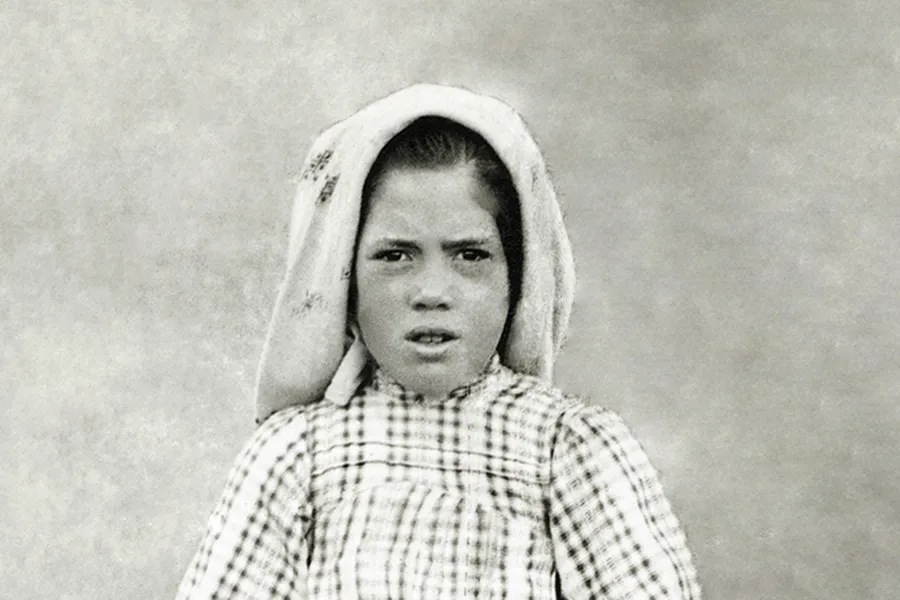
Fatima, Portugal, May 11, 2017 / 05:02 am (CNA/EWTN News).- The niece of Fatima visionary Sr. Lucia dos Santos said her aunt was a normal person like everyone else, but shared some personal advice that her saintly relative used to give: to pray at least something every day.  

“She always asked me to pray the rosary every day, because there were many who did not pray,” Maria dos Anjos, niece of Fatima visionary Lucia dos Santos, told CNA in an interview.

“This was what Our Lady asked: that we pray the rosary every day. Because there were many who didn’t pray and because of this many souls went to hell because there was no one to pray for them,” she said.

Anjos, who only saw her aunt when they went to visit her in the convent, said the advice Lucia always gave her was to pray daily, and “that I not forget.”

She recalled that in a few of the conversations she had with her aunt, she confessed to not finishing the rosary because she was tired, having worked hard in the fields all day.

In response, Lucia didn’t reproach, but instead told her to “always start it, and if you don’t finish, Our Lady will finish it.”

Anjos, 97, is the daughter of one of Lucia’s older sisters. She grew up in the house directly across the street from where Lucia and her family used to live, and continues to live there with one of her sons today. Every evening she can be seen sitting on the front porch area with a rosary in hand.

While now there are paved streets and cars driving past the houses and tourist shops set up near Lucia’s house, which is now preserved as a museum and is open to the public for visits, Anjos said that when she was growing up, “there wasn’t anything here…just a mountain and some sheep and donkeys.”

Although she was only one year old at the time Lucia entered the convent, Anjos said her family would go to visit whenever they could.

Lucia, she said, “was a sister like the others. There was no difference. She was just like the other sisters who were in the convent,” and was always “joyful” – both as a child and as a religious sister.

Recalling memories that her mother had shared of her and Lucia’s childhood, Anjos said Lucia was a normal child like everyone else, and never lacked playmates.

“Many children came to play with her because their parents went to the wine estates and left their children here, because there was always someone at the house of Lucia’s mother who looked after the kids,” Anjos said.

Her grandmother and mother to Lucia, Maria Rosa Farreira, was catechist, and would also teach the children who came to the house while their parents were away.

Faith was always a big part of their family, even before the apparitions, Anjos said, explaining that “we always prayed the rosary, we went to Mass every Sunday, we did what we saw that could be done.”

After the apparitions of Mary, “we continued, doing more, and remembering that Our Lady asked us to pray more and to make more sacrifices,” she said, jesting that “we do our homework well.”

She recalled being able to attend Mass with Pope John Paul II during one of his three visits to Fatima, saying she was able to receive communion from him alongside her aunt, Sister Lucia.

“When communion came, I received communion from his hands, from the hands of the Holy Father. I liked it a lot,” she said, adding “you always like good things, do you not?”

Though she wasn’t able to speak with John Paul, Anjos said she was still “very happy,” and is equally content to welcome Pope Francis during his May 12-13 visit for the centenary of the Fatima apparitions.

During the visit, Francis will also canonized the two other Fatima visionaries – Francisco and Jacinta Marto – who were Lucia’s younger cousins, but died shortly after the apparitions took place.  

“I am very glad they will be canonized,” she said, explaining that in her and her family’s mind, the siblings were already saints. Though it will now become official, she said she believes devotion to them will be “the same,” since people had already viewed them as holy.

While she’s sad she won’t be able to attend this Mass personally, Anjos said she’ll be watching it on TV, which she said is enough to make her happy.

Noting an uptick in visits to the shrine, Anjos said that many people, her family included would pray the rosary and visit the shrine after the apparitions, but “it seems that we have more devotion.”

“I think that faith has increased here and in the whole world,” she said. “At least I think it has, because many people come here, and that’s why we have to (pray) more and more. I think it did a lot of good for people to have Our Lady appear here.”

[…]

No Picture
News Briefs

France’s new president is a ‘zombie Catholic’

May 10, 2017 CNA Daily News 0

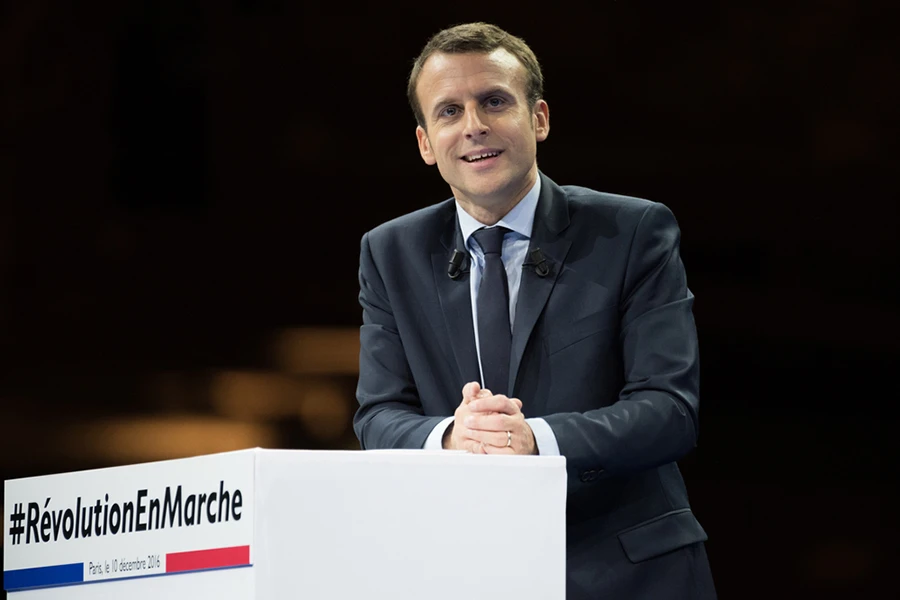
Paris, France, May 10, 2017 / 04:44 pm (CNA).- Newly-elected President Emmanuel Macron, according to one of his biographers, embodies a new phenomenon in France known as “zombie Catholicism.”

Once among the most Catholic countries in the world, sometimes called the “eldest daughter of the Church,” France has seen serious decline in churchgoing numbers in modern times. While more than 50 percent of people still identify as Catholic, only 5 percent regularly attend Mass.

Still, in France’s recent presidential election, a latent Catholic identity in many of France’s citizens proved to be a powerful political tool.

Sociologists Emmanuel Todd and Hervé Le Bras were the first to label the phenomenon in their book “Le mystère français” in which they explain that “Catholicism seems to have attained a kind of life after death. But since it is a question of a this-worldly life, we will define it as ‘zombie Catholicism.’”

“Zombie Catholics” of France share certain characteristics, the sociologists noted. They typically come from regions of the country where resistance to the French Revolution was the strongest.

“Highly educated and meritocratic, they also privilege a traditional ordering of professional and domestic duties between husbands and wives; strong attachment to social, community, and family activities; and a general wariness over the role of the state in private and community affairs, including ‘free schools’ (Catholic private schools),” they wrote.

According to Marc Endeweld, a biographer of Emmanuel Macron, the new president embodies this “zombie Catholic” phenomenon. Although born into a secular family, Macron asked to be baptized at age 12. While not a regular churchgoer, Macron symbolizes “those territories of Christian tradition that benefit from social structures and economic systems capable of counterbalancing globalization, in contrast to the more Jacobin territories that have lost the protection of the state.”

In the “zombie Catholic” stronghold region of Brittany, Macron won 3 out of every 4 votes. Having never been elected to any other political office, he ran as the head of a new movement, En March!, instead of an established political party. His politics have been described as liberal and progressive, though he has said he hopes to transcend the divides of the left and right political parties. At 39, he is the youngest president to ever be elected in France.

He was not the only candidate who appealed to the latent Catholics of France during the election season. François Fillon, former prime minister of France and a practicing Catholic, shocked pundits and political commentators throughout the country when he pulled ahead in the Republican party and beat out the moderate former Prime Minister Alain Juppé (himself a self-described “agnostic Catholic”) by a wide margin.  
 
His Catholicism was such a strong part of his political identity that a headline in the newspaper Libération proclaimed: “Help, Jesus has returned!”

President-elect Macron has said that he supports the French principle of secularism (laïcité). He has also said that “we have a duty to let everybody practice their religion with dignity,” though he believes that “when one enters the public realm, the laws of the Republic must prevail over religious law.”


[…]