No Picture
News Briefs

Infanticide ok with 90% of NICU docs and nurses in Belgian survey
August 19, 2020 CNA Daily News 2

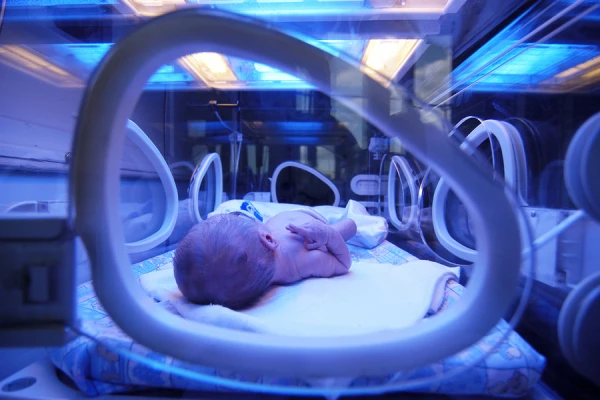
Washington, D.C. Newsroom, Aug 19, 2020 / 12:10 pm (CNA).- A new survey of neonatal medical professionals in the Belgian region of Flanders has found that nearly nine out of ten approve of euthanizing newborn children diagnosed with serious, non-lethal, medical conditions. 

The article, titled, “Healthcare professionals’ attitudes towards termination of pregnancy at viable stage” was published in the journal Acta Obstetricia et Gynecologica Scandinavica on August 2. The research was funded by the Research Foundation Flanders and Ghent University.

The researchers mailed a survey to physicians and paramedical professionals who are involved in “late termination of pregnancy decision-making” at each of Flanders’ eight neonatal intensive care units. Flanders is a region in northern Belgium. 

The term “late termination of pregnancy” (TOP) refers to abortions that take place past the point of fetal viability. Abortion is legal in Belgium until the 12th week of a pregnancy, unless there are fetal defects or a risk to the life of the mother. 

Seventy-nine percent of those mailed a survey responded. The respondents were nearly evenly split between physicians and paramedic professionals. 

In the survey medical professionals were asked for their opinion on late-term abortions for unborn babies with lethal conditions, serious conditions that are not lethal, and for the healthy unborn babies of mothers with psychological or economic issues. 

“Almost nine out of ten respondents (89.1%) agreed that in the event of a serious (non‐lethal) neonatal condition, administering drugs with the explicit intention to end neonatal life was acceptable,” said the article’s abstract. 

“Neonatal” is defined as the first four weeks of a child’s life after they are born.

Neonatal medical professionals in Belgium widely approve of late-term abortion for a multitude of reasons. 

For unborn babies with lethal conditions, 100% of the respondents agreed that it would be acceptable for a late-term abortion. That figure dropped to 95.6% for unborn children with serious, nonlethal diagnoses. Nearly one out of five respondents, 19.8%, agreed that late-term abortion was acceptable for a woman with psychological problems, and 13.2% said that they would agree with a post-viability abortion for a woman experiencing socio-economic problems. 

Physicians, rather than paramedic professionals, were more likely to prefer late-term abortion rather than neonative palliative care for an unborn child diagnosed with a serious condition. More than two thirds of the physicians who responded said they “preferred feticide,” compared to 53.2% of paramedical professionals.

Dr. Charlie Camosy, a professor at Fordham University, told CNA that he was not shocked by these numbers, given Belgium’s promotion of euthanasia for the elderly and sick. 

“Belgium is an example of what happens when fundamental human equality and dignity is abandoned in favor of a utilitarian calculation about what makes certain lives valuable and what make others able to be discarded and thrown away. Sometimes violently,” said Camosy.

Camosy noted that a recent New York Times article highlighted Belgian hospitals refusing to care for elderly or disabled COVID-19 patients, despite there being beds available.

With that context, “it is not surprising to learn that certain newborn babies don’t ‘count’ the same as the result of us and may be abandoned or killed,” he added.
[…]

No Picture
News Briefs

Abbot who helped revive traditional monasticism laid to rest in France

August 19, 2020 CNA Daily News 2

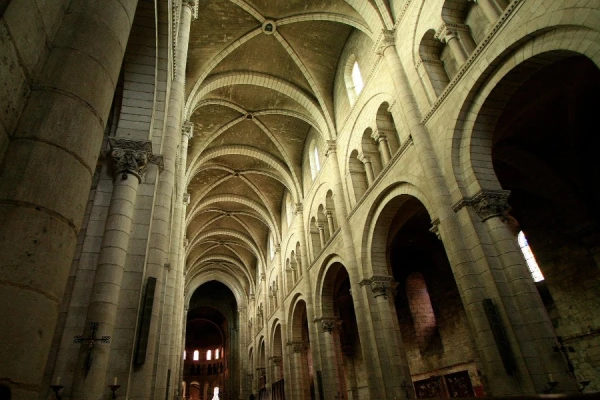
Rome Newsroom, Aug 19, 2020 / 11:10 am (CNA).- A Benedictine abbot who helped to revive traditional monasticism and Gregorian chant in France was buried Wednesday in the 11th-century Abbey of Fontgombault, the monastery he led for more than 30 years.

Dom Antoine Forgeot died Aug. 15, the Solemnity of the Assumption and the 65th anniversary of his profession of vows. He was 87.

At his funeral Aug. 19, Forgeot was remembered for his courage, simplicity, and paternal affection for his monks. He led the Abbey of Notre-Dame, Fontgombault, from 1977 to 2011.

“Despite being abbot during a period where the Church struggled to find young men willing to pursue the vocation to the priesthood, Dom Antoine received such a large number of vocations that he found it necessary to found no less than four new monasteries, all the while overseeing renovations and construction projects on an aging medieval monastery in the central west part of France,” Fr. Joseph Hudson, OSB told CNA.

Hudson is a Benedictine of Clear Creek Abbey in Oklahoma, which was founded by Forgeot in 1999 with 50 monks.

He said that the surge in vocations for the Benedictine congregation of Solesmes can be traced back to when Forgeot was assistant to the novice master, nurturing at least 150 vocations from 1965 to 2011.

Forgeot oversaw the growth of the congregation, which led to the establishment of Benedictine abbeys in Triors and Gaussan, France and the founding of Clear Creek Abbey. 


Dom Forgeot reparti au Ciel en ce samedi 15 août. La Vierge Marie était là pour l’accueillir.

Qu’il repose en Paix. Il contemple dorénavant Jésus qu’il connaissait déja tant sur Terre. #DomForgeot #Fontgombault

??? pic.twitter.com/2ypWDjoKJS

— Samuel POTIER (@samuel_potier) August 16, 2020


Fontgombault Abbey is well known for its traditional liturgy and Gregorian chant.

“Though he adhered to and promoted the older form of liturgical worship, the usage of Latin and the so-called Tridentine Mass, he made a commitment to always do so under the direction of the Holy Father and the monastery was known far and wide for its orthodoxy and fidelity to the Holy See,” Hudson explained. 

The abbey was founded as a Benedictine monastery in 1091. It was plundered and damaged by Calvinists in 1569 and later sold during the French Revolution as “national property” in 1791.

The Benedictines did not return to Fontgombault until 1948, when monks from the Abbey of Solemes worked to restore the abbey following World War II. 

The Solemnity of the Assumption of the Blessed Virgin Mary is the patronal feast of the monastery, and the date that Forgeot made his profession of vows in 1955.

Monks at the abbey noted that Forgeot had said that he wanted to die on the Marian feast day. He had been taken to the hospital on the morning of Aug. 13 with an accelerated heartbeat.

After his death Aug. 15, Forgeot’s body was brought to the monastery, where two monks continuously prayed the Divine Office at his side for the next three days. 

He was buried in a solemn ceremony with chants, incense, and prayers in the apse of the church of Our Lady of Fontgombault.

[…]

No Picture
News Briefs

Catholic Archbishop of Minsk calls for end to violence after Belarus election

August 12, 2020 CNA Daily News 0

CNA Staff, Aug 12, 2020 / 01:01 pm (CNA).- The Archbishop of Minsk-Mohilev called Tuesday for an end to the violent clashes occurring across Belarus following a disputed presidential election.

“At this crucial moment in our history, in the name of the God of boundless mercy, love, and peace, I call on all parties to the conflict to end the violence. May your hands, created for peaceful work and fraternal greetings, lift neither weapons nor stones. Let the force of argument, based on dialogue in truth and mutual love, prevail over the argument of force,” Archbishop Tadeusz Kondrusiewicz, who chairs the Belarusian bishops’ conference, wrote Aug. 11.

Protests began Aug. 9 after president Alexander Lukashenko was declared to have won that day’s election with 80% of the vote. Lukashenko has been president of Belarus since the position was created in 1994.

Electoral officials said that the opposition candidate, Sviatlana Tsikhanouskaya, earned 10% of the vote. She was detained for several hours after complaining to the electoral committee, and has fled to Lithuania.

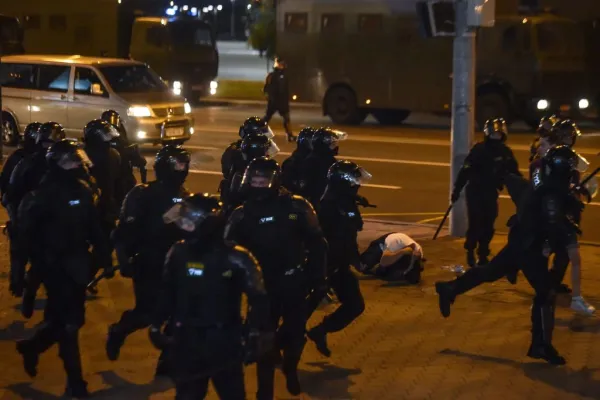
Protests have taken place across the country, and thousands of protesters have been detained.

Belarusian athorities say demonstrators have used metal rods, and police forces have used tear gas, stun grenades, and batons on them. Police in Brest, 110 miles west of Pinsk, shot live bullets at protesters Aug. 11.

Journalists from the BBC were harassed by police in Minsk, and other journalists were reportedly detained there and in Brest and Grodno.

US Secretary of State Mike Pompeo said Aug. 10 that the election “was not free and fair,” citing “severe restrictions on ballot access for candidates, prohibition of local independent observers at polling stations, intimidation tactics employed against opposition candidates, and the detentions of peaceful protesters and journalists.”

“We urge the Belarusian government to respect the rights of all Belarusians to participate in peaceful assembly, refrain from use of force, and release those wrongfully detained. We strongly condemn ongoing violence against protesters and the detention of opposition supporters,” he added.

Archbishop Kondrusiewicz wrote that Belarus has “witnessed unprecedented tensions” related to the election, saying: “There were clashes between citizens and law enforcement officers. As a result of the active confrontation, unfortunately, the first blood has been shed and there are victims on both sides. For the first time in the modern history of Belarus, a brother raised his hand against his brother.”

“Why do we, a nation with more than a thousand years of Christian history, today seem to have forgotten about love of neighbor and our inherent tolerance towards dissenters,” he asked.

Appealing to the Slavic tradition of veche, or popular assemblies, the archbishop said, “I propose to convene immediately an emergency round table to decide the future of our fatherland behind it, and not at the barricades,” so as “to overcome the crisis in society and stop the violence as soon as possible.”

“I encourage all people of good will to pray fervently for peace and harmony in our country,” Archbishop Kondrusiewicz concluded.

Lithuania, Poland, and Latvia have also offered to mediate between the government and protesters.

Tsikhanouskaya entered the presidential race after her husband, Siahei Tsikhanouski, was blocked from running and was arrested. Tsikhanouski is a pro-democracy activist.

[…]

No Picture
News Briefs

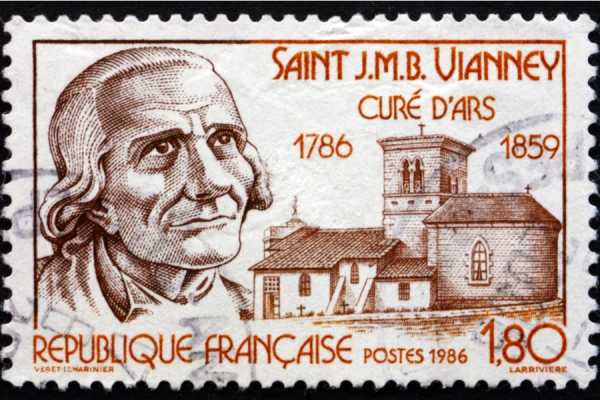
Cardinal Parolin in Ars for feast of St John Vianney

August 4, 2020 CNA Daily News 1

Rome Newsroom, Aug 4, 2020 / 11:58 am (CNA).- Cardinal Pietro Parolin, Vatican Secretary of State, was in Ars Tuesday for the feast of St. John Vianney, the patron of priests.

Parolin offered Mass at the Ars shrine, where St. John Vianney is buried, Aug. 4. He later gave a speech on the saint.

The Curé of Ars, as St. John Vianney was known, is “very relevant,” Parolin said in his homily. “In these difficult times, he teaches us to transmit joy and hope through the witness of our personal life.”

The cardinal also called the saint an example of holiness for all Catholics, because he “teaches us that intimate personal union with Christ helps to conform our desires to the will of God, fills us with joy and happiness, helps us to be salt and light of the world.”

St. John Vianney, Parolin said, is an example of a priest “who comes close to all with tenderness and does not reject those who are wounded in their existence and sinners in their spiritual life.”

Vianney warned people away from the “traps and stratagems of the demon,” including acedia, “that sweet sadness which paralyzes the mind and prevents it from persevering in prayer and in the mission,” Parolin stated.

In his homily, he recalled Benedict XVI’s characterization of St. John Vianney in 2010 as “a model of priestly ministry in our world.”

Parolin pointed out that though there are priests who have been led astray, the examples of good priests “who, in a constant and transparent manner, devote themselves entirely to the good of others” outnumber them.

The cardinal urged people to pray for priests and for priestly vocations “as our first intention of prayer, which we all entrust to the particular intercession of the Holy Curé of Ars.”

Later, in his address titled “Pope Francis and priests on the way with the people of God,” Parolin gave a reflection on St. John Vianney and the “principles which can guide pastoral ministry in our 21st century.”

According to Parolin, the Curé of Ars was a priest who “went out” in search of lost sheep to rebuild the flock, despite the challenges of a post-revolution, de-Christianized France.

“It is not the first time that the Church is forced to renew her missionary commitment,” Parolin said.

“Faced with the novelty of the situations we are facing, the Holy Spirit stimulates creativity to find the best way to approach others,” he continued. “The Holy Father asks that creativity in the Spirit is also empathy in the same Spirit.”

The cardinal also stressed the intense prayer life of Vianney, his dedication to preparing his homilies well, and his charity to the poor.

The saint is best known for his giftedness as a confessor: “His art of listening, of advising, his mercy attracted more and more penitents,” Parolin noted.

Pope Francis “is inexhaustible on the theme of confession because it is the sacrament of mercy,” he added.

“You know that nowadays many faithful no longer go to confession or go very little,” requiring priests to have patience and to constantly teach about mercy and the essential nature of the sacrament, he said.

Parolin concluded his address with a prayer from Pope Francis: “Remember, Lord, your covenant of mercy with your children, the priests of your people. May we be, with Mary, the sign and sacrament of your mercy.”

[…]