No Picture
News Briefs

Children who faced abortion baptized in Spain

October 8, 2020 CNA Daily News 1

CNA Staff, Oct 9, 2020 / 12:00 am (CNA).-  

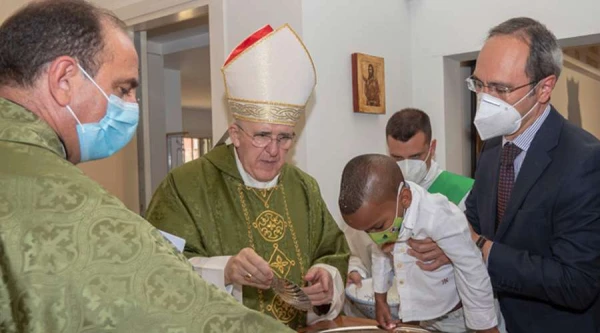
Fourteen children whose mothers considered abortion were baptized last month in Madrid by the city’s archbishop, Cardinal Carlos Osoro.

The newly baptized are children of women in vulnerable situations who considered abortion during their pregnancies. They were aided by the Más Futuro Association, a Catholic organization that offers support to expectant mothers and mothers in need.

Baptized Sept. 27 were a 6-year-old girl, two four-year-old boys and 11 babies less than a year old.

Nine more children were scheduled to be baptized at the same time, but were unable to be present because they were waiting for the results of coronavirus tests.

Cardinal Osoro honored the children’s mothers during the baptismal rite, telling them: “You have chosen life, we know that death will come, but you have chosen life.”

Some of the women had previously undergone abortions.

Present at the baptism were volunteers of the Más Futuro Association, who pray at abortion clinics in Madrid, and offer alternatives to women at the clinics who are considering abortion.


A version of this reported was first published by ACI Prensa, CNA’s Spanish-language news partner. It has been translated and adapted by CNA.


[…]

No Picture
News Briefs

Spain’s government wants to repeal need for parental consent for abortion

October 8, 2020 CNA Daily News 1

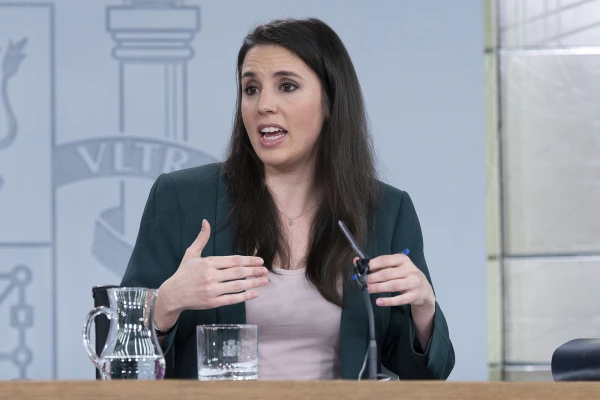
CNA Staff, Oct 8, 2020 / 12:10 pm (CNA).- The Spanish Equality Minister said Wednesday it is “more than necessary” to repeal a law that requires parental consent for children aged 16 and 17 who want to procure an abortion.

Irene Montero said Oct. 7 in the Council of Ministers that “we demand, like so many [abortion advocates] from all corners of the world, the right of all women to decide about their bodies and we demand a freely decided motherhood and above all a full and free sexual life.”

The minority coalition government, formed by the Spanish Socialist Workers’ Party and Unidas Podemos, also intends to promote sexual education and a right to the “newest forms” of contraception.

Abortion has been legal in Spain since 1985. The current abortion law, mandating parental consent for girls aged 16 and 17 to procure an abortion, was was adopted in 2015 when the People’s Party was in power. The People’s Party is now the largest group in the opposition.

Women in Spain can get state-paid abortion on demand during the first 14 weeks of pregnancy, up to 22 weeks in cases of serious health risks to the mother or baby, and for all nine months if the fetus has anomalies incompatible with life, or an extremely serious and incurable disease.

According to the latest data from the Ministry of Health, during 2018 there were 95,917 abortions performed in Spain; 310 on girls under 15 years of age, and 9,518 on girls 15 to 19.

In the US, most states require minors to obtain parental consent before procuring an abortion.

Such a law was adopted in Florida in June. The state’s bishops commented that “this common-sense measure simply holds abortion to the same consent requirements as most every other medical decision involving a child, including simple interventions such as taking an aspirin or getting ears pierced.”

“As Catholics, we condemn abortion as a grave injustice that denies the fundamental human right to life. However, as long as abortion is legal, we support measures such as parental consent that will reduce the grave harm it inflicts,” they added.


[…]

No Picture
News Briefs

Pope Francis hopes to visit Spain to mark 500 years since Jesuit founder’s conversion

October 7, 2020 CNA Daily News 1

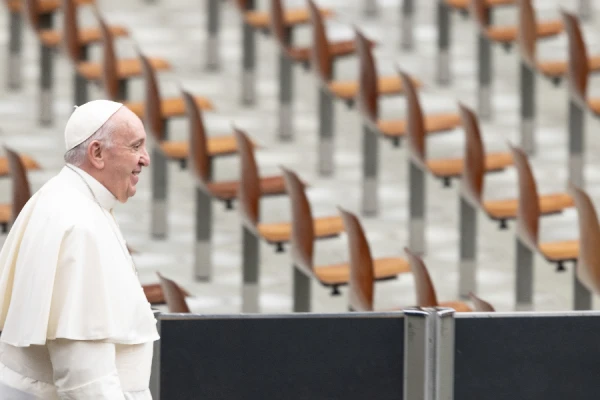
CNA Staff, Oct 7, 2020 / 10:30 am (CNA).- Pope Francis said he hoped to visit Spain to mark the 500th anniversary of the conversion of St. Ignatius of Loyola in an interview published Wednesday.

The pope told the Spanish edition of the monthly magazine Il Mio Papa that he hoped to travel to Manresa, in central Catalonia, where the founder of the Jesuit order arrived in 1522 seeking to pray and do penance.

“I believe that the conversion of St. Ignatius is also an encounter of the heart and can invite us to reflect on our personal conversion, to ask for the gift of conversion to love and serve more in the way of Jesus Christ,” said Francis, the first member of the Jesuits to be elected pope, in the interview released Oct. 7.

Ignatius’ military career came to an abrupt end in 1521 when a cannonball injured his right leg while he was defending the city of Pamplona. He experienced a spiritual awakening while recovering from surgery. When he could walk again, he decided to embark on a pilgrimage to the Holy Land. 

He went to a Benedictine abbey in Montserrat, where he confessed his sins, exchanged his expensive clothes for sackcloth, and left his sword before an altar dedicated to the Virgin Mary. 

He then walked to Manresa, arriving on March 25, 1522, and settling in a natural cave where he would spend the next 11 months. It was there that he underwent the religious experiences that led him to write the Spiritual Exercises, the foundation of Ignatian spirituality.

In 2022, Manresa will be the focus of events marking the 500th anniversary of this turning point in the life of Ignatius, who went on to complete his pilgrimage to Jerusalem and then founded the Society of Jesus in 1534. 

In July, Jesuit superior general Fr. Arturo Sosa announced that 2021-2022 would be designated an Ignatian Year. The year will begin on May 20, 2021, the 500th anniversary of the wounding of St. Ignatius during the Battle of Pamplona, and end on July 31, 2022, the Jesuit founder’s feast day.

The pandemic has forced Pope Francis to cancel his plans for international travel in 2020. His last foreign visit was to Thailand and Japan in November 2019. Last Sunday he made his first official trip outside Rome since the COVID-19 outbreak in Italy, signing his new encyclical, “Fratelli tutti,” in Assisi.

The Vatican has given no indication of when the pope will make his next journey outside Italy. If he visits Manresa, it would be his first trip to Spain — where 60% of the 47 million population consider themselves Catholic — since his election in 2013.

In his interview with Il Mio Papa, a publication founded in Italy in 2014, Pope Francis also reflected on the world after the coronavirus pandemic, migration, and service of the poor. 

He revealed what was going through his mind when he gave an extraordinary Urbi et Orbi blessing March 27 at the height of the pandemic in Italy. The 83-year-old said that at first he was afraid of slipping on the rain-slicked steps outside St. Peter’s Basilica.

“My heart was with all the people of God who were suffering, with a humanity that had to endure this pandemic and, on the other hand, which had the courage to strive forward,” he said, according to a translation of the Spanish interview by Vatican News.

“I climbed the stairs praying. I prayed the entire time, and I went away praying. That’s how I lived that March 27.”

The pope admitted that he had struggled with his general audiences during lockdown because they took place without members of the public present.

He said: “It was like talking to ghosts. I made up for many of these physical absences with telephone calls and letters. That helped me to take the pulse of how families and communities were living this.”


[…]