CNA Newsroom, Jul 18, 2023 / 14:07 pm (CNA).
European bishops on Tuesday released a statement condemning the drafting of a right to abortion in the European Union’s Charter of Fundamental Rights, arguing that the propos… […]
Father Marko Rupnik / Courtesy of the Diocese of Rome
ACI Prensa Staff, Jul 17, 2023 / 16:30 pm (CNA).
Father Johan Verschueren, a Jesuit official and the superior of Father Marko Rupnik, announced June 15 the expulsion of Rupnik from the Socie… […]
Father Benjamin Sellier. / Credit: Archdiocese of Cambrai, France
ACI Prensa Staff, Jul 17, 2023 / 14:00 pm (CNA).
Father Benjamin Sellier of the Archdiocese of Cambrai in France died by suicide in the early hours of July 11 after learning that… […]
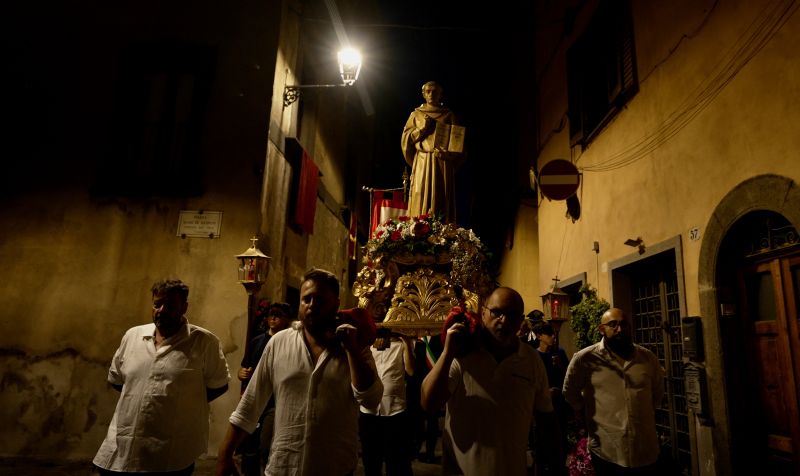
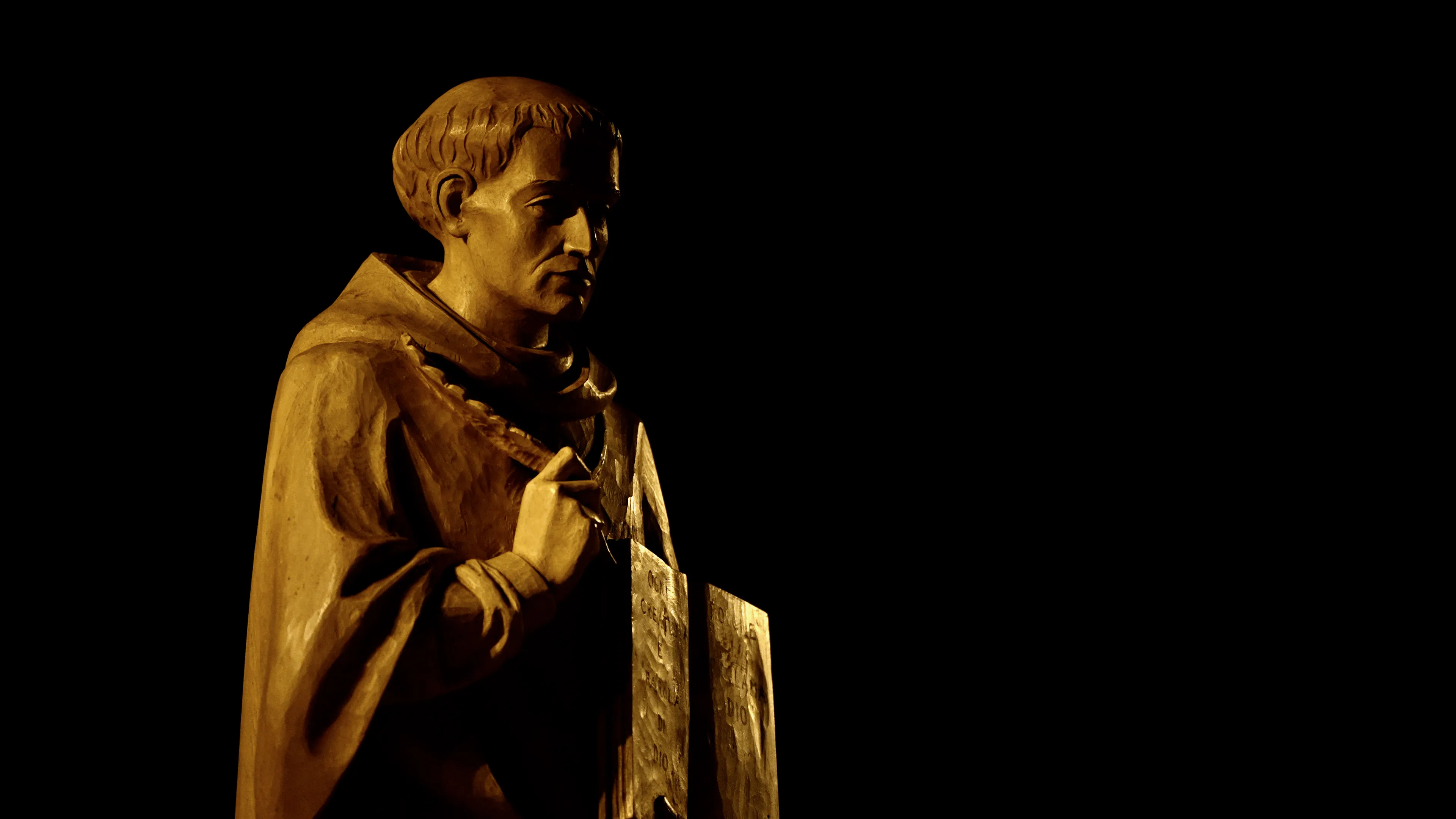
Four men carry a statue of St. Bonaventure during a candlelight procession on July 14, 2023, in Bagnoregio, Italy, his birthplace, on the vigil of the saint’s feast day. / Patrick Leonard/CNA
Bagnoregio, Italy, Jul 15, 2023 / 12:15 pm (CNA).
The birthplace of St. Bonaventure, a 13th-century intellectual giant now revered as a doctor of the Church and the “second founder” of the Franciscans, paid homage to its patron Friday night on the vigil of his feast day with music, prayers, and a candlelight procession.
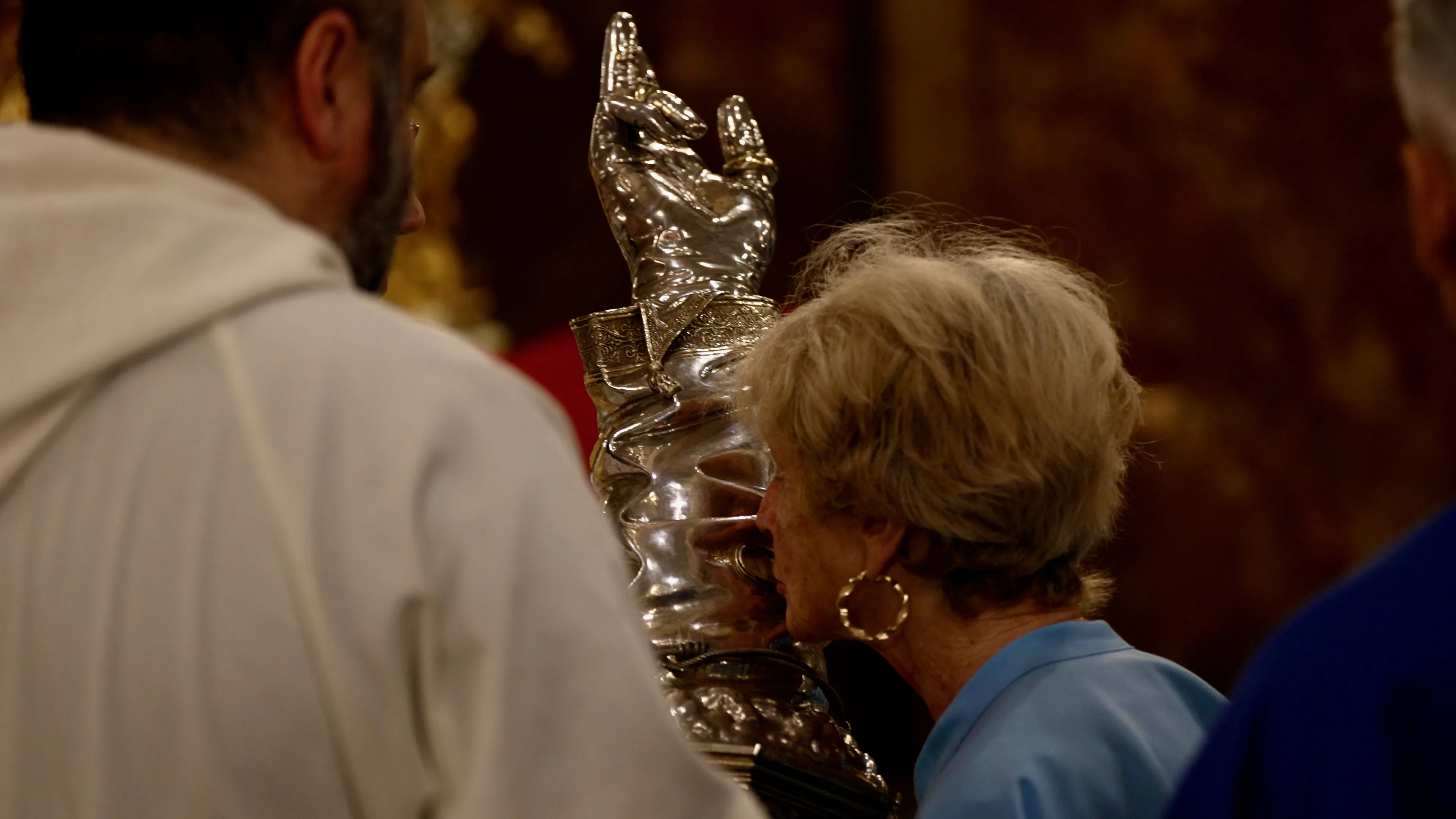
For the citizens of Bagnoregio, an idyllic town nestled in Italy’s Lazio region about a 1½ drive north of Rome, the July 15 feast is both a solemn holy day and a wellspring of civic pride. Bonaventure’s “braccio santo,” or holy arm — the only surviving relic of the saint — is kept in a silver, arm-shaped reliquary housed in a side chapel of Bagnoregio’s Cathedral of San Nicola and San Donato.
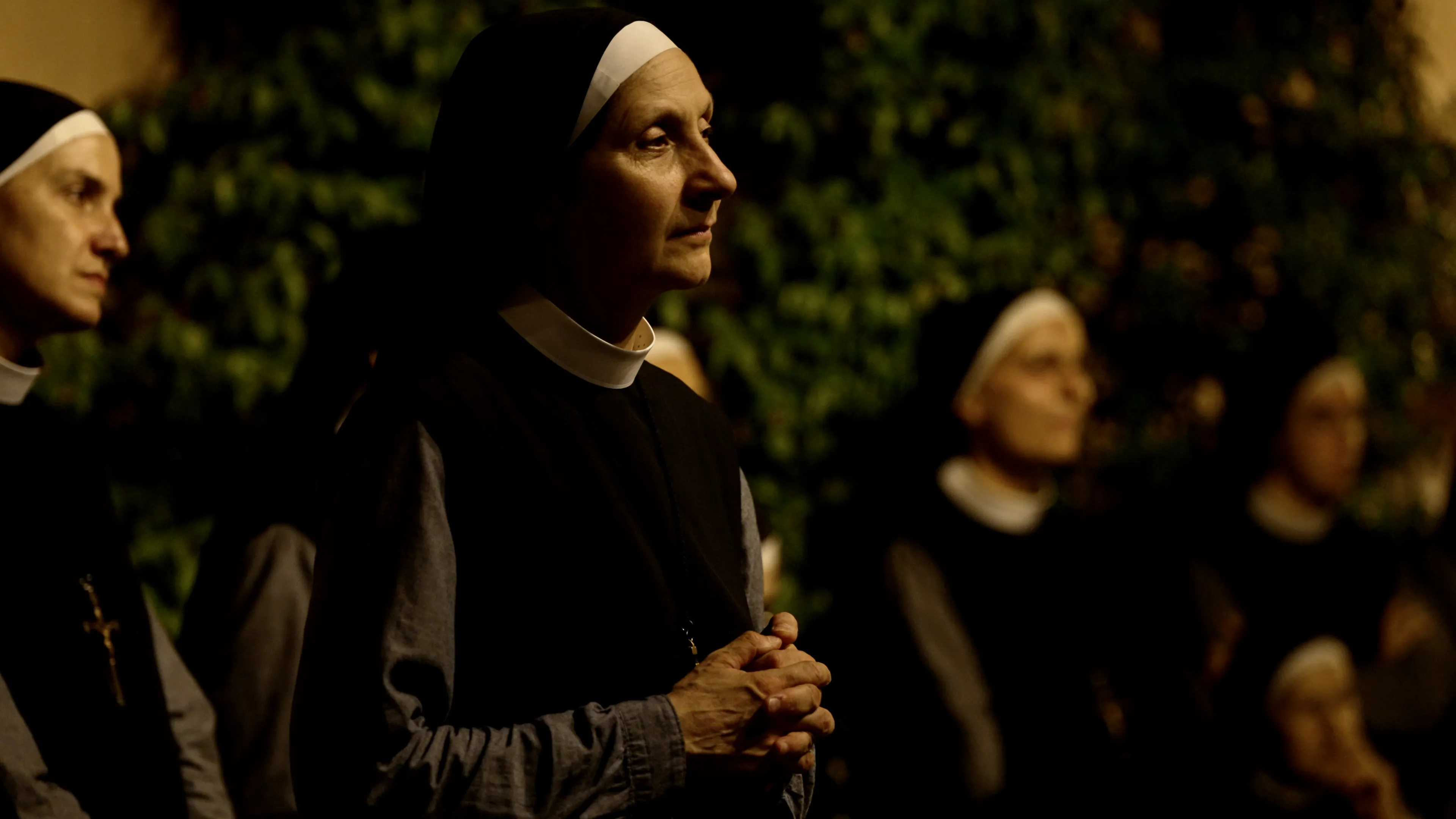
Religious sisters participating in a candlelight procession on July 14, 2023, in Bagnoregio, Italy, in honor of the town’s patron saint and native son, St. Bonaventure. Patrick Leonard/CNA
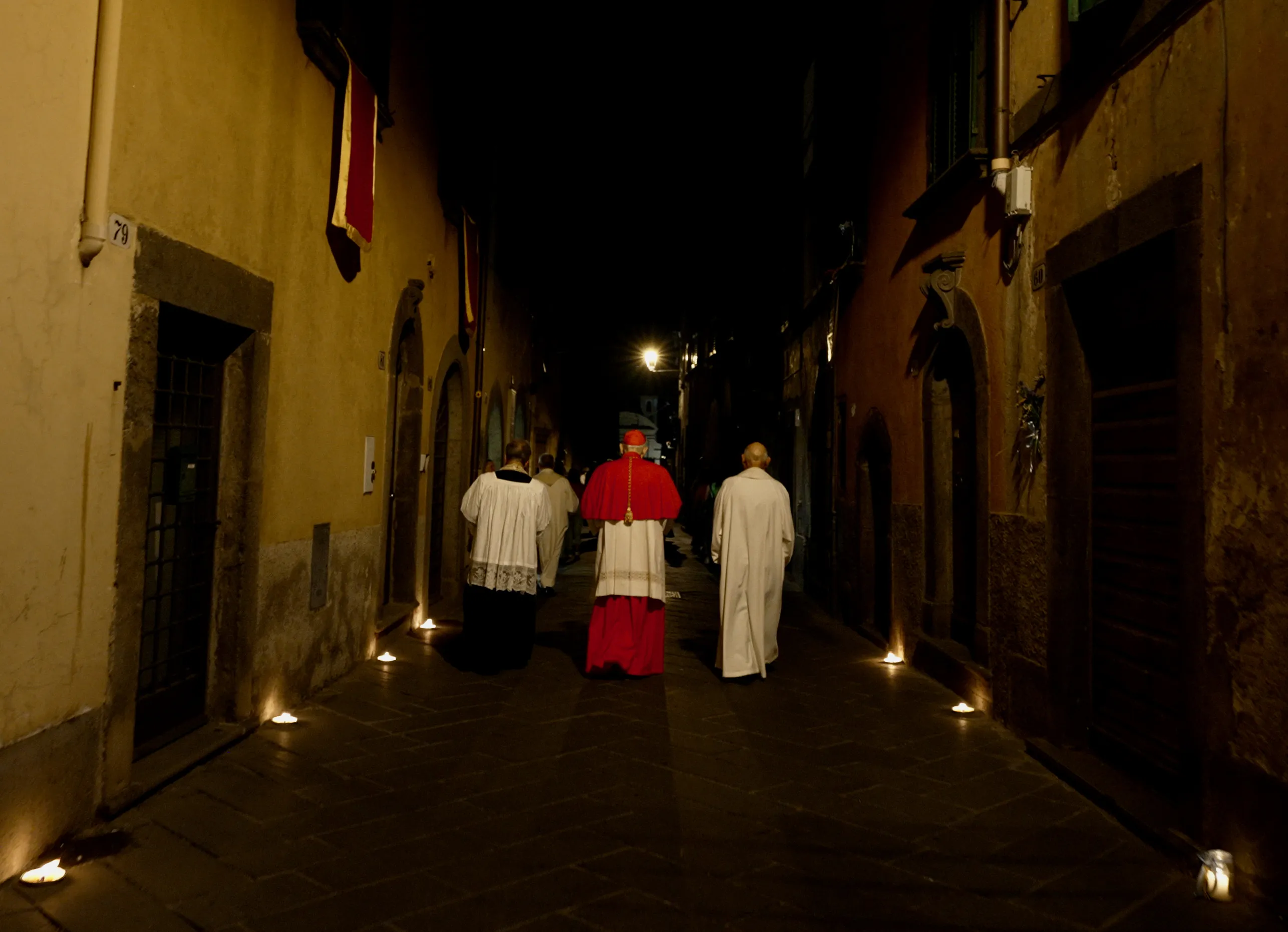
Friday’s procession, which commenced at the cathedral, was led by the town’s confraternities of the Most Blessed Sacrament, St. Francis, and St. Peter. Following them were a brass band, a statue of the saint adorned with flowers and carried by four men, and a priest carrying the holy arm. Then came Cardinal Fortunato Frezza, numerous priests, and this year’s first communicants, followed by other religious and residents.
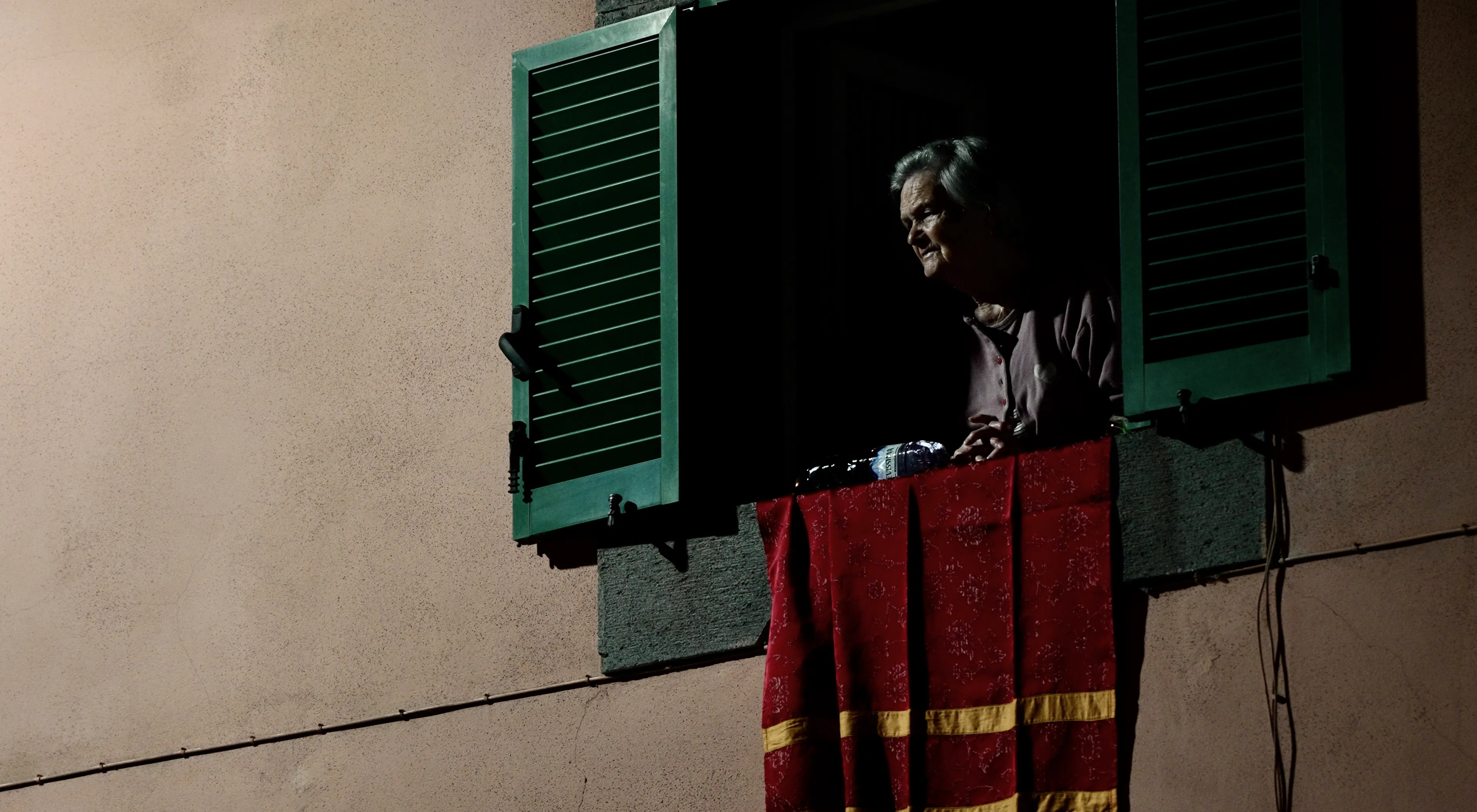
As the participants made their way down the candlelit Via Roma, onlookers watched from windows, balconies, and restaurants bustling with patrons on a warm summer evening.
A resident of Bagnoregio, Italy, watches a candlelight procession through the streets of the town in honor of its patron saint, St. Bonaventure, on July 14, 2023. Patrick Leonard/CNA
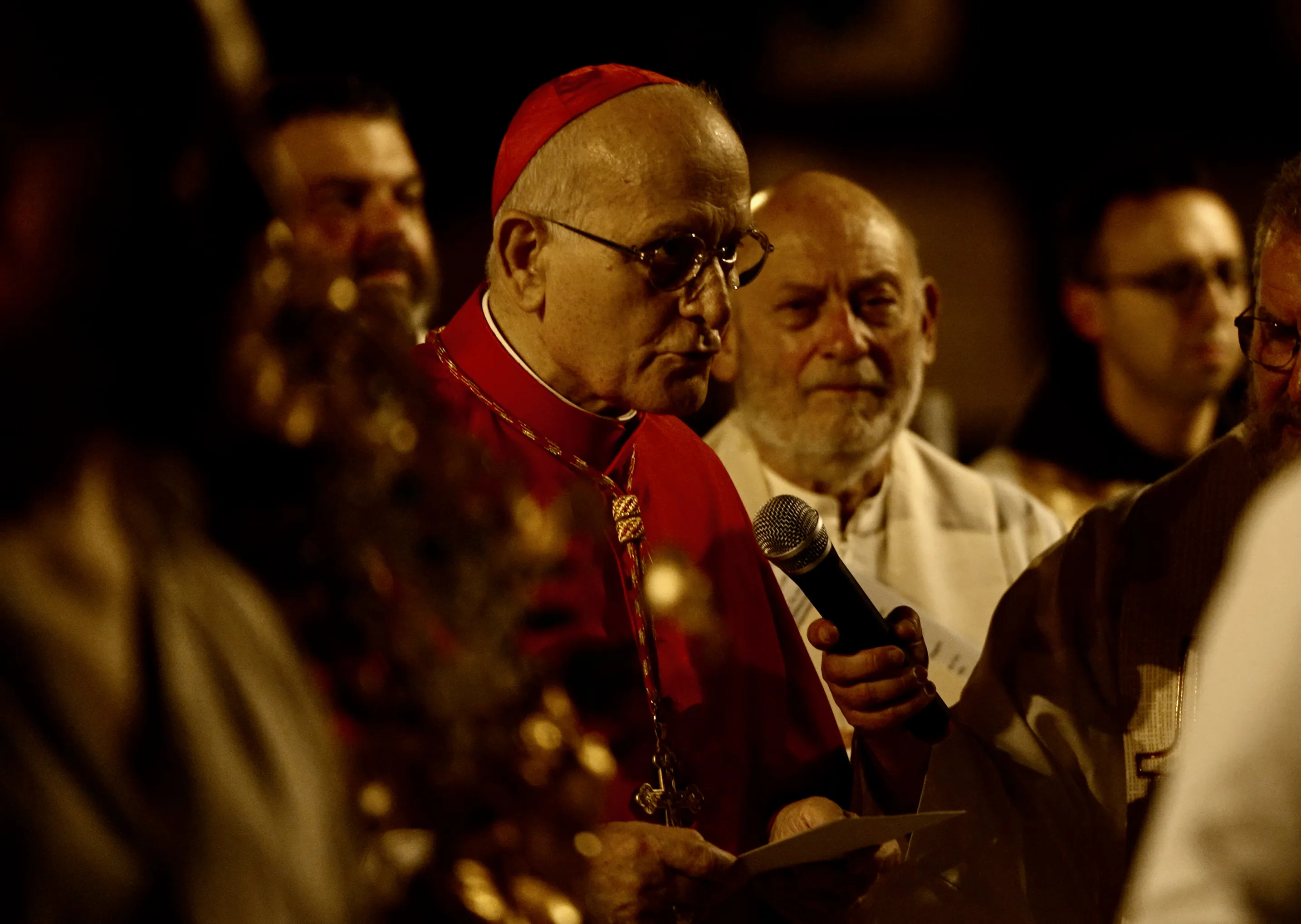
Arriving at the piazza Sant’Agostino, Cardinal Frezza, standing beneath a monument of Bonaventure, offered a brief reflection on the importance of the saint and of procession as a form of popular devotion.
The relic “gives us strength to sustain our weakness … It is a relic that is alive and active,” observed the cardinal, a noted biblical scholar. It is “an arm that teaches,” he said, the very right arm that “wrote his works of great intellect and wisdom.”
The cardinal closed his brief catechesis by saying “our life is a holy procession, an itinerary of the mind towards God.” Here he was playing on the title of one of Bonaventure’s most important theological works, Itinerarium Mentis in Deum, “The Journey of the Mind to God.” Following a benediction with the relic, the procession continued down Via Fidanza, looping around the main gate and then back up Via Roma to the cathedral. The faithful entered and Cardinal Frezza imparted the final blessing, again with the relic.
Cardinal Fortunato Frezza leads a prayer service on July 14, 2023, in Bagnoregio, Italy, in honor of the town’s patron saint and native son, St. Bonaventure. Patrick Leonard/CNA
The Franciscans’ ‘second founder’
Born in 1217 (or 1221, according to some accounts) as Giovanni Fidanza in Civita di Bagnoregio (then in the territory of the Papal States), he displayed great acumen and intellectual curiosity. He was, however, plagued by ill health in his youth. His mother called upon the intercession of St. Francis of Assisi, and he was, according to the legend, miraculously cured.
The young Bonaventure studied at the nearby Franciscan convent. Given his great talent, at 18 he left Bagnoregio to study in Paris, then the intellectual capital of Europe.
He joined the Franciscan Order of Friars Minor in 1243. At the University of Paris, he studied under the renowned Franciscan theologian Alexander de Hales; in 1257 he earned his teaching license (magister cathedratus) in theology there. Bonaventure was a contemporary of St. Thomas Aquinas, whom he met as they were both teaching at the university. The two future doctors of the Church were united in defending the then-nascent Franciscan and Dominican orders, whose orthodoxy was called into question by the secular clergy.
A statue of St. Bonaventure is shown during a candlelight procession on July 14, 2023, in Bagnoregio, Italy, his birthplace, on the vigil of the saint’s feast day. Patrick Leonard/CNA
Bonaventure’s teaching career was cut short; in 1257 when he was appointed minister general of the Franciscan order, which was then plagued by internal factionalism due to divergent understandings of Francis’ spirituality following his death.
To rectify this, Bonaventure spent much time traveling around Europe to help maintain the unity of the order. In 1260 went to Narbonne, France, to solidify the rule of the order and that same year he started writing (which was completed three years later in 1263) the Legenda Maior, “The Major Legend,” considered the definitive biography of St. Francis. For Bonaventure, the key to righting the order lie in Francis’ ideals of obedience, chastity, and poverty, which he re-established as the Franciscans’ guiding principles.
A woman venerates the “braccio santo,” or holy arm, of St. Bonaventure on July 14, 2023, the vigil of the saint’s feast day, at the Cathedral of San Nicola and San Donato in his hometown, Bagnoregio, Italy. Patrick Leonard/CNA
Enduring influence
In addition to his contributions as the “second founder” of the Franciscans, Bonaventure had a profound impact on the papacy. Following the chaos of the three-year conclave in Viterbo that elected Gregory X in 1271 (the longest papal election in the history of the Church), the new pontiff, also a Franciscan, entrusted Bonaventure with preparing many of the key documents for the Second Council of Lyon (1272-1274) which sought to unify the Latin and Greek Churches.
He was made a cardinal in the consistory of May 28, 1273. He did not, however, see the end of the council, as he died on July 15, 1274. He was canonized in 1482 by Pope Sixtus IV and proclaimed Doctor of the Church by Pope Sixtus V in 1588.
A candlelight procession through the streets of Bagnoregio, Italy, on July 14, 2023, honors the town’s native son and patron saint, St. Bonaventure. Patrick Leonard/CNA
In 2009, Pope Benedict XVI, who was a great admirer of Bonaventure, visited the saint’s birthplace to venerate the relic and address the faithful. In 2010 he dedicated three consecutive Wednesday audiences on the saint, outlining the importance of his governance of the Franciscans and his theological, philosophical, and mystical works. Bonaventure’s writings, Benedict observed, demonstrate that “Christ’s works do not go backwards, they do not fail but progress.”
“For St. Bonaventure, Christ was no longer the end of history, as he was for the Fathers of the Church, but rather its center; history does not end with Christ but begins a new period,” Benedict said.
“The following is another consequence: Until that moment the idea that the Fathers of the Church were the absolute summit of theology predominated, all successive generations could only be their disciples,” Pope Benedict explained.
“St. Bonaventure also recognized the Fathers as teachers forever, but the phenomenon of St. Francis assured him that the riches of Christ’s word are inexhaustible and that new light could also appear to the new generations,” he said. “The oneness of Christ also guarantees newness and renewal in all the periods of history.”
ACI Prensa Staff, Jul 14, 2023 / 16:30 pm (CNA).
Polish Cardinal Stanisław Dziwisz, archbishop emeritus of Krakow and for more than 40 years the personal secretary to Pope John Paul… […]
CNA Newsroom, Jul 14, 2023 / 10:35 am (CNA).
Cardinal Blase Cupich recently expressed confidence in the intentions behind the German Synodal Way while warning of divisions and praising the pontificate… […]
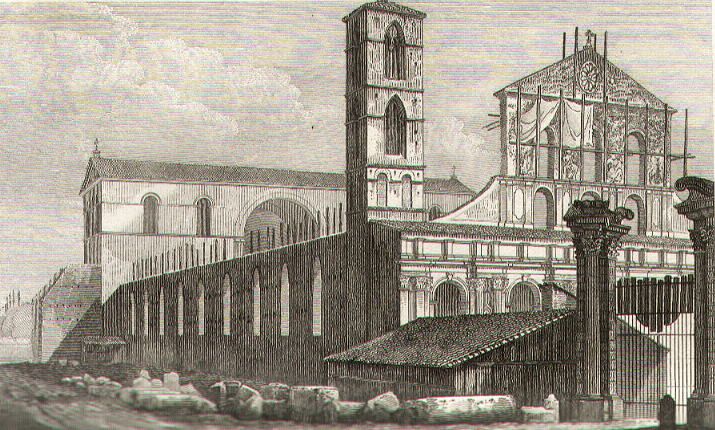
Illustation of St. Paul Outside the Walls in Rome, before the fire that destroyed it in 1823. / Photo courtesy of Professor Nicola Camerlenghi, from his book “St. Paul’s Outside the Walls, A Roman Basilica, from Antiquity to the Modern Era,” 2018
Rome, Italy, Jul 14, 2023 / 03:00 am (CNA).
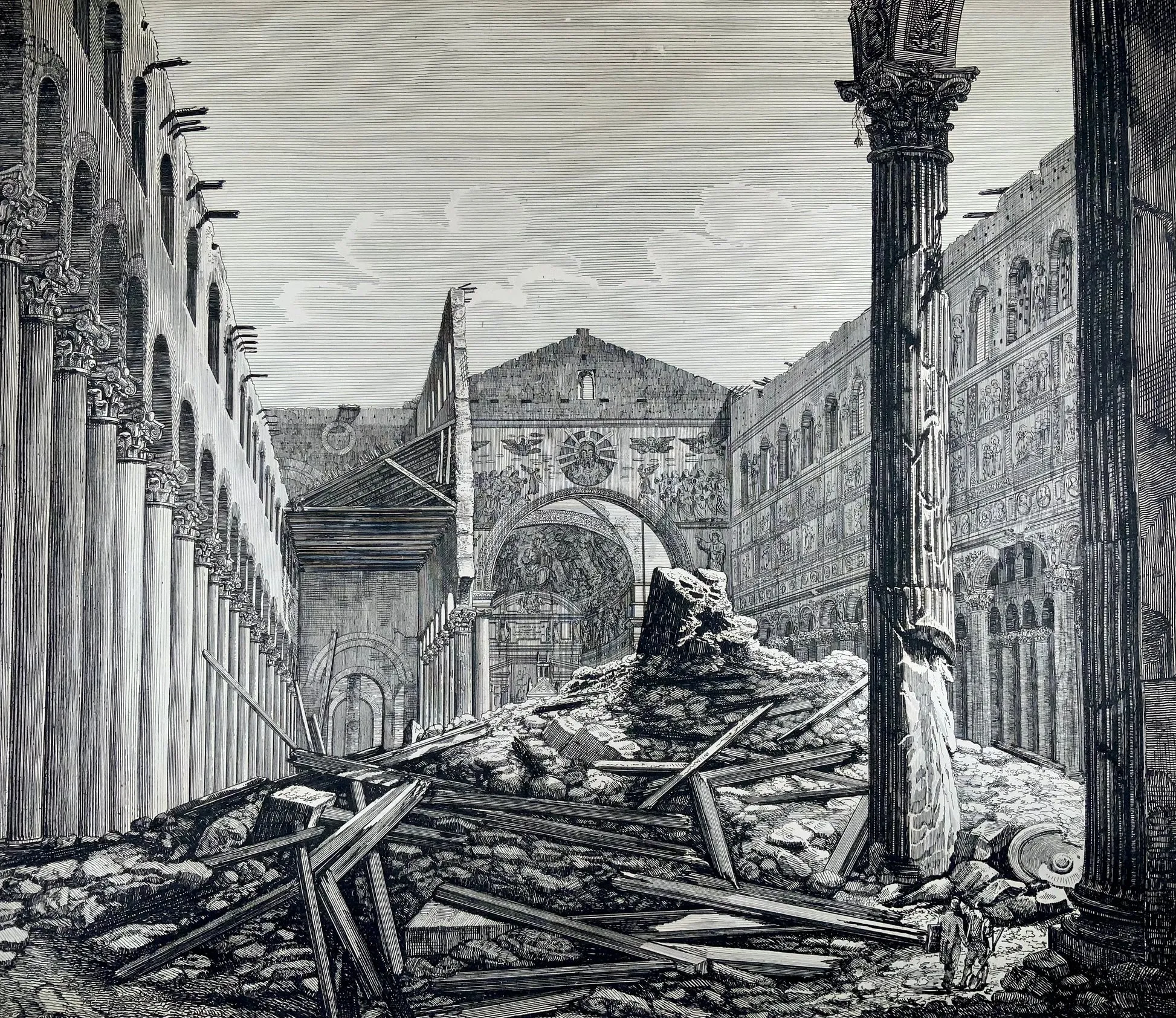
As the bicentennial anniversary of the devastating fire at St. Paul Outside the Walls in Rome draws near, the profound significance of the July 15, 1823, event is recalled among those who love the basilica. The tragic incident left an indelible mark on the architectural landscape and the hearts of believers.
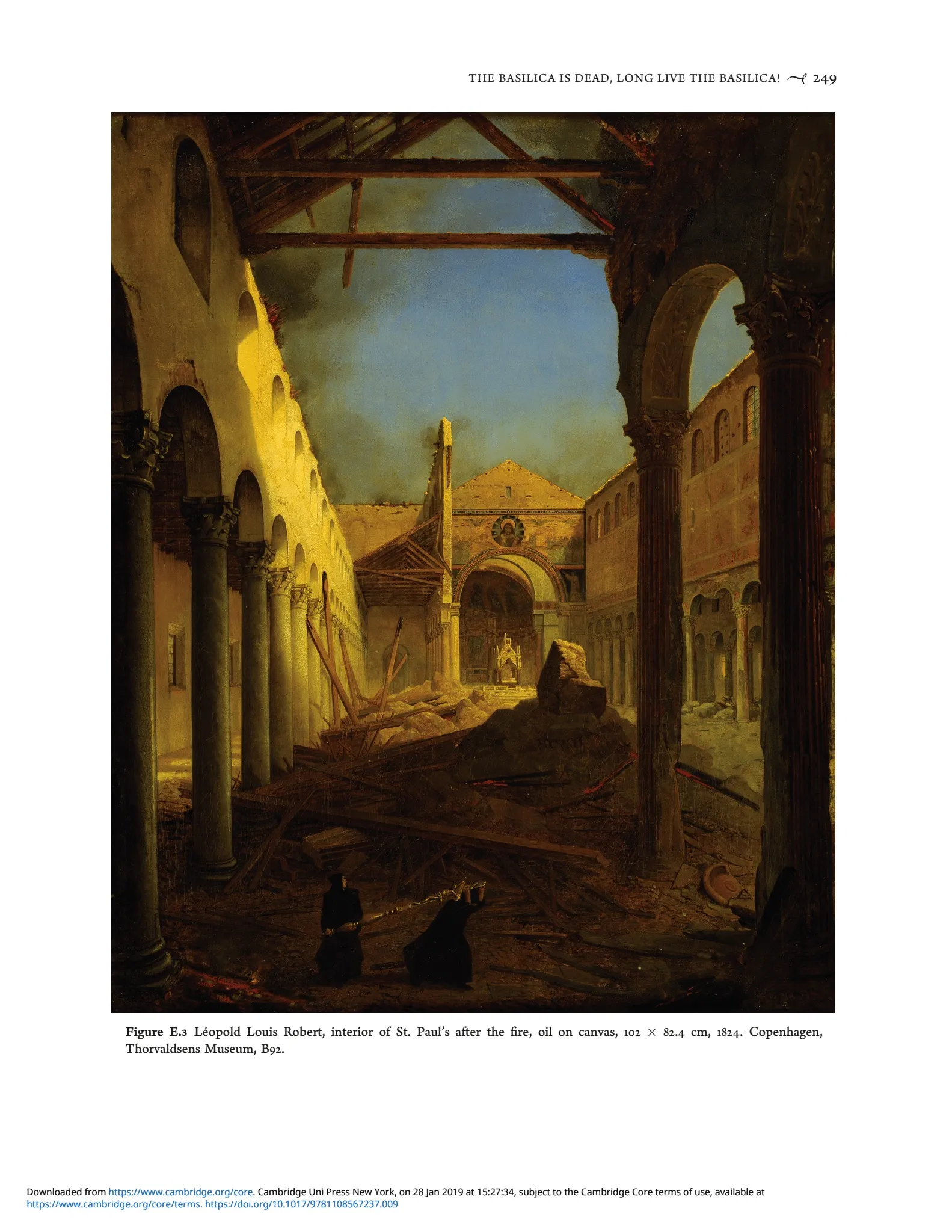
Illustration of the destruction of St. Paul Outside the Walls in Rome in 1823, depicted in Professor Nicola Camerlenghi, from his book “St. Paul’s Outside the Walls, A Roman Basilica, from Antiquity to the Modern Era,” 2018. Photo courtesy of Professor Nicola Camerlenghi, from his book “St. Paul’s Outside the Walls, A Roman Basilica, from Antiquity to the Modern Era,” 2018
To commemorate this solemn anniversary, a series of events are planned in collaboration with various embassies, universities, and choirs.
On July 11, the Benedictine friars residing in the monastery at the basilica offered a special vespers service open to the public. Additionally, a community event organized by the nearby university Roma Tre will take place in Rome’s Ostiense neighborhood on July 14 and 15 in the Parco Schuster, a small neighborhood park in the shadow of the iconic basilica. The gathering aims to honor the memory of the great fire and pay tribute to the enduring spirit of the basilica. It provides an opportunity for Catholics, architectural enthusiasts, and community members to come together and reflect on the profound impact of the fire and the subsequent reconstruction efforts, complete with 3D imaging technology developed to show what the basilica used to look like.
Cardinal James Michael Harvey, the appointed archpriest of St. Paul Outside the Walls, expressed the importance of commemorating the tragic event, stating: “We want the future to know that the memory of this event was taken seriously during its 200-year anniversary.”
Harvey also noted that the basilica is organizing an assembly of 19th-century scholars, experts, and historians to visit the basilica and discuss the significance of the tragedy sometime in November. The announcement of this event is still pending.
To gain deeper insights into the fire and its aftermath, Nicola Camerlenghi, assistant professor of Art History at Dartmouth College and a renowned expert in architectural history, shared his expertise during an interview with CNA. According to Camerlenghi, “The fire at St. Paul’s Basilica was a great tragedy. What was lost was the last imperial basilica built in Rome and one of the few monumental buildings from early Christian times that had survived relatively untouched by subsequent alterations.”
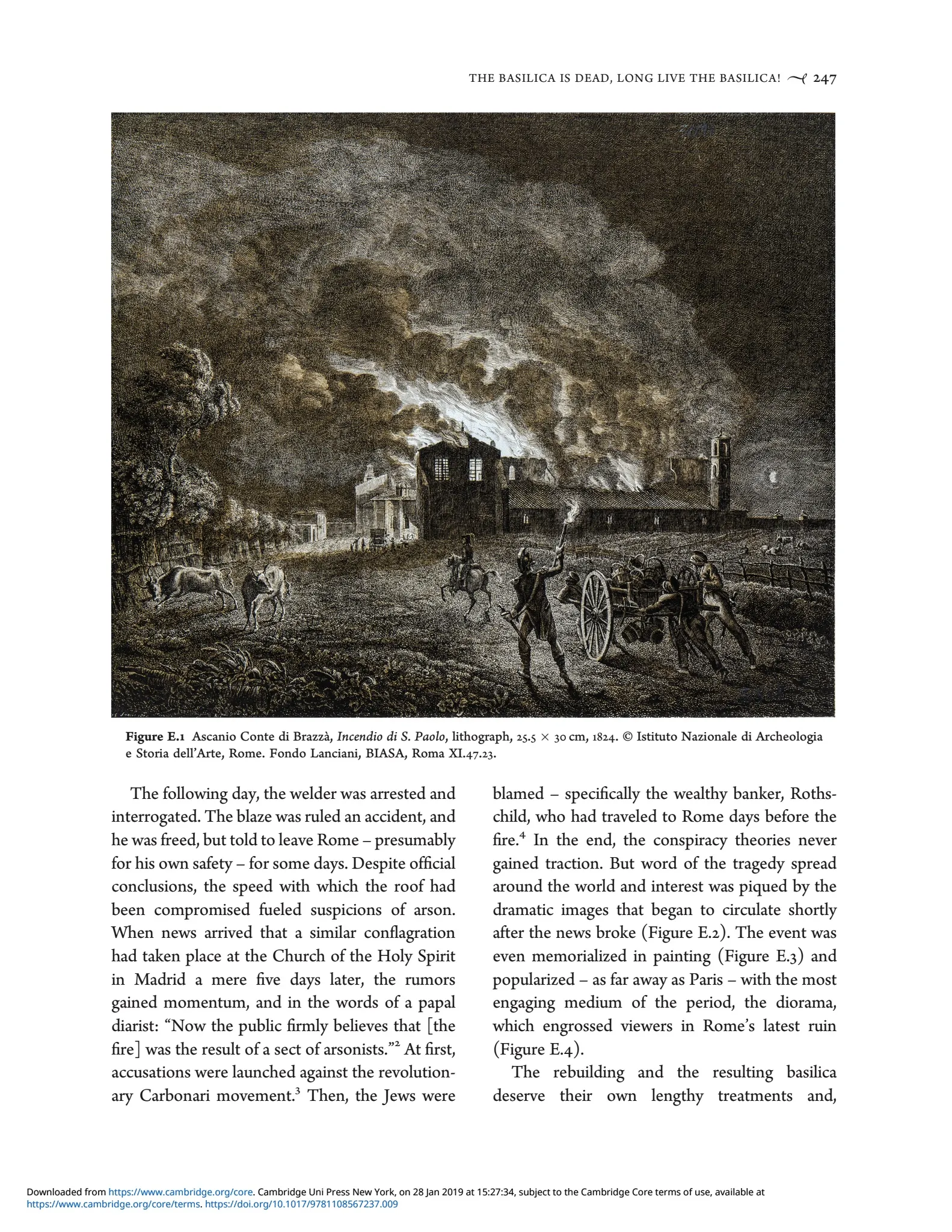
Color illustration of historic fire at St. Paul Outside the Walls in Rome, 1823, depicted in Professor Nicola Camerlenghi’s book “St. Paul’s Outside the Walls, A Roman Basilica, from Antiquity to the Modern Era,” 2018. Photo courtesy of Professor Nicola Camerlenghi from his book “St. Paul’s Outside the Walls, A Roman Basilica, from Antiquity to the Modern Era,” 2018
Reflecting on the decisions made during the meticulous reconstruction process, Camerlenghi emphasized the faithful restoration of the basilica. The architects and artisans recreated its original state while adapting to the loss of certain materials and using materials that are more fireproof. As a result of Camerlenghi’s research, 19th-century French writer Stendhal’s journal entry from his time in Rome surfaced, providing a glimpse into Rome after the fire. Stendhal wrote: “I found in it a severe beauty and an impression of calamity such as only the music of Mozart can suggest. The terrible painful traces of the misfortune were still alive… Thus perished the most ancient basilica not only of Rome, but of all Christianity. It had lasted 15 centuries.”
The fire was ruled an accident, caused by a distracted welder named Giacomo who unknowingly left a pan of coals burning on the roof. Despite initial suspicions of arson, conspiracy theories involving revolutionary movements and even the prominent Rothschild family failed to gain traction.
Lithograph image of fire at St. Paul Outside the Walls in Rome, 1823, depicted in “St. Paul’s Outside the Walls, A Roman Basilica, from Antiquity to the Modern Era,” by Professor Nicola Camerlenghi, 2018. Photo courtesy of Professor Nicola Camerlenghi from his book “St. Paul’s Outside the Walls, A Roman Basilica, from Antiquity to the Modern Era,” 2018
The reconstruction of St. Paul Outside the Walls proved to be a formidable undertaking amid the political and cultural turmoil of Rome at the time. To honor the basilica’s historical significance, Pope Leo XII decided to restore it to its former glory, without the architectural modifications and additions that had accumulated over the centuries.
At the bicentennial anniversary of this devastating fire, one is reminded of the enduring faith and unwavering spirit that define St. Paul Outside the Walls and even St. Paul himself. As Camerlenghi noted: “In turn, the reconstruction that ensued was a testament to the importance of the figure of St. Paul to the Catholic Church and indeed to the Christian community at large. No figure has been quite as ecumenical as Paul, the Apostle of the Gentiles.”
Another consistory, another snub for Paris. While there are many different ways to approach Pope Francis’ recent appointment of twenty-one new members of the College of Cardinals, what immediately jumped out at me was the […]
ACI Prensa Staff, Jul 13, 2023 / 16:30 pm (CNA).
The Diocese of Mallorca in Spain has sentenced Father Julià Cifre Vandrell to three years of not celebrating Mass “in any place other than at his home… […]