No Picture
News Briefs

Indonesian bishop resigns amid embezzlement, affair accusations

October 11, 2017 CNA Daily News 0

Ruteng, Indonesia, Oct 11, 2017 / 02:39 pm (CNA/EWTN News).- An Indonesian prelate resigned Wednesday as Bishop of Ruteng amid mounting concerns surrounding an alleged mistress and reportedly stolen funds.

Bishop Hubertus Leteng, 58, was accused of borrowing $94,000 from the Indonesian bishops’ conference, as well as $30,000 from the Diocese of Ruteng.

Leteng said the money was being used to fund a poor youth’s education, although he failed to give any further details or information, according to Ucanews. He was additionally criticized for reportedly taking a mistress – an allegation which Leteng called “slanderous.”

In June, more than 60 priests of the diocese resigned from their assignments in protest of Leteng’s administration of the diocese.

A year earlier, 112 of the diocese’s 167 priests had signed a letter of no confidence in Leteng, citing their suspicions of financial mismanagement and incontinence.

The Vatican has been investigating the accusations brought against Leteng since April, and Pope Francis accepted Leteng’s resignation Oct. 11.

Following Leteng’s departure, Bishop Sylvester San of Denpasar will serve as apostolic administrator of Ruteng until a bishop is named.

Leteng was ordained a priest of the Ruteng diocese in 1988, and was appointed its bishop in 2009. He was consecrated a bishop April 14, 2010.

Though Indonesia is a heavily majority-Muslim country, the island of Flores, on which Ruteng is located, is largely Catholic. Flores was colonized by Portugal, and nearly 89 percent of the population of the Ruteng diocese is Catholic.

[…]

No Picture
News Briefs

Catholics in Papua New Guinea a sign of the Church’s universality

September 26, 2017 CNA Daily News 1

Port Moresby, Papua New Guinea, Sep 26, 2017 / 06:08 am (CNA/EWTN News).- A young Catholic diocese in the southern highlands of Papua New Guinea has a vibrant and growing faith, one which the people have embraced as their own, showing the universality of the Church, a local bishop says.

“To me it is really beautiful and it really expresses the catholicity of the Church, that the people have embraced the faith as something that is truly theirs, something that is truly meaningful to them,” Bishop Donald Lippert told CNA.

“They don’t look upon it as something foreign, as something coming from the outside. It is something that is very important to them and truly theirs.”

Bishop Lippert, an American Capuchin, has been working in Papua New Guinea for more than 10 years and has been bishop of the Diocese of Mendi, an area nestled in the mountains, in the southern highland region of Papua New Guinea, since 2012.

The Diocese of Mendi is young. When the first missionaries came to the area in the mid-1950s there were no Catholics. The diocese now has 80,000 Catholics – around 10 percent of the population.

“We hope that will grow over the years. That’s what we’re there for,” he said.

One sign of the faith’s growth is the building of a new church in the pastoral area of Hedmari in August. Bishop Lippert, who traveled to the rural village to bless the new church, said that “the people were so happy.”

The old church building had been falling into disrepair and the community was quickly outgrowing it. “The people themselves, without any help from the diocese, without any help from outside agencies, came together and built a beautiful church in a small little place,” he said.

“I was amazed when I saw it for the first time.” In general, the people of Papua New Guinea “are so happy when they can build a church, both in terms of the church building and in terms of the church as the people of God.”

Not a full-fledged parish yet, Bishop Lippert explained the people of Hedmari were not just constructing a church building, but were working to build the Church herself.

“They are becoming more self-reliant in terms of financial things, they have active ministries going on there, they have parish leadership among the laity, and they have a very strong number of young people who are involved in the church,” he said. “Before long I’ll be able to go back there and open it up as a parish.”

The faith faces some difficulties too, however, one being the remoteness of the highlands. In Mendi, for example, only one small plane arrives per week. With poor infrastructure and bad roads, getting around can be a challenge.

Other challenges include the lingering pagan beliefs of the people, many of which are steeped in witchcraft. But this is where the Church can step in, Bishop Lippert said. “In fact, I think that is the most beautiful part,” he said.

“They live in a society that is very chaotic and very unsure. And so the Church I think gives them a secure place to stand and can really help them to overcome some of the challenges that they might have.”

Of course no one is exempt from challenges, he pointed out, but it’s the faith that gives us the strength to carry on.

He said that one of the greatest fruits of the Catholic faith he has witnessed in Papua New Guinea is freedom from fear. In the past many people “were afraid of evil spirits, they were afraid of tribal fighting,” he said. “Fear was a great motivator and very characteristic of their lives.”

“But with the embracing of the Catholic faith, that fear is dissipating. Because they know the power of Jesus and the power of the Holy Spirit that can cast out any kind of evil, or any kind of fear that they might have.”

Even the bishop’s pectoral ‘Tau’ cross is a sign of the faith of the people of Papua New Guinea. “It was made by one of the local people for me out of a shell, a shell that used to be their money, the kina shell,” he said.

“In fact the money today is still called a ‘kina’ so it was something very valuable for them.”

“So he took one of these shells and was able to make this pectoral cross for me and gave it to me when I became a bishop; it’s very unique and very beautiful I think.”


[…]

No Picture
News Briefs

In fight against sex abuse, Australian archbishop sees progress, challenges

September 18, 2017 CNA Daily News 0

Brisbane, Australia, Sep 18, 2017 / 02:50 pm (CNA/EWTN News).- Amid ongoing controversy surrounding clerical sex abuse in Australia, one of the country’s archbishops believes the local Churches are making progress – but still face a long journey ahead.

“It’s very much a work in progress; we still have a long way to go,” said Archbishop Mark Coleridge of Brisbane, according to the Australian Associated Press.

“Because it’s not just a matter of changing procedures and protocols but of building a culture, and that takes time,” he continued.

Over the years, Australia’s sexual abuse crisis has been one of the most infamous within the Church. A recent report from the Australian Royal Commission found that seven percent of Catholic priests in Australia serving between 1950-2009 have been accused of child sex crimes.

One of the most recent cases is that of Cardinal George Pell of Melbourne, who was accused of ignoring sexual abuse claims against Fr. Gerald Ridsdale, who has since been dismissed from the clerical state.

Cardinal Pell himself is also facing sexual abuse charges dating back to 1961, to which he has pleaded not guilty. His preliminary hearing is set for Oct. 6.

Other abuse claims within the country prompted the Australian Royal Commission to create the Institutional Responses to Child Sexual Abuse organization, which was officially established in 2013. The group investigates how child sex abuse claims are handled within the country, particularly in religious environments, as well as in education, government, and sporting.

The commission has been investigating the Catholic Church in Australia, going so far as to propose that priests be legally obligated to disclose sexual abuse sins which have been admitted in the confessional, or face criminal charges. They have also proposed 85 additional changes to Australia’s criminal justice system.

Amid the commission’s investigation, some of the country’s clergy have responded, including Archbishop Denis Hart of Melbourne and Archbishop Anthony Fisher of Sydney, who both expressed sorrow and regret for the Church’s failure in this area.

A recent report conducted by RMIT University found that the Catholic Church in Australia was “significantly behind” in its development of standards and procedures that protect against child sexual abuse, compared to similar countries.

However, Archbishop Coleridge noted that the report may not be completely accurate, since the Church has promoted some efforts to combat sexual abuse claims which are more behind-the-scenes. He pointed to the Archdiocese of Brisbane, which now has safeguarding officers and external auditing.

The Catholic educational system in Australia has also made strides. Archbishop Coleridge noted that the Catholic schools are now “probably the safest places in the nation for a child to be.”

In addition, the Catholic Church established a new non-profit group in 2016 called Catholic Professional Standards Limited, which promotes protection for children against abuse by auditing and reporting on Catholic entities.

While these efforts are pointing the Church in Australia in the right direction, Archbishop Coleridge said that the Church does have a long way to go.  

“Australia has done some things well and some things badly,” Archbishop Coleridge said, adding, “but that’s true of any country.”

[…]

No Picture
News Briefs

Why this bishop thinks memes may just be the tool for evangelization today

September 15, 2017 CNA Daily News 2

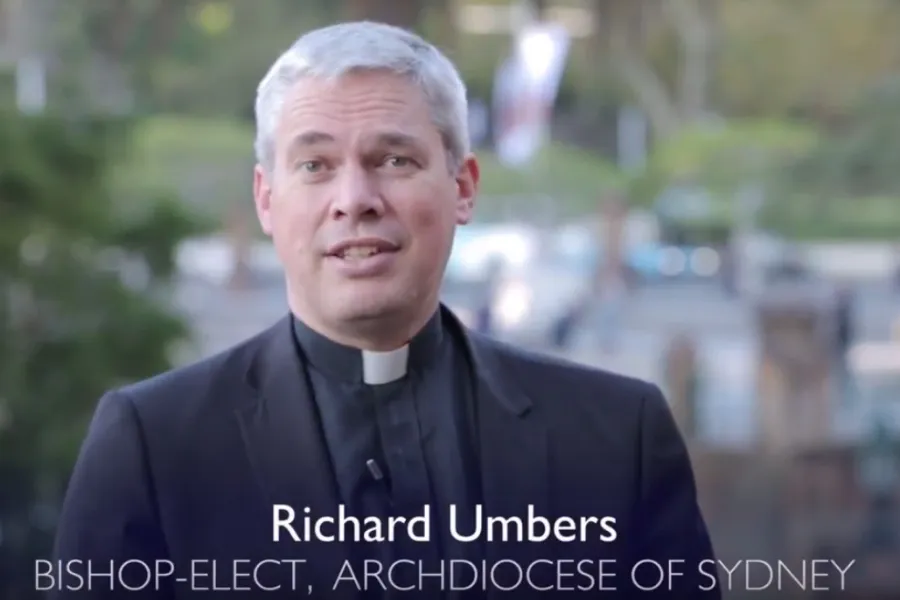
Sydney, Australia, Sep 15, 2017 / 03:01 am (CNA).- Between the Harambe memes and quick explanations of Catholic doctrine on his Twitter page, Richard Umbers, Auxiliary Bishop of the Archdiocese of Sydney, says that online humor is about more than just the laughs.

In fact, he says, Christian humor online can help to reach out to parts of our modern world that are in the process of secularization. This kind of online engagement – with a wink- plays into a larger need for Christians to engage in society and to promote a vision of Christian life.

Bishop Umbers is quick to note in his Twitter bio that he is indeed an “actual person and a realbishop”, adopting the description given him by Tommy Tighe, the “Catholic Hipster”.

<blockquote class=”twitter-tweet” data-lang=”en”><p lang=”und” dir=”ltr”><a href=”https://t.co/Dh88ZEjeuy”>pic.twitter.com/Dh88ZEjeuy</a></p>&mdash; Bishop Down Umber (@BishopUmbers) <a href=”https://twitter.com/BishopUmbers/status/906526961983356928″>September 9, 2017</a></blockquote>
<script async src=”//platform.twitter.com/widgets.js” charset=”utf-8″></script>

Whether in art, online culture, or political discussion, Christians should be giving an example of how to evangelize and to speak to the challenges society faces today. “You need the contemporary expression of Christian faith,” Bishop Umbers said of what the Church needs from its faithful today.

The writings of Benedict XVI, and Pope Francis’ Laudato si’, can provide such a template for living an “alternative” lifestyle as a Christian, while also speaking to contemporary culture, he indicated.

“You can promote a coherent alternative lifestyle, which is what Catholicism really is in our society.”

Bishop Umbers was born and raised in New Zealand, joining the personal prelature of Opus Dei before moving to Sydney to finish his degrees in economics. After guidance from a mentor, he discerned a call to the priesthood, upon which he travelled to Rome and then to Spain to continue his studies. He was ordained a priest of the prelature in Spain in 2002. Fourteen years later, Umbers was consecrated a bishop, becoming in 2016 the youngest bishop in Australia, at the age of 45.

Five or six years ago, he told CNA, he got his first Twitter account and started to use it regularly. In the past several years, he has used his twitter account to reach out on issues affecting Australian society – as well as to joke about a variety of topics: “You can have fun with memes.”

Part of the reason he’s drawn to memes, Bishop Umbers said, is not only because they match his sense of humor, but because of his own limitations. “I have an artistic vision with zero talent,” he joked.

More seriously, memes do indeed convey a message. Like political cartoons, which have spread powerful ideas and opinions for centuries, memes can also convey earnest information.

The creation of a meme culture in online Catholic spaces, or use of other kinds of social media outreach can help reach out and participate in conversations. In fact, he said, people tend to take notice when a conversation is constructive, rather than a “flame war.” Also, he warned, any conversation can sometimes face the threat of miscommunication, or being “overly ironic.”

Honesty and consideration can add balance to online evangelization. “I tell people all the time: be yourself,” Bishop Umbers said. He also advocated that Catholics online display their convictions, and even make “strong comments” – but also advised them consider what they say before they type.

The bishop also urged that Catholics online have faith and conviction in their beliefs – especially if they dabble in memes or in online discussions. “[It] takes a certain confidence in your own faith,” he said of online participation and discussion. This confidence can even help bring out the humor of the whole situation.

While throughout history “believers have always had a go” during important disagreements, poking fun at topics and laughing about the misunderstandings is “a lasting human tradition.”

It’s this sense of conviction that Bishop Umbers hopes believers can bring to conversations happening not only online, but in the Archdiocese of Sydney.

Australian society is currently experiencing “rapid secularization” and increasing “sectarianism”, he said, as issues like abortion, same-sex marriage, and euthanasia come to the center of Australian political debates.

While more Catholics continue to identify as Catholic, as opposed to the shift to “non-religious” among other Christian groups, some Catholic institutions have remained quiet or even supported positions that fly in the face of Church teaching.

“To stand up for Catholic teaching puts you, once again, on the margins”: Bishop Umbers explained that taking a counter-cultural position is likely to impact funding of Church programs as time goes on.

The marginalization of traditional Christian beliefs, however, does not mean that people do not listen or that people do not take interest in the Church’s arguments. “You’re definitely not irrelevant,” he said of the Christian voice in the public square.

Rather, he said, effective communication and coordination seem to be the major stumbling-block facing the Church in the Sydney area.

“That’s where social media can play a big role,” Bishop Umbers offered.

For example, he pointed to a successful social media campaign started by three young women which protested the expansion of abortion in the Australian state of New South Wales, of which Sydney is the capital. The young pro-life advocates started a twitter hashtag that started to change the conversation surrounding abortion, and inspired local communities to get involved.

“Because of them, there was a huge campaign across all the parishes to have people sign a petition.” More than 80,000 signed the petition, which eventually contributed to the bill’s defeat in parliament, the bishop said.

The center of a successful online campaign like the one in New South Wales, or of a meme, or of any mode of evangelization, lies, at its core, in the truth, Bishop Umbers said.

“Really it’s an expression of who you are, and I think that’s where evangelization comes from,” he said of online engagement. “It’s not a campaign. It is truly a sharing of your own convictions and your own thoughtfulness.”

[…]

No Picture
News Briefs

Filipino archbishop: Face opposition with a martyr’s courage

September 6, 2017 CNA Daily News 1

Dagupan, Philippines, Sep 7, 2017 / 12:08 am (CNA/EWTN News).- Despite hostility, the Church must teach the truth of the Gospel with the courage of the martyrs, said the Archbishop of Lingayen-Dagupan in the Philippines.

In a Mass during the archdiocese’s second-ever synod, Archbishop Socrates Villegas said the most important work of those assembled is to reach everyone with the Church’s teachings.

“We must teach even if our voices get hoarse. We must teach even if they threaten us,” the archbishop said Sept. 2, according to CBCP News.

“We must teach even if they kill us and if they kill us, our message will echo even more because the best way to teach is through martyrdom!”

Archbishop Villegas spoke at the Cathedral of Saint John the Evangelist in Dagupan – an archdiocese particularly known to voice its opposition to the government’s extreme measures in its fight against drugs.

Since President Rodrigo Duterte took office in June 2016, over 7,000 deaths have been related to the war on drugs, with more than 2,500 killings attributed to the Philippines’ police force, according to Human Rights Watch.

However, despite cultural opposition from the government or even on social media, God will triumph, the archbishop said.

“In the lights and shadows of life, in the stormy and sunny days, in the persecutions we endure and the triumphs we bask in – the Lord speaks.”

He said during these times pastors must not be afraid to “fill the dark world with the light of Christ,” and he encouraged the crowd to live up to the challenge of Pope Francis – to meet people in “the peripheries” of society.

“We dream not of [a] status quo Church but an ever vibrant Church that is excited, not afraid to plunge into the deep,” Archbishop Villegas said, noting Catholics must be willing to reach out to the people in the streets.

One of the Philippine’s fastest growing pastoral jurisdictions, the Lingayen-Dagupan archdiocese was founded in 1963, and this is its first synod since 1985.

The gathering will discuss matters relevant to local parishes, but the archbishop said it will also be an opportunity to listen and serve.

[…]
