No Picture
News Briefs

Kim Jong Un invites Pope Francis to meet in Pyongyang
October 9, 2018 CNA Daily News 0

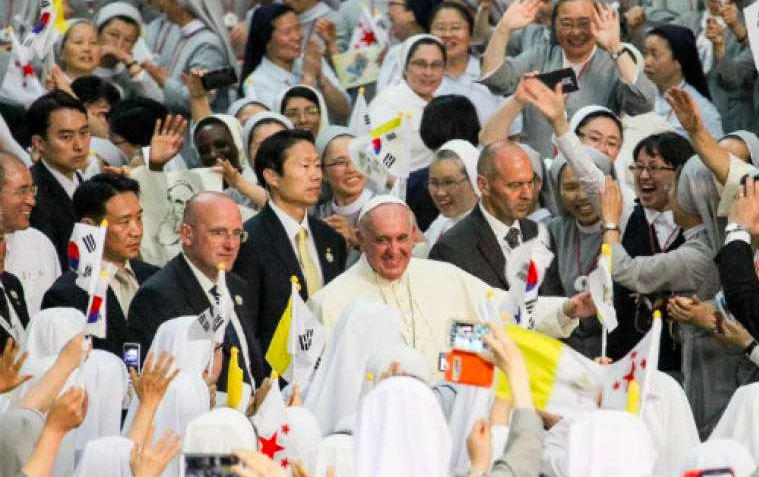
Seoul, South Korea, Oct 9, 2018 / 05:40 am (CNA/EWTN News).- North Korean dictator Kim Jong Un has invited Pope Francis to meet in Pyongyang, a South Korean spokesman said Tuesday.

Pope Francis is already set to meet with South Korean President Moon Jae-in Oct. 18 for an audience at the Vatican Apostolic Palace, where Moon will personally deliver the invitation from Kim Jong Un.

President Moon, a Catholic, will also participate in a Mass for peace on the Korean peninsula in St. Peter’s Basilica on Oct. 17 celebrated by the Vatican Secretary of State Cardinal Pietro Parolin. 

During the most recent summit between Korean leaders in September, Kim told Moon that he would “greatly welcome” the pope Pyongyang, according to South Korea’s presidential office. 

On Oct. 7, U.S. Secretary of State Mike Pompeo met with Kim Jong Un in North Korea to discuss details for a second summit between President Donald Trump and Chairman Kim to continue negotiation of the denuclearization of the Korean peninsula, according to the State Department.

“One of the key pillars of the statement between Chairman Kim and President Trump was that we would have better relationships, confidence-building measures. We would fundamentally change the nature of North Korea’s relationship with the rest of the world,” Secretary Pompeo told press in South Korea on Oct. 8 after the meeting with Kim.

Vatican Secretary for Relations with States Paul Gallagher visited the Joint Security Area on the Demilitarized Zone between North and South Korea on July 5, where he said, “it is a very historic period, a period of hope and the Holy Father is supporting that movement.”

“I am sure with the prayers and support of Christians and other men and women in good faith around the world that many good things will be achieved in the coming months. We pray for that,” Archbishop Gallagher said during the visit.

Diplomatic negotiations continued at the third inter-Korean summit between Kim and Moon, which took place on Sept. 18 in Pyongyang during a week in which Catholics in South Korea celebrated the peninsula’s martyr saints.

The First Lady of South Korea, Kim Jung-sook, participated in the Mass with Korean bishops as a part of the festivities. She asked for prayers for the diplomatic negotiations at Seoul’s Myeongdong Cathedral days prior to heading to Pyongyang for the summit.

Twenty-five million people live in North Korea, which has one of the worst human rights records in the world. A United Nations investigation in 2014 produced a 372-page report that documented crimes against humanity, including execution, enslavement, torture, imprisonment, forced abortions, and knowingly causing prolonged starvation.

There are currently an estimated 80,000 to 120,000 people in North Korea’s six political prison camps, in which the U.S. State Department has found evidence of starvation, forced labor, and torture.

South Korean bishops have been leading Catholics in prayer for the reconciliation and unity of the divided Korean peninsula for decades. 

“Since 1965, the Korean Catholic Church has been praying for the true peace of the two Koreas and the reconciliation of the nation,” Archbishop Kim Hee-Jung of Gwangju wrote in April following the first meeting between the Korean leaders. chairman of the Korean bishops’ conference in April.

“Through these prayers, something miraculous is happening in this land by the help of God for whom nothing will be impossible,” Archbishop Kim continued.

“Until the day when complete peace is established on the Korean peninsula and divided peoples are united, the Catholic Church of Korea will accompany the journey for reconciliation of the people in unity.”
[…]

No Picture
News Briefs

Pro-life leaders oppose broad expansion of abortion in Australian state

October 8, 2018 CNA Daily News 0

Brisbane, Australia, Oct 8, 2018 / 04:22 pm (CNA/EWTN News).- A parliamentary committee reportedly supported a proposal Oct. 5 to significantly expand abortion in the northeastern Australian state of Queensland.

The proposed law, set to be debated in Queensland parliament this month, would allow women to terminate pregnancies up to 22 weeks gestation and until birth with the permission of two doctors. The proposed changes are based on a June report from the Queensland Law Reform Commission, which recommended removing abortion from the Criminal Code.

The proposal would also enforce 150 meter “safe zones” around clinics and medical facilities that perform abortions in order to exclude protesters.

Under the proposal, doctors would be permitted to refuse to perform abortions if they have moral objections to doing so, but they must refer patients to another doctor.

Although the Labor party controls the majority of Queensland’s parliament, Health Minister Steven Miles urged the opposition Liberal National Party to allow a conscience vote on the bill. Miles said if the LNP allows a vote to take place, “the bill will likely pass,” and “if they don’t it will be very difficult for it to pass,” as reported by the Australian Associated Press.

Tim Mander, deputy leader of the LNP, has refused to confirm or deny if his party would allow a conscience vote, saying it would be decided at a party room meeting Oct. 9. He said the Health Minister’s demands indicated that the majority party was uncertain whether they had enough votes from its own members to pass the bill.

Abortion is currently illegal in Queensland except when a doctor believes a woman’s physical or mental health to be in serious danger.

Opponents of the bill have argued that while the legislative proposal is being presented as a matter of health, it will instead legalize abortion based on financial, social, or eugenic reasons.

Dr. Jovina James, a general practitioner from Queensland, objected to the bill’s inclusion of a requirement for conscientious objectors to abortion to refer women to another doctor for the procedure.

“Do they even know what conscientious objection means?” she said in September as reported by the diocesan newspaper The Catholic Leader.

“It is not a distaste for abortion. It’s a deep, unshakeable belief that this act is contrary to the human good…that this is not healthcare, and this is not what I signed up for when I promised to ‘do no harm.’”

Archbishop Mark Coleridge of Brisbane weighed in on the proposed legal changes in August.

“According to the draft bill, abortion will be permitted until the moment of delivery if two doctors consider that ‘in all circumstances, the termination should be performed’,” Archbishop Coleridge told The Catholic Leader.

“So, it’s not a health issue. It’s an essentially moral issue that concerns the good of society as a whole because it touches on questions of life and death.”

He cautioned that many women choose abortion out of desperation, believing that they have no other options, because those who support abortion do not present other choices.

“Those MPs who favor the legislation should say why they can accept that Queensland babies who may have reached 40 weeks gestation can be aborted when health isn’t a factor,” he said.

[…]

No Picture
News Briefs

Pakistani Supreme Court reserves judgement on Asia Bibi blasphemy case

October 8, 2018 CNA Daily News 0

Islamabad, Pakistan, Oct 8, 2018 / 01:01 pm (CNA/EWTN News).- Pakistan’s Supreme Court has reserved judgement on the verdict of Asia Bibi, a Roman Catholic woman who was sentenced to death for blasphemy, several Pakistani news sources reported on Monday.

The three-judge bench who was assembled to hear Bibi’s final appeal of her 2010 conviction declined to announce their decision on the verdict, and it is unknown when they will do so.

The reasons for the delay were not immediately made clear.

In 2009, Bibi was accused of making disparaging remarks about the Islamic prophet Muhammad after an argument stemming from a cup of water. Bibi was harvesting berries with other farm workers when she was asked to get water from a well.

Another person saw her drinking water from a cup that had previously been used by Muslims, and informed Bibi that it was not proper for a Christian to use that cup, as she was unclean. An argument ensued, and Bibi was reported to a Muslim cleric five days later for her supposed blasphemy. Bibi and her family were the only Christians in the area, and had faced pressure to convert to Islam.

She was convicted of blasphemy in 2010, and was sentenced to death by hanging. She immediately appealed. The Lahore High Court upheld conviction in 2014, which she then appealed to the country’s Supreme Court. The Supreme Court agreed to hear her appeal in 2015.

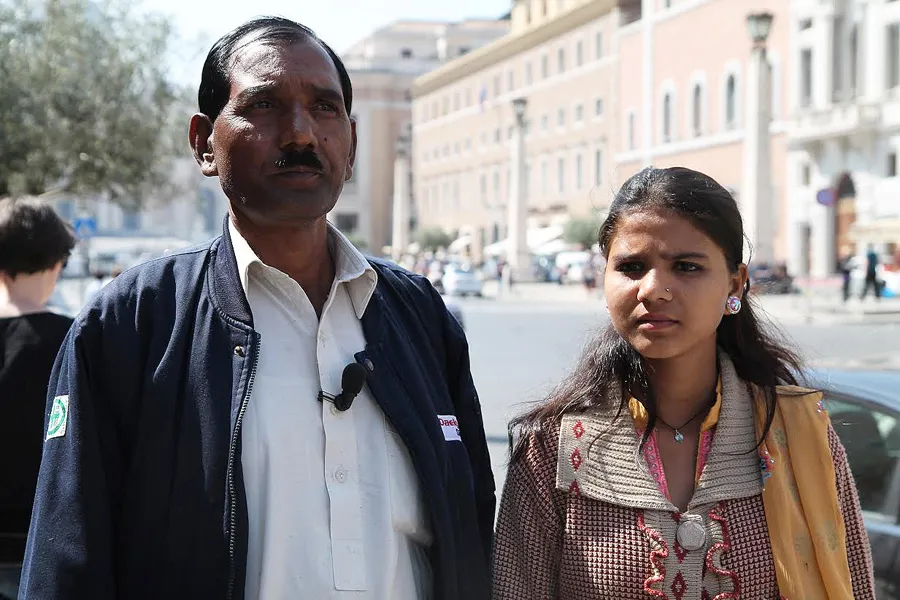
Since her arrest, Bibi has garnered international support from numerous world leaders calling for her immediate release, including Benedict XVI and Pope Francis. In 2015, Pope Francis met with her daughter and offered prayers.

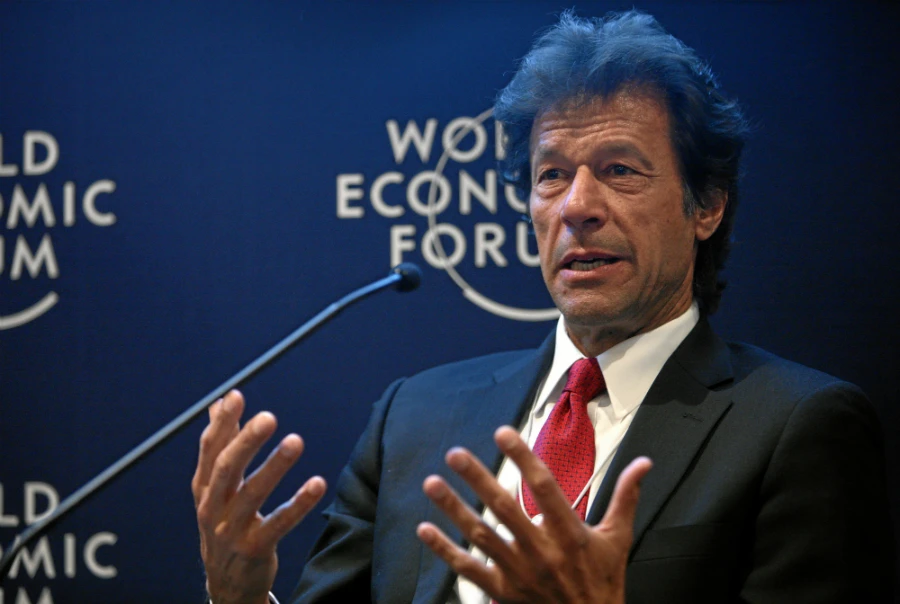
In Pakistan, Islamic hardliners have been calling for her execution since her initial conviction. Pakistan’s Prime Minister Imran Khan said that he supports the country’s harsh blasphemy laws.

If her appeal fails, Bibi would become the first person in Pakistan to be executed for blasphemy. In Pakistan, the crime of defaming Muhammad carries a mandatory death sentence.

Pakistan’s blasphemy laws impose strict punishment on those who desecrate the Quran or who defame or insult Muhammad. Pakistan’s state religion is Islam, and around 97 percent of the population is Muslim.

Although the government has never executed a person under the blasphemy law, accusations alone have inspired mob and vigilante violence.

Blasphemy laws are reportedly used to settle scores or to persecute religious minorities; while non-Muslims constitute only 3 percent of the Pakistani population, 14 percent of blasphemy cases have been levied against them.

Many of those accused of blasphemy are murdered, and advocates of changing the law are also targeted by violence.

[…]

No Picture
News Briefs

Pakistani scrutiny for multiple NGOs could close Catholic Relief Services

October 8, 2018 CNA Daily News 0

Islamabad, Pakistan, Oct 8, 2018 / 11:09 am (CNA/EWTN News).- Catholic Relief Services is among the 18 international organizations ordered closed by Pakistan’s new government without explanation. The move follows allegations related to the U.S. government’s pursuit of Osama bin Laden, in which a doctor’s false vaccination campaign claimed to be linked to the NGO Save the Children.

Most of the groups under the order are U.S.-based, with the rest from the U.K. and the European Union, the Associated Press reported Oct. 5.

World Vision and International Relief and Development are among the other U.S. groups affected, while the U.K.-based ActionAid and the Denmark-based Danish Relief Council are also under orders to close, the Associated Press reports. According to the Pakistani newspaper The Nation, the Pakistani branch of George Soros’ Open Society Foundations is among the organizations.

Pakistan’s Interior Ministry issued the order. The organizations have 60 days to end operations in Pakistan.

Catholic Relief Services declined comment on the matter.

Beginning in 2015, the Interior Ministry required stricter and more detailed online registration application for NGOs. The move was prompted by fears that some NGOs were using their charitable status to spy on Pakistan – and one observer said it is connected to the U.S. government’s hunt for bin Laden.

Muhammad Amir Rana, director of the Islamabad-based Pakistan Institute of Peace Studies, told the AP that ahead of the 2011 U.S. Navy Seal operation that killed bin Laden in Pakistan, a Pakistani doctor used a fake vaccination scam to attempt to identify the al-Qaeda leader’s home using DNA acquired from his relatives.

The Pakistani doctor, Shakil Afridi, said he was working for the NGO Save the Children to gain access to the bin Laden compound.

According to Reuters, he had been recruited by the CIA to help find bin Laden. He has been in jail since 2011.

Save the Children has denied any links to the CIA, and said the doctor’s claimed link with the NGO was false, but its non-Pakistani staff were forced to leave the country, Agence France Presse reports.

In 2012 the NGO’s then-country representative David Wright charged that intelligence agencies had broken international law and put at risk the safety of aid groups around the world.

“The blame lies squarely with the CIA which use humanitarian work for intelligence gathering or worse,” he said, according to the U.K. newspaper The Telegraph. “If it continues then we won’t be able to do our jobs at all in 10 years’ time.”

Rana said that Pakistan, including its intelligence agency, also views many international aid organizations as advocates of “liberal, secular voices.”

In December 2017 Pakistan’s previous government ordered 10 other foreign-funded aid groups to close, including the Pakistani branch of the Open Society Foundations. That order was not enforced in time.

The U.K.-based Plan International also faces a denied registration. The NGO focuses on education and child rights and often partners with the government on water and sanitation projects and disaster management.

Imran Yusuf Shami, Plan International’s country director, said the NGO employs dozens of people, all of whom are Pakistani, and aids tens of thousands of the poorest people in the country.

Shami said the NGO closures will affect hundreds of thousands of people.

[…]

No Picture
News Briefs

Catholic charities worldwide join Indonesia tsunami relief efforts

October 3, 2018 CNA Daily News 0

Manado, Indonesia, Oct 3, 2018 / 04:01 pm (CNA/EWTN News).- Caritas Italy will donate more than $115,000 to help the victims of the tsunami that struck Indonesia last week.

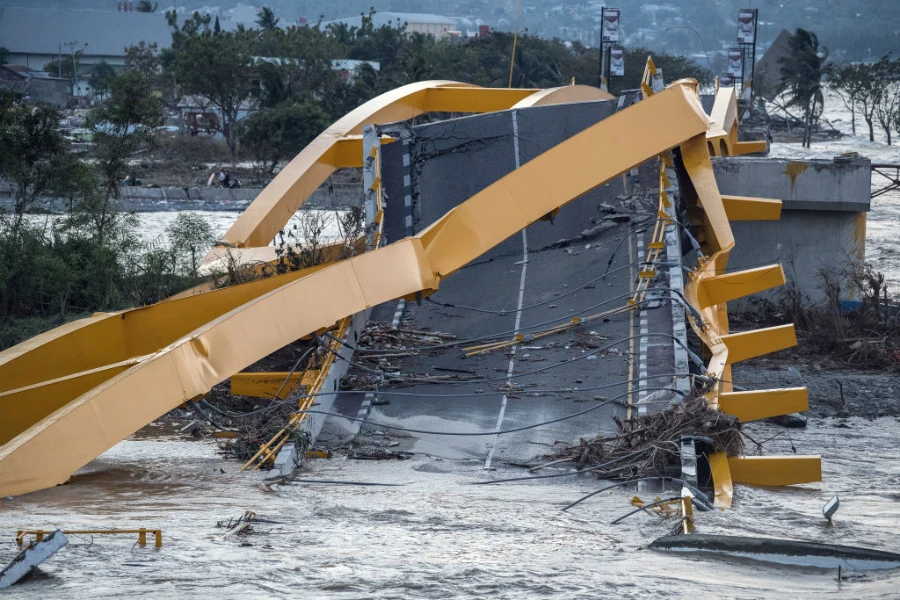
A 7.5-magnitude earthquake struck 6 miles beneath Sulawesi just after 6 pm Sept. 28. It set off a tsunami, which caused 20 foot-high waves which devastated coastal cities, including, prominently, Palu. The quake also caused landslides and power outages.

More than 1,400 people have died as a result of the disaster, and tens of thousands are displaced from their homes.

Rescuers expect the death toll will rise, as access to some areas is currently blocked by damaged roads and communication lines.

Caritas Ambrosiana, the charity arm of the Archdiocese of Milan, has allocated $34,000 for disaster relief on Sulawesi.

Catholic Relief Services and the Scottish Catholic International Aid Fund have provided relief funds and teams to address the emergency situation.

As heavy damages have affected access points and infrastructures, CRS expressed it has had difficulty in reaching devastated areas.

“Humanitarian groups are struggling to get people into affected areas,” Yenni Suryani, CRS’ Indonesia country manager, said Sept. 30. “With the airport damaged, getting access to Palu and Donggala is a huge problem. Responders and local aid groups are having to drive overland 10-12 hours.”

“That means a bottleneck for relief supplies in coming days. Landslides are hindering road travel in some places. There’s very limited electricity in Palu but power is out almost everywhere. Some mobile phone towers have been repaired allowing limited communication, but it’s unreliable.”

The CRS teams are joining local partners in the area, addressing needs such as tarps, blankets, sanitation kits, and sleeping mats. Suryani said a lack of water and fuel are also a concern which needs to be addressed.

Scottish Catholic International Aid Fund have partnered with Caritas Indonesia and contributed over $25,000 to relief efforts. SCIAF Director Alistair Dutton expressed apprehension over the situation and said his prayers would be with the Indonesian victims.

[…]

No Picture
News Briefs

Provision for abortion delayed in Australian state

October 3, 2018 CNA Daily News 0

Hobart, Australia, Oct 3, 2018 / 03:23 pm (CNA/EWTN News).- Government authorities in the Australian state of Tasmania have promised that low-cost surgical abortion will be provided starting in October, but general practitioners and the state’s Women’s Legal Service say they have not been provided any information on who the provider will be and how abortions will be delivered, according to local media reports.

The state’s only dedicated abortion clinic closed in late 2017 due to declining demand for surgical abortions, ABC news reported.

At the time, Tasmania’s primary abortion doctor cited medical abortion, which is allowed in the country up to nine weeks of pregnancy, and increased use of contraception as reasons for the drop in demand for the surgical procedure.

The state had been paying for women to travel to other Australian states to have abortions since the clinic’s closure. The Tasmanian health department said it had reached an agreement with a new abortion provider and reportedly signed a five-year agreement with the as-yet undisclosed provider in July.

Bastian Seidel, president of the Royal Australian College of General Practitioners, told ABC News that no information from the government about how the procedures would be delivered had yet been passed on to general practitioners. Susan Fahey, Women’s Legal Service chief executive, also expressed frustration that the government had so far provided so few details.

Under Tasmanian law, women are allowed to choose abortion up until 16 weeks of pregnancy, and after 16 weeks must seek the approval of two doctors before an abortion is allowed. Doctors are allowed to conscientiously object to the procedure, but are compelled by law to provide “provide the woman with a list of prescribed health services from which [they] may seek advice, information or counselling on the full range of pregnancy options.”

Tasmania’s current Health Minister, Michael Ferguson, voted against the liberalization of the country’s abortion laws in 2013.

[…]

No Picture
News Briefs

Tasmania may criminalize priests for upholding seal of confession

October 2, 2018 CNA Daily News 0

Hobart, Australia, Oct 2, 2018 / 02:01 pm (CNA/EWTN News).- Catholic priests in the Australian state of Tasmania could face jail time if they fail to report sexual abuse disclosed during the sacrament of confession, ABC news (Australia) has reported.

Draft legislation put forth by the government of the island would make mandatory reporting of child sexual abuse a criminal matter for religious leaders. Many public sector workers already face fines if they fail to report suspected abuse, according to ABC.

The Tasmanian proposal comes amid various attempts by authorities throughout Australia to mandate the breaking of the confessional seal to report cases of child sex abuse, and pushback from Catholics in the country.

The Royal Commission into Institutional Responses to Child Sex Abuse released a report in December 2017 that included 409 recommendations aimed at curbing child sex abuse in the country. The Royal Commission recommended to all Australian states that their laws governing child abuse reporting “should not exempt persons in religious ministry from being required to report knowledge or suspicions formed, in whole or in part, on the basis of information disclosed in or in connection with a religious confession.”

The Australian bishops’ conference on Aug. 31 responded positively to nearly all of the Royal Commission’s recommendations, but defended the confessional seal.

Archbishop Julian Porteous of Hobart, the Tasmanian capital, argued that “perpetrators of [sexual abuse] very rarely seek out confession and if mandatory reporting of confessions were required they would almost certainly not confess,” as quoted by The Australian.

The Australian Capital Territory Legislative Assembly in Canberra passed a law in June requiring religious groups to report any allegations, offences or convictions of child abuse within 30 days. The state of South Australia adopted a similar law, mandating a fine for failing to report abuse, which took effect this week.

Should the proposed legislation pass, Tasmania will become the second Australian state to change their laws based on the Royal Commission’s guidelines.

In July, the attorney general of Victoria declined to accept the royal commission’s recommendentation that it require priests to break the confessional seal to report cases of child sex abuse.

The Code of Canon Law states that “The sacramental seal is inviolable; therefore it is absolutely forbidden for a confessor to betray in any way a penitent in words or in any manner and for any reason.” A priest who intentionally violates the seal incurs an automatic excommunication.

The Catechism of the Catholic Church teaches that “every priest who hears confessions is bound under severe penalties to keep absolute secrecy regarding the sins that his penitents have confessed to him,” due to the “delicacy and greatness of this ministry and the respect due to persons.”

Fr. Michael Whelan, a parish priest at St. Patrick’s Church in Sydney, was quoted in local news in June as saying that he, along with other priests, would be “willing to go to jail” rather than break the seal of confession. When asked if the Church was above the law, Whelan said “absolutely not” and said he would only be protecting religious freedom.

Clerics are not the only critics of the new legislation. Andrew Wall, a member of the Australian Capital Territory Legislative Assembly, said forcing priests to break the seal of confession oversteps an individual’s “freedom of association, freedom of expression and freedom of religious rights.”

[…]

No Picture
News Briefs

CRS helps victims of Indonesia earthquake and tsunami

October 1, 2018 CNA Daily News 0

Manado, Indonesia, Oct 1, 2018 / 03:26 pm (CNA/EWTN News).- Catholic humanitarian groups have joined the efforts to support the victims of the earthquake and tsunami that struck the Indonesian island of Sulawesi on Friday.

A 7.5-magnitude earthquake struck 6 miles beneath Sulawesi just after 6 pm Sept. 28. It set off a tsunami, which caused 20 foot-high waves which devastated coastal cities, including, prominently, Palu. The quake also caused landslides and power outages. At least 844 people have died as a result of the disaster.

The country’s tsunami warning system had reportedly been damaged. Though an alert was still issued, the size of the waves were underestimated and power outages from the tremors caused many people not to receive an alert at all, according to the BBC.

Catholic Relief Services and the Scottish Catholic International Aid Fund have provided relief funds and teams to address the emergency situation. As heavy damages have affected access points and infrastructures, CRS expressed it has had difficulty in reaching devastated areas.

“Humanitarian groups are struggling to get people into affected areas,” Yenni Suryani, CRS’ Indonesia country manager, said Sept. 30. “With the airport damaged, getting access to Palu and Donggala is a huge problem. Responders and local aid groups are having to drive overland 10-12 hours.”

“That means a bottleneck for relief supplies in coming days. Landslides are hindering road travel in some places. There’s very limited electricity in Palu but power is out almost everywhere. Some mobile phone towers have been repaired allowing limited communication, but it’s unreliable.”

Suryani said many people are expected to still be trapped alive underneath the buildings, noting there has been reports of shouts and lights, possibly from cell phones, among the rumble.

The CRS teams are joining local partners in the area, addressing needs such as tarps, blankets, sanitation kits, and sleeping mats. Suryani said a lack of water and fuel are also a concern which needs to be addressed.

Scottish Catholic International Aid Fund have partnered with Caritas Indonesia and contributed over $25,000 to relief efforts. SCIAF Director Alistair Dutton expressed apprehension over the situation and said his prayers would be with the Indonesian victims.

“I’m deeply concerned to see the news of deaths, injuries and destruction following the terrible tsunami which has hit Palu city in Indonesia,” he said. “My thoughts and prayers are with those who have lost loved ones and are now left to pick up the pieces and rebuild their lives.”

[…]

No Picture
News Briefs

Study finds increases in gold price increase sex-selective abortions in India

September 29, 2018 CNA Daily News 0

New Delhi, India, Sep 29, 2018 / 03:01 pm (CNA/EWTN News).- A study from the University of Essex has found a link between the global price of gold and the survival rate for Indian baby girls. Monthly increases in the price of gold between 1972-2005, the study argues, led to girls being more likely to be aborted, die in the first month of life, or suffer from stunted growth.

The study also concluded that dowries are a major contributing factor to India’s gender imbalance. Sex-selective abortion, though illegal since 2015, has been widely practiced since the 1980s, and nationwide men outnumber women by nearly 37 million. There are also an estimated 21 million “unwanted” girls who have been born in the country.

“Our contribution is to provide what we believe is the first clear evidence of causal effects of dowry costs on son preferring behaviours,” said Sonia Bhalotra, a professor of economics and the author of the study.

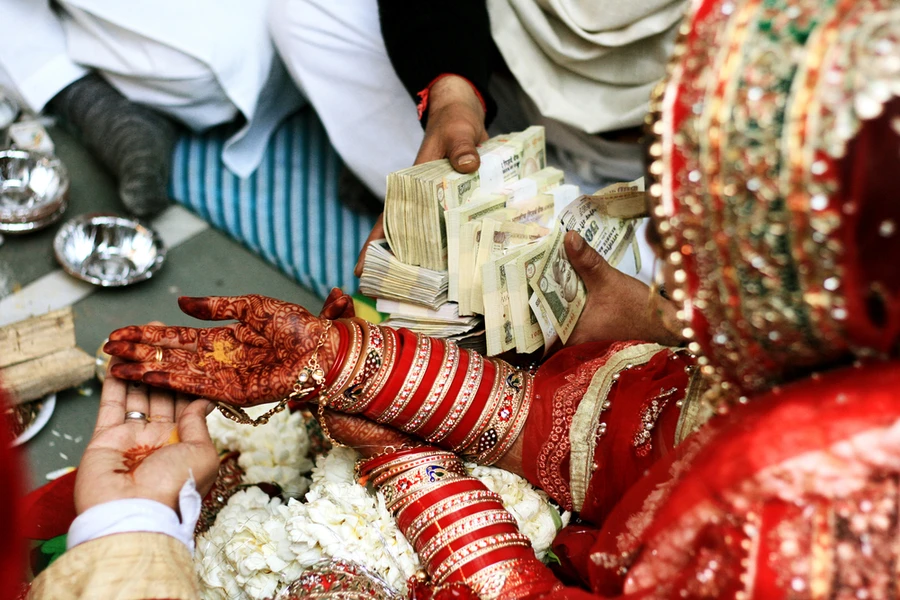
Dowries are a transfer of parental property upon marriage of a daughter, a practice still widely found in India, Bangladesh, Pakistan, and Sri Lanka, despite being illegal in India since 1961.

“While the original dowry payments acted as a pre-mortem bequest to daughters that afforded them post-marital financial protection, property rights over dowry are now often appropriated by the groom or his parents rather than retained by the bride,” the study states.

The study cites estimates that suggest a dowry may often be four to eight times a family’s annual household income, and that parents often have to start saving for a girl’s dowry as soon as she is born.

Gold, especially jewelry, is an integral part of Indian dowries. Gold prices are frequently reported in Indian media and are a regular topic of discussion, Bhalotra wrote in Quartz India.

The study found that from 1972 to 1985, an increase of approximately six percent in the monthly price of gold was accompanied by a six percent increase in deaths of baby girls, with no significant change in deaths of baby boys. Additionally women who survived to adulthood who were born during that time period were more likely to be less tall when they reach maturity, possibly due to nutritional deprivation early in life.

After 1985, when ultrasound scans became widely available, fewer girls were born in months of gold price inflation, suggesting that those children were being aborted rather than neglected at birth. Tests to determine the sex of a fetus have been illegal in India since 2015.

“We find that parents are consistently ‘eliminating’ girls early in life, but the pattern is that this is done soon after birth before 1985, and while the girl is in the womb after 1985,” Bhalotra said.

“[In 1994,] abortion clinics in Mumbai had posters with slogans such as ‘Better pay 500 [rupees] now than 50,000 [rupees] later.’ The 500 [rupees] is the cost of abortion and the 50,000 [rupees] refers to the future cost of dowry,” the author states.

The study found that after 1985, a 1 percent increase in the global price of gold led to an extra 33,000 “missing” female births each year.

[…]