No Picture
News Briefs

Church in Colombia prepares for first National Day of Reconciliation

May 2, 2018 CNA Daily News 0

Bogotá, Colombia, May 2, 2018 / 02:57 pm (ACI Prensa).- Inspired by Pope Francis’ message during his 2017 visit to the country, the Church in Colombia is preparing to celebrate the first National Day of Reconciliation on May 3.

Auxiliary Bishop Elkin Fernando Álvarez Botero, secretary general of the Colombian Bishops’ Conference, explained that the bishops met in November 2017 to more deeply reflect on the message of the Holy Father during his Apostolic Visit to the country that year.

In that meeting, he said, the bishops “wanted to have a day set aside especially dedicated to praying for reconciliation among Colombians.”

The bishops decided that that celebration would coincide with the Exaltation of the Holy Cross, which in Colombia is May 3.

During his visit to Villavicencio in September 2017, the Holy Father urged Colombia “to open your heart as the people of God, allow yourself to be reconciled! Colombians, don’t be afraid to ask and offer forgiveness. Don’t resist reconciliation in order to come together, to re-encounter each other as brothers and sisters and overcome enmities. Now is the time to heal wounds.”

The pope’s trip was largely the result of the country’s ongoing peace process between the government and Colombia’s largest guerrilla group, the Revolutionary Armed Forces of Colombia (FARC).

After more than six decades of conflict, a peace deal was finally struck in August 2016, de-escalating a conflict which since 1964 has left some 260,000 people dead and an estimated 7 million displaced.

In preparing for the day of reconciliation, Bishop Álvarez Botero reflected, “Let us be convinced, inspired by the Holy Spirit, that reconciliation with God, with our brothers and sisters, with ourselves and with nature is the path we must take to reach peace.”

He urged Catholics not to grow tired of praying for reconciliation “and peace for our country, because they are a gift that only comes from Jesus Christ, who gave his life on the Cross to heal our wounds and to knock down the wall that separates us, hatred.”

The bishop encouraged people to make “a serious commitment to reconciliation” in order to “eradicate from our personal and communal life all that which divides and separates us, which leads us to violence and death.”

He also urged the people of the country “to cultivate, care for and promote the values that dispose us to live reconciliation.”

Among Colombians, he said, there is “dialogue, sharing, solidarity, understanding, patience and above all, the charity that allows us to reach out to the poorest and neediest with the same love that Christ taught us from the Cross.”


This article was originally published by our sister agency, ACI Prensa. It has been translated and adapted by CNA.

[…]

No Picture
News Briefs

Chilean Church opens greenhouse to employee youth with Down syndrome

May 1, 2018 CNA Daily News 0

Concepción, Chile, May 2, 2018 / 12:03 am (ACI Prensa).- The Archdiocese of Concepcion in Chile has begun construction on a greenhouse to grow vegetables, a new project which will contribute to the inclusion of young people with Down syndrome in the workforce.

The vegetables will be raised using organic methods. The soil will be enriched with compost.

This initiative builds on an August 2014 initiative, where young people with Downs syndrome provide personalized service for clients from businesses and institutions. 

The greenhouse will span 1400 square feet. Its roofing will be made of long-lasting polycarbonate. It is expected to be ready within a month and a half.

The project will at first bring in “a small group of young people, which will be increased over time. The idea is that this project, with this model, can be imitated in schools and parishes,” said activity coordinator, Fr. Pedro Gomez.

Directing the project will be a deacon who is an expert in the environmental field, a layman in charge of setting up the facility, and Fr. Gomez, who has done studies in ecological conversion, agriculture and afforestation.

Fr. Gomez, who is also the vicar general of the archdiocese, said that in the future, the greenhouse will create a seed bank and recycling networks.

The initiative takes its direction from the encyclical Laudato Si’ which “has a lot to do with the care of our common home and its connection to social issues,” the priest said.

The project does not have a name yet, but Archbishop Fernando Chomali of Concepcion suggested “Simon of Cyrene.” Fr. Gomez explained that “today, we see that we can help carry the cross of other brothers – in this case, young people with Down syndrome – accompany them and offer them a source of work.”

It is Christ who “helps us carry our own weaknesses and fragility and invites us to be more compassionate and merciful, to also be an expression of the works of mercy that Pope Francis invites us to,” the priest said.


This article was originally published by our sister agency, ACI Prensa. It has been translated and adapted by CNA.

[…]

No Picture
News Briefs

Priest kidnapped from Our Lady of Guadalupe Basilica found dead

April 30, 2018 CNA Daily News 1

Mexico City, Mexico, Apr 30, 2018 / 11:20 am (ACI Prensa).- An 84-year-old priest of the Archdiocese of Mexico City was found dead in Cuernavaca, the capital of Mexico’s Morelos state, April 25.

Fr. Moisés Fabila Reyes had been kidnapped April 3. According to local media, his family had decided not to publicize the kidnapping, and to keep the Church out of the negotiations to free him.

Test showed that the priest died from a heart attack. He had health issues before the kidnapping, reports said, which were likely exacerbated by the conditions of his captivity.

Fr. Fabila entered the Conciliar Minor Seminary of Mexico at age 12. He was ordained a priest on June 29, 1961 in the Mexico City cathedral. Since 2001, he served as chaplain of the choir at the Guadalupe Basilica.

In a statement released April 26, the Archdiocese of Mexico City announced that Fr. Fabila’s body had been recovered the previous day.

The archdiocese said it shares in“the overwhelming pain of the relatives and friends of Father Moisés Fabila.”

“We lift up our prayers to God for the eternal rest of his soul, and that Our Lady of Guadalupe console them.”

The Mexican Bishops’ Conference also expressed “our profound solidarity with his relatives, parishioners, fellow canons of the basilica, as well as with the Archbishop of Mexico City, Cardinal Aguiar Retes and the Rector of the National Basilica of Guadalupe, Msgr.  Enrique Glennie Graue.”

“We implore the intercession of Our Lady of Guadalupe that, like her, we may always be faithful sowers of faith, hope and charity,” the conference concluded.

The announcement comes amid a wave of violence against priests in Mexico. Fr. Rubén Alcántara Díaz was found murdered April 18, and Fr. Juan Miguel Contreras was shot to death in his church April 20.

Another priest, Fr. Lucino Flores Sánchez of the Archdiocese of Puebla, died April 16 after being struck by a car on the Mexico-Puebla highway. However, officials said they believed the incident to be accidental, as the priest, who was in his late 60s and no longer in active ministry, had been sick and showing signs of significant memory loss.


This article was originally published by our sister agency, ACI Prensa. It has been translated and adapted by CNA.


[…]

No Picture
News Briefs

Colombia drug route battle leaves residents trapped in homes

April 26, 2018 CNA Daily News 0

Catamarca, Argentina, Apr 26, 2018 / 07:23 pm (ACI Prensa).- Residents of the Catatumbo region of Colombia, which borders Venezuela, are trapped in their own homes due to an ongoing conflict between two guerilla groups fighting over drug trafficking routes.

“People are trapped in their own homes and the people who dare to go out are intimidated by motorcycle riders who tell them, ‘You have to obey the order to strike.’ They simply cannot go out or open their businesses,” Bishop Gabriel Ángel Villa Vahos of Ocaña told RCN Radio April 23.

The National Liberation Army (ELN) and the People’s Liberation Army (EPL), two Marxist-Leninist guerilla insurgents, declared war some 40 days ago for control of the drug trafficking routes for about 62,000 acres of coca in Catatumbo, which is a sub-region in northeast North Santander.

The problem worsened with the “armed strike” decreed last week by the EPL which has restricted commerce and people’s free movement in the area.

The United Nations has estimated that the conflict has caused more than 4,000 people in the rural areas to leave the region since March 14, El Tiempo reports. It is estimated that there are more than 145,000 people affected in 11 townships.

Bishop Villa appealed to the armed groups to leave the civil population out of their confrontations, “because they are those most affected at this time.”

The bishop stressed that the government needs to make a major effort to address social problems. He said he hopes “there will be an immediate response to the emergency,” that respects the safety of civilians.  


This article was originally published by our sister agency, ACI Prensa. It has been translated and adapted by CNA.


[…]

No Picture
News Briefs

Argentina homeless shelter named after bishop who loved the poor

April 25, 2018 CNA Daily News 0

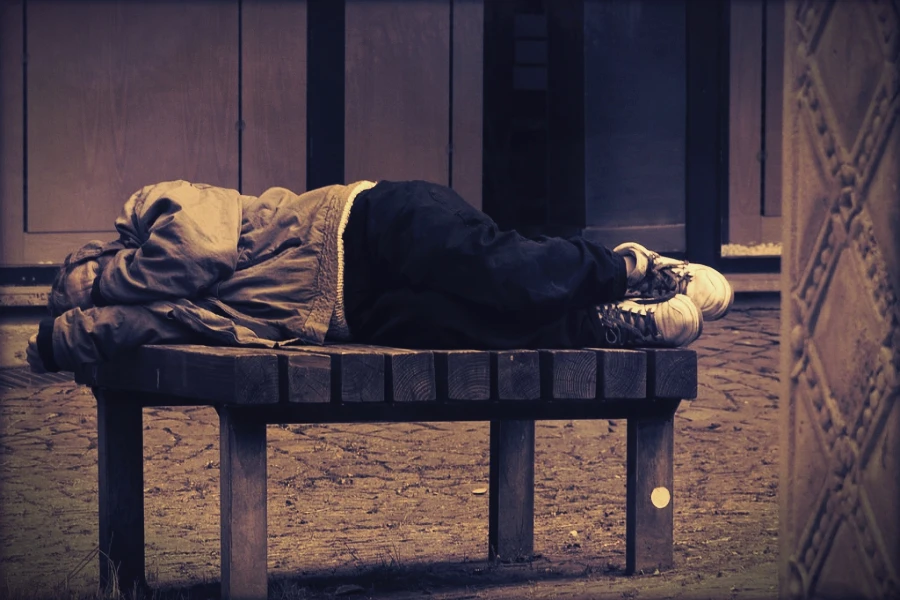
Buenos Aires, Argentina, Apr 26, 2018 / 12:35 am (ACI Prensa).- A men’s homeless shelter in Zeballos, Argentina has been named after a local bishop known for his attention to the poor.

The Jorge Novak, Friend of the Poor Homeless Shelter was inaugurated April 24.

The name commemorates the first bishop of Quilmes, Jorge Novak, who denounced the human rights violations committed by the military during the 1970s and ‘80s.

Bishop Novak loved the poor and led an austere life of deep spirituality. He was co-founder of the Ecumenical Movement for Human Rights. In late 2017, the investigation to initiate his process of beatification was begun.

The Jorge Novak Homeless Shelter is run by Caritas Quilmes. It welcomes men over 18 years of age.

Men hoping to benefit from the shelter’s services must have an admissions interview and accept the shelter’s rules. Opportunities are offered for bathing, eating, and sleeping.

When fully functional, the shelter will also offer job training, spiritual and ethical formation, and counseling on health and employment.

The hope is that in addition to providing for basic physical needs, the shelter will be able to help homeless men regain self-esteem, reestablish ties with the community, and eventually reintegrate.

The Jorge Novak Homeless Shelter has a capacity for 30 people and is supported by donations from individuals, institutions and the Diocese of Quilmes.

The diocesan secretary for communications asked for prayers “so this work may be a real concrete commitment to the poorest and most needy.”
 

This article was originally published by our sister agency, ACI Prensa. It has been translated and adapted by CNA.


[…]

No Picture
News Briefs

Analysis: Pope’s personal theologian expected to lead major Argentine archdiocese

April 25, 2018 CNA Daily News 3

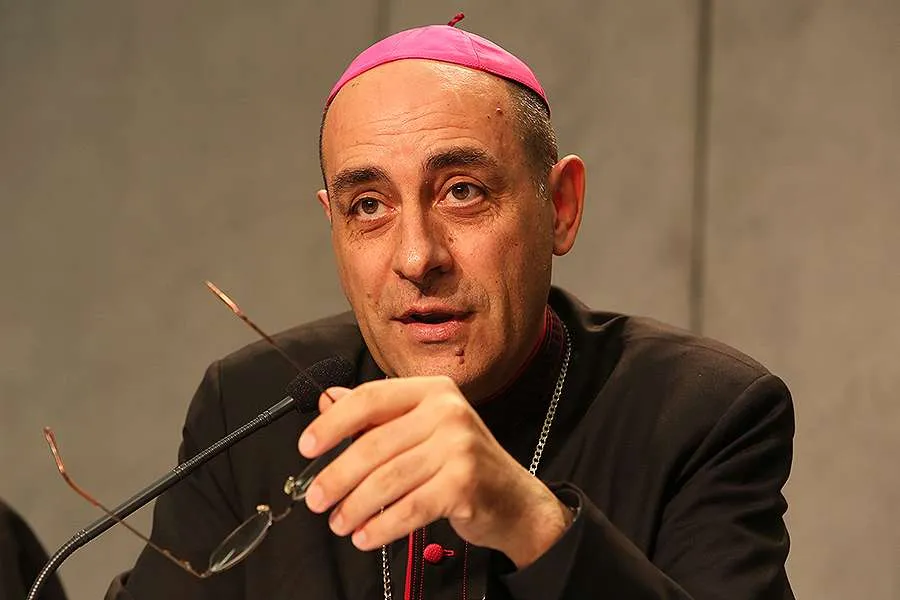
Buenos Aires, Argentina, Apr 25, 2018 / 11:54 am (CNA).- The Pontifical Catholic University of Argentina announced this week that Archbishop Victor Manuel Fernandez, Pope Francis’ personal theologian and ghostwriter, will be replaced at the helm of the university by Miguel Ángel Schiavone, a long-serving lay professor at the university.

The April 23 statement announcing his replacement said that the Fernandez will “collaborate with the new rector as an adviser, in waiting for his next pastoral destination.”

Officials from the pontifical university (UCA), speaking on background, told CNA that Fernandez has long hoped to leave the university and become the head of an Argentinean archdiocese, while remaining a close advisor to Pope Francis. The same sources told CNA that Fernandez would like to be named Archbishop of La Plata, considered to be the second most important archdiocese in Argentina, after Buenos Aires.

Archbishop Héctor Aguer, the current Archbishop of La Plata, will turn 75 in May 2019. 75 is the age at which diocesan bishops are required to submit letters of resignation to the Pope.

Archbishop Fernandez is a controversial figure in the Church in Argentina, because of some of the publications of his past, and because of his open claim that he can interpret Pope Francis at almost every turn.  

In fact, in 2014 he published the book “Il Progetto di Francesco, Dove vuole portare la Chiesa” (“Francis’ Project: Where does he want to lead the Church”) with Italian journalist Paolo Rodari, and he regularly appears in the Argentine press as to interpret the gestures or words of the Pope.

Fernandez was born in 1952 in the small rural town of Alcira, in the Province of Córdoba. He was ordained a priest in August 1986 in Río Cuarto, a mostly rural diocese. In 1988 he obtained a degree in theology with a biblical specialization at the Pontifical Gregorian University in Rome, and then obtained a doctorate in theology at the UCA in 1990.

With the recommendation of then-Archbishop Bergoglio, he moved in the early 90’s to Buenos Aires, where he was appointed a consultor to several commissions within the Argentinean bishops’ conference and the Latin American Bishops Council (CELAM).

According to a source close to the Argentine bishops’ conference, Fernandez showed a great capacity for writing, and especially for incorporating into the drafts of official documents positions that seemed completely opposed, thus appeasing bishops of various ideological positions.

This ability is reportedly what convinced Cardinal Bergoglio to bring Fernandez as an expert to the V General Conference of the Latin American Bishops, held in 2007 at the Brazilian Marian shrine of Aparecida. It is said that Cardinal Bergoglio, head of the drafting committee of the General Conference, relied heavily on Fernandez’ ability to synthesize a diverse set of viewpoints in his writing.

Aparecida, many sources have claimed, solidified the relationship between the future Pope and the theologian.

On December 15, 2009, Cardinal Bergoglio appointed Fernandez as rector of the Pontifical Catholic University of Argentina. However, much to the frustration of Cardinal Bergoglio, Fernandez was not able to take the oath of office until May 20, 2011, after he had answered objections to his appointment raised by the Congregation for the Doctrine of the Faith, which assessed concerns about the orthodoxy of certain elements of his scholarship.

An avid writer, by the time Fernandez was chosen by Cardinal Bergoglio to head the UCA, he had written more than 100 articles and books, many of them combining biblical passages with “self-help” themes, in texts including “Activity, Spirituality and rest” (2001). “Living in Peace” (2003), “Catechesis with Spirit” (2003), “Grace and a Wholesome Life” (2003), “Keys to Living Fully” (2003), and “Incarnated Spiritual Theology” (2004,) a book that was featured in the Argentinean soap opera “Esperanza Mía,” about an illicit love affair between a priest and a nun.

The book commonly regarded as his most unusual is 1995’s “Heal me With Your Mouth: The Art of Kissing.”  Regarding the book, Fernandez explained that: “in these pages I want to synthesize the popular feeling, what people feel when they think of a kiss, what they experience when they kiss… So, trying to synthesize the immense richness of life, these pages emerged in favor of kissing. I hope that they help you kiss better, that they motivate you to release the best of yourself in a kiss.”

Not surprisingly, “Heal me With Your Mouth” has disappeared from most official lists of Fernandez’ works.

Pope Francis named Fernandez the titular Archbishop of Tiburnia on May 13, 2013, thus making him the first rector of UCA to become an archbishop. According to the UCA sources consulted by CNA “Archbishop Fernandez was less than gracious upon receiving the episcopate, and wrote a couple of articles in ecclesial reviews running a true victory lap and denigrating his past critics with very unkind words.”

This reaction did not sit well with many in Argentina, but by that time, sources say it was clear that Fernandez was one of Pope Francis’ closest collaborators.

In fact, the Pope entrusted him with drafting his first apostolic exhortation, Evangelii Gaudium, a text in which Fernandez cited his own prior scholarship as a source document.

Pope Francis later appointed him vice-president of the commission for the message of the Extraordinary Synod of Bishops on the Family, held in October 2014, and later appointed him a member of the pontifical roster of the Fourteenth Ordinary General Assembly of the Synod of Bishops on the Family in October 2015. He was then nominated by the Pope for the commission for the elaboration of the synod’s final report.

Fernandez’ controversial role in the drafting of Amoris Laetitia, especially the critical chapter VIII, was denounced by Vatican analyst Sandro Magister and then criticizied by Professor Michael Pakaluk of the Catholic University of America. Writing for Crux in January 2017, Pakaluk argued that “the most important footnote in Amoris Laetitia may not be, as many suppose, one dealing with access to the sacraments for Catholics in ‘irregular’ situations. Instead, it may be a footnote that’s not actually in the document but which should be, since one of the sentences in Amoris is lifted nearly verbatim from an essay published [by Fernandez] in 1995 in a Buenos Aires theological journal.”

“These instances of material plagiarism call into question Fernandez’s suitability to be a ghostwriter for the pope.  A ghostwriter should remain a ghost. By quoting himself, Fernandez has drawn attention to himself and away from the pope,” Pakaluk added.

“Worse than that, Fernandez strains the consciences of the faithful… in the plagiarized sentence do we find ‘the magisterium,’ or Fernandez’s own theological speculations?” Pakaluk asked.

Acknowledging his influence in drafting Amoris Laetitia, Fernandez published in August 2017 a long essay in “Medellin,” the theological Magazine of CELAM, titled  “Chapter VIII of Amoris Laetitia: What is left after the storm.”  

In the essay, he tried to make the case for greater latitude when deciding giving Communion to the divorced and remarried:  “It is also licit to ask if acts of living together more uxorio [i.e. having sexual relations] should always fall, in its integral meaning, within the negative precept of ‘fornication.’ I say ‘in its integral meaning’ because one cannot maintain those acts in each and every case are gravely dishonest in a subjective sense. In the complexity of particular situations is where, according to St. Thomas [Aquinas], ‘the indetermination increases.’”

Elsewhere in the same essay, Archbishop Fernandez lamented the conflict sparked by footnote 351: “Although the question of the possible access to the communion for some divorcees in a new union has caused much commotion, the Pope intended – unsuccessfully – that this move be made in a discreet manner. Therefore, after developing the presuppositions of this decision in the body of the document, the application to communion for the divorced in new union was made explicit in the footnotes.”

In its farewell message, the UCA statement thanked Fernandez for starting during his tenure the “Coordination for Social Commitment” and several university outreach initiatives aimed at serving the poor in Buenos Aires and the other provinces in which the UCA has campuses.

According to CNA’s UCA sources, Fernandez has never been shy about defending issues related to the life of the unborn, marriage, family or euthanasia. “Everyone at UCA taking strong positions on these key issues, even when they were politically radioactive, always received the rector’s support,” one source said.

At the same time, Fernandez has also been very vocal in expressing that “in many issues I am far more progressive than the Pope.”

Archbishop Héctor Aguer, whom Archbishop Fernandez may replace in La Plata, is regarded as an intellectual and pastoral leader in the mold of Pope John Paul and Benedict XVI. He completed a colossal neo-gothic cathedral for the Archdiocese during his tenure and both his Catholic university and his seminary are regarded by many as among the most orthodox in the country. During the 16 year-run of his popular Saturday radio show, Aguer has proven to be one of Argentina’s most outspoken bishops when it comes to the defense of Church teachings, even at the cost of straining relationship with other bishops and local politicians.

Archbishop Aguer has declined to comment about the possibility of being replaced by Archbishop Fernandez.

[…]

No Picture
News Briefs

Dictatorship the underlying problem in Nicaragua riots, priest says

April 24, 2018 CNA Daily News 0

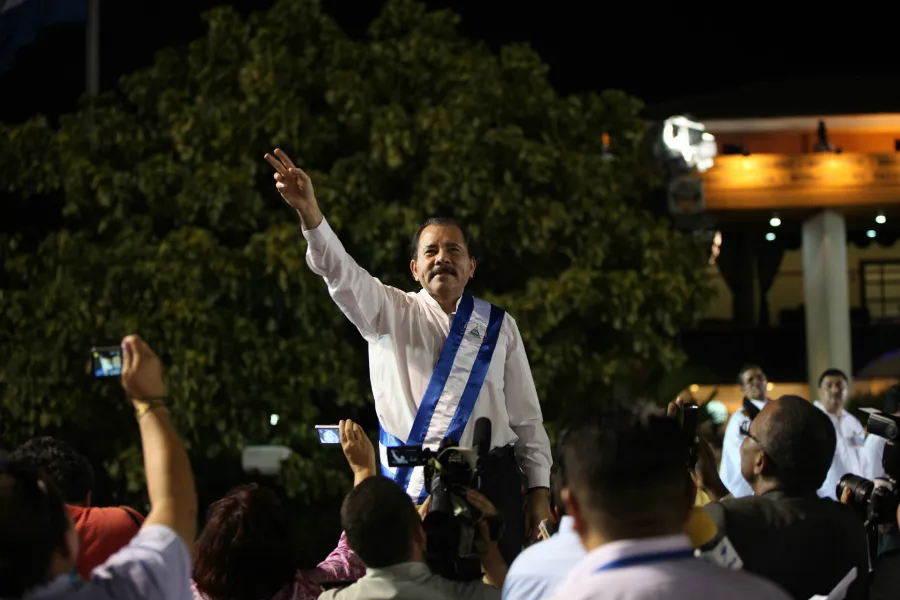
Managua, Nicaragua, Apr 24, 2018 / 01:08 pm (CNA/EWTN News).- As violent clashes continue between security forces and anti-government protestors in Nicaragua, an eye witness has said the country’s underlying problem is the president’s authoritarian bent.

Nicaraguans began protesting in the streets of Managua April 18 following the government’s announcement of reforms to the country’s social security system. The army has been deployed and as many as 27 people have been killed.

The social security reforms were abandoned April 22 by president Daniel Ortega, but protests have increased over what is seen as an overly harsh response to protesting pensioners.

Nicaragua “is living under a dictatorship with the facade of democracy,” a priest working in the country told CNA.

“We could see a transition to peaceful negotiation in the coming days and an end to protests on the street and violent repression. Or we could see an accelerated effort to amplify the protests and fight for a complete take down of the Ortega regime.”

The priest spoke on condition of anonymity due to the unpredictability of the situation.

“The continued aggression and violence on the part of the government continues to incite people to protest. One step forward followed by two steps back,” he said.

A reporter was killed during a broadcast covering the protests over the weekend, and the priest believes that  the government’s strong reaction against protestors, and in particular students – including the use of tear gas and rubber bullets by riot police – motivated the latest round of protests Monday.

Nicaragua’s social security system has needed an overhaul due to poor management of funds and a lack of transparency from officials, the priest said.

However, the reforms proposed last week would make Nicaraguans pay for these errors: “it was a trigger for massive protests,” he said, pointing out that though social security reforms lit the fire, the conversation surrounding the protests has changed.

The plan would have required retirees to pay 5 percent of their pension into a medical expenses fund, the social security withdrawal from employees’ salaries would have increased from 6.25 to 7 percent, and employers would have had to increase contributions as well.

Though the reform was tossed out, larger-scale protests and looting broke out April 23, including demands for Ortega to resign and resulting in further violent clashes with police.

The priest said he believes older Nicaraguans had been reluctant to protest corruption because they feared violence, having lived through the Nicaraguan Revolution throughout the 1960s, ’70s, and ’80s.

Young people, on the other hand, “feel like it is their turn, to take up the mantle of their parents, aunts and uncles, grandparents, to fight for a better future for Nicaragua.”

Bishop Silvio José Baez Ortega, Auxiliary Bishop of Managua, thanked a group of some 2,000 students gathered in the Managua cathedral April 21 for being “the moral reservoir” of the Church and assured them of the Church’s support for their cause. “You have woken the nation up,” he said.

Fr. Víctor Rivas Bustamante, from the Nicaragua bishops’ conference, told Vatican News that the local bishops are “working to recover the concerns and demands of young people and of different social sectors, to lay out to the government what is being demanded so that the government can act and change its position.”

The problem is no longer just welfare reform, but “other issues: there is talk of democracy, freedom of expression, and many other things,” Bustamante said.

Ortega has been president of Nicaragua since 2007, and oversaw the abolition of presidential term limits in 2014. His wife, Rosario Murillo, is also his vice president.

He was a leader in the Sandinista National Liberation Front, which had ousted the Somoza dictatorship in 1979 and fought US-backed right-wing counterrevolutionaries during the 1980s. Ortega was also leader of Nicaragua from 1979 to 1985 as coordinator of the Junta of National Reconstruction, and from 1985 to 1990 as president.

[…]

No Picture
News Briefs

Second priest murdered in Mexico in less than a week

April 23, 2018 CNA Daily News 1

Guadalajara, Mexico, Apr 23, 2018 / 03:30 pm (ACI Prensa).- The reported murder of a priest in Guadalajara, Mexico, on Friday marks the second killing of a priest in less than a week in the country.

Fr. Juan Miguel Contreras Garcia, 33, was shot to death the afternoon of April 20 inside Saint Pio of Pietrelcina church, in Guadalajara, Jalisco State, authorities reported.

The murder of Fr. Contreras Garcia makes the second murder of a priest in Mexico in less than a week, following the killing of Fr. Rubén Alcántara Díaz, the vicar general of the Diocese of Cuautitlán Izcalli, on April 18.

According to the Catholic Multimedia Center, this makes a total of 23 priests murdered in the country in the last six years.

The Attorney General’s Office of Jalisco State reported that Fr. Contreras Garcia was believed to have been attacked by two men from the Hacienda Santa Fe neighborhood in the town of Tlajomulco, in the Guadalajara metropolitan area.

The attorney general’s office indicated the killers “entered the sacristy of the parish and straight away attacked the victim, fleeing afterwards in a compact vehicle.”

“The victim was found in the church with several gunshot wounds,” the office said.

In a message released by the Archdiocese of Guadalajara, Cardinal Francisco Robles Ortega, his auxiliary bishops, the clergy and the faithful expressed “our deepest grief.”

The Archdiocese of Guadalajara urged “the state and municipal authorities to investigate and determine the facts of this deplorable incident.”

In addition, they called on “those that commit these atrocities against people’s lives to reconsider the damage they do to society and the climate of anguish they bring upon the citizens, so that their minds and hearts be moved to repent of their actions.”

“We unite in prayer so that this climate of violence that afflicts our state of Jalisco would come to an end.”

The bishops of Mexico also released a statement voicing “sadness and grief over the murder of another priest in just a few days.”

“We make an urgent call to build a culture of peace and reconciliation. These deplorable incidents call all of us to a much deeper and sincere conversion. It is time to look honestly at our culture and society, to ask ourselves why we have lost respect for life and the sacred.”

“We ask the Catholic faithful to accompany their priests with prayer, especially in the pastoral service of the communities that have been entrusted to them.”

The bishops also exhorted “those who despise and take away life for any cause, to let the kindly face up God look upon you to not only lay down your weapons but also hatred, resentment, vengeance and every destructive sentiment.”

“To our competent authorities we strongly request, once again, to exhaustively investigate and determine the facts in order to act in conformity with justice and not allow this crime or the other crimes in our nation to go unpunished.”

The Citizen Council for Public Safety and Criminal Justice warned that within Mexico, “the increase in violence is undeniable.”

On the council’s most recent annual list of the 50 most violent cities in the world, 12 are in Mexico.


This article was originally published by our sister agency, ACI Prensa. It has been translated and adapted by CNA.

[…]