No Picture
News Briefs

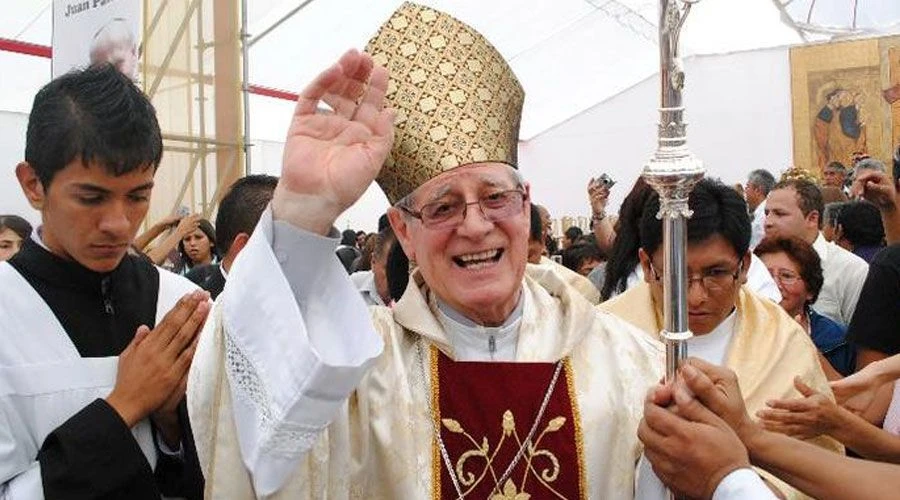
Bishop who ministered to indigenous Peruvians dies at 84

August 20, 2018 CNA Daily News 1

Callao, Peru, Aug 20, 2018 / 04:25 pm (ACI Prensa).- The bishop emeritus of Callao, Peru died Sunday at the Deusto Passionist community in Bilbao, Spain, where he had resided since 2015. He was 84 years old.

Bishop Emeritus Miguel Irizar Campos “was characterized by a missionary personality,” said a communique from the coastal Peruvian Diocese of Callao, responding to the prelate’s death.

“Callao will remember Bishop Miguel Irizar as a pastor close to his people and faithful to the mission, with his episcopal motto ‘Sent to give the Good News.’”

The Diocese of Bilbao, where Irizar lived out his last years, described the bishop as a man who was able to fit in anywhere. During more than 50 years of service in Peru, including 17 years ministering to the indigenous population in the jungle, he proved himself to be a “people’s pastor,” the diocese said.

While in recent years his health had declined, Irizar’s Passionist brothers described the late bishop as “optimistic and a person close to others.”

Born May 7, 1934 in Spain’s Basque country, Irizar was ordained a priest March 16, 1957 at the shrine of the Virgin of Aránzazu, where his mother had consecrated him to God years before.

He arrived in Peru in 1960 and began his pastoral work there at the Virgin of Pilar parish in the San Isidro district.

Between 1961 and 1965, he was professor of the Social Doctrine of the Church and Ethics at the Catholic University of Peru. From 1969 to 1972, he was the Regional Superior of the Passionist Congregation in Peru.

Blessed Paul VI named him the Missionary Bishop of the Yurimaguas Vicariate (Upper Amazon Province), and he was consecrated a bishop on July 25, 1972.

Pope John Paul II appointed him in 1989 as Coadjutor Bishop of Callao, the diocese he took full possession of on August 17, 1995.

Irizar promoted the creation of new parishes and founded the first monastery of Discalced Carmelites in Callao. He ordained more than 100 priests and received seminarians from other ecclesiastical jurisdictions for formation in the Heart of Christ diocesan seminary.

The bishop also promoted the Pachacútec Foundation, through which the Center for Community Studies and Development was created. Today, thousands of low income children, youths and families benefit from the center’s large educational complex.

Irizar was the Secretary General of the Peruvian Bishops’ Conference for two periods. He also served as president of Caritas Peru, and a member of the Cor Unum Pontifical Council, and headed the Council of Latin American Bishops’ ecclesial movement section.

Bishop Irizar’s funeral was celebrated Aug. 20 in the parish of Pasión and San Felicísimo in the Deusto district of Bilbao. Local Bishop Mario Iceta presided over the Mass.


This article was originally published by our sister agency, ACI Prensa. It has been translated and adapted by CNA.

[…]

No Picture
News Briefs

Chilean officials raid bishops’ conference amid abuse investigation

August 14, 2018 CNA Daily News 1

Santiago, Chile, Aug 14, 2018 / 11:47 am (CNA).- Officials of the Investigative Police of Chile (PDI) raided Tuesday the offices of the Chilean bishop’s conference to seize information and statements from alleged victims of abuse perpetrated by the Congregation of the Marist Brothers.

According to Chilean officials, police are investigating 38 claims of sexual abuse related to the Marist congregation.  

Government officials and members of the PDI’s Sex Crimes Division arrived at 9:15 a.m. at the downtown Santiago headquarters of the bishops’ conference, to carry out a search order from Chilean regional prosecutor Raúl Guzmán, who is overseeing the national government’s investigation of cases related to the Marist Brothers.

After the search, which lasted for about 90 minutes, the prosecutor told the press that “we are collecting and complementing the information we have already received, particularly about the identification of victims who have lodged complaints about abuses of various types.”

He also stressed that these records are “related to facts that we are investigating, which can be constitutive of crime, and which involves both victims and potential defendants.”

After finishing the raid, the prosecutors and the PDI went to the headquarters of the Marist Brothers, in the commune of Providencia, to specify a new procedure.

The raid is the latest of several that have occurred in Chile in the context of abuse investigations. Other raids took place in the Diocese of Rancagua, the Military Bishopric and the Ecclesiastical Court of Santiago.

The Congregation of the Marist Brothers in Chile has undertaken a canonical investigation into allegations of sexual abuse against some of its members.

In February of this year, some alleged victims of abuse perpetrated by Marist Brothers met with Archbishop Charles Scicluna, the Pope’s envoy to Chile, who was investigating the accusations of cover-ups made against Bishop Juan Barros or Osorno.

Spanish priest Jordi Bertomeu, who acted as the notary of those meetings, recorded that the papal envoy reminded the victims of their “right to denounce civilly” the abuse they had reported.

This article was originally published by our sister agency, ACI Prensa. It has been translated and adapted by CNA.

[…]

No Picture
News Briefs

Costa Rican bishops deplore ruling legalizing gay marriage

August 13, 2018 CNA Daily News 1

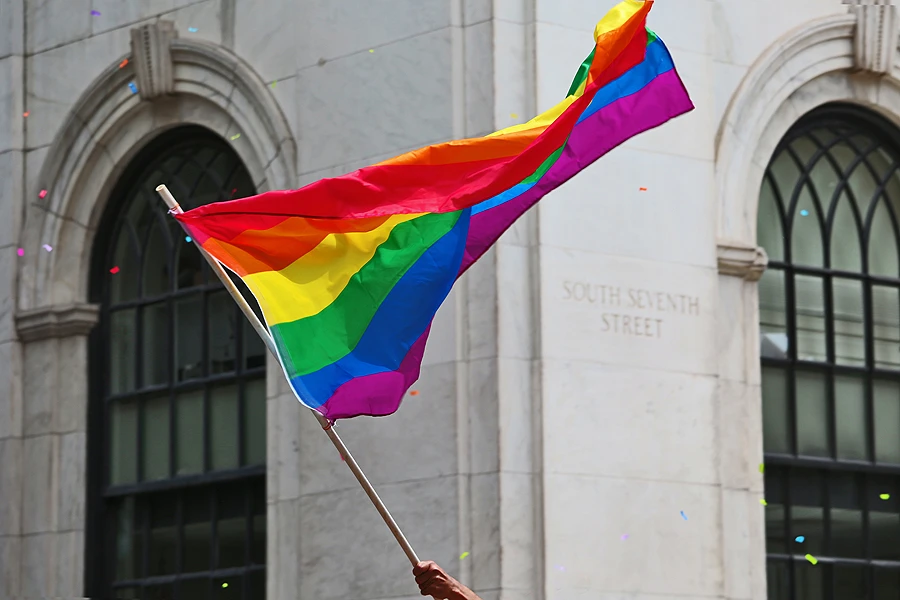
San José, Costa Rica, Aug 13, 2018 / 05:34 pm (ACI Prensa).- The Costa Rican Bishops’ Conference lamented a ruling by the Constitutional Chamber of the nation’s Supreme Court which mandated legal same-sex marriage in the country.

“In a democratic and pluralistic society like ours, legal recognition can be given to persons of the same sex that live together,” the bishops said. However, they continued, it would be “unjust if such recognition would claim to equate same sex unions with marriage.”

“Wanting to not discriminate against homosexual people does not authorize the State to confound the natural order of marriage and the family,” the bishops warned.

In a 6-1 vote on August 8, Chamber IV of the Costa Rican Supreme Court struck down a provision prohibiting marriage “between persons of the same sex” and gave the National Assembly 18 months to adopt legislation recognizing same-sex unions.

The decision was issued in response to a legal petition challenging the constitutionality of Article 14, Subsection 6 in the Code on the Family. The legal challenge was filed by the former president of the Diversity Movement, Marco Castillo, and by the lesbian couple Laura Flores-Eztrada Pimentel and Jazmín Elizondo.

“We reiterate our respect for the Costa Rican legal order, but we deplore that the Constitutional Chamber did not dismiss the petition…thus calling into question the origin and natural function of the family,” the bishops’ conference said in an Aug. 9 statement.

The Costa Rican bishops’ conference recalled the words of Pope Francis, who said in his apostolic exhortation Amoris Laetitia, “Same sex unions may not simply be equated with marriage. No union that is temporary or closed to the transmission of life can ensure the future of society.”

“No one can think that the weakening of the family as that natural society founded on marriage will prove beneficial to society as a whole. The contrary is true: it poses a threat to the mature growth of individuals, the cultivation of community values and the moral progress of cities and countries,” the pope said in that document.  

In their statement, the bishops noted that “the Church maintains her conviction that the family continues to be, and always will be, the basic cell of society because in it the future citizens of all of society are procreated and brought up.”

“The family possesses a specific and original social dimension as a primary place of interpersonal relationships, the primary and vital cell of society: it is a natural institution, the foundation of people’s lives and the prototype of every social organization,” they stated.

Therefore, the bishops concluded, “it is clear in the natural order of things, that family, the basic cell of society, is founded on monogamous and heterosexual marriage from whose conjugal love are generated children, and therefore deserves the protection of the State.”


[…]

No Picture
News Briefs

Chile’s military diocese raided in abuse investigation

August 11, 2018 CNA Daily News 1

Santiago, Chile, Aug 11, 2018 / 06:01 am (ACI Prensa).- Police seized documents and equipment from the office of the bishop of Chile’s military diocese Thursday as part of an investigation into accusations that Church officials in the country covered up clerical sexual abuse.

Personnel from Chile’s Carabineros arrived at the headquarters Aug. 9 in Santiago with a court order from the O’Higgins Regional Prosecutor’s Office. The offices of eight senior Church officials have been raided as part of the investigation, according to Reuters.

Chile’s military diocese was led from 2004 to 2015 by Bishop Juan de la Cruz Barros Madrid. Attention to clerical sex abuse has heightened since Bishop Barros’ 2015 transfer to the Diocese of Osorno. Barros had been accused of covering up abuses committed by Fr. Fernando Karadima, who was convicted by the Congregation for the Doctrine of the Faith in 2011 of abusing minors.

In a statement, the military diocese said it turned over the requested documents and equipment and expressed its willingness to cooperate in the investigative process “in everything that is required.”

According to the Public Prosecutor’s Office, prosecutor Mariano Arias ordered the raid because the investigations “indicate that a cover-up by the military diocese may have been committed”, considering that the head of this office must report these incidents in his capacity as a public official of the armed forces.

The raid was authorized by the Chilean defense minister and the commander-in-chief of the armed forces.

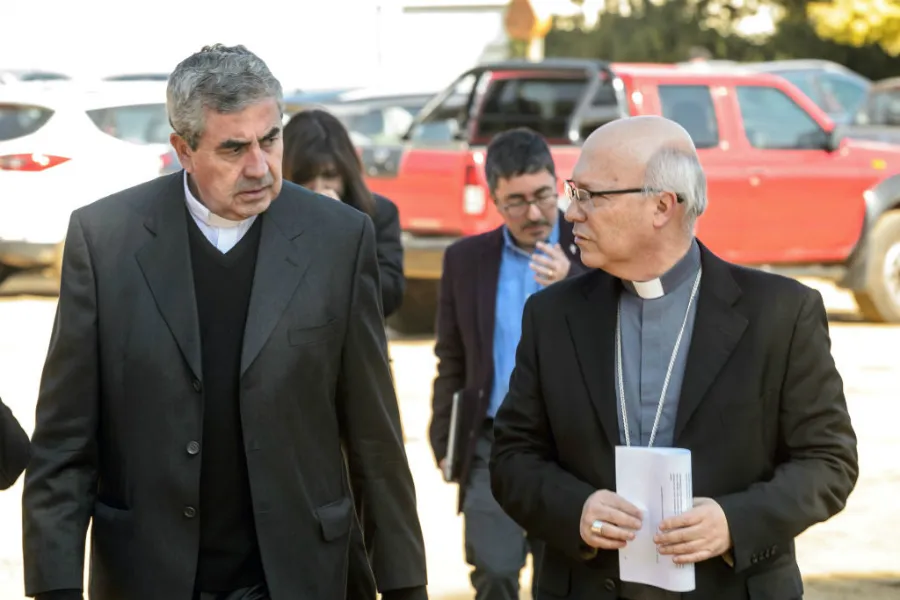
Bishop Santiago Jaime Silva Retamales of the military diocese was outside Chile at the time of the raid. Bishop Silva is also head of the Chilean bishops’ conference.

As part of the investigation, the Rancagua Regional Prosecutor’s Office summoned Cardinal Ricardo Ezzati Andrello of Santiago to testify Aug. 21 concerning his possible responsibility for the crime of cover-up in cases of sexual abuse and the abuse of power and conscience.

On Aug. 9, the Archdiocese of Santiago reported that Cardinal Ezzati will be hospitalized for two days for a routine checkup following the insertion of a pacemaker in March.

On June 13 and July 12 the O’Higgins Regional Prosecutor’s Office seized documents of the Diocese of Rancagua and the Santiago archdiocese respectively in the process of this investigation.

Other dioceses, including Villarica and Temuco, also were the target of orders to seize their files as a result of the investigations being conducted on sexual abuse. Files from the Archdiocese of Santiago have been seized on two occasions.

On Aug. 9, the Diocese of Talca reported a new complaint of sexual abuse against Fr. Luciano Arriagada Vergara, who was in charge of the diocesan youth ministry.

Following the accusation, a preliminary investigation was initiated in order to determine the credibility of the allegation. A complaint was also filed with the regional prosecutor’s office.   

The diocese stated that while this process is going on, the accused is barred from the public exercise of priestly ministry.

This article was originally published by our sister agency, ACI Prensa. It has been translated and adapted by CNA.

[…]

No Picture
News Briefs

Nun in Mexico celebrates 75th anniversary of her first profession

August 9, 2018 CNA Daily News 0

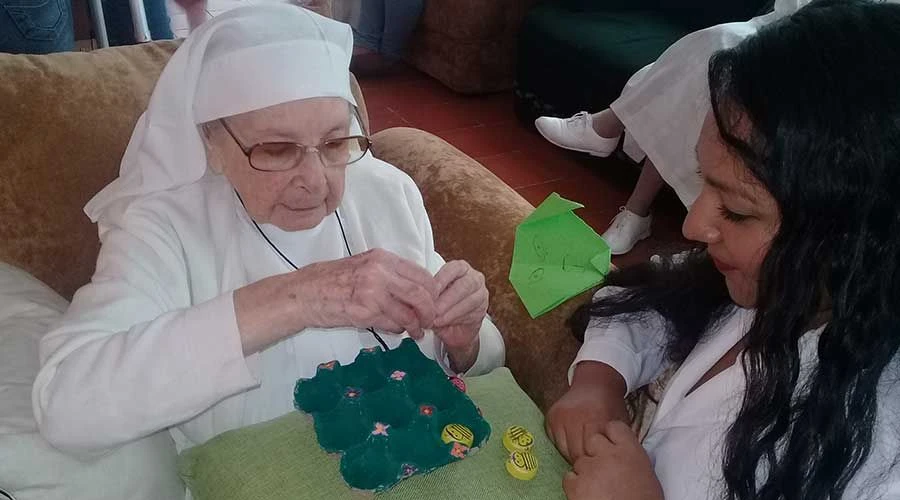
Guadalajara, Mexico, Aug 9, 2018 / 03:01 pm (ACI Prensa).- Sister Emma of the Immaculate Heart of Mary, 97, celebrated last month her “diamond anniversary” of consecration to Christ.

The religious, born in 1921 Yahualica in the Mexican state of Jalisco, celebrated July 19 the 75th anniversary of her profession in the Congregation of the Servants of the Most Holy Trinity and of the Poor.

The congregation noted that the milestone marks for Sister Emma “75 years of living united to the Divine Spouse and of jubilant dedication to our most needy brothers, especially the sick and the elderly.”

Sister Emma entered the congregation Dec. 4, 1940. She made her first profession July 16, 1943, and made her final vows six years later.

She now lives in the congregation’s community at Most Holy Trinity Hospital in Guadalajara.

The congregation said that in the witness of Sister Emma’s life “we can see our charism radically lived out, because she has known and has experienced being loved and indwelt by the Triune God and so has discovered the presence of God in the people she lives with and has served and loved as living temples of the Most Holy Trinity.”

The religious, they said, “always reminds us that it’s God’s work and that he will send us in his time many vocations, and that we should continue working and giving glory to God.”

The Congregation of the Servants of the Most Holy Trinity and of the Poor was founded by Blessed Vicenta Chávez Orozco amid the societal hardships and attacks against the Church in the late 19th and early 20th centuries in Mexico. It was established as a religious institute in 1905 in Guadalajara.

At 113 years from their foundation, they are currently in several Mexican states, serving hospitals, medical clinics, mission centers, and infirmaries.


This article was originally published by our sister agency, ACI Prensa. It has been translated and adapted by CNA.

[…]

No Picture
News Briefs

Brazilian church bells ring as court considers decriminalizing abortion

August 7, 2018 CNA Daily News 0

Brasilia, Brazil, Aug 7, 2018 / 03:01 pm (ACI Prensa).- Catholic churches throughout Brazil rang their bells at 3 p.m. Thursday to sound a warning regarding the possible decriminalization of abortion in the country.

The Aug. 2 initiative took place on the eve of a Supreme Federal Court hearing which was to consider the constitutionality of Brazil’s current law governing abortion. Abortion is permitted only in cases of rape, risk to the mother’s life, or if the fetus has anencephaly.

A suit was brought by the Socialism and Liberty Party, an opposition party which has six members in the Chamber of Deputies.

The hearing could allow for the legalization of elective abortion up to 12 weeks of gestation.

Debora Diniz, a law professor at the University of Brasilia and a pro-choice who testified before the court, received death threats in June, Reuters has reported.

The court has not set a date for its decision.

At a bell-ringing at the foot of the Christ the Redeemer statue in Rio de Janeiro, Cardinal Orani Tempesta said that “we want to call to the attention of all of society the importance of life. Just as this fog is over Rio de Janeiro, today, we know that a threat always exists: the ‘culture of death’ which covers our country and all of humanity.”

He also expressed his desire that throughout Brazil the bells would “call attention to this important moment in our history with the aim of guaranteeing the inviolability of the right to life, set in stone in the constitution, changes or repeals resulting in the loss of fundamental rights therefore not being possible.”

Prior to the hearings, a number of bishops spoke out against the legalization of abortion, denouncing  judicial activism in support of this procedure and exhorting citizens to speak out in defense of life.

Archbishop Washington Cruz of Goiania, together with his auxiliaries and the Union of Catholic Jurists of Goiania, denounced the judicial activism which seeks to legalize abortion in Brazil after it could not pass the legislature.

“At no time did the National Congress fail to address the issue and they never allowed, as legitimate representatives of the entire nation, the normalization of this abominable practice of killing children in their mothers’ womb,” they said.

They charged that “the issue was run through the court to get around and exclude the National Congress from the legitimate and democratic debate which governs the legislative branch.”

“This act offends the constitutional organization of powers and constitutes activism within the Judicial Branch which is highly injurious to the foundations of the state of democratic rule of law in which we live, because it effects an invasion of the powers of the legislative branch by the judicial branch,” they added.

Bishop Odelir Magri of Chapecó said that  that “abortion is not an achievement, but a social tragedy that corrodes the very roots of human coexistence.”  

He also called on the Supreme Federal Court to “defend life from conception to natural death” and to guarantee the prerogative of the National Congress “as the body authorized to regulate the issue.”

Bishop Luiz Guedes of Campo Limpo noted that “the majority of the Brazilian population is pro-life and against abortion,” and what is happening is “an invasion of the ‘culture of death’ already denounced by St. John Paul II.”

To address this situation Bishop Francisco Bach of Joinville has urged the National Congress to pass the “Unborn Child Statute”.


This article was originally published by our sister agency, ACI Prensa. It has been translated and adapted by CNA.

[…]

No Picture
News Briefs

Chilean bishops’ efforts to prevent sex abuse affirmed by Pope Francis

August 6, 2018 CNA Daily News 2

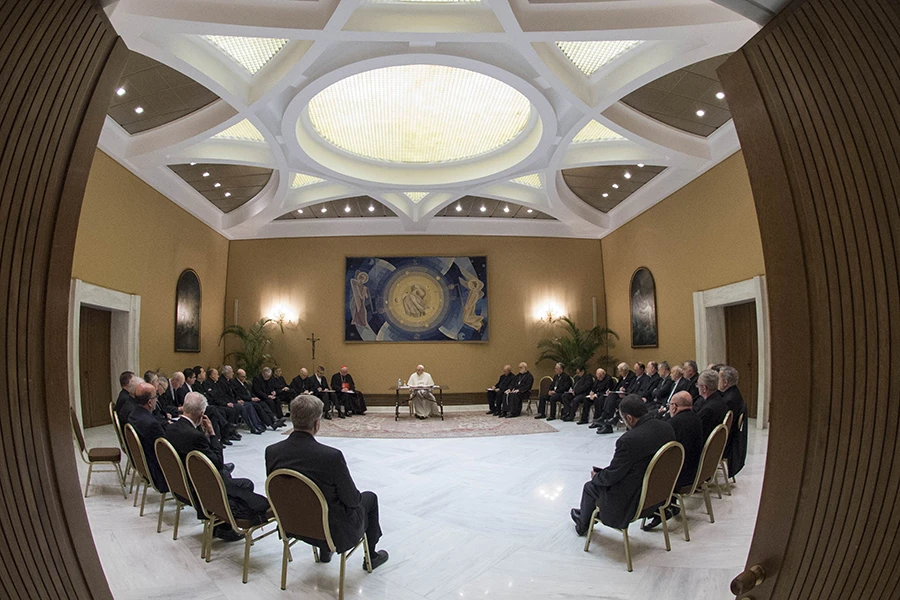
Santiago, Chile, Aug 6, 2018 / 04:01 pm (CNA/EWTN News).- Pope Francis on Friday wrote to the Chilean bishops’ conference to express his approval of their newly-adopted plan to prevent future instances of sex abuse within the Church.

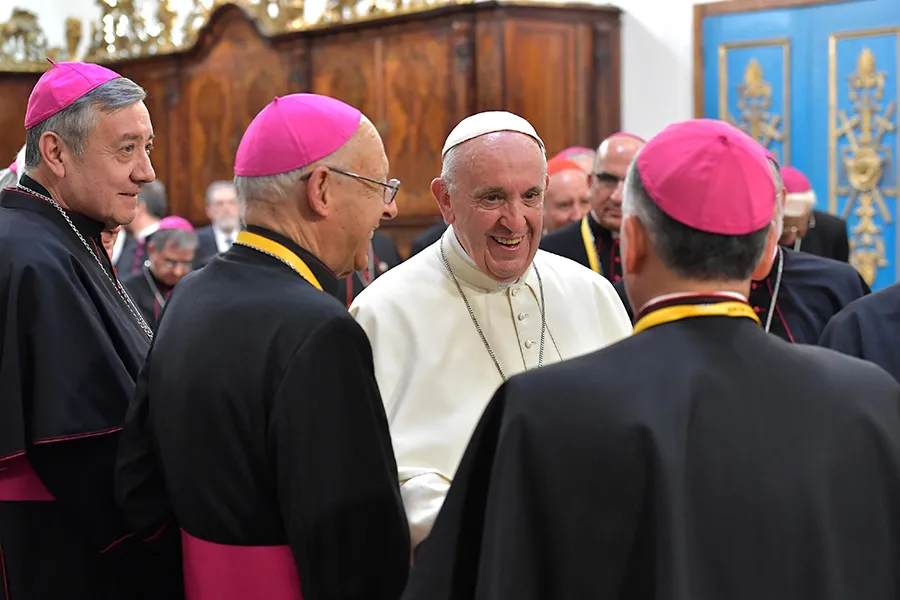
“I was impressed by the work of reflection, discernment, and decisions that you have made,” the Pope wrote in his Aug. 5 letter to Bishop Santiago Jaime Silva Retamales of Chile’s military diocese, who is president of the Chilean bishops’ conference.

“May the Lord repay you abundantly in this communitarian and pastoral effort.”

“The decisions are realistic and concrete,” he said. “I am sure that they will help decidedly in this entire process. But what touched me most was the example of episcopal community united in the pastoral care of the holy, faithful people of God. Thank you for this edifying example … because it ‘builds’ the Church.”

Francis was responding to the Aug. 3 statement issued at the conclusion of the week-long meeting of the Chilean bishops to consider the roots of the crisis of sexual abuse in the Church in their country and then to define guidelines to implement in their dioceses.

The bishops acknowledged they had failed in their duty as pastors in face of the cases of sexual abuse committed by priests and therefore presented some short- and medium-term measures in order to determine the truth and to secure justice and reparation for the victims.

The bishops expressed their repentance because “we did not always know how apply or implement  in every church setting the guidelines of the National Council for Prevention of Abuse in order to opportunely address cases of sexual abuse.”

“Our faults and omisions have caused pain and perplexity, have harmed ecclesial communion and hindered conversion, and undermined hoped,” they added.

“In no way did we want to cause or aggravate the harm that has occurred, but seen from the perspective of time, some of us could have been more active and attentive to the pain suffered by the victims, relatives, and the ecclesial community,” they stated.

The first measure announced by the bishops was their intention to cooperate with the investigations being conducted in the criminal justice system, duly protecting “the names of the complainants and victims that expressly requested that their identity be withheld.”

The Chilean bishops also announced the publication of every preliminary investigation being conducted regarding the alleged sexual abuse of minors, and asked religious congregations to do the same.

The bishops appointed attorney Ana María Celis as president of the National Council for the Prevention of Abuse and the Accompaniment of Victims, a position held in interim by Bishop Silva.

They also approved new powers for the National Council for the Prevention of Abuse, so it can gather up-to-date information on the investigations and criminal proceedings.

The bishops also confirmed the creation of a Department for the Prevention of Abuse, which will report to the council, and will have the faculty to execute actions and receive complaints in accordance with canonical norms.

Finally, the bishops announced that the list of the names of priests sentenced civilly and canonically for abusing minors will be posted again on the council’s website.

[…]