
No Picture
News Briefs

Bishops conference condemns Peru vaccine scandal

February 19, 2021 CNA Daily News 1

Lima, Peru, Feb 19, 2021 / 03:55 pm (CNA).- The Peruvian bishops’ conference on Thursday condemned the country’s vaccine scandal, in which hundreds of prominent figures took advantage of their positions to receive coronavirus vaccination out of turn.

Among those who received early vaccination is Archbishop Nicolas Girasoli, apostolic nuncio to Peru.

In a Feb. 18 statement the Peruvian bishops censured the misuse “of the vaccines entrusted to our authorities for the sake of research and the health of all Peruvians.” The conference said that “this shows a new face of the monster of corruption and the crisis in ethics and values.”

“It’s inconceivable that doctors, nurses, police, public servants and so many other volunteers should continue to die while a callous group seeks its own interests,” the bishops said, demanding that “these actions be duly investigated and punished.”

This week a list was published of 487 people who were vaccinated early with doses from the Chinese company Sinopharm. These doses accompanied ones that were being used in clinical trials.

Among those who received the early doses from Sinopharm are former president Martín Vizcarra, his wife, and his brother. Vizcarra was removed from office by the parliament over unrelated corruption allegations in November 2020.

The former Minister of Foreign Relations, Elizabeth Astete, and the former director of Science and Technology of the same ministry, are on the list as well.

The list also includes the former Minister of Health, Pilar Mazzetti, who had said that she would be the last to be vaccinated in the healthcare sector; two former vice ministers; and Dr. Germán Málaga Rodríguez, who directed the Sinopharm vaccine trials at Cayetano Heredia University.

The scandal has led to the resignation of the principal authorities of the university, and the suspension of Malaga as coordinator of the vaccine project.

Others who have been vaccinated include Alejandro Aguinaga, a candidate for Congress and the doctor of former President Alberto Fujimori; the former Minister of Health Patricia García, as well as other officials from the Ministry of Health and the Ministry of Foreign Affairs, and some of their relatives.

The National Prosecutor’s Office has started a preliminary investigation in which Vizcarra and Mazzetti and Astete have been included so far.

In addition, the government has created an investigative commission in the Ministry of Health, and Francisco Sagasti, the current president, has promised to fire the officials who received the vaccine out of proper order, which was intended to be first administered to frontline healthcare personnel.

The list of those vaccinated was turned over by Cayetano Heredia University to Congress, the Comptroller General of the Republic, the Attorney General’s Office, and the investigative commission of the Ministry of Health, after Vizcarra admitted that he was vaccinated when he was president and long before the country had a contract with Sinopharm to purchase the vaccine.

Sinopharm began the clinical trials of its vaccine in Peru in September 2020 with 12,000 volunteers. One group received the vaccine, and another a placebo.

Additionally, the Chinese laboratory sent 3,200 doses of vaccine to be administered to healthcare personnel related to the clinical trial. However, the list presented by Cayetano Heredia University revealed that this lot was used in violation of the established priorities.

Archbishop José Antonio Eguren Anselmi of Piura, a member of the Sodalitium Christianae Vitae, said during Mass Feb. 17, “Let us also do penance for the cases of corruption that we painfully see being discovered day by day in our country right in the midst of the epidemic, now with the shameful scandal of preferential vaccines.”

“Getting vaccinated first is an affront to the thousands of infected brothers and especially to the tens of thousands of deaths because of Covid-19 in our homeland, which has plunged so many Peruvian families into pain and mourning,” Archbishop Eguren said.

“It is an affront to all those who from day one are on the front lines in the fight against the coronavirus. Corruption causes great harm in society and is like a cancer that infects and contaminates all sectors of social life,” he said.

Peru has had more than 1.25 million confirmed cases of Covid-19, and more than 44,000 deaths. The pandemic has overwhelmed the healthcare system in the country, and the crisis has been aggravated by the shortage of oxygen for patients.
[…]

No Picture
News Briefs

Brazil’s military archbishop distances himself from Lenten campaign over gender ideology

February 17, 2021 CNA Daily News 0

Brasilia, Brazil, Feb 17, 2021 / 03:52 pm (CNA).- The head of Brazil’s military ordinariate has told the nation’s bishops’ conference he will not use material from this year’s ecumenical Lenten campaign because it contains gender ideology concepts.

“The evangelization of the faithful at any time, but especially in a special time such as Catholic Lent, is not a place for dialogue on themes that are polemical and contrary to the authentic doctrine of our Church,” Archbishop Fernando Jose Monteiro Guimarães of the Military Ordinariate of Brazil wrote Feb. 8.

“Interreligious dialogue is necessary and opportune when, respecting various expressions of faith, it is carried out in the competent sees,” Archbishop Guimarães added in his letter to Archbishop Walmor Oliveira de Azevedo of Belo Horizonte, president of the National Conference of the Bishops of Brazil.

The military archbishop stressed that “it is the responsibility of the diocesan bishops, as authentic teachers and guardians of the deposit of faith, to guarantee the orthodoxy of the faith that is preached to the faithful in their diocese.”

“This mission, the object of solemn oath on the part of each one of us before our episcopal ordination, commits my conscience as bishop and I will never be able to renounce it.”

“For this reason, I inform you that in the Military Archdiocese of Brazil, during Lent this year, we will follow the theological-liturgical guidelines proper to the Lenten season and will not use any of the materials officially produced for this year’s Fraternity Campaign,” Archbishop Guimarães stated.

He added that “our military chaplains are being given guidelines, in case they wish to address the Fraternity Campaign, to use only Pope Francis’ Fratelli tutti.”

“Also the percentage of the collection allocated to this episcopal conference – and distributed to other entities promoting the campaign – will not be sent and, of course, really and effectively, it will be used to help the poor, through the social work recognized by the Military Ordinary. Regarding this use, it will be my responsibility to present the accounts respectively to the presidency” Archbishop Guimarães concluded.

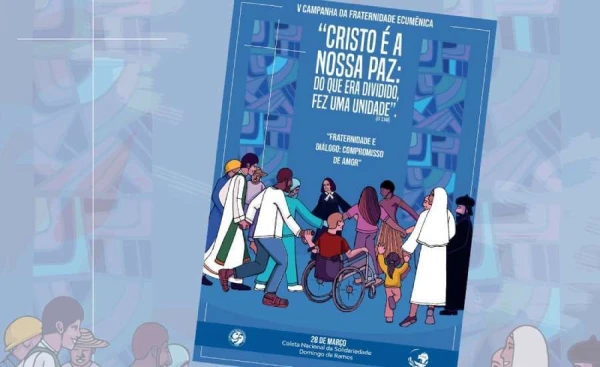
The Fraternity Campaign is a prominent Catholic fundraiser celebrated in Brazil during Lent; every five years it is carried out in conjunction with mainline ecclesial communities.

This year’s campaign is entitled “Fraternity and dialogue: commitment of love”, and the motto is a phrase from the Letter from Paul to the Ephesians: “Christ is our peace: he who made one of both peoples.”

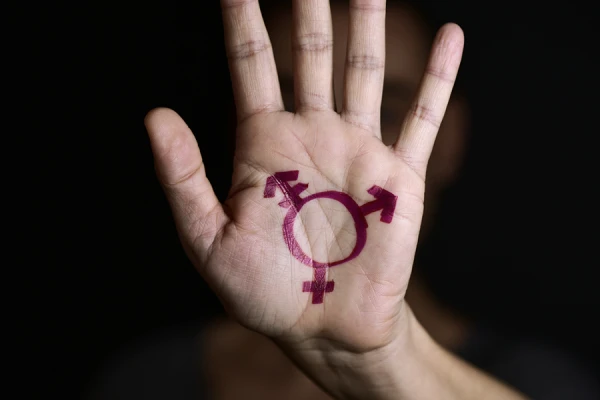
Controversy over this year’s campaign arose because the material for parish meditations during Lent includes a text that says: “another social group that suffers the consequences of systemic politics and violence and the creation of enemies is the LGBTQ+ population.”

It provides information on alleged violence against gay people sourced from the “Grupo Gay da Bahía,” a homosexual lobby group, and claims that “193 LGBTQ+ were murdered in 2017.”
“These homicides are the effects of hate speech, religious fundamentalism, voices against the recognition of the rights of LGBTQ+ populations and other persecuted and vulnerable groups,” the text says.

The presidency of the Brazilian bishops’ conference issued a statement Feb. 9 explaining that the materials for the Fraternity Campaign were prepared by the National Council of Christian Churches, and “therefore, it is not a text in the style of what would happen if it were prepared by the CNBB commission, since we have two different theological understandings, although around the same ideal of serving Jesus Christ.”

The bishops’ statement referenced numbers 67 and 68 of the Fraternity Campaign text and quoted the 2003 Pontifical Council for the Family’s “Lexicon on ambiguous and debatable terms regarding family life and ethical questions” that gender “must obey the natural order already predisposed by the body.”

The Brazilian bishops state that the money will not be spent in projects that are inconsistent with Catholic teachings.

“From the beginning of the 2021 Fraternity Campaign, we have informed the NCC about the difficulty and even the impossibility of working together in the structure of the Fraternity Campaign, unlike previous ecumenical campaigns. On this point, based on the last campaigns, that of 2016, this presidency (of the CNBB) has already expressed the difficulties and, in a spirit of communion and co-responsibility, will discuss the matter in a future meeting and the conclusion will be reported immediately,” concludes the bishops’ statement.


[…]

No Picture
News Briefs

Brazilian bishops discuss controversial text of ecumenical Lenten campaign

February 17, 2021 CNA Daily News 0

Brasilia, Brazil, Feb 17, 2021 / 12:39 pm (CNA).- The National Conference of Bishops of Brazil has issued a statement to confront a wave of complaints over the inclusion of gender ideology and the almost null presence of Catholic concepts in the base text of the Ecumenical Fraternity Campaign for Lent 2021.

The Fraternity Campaign is a prominent Catholic fundraiser celebrated in Brazil during Lent; every five years it is carried out in conjunction with mainline ecclesial communities.

This year’s campaign is entitled “Fraternity and dialogue: commitment of love”, and the motto is a phrase from the Letter from Paul to the Ephesians: “Christ is our peace: he who made one of both peoples.”

The controversy in social networks arose because the material for parish meditations during Lent includes a text that says: “another social group that suffers the consequences of systemic politics and violence and the creation of enemies is the LGBTQ+ population,” and provides information on alleged violence against gay people.

The manual quotes the “Grupo Gay da Bahía,” a homosexual lobby group, and claims that “193 LGBTQ+ were murdered in 2017.”

“These homicides are the effects of hate speech, religious fundamentalism, voices against the recognition of the rights of LGBTQ+ populations and other persecuted and vulnerable groups,” the text says.

After the storm of protests and calls to boycott the campaign, the CNBB released a statement claiming that “for 2021, as approved in our 2018 general assembly, the campaign was meant  to be ecumenical and, according to a custom since 2000, under the responsibility of the NCC,” or National Council of Christian Churches.

“In the first meetings, the urgency to address these times of polarization and fanaticism was discerned and this chose the topic of dialogue, but the elaboration of the basic text was assigned to NCC.”

“Consequently, the text followed the structure of NCC’s thinking and work. Several meetings were held, the text went through the revision of the theological consultancy of NCC, a consultancy of members of various churches, reaching then what we have today. Therefore, it is not a text in the style of what would happen if it were prepared by the CNBB commission, since we have two different theological understandings, although around the same ideal of serving Jesus Christ,” the CNBB statement says.

The text of this year “must be understood in this way, as it was in the fraternity campaigns carried out in an ecumenical way,” they added.

To answer the problem of gender ideology, the bishops cite page 673 of the Lexicon of ambiguous and disputed terms on families, life and ethical issues, of the Pontifical Council for the Family. The bishops affirm in this regard that “Catholic doctrine on gender issues affirms that ‘gender is the transcendent dimension of human sexuality, compatible with all levels of the human person, among which are the body, mind, spirit, the soul. Gender is therefore malleable and is subject to internal and external influences to the human person, but it must obey the natural order predisposed by the body.’”

Several lay Catholics questioned the wisdom of the CNBB in releasing the material for the campaign, especially when the significance of mainline ecclesial communities in Brazil is negligible and the brunt of the collection depends on the hundreds of thousands of Catholic parishes in the country.

Bruno Braga questioned the response of the bishops and said on his Facebook account that the episcopal note tries to defend “a campaign evidently incompatible with the Catholic faith that does not justify the absurdities committed in the name of a false ecumenism.”

Braga explains that the note speaks of the responsibility of the NCC in the text that will be “distributed and worked in parishes and churches throughout the country,” but does not mention that “who coordinated the preparation of the text is the pro-abortion pastor Romi Bencke.”

Bencke is a Lutheran pastor who supports abortion and same sex marriage, and was heavily involved in drafting the text for the campaign.

The Dom Bosco Center also published a video explaining Bencke’s pro-abortion, feminist, and pro-gender ideology stance.

“The problem is that there is no space to talk about sexual and reproductive rights for women. People know these issues are very difficult, an abortion for example,” says Bencke in the video made available by the Don Bosco group.

The video also shows Catholic priest Oscar Beozzo, a well-known liberation theologian in Brazil, who considers Bencke to be “the soul” of the 2021 ecumenical Fraternity Campaign.

“In a sense, the 2021 Fraternity Campaign pretends to be like something like a Socialist Worker’s Party or the Democratic Party infiltrating the Catholic Church. The doctrine of these organizations is fully replicated in a document prepared to be executed in all the Brazilian dioceses. That must be an alarming sign for us,” the group said in a video released Feb. 5.

“The campaigns of Fraternity are carried out during Lent until Palm Sunday, it is a time of penance, prayer and conversion. It is a very important time to reflect upon our lives,” the Don Bosco group also said.

The video also indicates that the words Mary, Saint Joseph or the sacraments are not found in the text, and Pope Francis is mentioned only once to make a reference to caring for the environment.

Braga also said that “the 2021 Fraternity Campaign is an aberration and should be abandoned immediately.”

Braga also argued that the money collected annually on Palm Sunday is used in “causes that would not be consistent with Catholic doctrine” and asked Catholics not to contribute to it. The campaign raises annually the equivalent to $700,000.

But in their statement, the Brazilian bishops argue that the money will not be spent in projects that are inconsistent with Catholic teachings.

“From the beginning of the 2021 Fraternity Campaign, we have informed the NCC about the difficulty and even the impossibility of working together in the structure of the Fraternity Campaign, unlike previous ecumenical campaigns. On this point, based on the last campaigns, that of 2016, this presidency (of the CNBB) has already expressed the difficulties and, in a spirit of communion and co-responsibility, will discuss the matter in a future meeting and the conclusion will be reported immediately,” concludes the bishops’ statement.


[…]

No Picture
News Briefs

Argentine bishop says attempted transsexual marriage in church was unauthorized

February 9, 2021 CNA Daily News 1

Rio Gallegos, Argentina, Feb 9, 2021 / 08:01 pm (CNA).- The Diocese of Río Gallegos reported Feb. 8 that it did not authorize an attempted marriage between a man and a male transsexual on Feb. 6.

The attempted marriage took place in the parish of Nuestra Señora de la Merced, administered by the Salesian congregation in Ushuaia, more than 350 miles south of Rio Gallegos. It was witnessed by Father Fabián Colman.

According to the Argentine news agency Télam, Victoria Castro, a 46-year-old transsexual male, and Pablo López Silva, 54, asked Father Colman to hold a ceremony in the parish to proclaim their wedding vows according to the Catholic Church.

“We gave him the idea of ​​doing this ceremony and he accepted. He told us that he only evaluates people’s capacity to love. Of course, he consulted with the diocese, but personally he was always predisposed in our favor,” Castro said.

Castro and López Silva obtained a civil union in 2011 as a homosexual couple, but Castro decided to transition and currently defines himself as a woman.

Shortly after the news story was picked up by many Argentine media, Bishop Jorge Ignacio García Cuerva of Río Gallegos, said that “the celebration was not authorized by this diocese.”

“While we accompany all people without exception in their legitimate desire to receive God’s blessing, we clarify that in this case there is no sacrament of marriage as believed and supported by the Church.”

The bishop’s statement also says that “the priest in question has already been properly warned.”

“As pastor of this diocesan Church, I want to convey to all the people of God who reside in Santa Cruz and Tierra del Fuego my closeness, asking that we all pray always to maintain Christian charity towards our neighbor, accompanying their pain and suffering, their joys and hopes, and at the same time preserving the teaching of Jesus, the Lord,” he concluded.

As Castro told Télam, the ceremony included biblical readings, a homily, the profession of marriage vows, and Communion for the couple and several guests.

“Our ceremony has not been recorded in ecclesiastical documents because the norms of canon law prevent it,” he said.

Castro also said that “being transsexual does not imply neither losing faith nor ceasing to be a child of God. The ceremony was a very significant moment for the LGBTQ collective because the Church is a place that had been denying us, like so many other things.”

ACI Prensa contacted the Diocese of Río Gallegos to ask if Father Colman had received any canonical sanction, but the bishop’s secretary said that “the only response from Bishop García on this issue is the one that appeared in the official statement that is on the web site.”

ACI Prensa also contacted the regional authority of the Salesians regarding the canonical status of the priest, but they did not respond after more than 24 hours.


[…]

No Picture
News Briefs

Nicaraguan cardinal commemorates attack on Managua cathedral

February 3, 2021 CNA Daily News 0

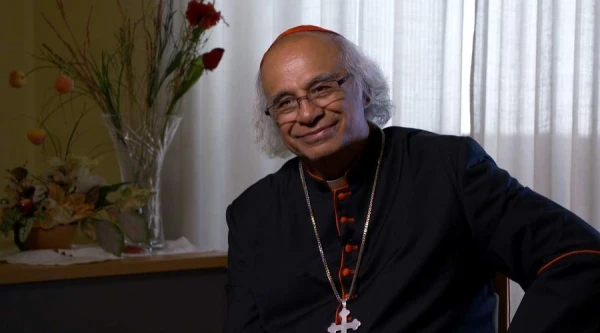
Managua, Nicaragua, Feb 3, 2021 / 02:11 pm (CNA).- The Archbishop of Managua, Cardinal Leopoldo Brenes, celebrated Mass Jan. 31 to commemorate six months since the attack that destroyed part of the chapel of the Cathedral of the Immaculate Conception, where the crucifix known as “the Blood of Christ” was kept.

On July 31, 2020, an unknown person entered the Chapel of the Blood of Christ and launched an incendiary bomb that severely damaged the premises and a 382-year-old image of the Blood of Christ, a depiction of Jesus Christ crucified.

As soon as the attack occurred, the cardinal said that the bombing was “a totally reprehensible act of desecration, so we must remain in constant prayer to defeat the evil forces.”

In his homily on Jan. 31, the cardinal said that “faith in Jesus Christ cannot be destroyed with this type of offence, because He is engraved in the heart of every human being.”

“We remember with great sadness that regrettable attack against the precious and consecrated crucifix of the Blood of Christ. However, the Holy Father said on Wednesday referring to the Word: ‘Someone can throw the entire Bible into fire and yet the Word is not going to be lost and it can be written again, because that word was recorded in the heart,” he said.

Cardinal Brenes also said that “the person or persons who planned the attack … thought that by destroying our venerated and consecrated image, faith in Jesus Christ was going to be lost.”

“But our faith in Jesus Christ, that we strengthen through images, is engraved in the depths of the heart; and what is engraved in the heart, nothing and no one can take away, nothing and no one can steal,” he stressed.

The cardinal also announced that with the support of a technical restoration institute from the Archdiocese of Santiago de Guatemala the crucifix will be restored.

Finally, Cardinal Brenes called on the faithful “to continue praying so that we can soon have the venerated crucifix in good condition,” because “it has greatly helped bringing Nicaraguans closer to Jesus Christ for centuries.”

The attack on the cathedral comes amid tensions between some Catholics and supporters of President Daniel Ortega, who previously led the country for over a decade after the Sandinistas’ 1979 ouster of the Somoza dictatorship. Ortega has again been president of Nicaragua since 2007, and oversaw the abolition of presidential term limits in 2014.

Ortega’s government has accused many bishops and priests of siding with his opposition.
Backers of Ortega have led actions against some churches, including Managua’s cathedral when critics of Ortega took refuge there.

Ortega’s wife, Rosario Murillo, is also vice president.

In reaction to the fire, she suggested, without evidence, that candles were to blame, as were people who placed candles too close to religious images. She did not condemn the attack on the church. She said she would wait for the opinion of police experts on the causes of the fire.

The Archdiocese of Managua expressed concern over new threats to freedom and personal safety in the country in October 2020, and urged the country’s board of elections “to guarantee free elections” in 2021.

Nicaragua’s crisis began in April 2018 after Ortega announced social security and pension reforms. The changes were soon abandoned in the face of widespread, vocal opposition, but protests only intensified after more than 40 protesters were killed by security forces.


[…]