No Picture
News Briefs

The Church is the ‘only functioning institution’ in South Sudan

March 13, 2017 CNA Daily News 0

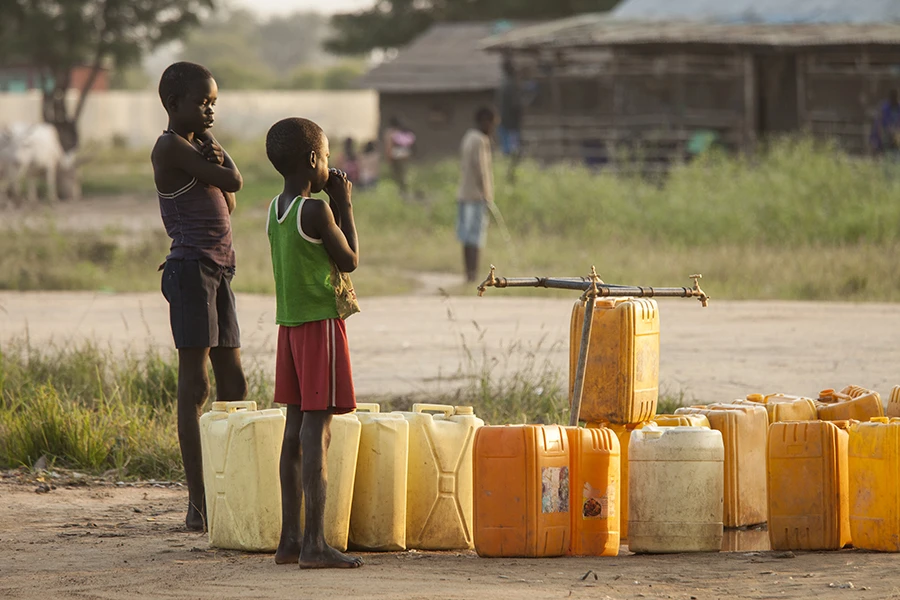
Washington D.C., Mar 13, 2017 / 04:46 pm (CNA/EWTN News).- Amid war and famine in South Sudan, the Catholic Church is still serving the most vulnerable even as the government has collapsed.

The Church is the “only functioning institution in civil society,” Neil Corkery, president of the Sudan Relief Fund, told CNA in an interview, and “is really the only thing that’s left trying to help people” who live “in the remotest parts of the country.”

Famine was recently declared in parts of South Sudan, where there has been an ongoing civil war, interrupted by tenuous peace, since December 2013.

42 percent of the population, an estimated 4.5 million people, are facing “severe food insecurity,” Corkery said, and that number is expected to rise to half the country’s population – or 5.5 million – by July.

There have been 2.5 million refugees created by the conflict, he added. A confidential UN report warned that the conflict had reached “catastrophic proportions for civilians,” the South China Morning Post reported last month.

“This crisis is man-made, the direct consequence of a conflict prolonged by South Sudanese leaders who are unwilling to put aside political ambitions for the good of their people,” State Department acting spokesperson Mark C. Toner stated on February 21.

“We call on President Kiir to expeditiously make good on his promise that humanitarian and developmental organizations will have unimpeded access to populations in need across the country,” Toner added.

Recently, President Salva Kiir called for a day of prayer for the country ahead of a national dialogue. The auxiliary bishop of Juba, however, dismissed it as a “political prayer” and “a mockery” amid violence inflicted by government troops.

Because of the conflict and the “scorched earth” policies of government troops, many have been “unable to plant their crops,” Corkery said.

At a parish in the Diocese of Tombura-Yambio, in the southwestern portion of the country and an area that is “very fertile” and was once a bread basket for the country, “these people are now in hiding, or taking refuge in the parish compound, and unable to plant crops,” he said. “Things are obviously just getting much worse.”

“It is a real crisis that’s coming down the pike,” Corkery warned.

The country’s bishops have spoken out against the violence there, accusing soldiers of committing war crimes and saying that the violence has interrupted the harvesting of crops.

“Despite our calls to all parties, factions, and individuals to STOP THE WAR, nevertheless killing, raping, looting, displacement, attacks on churches and destruction of property continue all across the country,” the bishops of South Sudan stated in a Feb. 23 pastoral message.

“Much of the violence,” they added, “is being perpetrated by government and opposition forces against civilians,” especially those of ethnicities deemed to be in alliance with rebel factions. And those victims “are prevented from harvesting their crops,” the bishops added.

Some members of the government have frustrated local peace deals brokered by the Church, the bishops said, and churches, priests, and nuns have been attacked.  

The U.S. has sent “$2 billion since 2014 in humanitarian aid alone,” Corkery said, but the United Nations humanitarian workers only operate in “certain pockets” of the country.

Amid this crisis and growing famine, Catholic priests, nuns, and missionaries have been laboring to bring food and supplies to remote areas and are “reaching these people who are truly destitute and starving.”

It is not an easy task. Aside from the ongoing conflict where soldiers could seize food and supplies if they were aware they were being transported, the country’s logistical infrastructure is so poor there are no paved roads outside the capital city of Juba, Corkery noted. During the country’s rainy season, this problem is expanded.

“The real heroes that I see there,” Corkery said, are the “missionaries toiling away on the front lines.”

“These people are looking at the long-term solution in terms of the eternal scheme of things, people’s souls.”

Several aid workers with Samaritan’s Purse were detained or kidnapped by opposition fighters near Mayendit March 13.

South Sudan announced earlier this month it plans to charge $10,000 per visa for foreign aid workers.

“The government and the army have largely contributed to the humanitarian situation. And now, they want to create profit from the crisis they have created,” Elizabeth Deng, South Sudan researcher with Amnesty International, said in reaction to the announcement.

Despite the heroic efforts of missionaries, the Sudan Relief Fund, and other aid groups like Aid to the Church In Need and Samaritan’s Purse, a long-term peace is the only lasting solution to the country’s problems, Corkery insisted.

Prayer is the most important thing Catholics in the U.S. can do to help the situation, he said, as peace can only come about through “prayer and grace working in the hearts and the minds of these warring tribes and factions.”

However, citizens can also ask members of Congress to “push the U.S. government to put more pressure” on South Sudanese leaders. The U.S. has already begun listing “top leaders as war criminals” there, he said.

Pope Francis has spoken about the crisis in the country and has expressed his desire to visit there. No details of the trip have yet been released, Corkery said.

“The Pope and the Church,” he said, “are the only people that have the ability to convene, bring the parties together” for a peaceful solution. Pope Francis will try to “refocus the international community on the gravity of this crisis that’s there” and “convene the warring parties to try to bring them to the table to get some peace.”

[…]

No Picture
News Briefs

Fr. Stanley Rother, first US-born martyr, to be beatified in September

March 13, 2017 CNA Daily News 0

Oklahoma City, Okla., Mar 13, 2017 / 10:37 am (CNA/EWTN News).- Father Stanley Rother, the Oklahoma-born martyr who served as a priest in Guatemala, will be beatified in Oklahoma City on Sept. 23, 2017.

The beatification announcement was made by the Archdiocese of Oklahoma City on March 13. Fr. Rother was a priest of the archdiocese. The beautification Mass will take place at 10 a.m. at the Cox Convention Center.

In December 2016, Pope Francis officially acknowledged Fr. Rother’s martyrdom, making him the first recognized martyr to have been born in the United States.

Fr. Rother was from the unassuming town of Okarche, Okla., where the parish, school and farm were the pillars of community life. He went to the same school his whole life and lived with his family until he left for seminary.

Surrounded by good priests and a vibrant parish life, Stanley felt God calling him to the priesthood from a young age. But despite a strong calling, Stanley would struggle in the seminary, failing several classes and even out of one seminary before graduating from Mount St. Mary’s seminary in Maryland.

Hearing of Stanely’s struggles, Sister Clarissa Tenbrick, his 5th grade teacher, wrote him to offer encouragement, reminding him that the patron of all priests, St. John Vianney, also struggled in seminary.

“Both of them were simple men who knew they had a call to the priesthood and then had somebody empower them so that they could complete their studies and be priests,” Maria Scaperlanda, author of The Shepherd Who Didn’t Run, a biography of the martyr, told CNA in an interview last year.

“And they brought a goodness, simplicity and generous heart with them in (everything) they did.”

When Stanley was still in seminary, St. John XXIII asked the Churches of North America to send assistance and establish missions in Central America. Soon after, the dioceses of Oklahoma City and Tulsa established a mission in Santiago Atitlan in Guatemala, a poor rural community of mostly indigenous people.

A few years after he was ordained, Fr. Stanley accepted an invitation to join the mission team, where he would spend the next 13 years of his life.

When he arrived to the mission, the Tz’utujil Mayan Indians in the village had no native equivalent for Stanley, so they took to calling him Padre Francisco, after his baptismal name of Francis.

The work ethic Fr. Stanley learned on his family’s farm would serve him well in this new place. As a mission priest, he was called on not just to say Mass, but to fix the broken truck or work the fields. He built a farmers’ co-op, a school, a hospital, and the first Catholic radio station, which was used for catechesis to the even more remote villages.

“What I think is tremendous is how God doesn’t waste any details,” Scaperlanda said. “That same love for the land and the small town where everybody helps each other, all those things that he learned in Okarche is exactly what he needed when he arrived in Santiago.”

The beloved Padre Francisco was also known for his kindness, selflessness, joy and attentive presence among his parishioners. Dozens of pictures show giggling children running after Padre Francisco and grabbing his hands, Scaperlanda said.

“It was Father Stanley’s natural disposition to share the labor with them, to break bread with them, and celebrate life with them, that made the community in Guatemala say of Father Stanley, ‘he was our priest,’” she said.

Over the years, the violence of the Guatemalan civil war inched closer to the once-peaceful village. Disappearances, killings and danger soon became a part of daily life, but Fr. Stanley remained steadfast and supportive of his people.

In 1980-1981, the violence escalated to an almost unbearable point. Fr. Stanley was constantly seeing friends and parishioners abducted or killed. In a letter to Oklahoma Catholics during what would be his last Christmas, the priest relayed to the people back home the dangers his mission parish faced daily.

“The reality is that we are in danger. But we don’t know when or what form the government will use to further repress the Church…. Given the situation, I am not ready to leave here just yet… But if it is my destiny that I should give my life here, then so be it…. I don’t want to desert these people, and that is what will be said, even after all these years. There is still a lot of good that can be done under the circumstances.”

He ended the letter with what would become his signature quote:

“The shepherd cannot run at the first sign of danger. Pray for us that we may be a sign of the love of Christ for our people, that our presence among them will fortify them to endure these sufferings in preparation for the coming of the Kingdom.”

In January 1981, in immediate danger and his name on a death list, Fr. Stanley did return to Oklahoma for a few months. But as Easter approached, he wanted to spend Holy Week with his people in Guatemala.

“Father Stanley could not abandon his people,” Scaperlanda said. “He made a point of returning to his Guatemala parish in time to celebrate Holy Week with his parishioners that year – and ultimately was killed for living out his Catholic faith.”

The morning of July 28, 1981, three Ladinos, the non-indigenous men who had been fighting the native people and rural poor of Guatemala since the 1960s, broke into Fr. Rother’s rectory. They wished to disappear him, but he refused. Not wanting to endanger the others at the parish mission, he struggled but did not call for help. Fifteen minutes and two gunshots later, Father Stanley was dead and the men fled the mission grounds.

Scaperlanda, who has worked on Fr. Stanley’s cause for canonization, said the priest is a great witness and example: “He fed the hungry, sheltered the homeless, visited the sick, comforted the afflicted, bore wrongs patiently, buried the dead – all of it.”

His life is also a great example of ordinary people being called to do extraordinary things for God, she said.

“(W)hat impacted me the most about Father Stanley’s life was how ordinary it was!” she said.

“I love how simply Oklahoma City’s Archbishop Paul Coakley states it: ‘We need the witness of holy men and women who remind us that we are all called to holiness – and that holy men and women come from ordinary places like Okarche, Oklahoma,’” she said.

“Although the details are different, I believe the call is the same – and the challenge is also the same. Like Father Stanley, each of us is called to say ‘yes’ to God with our whole heart. We are all asked to see the Other standing before us as a child of God, to treat them with respect and a generous heart,” she added.

“We are called to holiness – whether we live in Okarche, Oklahoma, or New York City or Guatemala City.”

[…]

No Picture
News Briefs

Muhammad Ali’s family speaks up on religious freedom after airport detainment

March 9, 2017 CNA Daily News 0

Washington D.C., Mar 9, 2017 / 04:45 pm (CNA).- Family members of boxing great Muhammed Ali say they were detained at an airport for their religion and have linked the incident President Donald Trump’s travel ban, which they are challenging on religious freedom grounds.

“There shouldn’t be a travel ban,” said Khalilah Camacho Ali, the boxer’s former wife. “If I don’t speak up now, they’re going to keep harassing us.”

She said Muhammed Ali’s family has been fighting for religious rights “for a very long time,” adding “We are going to continue to fight for religious justice.”

Muhammed Ali, Jr. and his mother Khalilah Camacho Ali, were detained and questioned Feb. 7 at the Fort Lauderdale-Hollywood International Airport as they returned from a Black History Month event in Jamaica, the Associated Press reports. They said they were asked if they were Muslim and a family spokesman charged they were flagged for their Arabic-sounding names.

While Ali’s former wife could produce a photo of herself with her famous ex-husband, her son could not. They were separated and he was detained by immigration officials for about two hours, the family spokesman said, according to the Washington Post.

Ali Jr. was born in Philadelphia and has a U.S. passport.

Customs officials, however, rejected claims it had discriminated on the basis of religion or ethnicity. “We accomplish our mission with vigilance and in accordance with the law,” U.S. Customs and Border Protection said Feb. 26, adding “We treat all travelers with respect and sensitivity.”

Khalilah Camacho Ali said the incident at the Florida airport has affected her.

“I’m paranoid. I’m just waiting for somebody to mess with me. That’s not a good feeling when you have to travel,” she said.

The ban on new visas for travelers from six predominantly Muslim countries and temporarily halted the United States’ refugee program was revised after facing court challenges. The latest version will take effect March 16 and has removed Iraq from the list of countries, which originally numbered seven.

Ali Jr. and Khalilah Camacho Ali visited Washington, D.C. on Thursday to meet with lawmakers and discuss their experience. Democratic members of the House Subcommittee on border security invited them to a forum on the topic.

They have launched a campaign against the travel restrictions with support of former boxing stars Evander Holyfield, Larry Holmes and Roberto Duran.

They are framing the effort as a conflict with the president, using the hashtag “#AlivsTrump.”

The three-time boxing heavyweight champion Muhammed Ali also advocated for civil rights. He converted to Islam in 1964 and refused to join the military draft, citing conscientious objections as a Muslim. He was stripped of his heavyweight title and convicted of draft evasion, though the Supreme Court would rule in his favor.

He died in 2016.

[…]