Why character counts in the voting booth
November 21, 2017 CNA Daily News 1

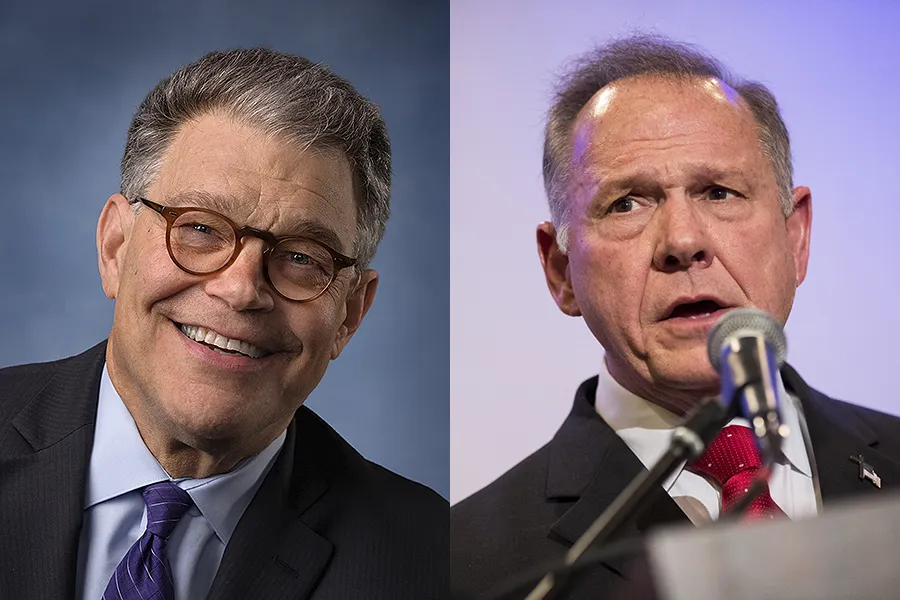
Denver, Colo., Nov 21, 2017 / 05:20 pm (CNA).- Sexual misconduct allegations against Republican candidate Roy Moore have brought Alabama’s special election to fill a U.S. Senate seat into the national spotlight.
 
U.S. Senator Al Franken (D-Minn.) has also been recently accused of kissing and groping women against their will. During the 2016 presidential campaign, more than a dozen women raised allegations of sexual assault or harassment against Republican candidate Donald Trump.

These accusations have raised public debate about whether a candidate’s personal character should matter in elections, and if so, to what extent.
 
“Obviously, all of us are sinners. But some sins are especially relevant when deciding whether to give one’s vote to a candidate,” said Dr. Kevin Miller, professor of moral theology at Franciscan University of Steubenville.
 
“The key purpose of politics is justice – as thinkers from Aristotle to Pope Benedict XVI have taught,” Miller told CNA.
 
“Thus it should especially be taken into account when a candidate has – based on good evidence – acted unjustly, and even more especially when the candidate’s unjust actions have been habitual and/or when the candidate does not give serious indication of repentance against these actions.”
 
Moore is the Republican nominee in Alabama’s special election to fill a U.S. Senate seat, left vacant when former U.S. Senator Jeff Sessions was appointed U.S. attorney general earlier this year.

A former Chief Justice of the Alabama Supreme Court, Moore was removed from the court twice – once for refusing to obey a federal court order to remove a statue of the Ten Commandments from the Alabama judicial building, and later for instructing that same-sex marriage licenses should not be issued after the U.S. Supreme Court ruled in favor of same-sex marriage in 2015.
 
In recent weeks, nine women have brought allegations of misconduct against Moore, including an accusation of forced sexual contact with a 14-year-old in 1979.
 
A number of high-profile Republican leaders – including Senate Majority Leader Mitch McConnell (R-Ken.) – have withdrawn their support from Moore, while others, including Alabama Governor Kay Ivey, continue to support the candidate. One Alabama pastor told the Boston Globe that he would continue to support Moore even if the allegations against him were true.

Franken, who has publicly criticized other public figures accused of sexual misconduct, has apologized for some accusations leveled against him, while maintaining that other allegations are the result of misunderstanding, or have been mischaracterized. While some public figures have defended him, including former colleagues in the entertainment industry, others have called for investigations, or for his resignation.
 
When a candidate is facing serious allegations of misconduct, how should Catholics respond?
 
While Church teaching does not dictate which party or candidate a Catholic should choose, it does offer guidelines for Catholics in the voting booth.
 
In the 2007 document “Forming Consciences for Faithful Citizenship,” the U.S. Conference of Catholic Bishops outline an approach to political responsibility based upon developing a “well-formed conscience.”

In addition to considering moral issues of grave importance, the document says that voting decisions “should take into account a candidate’s commitments, character, integrity, and ability to influence a given issue.”
 
The importance of character and integrity should not be taken lightly, Dr. Miller told CNA.
 
When there is good evidence that a candidate has habitually or unrepentantly engaged in serious injustice, whether in sexuality or in another area, Miller said, “there is a serious presumption that the candidate ought not be entrusted with decisions about the common good, which consists especially of justice.”
 
“One doesn’t need ‘proof’ that allegations against a candidate are true before one may reasonably decide that such allegations warrant a decision not to vote for the candidate,” Miller continued.
 
Even when definitive proof is lacking, there may be substantial evidence supporting an allegation, he said. “It is a voter’s right and responsibility to make an honest and serious attempt to consider whether such evidence exists. As others have pointed out, a candidate doesn’t have a right to one’s vote.”
 
The election of a candidate who has habitually committed serious injustices is likely to cause scandal and a negative influence on culture, Miller said, adding that negative cultural consequences could outweigh the good the candidate might do in office..
 
Additionally, a candidate who defends serious injustices in his own life may make poor decisions about justice in society, Miller said.
 
Miller also cautioned that there can be a tendency to be defensive about the candidate that one supports, and to minimize flaws in personal conduct and in policy decisions.
 
“This is a way in which voting for a ‘bad’ candidate can be bad, not only for justice and the common good, but for the voter’s own soul,” he said.
 
“Thus, there is a serious risk that voting for a ‘bad’ candidate can be the equivalent of trying to gain the world at the expense of one’s soul,” he continued, noting that voters must be concerned with personal salvation and the “soul” of political culture.  
 
Miller clarified that deciding not to vote for a candidate in one party does not morally translate to a vote for the candidate of another party.
 
“There are other alternatives, like voting write-in or third-party – or not voting at all in a particular race,” he said.

Character is not the only factor to be considered in weighing candidates, Miller acknowledged. “There are obviously some policy issues that are extraordinarily serious,” he said, pointing to abortion as an example.
 
“I think you have to take seriously the gravity of some of the political issues we’re faced with today,” he said. “You also have to take seriously violations of human dignity and justice,” such as some of the allegations being raised against prominent politicians and other leaders.
 
In the case of a candidate for whom there is evidence of engagement in particularly grave evils and no sign of repentance, Miller said Catholics should at least consider voting third party or abstaining.
 
In the end, there is no easy formula or flow chart that is guaranteed to give the uniquely correct answer to every question that arises at the ballot box, he said. Catholics should take all factors into account and think about what will serve justice and the common good, not just in the short term, but in the long term.

A part of that discernment, Miller said, is that Catholics consider a candidate’s character and integrity.
 
“The point is that voters need at least to consider these concerns – in a morally [and] intellectually serious and honest way – rather than simply ignoring [or] dismissing them,” he said.
 

[…]

China, Vatican use ‘diplomacy of art’ to foster relations

November 21, 2017 CNA Daily News 1

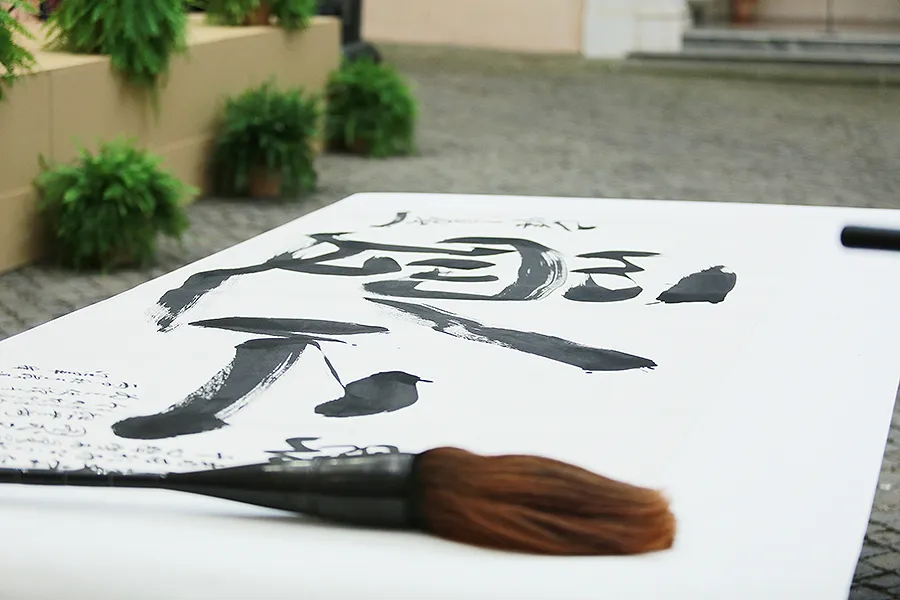
Vatican City, Nov 21, 2017 / 12:00 pm (CNA/EWTN News).- Relations with mainland China have long been an interest for the Holy See, and the Vatican Museums have now partnered with a Chinese cultural institute in hopes of building stronger ties with the country through art.

Barbara Jatta, Director of the Vatican Museums, said Nov. 21 that in recent months “we have found ourselves, perhaps unexpectedly, in a shared awareness, which is the common task that is required today, even more so in the past, of a reality such as ours: to be able to speak in a universal language.”

This language, she said, “can only be that of beauty, which is a powerful appeal to harmony (and) is an extraordinary vehicle to always speak, in every latitude and longitude (and) without fear, without barriers.”

“I think beauty – in the broadest sense of the term – is needed by everyone,”she said, and voiced her believe that beauty is “the key to what the Vatican Museums calls ‘the diplomacy of art,’ which is certainly not our discovery…but which today is up to us to carry forward and creatively reinterpret in a constant confrontation with the global scene that is in front of us.”

Jatta said she believes these are the types of initiatives the museums ought to be pursuing, and is convinced “that the activities that we present today will bring an abundant harvest and will be a positive sign of hope which, looking around, we all need!”

Jatta spoke at the presentation of an initiative being launched by the Vatican Museums and the China Cultural Industrial Investment Fund, who are joining forces to promote two different exhibits which will be displayed simultaneously in the Vatican Museums and the Forbidden City palace complex in Beijing in the spring of 2018.

The exhibits mark the first time the Vatican Museums and a Chinese cultural institution have collaborated, and are the result of a joint-project between the two called “Beauty Unites Us,” aimed at creating various forms of cultural collaboration through art.

The title of the exhibit that will be shown in the Vatican is “Anima Mundi: Human, nature and harmony,” while the exhibit on display in China is titled “Beauty Unites Us: The trip in the marvelous harmony between the Chinese people and the Vatican museums.”

According to a press release on the exhibits, they are meant to witness to how art can be an instrument of dialogue and encounter between people from different cultures.

Among the pieces selected for the simultaneous exhibit are 12 paintings from Chinese artist Zhang Yan, who has donated several of his works to Pope Francis, including one that will become a permanent addition to the Vatican’s “Anima Mundi” museum.

The Vatican will send 40 works to China for the exhibit, including 38 pieces of ancient Chinese art from the “Anima Mundi” museum, and a painting by Zhang Yan that he donated to the Pope. After its debut in Beijing, the exhibit will travel to other major cities in China.

Speaking alongside Jatta at the press conference on the exhibits were Msgr. Paolo Nicolini, Administrative Delegate of the Vatican Museums; Fr. Nicola Mapelli, Curator of the “Anima Mundi” museums; Zhu Jiancheng, Secretary General of the China Culture Investment Fund; and painter Zhang Yan.

In comments to journalists, Zhu thanked the Vatican for their “scrupulous organization and warm hospitality.”

He voiced his belief that the exhibits “will open a new chapter in the cultural exchange between the Chinese people and the Vatican, so that there is a new approach and understanding between two countries with a deep cultural tradition.”

As the first of its kind, the event holds significant meaning in terms of mutual understanding and trust between the two parties, he said, and, quoting the third century BC philosopher Han Fei, said, “relations between nations depend on the closeness of peoples, and the closeness of peoples depends on the communication of hearts.”

“We all know that this is also the thought of Pope Francis,” he said, adding that “cultural exchange precedes diplomacy.”

The exhibits, then, are an event that “crosses borders, time and unites cultures, and which will further strengthen the friendship between China and the Vatican in favor of the normalization of diplomatic relations between China and the Holy See.”

In his comments, Zhang said it was “a great honor” to be at the Vatican, where there is currently an increase in the “strong commitment for the development of civil relations between China and the Vatican.”

On behalf of the 1.38 million people of Chinese nationality, Zhang expressed his “sincere homage to the true friendship of Pope Francis,” and to all those who have contributed to the cultural exchanges between China and the Vatican.

The two simultaneous exhibits, he said, “represent the two ends of a bridge of civil dialogue – as a messenger of this cultural exchange, it is my pleasure and privilege to transmit the greeting and friendship of the Chinese people.”

The artist stressed that no matter what nation we come from or what creed we profess, “nothing in the world is irrelevant with us.”

“Even Chinese culture and the Vatican need communication and exchange, as with all cultures on the earth,” he said, adding that the “disinterested friendship” between China and Pope Francis and the idea that we are all one family “push men to rethink the relationship between humanity, life, society and nature.”

“The aesthetics of art,” he said, “will reveal in us the complete awareness of the environment, benevolence and tolerance. Dialogue among us is possible and inevitable because of our common sense of benevolence.”

[…]

Pope eager to meet Catholic, interreligious leaders in Bangladesh

November 21, 2017 CNA Daily News 0

Vatican City, Nov 21, 2017 / 06:33 am (CNA/EWTN News).- On Tuesday Pope Francis sent a video greeting to the people of Bangladesh ahead of his Nov. 30-Dec. 2 visit to the country, saying he is looking forward to meeting everyone, especially Catholics and other religious leaders, and to bringing the Gospel of Jesus Christ.

“I want to meet the entire people,” he said. “In a special way, I cannot wait to meet the religious leaders in Ramna (Park).” Located in the central part of the capital city Dhaka, Ramna Park has a lake and trees and is considered one of the most beautiful areas of the city.

In the video, published Nov. 21, he also emphasized his wish to reaffirm the Catholic community of Bangladesh in “its faith and in its testimony of the Gospel, which teaches the dignity of every man and woman, and calls us to open our hearts to others, especially the poor and needy.”

Francis also said that in his visit he comes as a “minister of the Gospel of Jesus Christ, to proclaim his message of reconciliation, forgiveness, and peace.”

This is a time when we all, both believers and non-believers, are called to promote understanding and respect, and support each other as part of “one human family,” he said.    

The Pope’s visit is the second leg of an apostolic trip to the countries of Burma – also known as Myanmar – and Bangladesh from Nov. 27 to Dec. 2.

He will arrive in Dhaka, the capital city of Bangladesh, from Burma on Nov. 30 in the afternoon. There will be a formal welcoming ceremony and then he will make a visit to the National Martyr’s Memorial in Savar, about 22 miles north-west of the capital.

The National Martyr’s Memorial in Savar is the national monument of Bangladesh. It stands in memory of all those who gave their lives in the Bangladesh Liberation War of 1971, which brought independence and separated Bangladesh from Pakistan.  

He will also visit the Bangabandhu Memorial Museum, which honors the former Father of the Nation, Bangabandhu Mujibur Rahman, who was assassinated alongside his family in August 1975.

From there he will meet with the President of Bangladesh, Abdul Hamid. Afterward he will deliver a speech in a meeting with governmental authorities, leaders of the civil society and with the diplomatic corps.

On Dec. 1, Francis will celebrate Mass and a priestly ordination at Suhrawardy Udyan Park. In the afternoon he will visit the Prime Minister, Sheikh Hasina and the cathedral.

Later he will give speeches in meetings with the bishops of Bangladesh and with interreligious leaders and an ecumenical group for peace.

In the morning on Dec. 2 he will make a private visit to the Mother Teresa House in the Tejgaon district of Dhaka.

Afterward he will meet and address priests, religious, consecrated, seminarians and novices in the Church of the Holy Rosary, which was built in the late 1600s and is the oldest church building still-standing in Dhaka. The Pope will visit the church and the parish cemetery during his visit.

Francis’ final encounter of the trip will be with youth at the Notre Dame College of Dhaka, where he will deliver a speech before leaving for the airport and the official leaving ceremony before departing for Rome. He is expected to land back in Rome at about 11p.m. local time.

[…]

Dioceses of Nashville, Jefferson City get new bishops

November 21, 2017 CNA Daily News 1

Vatican City, Nov 21, 2017 / 05:34 am (CNA/EWTN News).- On Tuesday the Vatican announced Pope Francis’ appointment of Fr. Shawn McKnight as the next bishop of the Diocese of Jefferson City, and Msgr. Mark Spalding as the new leader of the Diocese of Nashville.

In a Nov. 21 statement coinciding with the Vatican announcement, Fr. Michael Johnston, who until now has served as Apostolic Administrator for the Nashville diocese, voiced his gratitude to both Pope Francis for the appointment, and to Msgr. Spalding himself for his “generosity” in accepting the role.

Spalding, Johnston said, “is a man filled with enthusiasm and excitement” for his new responsibilities, and is someone who has “a strong work ethic, a deep love for the Lord and his people, and a great desire to lead and serve.”

“He has already expressed such a keen interest in learning about the Diocese of Nashville, in listening to our needs and our hopes and dreams, and then discerning the direction the Holy Spirit wishes to take us,” Johnston said. “With God’s gift to him of this spirit of service and willingness to lead us, we are truly blessed.”

Spalding, 52, who until now has served the Archdiocese of Louisville as Vicar General and pastor of Holy Trinity parish and Holy Name parish, was born Jan. 13, 1965, in Lebanon, Ky.

After graduating from Bethlehem High School Bardstown, he entered St. Meinrad Seminary in Indiana and was ordained a priest Aug. 3, 1991, in the St. Joseph Proto-Cathedral of Bardstown.

Before his ordination, he studied from 1987-1991 at the American University in Louvain, Belgium, where he obtained a master degree in religious studies and a licentiate in canon law.  

Since then, he has served at a number of parish assignments, including associate pastor at St. Joseph and chaplain at Bethlehem High School in Bardstown, associate pastor at St. Augustine in Lebanon, Ky., associate pastor at St. Margaret Mary in Louisville and pastor of Immaculate Conception in LaGrange.

Since 2011 he has served the Archdiocese of Louisville as Vicar General. His ordination and installation as Bishop of Nashville will take place Feb. 2, 2018, at Sagrado Corazon in the Catholic Pastoral Center on McGavock Pike.

In his comments on Msgr. Spalding’s appointment, Johnston said Louisville would be losing a “fine priest,” but offered his assurance that the bishop-elect would be “loved and cared for” as he begins his new role.

Fr. McKnight, who was born in Wichita, Kan. In 1968, got a degree in biochemistry from the University of Dallas before entering seminary in 1990.

He carried out his seminary studies at the Pontifical “Josephinum” College in Columbus, Ohio, and was ordained a priest May 28, 1994, for the Diocese of Wichita.

The bishop-elect then obtained a licentiate and doctorate degree in sacramental theology from the Pontifical Atheneum of St. Anselm in Rome and published several articles on relevant pastoral and sacramental themes, finishing his studies in 2001.

After his ordination, he served the diocese in various pastoral, teaching and diocesan roles, the most recent being pastor of the Church of the Magdalen Parish in Wichita.

From 2000-2005, McKnight served as Director of diocesan Divine Worship and was a diocesan consultant and a member of the Presbyteral Council. From 2005-2010 he was a faculty member at Saint Meinrad Seminary working in the formation of permanent deacons.

After, from 2010-2015, the bishop-elect served as Executive Director of the USCCB’s Office for Clergy and Consecrated Life. In 2015, he was assigned to the Church of the Magdalen parish, where he has served until now.

[…]

English judge applauds man who stole drugs, killed suicidal father

November 21, 2017 CNA Daily News 0

London, England, Nov 21, 2017 / 03:01 am (CNA/EWTN News).- An English chemist charged with murder for the 2015 killing of his 85-year-old father, who wished to die, was freed on Friday by a judge who said, “Your acts of assistance were acts of pure compassion and mercy.”

Bipin Desai, 58, was also charged with assisted suicide and two counts of theft. Desai gave his father, Dhirajlal Desai, a smoothie laced with stolen morphine at his home in Surrey on Aug. 26, 2015. Desai soon after injected his father with insulin to speed the morphine’s fatal action.

The judge ruled Nov. 17 that because Dhirajlal Desai wished to die, there was no basis for a murder conviction.

Dr. Anthony McCarthy of the Society for the Protection of Unborn Children responded to the ruling asking, “Are we now to believe that the killing of an innocent and vulnerable human being who is ‘tired of life’  is not to be regarded as any serious crime?”

Bipin Desai pleaded guilty to assisted suicide and the theft of the morphine and insulin from his employer. He was given a suspended nine-month jail sentence, and allowed to go free.

The judge, Justice Green, said that to convict Desai of murder would be “perverse and irrational … Your father had a solid and firm wish to die. For him, being assisted to die would be fulfilling his wish of going to heaven to see his wife and being put out of his misery.”

Green said the evidence “provides no support for the prosecution case, to the contrary it unequivocally supports the defence position that this is assisted suicide but not murder,” and that Desai had been “wrongfully accused of murder.”

According to Desai, his father had been asking to end his life after the 2003 death of his wife and the 2010 death of his dog. Desai’s lawyer, Natasha Wong, said in court that “what we have is a man who wanted to die, not because he was terribly ill but, sadly, because he had just had enough of life.”

Though Desai also admitted to stealing the drugs used to kill his father, Green said that “the thefts are trivial and only form part of the fabric of the wider case. The owner of the pharmacy said in his evidence that you were an honest, respectful and decent man.”

“You are free to now go with your family and start the process of rebuilding your life,” he continued.

Assisted suicide and euthanasia are both criminal offenses in England and Wales under the Suicide Act 1961, and are punishable by imprisonment.

A representative of the assisted suicide advocacy group Dignity in Dying said the case showed the need for “safe and compassionate” laws which decriminalized assisted suicide and euthanasia.

Peter Saunders of Care Not Killing responded that “This case underlines the need for better support for those caring for elderly and disabled relatives but does not mean the law should change.”

A bill to legalize assisted dying in England and Wales failed in Parliament in 2015 by a vote of 330-118.

The Suicide Act 1961 was challenged in High Court last month by a terminally ill man, Noel Conway, who wanted a doctor to be able to prescribe him a lethal dose. His case was dismissed.

In jurisdictions where assisted suicide or euthanasia are legal, the procedures usually require that the individual have a terminal illness and that the fatal drugs are prescribed by a doctor. In the handful of states in the U.S. which have legalized assisted suicide, the individual must have a terminal illness which would lead to death over the course of the next six months.

The Desai case could add to the growing list of assisted suicide abuses found around the world in which pressure is placed on individuals to kill themselves, or in which patients are held down against their wills during lethal injection.

Anthony McCarthy of SPUC said, “It is shocking that a High Court Judge in this country should speak with such approval of an adult son who ‘sends his father to heaven’. Serious crimes can be ‘well-motivated’  and indeed, mentally ill parents who kill their healthy children sometimes also talk of ‘sending them to heaven’.”

“What now of any respect for laws and investigations which seek to protect the ineliminable value of all human lives, regardless of feelings of sadness and loss on the victim’s part which may perhaps respond to loving care and professional help?”

[…]

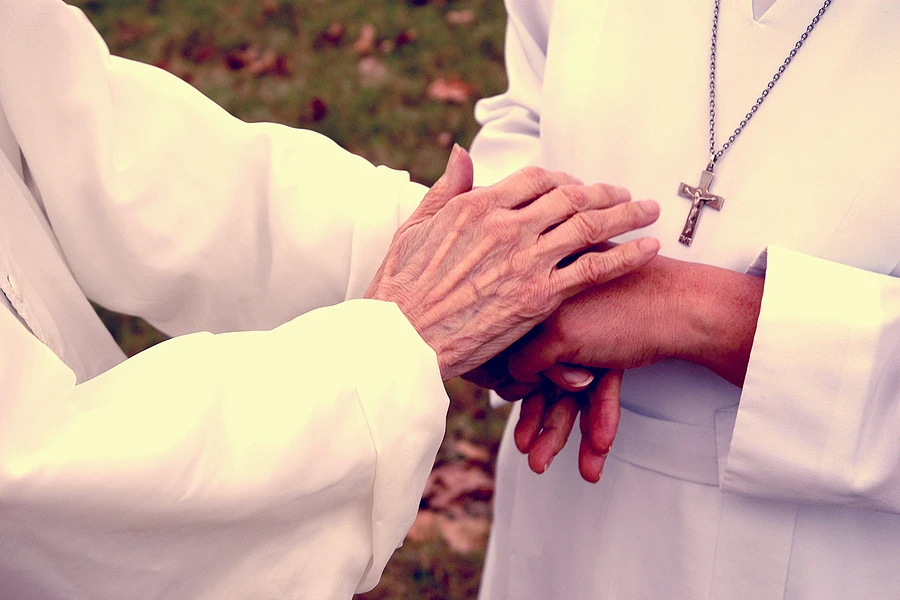
‘The good Lord has guided me well’: 113-year-old nun reflects on blessings

November 20, 2017 CNA Daily News 2

Marseille, France, Nov 21, 2017 / 12:08 am (CNA/EWTN News).- At age 113, Sister André is one of the oldest religious sisters in the world.

According to French newspaper Le Parisien, Sister André is the oldest person in France. She told the newspaper that this “very much surprised me because I never even thought about it.”

Sister André, who is blind, currently resides in the Sainte-Catherine-Labouré retirement home for religious in Toulon, a city in southeast France near the Mediterranean.

She was born Lucille Randon on Feb. 11, 1904 in the town of Alès , about 140 miles northwest of Toulon.

The nun told the French daily La Croix that she grew up in a poor Protestant family. Her paternal grandfather was “a pastor, very strict. The services lasted forever and you had to follow the entire sermon without budging or falling asleep! So my parents no longer practiced their religion. But that troubled me.”

When she was 27, she converted to Catholicism. “I gradually progressed, following my Catholic faith,” she said.

During her youth, she worked as a teacher and governess for various families including the Peugeots, who founded and owned the French car manufacturer.

At age 40, she joined the Daughters of Charity of Saint Vincent de Paul and took the name André in honor of her brother André, whom she said was like a parent to her.

After World War II began, the nun started working in a hospital in the town of Vichy in central France, taking care of the elderly and children.

“Some of them were orphans, some placed there by their parents because they were no longer able to feed them,” she recalled.

Sister André cared for children in that hospital for nearly 30 years, and said that “some of them have looked me up and still come to see me.”

In 2009, the nun moved into the Sainte-Catherine-Labouré retirement home in Toulon.

“I am really fortunate to be here, because I’m very well cared for here,” she said. “That’s very reassuring at my age.”

“When my brothers died when I was 70, I thought that it would be my turn soon,” she said. But several decades later, she is still alive, and grateful for all the blessings God has continued to send her.

Sister André told La Croix that she worked until she was 104 years old. What she misses now is that she can no longer “read, write, draw, embroider and knit.” However, she said that she still enjoys seeing the blue sky when the weather is nice.

“The good Lord has guided me well,” she reflected.


This article was originally published by our sister agency, ACI Prensa. It has been translated and adapted by CNA.

[…]

John Paul II relic given to 2019 World Youth Day

November 20, 2017 CNA Daily News 0

Vatican City, Nov 20, 2017 / 07:00 pm (CNA/EWTN News).- At a Nov. 17 ceremony at the Polish Embassy to the Holy See, Ambassador Janusz Kotanski delivered a relic of Pope St. John Paul II to Panama’s Ambassador to the Holy See, Miroslava Rosas Vargas.  The relic is a gift from Cardinal Stanislaw Dziwisz to the Church in Panama, as it prepares to host the 2019 World Youth Day.

John Paul II created World Youth Day in 1985 to harness the energy of young people and encourage them to participate in his call for a “new evangelization.” The first World Youth Day gathering took place in Rome in 1986.  The gatherings, held every three years, draw millions of participants from around the world.  The late Pope also created a special “youth section” within the Vatican’s Pontifical Council for Laity, charged with coordinating World Youth Days.

In attendance at the ceremony delivering the relic were Polish Cardinal Stanis?aw Ry?ko, former head of the Pontifical Council for Laity and organizer of World Youth Day;  Panamanian Cardinal José Luis Lacunza, and Hondurian Cardinal Óscar Rodríguez Maradiaga, archbishop of Tegucigalpa and coordinator of the Council of Cardinals called by Pope Francis to advise him in the government of the Church. Cardinal Maradiaga’s presence was a reminder to many of the 2019 World Youth Day’s regional importance.

During the ceremony Cardinal Rylko called John Paul II the “Pope of the youth,” because of the focus on young people that defined his papacy and his pastoral ministry.

Ambassador Kotanski expressed hope that World Youth Day in Panama would continue the “renewed springtime of the Church” called for by the late Pope. He also noted that Polish youth have begun a prayer campaign for the success of the 2019 World Youth Day, and expressed hope that the prayer campaign and relic would be a bridge between Central American and Europe.

Ambassador Vargas of Panama remarked that “to host World Youth Day is a great privilege.” The ambassador’s memories of John Paul II included “the sweet and profound look, typical of the saints, the invitation to dialogue and to communication, the faith and missionary zeal so that humanity can live in a better world.”

John Paul II’s “values, his principles and his love live still,” Vargas added, giving thanks that the late Pope “will be always present in the prayers of us all.”

This article was originally published in Italian by our sister agency, ACI Stampa. It has been translated and adapted by CNA.


[…]

Two years later, aunt of drowned refugee child pleads for action

November 20, 2017 CNA Daily News 0

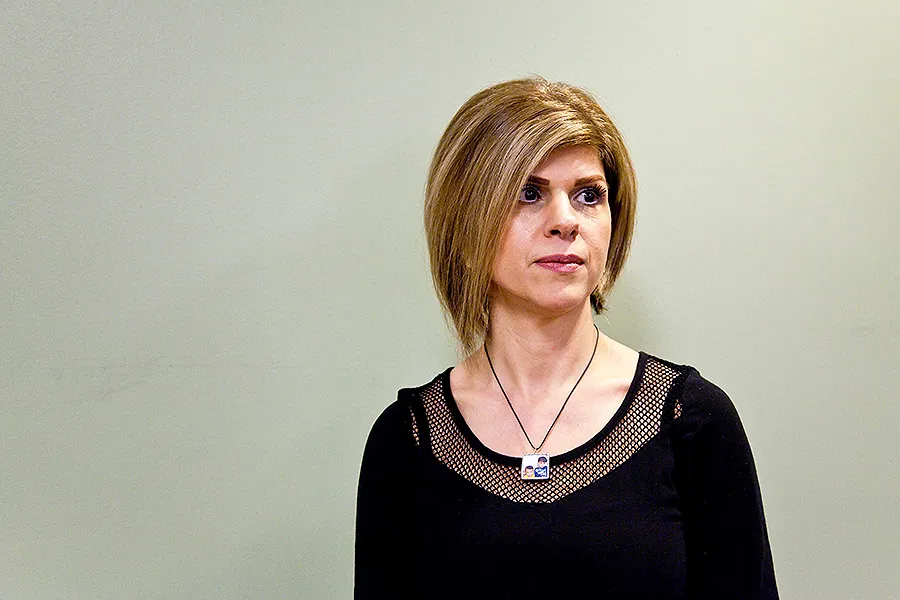
Vancouver, Canada, Nov 20, 2017 / 04:20 pm (CNA).- “We’re still grieving” – these are the words of Tima Kurdi, the aunt of the young refugee boy who captured the world’s attention when he drowned trying to cross the Aegean Sea two years ago.

On Sept. 2, 2015, the haunting image of three-year-old Alan Kurdi’s tiny body laying face down on a Turkish beach made headlines, drawing attention to the stark reality of forced migration, and becoming a global symbol of the ongoing crisis.


A year on from Alan Kurdi, we continue to ignore future refugee crises https://t.co/Jegv1nPoKX pic.twitter.com/Ln1UXg5Tyz

— Brigitte Colman (@lakolman) September 1, 2016

In many ways, a global conscience seemed to be awoken as people learned of the tragic fate of Alan, his brother Ghalib and their mother, Rehanna, who decided to make the perilous, 30-minute boat ride from Bodrum, Turkey to the Greek island of Kos, along with their husband and father, Abdullah.

The dinghy, designed for eight passengers but packed with 16, capsized just a few minutes after setting sail. Abdullah lost track of his family in the confusion, and while he was able to reach safety, his wife and sons met a different fate. Only four people survived the voyage.

“After that image, the world woke up,” Tima said. “That’s when people started talking about it, and that’s when I went crying to world leaders: open your heart, open your border, my people are being forced to flee their home, not by choice.”

In wake of the event, global leaders promised the family “that our tragedy would be the last,” she said. “But of course, a few months later, everyone went back to sleep, went back to business.”

And while many countries offered to give Abdullah asylum, he refused. “To him it was, ‘Where were you when my family needed it?’” she said.

Speaking to CNA over Skype from her home in Vancouver, Canada, where she has lived with her husband and son for the past 23 years, Tima shared the story of what led her five siblings to pack up their families and seek refuge elsewhere, and how her life has changed after the death of her nephews.

Ever since the occurrence of what she calls “the tragedy,” Tima has become the public face of her family’s suffering and the plight of thousands of others like them, quitting her job in mid-2016 to advocate on behalf of refugees, raising awareness at conferences and universities.

War breaks out

When the Syrian civil war broke out in 2011, “it was very shocking to the whole country,” Tima said, including to her family, who is from Damascus.

Life before the war was peaceful, and people of different religions lived side-by-side without problems, she said. But once the conflict erupted, things became dangerous very quickly, and many of her siblings lived in areas that were being bombed.

“What would you do as a family if you have children and they are in danger?” she said, explaining that she encouraged her family to flee as the situation worsened. Eventually, the home of one of her sisters was bombed, further cementing the decision to leave.

Tima’s siblings and their families – each with small children – made their way to Turkey, where they hoped to stay temporarily until things in Syria calmed down. But when they got there, they found that the refugee camps were already at maximum capacity, and the family was not able to enter.

Facing the risk of homelessness, Tima’s siblings struggled to find work. Tima helped them find housing and began paying their rent. After hearing about their ongoing struggles, she decided to go in person and see if she could help.

But when she arrived in 2014, she was shocked at what she found. “What we see in the news was not what I experienced,” she said. “It was worse than I could ever have imagined. I saw my people in the streets, families, they have no home, they were in the park. I talked to them personally, I heard heartbreaking stories.”

The experience “changed me a lot,” she said, adding that watching children begging for bread shows the inhumane reality of their plight. “It broke my heart to witness it myself.”

After returning to Canada, Tima began researching how to sponsor her family to come as refugees, but was unable to do so at that time. So when Germany offered to take in some 1 million migrants in 2015, her brother Abdullah, who was struggling to afford even diapers, decided the best option for his family was to leave, and asked Tima for help.

“Of course you discuss it. It’s risky, it’s not good, but they have no choice,” Tima said. “And that’s when they were forced to take that journey.”

“I paid for it. I paid for it,” she said, wiping tears from her face. “The guilt…that’s why I want to keep my voice alive, because that guilt, I will take it to my grave, but I did it with a good intention, because I saw the desperation, I saw my family only eating rice, I saw those children being abused at work rather than being in school, and the world was silent.”

‘I want the world to wake up’

Even two years later, Tima said it pains her to talk about the experience, “and that’s why I want the world to wake up. There is no one who will leave their home and leave everything behind just because they want to take advantage of Europe or the Western world.”

She said she rarely watches the news, because she’s tired of feeling “hopeless” when she sees the reports and the lack of action.

Tima said she doesn’t like to get into politics, and her family doesn’t support either side of the war in Syria, but she does condemn the use and sale of weapons, because ultimately, weapons “are what caused those people to flee their homes, weapons killed their loved one.”

Rather than pointing fingers, she wants the world to look at the root cause, because “nobody is talking about it.”

She voiced her admiration for Pope Francis, who often speaks out on the same issues, saying “his message and my message are exactly the same thing, from day one. He is my inspiration.”

A goal of hers, she said, is to one day visit the Vatican and meet the Pope, to discuss how to promote peace.

In her time as a public speaker and advocate, Tima has been asked to speak at various conferences and universities throughout Canada, the U.S., and Europe. She has also given a TED Talk on her story.

However, her preferred venue is the university, because she wants to educate young people to think about the importance of promoting peace.

In addition to her speaking engagements, Tima and her brother Abdullah have launched the Alan and Ghalib Kurdi Foundation to raise money in support of refugee children. Each year on the anniversary of the boys’ death, she visits her brother, who is now living in Iraq, to distribute clothes and supplies to the children living in refugee camps.

Abdullah, who was offered a house with free rent in Kurdistan after losing his family, now lives in Erbil, and is still coping with the death of his wife and sons.

“The emotional (stress) really paralyzed him and he’s not doing well,” Tima said, explaining that the first year was especially difficult. When she came to visit her brother on the first anniversary of the tragedy, he didn’t want to leave the house.

She offered him $500 to buy “whatever the children wanted” in the camps. Abdullah chose to buy diapers, since he couldn’t afford them as a refugee, and often used a cloth or a plastic bag for Alan, who as a result frequently had a rash.

This year, Tima had raised $1,000 for her small foundation at a speaking event held at a Canadian university. She again contributed $500 of her own money as well, helping to buy and distribute 500 pieces of clothing to the refugee children, which she described as “the most beautiful thing we ever did.”

Since the fatal boat ride in 2015, the rest of her family has dispersed. While her father continues to live in Damascus, two of her three sisters are refugees in Turkey, one has moved to Germany, and she was able to sponsor her other brother and his family to come to Canada as refugees.

Of the two sisters in Turkey, one – who has three children – is hoping to either join her 18-year-old son in Germany, or else come to Canada.

The other sister, whose house was bombed, is struggling to move forward. Her family has no home to return to, and her husband recently suffered a stroke, leaving him half paralyzed. Good medical treatment is hard to obtain in the area.  

Tima said she has been offering her sister encouragement, and sending her information about local medical centers that may be able to help her cope with the trauma that she has experienced.

Tima herself often grows discouraged at the lack of international action to help refugees. Her advocacy work takes a tough mental and emotional toll. But it’s worth it, she said, if she is able to help people who are suffering.

“When I go to sleep at night and put my head on the pillow, I always say, ‘Thank God my voice is being heard, you give me power to help others.’ And (I) thank God every moment.”

[…]