London abortion clinic buffer zone would criminalize prayer, pro-lifers say
April 10, 2018 CNA Daily News 0

London, England, Apr 10, 2018 / 03:38 pm (CNA/EWTN News).- As a London borough considers adopting a buffer zone around its abortion clinic to keep pro-life activists at a distance, one such group says the measure would discriminate against women who are helped through prayer and support vigils.

The Ealing Council, which serves the west London borough, is considering the ordinance during an April 10 meeting.

It follows a report recommending that a Public Space Protection Order (PSPO) with a censorship zone be set up around the Marie Stopes Clinic, which performs about 7,000 medical and surgical abortions a year.

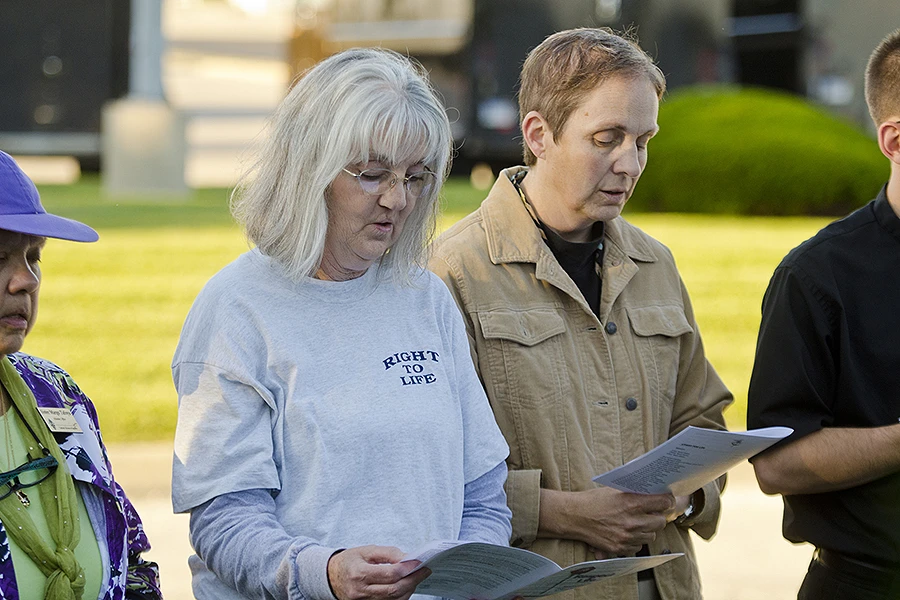
“The report ignores the testimony of women who have been helped by vigils,” said an April 5 statement from Be Here For Me, a pro-life organization which is fighting against the proposed buffer zone measure.

“The PSPO is so broadly worded that it criminalizes offers of support to women, as well as criminalizing prayer,” the statement continued.

The council denies it is criminalizing prayer. Its report stays that “’It should be clear from the order that the only ‘prayer’ which is prohibited is that which amounts to an act of approval/disapproval of issues relating to abortion services … It is not a general ban on prayer and it applies only within the ‘safe zone’ defined by the order.”

Be Here for Me has said that Ealing Council has “swallowed the pro-choice narrative without question.”

The pro-life group has primarily advocated against a PSPO because of the women who have been aided and supported through pro-life groups outside of the abortion clinics. The group has published multiple testimonies telling the stories of women who have been assured and supported through the prayer vigils.

“When I was pregnant, I was lost, confused, I didn’t know what to do… I was worried because I was on my own,” said a woman who testified on the Be Here For Me website, saying she went to an abortion clinic to terminate her pregnancy, but changed her mind.

“When I got there I met a lady outside the abortion clinic… I told her everything,” she continued, saying that “if there was no one outside the clinic I don’t think I would have kept the baby.”

She also noted that “seeing my baby now, I’m so happy that I met someone that very day.”

Another woman said the protester outside the abortion clinic “was our angel,” and another noted that she “felt under strong pressure to have an abortion,” but was relieved when she spoke to someone who was offering support outside of the clinic.

The proposed buffer zone has come amid allegations of intimidation and threats from protestors outside abortion clinics.

However, pro-life groups have denied the accusations. Antonia Tully of the Society for the Protection of Unborn Children told members of parliament that the alleged intimidation “is not what is happening,” according to the Telegraph.

Another SPUC spokesperson, Alithea Williams, has said that “if people were genuinely being intimidated then of course we would want to condemn that, but there are laws in place about harassment and intimidation and nobody has been arrested at these sites.”

The Be Here For Me organization is hosting a rally at the town hall on Tuesday as the Ealing Council cabinet meets to vote on the buffer zone. The rally aims to “send a clear message to the Ealing Council and the media assembled that there is strong opposition to banning help outside abortion centers.”

“This will be the end of a vital support option that 100s of women have accessed at Ealing in recent years,” said the Be Here For Me group.

If the Ealing Council passes the proposed buffer zone, it will be the first location in United Kingdom to have an enforced PSPO. Other locales, including Leeds, Birmingham, Manchester, Portsmouth, and two other London boroughs have considered similar measures.

Sadiq Khan, the Mayor of London, has said that “behaviour that seeks to deliberately target women for harassment and intimidation should not be tolerated,” and a local Labour MP, Rupa Haq, has said that the buffer zone is meant “not to stop protests, but to ask protesters to instead make use of the many places they could protest – from Parliament Square to town centres … The women accessing clinics are not seeking debate – they are trying to make their own personal decision about their own pregnancy.”

The matter of buffer zones around abortion clinics is also being discussed in the British Parliament.

MPs have heard testimonies of harassment during a recent parliamentary committee, and Home Secretary Amber Rudd has ordered an assessment of protests outside abortion clinics. Rudd has said that “it is completely unacceptable that anyone should feel harassed or intimidated simply for exercising their legal right to healthcare advice and treatment. The decision to have an abortion is already an incredibly personal one, without women being further pressured by aggressive protesters.”

Will Quince, a Conservative MP, told The Telegraph that “Looking at legislation to introduce buffer zones or exclusion zones for protesting around clinics of this nature is something we have to look at … I think we do need to be looking to legislate.”

In the US, a July 2017 city ordinance in Louisville, Ky., created a temporary buffer zone around the city’s only abortion clinic. In 2014 the US Supreme Court struck down on free-speech grounds a Massachusetts law requiring a 35-foot buffer zone around abortion clinics, only to have the state legislature enact a new 25-foot zone.

Ontario adopted a similar law in 2017.
[…]

Cardinal calls for consecration of Mexico to Immaculate Heart of Mary

April 10, 2018 CNA Daily News 0

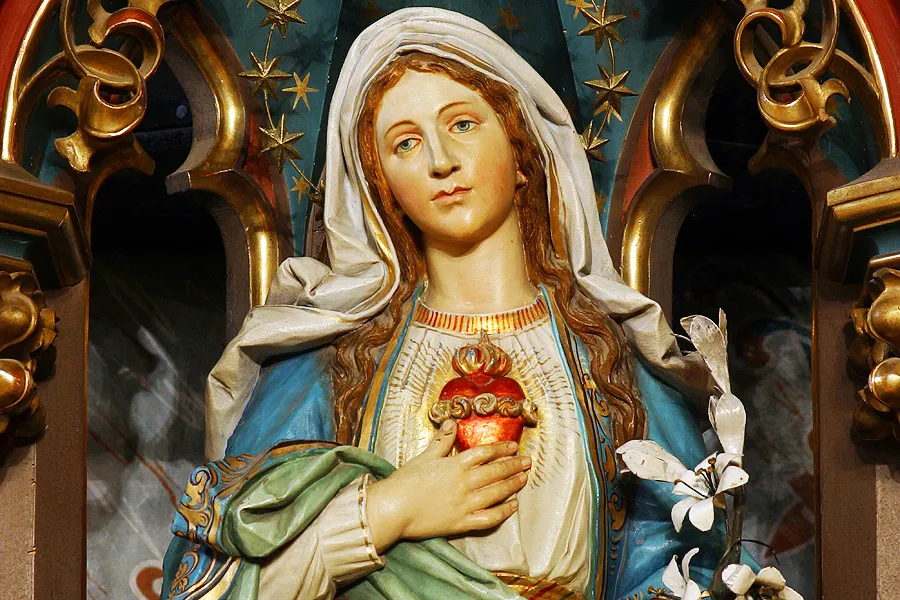
Guadalajara, Mexico, Apr 10, 2018 / 03:27 pm (ACI Prensa).- Facing violence, poverty and corruption, Mexico should be consecrated to the Immaculate Heart of Mary, said Archbishop Emeritus Juan Sandoval Íñiguez of Guadalajara.

“In face of the tribulations our country is currently going through, and the need we have for a good government, a suggestion occurs to me: that our bishops of Mexico consecrate the country on May 13, the date of the first apparition of Our Lady of Fatima, to the Heart of Jesus and the Immaculate Heart of Mary; and that each bishop do the same in his own diocese,” he said in a recent video released by El Universal.

He recalled that the Virgin Mary had requested the consecration of Russia to her Immaculate Heart, in her apparitions to the shepherd children at Fatima.

“A few years later, without violence, without the shedding of blood, the Berlin Wall and the Iron Curtain fell that divided Europe. The Blessed Virgin of Fatima foresaw future times and told us that the remedy was prayer and to make Christ reign in the world and in society along with her Immaculate Heart,” the cardinal said.

Saint John Paul II sent a letter in December 1983 to the world’s bishops, including the Orthodox bishops, in which he expressed his intention to consecrate Russia to the Heart of Mary.

At that time, Russia was part of the Soviet Union, which had imposed communism on a number of countries especially in Eastern Europe, and a great number of Christians were martyred.

On March 25, 1984, the Feast of the Annunciation, in Saint Peter’s Square, Pope John Paul II consecrated Russia, along with all of humanity, to the Immaculate Heart of Mary. and in communion with all the bishops of the world.

Sister Lucia, one of the three Fatima visionaries, affirmed that his consecration “has been done as Our Lady had requested.”

In 1989 the Berlin Wall fell. Over the next two years, the USSR collapsed. On Dec. 8, 1991 – the Feast of the Immaculate Conception –  Soviet leaders declared that the Soviet Union was to be dismantled and replaced by the Commonwealth of Independent States.

Reflecting on this, Cardinal Sandoval said, “it seems to me that this suggestion is pertinent; hopefully our bishops can carefully consider it, because in this time of tribulation, the voice of our bishops in guiding the people is needed. They are the religious leaders of Mexico, and the people, the people of God, hope for a word from us bishops.”

He emphasized that in consecrating Mexico to the Heart of Jesus and the Immaculate Heart of Mary, “we will be doing a service to our homeland, and I believe that God will take that into account for us.”


This article was originally published by our sister agency, ACI Prensa. It has been translated and adapted by CNA.


[…]

Condom distribution at Catholic hospital stops after Cincinnati archdiocese speaks up

April 10, 2018 CNA Daily News 0

Cincinnati, Ohio, Apr 10, 2018 / 02:19 pm (CNA).- A county-run needle exchange program hosted in a Catholic hospital’s parking lot has stopped distributing condoms, following action from Archbishop Dennis Schnurr and the Archdiocese of Cincinnati.
 
“This matter was addressed and favorably resolved last week, as soon as it came to the attention of the archdiocese,” Mike Schafer, director of the archdiocese’s communication and mission promotion department, told CNA April 9.
 
“Condom distribution is no longer part of the Hamilton County Public Health Harm Reduction Program, run from their van parked in the Mercy Health – Clermont Hospital parking lot,” he said. “Archbishop Schnurr engaged with Mercy Health leadership on this issue, with the resulting decision being to disallow condom distribution on hospital property.”  
 
The archdiocese was unaware that condom distribution was part of the Hamilton County Public Health Program until the fact was brought to its attention by CNA inquiries, said Schafer.

Mercy Health is not owned or operated by the Archdiocese of Cincinnati. Rather, its sponsors include the Sisters of Mercy, the Sisters of the Humility of Mary, and the Franciscan Sisters of the Poor. The system has hospitals in Ohio and Kentucky.

The Mercy Health – Clermont Hospital in Batavia, Ohio had been hosting in its parking lot a van that was part of a county-run needle exchange program. As part of its harm reduction strategy, the program offered condoms, as well as injection equipment and other health services, the Cincinnati Enquirer reported.

“After engaging in further discussion with Archbishop Schnurr from the Archdiocese of Cincinnati, we have asked the Hamilton County Health Department to discontinue the availability of condoms in the van,” Mercy Health spokesperson Nanette Bentley told CNA April 10. “The Hamilton County Public Health Department needle exchange program van will continue to serve the community, providing needle exchange and access to testing and resources.”

In April 3 comments to CNA, Bentley had described the program as “a harm reduction program aimed at reducing the spread of sexually transmitted diseases, including HIV and Hepatitis C.”

“The program includes needle exchange, access to testing and condoms as a holistic approach to harm reduction,” she had said, noting that clients would enter the Hamilton County Public Health property when they entered the van. The van was staffed only by county employees.

Previous news reports on the exchange program noted that condoms were distributed at the Mercy Health location, but not in a similar program hosted at two facilities of the Kentucky-based St. Elizabeth Healthcare system. That health system is sponsored by the Diocese of Covington.

The National Catholic Bioethics Center, which handles inquiries on Catholic bioethics issues, has always argued against condom distribution, Catholic bioethicist John Brehany, the center’s director of institutional relations, told CNA.

“One reason is that Pope Paul VI’s 1968 encyclical Humanae Vitae teaches that every sexual act must retain its essential openness to procreation,” he said. In addition, “if someone has a dangerous disease, really, the better ethical action is not to expose someone else to it at all.”


[…]

What a CUA symposium said about “Humanae Vitae”

April 10, 2018 CNA Daily News 2

Washington D.C., Apr 10, 2018 / 05:00 am (CNA/EWTN News).- The Catholic University of America played host last week to a symposium celebrating the 50th anniversary of Blessed Paul VI’s encyclical Humanae vitae, reflecting on the prophetic nature of the document, and on the lessons it still offers.

“In 1968, our university was at the center of a controversy regarding the document in the church in the United States,” said Catholic University of America President John Garvey during the symposium. “The fact that 50 years later, we’re hosting a conference to draw attention to what we now see as the wisdom Paul VI might be seen as a sign of the times.”

Humanae vitae took the world by storm when it was published in 1968. In the height of the sexual revolution, then-Pope Paul VI wrote that the use of prophylactics and hormonal birth control – which had only been on the market in the United States for less than a decade, and wasn’t legal for unmarried women until just three years prior – was morally unacceptable in the marital act.

“Consequently,” wrote Paul VI, “it is a serious error to think that a whole married life of otherwise normal relations can justify sexual intercourse which is deliberately contraceptive and so intrinsically wrong.”

The encyclical was not universally well-received, and former CUA professor Fr. Charles Curran led a dissent of nearly 100 theologians who were opposed to the content of Humanae vitae. Cardinal Donald Wuerl of the Archdiocese of Washington described the nation’s capital as one of the “largest flashpoints of opposition” to the document.

The majority of the speakers at the symposium argued that in retrospect, Pope Paul VI was a man ahead of his time, and was able to accurately discern the negative effects that widespread contraceptive use would have on society.

Despite its rather unique history with the encyclical, CUA Dean of Theology and Religious Studies Fr. Mark Morozowich told CNA he considers it a “natural thing” for the college to have played host to the symposium.

“We view ourselves as a theologate–that is, working in lock step with USCCB and under, certainly, the direction of our own shepherd, Cardinal Donald Wuerl,” he explained. The university in the past has played host to similar conferences concerning other encyclicals, as well as one on the anniversary of the Protestant reformation.

Planning for the conference took about a year and a half, said Fr. Morozowich. He was part of the team who selected the speakers and the topics for the symposium.

“I think it is an important thing to understand the historical milieu out of which that document came, and out of which the very sort of reactions with all the tumult and society that was going on, explained Morozowich.

One of the major themes touched on by the speakers at the symposium was the prophetic nature of the encyclical, particularly in light of last year’s viral “#MeToo” movement, through which people shared stories of being sexually assaulted and harassed. Morozowich told CNA that he believes #MeToo is a sign of larger problems concerning the sexual revolution.

“It was a document that many are hailing today as being prophetic,” he said. “I think the #MeToo movement is a real symbol of the failure of the sexual revolution. It was a failure of liberation for feminists, because it wasn’t the real, concrete entering in to a dignified relationship. So when we look at Humanae vitae, it’s calling for clarity about what human sexuality is.”

One conference attendee said that she believed that the encyclical had an important message for modern women: that they don’t need to change themselves with hormones or implants in order to suppress their fertility. What’s more, she said, Humanae Vitae is a message of hope.

Humanae vitae has a critical message today for all women, because Humanae vitae affirms that women are good as they are,” said Kat Talalas, communications director at Women Speak for Themselves.

“At a time where men and women increasingly feel alienated from each other, Humanae vitae affirms the good of married love. It shares the hopeful message that the romance of total unity open to new life is what we are made for, and can help provide the love, creativity, and connectedness human beings crave.”

[…]

As Palestinian Christians flee Gaza, priest expresses grave concern

April 9, 2018 CNA Daily News 0

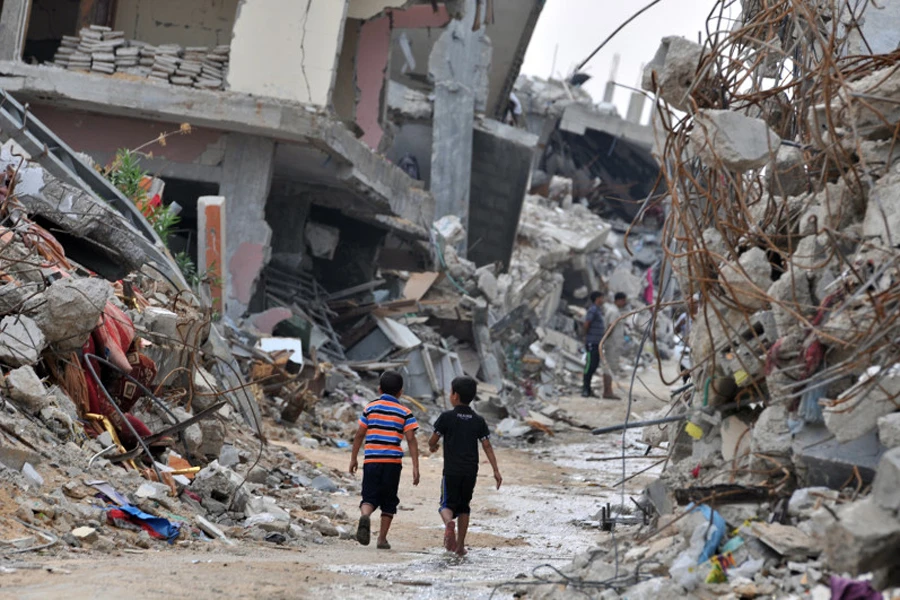
Gaza City, Apr 10, 2018 / 12:02 am (ACI Prensa).- In the past six years the number of Christians in the Gaza Strip has plummeted from 4,500 to just 1,000, due to the harsh conditions under which they are living, according to the pastor of the territory’s sole Catholic church.

Gazans “live like it’s an open air prison since we can’t leave. We can’t visit relatives, look for work, medicine or good hospitals on the outside,” Fr. Mario da Silva told ACI Prensa.

The Gaza Strip is a 141 square mile area, part of Palestine, located to the west of Israel and home to 1.8 million persons. Since 2007, it has been ruled by the Islamist movement Hamas.

Since Hamas came to power there, Israel and Egypt have conducted an economic blockade of the Gaza Strip, restricting the flow of persons and goods in an effort to limit rocket attacks on Israel launched from the territory.

Fr. da Silva, a priest of the Institute of the Incarnate Word, recalled that when he arrived in Gaza in 2012 “the situation was already very difficult. Over time, you would hope the situation would get better, but it’s only gotten worse.”

He related that inhabitants have only three hours of electricity a day, and there is a shortage of drinking water.

Most Gazans are unemployed, he said, and those who do work live on “about $150-200 a month.”

“It’s really a prison. People don’t have any money and the situation is terrible. There is widespread poverty.”

The harsh conditions imposed on Gaza has led to the exodus of Palestinian Christians.

“Every year Christians have one permit to leave and visit the holy places on Easter and Christmas,” and a many of them never return, explained Fr. da Silva.

In order to stem the tide, the priest’s Holy Family parish is working with 12 religious sisters, of the Servants of the Lord and the Virgin of Matará, the Missionaries of Charity, and the Sisters of the Rosary congregations.

“We’re doing two things: first, preaching Christ and the importance of Christians in the Holy Land; preaching the importance of forgiveness and of carrying the cross is what we most try to do.”

The second form of aid is material assistance projects, he said: “For example, with the help of institutions such as the Pontifical Mission or the Latin Patriarchate of Jerusalem, the Church tries to give work to more that 30 young people so they won’t leave, because they are mainly the ones who leave.”

He noted that the parish also cares for adherents of other religions: “The Christian community is very small and there are 2 million Muslims. They are also in great need. We have always opened the doors of our schools or our church during times of war to take in those seeking refuge.”
 

“There is not a very great persecution of Christians,” the priest said. “Though there is now a lot of fear with the news that the Islamic State has arrived, coming from the Sinai Peninsula, in Egypt … There have already been threats. There is also fear of the Salafist groups who are coming in from the south,” he said.

“In fact, when we have problems with Muslims who want to do something against the church, we’ve asked the government to protect us and they have done so,” he added.

The joy of Easter was tinged this year by a decrease in the permits given by Israel for Palestinian Christians to visit holy places in its territory, Fr. da Silva said.

“It was also very sad because Israel always gives permission for Christians so they can visit the holy places for Christmas and Easter,” but this year they only gave 300 permits instead of the 700 they usually grant. These permits were “for children and the elderly, who are really the people who can’t go out by themselves. Very few people actually went,” he lamented.

Nevertheless, “there was joy because Christ has risen and because our salvation comes from that, which is much more important than our material life; but on the human level it was a very sad Easter,” he said.

“Pray much for this, which is what we mainly ask for, because only God can change the situation we’re going through in these countries here in the Middle East,” he concluded.


This article was originally published by our sister agency, ACI Prensa. It has been translated and adapted by CNA.

[…]

Priest killed in the Democratic Republic of the Congo, another freed

April 9, 2018 CNA Daily News 1

Goma, Democratic Republic of the Congo, Apr 9, 2018 / 07:00 pm (CNA/EWTN News).- Armed men burst into a church meeting room in the North Kivu region April 8 in the Democratic Republic of the Congo and killed 38-year-old Fr. Étienne Sengiyumva, the parish pastor.

Bishop Théophile Kaboy Ruboneka of Goma, in North Kivu Province announced the news to the Vatican’s Fides News Agency

“After celebrating the Mass at Kyahemba, a district in his parish, around 3pm, Fr. Étienne was meeting with his parish staff, when an armed man, accompanied by others, entered the meeting room and shot the priest point blank in the head, killing him instantly, ” the bishop recounted.

“The murder happened so quickly that those present couldn’t take note of how many people had entered the room to kill Fr. Étienne,” he lamented.

The bishop also told Fides that ”it’s hard to know who is responsible. Our region is infested with armed groups, at least 15, that fail to be dismantled despite the constant presence of the army and the blue-helmeted UN soldiers.”

Bishop Ruboneka explained that “Fr. Étienne  is the third priest killed in the region” and that “the investigations to find those responsible for these deaths go nowhere. On our part, we are doing everything we can to identify Fr.  Étienne’s killers, even though we have no illusions.”

“In these cases the witnesses fear for their own lives and the lives of their loved ones and it would be hard for them to offer any information useful for the investigation,” he pointed out.

The bishop also stated that Fr. Célestin Ngango was kidnapped from the diocese after celebrating Easter Mass. He was later released, blindfolded, at around 3 am following heavy pressure from the local inhabitants. The Congolese bishops’ conference told Fides “the freed priest was not mistreated and he appears to be in good health. However, he will undergo a medical examination.”

Bishop Ruboneka does not think there is any connection between the two incidents.

“I repeat, in our region there are so many armed groups that it is hard to know who committed this act or another. Here in North Kivu we are living in total chaos,” Bishop Ruboneka said.

In conclusion the prelate stressed that “the situation of the Diocese of Goma, as well as Butembo-Beni, is unbelievable. We are completely abandoned by everyone and we live thanks to the grace of Providence. I ask the faithful of the Universal Church to pray for our region so we can again find peace.”

This article was originally published by our sister agency, ACI Prensa. It has been translated and adapted by CNA.

[…]