Lay rector a first at the ‘Pope’s university’
June 7, 2018 CNA Daily News 1

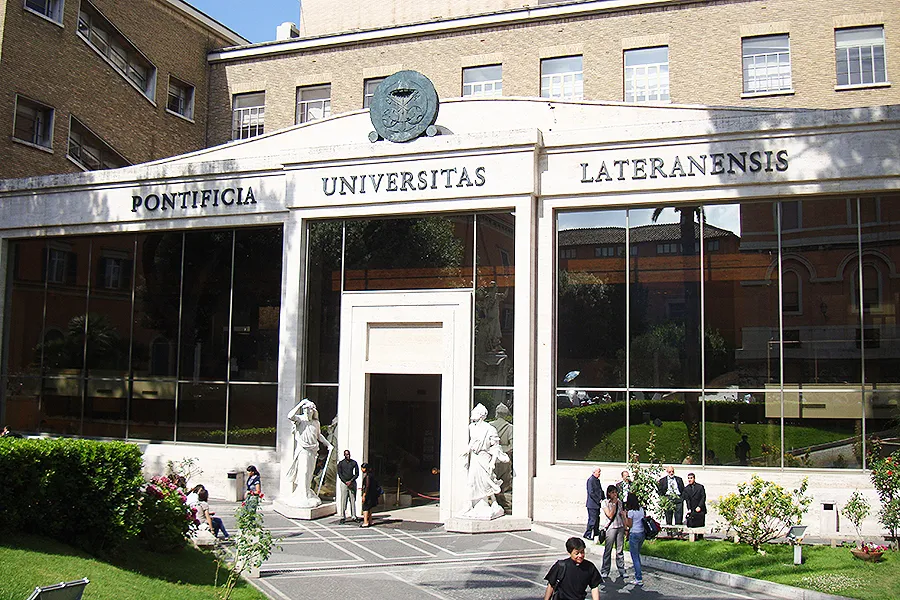
Rome, Italy, Jun 7, 2018 / 01:58 pm (CNA).- For the first time in its 245-year history, a lay professor has been appointed rector of the Pontifical Lateran University, also known as the “Pope’s university.”
 
Vincenzo Buonomo, a professor of international law and a consultant to the Holy See since the 1980s, was appointed rector of the Pontifical Lateran University by Pope Francis.
 
He will begin the position July 1, succeeding Archbishop Enrico dal Covolo, who has been rector of the university for 8 years and two consecutive mandates.
 
Born April 16, 1961 in the southern Italian city of Gaeta, Professor Buonomo is married with two children.
 
He earned from the Pontifical Lateran University a doctorate juris utriusque- an academic doctorate in both canon and civil law, and began teaching there in 1984.
 
He became a full professor of the university in 2001, he was from 2006–2012 dean of the civil law department, and presently serves as coordinator of the university’s doctorates. He is also the scientific director of the Masters in New Horizons of Cooperation and International Law program, which the Lateran University manages with the NGO FOCSIV.
 
Although his career has been mostly linked to the Pontifical Lateran University, Buonomo is also a professor of international organization at the Catholic-inspired LUMSA University in Rome and visiting professor of international law at the Sophia University Institute of Loppiano.
 
Beyond his academic career, Buonomo has has long-term involvement with the Holy See.
 
He has been the chief of office for the Holy See’s Representation to Food and Agriculture Organization and related UN bodies (namely, FAO, IFAD and World Food Program). He also represents the Holy See on the UN Human Rights Council’s advisory committee, and has twice been a part of the Vatican’s delegation to present reports before the UN Committee on the Rights of the Child.
 
Under Pope Francis, Buonomo provided advice for the Comprehensive Agreement signed by the Holy See an Palestine in June 2015.

On Jan. 25, 2014, he was also appointed an advisor to the Vatican City State’s administration.
 
Buonomo began collaborating with the Vatican in the 1980s, when Cardinal Casaroli was Secretary of State.
 
He was was also a close collaborator with former Secretary of State Tarcisio Bertone, and edited a book of speeches Cardinal Bertone delivered in his capacity of Secretary of State.

His appointment as rector of the Pope’s university is a sign of continuity, and, at the same time, a break from tradition.
 
Buonomo has made his career in the Lateran and Vatican ranks without being linked to any particular ideological group, and so he will be able to carry on the tradition linking the Lateran Pontifical University directly to the pope himself. The Pope’s university will also keep its special bond with the pope through Cardinal-elect Angelo De Donatis, the pope’s vicar for the Diocese of Rome, who serves as the Lateran’s Grand Chancellor.  
 
At the same time, Buonomo is the first lay person to be named for the post.
 
The appointment of a lay person signals that the Pope wants the Lateran University to make improvements: following his curriculum, it is likely Professor Buonomo will lead the Pontifical Lateran University in a more international direction, and increase the caliber and standards of academic offerings.
 
Any new approach must be made according to the university’s storied traditions. The Pontifical Lateran University is formally a university since 1959, but its origins date back to 1773. The university has four departments (philosophy, theology, civil law and canon law) and two Institutes (Redemptor Hominis and Utriusque Iuris), plus a post-graduate specialization center. Teachers and students come from five continents.
 

[…]

Pope Francis sends liberation theologian Gustavo Gutierrez a birthday greeting

June 7, 2018 CNA Daily News 0

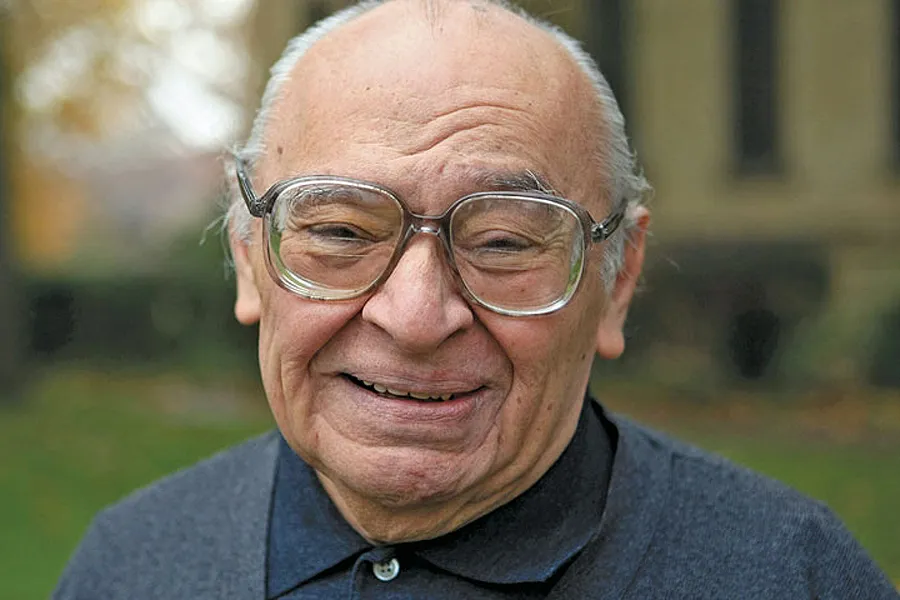
Vatican City, Jun 7, 2018 / 10:30 am (CNA/EWTN News).- Pope Francis has sent a birthday greeting to Fr. Gustavo Gutierrez, widely considered the father of liberation theology, thanking him for his service to the Church and his dedication to the poor.

In a letter dated May 28, Pope Francis assured the Dominican priest of his prayers as he reaches the landmark age of 90, and said he thanked God “for what you have contributed to the Church and to humanity through your theological service and from your preferential love for the poor and discarded in society.”

“Thank you for your efforts and for your way of challenging the conscience of each person, so that no one can be indifferent faced with the drama of poverty and exclusion.”

Francis closed the letter encouraging Gutierrez to “continue with your prayer and your service to others, giving witness to the joy of the Gospel.”

Fr. Gustavo Gutierrez Merino, who will turn 90 June 8, was born in Lima and is considered by many to be the father of the liberation theology movement, which sprung up in Latin America in the 1950s.

Gutierrez is the John Cardinal O’Hara Professor of Theology at the University of Notre Dame.

In a 2015, Gutierrez, wrote an article in the Vatican newspaper L’Osservatore Romano, saying there are two schools of thought on poverty, both of which are rooted in the Gospel.

The first form of poverty, he said, is focused on Christ’s sensitivity toward the poor and their suffering, while the second is that Christ himself “had lived a life of poverty, and so Christians, from their origin, understood that in order to be his disciples they also had to live a life of poverty.”

The Peruvian said that both “poverty as scandal and poverty of spirit” can be useful, however, their meaning must be interpreted in the modern historical and global context.

Gutierrez said “a new notion of poverty” has emerged over the past century, and that “poverty, in bible and in our times, is not a merely economic issue. Poverty is very much more than this. The economic dimension is important, perhaps primary, but it is is not the only one.”

Liberation theology is often criticized for offering a Marxist interpretation of the Gospel, focusing on freedom from material poverty and injustice rather than giving primacy to spiritual freedom.

Gutierrez himself has never been censured by the Vatican, though the Vatican has warned about the implications of liberation theology and its excesses.

Under Cardinal Joseph Ratzinger, the Congregation of the Doctrine of the Faith twice issued instructions regarding liberation theology, the first being 1984’s Libertatis nuntius, which drew attention to “the deviations, and risks of deviation, damaging to the faith and to Christian living, that are brought about by certain forms of liberation theology which use, in an insufficiently critical manner, concepts borrowed from various currents of Marxist thought.”

That document was followed in 1986 by Libertatis conscientia, which presented Christian doctrine on freedom and liberation.

“Through his Cross and Resurrection, Christ has brought about our Redemption, which is liberation in the strongest sense of the word, since it has freed us from the most radical evil, namely sin and the power of death,” the congregation said.

Truth beginning with the truth about redemption, which is at the heart of the mystery of faith, is thus the root and the rule of freedom, the foundation and the measure of all liberating action.


[…]

Global campaign urges greater involvement to help migrants, refugees

June 7, 2018 CNA Daily News 0

Vatican City, Jun 7, 2018 / 10:10 am (CNA/EWTN News).- Organizers of the international “Share the Journey” campaign are urging Catholics to step up and interact with migrants and refugees through shared meals or other activities as part of a global action week.

“We invite you to sit down together with migrants and refugees in your community, to look into their eyes, listen to their stories and to share your own,” Cardinal Luis Antonio Tagle said in a press release on the initiative.

The cardinal, who serves as archbishop of Manila and is also the president of papal charity organization Caritas Internationalis, said each person’s journey starts “with a moment of sharing which helps us recognize the bonds which bind the whole of humanity together.”

“We are invited to have compassion and courage to open our hearts and minds to the people we don’t yet know and to share the journey with them.”

The Global Action Week will take place June 17-24 and is part of the wider, two-year Share the Journey campaign, which was launched by Caritas Internationalis in September 2017 with the goal of encouraging a “culture of encounter” and bolstering efforts to warmly welcome immigrants and refugees.

The project also aims to shed light on both the challenges and effects of migration at every stage of the journey in order to promote a “shift in thinking” on the issue. It has the support of the ACT Alliance, which is a network of 145 Christian agencies and a variety of other religious congregations and civil society groups worldwide.

As part of the action week, Caritas branches in all regions of the world will organize shared meals with immigrants and refugees, as well as other events aimed at providing opportunities for interaction.

In Rome, the Caritas soup kitchen at Termini, the city’s main train station, will host a meal with migrants and refugees June 19.

They have also promoted other activities, like the “My Mirror” social experiment promoted by Caritas Ambrosiana in Milan, which encourages strangers to look into each other’s eyes as a means of breaking down barriers.

Caritas Cyprus also organized a handbag event for women, giving each woman who came a handbag full of basic toiletries.

In the U.S., the bishops’ conference as well as Caritas organizations like Catholic Relief Services and Catholic Charities USA have promoted the campaign as a way for Catholics to pray for migrants and refugees and make concrete acts to help them.

In one activity, Catholic Relief Services partnered with a local clothing store, which agreed to donate 20 percent of all sock sales to the organization’s work with migrants and refugees.

The official website for the Share the Journey campaign in the U.S. is: www.sharethejourney.org.

[…]

Analysis: Cardinal Parolin at the elite Bilderberg meeting

June 6, 2018 CNA Daily News 1

Vatican City, Jun 6, 2018 / 04:26 pm (CNA).- Cardinal Pietro Parolin, Vatican Secretary of State, will take part in the Bilderberg Conference, an annual private gathering of global political, business and media leaders, set to take place this year in Turin, Italy, June 7 – 10.
 
Cardinal Parolin’s name is included in the list of 131 participants in this year’s Bilderberg meeting.
 
His participation in the meeting has not been officially announced by the Vatican, though sources within the Secretariat of State have confirmed that he is scheduled to take part in the meeting.
 
If his participation were confirmed, it would be the first time high-ranking Vatican official has taken part in the Bilderberg Conferences.
 
Started in 1954 the Hotel de Bilderberg in Oosterbeek, The Netherlands, and named after the same hotel, the Bilderberg Conference gathers each year some 120 – 150 participants, among them European and North American political élites, along with industrial, financial, academic and media figures.
 
The first meeting took place at the invitation of Prince Bernhard of Lippe-Biesterfeld. Co-founders of the meeting were Polish politician Jozef Retinger, former Belgian prime minister Paul van Zeeland and Paul Rijkens, who was then the head of Unilever.
 
The success of the first meeting brought the organizers to stage an annual meeting.
 
According to the groups’ official website, about two-thirds of the participants come from Europe, and the rest from North America, and one-third are political figures or government officials.
 
The original meeting objective was to strengthen US – European relations. Over the years, the annual meetings became a forum for discussion on a wider range of topics, from ecology to trade and monetary policies.
 
This year’s meeting is set to discuss populism in Europe, the challenges of inequality, the future of work, artificial intelligence, US midterm elections, free trade, US global leadership, Russia, quantum computing, Saudi Arabia and Iran, the post-truth world, and other current events.
 
The Bilderberg meeting’s official website stresses that discussions are private, no minutes are taken and no reports are written.

The meetings are held under the so-called “Chatham House Rules,” an agreement typical of off-record meetings among academics or political leaders. According to that agreement, participants are free to use the information received, but they cannot disclose the identity nor the affiliation of speakers, nor can they disclose the other participants taking part in the conversation.
 
Dubbed by critics to be a kind of “global shadow government”, and targeted by protesters who picket the meeting, the Bilderberg meeting has has an official website since 2011, and publishes the names of participants in the annual meeting the day before the gathering begins.
 
Cardinal Parolin’s participation may be an expression of the “culture of the encounter” encouraged by Pope Francis. The pope has often asked officials to engage a dialogue with the world.
 
Receiving the Charlemagne Prize May 6, 2016, Pope Francis stressed that ”today we urgently need to engage all the members of society in building ‘a culture which privileges dialogue as a form of encounter’ and in creating ‘a means for building consensus and agreement while seeking the goal of a just, responsive and inclusive society.’”
 
The cardinal’s participation in the Bilderberg Group could be part of a strategy of dialogue the Holy See is engaging with small influential élite group.
 
It is noteworthy that last year, Cardinal Pietro Parolin took part in the World Economic Forum in Davos, and there he delivered Jan. 19 a speech in which he listed the aims of pontifical diplomacy.

[…]