How a teen who fought a tumor showed ‘you can be holy living your daily life’
August 19, 2018 CNA Daily News 0

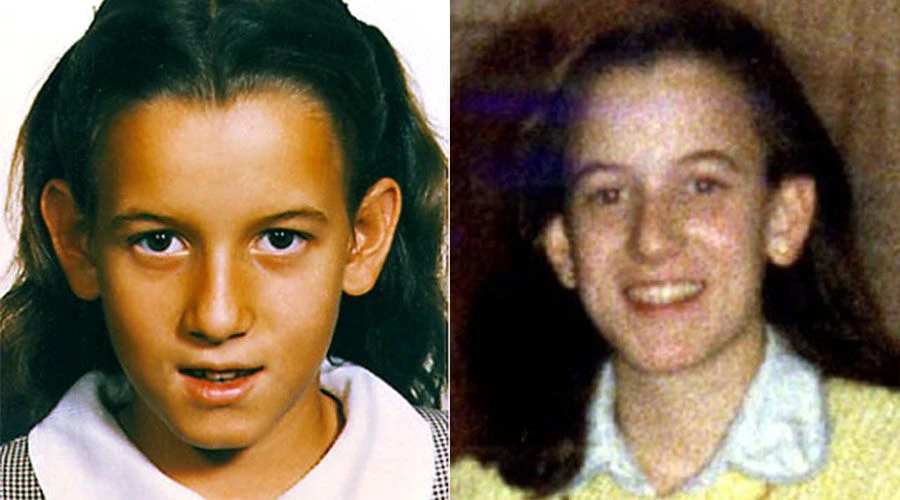
Madrid, Spain, Aug 19, 2018 / 01:00 pm (CNA).- A young woman whose cause for sainthood is being considered by the Church demonstrated by her life that “you can be holy living your daily life,” according to one of her closest friends.

Alexia González-Barros was recently declared “venerable” by Pope Francis, a step in the Church process that could lead to canonization. González-Barros died in 1985 at the age of 14, after a ten-month battle with cancer.

Begoña Hernandez, Alexia’s classmate and one of her best friends, recalled that the youth lived out her illness “with joy” and trust in God. Hernandez said that she had the “conviction that [González-Barros] was a saint” from the moment that she died in 1985.  

Alexia González-Barros was born in Madrid, Spain, in 1971 and was the youngest of seven siblings, two of whom died before they were born. Her parents, Francisco and Moncha, were supernumeraries in Opus Dei.

In February 1985, she was diagnosed with a malignant spinal tumor that quickly led to paralysis. She died in December that same year, just ten months after her diagnosis, in the University of Navarre Clinic in Pamplona, Spain.

During her sickness, the young girl offered her suffering for the Church and for the pope. Several biographies highlight her fortitude, peace and joy despite the severe pain she suffered.

In June, Pope Francis recognized her heroic virtues, the first step in the process of canonization.

The friendship between Begoña and Alexia began in nursery school. “We were in the same class since we were 4 or 5 years old until she died, and we were very close  friends,”  Hernandez recalled in an interview with ACI Prensa, CNA’s Spanish-language sister agency.

“Alexia was a lovely person, joyful, friendly, a normal girl. I remember when I was a teenager I had a diary and I wrote down ‘the people that especially help me’ and on that list was Alexia. They were very simple things, but she helped me be a better person, to share with others and to not be capricious,” she said.

Hernandez said that “when we learned she could not move, all of us girls in her class went to see her. During her convalescence I continued to visit her and I sincerely say  she always exhibited joy.  With her you found peace and that was very surprising.”

“You left the hospital with joy and not with anguish or suffering,” Hernandez recalled.

A great help in maintaining hope despite the difficulties was González-Barros’ mother, who “always trusted in God and reminded that we are in his hands,” Hernandez said.

During her illness, González-Barros used to repeat “Jesus I want to be healed, but if you don’t want that, I want what you want.”

Hernandez said that González-Barros’ fortitude was rooted in her faith, because “she took everything that happened to her from the point of view of faith and that’s is why she endured all the suffering so well.”

The process of canonization for González-Barros was opened in the Archdiocese of Madrid in 1993 and was sent on to Rome that same year.

“When Alexia died I had the conviction that my friend was a saint. Since then I have commended myself to her and I know that it has been through her intercession that she helped me on many occasions,” Hernandez said, and assured that that is a common feeling among her other classmates.

Alexia’s example shows  the world that you can be holy living your daily life in a normal way. And she demonstrated that with her life,” she emphasized.


[…]

After roadblocks, film on abortion doctor Kermit Gosnell releases preview

August 18, 2018 CNA Daily News 1

Washington D.C., Aug 18, 2018 / 06:04 am (CNA).- The trial of a Philadelphia abortion doctor, whose shoddy clinics and gruesome practices led to his conviction of three counts of murder and one count of involuntary manslaughter, is the subject of a movie due to be released in October.

A trailer previews the movie “Gosnell: America’s Biggest Serial Killer”, a crowd-funded project produced by a team of filmmakers and journalists, some of whom were present for the trial which concluded in 2013.

The name takes its title from the grand jury report in the trial, which detailed the crimes and grisly malpractices of abortion doctor Kermit Gosnell’s clinics, including the snipping of the necks of more than 100 babies who had survived abortion.

The film was given the green light to show in U.S. theaters after the producers settled with Judge Jeffrey Minehart, who was involved in the original Gosnell trial and sued to block the film’s release, arguing that he was portrayed in the film as “Philadelphia’s liberal corrupt government.”

The film’s producers told The Hollywood Reporter that it had been “a really hard road” but that they are anticipating the movie to show in as many as 750 theaters throughout the country.

“No matter what your stance is on abortion, you will have a more informed opinion after you see Gosnell,” director Nick Searcy said.

The filmmakers have said they are hoping to avoid an R-rating by alluding to, but not directly showing, some of the most gruesome details of Gosnell’s practices.

“The fanatic subject matter poses a risk,” executive producer John Sullivan told The Hollywood Reporter. “We were very careful not to make it too graphic. Gosnell saving feet of infants in jars as trophies plays a role, and you’ll see him take scissors out, but that part plays out as theater of the mind.”

After reportedly being kicked off of crowdfunding site Kickstarter because of the film’s anti-abortion content, the multi-million dollar project was crowdfunded on Indiegogo, and was one of the most successfully crowdfunded films of all time, according to Gosnell producers.

“Almost 30,000 people donated over $2.3m in 45 days. When it ended it was the most successful crowdfunding campaign on the Indiegogo website,” the producers note on their website. “We want to thank all of our funders who helped make this project such a success. We literally could not have done it without you. This is your movie.”

Phelim McAleer, one of the film’s producers and a journalist who covered the Gosnell trial, said in an introductory video to the film that part of the motivation for the movie was the lack of attention to the trial in the mainstream media.

“The media have basically ignored his crime and his trial,” he said.

“He ran an abortion clinic in Philadelphia where he delivered live, viable babies and then murdered these newborns by severing their spinal cords with scissors.”

“I’ve been on hard films before, but this one was particularly difficult,” Sullivan told The Hollywood Reporter. “Hollywood is afraid of this content. It’s a true story the media tried to ignore from the very beginning, so I wasn’t surprised to see Hollywood ignore us.”

During Gosnell’s trial, one Philadelphia-area reporter took photos of the courtroom showing that the courtroom benches reserved from the press were empty.

National media covered the case only after pro-life advocates launched a social media campaign to raise awareness about the case.

Gosnell’s clinic had not been subject to oversight by the state of Pennsylvania since 1993. A federal drug raid in 2010 uncovered blood-stained rooms and filthy equipment.

According to the grand jury report, the clinic stored aborted fetuses in a basement freezer in plastic food containers and bags next to staff lunches. Gosnell kept severed feet of unborn babies preserved in specimen jars, allegedly for future identification or DNA samples.

Staff allegedly sent women to give birth into toilets, a doctor allegedly spread sexually transmitted infections to women through poor sanitary standards, and a 15-year-old staffer administered anesthesia to patients. The clinic also allegedly gave preferential treatment to white patients.

In addition to the counts of first degree murder, the abortion doctor was found guilty of involuntary manslaughter in the death of a patient who died of an overdose in 2009.

Prosecutors had sought a third-degree murder charge in her case, saying Gosnell let his untrained and unlicensed staff give the 41-year-old Bhutanese immigrant woman a fatal combination of drugs.

Several of Gosnell’s former employees have pleaded guilty to murder and other charges. Gosnell himself is now serving several life sentences.

“Gosnell” opens in theaters throughout the country on Oct. 12 through GVN Releasing. It stars Dean Cain as Detective James “Woody” Wood, the main detective on the case, and Earl Billings as Dr. Kermit Gosnell.

[…]

US bishops express anguish over abuse reports, encourage change in Church

August 17, 2018 CNA Daily News 2

Washington D.C., Aug 17, 2018 / 03:12 pm (CNA/EWTN News).- After a grand jury found thousands of alleged instances of sexual abuse in six of Pennsylvania’s Catholic dioceses, numerous U.S. bishops have called for renewal and change in face of these heartbreaking events.

Archbishop José Gomez of Los Angeles, vice president of U.S. Conference of Catholic Bishops, said the Church in the U.S. is in “a sad and confusing time.”

In his homily for the Assumption of the Blessed Virgin Mary Aug. 15, the archbishop asked the Blessed Mother to intercede for greater purity and renewed love inside the Church.

“Let us ask the intercession of our Blessed Mother Mary, the Mother of the Church. May she help us to have the courage we need to purify the Church and renew our love for holiness and our devotion to Jesus Christ and his Gospel.”

An 884-page grand jury report was released Aug. 14. The report states more than 1,000 victims had been sexually abused by some 300 priests over a span of seven decades. The report also points to the efforts to conceal or ignore the abuse by Church authorities.

Archbishop Gomez said now is the time for prayers and repentance in the Church, encouraging actions of forgiveness and healing.

“This is a time now for prayer and repentance and a time for examining our conscience, especially for those of us who are bishops and priests. And all of us need to pray for every person who has been hurt by the Church, and we need to work to help them heal.”

Archbishop Charles Chaput of Philadelphia said the report should also ignite a just anger, not an unhealthy rage, and he compared it to Christ’s actions toward the moneychangers in the temple.

His archdiocese experienced similar reports on abuse in 2005 and 2011, he said, noting the “The anger Philadelphians felt toward the Archdiocese was likewise well placed.” Similarly, he said, this recent event calls for an anger which needs to be controlled and fruitful.

“Anger is also a righteous and necessary response – but it needs to be an anger that bears good fruit; an anger guided by clear thinking, prudence, and a desire for real justice. That kind of anger all of us should feel this week and carry with us into the days ahead.”

For his archdiocese, he said, anger motivated change. Since the abuse had been made known, the archdiocese has taught an estimated 100,000 laypeople and clergy to recognize and report abuse.

An Aug. 15 statement from the bishops of New Jersey dioceses acknowledged “that media accounts of the details contained in Pennsylvania’s grand jury report show a heartbreaking departure from our fundamental belief in the dignity and value of every child. As a Church, our calling remains unchanged – to help children in our care encounter leaders who exemplify God’s commandment to love and protect the most vulnerable.”

“As Bishops, we hold that every parent and every child deserve a safe environment to learn and explore their faith. Every space where teaching, worship, and ministry take place must provide this safe environment. There must be no compromise on this principle. The children entrusted to our care are treasures.”

The New Jersey bishops said they will “remain vigilant to ensure that not one child will ever be abused on our watch,” adding that the state’s dioceses have conducted background checks on all personnel who have regular contact with minors.

“We thank law enforcement agencies, child protection advocates and victims themselves who have helped us move beyond compliance to creating the safest environments for learning and worship. We are deeply thankful for those who have joined our efforts to extend both healing and hope to every victim and their family. We renew our commitment to foster healing and seek forgiveness.”

The bishops of New Jersey’s dioceses urged “anyone who was abused by clergy to come forward to civil authorities.”

Cardinal Seán O’Malley of Boston said that while many sexual offenders have answered for their crimes, there are areas in need of improvement.

“While many perpetrators have been held accountable in one way or another for their crimes, we have yet to establish clear and transparent systems of accountability and consequence for Church leadership whose failures have allowed these crimes to occur.”

“The Church must embrace spiritual conversion and demand legal transparency and pastoral accountability for all who carry out its mission,” he added. “The way we prepare priests, the way we exercise pastoral leadership and the way we cooperate with civil authorities; all these have to be consistently better than has been the case.”

This will not be an easy task, admitted the cardinal. He said Catholics and others in society are frustrated with Church leadership. However, he promised there is still hope.

“I am not without hope and do not succumb to despondent acceptance that our failures cannot be corrected. As the Church we have the responsibility to help people not to lose hope, that was Jesus’ message to all those he ministered to, especially in times of great trial.”

“There is too much good in the Church and in our faith to lose hope. Often it is survivors who courageously teach us we cannot lose hope.”

[…]