Inmates building 250 confessionals for 2019 World Youth Day

November 13, 2018 CNA Daily News 0

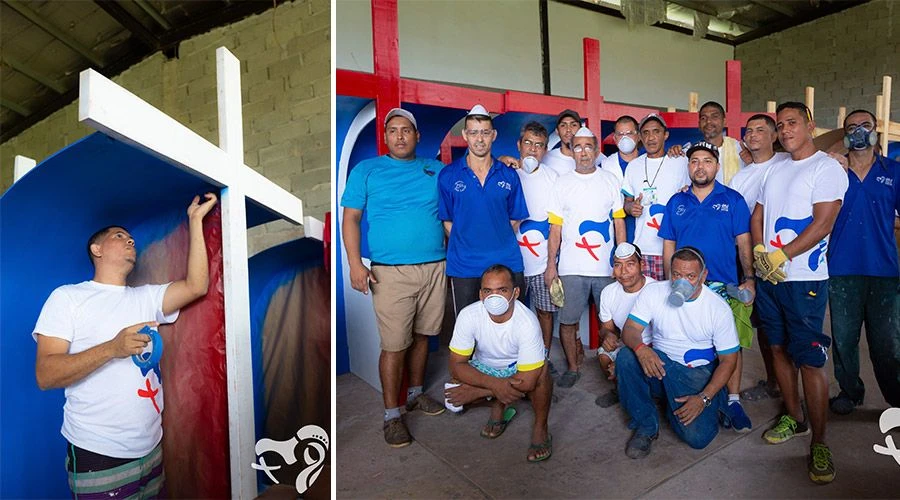
Panama City, Panama, Nov 14, 2018 / 12:30 am (ACI Prensa).- Inmates from La Joya and Nueva Joya prisons have begun the construction of 250 confessionals to be used in the Sacrament of Reconciliation at World Youth Day in Panama in January 2019.

The confessionals will be set up in Omar Recreation Park in Panama City, which will be called “Forgiveness Park” during the youth event. In total, 35 inmates are working from 8:00 a.m. to 4:00 p.m. daily, sanding, painting, and assembling the crosses and wooden confessionals.

Interior designer Lilibeth Bennet created different two models for the confessionals, both inspired by the WYD logo and using the same colors.

In an interview conducted by WYD organizers, the prisoners said that the project is not just “simple cabinetry work,” but allows them to contribute to a project aimed at young people who will be able to “take a different path” than they did.

“Even though we won’t be able to be there (at World Youth Day) we still feel that we’re doing something important, and I thank God for the opportunity he has given us as prisoners to contribute to a mission as important as World Youth Day,” explained Luis Dominguez, who is in charge of painting and supervising the sanding of the confessionals.

Jesús Ramos, another one of the inmates constructing the confessionals, said that even though he is an Evangelical, he is sure of the valuable contribution that World Youth Day is making to young people.

“I am grateful that they took me into account because I’ve learned how to use the tools here, to work based on respect and together toward the same goal…I feel included and happy to work for God,” he said.

The project coordinator for the prison system, Alma De León, explained that the work is being done with the support of an instructor from the National Institute for Professional Formation and Training for Human Development of Panama, and it is a way to demonstrate the capabilities of people in prison. 

Sharon Diaz, deputy director general secretary of the prison system, said that the inmates form “a single team, and they know the importance of working on a project as unique as this one, regardless of the faith they profess.”


This article was originally published by our sister agency, ACI Prensa. It has been translated and adapted by CNA.


[…]

Alleged victim of Archbishop McCarrick speaks at rally outside USCCB meeting

November 13, 2018 CNA Daily News 1

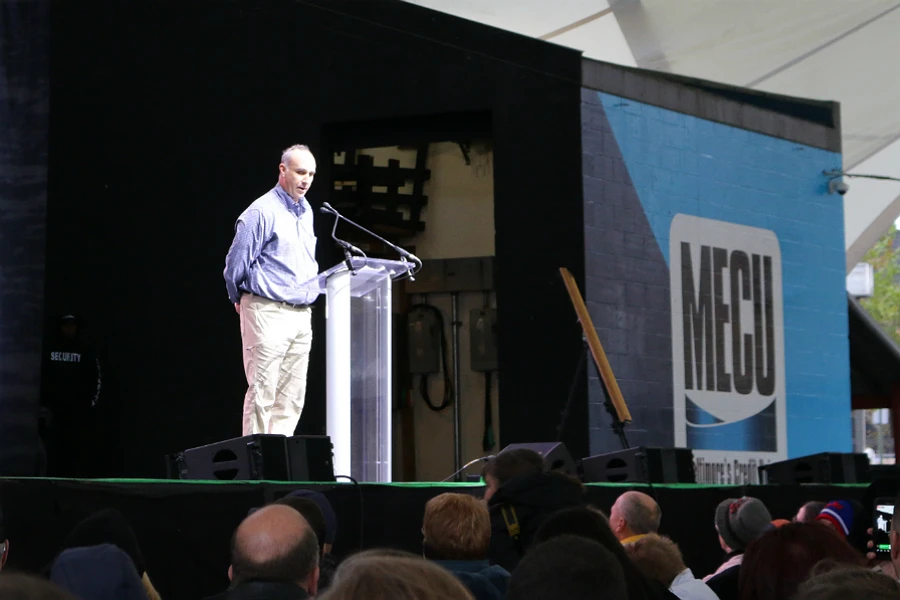
Baltimore, Md., Nov 13, 2018 / 05:34 pm (CNA/EWTN News).- James Grein, the man who came forward this summer alleging he was abused for 18 years by Archbishop Theodore McCarrick, appeared in public Tuesday for the first time and revealed his full name. Previously, the New York Times had identified him only as “James.”

Grein appeared at the Nov. 13 “Silence Stops Now” counter-rally organized by several groups critical of the bishops’ approach to addressing the sexual abuse crisis. The rally was held near the location of the USCCB’s Fall General Assembly in Baltimore.

Grein was visibly nervous taking the stage, where he delivered a short speech about his experience coming forward with his story, and received an extended standing ovation when he finished.

In July Grein came forward with his story to the New York Times. He said McCarrick began abusing him when he was 11 years old. At that time, McCarrick was 39 years old, and a priest of the Archdiocese of New York.  

This abuse continued for the next 18 years, he said, during which McCarrick was consecrated a bishop and served in the local Churches of New York, Metuchen, and Newark. In November 2000, he was appointed Archbishop of Washington, where he served the remainder of his career until his 2006 retirement. In 2001, McCarrick was elevated to the College of Cardinals. About a week after Grein’s allegation was published, McCarrick resigned from the College of Cardinals.

Grein credited the first survivor coming forward for giving him the strength to share his experience.

“That article would never have been written had it not been for a 16-year-old altar boy who accused McCarrick of abusing him,” he said. After that survivor went public, and his claim was found to be credible, Grein said he felt as though “my time has come” and chose to share his story.

Previously, he felt there was “no place” for him to report his abuse, and that nobody would believe him even if he were to report it. Grein said he was motivated to go public Tuesday as a way to inspire other victims.

“I do this today so that others like me have the strength to come forward. Think about what you can do to help others. This movement must continue to gain strength,” he said.

“Our bishops must know that the jig is up.”

Grein said he believed that McCarrick’s punishment of a life of prayer and penance was a “necessary step” on the extended journey to “reform and reclaim the Church.” McCarrick is currently living in a monastery in Kansas until he is faces a canonical trial.

Despite his abuse, Grein said that he has continued to put his faith in Christ, and continues a regimen of prayer and fasting.

“Jesus’ law is much higher than pontifical secrets,” he told the crowd.

“It’s not Francis’ Church. It’s Jesus Christ’s Church.”

[…]

Archbishop Cordileone says Mass for San Francisco’s deceased homeless

November 13, 2018 CNA Daily News 2

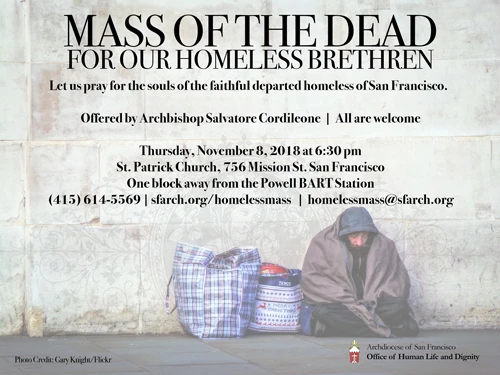
San Francisco, Calif., Nov 13, 2018 / 03:11 pm (CNA/EWTN News).- Eight days after the feast of All Saints, Archbishop Salvatore Cordileone of San Francisco said a Mass of the Dead for the homeless of the city, emphasizing the importance of remembering and praying for the deceased homeless.

“One of the greatest acts of charity we can perform is to pray for the eternal salvation of those who have gone before. That is what we are doing,” said Martin Ford, social action coordinator of the Archdiocese of San Francisco’s Office of Human Life and Dignity.

The Nov. 8 Mass was said at St. Patrick’s parish in San Francisco. The collection taken during Mass was used to support the homeless ministry of Catholic Charities San Francisco.

According to the San Francisco Homeless Count and Survey 2017, there are more than 2,100 chronically homeless in this city. It is difficult to track the exact numbers of homeless deaths in the city, but the survey said mortality rates is four to nine times higher for those who are continuously homeless.

In his homily, Archbishop Cordileone connected the coming of winter and the passing of life. He spoke on the Second Letter of St. Paul to the Corinthians, noting its theme on the briefness of life and the journey to eternal life.

“There is a sense of things coming to an end and a passing into silence – the silence of winter – which reminds me of the silence of death. It’s a reminder to us of the end of life and how fleeting our life is in this world,” he said.

“This is what St. Paul is speaking about in this passage from his second letter to the Corinthians when he is comparing the body to a tent… This is a disturbingly accurate description of those who die in the streets; most of them don’t even have a literal tent.”

He recalled the nomadic lifestyle of the Israelites following the exodus. He said that similarly, the people of God are on a journey, which should be lived with charity.

“As long as we are in this world we are a people along a pilgrimage – a movement towards a goal that is eternity, our only true home. And, therefore, we must always keep our vision fixed on that ultimate destination that God created us for,” he said.

“How do we do that? [St. Paul] says, ‘for we must always appear before the judgement seat of Christ so that each one may receive recompense according to what he did in the body, whether good or evil.’”

Archbishop Cordileone discussed Matthew 25’s portrayal of the last judgement, saying, “This is where the corporal works of mercy come from, and it is certainly a reminder of our call to put these works of mercy into concrete action.”

The homeless also conduct works of mercy, he said, noting that if those with little may give charitably, then Christians who have more resources will be judged accordingly.

“We can think about how concrete acts of love and mercy are shown by our homeless brothers and sisters. They who have so much less than we have show mercy too. So we with so much more, how much more will we be held to a higher standard, when it comes to rendering an account to God for our lives in this world.”

He expressed hope that the Mass would assist the homeless “on their way to the eternal hope that is God’s kingdom of heaven” and would inspire the congregation to perform more acts of mercy.

“May this work of mercy please our Lord and may it inspire us to glorify God in our bodies through concrete acts of love and mercy, so that when it is our turn to make the passage of this life to the next and face our own final judgement, the great King of all the ages will give us a place with the sheep at his right hand.”

[…]

National Review Board offers suggestions for bishops’ accountability

November 13, 2018 CNA Daily News 1

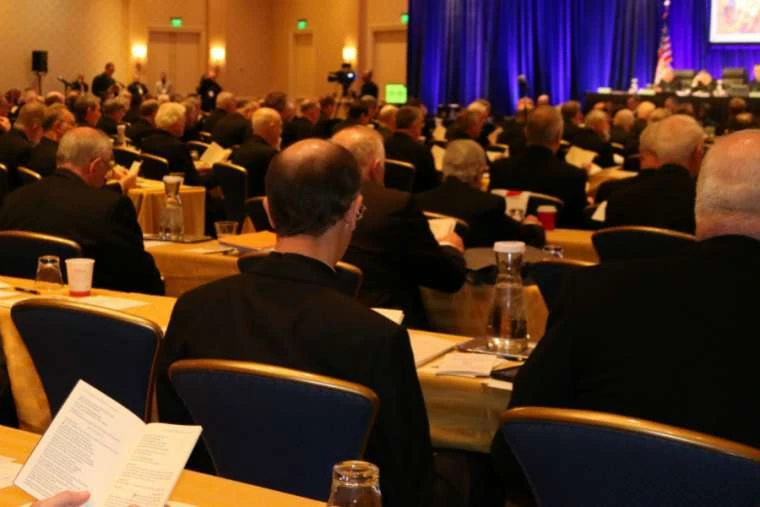
Baltimore, Md., Nov 13, 2018 / 03:05 pm (CNA/EWTN News).- Speaking on Tuesday at the USCCB’s Fall General Assembly in Baltimore, Dr. Francesco Cesareo, chairman of the National Review Board, told those present that while efforts taken by the bishops to combat the sexual abuse crisis have been noticed, there is still much work to be done.

Although it was “regrettable” that the Vatican had canceled the planned vote on sex abuse reform measures, Cesareo said the National Review Board will continue to stand by their recommendations to the body of bishops.

“Your response to this crisis has been incomplete,” Cesareo said bluntly, pointing out that the secular media and authorities have filled in gaps when it comes to increased transparency and accountability for those in positions of authority. He said it was “shameful” that abuse had been hidden from the public and “allowed to fester” until it was uncovered by secular sources.

What’s worse, he added, was how many innocent people have suffered due to the “inaction and silence” of some of those present. Bishops “must put the victim first when allegations come forward,” he said. “How many souls have been lost because of this crisis?”

Like Apostolic Nuncio Christophe Pierre, who addressed the USCCB on Monday, Cesareo did not mince words when describing how the bishops have betrayed the trust of the faithful and would now have to work to regain that trust. Many Catholics are “angry and frustrated” and will not be satisfied with prayers, he explained.

“They seek action that signals a cultural change from the leadership of the Church,” he said. The bishops must “embrace the principles of openness and transparency” that were outlined in the Dallas Charter from 2002, and “come to terms with the past.” Until the bishops acknowledge the truth about what occurred, they will not be able to experience reconciliation, said Cesareo.

In terms of recommendations on what to do now, the National Review Board said that each diocese should, as soon as possible, review all files regarding clergy abuse allegations dating back to at least 1950. If it is possible, the dioceses should also share the results of this review with the public.

This process should result in a list of clergy who have faced a credible accusation of abuse against a minor or vulnerable adult, and an analysis of how their cases were handled by the bishop and their diocese. In order to increase credibility, Cesareo recommended that the laity be involved in some capacity in this investigation.

Cesareo acknowledged that many bishops have already gone through this process, either through a review of files or an investigation with the state’s attorney general. For this, Cesareo said he was “grateful for your proactive steps to restore credibility” and that this was a “true marks of the leadership the Church so desperately needs.”

Bishops must be accountable for failures within their dioceses, he said, pointing out that while plenty of priests have been punished for sexual abuse, “the accountability of bishops has never been fully addressed.” In order to address this accountability, Cesareo said there is a need to investigate allegations that concern bishops, as well as to enforce consequences among those who have “failed in their responsibility to protect the vulnerable.”

Currently, the National Review Board said they are “unaware of any mechanism” that the USCCB uses to enact consequences against culpable bishops as well as “any sense of meaningful fraternal correction.” Cesareo said that perhaps the USCCB could bar those bishops from membership and prohibit them from attending national meetings as a form of punishment.

In addition to these steps, Cesareo said that the Dallas Charter should be “revisited,” and that the audit process be strengthened. Bishops, he said, should also be included under the charter.

During a question-and-answer period after Cesareo’s presentation, numerous bishops came forward to ask questions or to share stories.

Notably, Cardinal Seán O’Malley of Boston, president of the Pontifical Commission for the Protection of Minors, suggested that the definition of “vulnerable adult” be expanded to include seminarians. That suggestion appeared to be well-received.

Earlier this year, O’Malley came under fire after it was shown that his secretary had ignored a letter of complaint against Archbishop Theodore McCarrick because the complaint concerned adult seminarians, not minors. O’Malley has since promised to update his policy regarding letters.

In his first public comments since his resignation was accepted by the pope, Cardinal Donald Wuerl, the apostolic administrator of the Archdiocese of Washington, recalled the bishops’ meeting in 2002, when the sexual abuse crisis in Boston was unfolding. That meeting, he recounted, considered by St. John Paul II as a “moment of purification,” for not only the bishops themselves, but for the institution of the Church.

And while Wuerl acknowledged that the bishops have come quite a ways since that time, they “still have a long way to go,” he said.

Wuerl offered praise for Cesareo’s points stressing the need for accountability and personal responsibility amongst the bishops.

“Sometimes we have to take personal responsibility, and we simply need to say, this needs to be done. Institutionally, it’s easier. Personally, it’s where that purification has to be a part of the process,” he said.

[…]

Archbishop Viganò urges US bishops to be ‘courageous shepherds’

November 13, 2018 CNA Daily News 1

Vatican City, Nov 13, 2018 / 10:46 am (CNA/EWTN News).- Archbishop Carlo Maria Viganò sent Tuesday a message to the bishops of the United States, who are holding a plenary assembly, encouraging them to act as courageous shepherds in the face of the sex abuse crisis.

“I am writing to remind you of the sacred mandate you were given on the day of your episcopal ordination: to lead the flock to Christ,” the emeritus Apostolic Nuncio to the US said Nov. 13.

“Meditate on Proverbs 9:10: The fear of the Lord is the beginning of wisdom! Do not behave like frightened sheep, but as courageous shepherds. Do not be afraid of standing up and doing the right thing for the victims, for the faithful and for your own salvation. The Lord will render to every one of us according to our actions and omissions.”

“I am fasting and praying for you,” Archbishop Viganò concluded.

The former nuncio’s message came on the second day of the USCCB’s autumn general assembly, being held in Baltimore Nov. 12-14.

It was intended that the assembly would vote on proposals meant to form the basis for a response to the sexual abuse crisis facing the Church in the US.

But Cardinal Daniel DiNardo of Galveston-Houston, president of the conference, announced Monday morning that the Congregation for Bishops had directed that the vote not be held.

DiNardo said that the Holy See insisted that consideration of a code of conduct for bishops and a lay-led body to investigate bishops accused of misconduct be delayed until the conclusion of a special meeting called by Pope Francis for February.

Archbishop Viganò, who was nuncio to the US from 2011 to 2016, has issued a series of testimonies and letters in recent months.

In August, he wrote that Benedict XVI had “imposed on Cardinal McCarrick sanctions similar to those now imposed on him by Pope Francis” and that Viganò personally told Pope Francis about those sanctions in 2013.

Viganò claimed that this was ignored by Francis, who pulled McCarrick back into public ministry and allowed him to become a “kingmaker for appointments in the Curia and the United States.”

[…]

Tyler bishop: Our main job is to focus on salvation of souls

November 13, 2018 CNA Daily News 1

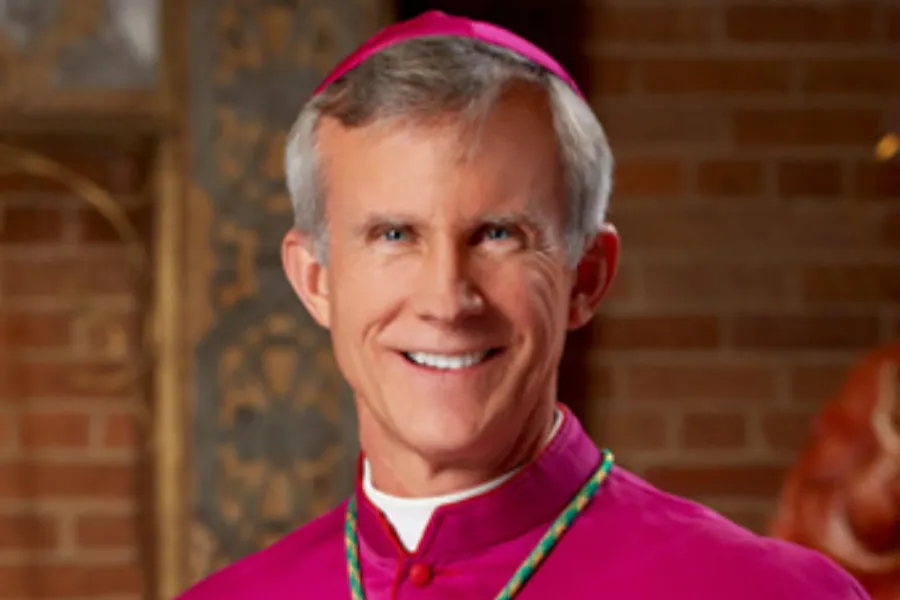
Baltimore, Md., Nov 13, 2018 / 10:35 am (CNA).- About three months after calling for an investigation into the claims made by former Apostolic Nuncio Carlo Vigano, Bishop Joseph Strickland of Tyler, Texas is not confident that the Vatican will ever properly investigate allegations outlined in the nuncio’s August letter.

In an interview with CNA on Monday at the USCCB’s Fall General Assembly in Baltimore, Md., Strickland also expressed concerns that bishops of late have strayed from their “basic mission” as the shepherd of souls.

Vigano, former nuncio to the U.S., released a testimony in August which claimed that Pope Francis had removed restrictions on Archbishop Theodore McCarrick that had been imposed by Pope Emeritus Benedict XVI.

McCarrick resigned from the College of Cardinals in July of this year, following a series of public allegations against him concerning the sexual abuse of minors, seminarians, and priests. The dioceses of Newark and Metuchen subsequently confirmed they had previously reached two out-of-court-settlements with adult accusers.

Regarding the Vatican’s pledge to investigate Vigano’s various claims, Strickland told CNA he is concerned that the investigation is going far too slowly.

“I’ve worked in the tribunal for years, I’ve studied canon law,” he said. “We used to always say working in the tribunal, ‘justice delayed is justice denied,’ so that’s my thought. It’s just taking too long.”

Strickland told CNA that he is not entirely sure what was causing this delay, but he did acknowledge that Americans are generally accustomed to investigations happening quickly, while Europeans often have a more relaxed mindset.

When asked if he believed anything could be done to get Rome to speed up the investigation, Strickland was skeptical. He told CNA that while he accepts that it is up to Rome to deal with Archbishop Theodore McCarrick, he believes that the Church in the United States should do its own investigation into his alleged crimes and learn from what they uncover.

“There’s got to be files. He’s an American. I mean, his whole priesthood has been in the United States,” said Strickland.

“I would say, let’s help Rome, and have our own investigation, and do what we can. Certainly, we can.”

The delay in the investigation into McCarrick is a sign of deeper issues within the Church, Strickland said. He told CNA that he was “disappointed” thus far with how things have been handled. He described the lack of a proper investigation as an “illustration that the same machinery that caused the whole McCarrick mess, still functions–or doesn’t.”

“It’s that same kind of machine that allowed him to move through the ranks doing all this stuff and just sort of side-tracking the moral issues,” he said. He blamed this “machine” for slowing down the investigation into uncovering what exactly McCarrick did.

The Vigano letter, he said, has “sort of pulled the curtain back” on deeper issues within the Church–namely, moral decay amongst the clergy and the Church as a whole.

Strickland said he believes the issues regarding McCarrick, Vigano, and the lack of any real investigation into either can be traced to what he describes as a drifting away from the main job of a bishop: a need to promote the salvation of souls.

“We need to worry about the salvation of Theodore McCarrick’s soul, as bishops,” he said.

“We need to be focused on the salvation of the victims and the abusers. That, to me, is the core issue.”

Strickland pointed to the events of the past summer, primarily the reaction to what he called the “Vigano question,” as proof that this primary concern has fallen out of focus among some of his brother bishops.

“All of what’s happened this summer. It’s ‘Oh, well, we’ve got to worry about global warming.’ That’s not our job,” he said, in an apparent reference to comments made by Cardinal Blase Cupich of Chicago, who in August dismissed the nuncio’s allegations as a “rabbit hole”, saying Pope Francis has a “bigger agenda” to worry about, including defending migrants and protecting the environment.

Strickland said that there is certainly a need for “good people, good laity,” working on various issues such as global warming, immigration, and general injustices in the world, noting that he’s on the board of a Catholic charity.

But he expressed concern that an overemphasis on these kinds of works is serving as a distraction from the ultimate call of a bishop: bringing people to holiness, promoting the sanctity of life, and “living the virtues.”

“I think we’ve got it flipped,” he said. “As bishops, our first job is the holiness of the people of God. The salvation of souls.”

In every situation he encounters as a bishop, Strickland said, he tries to consider how his actions may affect the salvation of souls.

Looking ahead to the future of the Church, Bishop Strickland said he believes there needs to be increased accountability among bishops, improvements in teaching the various facets of the faith – especially in terms of sexuality – continued state investigations into abuse, and reforms to ensure that seminarians will be protected throughout the formation process.

“We need to make sure that seminarians are not victimized,” he said, adding that a man who is called to seminary should not be at risk of “having his life destroyed by the people who are supposed to be forming him for the priesthood.”

One area where Strickland expressed confidence was in regards to the Charter for the Protection of Children and Young People. Although he said there are loopholes that need to be tightened, he is “fairly confident” that the appropriate steps to “revamp and strengthen” the charter will be taken.

As a bishop, however, there are responsibilities that go along with his roles as a spiritual father and shepherd to a diocese, he told CNA. He cannot “just sit in a corner and go and pray” – during times of controversy and upheaval, he has to prioritize what he does first.

“I’m a shepherd. I’ve got sheep,” he said.

“And sheep are bleeding, and getting slaughtered, and wolves are attacking. We can’t be worried about what color we’re going to paint the barn…Deal with the most important (things) first, then get others to figure out the barn.”


[…]