Cardinal Brenes: Peace in Nicaragua will come through dialogue, early elections
July 3, 2018 CNA Daily News 1

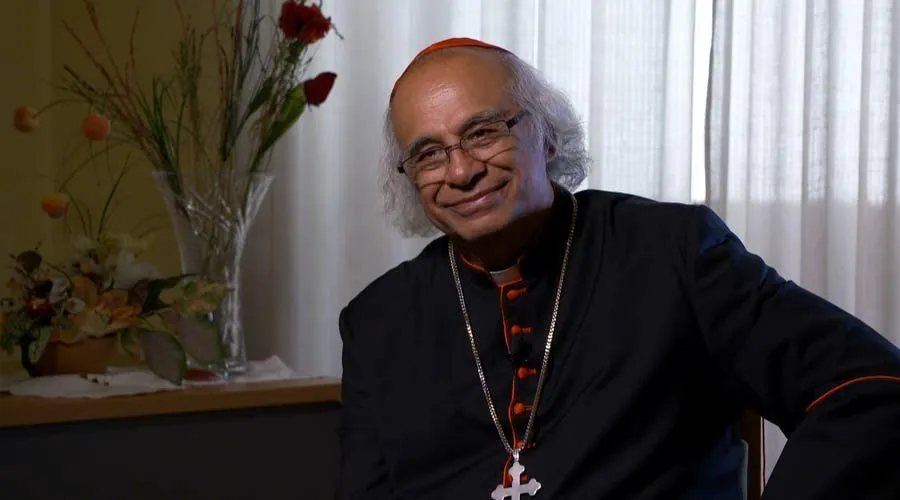
Rome, Italy, Jul 3, 2018 / 03:07 pm (ACI Prensa).- Cardinal Leopoldo José Brenes Solorzano of Managua believes the two month-long open conflict in Nicaragua will come to an end through genuine dialogue and by listening to the voice of the people, many of whom are calling for early elections.

Protests against president Daniel Ortega have resulted in 309 deaths, according to the Nicaraguan Association for Human Rights. The country’s bishops have mediated on-again, off-again peace talks between the government and opposition groups.

Protests began April 18 after Ortega announced social security and pension reforms. The changes were soon abandoned in the face of widespread, vocal opposition, but protests only intensified after more than 40 protestors were killed by security forces initially.

The Church in Nicaragua was quick to acknowledge the protestors’ complaints. Barricades and roadblocks are now found throughout the country, and clashes frequently turn lethal. Bishops and priests across Nicaragua have worked to separate protesters and security forces, and have been threatened and shot.

While in Rome to brief Pope Francis on the situation in Nicaragua and to participate in the June 28 consistory, Cardinal Brenes spoke to ACI Prensa, CNA’s Spanish-language sister agency, describing the
state of affairs as “very painful.”

“We bishops have said ‘not one more death’, but nevertheless they continue. The prophetic voice of the bishops on many occasions has not been listened to, but we will go on insisting. One death, two deaths, three deaths and already there are more than 300 deaths. I have always said that behind the death of every Nicarguan, the pain affects many more,” he said.

“One day I read a banner that a mother was carrying during a demonstration. It said, ‘giving birth to a child is painful, but losing a child is much more painful.’ When a mother gives birth, she suffers at that time, but when the child is born she is filled with joy. However, when that mother loses a child, especially when he is murdered, that sad expression on her face lasts a lifetime. And it just doesn’t hurt her, but also the siblings, and if he is married, his wife, his children; but it also goes beyond the families, because it affects neighbors and friends.”

The cardinal described the bishops’ relationship with Ortega’s government as “one of pastors with president to whom we have said we are not enemies, and we don’t want them to see us as enemies.”

“As pastors we are supporting a common cause. As pastors we don’t want to form a political party; no one aspires to be president of the country or have a position in the government. We agreed to be part of the national dialogue as mediators and witnesses, and if tomorrow this gets resolved, we’ll be happy.”

The Church’s mediation of dialogue between the government and the opposition is “a service which we want to offer for the governability and democratization of our country,” he said.

Cardinal Brenes added that “we have felt the confidence of the people in the bishops’ conference” and  noted, “there’s no bishop in particular who is setting the guidelines. Perhaps at some point they will want to make some bishop stand out, but in reality it’s the entire bishops’ conference. What’s important is to see a bishops’ conference that is very united.”

The cardinal believes the resolution of the conflict is going to take  “both the civic alliance and the delegates from the government  learning to dialogue, because with shouts, complaints, and insults, nothing gets done.”

“We have now entered into that process, but the first few days were really intense, and we had to call for a truce, and say: ‘let’s think this through.’  But then they began to talk again.”

“We are organizing small working groups, in which there are usually six members from the government and another six from the alliance, and in another working group three and three, with their respective advisers, and a coordinator who represents us bishops,” Cardinal Brenes said, explaining the current configuration of the talks.

“The primary thing is to begin to learn how to speak and to have as a common goal the good of the country leading to its democratization. The people are calling for early elections and we as a bishops’ conference have taken up that sentiment of the people and have presented the project, that route to take, to the president of the government. Everything is in his hands,” he stated.

The Church in Nicaragua “is an institution the people trust,” he said, “and that is a challenge for us, because it means we are answerable to that trust.”

Cardinal Brenes emphasized the importance of well-formed youth, citing their role in standing up to Ortega’s government.

“This entire situation we’re going through broke out because of them, because it was from that social commitment which they have that they began the protests, which then spread throughout the country,” he explained.

“We also have a great challenge: How to form young people so that come tomorrow, we don’t fall back into the same errors of today. They are the ones who have in their hands the destiny of Nicaragua” and therefore it is important to ask ourselves “how to make a better Nicaragua.”

Anti-government protesters have been attacked by “combined forces” made up of regular police, riot police, paramilitaries, and pro-government vigilantes.

The Nicaraguan government has suggested that protestors are killing their own supporters so as to destabilize Ortega’s administration.

The pension reforms which triggered the unrest were modest, but protests quickly turned to Ortega’s authoritarian bent.

Ortega has been president of Nicaragua since 2007, and oversaw the abolition of presidential term limits in 2014.

He has shown resistance to calls for elections, which are not scheduled until 2021, to be held early.

Ortega was a leader in the Sandinista National Liberation Front, which had ousted the Somoza dictatorship in 1979 and fought US-backed right-wing counterrevolutionaries during the 1980s. Ortega was also leader of Nicaragua from 1979 to 1990.


This article was originally published by our sister agency, ACI Prensa. It has been translated and adapted by CNA.
[…]

Pope Francis asks Catholics to pray for their priests in July

July 3, 2018 CNA Daily News 1

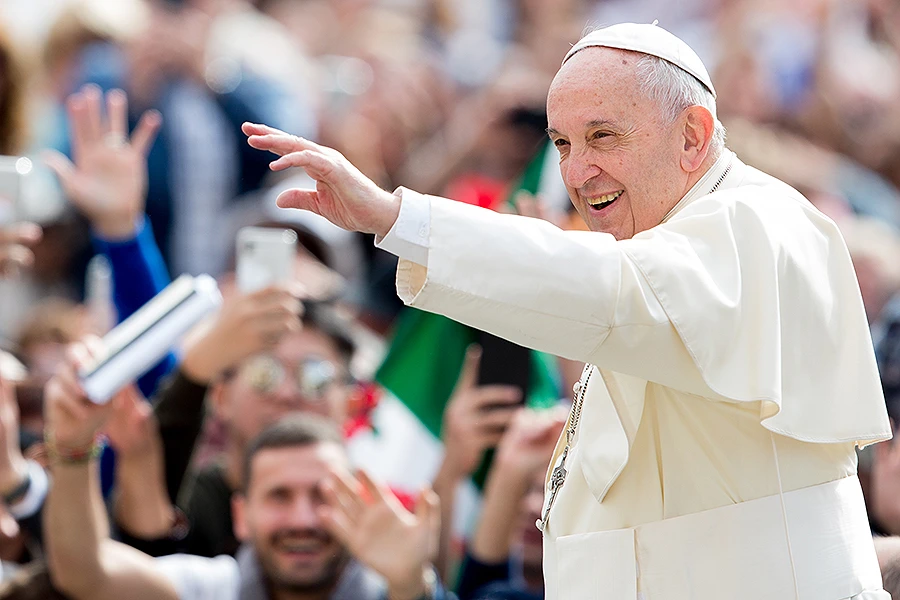
Vatican City, Jul 3, 2018 / 11:08 am (CNA/EWTN News).- In his latest prayer video, Pope Francis asked Catholics to dedicate the month of July to giving a spiritual gift to their pastors by praying for them, especially the priests who are tired or lonely.

“The tiredness of priests…Do you know how often I think about it?”

This is the opening line of Pope Francis’ newest prayer video, published July 3 and dedicated to his intention for the month.

As the video flashes scenes of priests working in difficult situations, including war and disaster relief, Francis speaks in his native Spanish, saying, “priests, with their virtues and defects, work in many different areas.”

“Working on so many active fronts, they cannot remain inactive after a disappointment,” the pope said. And when these moments come along, it is good for a pastor to remember “that the people love their priests, need them, and trust in them.”

The video then displays scenes of priests administering the sacraments, visiting the sick, and speaking with parishioners.

After being given a flower by an elderly woman, the priest featured in the video puts it in a vase inside of his parish and prays as members of his congregation bring more flowers to add to the bouquet.

Francis closes the video asking Catholics to join him in praying “that priests, who experience fatigue and loneliness in their pastoral work, may find help and comfort in their intimacy with the Lord and in their friendship with their brother priests.”

Pope Francis has often spoken of the need for consecrated persons to care for their vocation both spiritually and temporally, especially when he is meeting with priests and religious during international trips.

His specific concern for priests who feel weary on the job goes back to the beginning of his pontificate, and is an issue he has brought up on multiple occasions.

In his homily for the chrism Mass during Holy Week in 2015, the pope spoke to priests directly about getting worn out, saying: “the tiredness of priests! Do you know how often I think about this weariness which all of you experience?”

“I think about it and I pray about it, often, especially when I am tired myself,” he said, and admitted that he prays for every priest and their ministry, especially those who serve “in lonely and dangerous places.”

The tiredness of a holy priest who gives his life in service, Francis said during the Mass, “is like incense which silently rises up to heaven. Our weariness goes straight to the heart of the Father.”

Francis’ prayer intention for priests is part of the monthly “Pope Video” initiative, which is a project of the Jesuit-run global prayer network Apostleship of Prayer.

The Apostleship of Prayer, which produces videos on the pope’s monthly prayer intentions, was founded by Jesuit seminarians in France in 1884 to encourage Christians to serve God and others through prayer, particularly for the needs of the Church.

Since the late 1800s, the organization has received a monthly, universal intention from the pope. In 1929, an additional, missionary intention was added.

However, as of last year, rather than including a missionary intention, Pope Francis opted to have only one prepared prayer intention – the universal intention featured in the prayer video – and will add a second intention for an urgent or immediate need should one arise.

The videos are filmed in collaboration with the Vatican Television Center and mark the first time the Roman Pontiff’s monthly prayer intentions have been featured on video.

[…]

Christians an ‘essential element of balance’ in the Middle East

July 3, 2018 CNA Daily News 1

Vatican City, Jul 3, 2018 / 10:20 am (CNA/EWTN News).- For two cardinals helping to organize Pope Francis’ upcoming trip to Bari, the event is a chance to highlight not only the historic religious presence of Christianity in the Middle East, but also the social contribution the various rites and churches bring to the region.

“Christians are an essential element of balance” for the Middle East “not only for religious reasons, but also for political and social reasons,” Cardinal Kurt Koch, president of the Pontifical Council for Promoting Christian Unity, said July 3.

Quoting Benedict XVI’s 2012 apostolic exhortation on the Church in the Middle East, Ecclesia in Medio Oriente, Koch said that “a Middle East without Christians, or with only a few Christians, would no longer be the Middle East, since Christians, together with other believers, are part of the distinctive identity of the region.”

However, he stressed that getting Christians to stay after having their lives uprooted and, in many cases, torn apart, will only happen “if peace is re-established.”

This peace largely depends on the political climate, he said, adding that “this is why, since the beginning of the crisis, the Catholic Church has tirelessly called for the restoration of peace, above all through the search for a political solution.”

Koch spoke to the press alongside Cardinal Leonardo Sandri, prefect of the Congregation for the Oriental Churches, at a briefing on Pope Francis’ July 7 trip to Bari for an ecumenical gathering aimed at promoting peace in the Middle East.

Located in the southern Italian region of Puglia, Bari is known as the “porta d’Oriente,” or the “Eastern Gate,” because of its connection to both the Catholic and Orthodox Churches through the relics of St. Nicholas.

The ecumenical gathering will include leaders of Eastern Catholic Churches and Orthodox Churches, the Assyrian Church of the East, as well as ecclesial communities.

Eastern Catholic Churches present will include the Coptic Catholic Church, the Melkite Greek Catholic Church, the Chaldean Catholic Church, the Maronite Catholic Church, the Syriac Catholic Church, and the Armenian Catholic Church.

Among the Eastern Orthodox participating are Ecumenical Patriarch Bartholomew I of Constantinople and Metropolitan Hilarion of Volokolamsk, who will attend on behalf of Russian Orthodox Patriarch Kirill.

From the Oriental Orthodox Churches there are Tawadros II, Coptic Orthodox Pope of Alexandria, as well as representatives of the Armenian Apostolic Church and the Syriac Orthodox Church.

There will also be representatives from the Evangelical Lutheran Church in Jordan and the Holy Land, and from the Middle East Council of Churches.

Sandri said the gathering came about as the result of requests from several patriarchs and heads of Churches in the Middle East.

The trip, he said, is an illustration the pope’s attention to the Eastern Catholic community in the Middle East and the well-being of Orthodox Churches in the region, and his relationship with heads of Orthodox Churches, as well as his concern for the Muslim community and for regional minorities.

Bari, Sandri said, will be “an appeal to prayer,” but also an appeal for unity in prayer, which is the only thing that “can change hearts.”

But in addition to joint prayers, participants will also have a collective discussion, which will be opened by Archbishop Pierbattista Pizzaballa, apostolic administrator of the Latin Patriarchate of Jerusalem, and which will take place behind closed doors.

Sandri said there is no plan to release a joint statement after the meeting, but that some highlights might be provided.

Koch stressed the importance of interreligious dialogue for the peace process in the Middle East, and urged greater protection for minorities in the law.

“The primacy of law, including respect for religious freedom and equality before the law, based on the principle of citizenship regardless of ethnic origin or religion, has been repeatedly emphasized by the Catholic Church as a fundamental principle for the realization and for the maintenance of a peaceful and fruitful coexistence among the various communities of the Middle East,” he said.

Dialogue, he said, quoting a letter from Pope Francis to Christians in the Middle East, “is all the more necessary when the situation is more difficult.”

“There is no other path. Dialogue based on an attitude of openness, in truth and in love, is also the best antidote for the temptation of religious fundamentalism, which is a threat for believers of all religions.”

[…]

Pope Francis names three new auxiliary bishops for Chicago

July 3, 2018 CNA Daily News 2

Vatican City, Jul 3, 2018 / 04:51 am (CNA/EWTN News).- The Vatican announced Tuesday that Pope Francis has named three new auxiliary bishops for the Archdiocese of Chicago, appointing Fr. Ronald Hicks, Fr. Robert G. Casey and Fr. Mark Bartosic to the positions.

The July 3 announcement of the priests’ appointments coincided with the news that two of Chicago’s six current auxiliary bishops, George Rassas and Francis Kane, would be retiring. With Hicks, Casey and Bartosic, there will now be seven auxiliaries serving in the archdiocese.

Born in Chicago in 1967, Hicks has until now served as the archdiocese’s vicar general.

In 1985 he graduated from Quigley Seminary South, and obtained a bachelor’s degree in philosophy four years later from the University of Chicago. He also has a master of divinity degree and a doctor of ministry degree from the University of St. Mary of the the Lake in Mundelein.

Hicks was ordained a priest in 1994 for the Archdiocese of Chicago, after which he served in various pastoral roles throughout the diocese.

After a stint as dean of formation at St. Joseph College Seminary from 1999-2005, the bishop-elect received permission from his then-archbishop, the late Cardinal Francis George, to move to El Salvador, where he served a 5-year term as regional director of the Nuestros Pequeños Hermanos home for orphaned and abandoned children.

From 2010-2014 he served as dean of formation at Mundelein Seminary, while also helping with weekend Masses at St. Jerome Parish in Rogers Park. He was named vicar general for the archdiocese by the current archbishop, Cardinal Blase Cupich in 2015.

Casey, also a Chicago native, was born Sept. 23, 1967, and is currently serving as pastor of St. Bede the Venerable Church in Chicago.

After obtaining a bachelor’s degree in English from Niles College of Loyola University Chicago in 1989, Casey went on to pursue a master of divinity, which he received from the University of St. Mary of the Lake in Mundelein in 1994.

The bishop-elect was ordained a priest in 1994, after which he served as associate pastor of St. Ita parish in Edgewater until his 1998 appointment by Cardinal George as the part-time, associate director of Casa Jesus. In 1999, he was named the organization’s full-time director.

After a 40-day pilgrimage to Santiago de Compostela in Spain in 2003, Casey began serving as pastor of Our Lady of Tepeyac in the Little Village neighborhood of Chicago. In 2008, he co-founded the Taller de José ministry, which is sponsored by the Congregation of St. Joseph and provides accompaniment to those in need.

Casey then served in a number of other pastoral roles before being named to the Placement Board of the archdiocese, a role in which he helps assign priests to parishes.

The only non-Chicago native of the new appointments, Bartosic was born in Neehah, Wis., in 1961, and is currently serving as pastor of Assumption of the Blessed Virgin Mary Church in Chicago and as director and chaplain of the Kolbe House, Cook County Jail.

Raised in Ashland, Ohio, Bartosic obtained a bachelor’s degree in theater from Ashland University in 1983, and went on to earn a both a master of divinity degree and a licentiate degree in sacred theology from the University of St. Mary of the Lake.

He was ordained a priest for the Archdiocese of Chicago by Cardinal Joseph Bernardin in 1994, and has served in several pastoral roles since, including his position as chaplain of the Kolbe House jail ministry.

[…]

Australian archbishop sentenced to year’s detention for not reporting sexual abuse

July 2, 2018 CNA Daily News 1

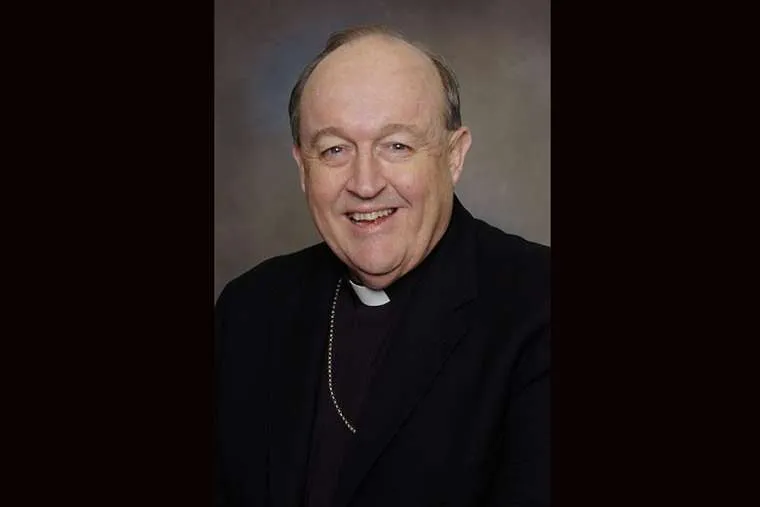
Adelaide, Australia, Jul 2, 2018 / 11:21 pm (CNA/EWTN News).- The Archbishop of Adelaide was sentenced Tuesday to a 12-month sentence after being convicted in May of failing to report allegations of child sexual abuse disclosed to him in the 1970s.

The archbishop is likely to serve his sentence under house arrest, and be fitted with an electronic monitoring bracelet, according to media reports. A judge must confirm that arrangement at an August 14 hearing before it can be finalized.

Wilson, 67, has not resigned from his position as Archbishop of Adelaide.

Pope Francis appointed on June 3 Bishop Greg O’Kelly, SJ, bishop of Australia’s Diocese of Port Pirie, to serve as apostolic administrator of the archdiocese, entrusting him with day-to-day leadership responsibilities. O’Kelly, 76, is not expected to succeed Wilson, especially since he has already surpassed the age at which bishops customarily submit a resignation letter to the pope.

At Wilson’s sentencing hearing July 3, Magistrate Robert Stone said Wilson had shown “no remorse or contrition” before imposing the sentence.

Wilson was convicted of concealing child sexual abuse committed by a fellow parish priest in New South Wales in the 1970s. At the time, Wilson had been ordained a priest for only one year.

The victims of the scandal, Peter Creigh and another altar boy who is unnamed for legal reasons, said they both had told Wilson of their abusive experience with Fr. James Fletcher.

During the trial, Creigh said that he told Wilson in graphic detail of the abuse in 1976, five years after it had occurred. However, Wilson said the conversation never took place, noting in a court hearing April 11, “I don’t think I would have forgotten that.”

The second victim said he had told Wilson of the abuse in the confessional in 1976, but that Wilson had dismissed the boy with a penance, saying that he was lying. Wilson said he would never tell someone in the confessional that they were untruthful, and that he did not remember having seen the boy at all in 1976.

Fletcher was convicted of nine counts of sexual abuse and was jailed in 2006. He died of a stroke within the year. Wilson said he had no previous suspicions about the integrity of Fletcher’s character.

Wilson also told the court that if he had been notified of the scandal, he would have offered pastoral care to the victims and their families, and reported the event to his superiors.

Wilson’s legal team argued during the trial that child sexual abuse was not understood in the 1970s to be a crime that was required to be reported to authorities. Stone, however, said that protecting the Catholic Church was Wilson’s “primary motive” for failing to report the abuse allegations.


[…]

Catholics are called to speak out against injustices, Hong Kong bishop says

July 2, 2018 CNA Daily News 3

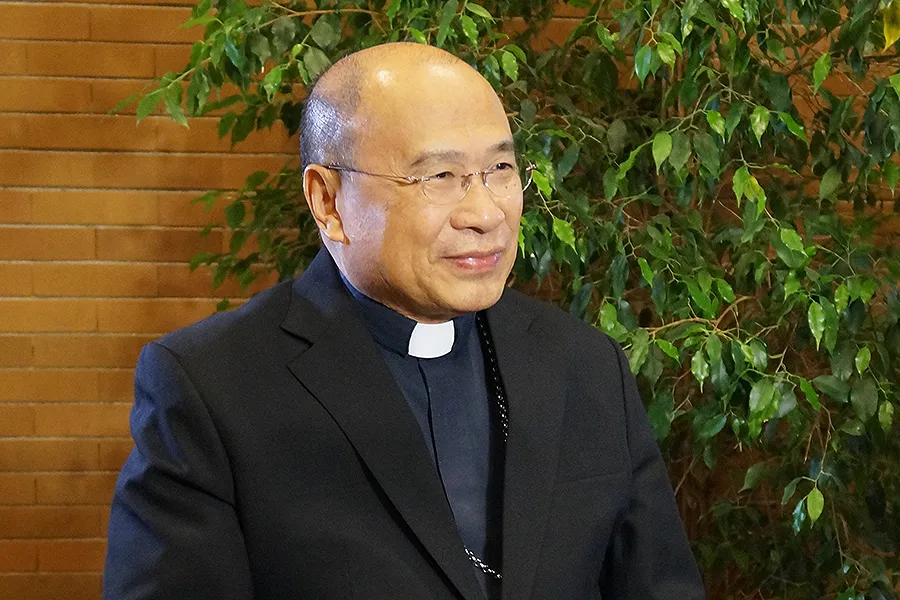
Hong Kong, China, Jul 2, 2018 / 05:29 pm (CNA/EWTN News).- The Catholic Church in Hong Kong is called to speak out in case of injustices, but it does not compete with the government, the bishop of the Chinese territory told CNA on the occasion of his ad limina visit to Rome.

Bishop Michael Yeung Ming-cheung was making an ad limina visit along with the Bishop of Macau; the two territories are former British and Portuguese dependencies which are now part of the People’s Republic of China.

As a special administrative region, Hong Kong has a large degree of autonomy from mainland China, with its own political and economic system. The territory was a British colony from 1842 until 1997.

The bishops met with Pope Francis June 23, at the end of a week filled with meetings at Vatican offices, including a two-hour-long meeting with the Secretariat of State.

Bishop Yeung, who succeeded as Bishop of Hong Kong in August 2017, said that Hong Kong can have an influence on the Chinese way of life, as “Hong Kong is called to participate in China’s modernization, and not only from the political-economic point of view. The development of the country is not merely based on the economy.”

He added that the Catholic Church “mustn’t compete with the communist party for power and authority in this world. The Lord Jesus never told the disciples to compete with the Roman empire.”

Bishop Yeung underscored that “the Church has, however, her role to play. She is called to have a good attitude to dialogue, and at the same time she is called to tell the truth, and to speak out against social injustice, when the latter happens.”

The relation with the Church in mainland China is described by Bishop Yeung as “delicate.”

He explained that “the Chinese authorities’ message is that they do not want any interference in mainland China, and the most recent bill on foreign NGOs goes in that direction: everything must be approved by the government, and the government has the right to know whence the money comes.”

According to the law, foreign NGOs must register with the Ministry of Public Security or its provincial-level equivalents before establishing an office within mainland China.

The law paralleled increasing government regulations in many areas of public life.

The law affects aid that Hongkongers might send to mainland China, as “no one has certainty that the money arrives to its destination, and even a mere money transfer is considered a possible interference,” Bishop Yeung said.

Speaking about the long-rumored, potential Holy See – China deal, Bishop Yeung said that “the Church has a very clear role: she does not compete with the government; she is called to speak out when there are injustices.”

He added that “we understand that the Holy See is entertaining a dialogue with the government in Beijing, and it is normal that there are also people against this. We trust in our Lord. Fifty years ago, the door between the Vatican and Beijing was shut, and now we are struggling to find a very narrow opening.”

Bishop Yeung concluded that he does not know “where the agreement will take us,” but he believes that “God will take us on the right way. There have been mistakes, and perhaps there will be others. We are human. But our Lord will guide us.”

Bishop Yeung said that one of the topics of discussion with Vatican officials during the ad limina was the potential registration of a Catholic university of Hong Kong.

At the moment, the Caritas Institute for Higher Education has been established, and counts some 2,000 students. In 2014, it was announced that the school aims to be recognized as a university by education officials within five years.

Once the recognition will be finalized, it will be named “St. Francis University.”

According to Bishop Yeung, the Chinese government has an interest in accrediting a Catholic university in Hong Kong because of the “one country, two systems” principle which articulates the autonomous relationship between the territory and mainland China.

“We can have our way of doing things,” the bishop explained. “I think Hong Kong can be very important for China, as it is its open window to the world. If the central government were to shut down everything in Hong Kong, it would prove that the principle ‘one country, two systems’ cannot work.”

[…]