In N. Ireland, another challenge to pro-life law

October 4, 2018 CNA Daily News 0

Belfast, Northern Ireland, Oct 4, 2018 / 07:45 am (CNA).- A new legal challenge has been mounted to Northern Ireland’s abortion law calling it incompatible with human rights because it does not allow abortion in cases where the unborn baby has a fatal abnormality. Pro-life advocates are arguing that abortion is not the compassionate choice, even in the most difficult circumstances.

“We can and will do so much better for women and their children in Northern Ireland than offering them the barbaric violence, distress and heartbreak of abortion,” said Bernadette Smyth, director of the Northern Ireland group pro-life Precious Life.

“Those working to overturn our legal protections for the unborn are attempting to make abortion appear to be a compassionate response to a woman facing a poor diagnosis for her unborn baby,” she said Oct. 2.

The plaintiff is seeking a high court decision against the current restrictions. Sarah Ewart travelled from Belfast to England for an abortion after a 20-week ultrasound scan led to a diagnosis of anencephaly for her baby, the Irish Times reports. The condition means the baby’s brain and skull do not develop and causes death either before birth or shortly afterwards.

“Pregnancy should be a happy time, whereas it has been a scary time for me, every scan I went to, I feared,” Ewart told the Press Association.

“Five years ago, I didn’t think I would still be fighting now, but we are going to go all the way, we are part of the U.K., the same laws should apply here,” she said.

Ewart now has two children and would like to have more, but said this was daunting given that doctors have told her she faces a risk of a similar pregnancy.

Smyth, however, thought the case for legal abortion was misleading.

“People are being fooled into thinking that abortion is a humane answer for a baby who is not going to survive for long after birth,” she said. “The heart-breaking reality however is that these late term abortions for babies with life-limiting conditions literally tear these babies apart in the womb, and so often leave women suffering with long-term grief, regret, anxiety and other mental health problems caused by the abortion and their knowledge that their baby’s death was a chosen one.”

Abortion is allowed in Northern Ireland only if the mother’s life is at risk, or if there is risk of permanent, serious damage to her mental or physical health.

In June the U.K. Supreme Court threw out a previous challenge to Northern Ireland’s abortion law, saying the Northern Ireland Human Rights Commission, which brought the case, did not have standing to do so. However, a majority of the judges said that the Northern Ireland abortion law framework is incompatible with human rights laws insofar as it bars abortion in cases of pregnancy by rape or incest or in cases of fetal abnormality. The U.K. government has so far not legislated any change.

Grainne Teggart, Northern Ireland campaigns manager for Amnesty International, said that taking the case to the Belfast high court should secure the necessary declaration that Northern Ireland’s abortion law violate human rights as they are enshrined in national legislation for the U.K.

Teggart said Ewart and other women should not have to go through the courts.

“The U.K. government has the power to change the law now and bring an end to the suffering of women here,” she said.

Precious Life said that Ewart “should have been offered real care and options, such as the loving support system of perinatal hospice care.”

“This service gives families the precious time they need with their sick babies, and gives these babies the dignity and love they deserve, no matter how short their lives may be.”

The pro-life group said that at 20 weeks into pregnancy, babies are close to surviving outside the womb. “Babies do not deserve to be killed so barbarically for any reason, or simply because they have a disability,” said the group.

“We must work to inform the people of Northern Ireland about the reality of abortion and what happens in the abortion procedure.”

Precious Life stressed the need to educate Northern Ireland about “what really happens in the abortion procedure.” The organization said that during a late-term abortion – between 15 and 24 weeks – the unborn baby’s body parts are “pulled apart piece by piece with a long-toothed clamp and removed.”

“The baby’s head is grasped and crushed in order to remove through from the mother’s cervix,” it added.

In an induced labor abortion, potassium chloride is injected into the baby to stop its heartbeat before delivery.

“If aborted alive, the baby will be left to die,” said the group. It cited National Health Service statistics estimating that in Britain, 66 babies a year are “left to die after late-term abortions gone wrong.”

“This is not healthcare. This is not compassion. This is cold-blooded killing,” Precious Life said. It urged the people of Northern Ireland to “continue to stand with us as a light in the darkness and a voice for unborn babies and their mothers who deserve all the help, love and support we can offer to encourage them to choose life.”

Northern Ireland’s abortion law could be taken up by either the Northern Ireland Assembly or the Parliament of the United Kingdom, but the Northern Ireland government is currently suspended due to disagreements between the two major governing parties.

The Democratic Unionist Party, the largest party in Northern Ireland and a key member of the U.K.’s governing coalition, is opposed to changing the law. Sinn Féin, another prominent party in Northern Ireland, backs a law that permits abortion.

In the neighboring Republic of Ireland, constitutional protections for the unborn were repealed following a May referendum. Lawmakers there have said they will work to pass taxpayer-funded abortion and implement legislation that will prevent Catholic-run hospitals from objecting to performing abortions.

[…]

Spooky, scary, saintly? How Catholics can see Halloween at its best

October 4, 2018 CNA Daily News 0

Tulsa, Okla., Oct 4, 2018 / 03:01 am (CNA/EWTN News).- Whether you dress up as a ghoul, a hero, or a saint, Halloween has a Christian origin that should inspire us to remember our mortality and our redemption in Christ, Bishop David Konderla of Tulsa has said.

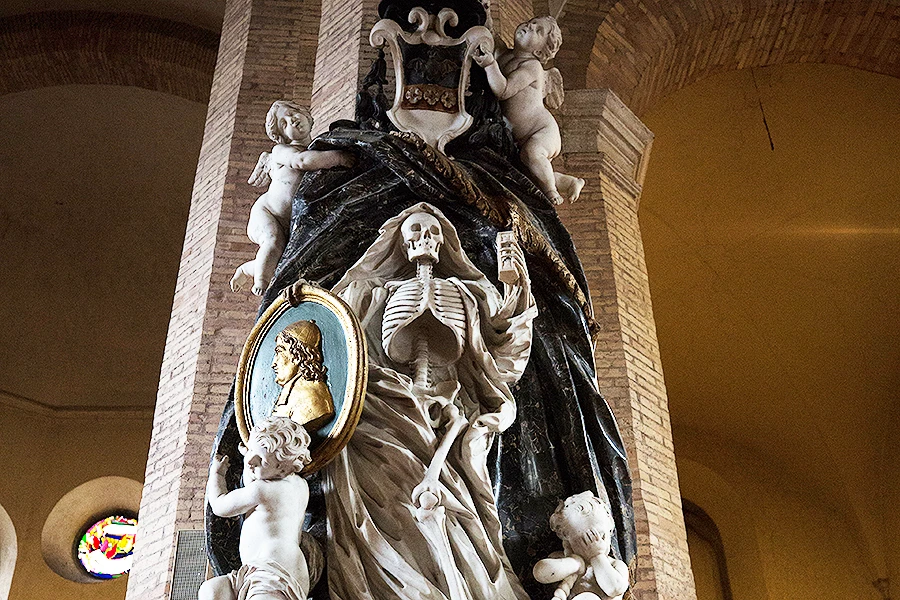
“In contrast to popular culture’s observance of Halloween, even the customary appeal to the ‘frightful’ has a devotional meaning in the Catholic tradition. Props such as skulls and scythes have historically recalled our mortality, reminding us to be holy because we are destined for judgment,” the bishop said, citing Hebrews 9:27 and Revelation 14:15. “Visible symbols of death thus represent a reminder of the last things – death, judgment, Heaven, and hell.”

Bishop Konderla discussed the upcoming holiday, which falls before the Nov. 1 feast of All Saints, in a Sept. 28 memorandum on the celebration of Halloween in the Diocese of Tulsa.

Halloween has origins in the Catholic liturgical calendar, he said, but the customs surrounding it have “drifted from the feast’s intended meaning and purpose.” The name itself derives from the archaic English phrase “All Hallows’ Evening,” referring to the Eve of All Saints. Since All Saints can begin with evening prayer the night before, Halloween is the feast’s “earliest possible celebration.”

“While the ‘Gothic’ aspect of Halloween reminds us of Christian teaching about the resurrection of the dead, our culture often represents this in a distorted manner, for when the dead are raised they will in truth be ‘clothed with incorruptibility’,” said Bishop Konderla.

When separated from Catholic teaching, the holiday’s grim, ghoulish, or “Gothic” costumes can be mistaken as “celebration or veneration of evil or of death itself, contradicting the full and authentic meaning of Halloween.”

“For the Christian, Christ has conquered death, as has been prophesied and fulfilled,” he said.  “Christ has conquered death by his Passion, Death, and Resurrection, the Paschal Mystery whose graces are evident in the glory of all saints.”

The bishop also discussed the custom of dressing up as Christian saints.

“The custom of dressing up for Halloween is devotional in spirit,” he said. “By dressing up as the saints whom we most admire, we imagine ourselves following their example of Christian discipleship. This practice allows the lay faithful in festive celebration to become ‘living icons’ of the saints, who are themselves ‘icons’ or ‘windows’ offering real-life examples of the imitation of Christ.”

“In dressing up as saints we make Christian discipleship our own in a special way, following the exhortation of St. Paul: ‘Be imitators of me, as I am of Christ’,” he said, citing Paul’s First Letter to the Corinthians.

Bishop Konderla invoked the imagery of the saints used in the Book of Revelation.

“Proper veneration of the saints naturally leads to adoration of the Lamb who was slain, whom the saints adore and follow wherever he goes,” he said. “True devotion to the saints, through our prayers and imitation of their witness, leads us sinners back to Christ.”

The bishop also voiced a few warnings. He said it is important to avoid Halloween popularizations of things that are contrary to the Catholic faith. These include the glamorization or celebration of “anything involving superstition, witches, witchcraft, sorcery, divinations, magic, and the occult.”

“We want to be good models of Christian virtue for those we serve and make clear distinctions between that which is good and that which is evil,” he added.

“Let us urge one another this Halloween to express in every detail of our observance the beauty and depth of the Feast of All Saints,” Bishop Konderla concluded.

“Let us make this year’s celebration an act of true devotion to God, whose saints give us hope that we too may one day enter into the Kingdom prepared for God’s holy ones from the beginning of time.”

[…]

Archbishop criticizes pro-abortion presentation at Catholic university

October 3, 2018 CNA Daily News 0

Guadalajara, Mexico, Oct 4, 2018 / 12:00 am (CNA).- After an event featuring abortion rights activists was held at a Mexican Jesuit university, the president of the Mexican bishops’ conference reiterated that the Church opposes abortion, and said that he had no prior knowledge of the event and that this forum was not authorized by the Church.

Abortion is illegal in Mexico. However, in 2007 Mexico City, the country’s capital, decriminalized abortion for up to 12 weeks for any reason. By some estimates, there have been two million abortions there since that time.

In his communiqué entitled “No to Abortion,” Cardinal Francisco Robles Ortega stated “Our position as believers is founded on both Sacred Scripture and the magisterium of the Church as well as natural law and what science has demonstrated regarding the beginning of the existence of the human being,”

“Serious scientific studies prove the existence of a life, of a different person, from the moment of conception. Respect for life must not be subject to a debate, nor some eagerness for ‘openness’ or to be ‘cutting edge,’  even less so for questions of taste or feelings, as if respect for life could depend on what some people feel or think,” the prelate pointed out.

Nor can respect for life, he added, “be subject to the arbitrariness of personal conscience alone, because the conscience must be objectively formed and because what it in question is the life of an innocent person.”

“When we talk about this issue—and we don’t accept abortion—it’s not a matter of intolerance or rejecting dialogue, but of coherence with the right of every person to live, especially if it’s an innocent person, the one yet to be born,”  Cardinal Ortega pointed out.

The controversial university program was held Sept. 26 at the ITESO (Institute of Technology and Higher Studies of the West), Jesuit University of Guadalajara. It was entitled “Dialogue concerning the Right to Decide,” and featured three presenters wearing the green kerchief of the pro-abortion movement in Latin America. The speakers were affiliated with organizations that promote the legalization of abortion in Mexico and other countries in the world: CLADEM, the Latin American and Caribbean Committee for the Defense of Women’s Rights; GIRE, the Informational Group on Chosen Reproduction, and Catholic Women for the Right to Decide.

CLADEM campaigns for legalized abortion throughout Latin America.  GIRE has reportedly received more than $100 million dollars from the International Planned Parenthood Federation over the last ten years. Catholic Women for the Right to Decide (Catholics for Choice in the U.S.) has been condemned by bishops in various parts of the world.

At the center of the controversy is the Jesuit priest and outgoing rector of the university, Fr. José Morales Orozco.

In defending the university’s decision to hold the event, Fr. Orozco stated that “ITESO is for life, is against abortion, but before that it is for freedom of conscience,” explaining that “people have every right and obligation to decide in conscience what they see and nobody can judge, only God.”

In a statement to ACI Prensa, CNA’s Spanish language sister agency, and ITESO spokesman said that “human life is sacred and always must be cared for and respected” and pointed out that Orozco “at the activity made it clear that the university is for life and against abortion, and for freedom of conscience.”

 ITESO “dialogues with people of different religious and political beliefs, different ethnic and cultural origins. A respectful exchange of ideas is brought about with those who think differently because this is how the reflection of the university is developed and deepened and  knowledge is increased.”

The university added that “abortion is one of the five main causes of maternal death, and these cases occur especially with poor women. It’s an issue that must be reviewed and discussed from the ethical and moral point of view, as well as its implication in terms of social justice and public health policy.”

Nevertheless, there was no presenter at the forum to explain the Church’s teaching or its basis in the sciences.

In response to the event, the president for the National Front for the Family for the state of Jalisco, Jaime Cedillo, demanded that ITESO not be a “platform to promote” abortion advocates.

Speaking to ACI Prensa, Cedillo criticized that the event at the Jesuit university was used “as a promotion of an international movement sponsored by large organizations that promote abortion.”

“At an educational institution like the university, which has a Christian inspiration, it can’t lend itself as a platform for the culture of abortion,” he noted.

Cedillo expressed his dismay that the position against abortion was not presented in order to open the doors to “a healthy debate at the university.”

He added that if a university “defends a clear position, obviously it can’t led itself to a scenario that openly promotes something to the contrary.”


This article was originally published by our sister agency, ACI Prensa. It has been translated and adapted by CNA.

[…]

Catholic charities worldwide join Indonesia tsunami relief efforts

October 3, 2018 CNA Daily News 0

Manado, Indonesia, Oct 3, 2018 / 04:01 pm (CNA/EWTN News).- Caritas Italy will donate more than $115,000 to help the victims of the tsunami that struck Indonesia last week.

A 7.5-magnitude earthquake struck 6 miles beneath Sulawesi just after 6 pm Sept. 28. It set off a tsunami, which caused 20 foot-high waves which devastated coastal cities, including, prominently, Palu. The quake also caused landslides and power outages.

More than 1,400 people have died as a result of the disaster, and tens of thousands are displaced from their homes.

Rescuers expect the death toll will rise, as access to some areas is currently blocked by damaged roads and communication lines.

Caritas Ambrosiana, the charity arm of the Archdiocese of Milan, has allocated $34,000 for disaster relief on Sulawesi.

Catholic Relief Services and the Scottish Catholic International Aid Fund have provided relief funds and teams to address the emergency situation.

As heavy damages have affected access points and infrastructures, CRS expressed it has had difficulty in reaching devastated areas.

“Humanitarian groups are struggling to get people into affected areas,” Yenni Suryani, CRS’ Indonesia country manager, said Sept. 30. “With the airport damaged, getting access to Palu and Donggala is a huge problem. Responders and local aid groups are having to drive overland 10-12 hours.”

“That means a bottleneck for relief supplies in coming days. Landslides are hindering road travel in some places. There’s very limited electricity in Palu but power is out almost everywhere. Some mobile phone towers have been repaired allowing limited communication, but it’s unreliable.”

The CRS teams are joining local partners in the area, addressing needs such as tarps, blankets, sanitation kits, and sleeping mats. Suryani said a lack of water and fuel are also a concern which needs to be addressed.

Scottish Catholic International Aid Fund have partnered with Caritas Indonesia and contributed over $25,000 to relief efforts. SCIAF Director Alistair Dutton expressed apprehension over the situation and said his prayers would be with the Indonesian victims.

[…]

Provision for abortion delayed in Australian state

October 3, 2018 CNA Daily News 0

Hobart, Australia, Oct 3, 2018 / 03:23 pm (CNA/EWTN News).- Government authorities in the Australian state of Tasmania have promised that low-cost surgical abortion will be provided starting in October, but general practitioners and the state’s Women’s Legal Service say they have not been provided any information on who the provider will be and how abortions will be delivered, according to local media reports.

The state’s only dedicated abortion clinic closed in late 2017 due to declining demand for surgical abortions, ABC news reported.

At the time, Tasmania’s primary abortion doctor cited medical abortion, which is allowed in the country up to nine weeks of pregnancy, and increased use of contraception as reasons for the drop in demand for the surgical procedure.

The state had been paying for women to travel to other Australian states to have abortions since the clinic’s closure. The Tasmanian health department said it had reached an agreement with a new abortion provider and reportedly signed a five-year agreement with the as-yet undisclosed provider in July.

Bastian Seidel, president of the Royal Australian College of General Practitioners, told ABC News that no information from the government about how the procedures would be delivered had yet been passed on to general practitioners. Susan Fahey, Women’s Legal Service chief executive, also expressed frustration that the government had so far provided so few details.

Under Tasmanian law, women are allowed to choose abortion up until 16 weeks of pregnancy, and after 16 weeks must seek the approval of two doctors before an abortion is allowed. Doctors are allowed to conscientiously object to the procedure, but are compelled by law to provide “provide the woman with a list of prescribed health services from which [they] may seek advice, information or counselling on the full range of pregnancy options.”

Tasmania’s current Health Minister, Michael Ferguson, voted against the liberalization of the country’s abortion laws in 2013.

[…]

Francis calls for youth synod creativity- How will U.S. bishops answer the call?

October 3, 2018 CNA Daily News 0

Vatican City, Oct 3, 2018 / 02:59 pm (CNA).- At the end of a synod of bishops, the pope customarily issues a document- a post-synodal apostolic exhortation- that summarizes the gist of the meeting, and offers his reflections on whatever pastoral issue the synod took up for discussion.

Synods- at least modern synods- involve a great deal of time and expense, and often involve the best minds and hearts in the Church. But synodal documents- good or bad, well-constructed or hastily strung together- tend to have the same unhappy fate: they are consigned to library or chancery shelves, where they get dusty from disuse.

While there are some notable exceptions, post-synodal documents tend generally to have very few practical outcomes, and very little long-term impact on the life of the Church.

Apart from the substance of its controversy, Amoris laetitia, the exhortation that followed the 2015 Synod of Bishops on the family, is an unusual post-synodal document because it actually provoked a controversy of any kind- one still unresolved as the Church begins another synod, this one focusing on young adults, the faith, and vocation discernment.

During his Oct. 3 remarks opening the 2018 Synod of Bishops, Pope Francis mentioned the reputation of synodal exhortations for irrelevance, quipping that a synodal text is “generally only read by a few and criticized by many.”

Optimistically, Francis told the bishops gathered for the synod that he hopes the gathering will lead to “concrete pastoral proposals capable of fulfilling the Synod’s purpose.”

Earlier Wednesday, during the synod’s opening Mass celebrated in St. Peter’s Square, Pope Francis called for a meeting “anointed by hope.”

“Hope challenges us, moves us and shatters that conformism which says, ‘it’s always been done like this,’” the pope said.

He added that young people expect of the synod’s participants “a creative dedication, a dynamism which is intelligent, enthusiastic and full of hope.”

The pope’s call for creativity Wednesday encouraged bishops to update their prepared interventions- the short speeches each synod participant gives during the meeting’s initial sessions- suggesting that bishops “consider what you have prepared as a provisional draft open to any additions and changes that the Synod journey may suggest to each of you.”

Despite this call, there are synod observers who argue that the synod structure makes creativity and original thinking a difficult proposition. In the initial meetings of the synod, each synod participant will be given the opportunity to make a very short speech of approximately four minutes. While those speeches are added into the record, observers say they are not always reflected in the synod’s final report.

Of slightly more importance is the subsequent discussion on the resolutions that form synod’s final report, undertaken in groups divided by language. But even that discussion has only a limited capacity to shape the synod’s final text.

There are observers who ask whether the synodal structure allows for any genuine dialogue or debate, and whether the narrowly circumscribed window for intervention is a suitable environment for the prophetic ministry of bishops. Critics argue that the current structure gives most of the power to the Vatican staffers who organize the synods and do much of the report drafting, rather than to the bishop delegates.

At least one observer close to the synod has told CNA that bishops sometimes complain they are called only to rubber stamp texts mostly regarded as faits accomplis.  

Francis last month issued a set of changes to the procedural rules for episcopal synods, that, according to some observers, further centralize real decision-making authority within the synod, placing considerable power over proceedings and final report in the hands of the general secretary. Those changes, critics say, mean that bishops will have even less influence over the final text than they did before. And, because of the new rules, the final text of the meeting can now be immediately approved by the pope, in place of an apostolic exhortation released months later.

Still, for the American bishops participating in the synod, Francis’ call for a new way of doing things is likely to resonate. Several members of the U.S. delegation are known as original thinkers and leaders, and some have already begun to signal that they’ll bring to the synod uniques ideas and approaches.

As the synod begins, it’s worth noting what some bishops from the U.S. delegation might bring to the table.

Bishop Robert Barron

Bishop Robert Barron, auxiliary of Los Angeles, is perhaps the U.S. bishop whose intervention in the synod is the most difficult to predict. Barron is a well-known public intellectual, a social media superstar, and the driving force behind the popular “Catholicism” series and Word on Fire catechetical apostolate.

Intellectually, Barron is difficult to pigeonhole. A polyglot with a doctorate from the theology faculty at the Institut Catholique du Paris, Barron’s intellectual interests and influences are broad-ranging. He’s managed to bring those interests to film and television reviews, to YouTube videos immensely popular with young people, and to seminars on preaching and pastoral work that have built a following among millennial priests.

The breadth and depth of Barron’s intellect make him hard to place consistently as a member of any of the ideological camps in which U.S. bishops are typically classified.

So what will he offer the synod?

In a Oct. 2 interview with L.A’s Angelus News, Barron said that he would prioritize ministry to young people in the context of their own culture. “We have to get them, we have to invade their space,” Barron told Angelus.

Barron told Angelus that he feels it important to address what he calls “the culture of self-invention.”

That culture, he said, “celebrated almost constantly: that I decide what my life is about, I decide what I’m going to believe, how I’m going to act, and no one tells me what to do.”  

While calling for a methodology intended to speak in the language of a fluid culture, Barron told Angelus that calls for doctrinal and fluidity would be a mistake.

Saying the doctrine is “not ours to play with,” Barron added that “dumbed-down Catholicism has been a disaster.”

Archbishop Jose Gomez

Barron is not the only U.S. delegate from Los Angeles. His boss- L.A.’s Archbishop Jose Gomez, was also elected to the synod. Gomez, who is vice-president of the U.S. bishops’ conference, can be counted on for a perspective that differs significantly from that of his brother American bishops.

Gomez seems to very capably straddle notably different worlds. He is Mexican-born, and also the bishop of the largest diocese in U.S. He is a member of an ecclesial movement, and has also spent decades in diocesan ministry. He is regarded as a doctrinal conservative, and has also become the most outspoken American bishop on immigration reform.

From that unique position in the Church, Gomez has appeal and credibility across a remarkably broad swath in the Church. His intervention will carry a great deal of weight among a number of bishops.

The archbishop is likely to discuss themes that reflect his Opus Dei formation- most especially, the universal call to holiness, and the importance of intentional sacramental and devotional formation for young people. Gomez’ intervention will likely be Christocentric, and call for distinctive place for lay Catholics in the life of the Church.

To Angelus, Gomez said this week that “we need to change gears and say that the lay faithful are also called to holiness and to be leaders in the Church.”

“We need to understand that we all are called to holiness; that sometimes we are still in the process of understanding that the Church not only belongs to the pope and the bishops and the priests, but to everyone — the lay faithful,” he added.  His intervention is likely to follow along similar lines.

Gomez is also likely to emphasize works of mercy, especially service to the poor.

“The young people of today, it seems to me, are trying to do something, to take action. It is difficult for them to stop and learn the teachings of the Church. The first encounter with Christ in serving other people is what I think is most important for us,” he said in an Oct. 2 interview.

Cardinal Blase Cupich

Cardinal Blase Cupich of Chicago was appointed to participate in the synod, along with Cardinal Joseph Tobin of Newark, who withdrew in response to fallout from the sexual abuse crisis in his diocese.

Cupich is reported to be a close collaborator of Pope Francis. He was appointed personally by Francis to this synod, rather than being elected by the U.S. bishops, and was similarly appointed by the pope to attend the 2015 synod.

After the synod, he became a vocal supporter of Pope Francis’ Amoris laetitia, hosting closed-door conferences on the document for bishops and theologians, and saying this February that the document “represents an enormous change of approach, a paradigm shift holistically rooted in Scripture, tradition and human experience.”

Cupich has been expected by observers to play a significant role in the 2018 synod. The cardinal, however, has had a difficult summer.

He become a central figure in the sexual crisis dubbed the “summer of hell,” especially because of an Aug. 27 interview in which he argued, or appeared to argue, that Pope Francis would focus on environmentalism and migration rather than going down the “rabbit hole” of an investigation into allegations of widespread corruption and misconduct leveled Aug. 25 by former Vatican diplomat Archbishop Carlo Vigano.

Cupich apologized for his remarks in a Chicago Tribune op-ed issued nearly a month after the interview.

“It was a mistake for me to even mention that the Church has a bigger agenda than responding to the charges in the letter by former Papal Nuncio Archbishop Carlo Maria Vigano,” he wrote.

“What I should have said, because it has been my conviction throughout my ministry, is that nothing is more important for the Church than protecting young people. I apologize for the offense caused by my comments. It pains me deeply to think that my poor choice of words may have added to the suffering of victim-survivors.”

Those difficulties do not seem to have prevented Cupich from getting an early start to active participation in the synod. After Archbishop Charles Chaput of Philadelphia published Sept. 21 an anonymous theologian’s criticism of the synod’s working document in the journal First Things, Cupich sent the magazine a letter, saying that the “use of anonymous criticism in American society does not necessarily contribute to healthy public discourse, but in fact can erode it.”

Cupich wrote that the commentary published by Chaput “raises essential questions about the nature of theological dialogue in our Church,” before criticizing the text for “selectivity, condescension, and the deployment of partial truths” which served to “obfuscate the fullness of truth.”

“What is needed is the spirit of synodality that Pope Francis has made the very heart of the Church’s upcoming moment of dialogue and teaching in search of ways to bring the Gospel of Jesus Christ to the next generations,” Cupich added.

Cupich, it seems, is likely to offer an intervention, and points for discussion, in support of the synod’s working document, or instrumentum laboris. In recent months, he has discussed publicly the importance of listening to young adults, the gifts young people offer to the Church, and the importance of dialoguing with young people about sexuality and gender- topics which all receive considerable treatment in the instrumentum laboris.

“Young people today are living in a whole different world than when I grew up. So they find their classmates, maybe even themselves, in situations where their family is broken and they’re in blended families,” Cupich said in August interview with Rome Reports.  

“The same thing too is with young people who have friends who have same-sex attraction, who are gay and lesbian. They treasure those friendships. So how can we speak to them in a way that challenges them – no matter what their attraction is – to live a life that’s in-tune with the Gospel?”

Archbishop Charles Chaput

Archbishop Charles Chaput has not been hesitant to express his views on the synod’s instrumentum laboris. In addition to the theological commentary he published last month, the archbishop has published or cited comments from young Catholics critical of the synod’s preparatory documents on several occasions.

On Sept. 29, the archbishop published an op-ed in the prominent Italian newspaper Il Foglio, saying that “the synod’s instrumentum laboris or ‘working document,’ needs to be reviewed and revised. As it stands, the text is strong in the social sciences, but much less so in its call to belief, conversion, and mission.”

Citing the Sept. 21 theological reflection, Chaput lamented within the document “‘serious theological concerns…including: a false understanding of the conscience and its role in the moral life;’ a ‘false dichotomy proposed between truth and freedom,’ a ‘pervasive focus on socio-cultural elements, to the exclusion of deeper religious and moral issues,’ an ‘absence of the hope of the Gospel,’ and an ‘insufficient treatment of the abuse scandal.’”  

“The synod’s success depends on a profound confidence in the Word of God and the mission of the Church, despite the sins of her leaders,” his commentary added.

Chaput’s commentary proved criticism from Cardinal Lorenzo Baldisseri, the synod’s secretary general. Baldisseri told journalists Oct. 1 that because Chaput, whom he alluded to but did not name, is a member of the synod’s planning council, he could have raised objections to the instrumentum laboris early in the planning process.

In fact, sources tell CNA, the instrumentum laboris was given to members of the planning commission only days before they were asked to approve it, as is typical for the synod council. Sources also say it was likely available only in Italian. If those things are true, it seems improbable that Chaput, or any bishop, would have been able to adequately study the document and give meaningful feedback before it was released.

Nevertheless, it seems unlikely that Chaput will focus on the instrumentum laboris during his intervention.

Instead, Chaput, as a frequent observer of culture, is likely to comment on the way that family, public, and ecclesial culture impact the development of young people- and he will probably raise the sexual abuse crisis, since most of his recent public remarks have addressed the imprudence of holding a synod on young adults without recognizing that sexual abuse and misconduct will be rather significant elephants in the room.

Following the trajectory of his recent remarks, Chaput will likely call for a pastoral focus on forming young people from a genuinely Christian anthropology, and toward a Christocentric self-identity.

__

Whether the interventions of any American bishop will make a major difference in the synod’s final text remains to be seen. Indeed, whether the final text will have an impact on the Church, or merely gather dust on chancery shelves, also remains to be seen. But the interventions and actions of the U.S. delegation can teach a lot about what kind of men lead the Church in the U.S., and what kind of future that Church might have.  


[…]

US Catholics’ confidence in Francis shaken

October 3, 2018 CNA Daily News 2

Washington D.C., Oct 3, 2018 / 02:24 pm (CNA/EWTN News).- A recent poll has shown a drop in popularity for Pope Francis in the United States over the past year. The poll suggests that many Americans increasingly disapprove of how the pope has handled t… […]