Pope Francis: Saints show the heart’s true desire
August 22, 2018 CNA Daily News 1

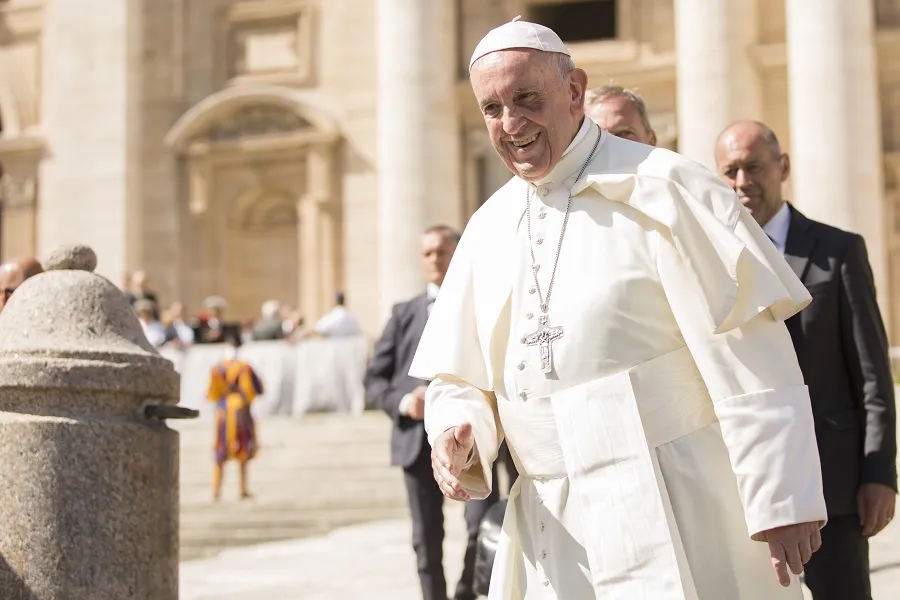
Vatican City, Aug 22, 2018 / 05:11 am (CNA/EWTN News).- The lives of the saints are attractive because they demonstrate the radical and authentic relationship with Christ each person is called to, Pope Francis said Wednesday.

“Why are the saints so able to touch the heart?” he asked at the general audience Aug. 22. “Because in the saints we see what our heart deeply desires: authenticity, true relationships, radicalism.”

This example can also be found in those “saints next door,” he noted, such as parents who teach their children to live “coherent, simple, honest, and generous” lives.

Continuing his reflection on the Ten Commandments, Pope Francis spoke about respecting the name of the Lord. He also pointed out a deeper meaning of the commandment, which is the hypocrisy of “using” God’s name while not having a real relationship with him.

“One may ask: is it possible to take upon oneself the name of God hypocritically, as a formality, in a vacuum? The answer is unfortunately positive: yes, it is possible. One can live a false relationship with God,” he said.

Francis drew a comparison to the “doctors of the law” in the Bible, who spoke about God but did not do his will or did not have a relationship with him.

In Exodus, the expression “in vain” is used, meaning emptily or “uselessly,” he explained. This is a characteristic of hypocrisy or lying – using words or the name of God “without truth.”

Thus, the commandment to not use the name of the Lord in vain, is also an invitation “to a relationship with God without hypocrisy, to a relationship in which we entrust ourselves to him with all that we are,” he stated. “This is Christianity that touches hearts.”

He said if Christians all strive to take God’s name upon themselves “without falsehood… the Church’s proclamation is heard more and is more credible.” If the Word of God is spoken in unity with Christ, then it will not be “praying like a parrot,” but “praying with the heart, loving the Lord.”

“If our concrete life manifests the name of God, we see how beautiful baptism is and what a great gift the Eucharist is!” he said. “What a sublime union there is between our body and the Body of Christ, He in us and we in Him!”

Because Christ, through his suffering and death on the cross, has taken the sins of the world, each person’s names are “on the shoulders of Christ,” he said, encouraging Christians to take God’s name upon themselves.

“Anyone can invoke the holy name of the Lord, who is faithful and merciful love, in whatever situation he finds himself,” he concluded. “God will never say ‘no’ to a heart that sincerely invokes it.”
[…]

Seminarian: Despite devastation, faith has grown in Venezuela  

August 21, 2018 CNA Daily News 0

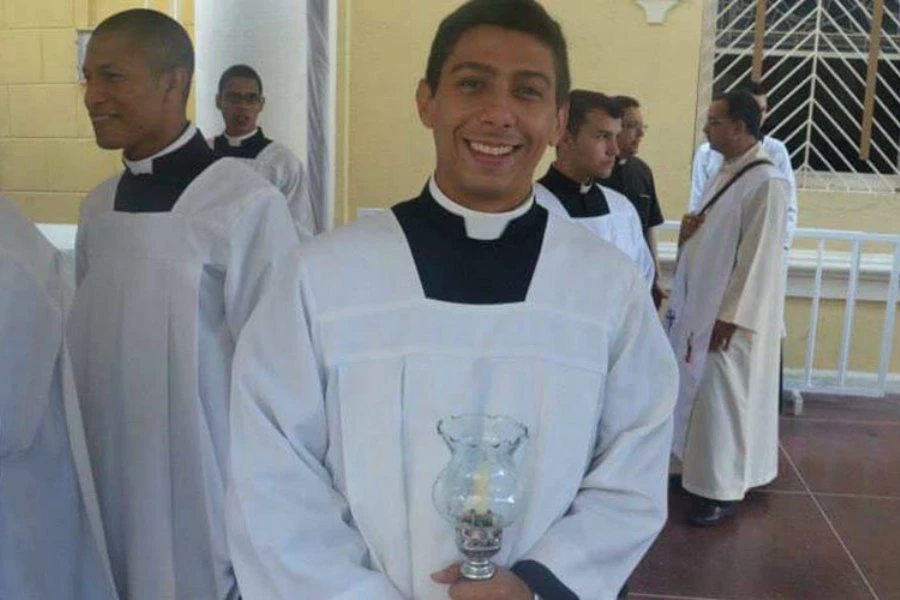
Maracaibo, Venezuela, Aug 22, 2018 / 12:23 am (ACI Prensa).- When Juan Pablo Hernandez returns to his home in the Archdiocese of Maracaibo, Venezuela next year, he will face a country suffering from a years-long economic crisis. But the 23-year-old seminarian is not afraid.

“I’m happy to go back home and to be able to help the people,” said Hernandez, who is currently studying in Spain.

“Giving them hope is essential. I want to bring them the joy and hope of Jesus Christ so that they can keep their heads above water,” he told ACI Prensa, CNA’s Spanish language sister agency.

Venezuela is in the midst of an ongoing economic crisis, as poor economic policies, including strict price controls, coupled with high inflation rates, have resulted in a severe lack of basic necessities such as toilet paper, milk, flour, diapers and medicines.

Added to shortages in food, healthcare supplies, and public services such as water and electricity are problems with personal safety, employment, the circulation and sale of cash, and insufficient public transport.

The city of Maracaibo, where Hernandez is from, has seen power outages lasting nearly three days, leaving food to spoil and the elderly to suffer in the summer heat.

The economic crisis has led 1.2 million refugees to flee Venezuela in the past two years, according to the Center for Strategic and International Studies (CSIS).

“The Church is suffering from this whole precarious situation right along with the people of Venezuela,” Hernandez said. “The government is asphyxiating us bit-by-bit, they want the people to lose hope and settle for the destitution they are given.”

But despite the devastating situation, “trust in God and in the Church has grown” throughout the country, he said.

Many people who did not formerly attend Mass are now “looking for God in the midst of the precariousness,” he said, and to these people, “the Church always extends a hand.”

Additionally, the lack of material goods “brings out people’s generosity, and groups are formed to help children and the sick.”

Something very common is the “mercy cooking pot” which is organized in the parishes where “people bring what they have – not what’s left over, because no one has any food left over – and with what there is, they cook it up and distribute some 300 servings,” Hernandez said.

It was precisely the desire “to be close to God and to help the people” that drew the seminarian to consider a vocation to the priesthood.

Hernandez said he first heard a call to the priesthood at a friend’s ordination Mass. At the time, he was 19 years old.

“During the celebration of the ordination…I felt something burning inside and that thing stayed with me. I was truly amazed that there are those who are capable of leaving everything to give themselves to God,” he said.

“I didn’t understand what was in the hearts of these people that were leaving everything and answering ‘Here I am Lord, your will be done’,” he recalled.

Although the experience was powerful, Hernandez did not initially consider pursuing the same path for himself. At the time, he had a girlfriend and was studying electrical engineering.

“I didn’t want to leave everything for something I would have no control over,” he said.

But a few years later, Hernandez could not shake the feeling “that there was something more I was missing, something greater.”

One day during Mass at his local parish, the priest asked if someone could assist as an altar server. Although Hernandez was above the typical age of altar servers, he volunteered.

“I saw that it was my opportunity to be close to everything that so much drew my attention a few years prior,” he said. “To be so close to the altar, the consecration, the Lord…All that stirred up in me what I had experienced at the ordination of my friend.”

From then on, he became more deeply involved in the parish – teaching catechism, organizing retreats, and joining the pastor in visits to the sick.

“I became impassioned with the priestly life, with being close to God in order to help people…it was a great joy,” he said.

“It wasn’t a commitment or a burden, it was something that came from within and made me very happy.”

It has now been seven years since Hernandez decided to become a priest. He is currently taking his final course of Ecclesiastical Studies at the University of Navarre in Spain. Looking back at the past seven years – and ahead to a priestly vocation – he has no regrets.

“I don’t know how the Lord does it, but every year surprises me more, and always with something better,” he said. “If I had not responded to his call, I wouldn’t be as happy as I am now.”


This article was originally published by our sister agency, ACI Prensa. It has been translated and adapted by CNA.


[…]

Journalist-turned-missionary finds happiness in evangelization

August 21, 2018 CNA Daily News 0

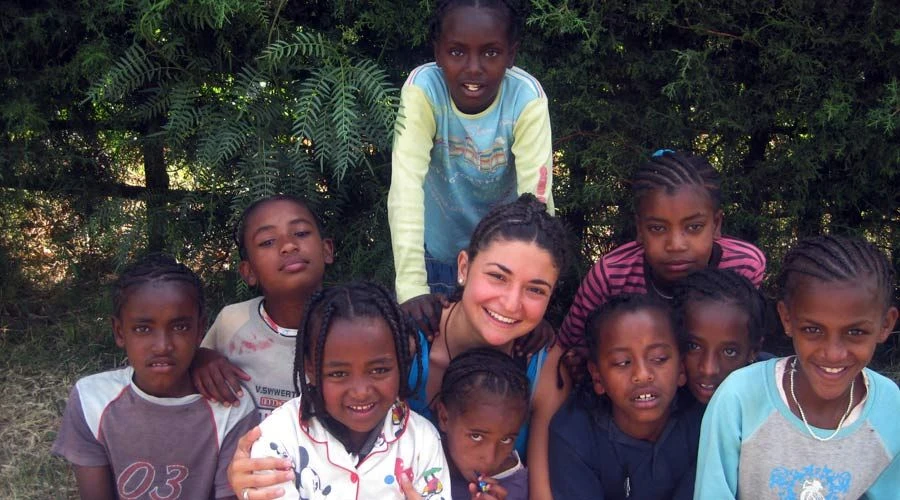
Addis Ababa, Ethiopia, Aug 21, 2018 / 08:33 pm (ACI Prensa).- Belén Manrique had a promising career in journalism, surrounded by good friends and family. But at age 30, she left her life in Spain behind to become a missionary in Ethiopia.

“I always say that the mission is never boring. It’s a thousand times better than what we could imagine. It’s a life full of surprises if you put yourself in the Lord’s hands,” she told ACI Prensa, CNA’s Spanish-language sister agency, during a recent visit to Rome.

“I live in Addis Ababa, the capital of Ethiopia, and my mission is to be a witness to the love of God there where he puts me, to build up the Church because it’s very poor there. The Christian community is very weak, and so it is very important to help the people know Jesus Christ,” she explained.

Despite worldly success, “the life I led did not fulfill me,” she said. “The plan God had for me was different, and when I discovered that what he wanted was for me to bring the love of God to people who don’t know him, I did not doubt God’s call – it wasn’t hard for me to leave my job as a journalist or leave Madrid.”

Manrique belongs to the Neocatechumenal Way, an ecclesial movement that focuses on post-baptismal adult formation. She said the movement helped her grow in faith.

“I was able to encounter Jesus Christ and realize that he’s the only one who gives happiness to man. I went there where I found the mission the Lord had planned for me.”

Her first destination in Ethiopia was the eastern desert, “where most people are Muslims.”

“I realized it was necessary for the Church to come there to bring the Gospel to those people who don’t know [Christ],” she said. “Ethiopia is 50 percent Muslim and 50 percent Christian, but most of them are Orthodox Christians. The Catholic Church is less than 1 percent of the population.”

“We’re building a ‘missio ad gentes’ on the outskirts of Addis Ababa, in a neighborhood where the Catholic Church has no presence. Besides the Orthodox, there are a lot of Protestants,” she said.

Manrique’s work consists of helping out in the parishes, and talking to people. She stressed that success in her mission is “not about gaining followers but of being witnesses and making Jesus Christ known.”

“Not long ago a boy asked me: ‘Can you be a Catholic without being a nun or a priest’? Most of the Catholics that have come to Ethiopia are nuns and priests, and so they have that thought.”

She added that she often encounters Ethiopians who want to leave their country, either to flee violence or because they have seen an idealized version of Europe on television, and believe life there to be luxurious and worry-free.

“Every day, there’s someone who asks me to bring him to my country, and I tell them that the one who’s not going back to her country is me,” she said. “I tell them that I lived in this idyllic world that they want to go to, and I have renounced it.”

“I explain that riches don’t give happiness, that I had all that which they long for and it wasn’t making me happy.  I’m much happier because God gives happiness and love for one’s neighbor.”


This article was originally published by our sister agency, ACI Prensa. It has been translated and adapted by CNA.

[…]