Pope Francis to miss Lent retreat due to cold

March 1, 2020 CNA Daily News 0

Vatican City, Mar 1, 2020 / 04:59 am (CNA).- Pope Francis said Sunday he will not take part in his annual Lenten retreat with the Roman Curia in Ariccia this week due to a cold he has had for several days.

“I also ask you to remember in prayer t… […]

Senators respond to defeat of pro-life bills

February 29, 2020 CNA Daily News 0

Washington D.C., Feb 29, 2020 / 09:00 am (CNA).- Two pieces of pro-life legislation failed to overcome a Democratic filibuster this week—but two pro-life senators said the bills forced debate on a vital subject.

The Pain-Capable Unborn-Child Protection Act, introduced by Sen. Lindsey Graham (R- S.C.), would have banned elective abortions after five months, the point at which science suggests an unborn child can feel pain. The Born-Alive Abortion Survivors Protection Act, introduced by Sen. Ben Sasse (R-Neb.), would have required that a child who survives a botched abortion attempt receive the appropriate medical care for their gestational age.

Although both bills received majority support, they each failed to reach the 60-vote threshold required to proceed. Three Democratic senators—Sens. Doug Joes, Bob Casey, and Joe Manchin—broke with their party to support the Born-Alive bill. Casey and Manchin also voted in support of the Pain-Capable Bill, while Republican Sens. Susan Collins and Lisa Murkowski voted against it.

Sen. Joni Ernst (R-Iowa), an original co-sponsor of both the Pain-Capable and Born-Alive bills, told EWTN Pro-Life Weekly on Thursday that passing these pieces of legislation would have been a “great step forward.”

Ernst noted that contrary to some arguments from pro-choice senators, the Born-Alive bill would not restrict abortion procedures.

“These are living, breathing, babies that are born,” Ernst said. “They are born alive. And so they are outside of the mother’s womb. They are babies, and they should be cared for.”

Ernst argued that both bills are in the interest of women as well as the unborn.

“I would say that every woman, every girl, regardless of age, in the womb, to an old, old age, every woman should be respected. Every life is valuable,” Ernst said, adding, “So I see these bills as being very pro-woman. We’re trying to protect that young girl, that baby in the womb, and make sure that she has every opportunity given to every other child that’s wanted.”

“We are trying to protect that young girl, that baby in the womb, and make sure that she has every opportunity given to any other child that’s wanted.” @SenJoniErnst explains why #ProLife is #ProWoman. pic.twitter.com/VkVnc9ur1m

— EWTN Pro-Life Weekly (@EWTNProLife) February 27, 2020


Ernst said despite the defeat, she hopes to win the support of her pro-choice colleagues on these bills.

“I am always hopeful,” she said. “I am an eternal optimist and I think that these bills and the stories behind some of these bills will resonate with our friends and colleagues on the left, and I am hoping that they do draw something from deep down inside of them and understand that we can be pro-life and pro-life is pro-woman, and hopefully that they would come to understand that and support us on these very, very important pro-life measures.”

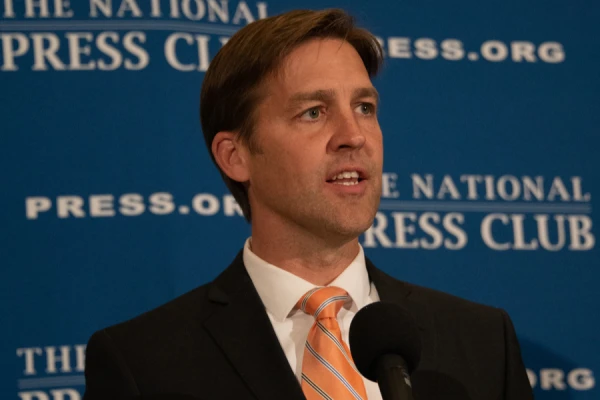
Sen. Ben Sasse (R-Neb.), who authored the Born-Alive bill, argued the legislation should have passed “one hundred to zero.” 

“We had 44 Democrats not with us, 41 actively filibustered, and three were off on the presidential campaign trail where they’re pretending to kiss babies, but they wouldn’t actually show up to vote to protect real-life babies,” Sasse said during a Thursday interview on EWTN Pro-Life Weekly.


“We had 44 Democrats not with us, 41 actively filibustered, and 3 were off on the Presidential campaign trail where they’re pretending to kiss babies, but they wouldn’t actually show up to vote to protect real life babies.” @SenSasse on the Born-Alive bill Senate failed to pass. pic.twitter.com/wP2YWJv6u4

— EWTN Pro-Life Weekly (@EWTNProLife) February 27, 2020


Sasse said although he is disappointed by the outcome of the vote, “we want to keep drawing more attention to this and force people to have these conversations about these moral responsibilities we have to love the weakest and most vulnerable among us.”

Kate Scanlon is a producer for EWTN Pro-Life Weekly.

[…]

Canadian hospice forced to close after refusing to offer assisted dying

February 28, 2020 CNA Daily News 1

Vancouver, Canada, Feb 28, 2020 / 05:00 pm (CNA).- A hospice in Canada has lost its funding and is being forced to close after refusing to offer and perform medically assisted suicides.

The Irene Thomas Hospice in Delta, British Columbia, will lose $1.5 million in funding and will no longer be permitted to operate as a hospice as of February 25, 2021. Fraser Health Authority, one of the six public health care authorities in the province, announced on Tuesday that it would be ending its relationship with the hospice over its refusal to provide medically assisted deaths to its patients. 

Per Fraser Health’s contract with the Delta Hospice Society, which administers the Irene Thomas Hospice, a one-year notice had to be provided before funding could be withdrawn without cause.

“We have made every effort to support the board to come into compliance and they have been clear that they have no intention to,” said British Columbia Health Minister Adrian Dix in a statement.

Dix said that the decision to pull funding was taken “reluctantly,” and that “when the role of the Delta Hospice Society concludes, patients in publicly funded hospice care will again be able to fully access their medical rights.”

A press release from Delta Hospice said that while it is not affiliated with a religion, the board of the Delta Hospice Society is opposed to medically assisted death on moral and philosophical grounds. 

“Delta Hospice officials were shocked and outraged this week by the Fraser Health Authority’s blatant move to cut off all discussions and close the facility because it wants the hospice to provide MAiD (Medical Assistance in Dying) at every facility,” said the statement. 

“The Irene Thomas Hospice is dedicated to allowing patients access to expert symptom management for physical, emotional and spiritual distress. It provides comfort, meaning dignity and hope as one dies a natural death.” 

In September 2016, about three months after medically assissted suicide became legal in Canada, Fraser Health introduced a new policy which required all hospices receiving more than 50% of provincial funding for their beds to offer the procedure to their residents. The hospice receives $1.4 million of its $3 million operating budget from the Fraser Health Authority, and Fraser Health funds virtually all of the beds at Irene Thomas Hospice. 

Angelina Ireland, president of the Delta Hospice Society, said in the press release that Fraser Health ignored her request to lower the amount of funding to below the 50% threshold, and also forbade the hospice from finding another partner to work with. 

After the contract with Fraser Health ends, the public health authority intends to take over the buildings that currently compose the Irene Thomas Hospital and bring in medically assisted dying. 

“By refusing to allow us to find another partner, [Fraser Health is] basically forcing us to be in default of our lease–because in order to have our lease, we have to be a hospice,” Ireland said. 

“They feel that they can just come in and seize our assets.” 

Ireland told CNA that although the facilities are on land that is leased from the government, the buildings were constructed using donations from the community of Delta.

“We built this facility,” she said. “We built that 10 years ago, and we put $9 million into that of privately-raised money from donations.” 

“This didn’t come from the taxpayer. This came from private people.” 

The Delta Hospice Society wishes to provide patients with a peaceful natural death, not actively end patients’ lives, Ireland explained to CNA. 

“[The hospice] worked really hard to have the people to trust us that when they come to hospice they will not be killed,” she said. “We will take care of them, they will take care of their families. And now basically the government has said that any hospice that does not provide euthanasia, it’s not allowed to exist.”

Ireland called this a “direct attack” on the medical specialty of palliative care. 

Faith-based healthcare organizations, as well as medical professionals opposed to MAiD, are not required to offer medically assisted suicide to patients in Canada. Doctors, however, must refer patients seeking an “assisted death” to a healthcare provider who is willing to euthanize them. 

Assisted dying is readily available at Delta Hospital, which is a one-minute drive from the Irene Thomas Hospice.

[…]

Some Kansas nuns urge Medicaid expansion despite risk of taxpayer-funded abortions

February 28, 2020 CNA Daily News 0

Topeka, Kansas, Feb 28, 2020 / 02:41 pm (CNA).- Despite cautioning from the Kansas Catholic Conference that Medicaid expansion in the state could lead to more state-funded abortions, a group of 76 nuns in the state have signed a petition urging lawmakers to go ahead with the expansion as soon as possible.

“Expanding KanCare [Medicaid in Kansas] is a lifesaving measure,” the nuns wrote Feb. 25.

“Expansion increases access to high-quality care for those who would otherwise go without healthcare. We implore you to approve Medicaid expansion, because we cannot wait any longer to give Kansans the care they so desperately need.”

The nuns insisted that the Kansas legislature “listen to the will of the voters and pass Medicaid expansion without any strings attached.”

“It is morally unconscionable to play political games with the lives of Kansans, especially children, seniors, and people with disabilities,” the nuns wrote.

NETWORK Lobby for Catholic Social Justice, a national group and longtime supporter of Medicaid expansion, coordinated the letter.

There are currently an estimated 400,000 people enrolled in Medicaid in Kansas. The Medicaid expansion bill currently under consideration would extend eligibility to an additional 130,000 low-income adults and children, the Topeka Capital-Journal reports.

Then-governor Sam Brownback vetoed Medicaid expansion in 2017, citing the budget crisis the state was experiencing at the time. The state’s new governor, Democrat Laura Kelly, made Medicaid expansion a key issue in her 2018 campaign.

The Kansas Catholic Conference, while supporting Medicaid expansion in the state, has expressly supported a constitutional amendment stating that abortion is not a “natural” constitutional right in Kansas – known as the “Value Them Both” amendment – as a precondition.

Sister Simone Campbell, Executive Director of NETWORK, told CNA in an interview that she believes Kansas already has adequate protection against state funding for abortion without the proposed constitutional amendment. The letter makes no mention of abortion.

The impetus for the amendment is an April 2019 ruling from the Kansas Supreme Court blocking a law that would have banned dilation and evacuation abortions, which found that the state consitution protects a women’s right to have an abortion.

In light of the ruling, Republican lawmakers in the state are pushing for a constitutional amendment to ensure Medicaid funds do not go to elective abortions. The amendment has so far failed to garner the two-thirds majority support necessary in the state House.

The proposed amendment would condify that “the constitution of the state of Kansas does not require government funding of abortion and does not create or secure a right to abortion.” Should the amendment gain support from two-thirds of the Kansas House, the subsequent referendum would take place during the state primaries in August.

Campbell pointed out that there is currently a Kansas statute on the books prohibiting state dollars being used for abortions.

While other states, such as California and Illinois, have chosen to use state dollars to fund abortions, “the state of Kansas hasn’t chosen to do it.”

“I’m not sure why they’re so worried about this,” she said.

“I think there’s adequate protection already. Let’s get Kansans the healthcare they need and stop the political posturing…Let’s get people healthcare, and then let’s see if there’s even this risk that [the KCC] is afraid of.”

For his part, Chuck Weber, executive director of the Kansas Catholic Conference, remains adamant that the idea that Kansas could soon use state money to pay for elective abortions is not as far-fetched as Campell would have people believe.

The federal Hyde Amendment bars federal funds for abortions except in cases of rape, incest, or life endangerment.

At least 16 states,  not including Kansas, currently use their own funds to pay for additional abortions outside of those conditions.

According to records from the Kansas Department of Health and Environment, Medicaid in Kansas covered one abortion in 2014 and three in 2018, KCUR reported.

Despite this, pro-life advocates have noted that limits on publicly funded abortion through state Medicaid programs have been struck down by the state supreme courts of Alaska, California, Massachusetts, Minnesota, and New Jersey, and overall, nine state Medicaid programs now cover elective abortions as the result of judicial rulings, according to National Review.

“It is disingenuous to put on political blinders and ignore the other elephant in the room so closely connected to this issue,” Weber said in an email to CNA.

“If Kansas passes Medicaid Expansion without the protection of the state constitutional amendment … then we are virtually assuring that taxpayer-funded abortion will become a reality in Kansas.”

The Special Committee on Medicaid Expansion, a joint House and Senate panel, held two days of hearings discussing an expansion of KanCare during November 2019.

Weber said in his Nov. 12 testimony that the conference cannot support Medicaid expansion unless it explicitly excludes the expansion of abortion coverage, includes conscience protections for healthcare organizations and individuals, and the state constitutional amendment is enacted to clarify that abortion is not a natural right.

Weber told CNA on Thursday that the KCC has contacted NETWORK to ask: “Why not help legislators to pass Value Them Both, which will then open the logjam to Medicaid Expansion in Kansas?”

“This is the authentically Catholic position, a classic win-win that helps save babies, protect women and provide healthcare to families,” Weber said.

For her part, Campbell reiterated to CNA that she sees the risk of Kansas taxpayer-funded abortions as small, and that for her “the urgency now is getting people healthcare.”

“For me, what I see the Kansas [Catholic] Conference doing is stopping care for everybody else because they have a fear of what the Supreme Court might do. And this is anguish in my heart. We gotta care for the born, also. So let’s deal with the born. Let’s get ’em healthcare.”

Sr. Campbell has led the “Nuns on the Bus” advocacy campaign that has the support of the group Faith in Public Life and U.S. Vice President Joseph Biden. She also delivered a speech at the 2012 Democratic National Convention.

NETWORK has, in the past, disagreed with the USCCB on support for various legislative efforts, including the extent to which the Affordable Care Act adequately forbade federal funding for abortion.

NETWORK also found itself at odds with the USCCB when it came out in support of the 2019 Equality Act, which has passed in the House, which would add sexual orientation and gender identity to the definition of “sex” in federal civil rights laws.

[…]