‘We will take to the streets’: Cardinal demands answers over 2019 Easter bombings
March 10, 2020 CNA Daily News 0

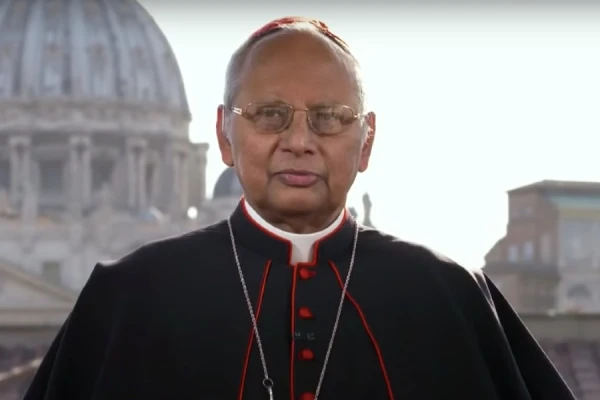
Colombo, Sri Lanka, Mar 10, 2020 / 11:10 am (CNA).- Cardinal Malcom Ranjith of Colombo has said he will lead public protests if the Sri Lankan government fails to produce a credible report on the 2019 Easter Sunday bombings. The cardinal said Saturday that questions about government inaction ahead of the attacks remain unanswered.

“I will not hesitate to hit the streets to safeguard the rights of our people,” Ranjith said March 7, according to the news site Outlook India. The cardinal had previously expressed support for an ongoing presidential enquiry into the attacks, which killed 259 people and injured more than 500.

Two Catholic churches, one evangelical Christian church, four hotels, and a housing complex were hit by a total of nine suicide bombers on Easter Sunday, 2019. The suicide bombers, who were all Sri Lankan citizens, belonged to an Islamist group known as the National Thowheeth Jama’ath.

In the aftermath of the attacks, Sri Lankan authorities were heavily criticized for failing to prevent the attacks. It has been reported that Indian intelligence services repeatedly warned Sri Lanka about the possibility of an attack occurring on Easter Sunday, including on the morning of the attacks. 

“Nobody took serious note,” said Ranjith in June. “This disaster could have been prevented because if I knew that there was an attack planned I would have closed the churches and told the people to go home.”

Last month, the cardinal issued a call for full public disclosure of what was known in advance of the attacks, and what action was taken.

“The people of this country have a right to know the truth about the Easter bomb attacks,” said Ranjith on Feb. 18. “We hope that our political leaders will work to fulfill that obligation.” 

Speaking to reporters on Saturday, the cardinal repeated his concerns and his impatience with the lack of progress with ongoing government investigations.

“I can sense that some of the things which need to come out are being hidden – who was responsible? Who aided them and kept contact with them?”

“There must be questioning from the highest to the very lowest level,” the cardinal said.

Speaking at a separate event on Sunday, Ranjith said that “investigations into the Easter Sunday attacks have revealed that current government-related ‘big people’ have also been involved, and no action has been taken against them.”

Sri Lankan President Gotabaya Rajapaksa, who assumed office in November 2019, has worked with Ranjith on the investigation into the attacks, and asked him to appoint a representative to a special presidential commission examining the bombings.

Ranjith did not nominate a representative, and instead appeared before the commission himself on December 6 and 7 last year. 

Ranjith said at the time that he wished to represent the concerns of both the victims and the country’s Catholic community.

Referencing the forthcoming parliamentary elections in Sri Lanka, scheduled for April 25, Ranjith said on Sunday that he was not seeking a change of government, but justice for the victims of the attacks. “We will take to the streets with our people whether we have this election or not,” he said.

In addition to his calls for more transparency from government authorities, Ranjith has also announced services to mark the anniversary of the attack, with prayer services and holy hours at all churches in the archdiocese from April 17-21 to pray for the bombing victims and their families.

“It is the responsibility of the Archdiocese of Colombo to never forget all those who lost their lives in this tragic attack on that day,” the cardinal said last month. 

Two of the prayer services will be held at St. Anthony’s Shrine in Kotahena and St. Sebastian’s Church in Negombo, the locations of the attacks. Those services will be held on April 20.
[…]

Polish archbishop: Not praying in churches during outbreak ‘unthinkable’

March 10, 2020 CNA Daily News 2

Poznan, Poland, Mar 10, 2020 / 10:50 am (CNA).- The president of the Polish bishops’ conference has asked for an increase in the number of Sunday Masses said in the country so that more people can attend safely amid the coronavirus outbreak.

“In connection with the recommendations of the Chief Sanitary Inspector that there should be no large gatherings of people, I ask to increase – as far as possible – the number of Sunday Masses in churches so that a number of believers can attend the liturgy … according to the guidelines of the sanitary services,” Archbishop Stanisław Gądecki of Poznań wrote in a statement sent March 10 to CNA.

Because among a church’s function is to cure spiritual disease, “it is unthinkable that we do not pray in our churches,” he reflected.

According to the World Health Organization, there are 11 confirmed cases of coronavirus in Poland, and zero deaths. The country has imported cases only; that is, all cases have been acquired outside its territory.

Worldwide, there are 109,577 confirmed cases, and 3,809 deaths.

Archbishop Gądecki recalled that in these circumstances, the elderly and sick have no obligation to attend Mass, and added that “there is no requirement to exchange the sign of peace by shaking hands during Holy Mass.”

He asked for prayers for those who have died as a result of coronavirus, adding: “Let us pray for the health of the sick and for the physicians, medical personnel and all services that work to stop the spread of the virus,” and “for the epidemic to end.”

Archbishop Gądecki especially encouraged, “in accordance with the tradition of the Church”, praying the Trisagion, from the Adoration of the Cross during the Mass of the Presanctified on Good Friday.

Many Churches around the world have issued precautionary guidelines for Masses, or cancelled public Masses entirely, because of the coronavirus outbreak which originated in China late last year.

The new strain of coronavirus causes a respiratory disease, COVID-19, and has a fatality rate of roughly 3%. The vast majority of cases and deaths have been in China.

[…]

Women deacons possible after ‘Synodal Way,’ says German bishops’ chairman

March 10, 2020 CNA Daily News 4

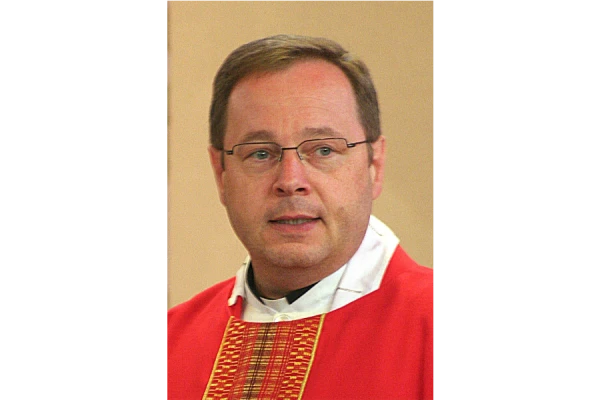
Berlin, Germany, Mar 10, 2020 / 09:00 am (CNA).- The new chairman of the German bishops’ conference has said that calling for the ordination of women could be a conclusion of the two-year “synodal way” being undertaken by the Church in Germany. Bishop Georg Bätzing of Limburg said in a radio interview Monday for International Women’s Day that such a conclusion would require Roman approval.

In an interview with WDR5 March 9, Bishop Bätzing answered questions on the role and future of women in the Church. He said that if the “synodal way” calls for the ordination of women to the diaconate, Rome would have to grant an indult to allow German bishops to begin ordaining women. In that event, he said, it would be important that the synodal assembly call for the change with “a very strong voice.”  

Bätzing said that if bishops and laity united to present a “strong appearance,” Rome would be more likely to respond positively.

Speaking after his election last week, he said that the role of women “is the most pressing question we have concerning the future” of Church. “That is where the Church really has a backlog. We won’t be able to wait. Women must be given equal rights,” the bishop said on the ARD morning program.

Bätzing also said that Pope Francis “did not take a position” on the possibility of ordaining women to the deaconate, which last year’s Synod on the Amazon recommended for further consideration, and that the subject was open for further discussion.

The bishop’s Monday interview coincided with International Women’s Day. In Germany, the day was marked by demonstrations outside Catholic churches and cathedrals by organizations calling for “equal” participation for women in the life of the Church through sacramental ordination to all ranks of the clergy. In Cologne, and estimated 700 protestors, led by the group Maria 2.0, protested the Church’s teaching on the reservation of priestly ordination to men alone and called for an end to clerical celibacy.

The two year “binding synodal process” is being conducted by the German bishops in partnership with the Central Committee of German Catholics (ZdK). Its first full assembly convened in January and its working groups are preparing proposals for reform on matters of Church teaching and discipline on marriage, ordination, clerical celibacy, and sexual ethics.

Bätzing has said he “fully supports the synodal way,” calling it “at the center of our considerations” for the Church in Germany.”

At the conclusion of the process, different proposals will be put to the synodal assembly for a vote, with bishops and lay people participating equally. The ZdK leadership have called for the Church to ordain women and to bless same-sex unions.

Bätzing was elected chairman of the German bishops’ conference on March 3, replacing Cardinal Reinhard Marx of Münich and Freising, who declined to seek reelection, citing his desire to spend more time in his diocese and allow a younger generation of bishops to lead the Church in Germany.

In the past, Bätzing has endorsed positions calling for a revision of Church discipline on the Eucharist, but insisted that any deviation from universal practice requires Roman approval.

In September, 2019, Bätzing co-chaired an ecumenical working group of Catholic and Protestant theologians which produced a document, titled “Together at the Lord’s Table,” which concluded that “mutual participation in the celebration of the Lord’s Supper / Eucharist is theologically justified.”

At the time of the document’s release, Bätzing noted that he had joined the group late in the process and initially asked himself “whether [he] can agree to this or not.”

“But I have to say, the theological justification in this basic paper is so clear to me that I did not want to and could not escape.”

In the Catholic Church, only baptized Catholics in a state of grace are permitted to receive Communion. The Code of Canon Law outlines very narrow circumstances in which non-Catholics may be admitted to Communion. While bishops in several northern European countries have repeatedly called for Eucharistic intercommunion, this has been rejected by Rome.

Acknowledging this at the time of the report’s release, Bätzing said that his own certainty on the issue did not mean he was free to alter sacramental discipline.

“However, this does not mean that I am a bishop alone, but the theological discussion must now be raised to the level of a teaching reception, i.e. an acceptance by the Magisterium of the Catholic Church. And this process is pending,” he said.

[…]

Italian police close St. Peter’s Square to public

March 10, 2020 CNA Daily News 0

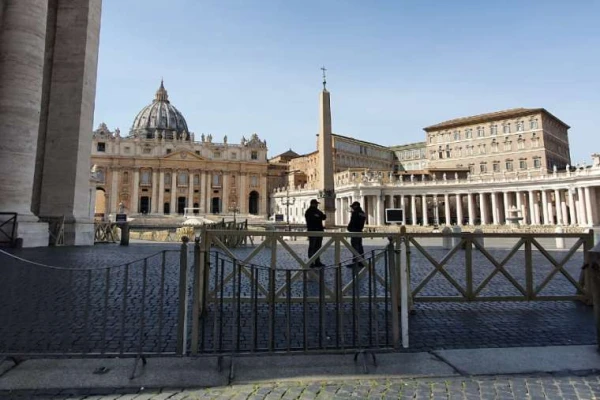
Vatican City, Mar 10, 2020 / 06:29 am (CNA).- The Italian police closed St. Peter’s Square Tuesday following the Italian government decree extending quarantine measures to all of Italy to slow the spread of coronavirus.

The Italian authorities have jurisdiction over the square, which they closed shortly before noon on March 10.

Italian police told CNA the square is closed and no one may enter except for work purposes.

Swiss guards at St. Peter’s Square confirmed to CNA that tourists and pilgrims are not allowed to enter the basilica to pray because if the square is closed the basilica is also “automatically” closed. One said they are waiting for more information.

The Vatican City State has its own legal order that is autonomous and separate from the Italian legal system, but the Holy See Press Office Director has repeatedly stated that Vatican City is implementing measures to prevent the spread of coronavirus in coordination with the Italian authorities.

Italian police closed St. Peter’s Square (under their jurisdiction) shortly before noon today. Swiss Guards told me this means the Basilica is also “automatically” closed.

People may continue to enter the Vatican, and the square, for work purposes. pic.twitter.com/Ode0YDF6Nc

— Hannah Brockhaus (@HannahBrockhaus) March 10, 2020

Scheduled Masses in St. Peter’s Basilica and Sant’Anna in the Vatican took place March 9 and 10 before the closure, as did confessions inside of the basilica, following a previous Italian government decree March 8 suspending all public religious ceremonies.

The thousands of priests who currently reside in the Diocese of Rome are still allowed to celebrate Mass privately after the diocese canceled public Masses on March 8 to abide by the government decree.

Churches throughout the city have also remained open for private prayer with some parishes choosing to offer Eucharistic Adoration. Religious communities in Rome have also told CNA that they have continued to attend private Masses in their residences.

Bishops from France offered a private Mass in the crypt chapel of St. Peter’s Basilica at the tomb of St. Peter March 9, and sat one meter apart during their ad limina meeting with Pope Francis later that day.

The nationwide quarantine in Italy restricts movement around the country and between regions. Restaurants and bars must close at 6pm and gathering in groups is forbidden.

People are encouraged to stay home, but may move around the city for work, to go to the grocery store or pharmacy, or for medical care. In public, people are asked to keep one meter of distance from each other.

Several Vatican officials told CNA that work inside Vatican offices continues despite coronavirus.

Employees and officials have been asked to remain one meter away from each other at all times, to restrict visits from guests, and to not gather around the coffee machine, one official said. He also said essential offices are fully staffed and open for the time being.

An official from another office said he “would be very surprised” if he were asked to work from home, as this is never done. He said for him, work “continues as normal,” but there is some uncertainty for the future.

The Holy See press office is open its regular hours with some employees working remotely. The communications office, where Vatican Media employees work, is working out a system for coverage with fewer employees in the office, but remains open.

[…]

Argentine bishops hold pro-life Mass as president plans to legalize abortion

March 9, 2020 CNA Daily News 1

Lujan, Argentina, Mar 9, 2020 / 06:18 pm (CNA).- As the Argentine president prepares to send a bill to the legislature legalizing abortion, thousands attended a pro-life Mass March 8 at the Basilica of Our Lady of Lujan.

The Mas Vida Foundation estimated  the attendance at more than 100,000 people.

The Argentine bishops’ conference organized the Mass with the theme “Yes to women, yes to life.” The main celebrant was Bishop Oscar Vicente Ojea Quintana of San Isidro, who is president of the conference.

The purpose of the event was to oppose the bill to legalize abortion to be sent by President Alberto Fernandez to the Congress, which was announced last week.

Argentine law allows abortion in cases when the mother’s life or health is in danger, or in cases of rape.

In his homily, Bishop Ojea said that “in this Eucharist we have come to celebrate and express our gratitude for the lives of so many women united in the sentiment of so many people in the world on this international women’s day.”

“We value your irreplaceable presence in families and and we celebrate the increasingly greater place you have in our society,” the prelate said, and that added that all have come to Luján to “pray for all women so their lives, their safety and their rights are respected, overcoming every kind of exclusion.”

“But in a special way, we want to celebrate and appreciate women’s closeness and commitment to life,” he said, and especially those “intelligent and brave women who commit their lives day after day, that life that sometimes makes it presence known with an unplanned pregnancy, which perhaps doesn’t come at the best time, but they are completely committed to care for this new being they have received.”

The bishop underscored that “there are millions of Argentine men and women, believers and non-believers” who “have the profound conviction that there is life from conception and that a different person than the mother is developing in her womb.” In addition he emphasized that “it is unfair and distressing to call them anti-rights or hypocrites.”  

“In reality, we value and defend the rights of each and every life, of every woman and every unborn child,” the president of the bishops’ conference said.

He stressed that “It’s not right to eliminate any human life, as our National Constitution affirms,”
and that “violence and death are the exact opposite of Jesus’ plan.”

“Life is the first right and without it no others can be given.  We claim it for everyone  at any age or in any situation that life finds itself in, and especially those who are weak, unprotected and defenseless,” he said.

At the same time Bishop Ojea said that the members of the Church “wholeheartedly deplore the cruelty of femicide and every kind of violence and discrimination against women” such as “ abuse in all its forms whether sexual, psychological or the abuse of power, whatever the environment where it occurs, the family, work, school, the street, and painfully we must also say in the Church.”

“Let us renew at this Eucharist our commitment to banish from us a culture that can foster cover up and any kind of complicit silence in face of this crime,” the bishop said.

He also called for civility in debating public policy and spoke against silencing or stigmatizing people which can only deepen the divisions in Argentine society.

The bishop asked  the clergy to support “the implementation of sex education that is truly integral” and “policies that recognize the equal dignity of men and women in society.”

Bishop Ojea expressed support for public policies to assist pregnant women, especially those in situations where there is conflict or extreme vulnerability and noted “we’re already doing it in a lot of our communities.”

A bill to legalize abortion through the first 14 weeks of gestation narrowly passed the Chamber of Deputies in 2018, but was rejected by the Senate.

[…]

Peruvian cardinal calls for suppression of Sodalitium Christianae Vitae

March 9, 2020 CNA Daily News 1

Lima, Peru, Mar 9, 2020 / 06:10 pm (CNA).- A Peruvian cardinal has said that the Vatican has been asked to dissolve the Sodalitium Christianae Vitae, a Peruvian religious community whose founder sexually and psychologically abused members, and committed other abuses of power.

“I personally think, when a religious organization has committed a crime, and it must be said that way, from the point of view of sexual abuse and the financial matters, that there are problems and it must be dissolved; and that is the point where we are on this road, and I know that the Holy See is on that road,” Cardinal Pedro Barreto Jimeno said March 10 during an interview with Peru’s Radio Santa Rosa.

“There are good people within the Sodalitium, so we cannot put them all in the same bag. The underlying problem is that the founder is, not only seriously questioned, but I repeat, with much regret, he is a perverted person and such a person cannot transmit and encourage the sanctity of life that Pope Francis himself in an apostolic exhortation manifested.”

The cardinal said that other bishops in Peru, including the president of the country’s episcopal conference are in agreement with him about the Sodalitium. He said that dicasteries of the Holy See, while not disagreeing with their conclusion, have not yet found a definitive way to move forward on suppression of the religious congregation.

“My personal position is that this religious community should be dissolved, and those within it can be helped, so that they can live authentic lives, and I believe that many people share this view. This is a proposal that many of us are talking about, and it is not that Pope Francis or the dicasteries of the Holy See disagree, but we are on a path,” he added.

The cardinal, a member of the Society of Jesus, was appointed to lead the Peruvian Archdiocese of Huancayo in 2004. He was made a cardinal in 2018.

The Sodalitium Christianae Vitae declined to comment on the cardinal’s remarks.

The group is a society of apostolic life founded in 1971 in Peru, and granted pontifical recognition in 1997. Alejandro Bermudez, executive director of CNA, is a member of the Sodalitium Christianae Vitae.

The Sodalitium’s founder, Luis Fernando Figari, stepped down as superior general in 2010, after allegations surfaced that he had committed serial acts of abuse while leading the community. Other former leaders of the community have since faced related abuse allegations, and several remain subject to law enforcement investigations.

In February 2017, a team of independent investigators commissioned by the Sodalitium reported that “Figari sexually assaulted at least one child, manipulated, sexually abused, or harmed several other young people; and physically or psychologically abused dozens of others.”

Figari was subsequently forbidden from the group’s community life, from any contact with the religious community, and from him from returning to Peru. Figari was also forbidden to make any public statements.

In January 2018, Pope Francis appointed Colombian Bishop Noel Antonio Londoño Buitrago C.Ss.R. as papal commissioner for the society, tasking him with overseeing an ongoing process of reform that began after allegations against Figari came to light. Cardinal Joseph Tobin of Newark was tasked in 2016 with assisting the community’s reform process and its internal investigations of alleged misconduct.
 
In 2019, the community elected Colombian José David Correa González as its new superior general.

Prosecutors in Peru are believed to be deliberating about the possibility of criminal charges in connection to acts of abuse which took place with the Sodalitium.


ACI Prensa, CNA’s Spanish-language news partner, contributed to this report.


[…]

Filipino bishops say abuse of women is an ‘affront to God’

March 9, 2020 CNA Daily News 0

Borongan, Philippines, Mar 9, 2020 / 03:36 pm (CNA).- The Catholic Bishops’ Conference of the Philippines has highlighted the value of women, noting that abuse of women is “an affront to God.”

“God made man and woman according to his own image and likeness. Every offense against the dignity of women is a direct offense against God himself,” said Bishop Crispin Varquez of Borongan, chairman of the CBCP’s Commission on Women.

“Every woman is entitled to the respect of every man and other women; no woman should ever be treated as a mere object for another person’s satisfaction.”

The prelate issued a statement following International Women’s Day on Sunday. He decried the terrible actions women often face, such as prostitution, sexual abuse, violence, and discrimination.

In recent years, Philippine President Rodrigo Duterte has been accused of making light of comments about rape. During a 2018 speech, the president said: “As long as there are many beautiful women, there will be more rape cases,” UCA News reported.

Joms Salvador, secretary-general of women’s group Gabriela, said abuses against women have only worsened under the current presidential office. Protesters at a Sunday rally set fire to an image of Duterte, whom they have accused of being a misogynist, according to UCA News.

Varquez highlighted the unique value of each gender. He said, while each sex is different, they provide a complementary good and deserve the same amount of respect.

“There are specific tasks in life that only a woman can do just as there are specific tasks that are meant only for a man. But man and woman are equal in dignity. Their true relationship is to complement and complete each other,” he said.

He drew attention to the Blessed Virgin Mary, emphasizing her role in salvation history. He said, through her “fiat,” she became the mother of God and the mother of the Church.

In a woman’s womb “life comes as a gift from God. Through her, God forms and nurtures a new human person. Indispensable and unique is her service and contribution to the family, the Church, and the social order,” he said.

“To them I say then, nurture what is good in your families. Raise God-loving, responsible and happy children, remembering that it is in your homes, no matter how humble, that we begin to form citizens of the world.”

[…]

Hearing delayed in lawsuit over teacher’s firing for same-sex marriage

March 9, 2020 CNA Daily News 0

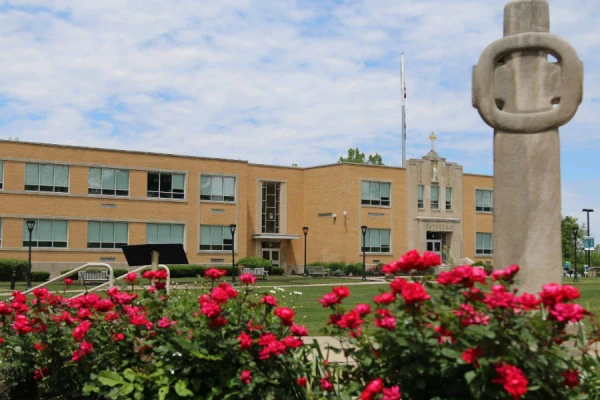
Indianapolis, Ind., Mar 9, 2020 / 02:24 pm (CNA).- Indiana’s Marion Superior Court has postponed a hearing scheduled for Tuesday in a religious liberty case over whether a Catholic school may dismiss a teacher for publicly violating Church teaching.

Becket, which is representing the the Archdiocese of Indianapolis in the case, has announced that a March 10 hearing in Payne-Elliott v. Archdiocese of Indianapolis “has been postponed for medical reasons.”

It added that the hearing will be reset at a later date.

Joshua Payne-Elliott, a former teacher at Cathedral High School in Indianapolis, filed a lawsuit claiming that the archdiocese illegally interfered in his professional relationship with Cathedral High School, leading the school to terminate his contract in June 2019.

Joshua and Layton Payne-Elliott had contracted a same-sex civil marriage in 2017.

Joshua was dismissed from Cathedral High because contracting a same-sex marriage violates archdiocesan policies and Catholic teaching.

“Archbishop Thompson made it clear that Cathedral’s continued employment of a teacher in a public, same-sex marriage would result in our forfeiting our Catholic identity due to our employment of an individual living in contradiction to Catholic teaching on marriage,” Cathedral High School leaders said in a June 2019 letter.

“Therefore, in order to remain a Catholic Holy Cross School, Cathedral must follow the direct guidance given to us by Archbishop Thompson and separate from the teacher,” said the letter, signed by Matt Cohoat, chairman of Cathedral High School’s board of directors, and Rob Bridges, the school’s president.

Layton is employed as a teacher at Brebeuf Jesuit Preparatory School. The school’s Catholic identity was revoked by the Archbishop of Indianapolis in 2019 after a disagreement about Layton’s employment. The revocation is temporarily suspended while the Congregation for Catholic Education considers an appeal.

In 2017, Archbishop Charles Thompson of Indianapolis had requested that Cathedral High School and Brebeuf Jesuit Preparatory School not renew the Payne-Elliotts’ contracts.

Joshua Payne-Elliott filed a lawsuit against the archdiocese in protest of his dismissal in August 2019, one day after having reached a settlement with Cathedral High School.

Jay Mercer, an attorney for the archdiocese, has said that “The Supreme Court has repeatedly recognized that churches have a constitutional right to determine rules for religious schools, and that religious schools have a constitutional right to hire leaders who support the schools’ religious mission.”

“Families rely on the Archdiocese to uphold the fullness of Catholic social teaching throughout its schools, and the Constitution fully protects the Church’s efforts to do so,” he added.

The Department of Justice has said that the school’s decision was protected by the First Amendment.

“This case presents an important question: whether a religious entity’s interpretation and implementation of its own religious teachings can expose it to third-party intentional-tort liability. The First Amendment answers that question in the negative,” a Justice Department statement of interest said.

It added that “religious employers are entitled to employ only persons whose beliefs and conduct are consistent with the employers’ religious precepts, and, more broadly, that the United States Constitution bars the government from interfering with the autonomy of a religious organization.”

In June 2019, the archdiocese said of teachers that “it is their duty and privilege to ensure that students receive instruction in Catholic doctrine and practice. To effectively bear witness to Christ, whether they teach religion or not, all ministers in their professional and private lives must convey and be supportive of Catholic Church teaching.”

Archdiocesan policy states that every Catholic school, archdiocesan and private, must clearly state in its contracts and job descriptions that all teachers are ministers of the Gospel and must convey and be supportive of all teachings of the Catholic Church.

In a June 2019 statement, the archdiocese explained that teachers at Catholic schools are considered ministers, as part of the schools’ mission to forming students in the Catholic faith.

“To effectively bear witness to Christ, whether they teach religion or not, all ministers in their professional and private lives must convey and be supportive of Catholic Church teaching,” the archdiocese said.

Archbishop Thompson has stressed that Joshua Payne-Elliott was removed not because he is homosexual, but because he had contracted a same-sex marriage, in opposition to Church teaching on marriage.

All people should be treated with love and respect, and sexual orientation in itself is not sinful, the archbishop said.

However, he added, the Church is clear in teaching that the proper role of sexual activity is within a marriage between one man and one woman.

The problem in cases such as Brebeuf and Cathedral, he said, “is about public witness of Church teaching on the dignity of marriage as one man and one woman. That is our Church teaching.”

“In this particular case we’re dealing with, those are ministers in our Church. Teachers, guidance counselors, other leaders, leaders of the schools and other leaders in the archdiocese are bound to live out these principles.”

[…]