No Picture
News Briefs

US bishops call for engagement amid Trump’s policy change on Cuba

June 20, 2017 CNA Daily News 0

Washington D.C., Jun 20, 2017 / 03:09 am (CNA/EWTN News).- President Donald Trump’s changes to U.S. policy on Cuba will end up weakening human rights in the island country, the United States bishops have said.

“The United States Conference of Catholic Bishops, in solidarity with the bishops of Cuba and the Holy See, has long held that human rights and religious freedom will be strengthened through more engagement between the Cuban and American people, not less,” said Bishop Oscar Cantu of Las Cruces, chair of the U.S. bishops’ Committee on International Justice and Peace.

“For decades, we have called for the U.S. travel ban and embargo against Cuba to be lifted,” he continued in a June 19 statement.

The U.S. Conference of Catholic Bishops objected that the move would affect U.S. citizens’ travel to Cuba and would hinder U.S. commerce with entities controlled by the Cuban government.

Last week, President Donald Trump delivered a speech on Cuba policy announcing the changes.

“I am canceling the last administration’s completely one-sided deal with Cuba,” the president said, charging that President Barack Obama’s policy ignored human rights violations and the Cuban government’s role in fostering instability in other countries.

CNN characterized the changes as only partial. U.S.-Cuba diplomatic relations will continue, and the governments’ respective embassies in Washington and Cuba will remain open. There will be no restrictions on Americans bringing Cuba-produced products like rum and cigars out of the country.

At the same time, there will be strict enforcement of authorized exemptions that allow travel between the U.S. and Cuba. The Trump administration will bar commerce with businesses owned by Cuba’s military and intelligence services.

President Trump’s move asks the U.S. Secretary of State to launch a task force concerning the expansion of internet access in Cuba and to repeat the U.S. opposition to U.N. efforts to lift the embargo on Cuba until more is done to address human rights concerns.

Bishop Cantu, speaking in his role with the U.S. bishops, urged that President Trump consider the ramifications that his order’s implementing regulations will have for “many ordinary Cubans who have taken advantage of new opportunities to support their families.”

He said the president is correct that serious human rights concerns remain.

“The Cuban government must be urged to respect religious freedoms and to extend greater social, political and economic rights to all Cubans,” he said. “The fruits of investment in Cuba should benefit individuals and families, and not the security forces.”

At the same time, Bishop Cantu suggested the president look to Pope Francis.

“Pope Francis helped our nations to come together in dialogue,” Bishop Cantu said. “It is important to continue to promote dialogue and encounter between our neighboring nations and peoples.”

Bishop Cantu is about to depart for a pastoral visit to Cuba at the invitation of the Cuban bishops.

[…]

No Picture
News Briefs

Don’t sideline human rights concerns, advocates tell State Department

June 19, 2017 CNA Daily News 1

Washington D.C., Jun 19, 2017 / 02:59 pm (CNA/EWTN News).- As a new administration takes form, human rights advocates have showed concern over a possible de-emphasis on human rights and religious freedom in U.S. foreign policy.

“Freedom of religion is the foundational freedom upon which our nation was founded. Because this is a core American value, the U.S. cannot simply ignore the cries of oppressed sufferers abroad,” Dr. Randel Everett, president and founder of the 21st Century Wilberforce Initiative, stated May 23.

“Our foreign policy must reflect this essential component of global security,” he continued.

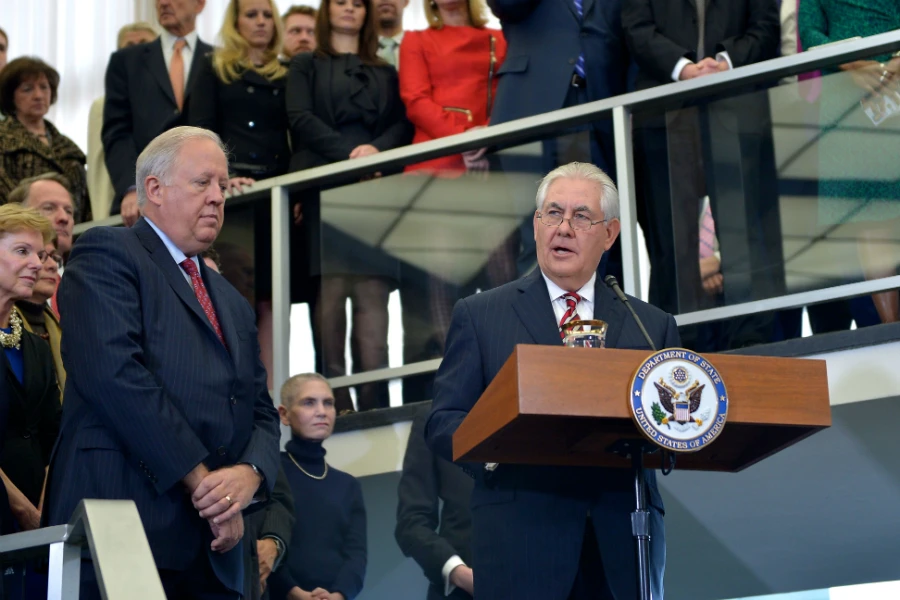
In a May 3 speech to State Department employees by new Secretary of State Rex Tillerson, he said that U.S. foreign policy cannot always be contingent on “values” like religious freedom and human rights.  

“Now, I think it’s important to also remember that guiding all of our foreign policy actions are our fundamental values: our values around freedom, human dignity, the way people are treated,” Tillerson said.

“Those are our values. Those are not our policies; they’re values,” he continued, explaining that “policies can change,” while “our values never change. They’re constant throughout all of this.”

Yet Tillerson went on to say that “in some circumstances, if you condition our national security efforts on someone adopting our values, we probably can’t achieve our national security goals or our national security interests.”

The U.S. took a long time to fundamentally adopt these “values,” he added, and cannot expect other countries to adopt them overnight.

“If we condition too heavily that others must adopt this value that we’ve come to over a long history of our own, it really creates obstacles to our ability to advance our national security interests, our economic interests,” he said.

Sen. John McCain (R-Ariz.) responded with a May 8 op-ed in the New York Times, insisting that “we are a country with a conscience. We have long believed moral concerns must be an essential part of our foreign policy, not a departure from it.”

“To view foreign policy as simply transactional is more dangerous than its proponents realize,” he continued. “Depriving the oppressed of a beacon of hope could lose us the world we have built and thrived in.”

Tillerson’s speech was not the only signal from the State Department that concerned human rights advocates.

Back in March, the agency held a somewhat muted release of its annual reports on human rights in foreign countries. Tillerson was not present at a public release of the report, something that reporters pointed out was a break with long-standing precedent.

Instead, the report was discussed in an on-background conference call with reporters by a “senior administration official.”

Rep. Randy Hultgren (R-Ill.), co-chair of the Tom Lantos Human Rights Commission, noted this in his April statement on the administration’s record in promoting human rights.

“I am concerned at the muted attention the administration has given so far on human rights,” he said, noting “the downplayed release of the State Department’s human rights report.”

“Promoting trade and economic and military cooperation are all essential to America’s future – but these mean little if we ignore the people in countries around the world who are suffering at the hands of their own governments and their rights are being abused,” he continued, in a statement made weeks before Tillerson’s May 4 speech.

The concerns come at a time when some are trying to ratchet up international attention on human rights abuses. The bipartisan U.S. Commission on International Religious Freedom, for instance, launched its Prisoners of Conscience Project earlier this spring, drawing attention to the plight of those detained, tortured, or killed by foreign governments because of their religious beliefs.

The commission hopes that the project will attract the attention of the public, but also of lawmakers who can ask to visit these prisoners when they travel abroad. “Public inattention can often lead to more persecution,” the commission’s chair, Fr. Thomas Reese, stated at the launch of the project.

Yet religious freedom advocates are also worried about the direction of the State Department. Everett issued a response to Tillerson’s speech on May 23, explaining how important the promotion of international religious freedom is to U.S. national security interests.

“When we disregard the brutality of religious persecution, the world becomes more dangerous for all,” he said.

As an example of this, he pointed out that “fifteen of the nineteen terrorists on 9/11 were from Saudi Arabia. All were Islamist extremists who believed violence is an acceptable tool to achieve their goals of global adherence to their strict religious laws.”

“Is it a coincidence that these men came from a nation where there is no religious freedom?” he asked.

Not all State Department actions have received criticism from human rights advocates. On April 4, the administration announced it would stop supporting the United Nations Population Fund (UNFPA) because of its support for China’s coercive two-child policy, which was for years a one-child policy until 2015.

China’s forced family-planning policy has resulted in massive human rights abuses like forced abortions and sterilizations of women. The UNFPA “gave China’s brutally enforced population control policies the international stamp of approval,” Rep. Chris Smith (R-N.J.), chair of the House panel on global human rights, stated.

Smith applauded the administration’s decision to stop funding the UNFPA.

“I am heartened by the Trump Administration’s early action to apply Kemp-Kasten and end U.S. support for this most egregious human rights violation,” Smith said of the action. The Kemp-Kasten Amendment allows the President to decide not to fund entities that engage in forced abortions or sterilizations.

Others are trying to inform and push the administration to recognize the importance of religious freedom to U.S. diplomacy. The Religious Freedom Institute released a March report with recommendations for the U.S. government.

“The President should state clearly and often that U.S. IRF policy will be a national security and minority rights priority for his administration,” the report stated.

It also asked the President to nominate an Ambassador-at-Large for International Religious Freedom soon, and for Congress to support the new ambassador by making sure he or she has the proper resources and staff within the State Department.

[…]

No Picture
News Briefs

London cardinal ‘appalled’ by Finsbury Park attack on Muslims

June 19, 2017 CNA Daily News 1

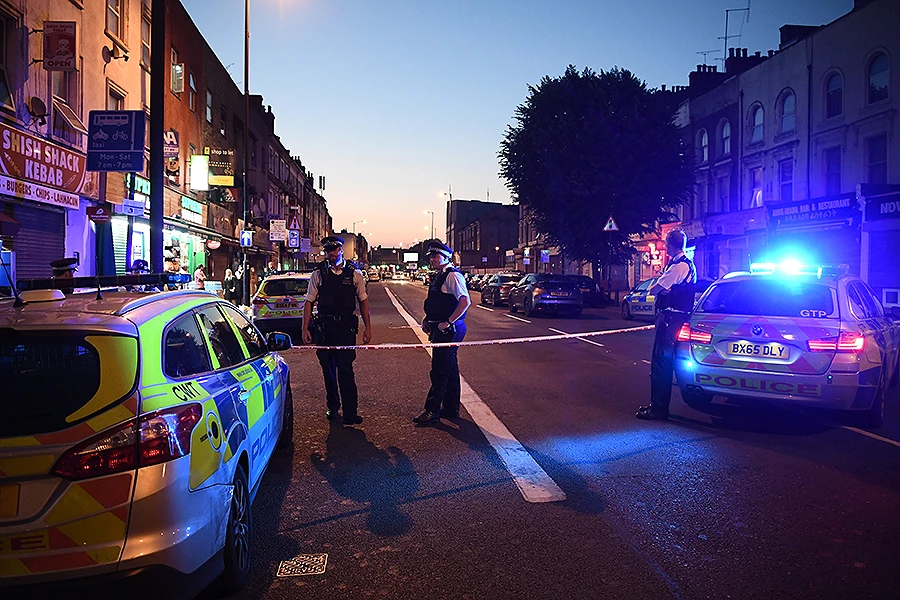
London, England, Jun 19, 2017 / 11:15 am (CNA/EWTN News).- Cardinal Vincent Nichols of Westminster has offered prayers for the victims of a terror attack in north London that targeted worshippers outside a mosque in the early hours of Monday.

One person was killed and nine have been hospitalized, after a van drove into a group outside the Finsbury Park Mosque shortly before 12:20 am June 19.

The Muslim worshippers were helping an elderly man who had fallen down in the street.

“Together with people all over this country I am appalled at the deliberate attack on people leaving their late night prayers, as the end of their day of fasting, at the mosque in Finsbury Park,” Cardinal Nichols stated.

“Violence breeds violence. Hatred breeds hatred. Every one of us must repudiate hatred and violence from our words and actions. We must all be builders of understanding, compassion and peace, day by day, in our homes, our work and our communities. That is the only way.”

The cardinal also wrote to Mohammad Kozbar, trustee of the Finsbury Park Mosque, saying, “I am horrified that people should, again, be targeted in this way. I write to assure you of my prayers for the person who has died, for those who have been injured and for all deeply affected by this brutal attack. I know that I speak for all Catholics when I assure you of prayers and support.”

In a similar message to Ahmed Kheloufi, director of Muslim Welfare House, Cardinal Nichols wrote “to assure you of my prayers and of my deep compassion for all who have been injured and affected by this deliberate act of violence. In particular I pray for the person who has been killed. May God’s blessings strengthened you all.”

“I also want to thank you for the work you do to foster good relations in the Finsbury Park community,” the cardinal added. “I pray that your work will be strengthened at this most difficult time.”

The attack came after the group had taken part in evening prayers after breaking their Ramadan fast.

The van’s driver, a 48 year old man, was restrained at the scene of the attack, and the mosque’s imam kept him from being attacked. He has been arrested on suspicion of attempted murder.

Sadiq Khan, the mayor of London, commented that “While this appears to be an attack on a particular community, like the terrible attacks in Manchester, Westminster and London Bridge, it is also an assault on all our shared values of tolerance, freedom and respect.”

Prime minister Theresa May said that “there has been far too much tolerance of extremism over many years”.

“It is a reminder that terrorism, extremism and hatred take many forms; and our determination to tackle them must be the same whoever is responsible.”

The Finsbury Park Mosque had been associated with Islamist terrorism in the early 2000s. Abu Hamza al-Masri, its imam from 1997 to 2002, was found guilty in the UK of inciting violence. He was later extradited ot the US, where he was found guilty of terror charges.

The mosque was shut down in 2003 after a police raid, but was reopened in 2005 under new trustees and new imams which have reportedly turned it around.

In his message to Mohammed Kozbar, Cardinal Nichols said that “Fr John O’Leary has told me of all the good work you do to foster strong and good relations with all people in Finsbury Park. Long may this good work continue and may your resolve be strengthened at this difficult time.”

[…]