No Picture
News Briefs

Forgiveness is the first step to ending cycle of violence, Pope says
September 8, 2017 CNA Daily News 0

Villavicencio, Colombia, Sep 8, 2017 / 03:46 pm (CNA/EWTN News).- Pope Francis told the Colombian people Friday that while it will be challenging, they must let go the anger caused by years of painful suffering and break the cycle of violence through a process of genuine forgiveness.

“Violence leads to more violence, hatred to more hatred, death to more death. We must break this cycle which seems inescapable,” the Pope said Sept. 8. “This is only possible through forgiveness and reconciliation.”

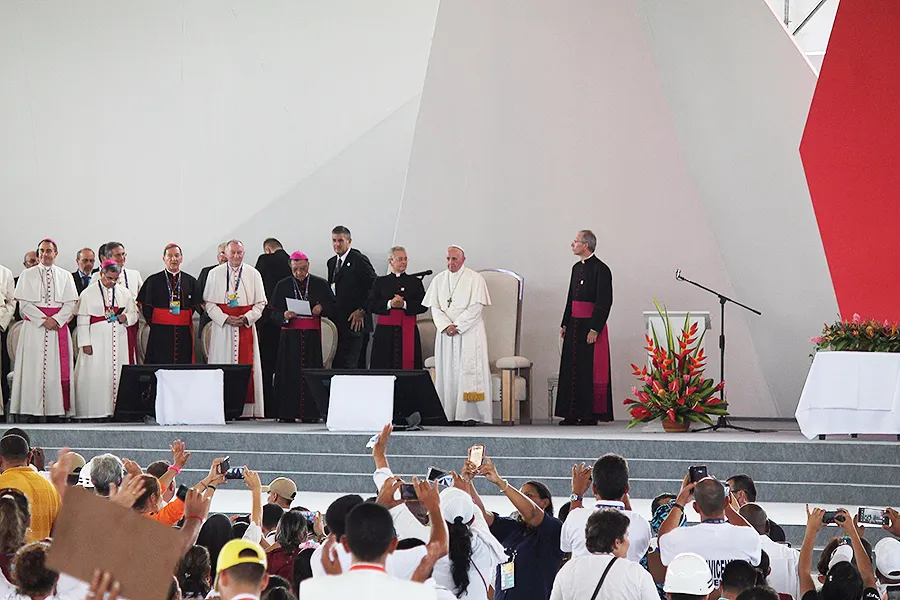
Pope Francis spoke during a prayer gathering in Villavicencio for national reconciliation as part of his Sept. 6-11 visit to Colombia.

The trip, which marks his third tour of South America since his election, is largely the result of the country’s ongoing peace process between the government and Colombia’s largest guerrilla group, the Revolutionary Armed Forces of Colombia (FARC).

After more than six decades of conflict, a peace deal was finally struck in August 2016, de-escalating a conflict which since 1964 has left some 260,000 people dead and an estimated 7 million displaced.

Archbishop Oscar Urbina Ortega of Villavicencio greeted the Pope, offering his own brief reflection on the need for reconciliation.

In his comments, the archbishop stressed that “you cannot have true conversion of heart that does not also produce social and political resonances. Because of this reconciliation is offered to everyone.”

Reconciliation among the Colombian people “is a process, not only a goal or a perfect state,” Archbishop Urbina said, pointing to the strong desire of Colombians to overcome the pain caused by different forms of violence such as kidnapping, extortion, displacement, forced disappearance, forced recruitment, threats against life, and murders.

These, he said, “have destroyed projects of life from thousands of families and communities,” and it will take time to help so many people rebuild their lives.

“The search and constant effort to listen to each other, forgive each other and to try again will be the basis for generating a culture of fraternity,” Archbishop Urbina said, praying that that God would give them “a fruitful seed so that the tree of forgiveness, justice, reconciliation and peace blooms in this land.”

Pope Francis then listened to four testimonies from victims of the violence, including former FARC fighters and former members of other paramilitary groups.

The first  testimony was given by Juan Carlos Murcia Perdomo, who was part of FARC forces for 12 years, and reflected on truth. After being recruited at 16, he lost his left had working with explosives.

He eventually ascended the ranks and was named commander of his own squad. However, Murcia said at the same time he felt used and had a strong sense of nostalgia for home, and little by little understood that violence wasn’t the right path. He left FARC and later launched the “Funddrras Foundation,” which is dedicated to sports in a bid to offer youth an alternative to drugs and violence.

Deisy Sanchez Rey, who at 16 was recruited by her brother to join the United Self-Defense Forces of Colombia (AUC) paramilitary and drug trafficking group, spoke on justice. She shared her story of how she was eventually arrested and, after two years in prison, wanted to change her life. She began attending Mass and studying psychology, and now offers counseling to victims of drugs and violence.

A third testimony, given by Luz Dary Landazury, the victim of an explosion set off by guerrilla forces, regarded mercy. In addition to nearly losing her left leg and suffering wounds all over her body, Landazury’s 7-month-old daughter also suffered significant injuries to her face.

Despite her anger, Landazury said she eventually understood that hate would only lead to more violence, and so began visiting other victims in order to help them learn to let go of their own anger and move forward with their lives.

The final testimony, focused on peace, was given by Pastora Mira Garcia, whose father was killed by guerrillas when she was just 6-years-old. She also lost her first husband, her daughter, and her son to guerrilla violence.

However, with what she describes as grace and the help of Our Lady, she was able not only to work with other families who had experienced similar losses, but eventually, in different moments, met and cared for both her father’s killer, who was sick and abandoned, and her son’s murderer, who was wounded.

In his address following the testimonies, Pope Francis said he had been looking forward to the encounter “since my arrival in your country.”

“You carry in your hearts and your flesh the signs of the recent, living memory of your people which is marked by tragic events, but also filled with heroic acts, great humanity, and the noble spiritual values of faith and hope,” he said.

Colombia has sadly become “a land watered by the blood of thousands of innocent victims and by the heart-breaking sorrow of their families and friends,” he said, adding that these wounds “hurt us all, because every act of violence committed against a human being is a wound in humanity’s flesh.”

The Pope said he didn’t come to speak, but rather “to be close to you and to see you with my own eyes, to listen to you and to open my heart to your witness of life and faith. And if you will allow me, I wish also to embrace you and weep with you.”

“I would like us to pray together and to forgive one another – I also need to ask forgiveness – so that, together, we can all look and walk forward in faith and hope.”

He pointed to the Crucifix of Bojayá, where on May 2, 2002, 119 civilians, including 45 children, were killed by guerrilla forces in an effort to take the Atrato River region from the AUC. Victims had taken refuge in the town’s church, but were all killed when the militants began launching gas cylinder bombs inside.

Pope Francis noted how the crucifix pulled from the carnage shows a Christ “mutilated and wounded,” with no arms and no body. “But his face remains, with which he looks upon us and loves us.”

To see Christ this way challenges us, he said, and reminds us of the “immense suffering, the many deaths and broken lives, and all the blood spilt in Colombia these past decades.”

“Christ broken and without limbs is for us even more Christ, because he shows us once more that he came to suffer for his people and with his people,” Francis said. “He came to show us that hatred does not have the last word, that love is stronger than death and violence.”

Turning to the testimonies given, the Pope said he was moved when listening to them, because they are stories that speak of pain and suffering, “but also, and above all, they are stories of love and forgiveness that speak to us of life and hope; stories of not letting hatred, vengeance or pain take control of our hearts.”

“Thank you, Lord, for the witness of those who inflicted suffering and who ask for forgiveness; for the witness of those who suffered unjustly and who forgive,” he said, adding that “this is only possible with your help and presence.”

Francis recalled how in her testimony, Mira Garcia had said that she wanted to place her suffering and that of all victims of the conflict at the feet of Christ Crucified, “so that united to his suffering, it may be transformed into blessing and forgiveness so as to break the cycle of violence that has reigned over Colombia.”

“And you, dear Pastora, and so many others like you, have shown us that this is possible,” he said, adding that “with the help of Christ alive in the midst of the community, it is possible to conquer hatred, it is possible to conquer death and it is possible to begin again and usher in a new Colombia.”

Noting how in her testimony Luz Dary shared that the wounds in her heart were deeper and harder to heal than the ones that scarred her body, he acknowledged that this is true, and commended her for realizing that “it is not possible to live with resentment, but only with a love that liberates and builds.”

By going out of herself to help other victims heal and rebuild their lives, Dary found the peace and serenity needed to keep going, he said. And while physical wounds remain, “your spiritual gait is fast and steady, because you think of others and want to help them.”

Turning to Deisy and Juan Carlos, the former FARC and AUC fighters, Pope Francis said their testimony helps one to understand that they, too, are victims.

“In the end, in one way or another, we too are victims, innocent or guilty, but all victims,” he said. “We are all united in this loss of humanity that means violence and death.”

“There is also hope for those who did wrong; all is not lost,” he said, noting that while justice requires that those who do wrong “undergo moral and spiritual renewal,” we must all “make a positive contribution to healing our society that has been wounded by violence.”

Francis recognized that it might be hard to believe change is possible given the sheer amount of suffering and violence perpetrated by those pursuing their own agenda. However, “even when conflicts, violence and feelings of vengeance remain, may we not prevent justice and mercy from embracing Colombia’s painful history,” he said.

“Let us heal that pain and welcome every person who has committed offenses, who admits their failures, is repentant and truly wants to make reparation, thus contributing to the building of a new order where justice and peace shine forth.”

As part of the reconciliation process, “it is also indispensable to come to terms with the truth.” This, he said, “is a great challenge, but a necessary one,” because “truth is an inseparable companion of justice and mercy.”

Both truth and justice are essential in building peace, he said, explaining that each prevents the other from being manipulated and transformed into “instruments of revenge against the weakest.”

Truth, the Pope said, “means telling families torn apart by pain what happened to their missing relatives,” and “confessing what happened to minors recruited by violent people.” It also means “recognizing the pain of women who are victims of violence and abuse.”

Pope Francis closed his address offering his perspective as “a brother and a father,” telling Colombia to  “open your heart as the People of God and be reconciled. Fear neither the truth nor justice.”

“Do not be afraid of asking for forgiveness and offering it. Do not resist that reconciliation which allows you to draw near and encounter one another as brothers and sisters, and surmount enmity,” he said.

“Now is the time to heal wounds, to build bridges, to overcome differences. It is time to defuse hatred, to renounce vengeance, and to open yourselves to a coexistence founded on justice, truth, and the creation of a genuine culture of fraternal encounter.”

Francis then led attendees in a prayer for peace to the “Christ of  Bojayá,” in “Lord, make me an instrument of your peace,” a 20th century prayer which is often attributed to St. Francis of Assisi, and in the Hail Mary. Before departing, the Pope blessed all present.
[…]

No Picture
News Briefs

Prisoners in Colombia unite in prayer for Pope Francis’ visit

September 8, 2017 CNA Daily News 0

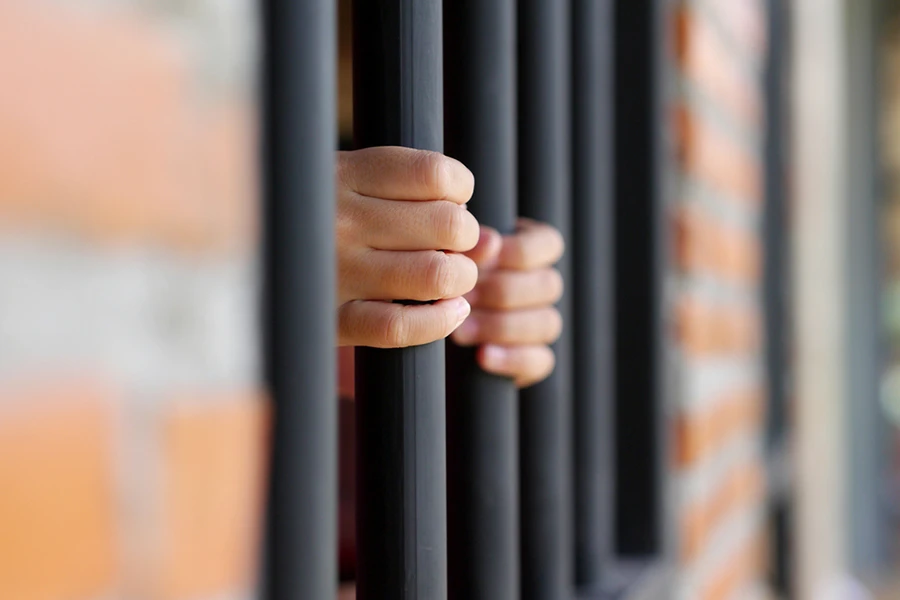
Bogotá, Colombia, Sep 8, 2017 / 02:25 pm (CNA/EWTN News).- Prison inmates from jails around Colombia prepared themselves spiritually for the Pope’s visit to their country through prayers, letters, messages, and watching his arrival to their country on television.

Although the Pope Francis’s Sept. 6-10 trip to Colombia does not include a visit to a penitentiary, the Pope’s visit has been viewed as a sign of peace and serenity for persons deprived of their liberty.  

The trip holds even more special meaning for those who have asked that the government consider the Jubilee Law, through which inmates with minor offenses are granted a reduction of their sentence.

Encouraged through the country’s Catholic Penitentiary Ministry and the National Penitentiary and Prison Institute, inmates of the various prison centers throughout the country prepared spiritually for the Pope’s visit.  

Fr. Edgar Galeano, chaplain at Colombia’s Model Jail in Bogota, explained that the inmates in his prison participated in prayer groups, daily recitation of the Rosary, and reading sacred scripture. In addition, every block read a book called “Take the First Step” in order to develop ten spiritual encounters on a weekly basis.

Likewise, in the penitentiary centers, liturgical celebrations were held with the motto “Pope Francis: the prisoners in Colombia are praying for you.” During the services, they asked for forgiveness for their personal sins and lit candles to pray for the protection of Pope Francis on his journey.

One of the inmates of Block 3 began painting a picture of Pope Francis three years ago. “Three years ago the initiative was born, a hope, a faith was born. Something in my heart told me that it would be a nice gesture to give something to a representative of Jesus.”

Aldo, another one of the prison inmates, wrote a letter to the pontiff in which he said: “If I could speak to you personally, Pope Francis, I would ask you to perform three miracles: Forgive all my mistakes and all the times I have hurt others; to return to be a child with the memories lived, having repented of having done bad things; I do not want to move away from my family. I would like to start over.”

Carlos Manuel Gutiérrez, a spokesman for the Building New and Better Roads Corporation in Bucaramanga, Colombia told the Colombian outlet Vanguardia that the letters written by the inmates are due to be delivered on Sept. 9 to Pope Francis, during his visit to Medellin.

[…]

No Picture
News Briefs

Pope Francis beatifies two Colombian martyrs

September 8, 2017 CNA Daily News 2

Villavicencio, Colombia, Sep 8, 2017 / 10:39 am (CNA/EWTN News).- During Mass in Colombia on Friday, Pope Francis beatified two martyrs from the country, both of whom were killed in hatred of the faith within the last 60 years.

Bishop Jesús Emilio Jaramillo Monsalve and Fr. Pedro María Ramírez Ramos were declared “blessed” by the Pope, moving them further ahead on the road to canonization.

The two martyrs, Francis said, are a sign of God’s presence in Colombia, as promised at the end of the Gospel of Matthew, where it says: “I will be with you always, to the close of the age.” They are “an expression of a people who wish to rise up out of the swamp of violence and bitterness,” he said.

Bishop Jaramillo, known for his care of the poor, served as bishop of Arauca. He became a target of the National Liberation Army, a Marxist guerrilla group in Colombia, when he spoke out against their kidnappings and involvement in the drug trade. Members of the guerrilla group kidnapped Bishop Jaramillo and killed him on Oct. 2, 1989.

After decades of fighting, the National Liberation Army and the Colombian government arrived at an agreement for a temporary ceasefire earlier this week. It will go into effect Oct. 1.

Born in La Plata in 1899, Fr. Ramirez became priest in 1931. When civil war erupted in Colombia between conservative and liberal groups, he was serving as a pastor in Armero. Local families offered to smuggle him to safety, but the priest refused to abandon his people.

On April 10, 1948, he was dragged out of his church by a group of rebels, who accused him of hiding weapons for conservatives. They lynched him in the town square. He died forgiving his killers.

The Pope spoke about reconciliation to large crowds gathered for an outdoor Mass in the Catama neighborhood of Villavicencio in Colombia.

He pointed to the martyrs as an example of what it means to make reconciliation concrete. The most powerful protagonists in the peace-building process are those people who have been victims of violence themselves, but have overcome the temptation to act with vengeance, he said.

“What is needed is for some to courageously take the first step in that direction, without waiting for others to do so. We need only one good person to have hope! And each of us can be that person!” he emphasized.

This does not mean sugarcoating or ignoring injustice and conflict, he noted. Still, he said, “every effort at peace without a sincere commitment to reconciliation is destined to fail.”

The Holy Family offers an example as well, he said.

“How can we best allow the light in? What are the true paths of reconciliation?” he reflected.

“Like Mary, by saying yes to the whole of history, not just to a part of it. Like Joseph, by putting aside our passions and pride. Like Jesus Christ, by taking hold of that history, assuming it, embracing it.”

“That is who you are, that is who Colombians are, that is where you find your identity. God can do all this if we say yes to truth, to goodness, to reconciliation, if we fill our history of sin, violence and rejection with the light of the Gospel,” he said.

In his homily, the Pope also referenced the day’s Gospel, which tells the long genealogy of Jesus.

This long list helps us to keep a good perspective – it shows us what a small part we play in the vast history of the world and integrates into salvation history “those pages which are the darkest and saddest, moments of desolation and abandonment comparable to exile.”

The people of Colombia have their own genealogies, he continued. “Here too we can write genealogies full of stories, many of love and light; others of disagreement, insults, even of death…How many of you can tell of exile and grief!”

The genealogy of Christ mentions numerous women, he pointed out. In communities still weighed down with “patriarchal and chauvinistic customs, it is good to note that the Gospel begins by highlighting women who were influential and made history.”

Noting that Sept. 8 is the Feast of the Nativity of the Blessed Virgin Mary, Francis particularly highlighted Mary as an example of the light of reconciliation breaking into the world, because she is “the first light who announces night’s end, and above all, the impending day.”

“Her birth helps us to understand the loving, tender, compassionate plan of love in which God reaches down and calls us to a wonderful covenant with him, that nothing and no one will be able to break.”

Mary transmits God’s light, he concluded. And just like Mary, we need to say ‘yes’ to reconciliation, “and sing with her ‘the wonders of the Lord,’ for as he has promised to our fathers, he helps all nations and peoples, he helps Colombia which today wishes to be reconciled; it is a promise made also to its descendants forever.”


[…]

No Picture
News Briefs

Barred from disaster relief, damaged Texas churches sue government

September 7, 2017 CNA Daily News 2

Washington D.C., Sep 8, 2017 / 12:02 am (CNA/EWTN News).- Texas churches damaged by Hurricane Harvey filed a lawsuit against the Federal Emergency Management Agency, claiming they have been denied disaster relief grants due to their religious status.

“After the costliest and most devastating natural disaster in U.S. history, the government should come to the aid of all, not leave important parts of the community underwater,” said Diana Verm, counsel at Becket, a non-profit religious liberty law firm representing the churches.

“Hurricane Harvey didn’t cherry-pick its victims; FEMA shouldn’t cherry-pick who it helps.”

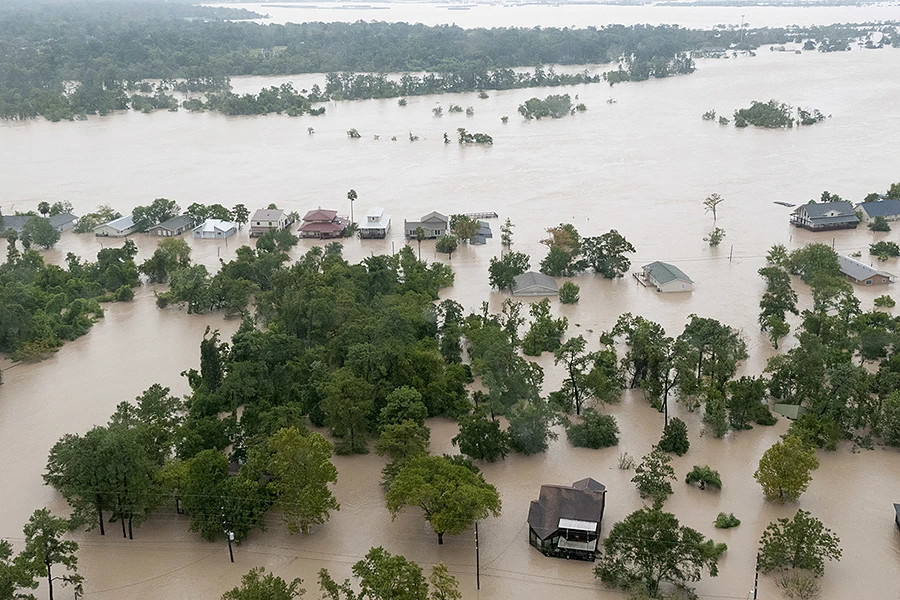
Hurricane Harvey, which ravaged the Texas coast in recent weeks, brought severe flooding to Southeast Texas, resulted in the deaths of over 60 persons, displaced 30,000, and damaged or destroyed homes throughout the region. It has reportedly caused billions of dollars of damage.

Becket filed a lawsuit against FEMA in a Houston federal court. In a complaint filed on Monday, three Texas churches – Harvest Family Church of Cypress, Tex., Hi-Way Tabernacle in Cleveland, Tex., and Rockport First Assembly of God in Rockport, Tex. – said that FEMA unlawfully denied them grants for disaster relief simply because of their religious status.

FEMA’s disaster relief policy states that “[f]acilities established or primarily used for political, athletic, religious, recreational, vocational, or academic training, conferences, or similar activities are not eligible” for grants.

Yet other non-profit community centers are eligible for grants, Becket says. And churches, some of which have helped distribute FEMA aid, need relief grants to make serious repairs.

“We’re just picking up the pieces like everyone else. And we just want to be treated like everyone else,” said Paul Capehart of Harvest Family Church.

“Our faith is what drives us to help others. Faith certainly doesn’t keep us from helping others, and we’re not sure why it keeps FEMA from helping us.”

The churches’ complaint claims that their eligibility for disaster relief is protected under the Free Exercise Clause of the First Amendment, that they cannot be denied relief simply because of their religious status.

And churches have been actively helping distribute disaster relief. One of the churches in the lawsuit, HiWay Tabernacle, “is currently in use as a shelter for dozens of evacuees, a warehouse for disaster relief supplies, a distribution center for thousands of emergency meals, and a base to provide medical services,” the complaint stated. Over 8,000 FEMA emergency meals have been handed out at the church’s facilities.

And other non-profit facilities are eligible for disaster relief, like “community centers,” the complaint said, so religious non-profits shouldn’t be excluded from grants.

The churches are in need of serious repairs, the complaint said. For instance, Rockport First Assembly of God saw its roof and its internal lighting and insulation destroyed. Serious flood damage also occurred at Hi-Way Tabernacle and harvest Family Churches.

FEMA’s policy prohibiting churches from receiving disaster relief is also in opposition to the Supreme Court’s ruling months ago in the Trinity Lutheran case, Becket argued.

Then the court had ruled in favor of a Lutheran church, which had applied for a state program that would reimburse it for resurfacing the playground of its school with material made from recycled tires.

Becket said that court’s decision was “protecting the right of religious organizations to participate in generally available programs on equal footing with secular organizations.”

The court’s majority opinion did contain a footnote stating that the decision was about “discrimination based on religious identity with respect to playground resurfacing,” and did not “address religious uses of funding or other forms of discrimination.”

Justices Neil Gorsuch and Clarence Thomas wrote a concurring opinion, pointing out that the footnote in question could be misinterpreted.

“I worry that some might mistakenly read” the footnote to apply only to “’playground resurfacing’ cases, or only those with some association with children’s safety or health, or perhaps some other social good we find sufficiently worthy,” Gorsuch wrote.

He said that “the general principles here do not permit discrimination against religious exercise – whether on the playground or anywhere else.”

[…]

No Picture
News Briefs

Catholics pray, prepare as Hurricane Irma looms

September 7, 2017 CNA Daily News 0

Miami, Fla., Sep 7, 2017 / 05:42 pm (CNA/EWTN News).- As Hurricane Irma moves through the Atlantic – one of the strongest storms ever recorded in that ocean – Catholic groups are offering prayers and helping prepare for the recovery efforts… […]

No Picture
News Briefs

Christ calls Colombia to cast a net of peace, Pope Francis says

September 7, 2017 CNA Daily News 0

Bogotá, Colombia, Sep 7, 2017 / 04:26 pm (CNA/EWTN News).- Just as Christ called Peter to cast his nest where there seemed to be no fish, Christ is calling Colombians to take risks in order to build a culture of peace and life, Pope Francis said in the capital Bogota on Thursday.

“…the word of Jesus has something special that leaves no-one indifferent; his word has the power to convert hearts, to change plans and projects. It is a word demonstrated by action, not academic findings, cold agreements, removed from people’s pain; for his is a word valid both for the safety of the shore and the fragility of the sea,” Pope Francis said Sept. 7 during his homily at a Mass in Simón Bolívar Park.

The Pope is on a 6-day trip to the South American country, which has just recently established a peace accord between the government and the guerilla group FARC. His trip is centering on peace and reconciliation, with the overarching theme “Let us take the first step”.

Pope Francis reflected on the Gospel of Luke and the calling of Simon Peter the fishermen, one of the first disciples called to follow Christ, during the homily on the first full day of his trip.

“Jesus scatters and destroys all this darkness with the command he gives to Peter in the boat: ‘Put out into the deep sea,’” the Holy Father noted. Despite his doubts, Peter follows the command of Christ and is able to bring into his boat a huge haul of fish.

Colombia itself has known its fair share of darkness, he added, including war, political division and corruption, and a disrespect for human life.

But like Peter, Colombia is called to respond to the call of Christ to take the first step out of darkness and toward peace, he said.

“In Bogotá and in Colombia a vast community journeys forwards, called to conversion in a healthy net that gathers everyone into unity, working for the defense and care of human life, especially when it is most fragile and vulnerable: in a mother’s womb, in infancy, in old age, in conditions of incapacity and in situations of social marginalization. Great multitudes of people in Bogotá and in Colombia can also become truly vibrant, just and fraternal communities, if they hear and welcome the Word of God,” the Pope said.

Evangelizing men and women with the Word of God will raise up a generation of people ready to hear the call of the Lord and able to foster peace and a culture of life, he added. He urged Colombians to work together and rely on each other in this common cause.

“He calls everyone, so that no one is left to the mercy of the storms; to go into the boat of every family, that sanctuary of life; to make space for the common good above any selfish or personal interests; to carry the most fragile and promote their rights,” he said.

He urged Colombians to remember to follow the Lord on the path of peace, even when it may seem difficult or they may be afraid.

“…in the same way as Simon, Jesus invites us to put out into the deep, he prompts us to take shared risks, to leave behind our selfishness and to follow him; to give up our fears which do not come from God, which paralyze us and prevent us becoming artisans of peace, promoters of life.”

[…]

No Picture
News Briefs

The significance of Pope Francis’ speech to Latin America’s bishops

September 7, 2017 CNA Daily News 2

Bogotá, Colombia, Sep 7, 2017 / 03:09 pm (CNA/EWTN News).- What is likely one of the most important speeches of Pope Francis’ visit to Colombia, political processes aside, and one which can offer key insights into his thinking, is his Thursday meeting with representatives of Latin America’s bishops.

Francis’ meeting with the continent-wide ecclesial body outlined not only vision for the Church in Latin America specifically, but his reflections also offer his key priorities for the universal Church.

In his Sept. 7 speech, the Pope said that since its foundation, the Episcopal Conferences of Latin America (CELAM) has become “a vital point of reference for the development of a deeper understanding of Latin American Catholicism.”

At the same time, he praised the entity for its efforts at becoming “a home at the service of communion and the mission of the Church in Latin America, as well as a center for fostering a sense of discipleship and missionary spirit.”

Given that he is himself Latin American, Francis obviously has strong ties to the ecclesial body, and in 2007, while Archbishop of Buenos Aires, he was charged with drafting the concluding document of their 5th General Conference in Aparecida, Brazil.

That document was taken by many as a compass of-sorts for Francis’ pontificate after he was elected, and with good reason.  

However, far beyond Latin America and the current Vicar of Christ, himself the first-ever South American Pope, CELAM has left a much bigger mark on the universal Church.

CELAM

The entity, which is composed of the 22 bishops’ conferences of Latin America and the Caribbean, was established by Venerable Pius XII in 1955 as the first continent-wide bishops’ conference.

The seven cardinals and 90 bishops who originally composed CELAM had met for their own conference during the Eucharistic Congress held in Rio de Janiero in 1955. The meeting was prompted by the Holy See itself, and Ven. Pius XII sent his own Cardinal legate, Adeodato Piazza, to attend the discussion.

One of the main reasons for the gathering was to create a new pastoral program for the region which addressed four major topics at the time: the shortage of priests, religious education, social problems, and the plight of Amerindian population.

Conclusions from the meeting were drafted and sent to Rome for approval before being published. Since then, CELAM members have met every few years to continue discussing major issues affecting the region, and theirs was a key voice on social issues during the Second Vatican Council.

However, though it was a novelty at the time, CELAM set the stage for the eventual creation of other continent-wide bishops conferences, all of which were established after Vatican II in a bid to foster greater unity and to encourage collegiality among local Churches.

Though still active, CELAM took a step back during the 1980s and ’90s under St. John Paul II, who preferred a greater emphasis on bishops as shepherds of their local Church.

The last major conference CELAM held before the 2007 gathering in Aparecida was their 4th General Conference in Santo Domingo of the Dominican Republic in 1992.

However, when Benedict XVI was elected, he offered his full support and empowerment to CELAM, and personally inaugurated the 2007 gathering in Aparecida.

When asked on the flight there how Brazil had impacted his  personal formation, Benedict said that while he was no expert, “I am convinced that it is here, at least in part – and a fundamental part – that the future of the Catholic Church is being decided. This has always been evident to me.”

And indeed it was during that gathering for CELAM in Aparecida that Cardinal Bergoglio would take the lead role in drafting a document that has become one of the most quoted and footnoted in his magisterial publications as Pope Francis.

Pope Francis and Aparecida

During his first international appointment as Pope, attending the 2013 World Youth Day in Rio de Janeiro, Francis made headlines for his vibrant style of communicating, his closeness to the people, and for dropping lines like the famous appeal for Argentine youth to get on the streets and “make a mess” with their love for Christ in spreading the Gospel.

But in addition to his official WYD commitments, he also met with CELAM leaders, telling them to embrace a “missionary spirit,” and referred them back to the 2007 concluding document from Aparecida, which he said launched a continent-wide mission aimed at Christ-centered service.

The document itself was a regional preview of what have become Francis’ top priorities for the universal Church. Among other things, it places strong emphasis on popular religiosity and included an introduction on how to approach contemporary reality as “missionary disciples.”

It also focuses on giving thanks, and the “joy of being disciples and missionaries” of God, and places a strong emphasis on the Church’s mission to evangelize.

The document is read through the lens of what it means to be a “missionary disciple” and how this should be the lens through which we read reality and its current challenges, including cultural trends and threats to the family and the environment.

Other topics mentioned that have come up frequently in Francis’ pontificate are: indigenous peoples, technology, the role and dignity of women, the importance of fostering community amid the diversity of the Church’s various charisms and spiritualities, interreligious dialogue, the role of the Holy Spirit, human dignity, and the need to go out of ourselves.

The document also dwells on marriage, the elderly, migrants, the poor, the need for solidarity and issues of social justice, emphasizing the Beatitudes, as Francis often does, as a road-map for how the Church’s social teaching out to be lived out.

In his speech to CELAM leaders in Colombia this week, Pope Francis again referred back to the “pastoral legacy” of the 2007 Aparecida document, telling them it is “a treasure yet to be fully exploited.”

“I am certain that each of you has seen how its richness has taken root in the Churches you hold in your hearts,” he said, and outlined the signs of hope found in the region. Namely, he said hope in Latin America is found primarily in the youth, in women – who “keep patiently kindling the flame of faith” – and in the laity.

These are all issues brought up at some point in the Aparecida document, and which that have become familiar to the eyes of Vatican-watchers throughout the world.

While the Pope certainly doesn’t shy away from these topics when conversing in other forums and with other demographics, he understandably feels more at home among his fellow Latin Americans, especially since he understands their reality so well.

That being said, we can expect to continue hearing the same messages from Pope Francis even from Rome. But if there’s one thing we can take away from his audiences with CELAM, it’s that they have played a significant role in his own life and pontificate, and will undoubtedly continue to do so. If we want to keep tabs on his vision for the universal Church, his meetings with them are a good place to start.

[…]

No Picture
News Briefs

Pope Francis lays out his vision for Church’s mission in Latin America

September 7, 2017 CNA Daily News 1

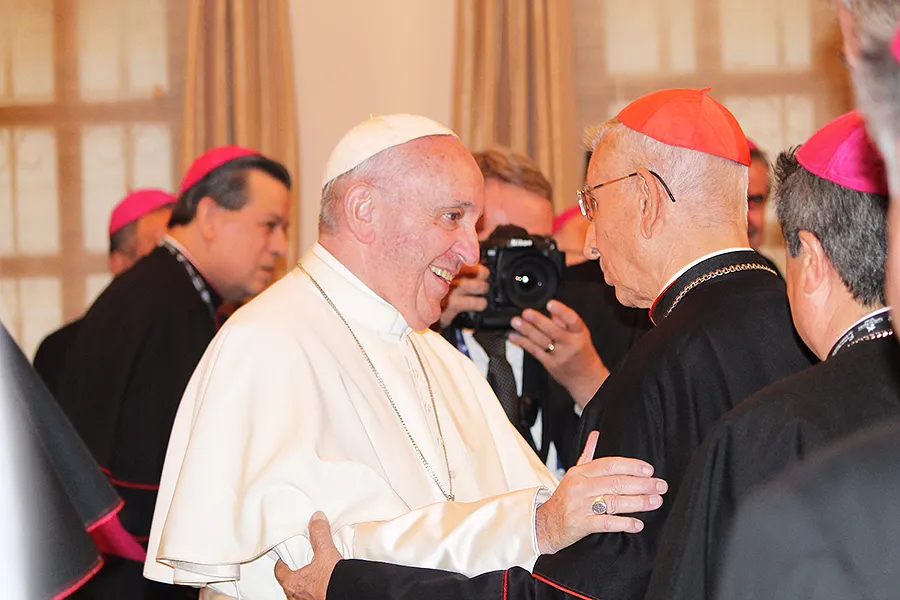
Bogotá, Colombia, Sep 7, 2017 / 02:55 pm (CNA/EWTN News).- The Catholic Church must avoid a sense of superiority and clericalism and instead teach forgiveness, reconciliation, and justice, Pope Francis said in forceful comments Thursday to a gathering of Latin American bishops.

“The Church is not present in Latin America with her suitcases in hand, ready, like so many others over time, to abandon it after having plundered it,” he said Sept. 7.

“Such people look with a sense of superiority and scorn on its mestizo face; they want to colonize its soul with the same failed and recycled visions of man and life; they repeat the same old recipes that kill the patient while lining the pockets of the doctors. They ignore the deepest concerns present in the heart of its people, the visions and the myths that give strength in spite of frequent disappointments and failures.”

He warned against those who “manipulate politics and betray hopes, leaving behind scorched land and a terrain ready for more of the same, albeit under a new guise.”

“Powerful figures and utopian dreams have promised magic solutions, instant answers, immediate effects,” he said.

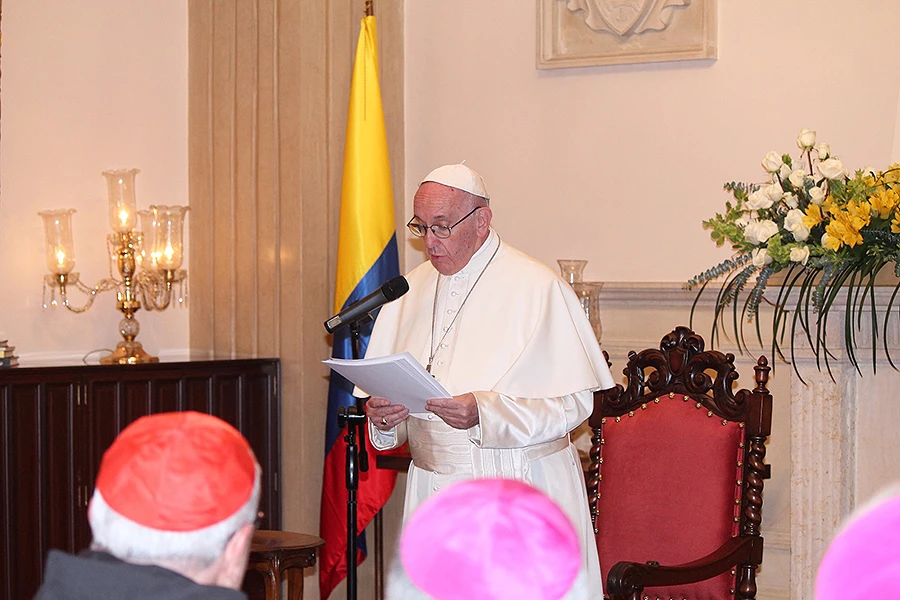
The Pope spoke to the executive committee of the Latin American Episcopal Conference, known also by its Spanish acronym CELAM. He spoke at the apostolic nunciature in Bogota during his visit to Colombia.

“The Church, without human pretensions, respects the varied face of the continent, which she sees not as an impediment but rather a perennial source of wealth. She must continue working quietly to serve the true good of the men and women of Latin America,” Pope Francis said. “She must work tirelessly to build bridges, to tear down walls, to integrate diversity, to promote the culture of encounter and dialogue, to teach forgiveness and reconciliation, the sense of justice, the rejection of violence. No lasting construction in Latin America can do without this invisible, yet essential, foundation.”

“The Church appreciates like few others the deep-rooted shared wisdom that is the basis of every reality in Latin America,” the Pope continued. “She lives daily with that reserve of moral values on which the life of the continent rests.”

He advocated continued dialogue with this reality. The Church cannot lose contact with this moral foundation, this “vital humus which resides in the heart of our people.” In this soil, he said, “we see the subtle yet eloquent elements that make up its mestizo face – not merely indigenous, Hispanic, Portuguese or African, but mestizo: Latin American.”

He warned against the habitual traps this part of the world faces: a lack of focus, the squandering of the continent’s diversity, and “a constant process of disintegration.”

“To speak to this deepest soul, to speak to the most profound reality of Latin America, the Church must continually learn from Jesus. The Gospel tells us that Jesus spoke only in parables. He used images that engaged those who heard his word and made them characters in his divine stories. God’s holy and faithful people in Latin America understand no other way of speaking about him,” he said. “We are called to set out on mission not with cold and abstract concepts, but with images that keep multiplying and unfolding their power in human hearts, making them grain sown on good ground, yeast that makes the bread rise from the dough, and seed with the power to become a fruitful tree.”

The Pope warned of a “deficit of hope” in Latin America, but also pointed to Christians’ supernatural hope.

“Once you think hope is gone, it returns where you least expect it,” he said. “Our people have learned that no disappointment can crush it. It follows Christ in his meekness, even under the scourge. It knows how to rest and wait for the dawn, trusting in victory, because – deep down – it knows that it does not belong completely to this world.”

In Latin America, hope has a youthful face, he said. Some people point to young people’s alleged shortcomings and lack of motivation, and others see them as potential customers or seek to enlist them in violence and trafficking.

“Pay no attention to these caricatures of young people. Look them in the eye and seek in them the courage of hope,” Pope Francis said. “Look them in the eye and seek in them the courage of hope.”

“It is not true that they want to return to the past,” he claimed.

“It is our task us to present the young with lofty ideals and to encourage them to stake their lives on God, in imitation of the openness shown by Our Lady.”

Hope in Latin America also has a woman’s face, the Roman Pontiff reflected.

“From their lips we learned the faith, and with their milk we took on the features of our mestizo soul and our immunity to despair,” he explained. “I think of indigenous or black mothers, I think of mothers in our cities working three jobs, I think of elderly women who serve as catechists, and I think of consecrated woman and those who quietly go about doing so much good. Without women, the Church of this continent would lose its power to be continually reborn. It is women who keep patiently kindling the flame of faith.”

He stressed the grave obligation to understand, respect, appreciate, and promote women’s impact on society and the Church. He invoked the example of the women who accompanied Christ and did not abandon him at the foot of the cross.

“Please, do not let them be reduced to servants of our recalcitrant clericalism,” he said, declaring that women are on “the front lines” of the Church.

He stressed that hope must pass through the hearts, minds, and arms of the laity. He challenged a clericalism that treats the laity as children and impoverishes the identity of clerics.

Hope must also look at the world with “the eyes of the poor.”

“Hope is poor, like the grain of wheat that dies, yet has the power to disseminate God’s plans,” said the Pope.

Wealth frequently blinds us to “both the reality of the desert and the oases hidden therein,” and offers “textbook answers and repeats platitudes,” he said.

“It babbles about its own empty ideas and concerns, without even coming close to reality. I am certain that in this difficult and confused, yet provisional moment that we are experiencing, we will find the solutions to the complex problems we face in that Christian simplicity hidden to the powerful yet revealed to the lowly. The simplicity of straightforward faith in the risen Lord, the warmth of communion with him, fraternity, generosity, and the concrete solidarity that likewise wells up from our friendship with him.

The Pope stressed that God does not speak to us as if we were strangers or as if he were a solicitor delivering a personal summons, nor does he “lay down rules to be followed like certain functionaries of the sacred.”

Rather, “God speaks with the unmistakable voice of the Father to his children; he respects the mystery of man because he formed us with his own hands and gave us a meaningful purpose.”

“Our great challenge as a Church is to speak to men and women about this closeness of God, who considers us his sons and daughters, even when we reject his fatherhood,” the Pope told the bishops. “For him, we are always children to be encountered anew.”

The Gospel cannot be reduced to “a programme at the service of a trendy gnosticism, a project of social improvement, or the Church conceived as a comfortable bureaucracy, any more than she can be reduced to an organization run according to modern business models by a clerical caste.”

“The Church is the community of Jesus’ disciples. The Church is a Mystery and a People. Better yet, the Church the Mystery becomes present through God’s People,” he said.

Missionary discipleship is “a call from God for today’s busy and complicated world.”  In this discipleship, the Christian is constantly setting out with Christ “in order to know how and where the Master lives.”

“Only a Church which is Bride, Mother and Servant, one that has renounced the claim to control what is not her own work but God’s, can remain with Jesus, even when the only place he can lay his head is the cross,” he said.

Closeness and encounter are the means that God uses, with the mystery of the Church being “the perennial place of this encounter.”

He told the bishops that the most essential and urgent activities are to pray and foster their relationship with the living Christ, where unity is always found: “How greatly we need to be alone with the Lord in order to encounter anew the heart of the Church’s mission … How greatly we need to be recollected, within and without! Our crowded schedules, the fragmentation of reality, the rapid pace of our lives: all these things might make us lose our focus and end up in a vacuum. Recovering unity is imperative.”

“If we do not we set out with [Christ] on our mission, we quickly become lost and risk confusing our vain needs with his cause. If our reason for setting out is not Jesus, it becomes easy to grow discouraged by the fatigue of the journey, or the resistance we meet, by constantly changing scenarios or by the weariness brought on by subtle but persistent ploys of the enemy,” he said.

Yielding to discouragement is not part of the Christian mission, and Christ “does not feed our fears.”

“The Gospel is always concrete, and never an exercise in sterile speculations. We know well the recurring temptation temptation to get lost in the byzantinism of the doctors of the law, to wonder how far we can go without losing control over our own demarcated territory or our petty portion of power.”

He stressed the importance of Christ’s encounter with persons, and how he draws near to them, talks to them, touches them, and brings them healing and salvation.

“His aim in constantly setting out is to lead the people he meets to the Father,” the Pope said. “We must never stop reflecting on this. The Church has to re-appropriate the verbs that the Word of God conjugates as he carries out his divine mission. To go forth to meet without keeping a safe distance; to take rest without being idle; to touch others without fear … We cannot let ourselves be paralyzed by our air-conditioned offices, our statistics and our strategies. We have to speak to men and women in their concrete situations.”

He summed up his message by saying the bishops must serve with passion: We need to have the passion of young lovers and of wise elders, a passion that turns ideas into viable utopias, a passion for the work of our hands, a passion that makes us constant pilgrims in our Churches … My brothers, please, I ask you for passion, the passion of evangelization.”

He commended the bishops, their local Churches, and all the people of Latin America and the Caribbean to Our Lady of Guadalupe and to Our Lady of Aparecida, the patron saint of Brazil.

“I do so, in the serene certainty that God who spoke to this continent with the mestizo and black features of his Mother, will surely make his kindly light shine in the lives of all.”

[…]