No Picture
News Briefs

Chilean bishops meet to discuss sexual abuse scandal
July 30, 2018 CNA Daily News 0

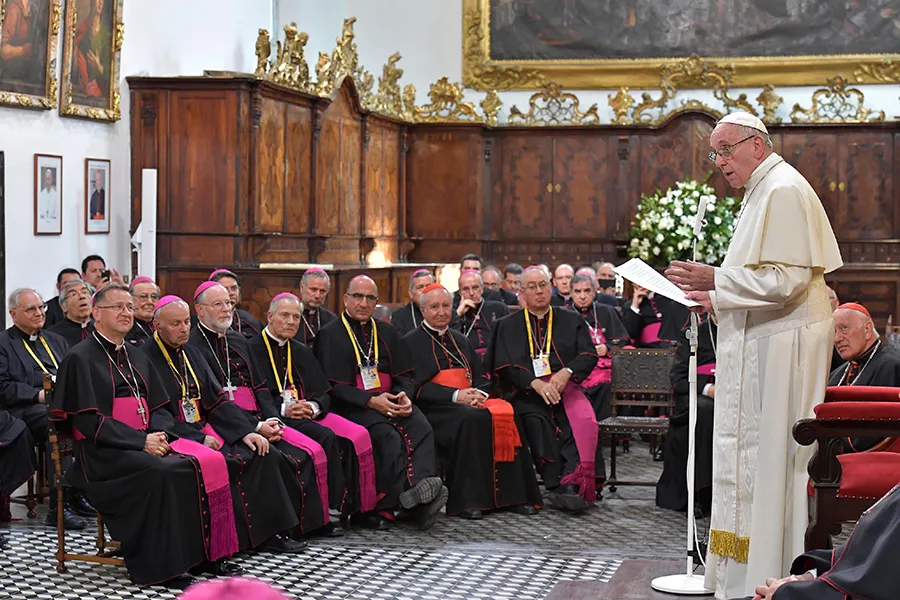
Melipilla, Chile, Jul 30, 2018 / 01:48 pm (CNA/EWTN News).- The Chilean bishops convened Monday for the start of a week-long assembly on the sexual abuse scandal in the Church in their country.

The meeting was organized to examine the causes of the ongoing abuse crisis and to establish national guidelines for dioceses on how to handle abuse cases. The July 30 – Aug. 3 assembly is taking place in Punta de Tralca, about 40 miles northwest of Melipilla.

Civil authorities in Chile are carrying out investigations into sexual abuse in the Church spanning 266 alleged victims and 158 Church officials.

Starting Aug. 1, four religious superiors, two deacons, two bishops’ conference department-heads, two lay people from the conference’s prevention council, and two representatives of a conference of religious men and women in Chile will also be present at the bishops’ assembly.

Bishop Santiago Jaime Silva Retamales of Chile’s military diocese, president of the Chilean bishop’ conference, said he has confidence the extraordinary assembly will contribute to the discussion of what the Church should do going forward.

According to the press agency of the Chilean bishops July 27, Bishop Silva said the bishops are “fully aware that the Lord of history, Jesus Christ, will know how to make fundamental renovations with willing hearts.”

“These paths that we seek with determination, paths of truth and justice, reparation and accompaniment, will help us to be a Church more and more similar to the one Jesus Christ dreams of,” he said.

Bishop Luis Fernando Ramos Perez, Auxiliary Bishop of Santiago and secretary general of the bishops’ conference, said the meeting is the next step on the “path of discernment to take on the challenges” Pope Francis asked them to address in their meeting with him in May.

Bishop Ramos said meetings were held within the dioceses, and the reflections and proposals from those gatherings will inform this week’s assembly.

The most recent development in Chile’s investigations into the sexual abuse scandal is the summoning of Cardinal Ricardo Ezzati Andrello of Santiago, a past president of the Chilean bishops’ conference, for questioning by local authorities.

A statement released by the archdiocese confirmed that the cardinal had received a summons and would meet with prosecutors Aug. 21.

Cardinal Ezzati’s questioning will focus on what the cardinal knew about his former archdiocesan chancellor, Fr. Oscar Munoz Toledo, who was arrested July 12 following allegations he sexually abused seven minors.

Munoz has already admitted to sexually abusing one minor, but investigators believe the archdiocese may have been aware of as many as four of his victims. Cardinal Ezzati has been called as prosecutors weigh his involvement in a potential cover-up of Munoz’s crimes.

Cardinal Ezzati denies any participation in covering up abuse. He is quoted as saying, “I reiterate my commitment, and that of the Church of Santiago, to the victims, to the search for truth and with respect to civil justice.”

“I have never covered up nor obstructed justice, and as a citizen I will comply with my duty to provide all the information that helps to clarify the facts.”

So far, Pope Francis has accepted the resignations of five Chilean bishops. Cardinal Ezzati submitted his resignation to the pope in May, together with the rest of the Chilean episcopate, but it has not yet been accepted.

[…]

No Picture
News Briefs

Albany bishop: Clerical sex abuse a ‘profoundly spiritual crisis’

July 30, 2018 CNA Daily News 1

Albany, N.Y., Jul 30, 2018 / 12:37 pm (CNA/EWTN News).- Bishop Edward Scharfenberger of Albany wrote to the clerics of his local Church Sunday, saying that abuse of authority and sexual abuse by clerics is, more than a crisis of policies and procedures, a spiritual crisis.

His comments come amid a scandal centered on Theodore McCarrick, the Archbishop Emeritus of Washington. Last month the Archdiocese of New York announced that it had concluded an investigation into an allegation that McCarrick had sexually abused a teenager, finding the claim to be “credible and substantiated.” Since then, media reports have detailed additional allegations, charging that McCarrick sexually abused, assaulted, or coerced seminarians and young priests during his time as a bishop.

McCarrick resignation from the office of cardinal was accepted by Pope Francis on Saturday.

“Let me be clear,” Bishop Scharfenberger wrote, “in stating my firm conviction that this is, at heart, much more than a crisis of policies and procedures. We can – and I am confident that we will – strengthen the rules and regulations and sanctions against any trying to fly under the radar or to ‘get away with’ such evil and destructive behaviors. But, at its heart, this is much more than a challenge of law enforcement; it is a profoundly spiritual crisis.”

The Bishop of Albany’s July 29 letter was sent to clerics and seminarians, as well as parish life directors and department heads at the diocesan chancery.

He began by reflecting on the betrayal of Christ, saying that “Like Jesus in the Garden of Gethsemane, many of our faithful are now feeling betrayed and abandoned by their spiritual fathers, especially the bishops.”

“No doubt you have been and will be hearing from your people about how shaken and discouraged they are over public revelations of despicable behavior on the part of a very popular and charismatic Cardinal with priests and seminarians in his care.”

Bishop Scharfenberger shared that he had been texted by a friend who conveyed “his family’s utter despondency over this and that the USCCB should disband itself: ‘[t]heir credibility is shot, probably for decades.’”

The bishop said that further “words are not going to repair, let alone restore, the damage that has been done. Lawyering, pledges and changes in the bureaucratic structures and policy – however well intentioned – cannot do it either. I do not see how we can avoid what is really at the root of this crisis: sin and a retreat from holiness, specifically the holiness of an integral, truly human sexuality.”

Bishop Scharfenberger repeated “as clearly and directly” as he could the Church’s teaching that sexual activity outside a valid marriage is a grave sin: “A cardinal is not excused from what a layperson or another member of the clergy is not … This is what our faith teaches and what we are held to in practice. There is no ‘third way.’”

Gravely sinful sexual activity outside marriage “includes grooming and seduction,” the bishop wrote. Such acts of McCarrick were detailed by a priest of the Diocese of Albany, who was once a seminarian under the former cardinal, in an interview with America magazine published July 25.

“The psychological and spiritual destructiveness of such predatory behavior, really incestuous by a man who is held up as a spiritual father to a son in his care – even if not a minor – cannot be minimized or rationalized in any way,” Bishop Scharfenberger wrote. “On that, it seems to me, we are experiencing an unusual unity amidst the many political and ecclesial tensions in our communities.”

“Abuse of authority – in this case, with strong sexual overtones – with vulnerable persons is hardly less reprehensible than the sexual abuse of minors, which the USCCB attempted to address in 2002.”

He noted that the Charter for the Protection of Young People, adopted by the USCCB in 2002, “unfortunately … did not go far enough so as to hold cardinals, archbishops and bishops equally, if not more, accountable than priests and deacons.”

Bishop Scharfenberger said he believes the vast majority of clerics “live or, at least, are striving to live holy and admirable lifestyles. I am ashamed of those of my brothers, such as the Cardinal, who do not and have not. As your Bishop, you can be sure of my support for you and all the faithful during this very difficult time.”

He expressed gratitude for “all of those who have come forward to expose these patterns of sin in the lives of some – as well the institutional sins of denial and suppression of those brave witnesses whose warnings went unheard or unheeded, so that some of the harm might have been prevented.”

“I hope and pray that others who may have suffered such traumatic experiences at the hands of their spiritual fathers will find the courage to say so. To you, if you are among them, and to them I offer my support and assistance in any way the resources I have can muster.”

Bl. Paul VI’s Humanae vitae “prophetically warned … of the long-range consequences of the separation of sexuality and sexual behavior from the conjugal relationship,” he said.

“Contemporary culture in our part of the world now holds it normative that sex and sexual gratification between any consenting persons for any reason that their free wills allow is perfectly acceptable. This is not a sexuality befitting of human beings that responds to the need and true desire of every human person to be respected and loved fully and unconditionally.”

Clerics “must practice what we preach and teach,” he emphasized. “We also need to uphold what our faith proclaims about the gift and beauty of human sexuality, fully lived in its essential conjugal meaning.”

“A culture of virtue and chastity – in short, personal holiness – rooted in a trusting and committed relationship with Jesus Christ is the path toward healing and wholeness, even as we seek to drive the evil behaviors among us from the womb of the Church.”

Bishop Scharfenberger commended preparation for a Eucharistic Congress as “a time of spiritual renewal for all of us seeking to follow in the footsteps of our Lord and Master who was himself betrayed by his closest friends, but died for us to save us from ourselves and to offer us a way to living our humanity fully in this life and in the heaven to come.”

[…]

No Picture
News Briefs

Bishop: Marriage is for life, so choose wisely

July 30, 2018 CNA Daily News 0

Abuja, Nigeria, Jul 30, 2018 / 11:23 am (CNA/EWTN News).- A thriving and holy marriage depends on choosing a suitable spouse, having realistic expectations for the difficulties of marriage, and understanding the role of God’s grace in Christian life, according to a Nigerian bishop.

“You do not choose when and where you are born, you may or may not choose what school you attend, but you alone can choose who your spouse will be. And because this is a critical life decision, it can mar one’s life when a wrong choice is made,” said Bishop Anselm Umoren, auxiliary bishop in Abuja, at a July ceremony launching a book on marriage written by Henrietta Okechukwa, a counselor in Abuja.

At the ceremony, the bishop noted that “many young people, having observed the tragic situation of marriage and family life today, are giving up hope of ever starting a family. I have heard and seen young people today who say, ‘If this is what marriage is, I prefer to remain single’. This seems to be the chorus on the lips of many young people in our society,” according to the Catholic News Service of Nigeria.

Those young people who do marry, he said, “go into marriage relationships with skewed values. Many young people want to marry a wealthy partner and are desperately seeking a life of comfort without seeking the values that make for a happy and holy life. They therefore end up mortgaging their lives and exchanging their happiness for the temporary pleasures of life.”

“On Valentine’s Day in 2014, Pope Francis addressed 10,000 young couples preparing for marriage at a special Valentine’s celebration in St Peter’s Square in Rome. In his address, the pope spoke to the engaged couples about love and about lasting fidelity in marriage and encouraged them not to be afraid to make the life-long commitment that marriage entails. But the pope also expressed his sadness that many marriages today do not last long. This mentality, he says, has affected many young people who now see marriage as a temporary arrangement according to their own preferences,” Umoren said.

“This is why today many young couples seem to be overtaken by excessive planning and preparation for wedding, with exotic wedding gowns, elaborate photo shoots, and huge financial spending, without giving much attention to the spiritual and mental preparation for marriage.”

“They spend a lot of time and resources preparing for wedding instead of preparing for marriage. The wedding ceremony takes only a couple of hours, but the life after wedding lasts ‘till death do us part’. We need to help today’s young people to focus on this priority,” he added, while praising Okechukwa’s book.

The book, “Understanding your spouse before and after saying ‘I do,’” has not been released in the United States.

The bishop urged dating couples to reflect carefully on their values, and those of their partner, encouraging them not to marry if they do not share a common commitment to the permanence of marriage, to faith and to the Gospel.

“We are inundated almost on a daily basis with harrowing tales of husband and wife who are unable to live together under the same roof and sometimes resort to violence even to the point of killing a partner,” he said of his own pastoral experience in the Diocese of Abuja.

“It is better to put an end to an incompatible relationship today than to find yourself in an unhappy and sorrowful marriage tomorrow.”


[…]

No Picture
News Briefs

Bishops announce nine-week novena ahead of Supreme Court confirmation

July 30, 2018 CNA Daily News 2

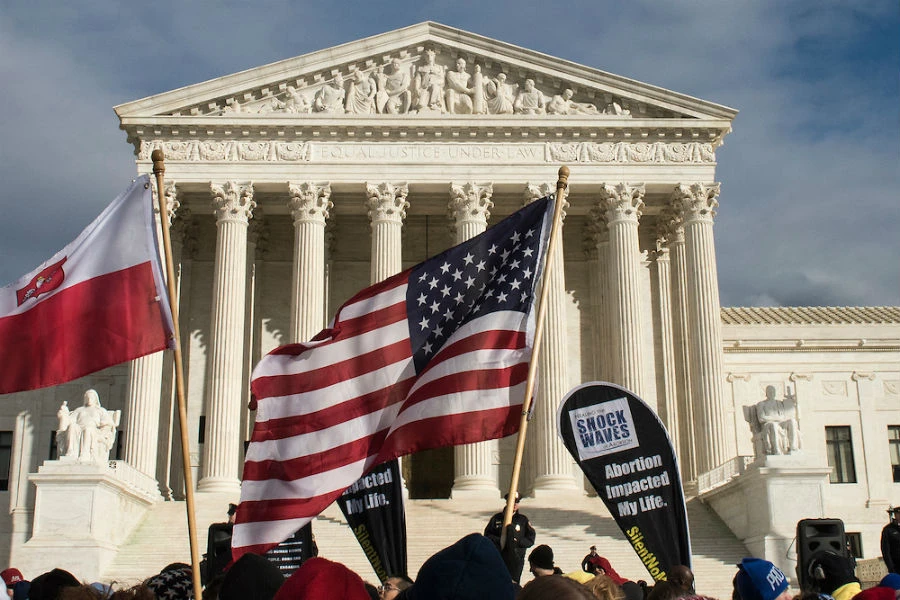
Washington D.C., Jul 30, 2018 / 03:00 am (CNA).- A Novena for the Legal Protection of Human Life is being led by the United States Conference of Catholic Bishops. Catholics are being encouraged to take part ahead of the Senate confirmation hearings for Judge Brett Kavanaugh’s nomination to the Supreme Court.

The novena will be prayed each Friday between August 3 and September 28. The initiative is part of the USCCB’s ongoing Call to Prayer for Life, Marriage, and Religious Liberty.

Every Friday, those who have signed up to the Call to Prayer program will receive the day’s prayer intentions by email or text message.

Senate confirmation hearings are set to begin in September, and there are expectations that Kavanaugh could be confirmed by the time the Supreme Court begins its next session in October. Kavanaugh’s nomination was welcomed by Catholics and pro-life groups who hope he could form part of a majority on the court in favor of overturning controversial abortion decisions like Roe v. Wade.

Roe, along with the companion decision in the case Doe v. Bolton, found a legal right to abortion throughout all nine months of pregnancy, regardless of circumstances.

The novena is tied to the confirmation process and the prayers of Catholics are important, Greg Schleppenbach, associate director of the USCCB Pro-Life Activities Secretariat, told CNA. He predicted that the confirmation process will be “very contentious,” with much of the debate centered around the issue of abortion.

“As we’ve already seen, the pro-abortion side is making this all about Roe v. Wade. It will clearly be contentious on that issue alone and perhaps others. But certainly, the other side has been making Roe vs. Wade a central issue, if not the central issue, in this confirmation process.”

Schleppenbach hopes that the novena and prayer initiative will help teach the public and Congress about what the Roe decision and its effects have actually meant in the United States.

The novena “presents an opportunity for us to educate the public on Roe v. Wade, and to urge them to pray for this very important intention [life] that transcends even this particular nomination,” he told CNA.

“One of the things we know about public opinion, about public knowledge, is that there’s a lot of misunderstanding about how radical Roe v. Wade is.”

Schleppenbach believes that recent polls indicating a high level of support for the decision are misleading, as most simply do not know what exactly overturning Roe would mean.

This prayer effort will go on even after Kavanaugh’s confirmation process ends, with hopes that this is just the beginning of a shift toward a culture where “unborn children are protected in law and welcomed in life.”

The Novena for the Legal Protection of Human Life is a “very concrete and effective way” for those who are concerned about human life to combat the “culture of death,” said Schleppenbach.

“The fact that this effort focuses on and encourages people to pray and to fast is critically important. It is absolutely one of the most productive, effective pro-life actions that we can take,” he told CNA. 

“I very strongly encourage everyone to participate in the prayer and fasting, and to utilize the educational materials on Roe, sharing them with others.”

The novena begins Friday, August 3, and information on how to take part is available from the USCCB website.

[…]

No Picture
News Briefs

Learning to ‘love your enemy’ in a Soviet labor camp

July 29, 2018 CNA Daily News 1

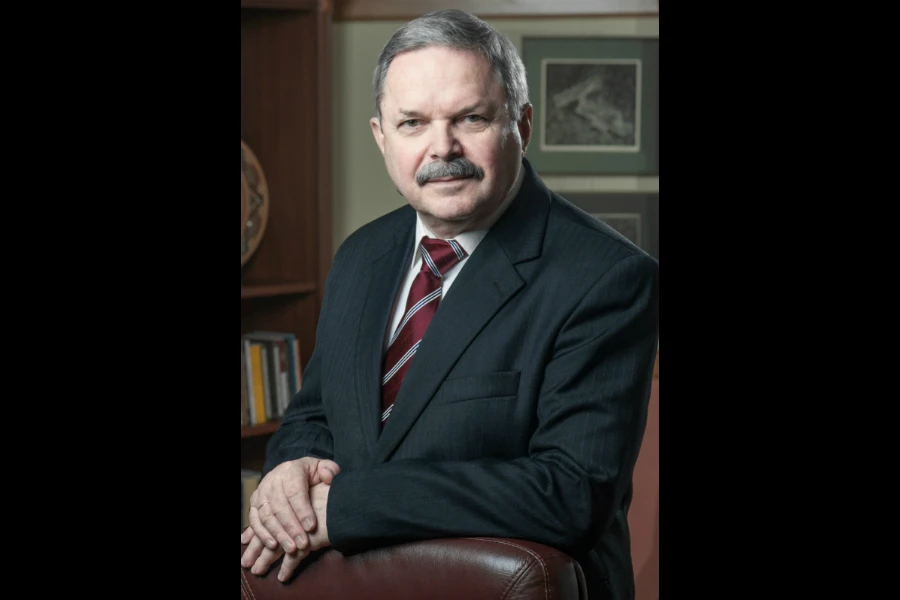
Lviv, Ukraine, Jul 29, 2018 / 04:02 pm (CNA/EWTN News).- “I can honestly say that the labor camp was the best place to understand what ‘love your enemy’ really means,” said Myroslav Marynovych, a Ukrainian Catholic who spent seven years in a Soviet gulag in the Perm region of Russia.

After receiving the 2018 Charles J. Chaput Award at the Napa Institute conference this month, Marynoych explained to CNA how the gospel came to life for him in the gulag, and how a stint in solitary confinement led him to write a letter to St. John Paul II.

Marynovych is currently vice-rector for university mission at the Ukrainian Catholic University in Lviv.

Marynovych was sent to the labor camp in 1977, one year before Karol Wojtyła was elected Bishop of Rome. He was arrested for leading the Ukrainian Helsinki Group, the first non-underground group in Ukraine tasked with documenting human rights abuses and monitoring the implementation of the Helsinki Accords.

He spent 1977-1984 in forced labor camps in Perm, and then three years of exile in Kazakhstan.

Marynovych learned early on in his gulag experience that he needed to guard against an unchristian contempt for the KGB officers and guards.

After an outburst while interacting with a guard when he was in solitary confinement, Marynovych reflected on his actions in his cell.

“This incarnation of anger – is it me? What about my Christianity? I didn’t want to transform myself into a ‘man of hatred.’”

“I started to pray. I started to walk in the cell back and forth, and…I decided, ‘No, I don’t want hatred to overcome my heart.’”

After that realization, “I behaved in a way that is acceptable as a Christian. I don’t need to hate people to say something that they have to hear,” said Marynovych.

The Catholics in his labor camp celebrated Easter twice in a sign of solidarity with their Orthodox brethren, who follow a different liturgical calendar. “That was a sort of prison ecumenism,” Marynovych explained. It also made it more difficult for the KGB officers to pit the two groups against each other.

Any sort of religious practice was strictly forbidden in the Soviet camps. In 1982, the camp administration issued a warning on Holy Saturday that anyone gathering to celebrate Easter would be punished.

“And, for us Christians, to be punished for celebrating the Easter is okay. So of course we ignored these warnings,” said Marynovych.

“We gathered and we prayed. There were people of different confessions. We started to eat some simple food that we had at that moment, and the guards arrived and took all of us to the penal isolation cell for 15 days,” he continued.

“That was the time when in Europe Christian peace marches were very popular, and the Soviet Union supported these Christian peace marches because they stood for disarmament etc. It was useful for the Soviet propaganda.”

“The Soviet Union supported Christian movements in Europe, on one hand, and punished Christians for just celebrating Easter on the other hand. We had to inform the world about that.”

The prisoners decided to write a letter to the pope.

When the news that Wojtyła had been elected reached the gulag, there was “total enthusiasm in the labor camp,” explained Marynovych.

“We all understood that as a Polish citizen, he knew the nature of communism from within, not as some Italian bishops-cardinal from outside. They knew communism as a grassroots activity of Italian communists, but he knew communist crimes from within.”

Marynovych was the man selected by the prisoners to pen the letter.

“We described the situation and asked John Paul II to make this moment known for Christians in the world – that we were punished simply for celebrating the Easter. We shared the text of this letter later when we were released from this punishment cell, and the text was agreed upon by the other prisoners.”

“We smuggled this letter secretly to Moscow, and then from Moscow to Rome.”

“After several months, we received a secret information from our relatives that John Paul II had received this letter and prayed a Mass for the signatories of this letter, including me.”

“There was a storm of positive emotion, and gratitude to John Paul II for that because this support was very important for us.”

“It was suggested that the election of the John Paul II as pope was the end of communism. And actually it happened during his papacy. The Soviet Union fell down.”

After the fall of the Berlin Wall, Marynovych had a chance to meet the pope and thank him personally, more than ten years later after he had written the letter.

“Of course, I was deprived of many joys of life – just imagine, I was arrested when I was 28 and released at 38. And yet, I am an illustration of the very important truth: God never takes anything away from a human being without compensating him or her even more abundantly. That’s why I have never considered my imprisonment as a curse,” Marynovych said in this remarks that the Napa Institute conference July 14.

“Yes, the Soviet regime did want to make my life hell. However, it was God who transformed the camp experience into a blessing.”

[…]

No Picture
News Briefs

US bishops to honor three people with ‘People of Life’ award

July 28, 2018 CNA Daily News 2

Phoenix, Ariz., Jul 28, 2018 / 04:01 pm (CNA/EWTN News).- More than 100 Catholics will attend the 2018 People of Life awards next week to honor three pro-life individuals for their dedication to the Gospel of Life.

The awards will go to Janice Benton, a proponent for disability rights; Monsignor Joseph Ranieri, an advocate for post-abortion healing; and James Hanson, who campaigned against medically assisted-suicide and who will be honored posthumously.  

The awards will be presented in Phoenix as part of the Diocesan Pro-Life Leadership Conference July 29 – Aug. 1, sponsored by the US bishops’ Secretariat on Pro-Life Activities.

More than 125 people are expected to attend, including Bishop Thomas Olmsted of Phoenix, Bishop Brendan Cahill of Victoria in Texas, and Bishop Eduardo Nevares, Auxiliary Bishop of Phoenix.

The awards are given to men and women who have made significant and longtime contributions to the pro-life movement, promoting a culture of life and respect for the human person.

Janice Benton has served as the executive director of National Catholic Partnership on Disability for 15 years. Before that, she spent 25 years ministering to people with disabilities, working in areas such as a camp counselor for people with intellectual disabilities.

She also worked for the American Coalition of Citizens in Washington D.C., beginning in 1979, where she advocated for Section 504 of the Rehabilitation Act and Education for All Handicapped Children Act.

Monsignor Ranieri has served as a parish priest of the Archdiocese of Washington for more than 60 years. There, he involved himself with Project Rachel Ministry, a post-abortion resource group.

According to the Catholic Anchor, Monsignor Ranieri encouraged priests, who will hear about abortions in the confessional, “to listen, to be open and to be patient. These people need to talk about what happened, often more than once.”

James Hanson was a U.S. Marine Corp veteran and president of the Patients Rights Action Fund, a strategic and financial support group advocating against assisted suicide legislation. Hanson suffered from glioblastoma, an aggressive form of brain cancer. Before he passed away in December 2017, Hanson campaigned against legislation permitting assisted suicide.

The People of Life award was established in 2007 by the Secretariat of Pro-Life Activities. The award seeks to honor Catholics dedicated to the pro-life movement as described by St. John Paul II in his 1995 encyclical on the value and inviolability of human life, Evangelium Vitae.

According to the USCCB website, the People of Life award “is presented to individuals who have consistently answered this call of the Gospel of Life.”

“Recipients are recognized because, through their personal or professional contributions, they have demonstrated their lifetime commitment to the pro-life movement, to promoting respect for the dignity of the human person, and to advocacy for an end to the culture of death in this nation.”

[…]

No Picture
News Briefs

Texas bishop: hold McCarrick and his enablers accountable

July 28, 2018 CNA Daily News 4

Fort Worth, Texas, Jul 28, 2018 / 03:33 pm (CNA).- Former Cardinal Theodore McCarrick’s alleged crimes might merit removing him from the clergy entirely—and they require accountability for all Church leaders who knew of his alleged misconduct and did nothing, Bishop Michael F. Olson of Fort Worth, Texas has said in a letter to the faithful of his diocese.

“The Church needs to do more than have a serious conversation about these issues, it needs to discern in light of the Truth and to act intentionally,” Olson told CNA July 28. “If conversation does not lead to decision, it quickly devolves into chatter.”

“An important ministry for us as bishops is to ‘see, judge, and act.’ It’s not enough to see. Yet, seeing clearly leads to sound judgment that requires fortitude for us to act,” he added. “If we don’t do that as pastors we sell our vocation as shepherds in exchange for a career as hirelings.”

The Pope accepted Cardinal McCarrick’s resignation from the College of Cardinals on Friday. The Pope directed McCarrick, the 88-year-old former Archbishop of Washington, to observe “a life of prayer and penance in seclusion” until the end of the canonical process against him.

A substantial and credible allegation of child sexual abuse against McCarrick was made public in June.

In recent weeks, McCarrick has faced several additional allegations of sexual abuse and misconduct. These include charges that he pressured seminarians and priests into sexual relationships, and another reported allegation that he had a serially sexually abusive relationship with a child.

Bishop Olson’s July 28 letter said the former cardinal’s alleged crimes have caused “such further damage to the integrity of the hierarchy and mission of the Church” that his prompt laicization should be “strongly deliberated.” Such a move would serve “reconciliation and healing in the light of the justice and merciful redemption as won by Christ and promised to all who are alienated by the corruption of sin.”

“Justice also requires that all of those in Church leadership who knew of the former cardinal’s alleged crimes and sexual misconduct and did nothing be held accountable for their refusal to act thereby enabling others to be hurt,” the bishop continued.

Olson’s letter said McCarrick’s alleged crimes were “scandalous” and resulted in violation of trust and “grave damage” to the lives and health of his reputed victims.

“This scandal and pain are compounded by the horrific fact that reportedly one of his victims was his first baptism after his priestly ordination,” he continued, noting that the claims also include crimes against his subordinates including priests, seminarians and lay Catholics.

“The evil effects of these actions were multiplied by the fact that financial settlements were arranged with victims without transparency or restrictions on the former cardinal’s ministry,” Bishop Olson said.

“Please continue to pray for the reported victims and the families who have been hurt by the alleged crimes and sins of former Cardinal McCarrick and others. Pray also that we can work together to respond not only in word but in action to prevent further crimes and transgressions.”

Cardinal Daniel DiNardo of Galveston-Houston, president of the U.S. bishops’ conference, on Saturday morning thanked Pope Francis for “his leadership in taking this important step” of accepting the cardinal’s resignation and ordering him to prayer and penitence.

“It reflects the priority the Holy Father places on the need for protection and care for all our people and the way failures in this area affect the life of the Church in the United States,” Cardinal DiNardo said.

A letter sent this week to priests of the Archdiocese of Washington claims that its current archbishop, Cardinal Donald Wuerl, did not know until recently about settlements made by two New Jersey dioceses in response to allegations misconduct on the part of former cardinal Theodore McCarrick. The letter was sent by by archdiocese’s vicar general Monsignor Charles Antonicelli.

Sources close to the Archdiocese of Washington have told CNA that Wuerl was not informed of settlements until June.

The two New Jersey legal settlements involving McCarrick were reached in 2005 and 2007 by the Diocese of Metuchen, the Archdiocese of Newark, and two men who claim they were sexually assaulted by McCarrick while they were seminarians and young priests.

McCarrick was Bishop of Metuchen from 1981-1986, Archbishop of Newark from 1986-2000, and Archbishop of Washington from 2000-2006.

In his letter, Bishop Olson stressed the Fort Worth diocese’s “zero tolerance” for sexual abuse against minors and vulnerable adults perpetrated by clergy, staff and volunteers, “including me, as bishop.” He said he has taken prompt action in response to credible allegations and added that the diocese has sought transparency in calling for victims to come forward, showing respect for protecting victims’ identities.

“Our seminarians, priests, deacons, and religious and lay staff are taught to recognize and to report boundary violations without fear of retribution, no matter the status of the perpetrator,” the bishop said.

Pope Francis named Olson to head the Fort Worth diocese in November 2013. He was ordained and installed as bishop in January 2014.

[…]