No Picture
News Briefs

Masked men brutally attack priest in Nicaragua

September 18, 2018 CNA Daily News 0

Leon, Nicaragua, Sep 18, 2018 / 05:01 pm (ACI Prensa).- A group of masked men entered the home of a priest in the Diocese of León in Nicaragua and savagely beat him in the early hours of Saturday, in a new direct attack against the Church in the country.

According to local media, unidentified men entered the home of Fr.  Abelardo Toval Ayesta, the pastor of Saint John the Baptist of Sutiaba parish in León, and struck him hard in the face and ribs, and even tried to suffocate him on Sept. 15

Fr. Victor Morales, communications director for the Diocese of León, told the media that “three people came in through the courtyard with faces masked, tied up (the priest), beat him badly and left him tied up. The stole several valuables from him.”

Following the incident, the auxiliary bishop of Managua, Silvio José Báez Ortega, strenuously protested the attack.

“I deplore and condemn the brutal aggression inflicted today by masked men on Father Abelardo Toval, the pastor of Sutiava in León. The priest is in danger of losing an eye. My prayers for him, for Bishop Bosco Vivas and for all the clergy of the Diocese of León,” the prelate wrote on Twitter.

The Archdiocese of Managua reported on Facebook that “His Eminence Cardinal Leopoldo José Brenes, the Metropolitan Archbishop of Managua, has been in direct contact with Father Abelardo Toval of the Diocese of León.”

The cardinal expressed to the priest “his closeness and prayer concerning the violent situation he experienced this morning. (The cardinal) asks the faithful to continue to pray for all the priests.”

Amid Nicaragua’s recent crisis, numerous churches have been desecrated and both bishops and priests have been attacked.

Protests against president Daniel Ortega which began April 18 have resulted in more than 300 deaths, according to local human rights groups. The country’s bishops have mediated on-again, off-again peace talks between the government and opposition groups.

Nicaragua’s crisis began after Ortega announced social security and pension reforms. The changes were soon abandoned in the face of widespread, vocal opposition, but protests only intensified after more than 40 protestors were killed by security forces initially.

Anti-government protesters have been attacked by “combined forces” made up of regular police, riot police, paramilitaries, and pro-government vigilantes.

The Nicaraguan government has suggested that protestors are killing their own supporters so as to destabilize Ortega’s administration.

The Church in Nicaragua was quick to acknowledge the protestors’ complaints.

The pension reforms which triggered the unrest were modest, but protests quickly turned to Ortega’s authoritarian bent.

Ortega has been president of Nicaragua since 2007, and oversaw the abolition of presidential term limits in 2014.

The Church has suggested that elections, which are not scheduled until 2021, be held in 2019, but Ortega has ruled this out.

Ortega was a leader in the Sandinista National Liberation Front, which had ousted the Somoza dictatorship in 1979 and fought US-backed right-wing counterrevolutionaries during the 1980s. Ortega was also leader of Nicaragua from 1979 to 1990.


This article was originally published by our sister agency, ACI Prensa. It has been translated and adapted by CNA.
[…]

No Picture
News Briefs

Indiana diocese releases names of credibly accused clerics

September 18, 2018 CNA Daily News 0

Fort Wayne, Ind., Sep 18, 2018 / 03:22 pm (CNA/EWTN News).- The Diocese of Fort Wayne-South Bend published Tuesday the names of the 18 priests and deacons who have served in the diocese and have been credibly accused of at least one act of sexual abuse of a minor.

“It is my hope that by releasing these names, the innocent victims of these horrific and heartbreaking crimes can finally begin the process of healing,” Bishop Kevin Rhoades said ahead of the Sept. 18 release.

“We must be vigilant in our efforts to protect our youth. With the Lord’s guidance and love, we will do so.”

The list of those credibly accused as developed with the help of the Diocesan Review Board, which is largely composed of laity.

A credible accusation, a statement from the diocese said, is one that “after a thorough investigation and review of available information, appears more likely true than not in the judgement of the Diocesan Review Board, and is accepted as credible by the Bishop.”

The diocese added that Bishop Rhoades “followed the recommendations of the Diocesan Review Board” in determining credibility, and that the credibility of accusations against religious were made “by the accused priest’s religious congregation.”

It added that it “stands firm in its commitment to investigate any allegation of sexual abuse by a member of the clergy and to listen to and support anyone who has been abused,” and provided contact information for the diocese’s victim assistance coordinator and its vicar general.

The credibly accused clerics who have served in the Fort Wayne-South Bend diocese are: James Blume, Michael Buescher, Brian Carsten, William Ehrman, William Gieranowski, John Gillig, Gabriel Hernandez, Edward Krason, Paul LeBrun, CSC, Thomas Lombardi, Robert Mahoney, Eldon Miller, Edward O. Paquette, Cornelius Ryan, CSC, James Seculoff, Richard Stieglitz, Richard Thompson and James Trepanier, CSC.

Of these, seven have died. Of those who are alive, eight have been dismissed from the clerical state, two are Holy Cross Fathers whose faculties for ministry in the Diocese of Fort Wayne-South Bend have been removed, and one has been removed from public ministry.

One was ordained in the 1920s, one in the 1940s, five in the 1950s, three in the 1960s, five in the 1970s, two in the 1980s, and one in the 2000s.

[…]

No Picture
News Briefs

UK politicians call for action against sex-selective abortion

September 18, 2018 CNA Daily News 0

London, England, Sep 18, 2018 / 02:30 pm (CNA).- British politicians have called for a review of the availability of early sex detection tests for pregnant women. The proposal was made by Labour Members of Parliament and prompted by concerns that the tests are leading to sex-selective abortions.

The MP’s expressed particular concern that women, especially those in the UK’s Asian communities, are being pressured or coerced into having an abortion if they are pregnant with a girl.

Labour MP Naz Shah said it was “morally wrong” that women are using the Non-Invasive Prenatal Test (NIPT) to determine whether or not they are pregnant with a girl, and then scheduling an abortion based on the result. Shah, the Shadow Secretary of State for Women and Equalities, called for a government investigation into the practice.

The call for government intervention against the practice comes almost 18 months after the Nuffield Council on Bioethics, a government-funded think tank, found that NIPT promoted sex-selective abortions.

The NIPT consists of a blood test given to the mother at the ninth week of pregnancy, at which time the baby’s DNA is detectable in their mother’s bloodstream.

The test is currently administered by the UK’s National Health Service to screen for genetic conditions, such as Down syndrome. Pro-life advocates have already warned that the test is used to “screen out” children with Down’s syndrome and other conditions. Currently in the UK, 90% of children with a prenatal diagnosis of Down’s syndrome are aborted.

While the gender can be detected by the NIPT, the NHS does not share this information with parents unless there is a specific need to do so. While the test is not made available by the NHS expressly for gender screening, it is privately available to parents and can be purchased at a clinic for about £150-£200.

In the London suburb of Slough, which has a substantial South Asian population, the tests are roadside advertisements explicitly market the test as being able to determine the sex of the child. This, said Shah, is where the government should consider stepping in.

“NIPT screenings should be used for their intended purpose, to screen for serious conditions and Down’s syndrome,” said Shah.

“The government needs to look into this exploitative practice and enforce appropriate restrictions.”

Slough’s Labour MP Tan Dhesi agreed with Shah, and pointed out that some Asian countries have “made huge strides in tackling this social evil,” particularly when the government has banned prenatal gender tests.
“In the UK I think we need to be doing likewise, with regards to the private sector as well,” said Dhesi.

Prenatal sex detection has been illegal in India since 1994.

The calls follow a BBC has report on online forums where women have discussed how NIPT results will directly inform their decision to continue with their pregnancy or to have an abortion.

“I need a son to heal me…,” wrote one woman. “My only bet is NIPT followed by continuation, only if it’s a boy.”

Clare McCarthy, spokesperson for Right To Life UK, told CNA that she agrees with the need for government action to address the problem of sex-selective abortion.

“This BBC investigation adds to a growing body of evidence that we have a sex-selective abortion problem here in the UK,” said McCarthy.

“It’s time for the Government to stop denying there is a problem here and take urgent action to put in place a ban on sex-selective abortion.”

McCarthy, however, said it was “seriously concerning” that the same Labour MPs who are opposed to sex-selective abortion also are in favor of removing all legal restrictions on abortion, “under the guise of ‘decriminalisation.’”

If this were happen, McCarthy told CNA that “the evidence from overseas shows that this could make our sex-selective abortion problem even worse.”

While sex-selection abortion is technically illegal in the United Kingdom, women may give other reasons as for why they want to have an abortion.

In England, Scotland, and Wales, abortion must be signed off by two doctors and cannot be performed later than 24 weeks gestation. After 24 weeks of pregnancy the grounds upon which an abortion can be sought narrow significantly.

In Northern Ireland, abortion is illegal, but it is legal for a Northern Irish woman to travel to England, Scotland, or Wales for an abortion.

[…]

No Picture
News Briefs

Religious priest named auxiliary bishop of Hartford

September 18, 2018 CNA Daily News 0

Hartford, Conn., Sep 18, 2018 / 11:07 am (CNA/EWTN News).- Father Juan Miguel Betancourt Torres, a member of the Institute of the Servants of the Holy Eucharist and the Blessed Virgin Mary, was appointed auxiliary bishop of Hartford on Tuesday.

“I am honored and grateful to be entrusted with this mission of service in the Lord’s Church,” Fr. Betancourt, 48, said Sept. 18. “My prayers are for my seminary family, for my parish family, and for my new family in the Archdiocese of Hartford.”

Archbishop Leonard Blair of Hartford said that “the appointment of Father Betancourt is a cause of rejoicing not only for me personally, but for all our clergy, religious and laity. For me and for our clergy it means the welcome arrival of a dedicated co-worker in the Lord’s vineyard who brings a variety of talents and of experience to our shared ministry.”

“For the laity of the archdiocese in all its present-day diversity, Fr. Betancourt’s Hispanic/Latino heritage will only enhance the pastoral care that he will exercise for the good of everyone of every race and ethnicity,” he said.

“For those in religious life, Fr. Betancourt’s membership in the Society of the Servants of the Eucharist and Mary only serves to underscore the value and contribution that consecrated religious men and women make to the good of the Church.”

Fr. Betancourt was born in Ponce, Puerto Rico in 1970.

He entered the Institute of the Servants of the Eucharist and the Virgin Mary, a contemplative community which is part of the Schoenstatt Movement and which was founded in Puerto Rico, as a postulant in 1992. He professed vows as a religious in 1994, studied at the Pontifical Catholic University of Puerto Rico, and made perpetual vows in 2000.

He was ordained a priest of the religious institute in 2001, and received a licentiate in scripture from the Pontifical Biblical Institute in 2005.

After receiving his licentiate Fr. Betancourt taught scripture at the Pontifical University of Puerto Rico and Regina Cleri Major Seminary, before beginning work in the Archdiocese of Saint Paul and Minneapolis in 2006.

Since then, he has been a professor of sacred scripture at the Seminary of Saint Paul and the University of St. Thomas, local superior at the Casa de San José, and pastor of St. James and St. Francis de Sales parish.

Fr. Betancourt currently serves as vice rector and associate academic dean at St. Paul Seminary, in addition to teaching. He is also vicar general of the Society of the Servants of the Eucharist and Mary.

He has served on the Saint Paul-Minneapolis archdiocese’s presbyteral council, and is a board member of the National Conference for Seminarians in Hispanic Ministry.

Bishop Andrew Cozzens, auxiliary bishop of Saint Paul and Minneapolis and interim rector of St. Paul Seminary, said: “I have known Father Juan Miguel Betancourt for almost 15 years to be a man of deep prayer and a joyful servant in everything he does. His love for the study of sacred Scripture and his gifts for teaching will be a great blessing for his new episcopal ministry. He is a man who desires to be a servant in all he does, as is reflected in the name of his religious community the Servants of the Eucharist and Mary. We will miss the dedication, his wisdom in formation of men, and his joyful Puerto Rican spirit!”

Archbishop Bernard Hebda of Saint Paul and Minneapolis said that Fr. Betancourt’s “sharp intellect, pastoral heart and joyful spirit suggest that the Lord has long been preparing him for this new ministry as a successor to the apostles. While he will be sorely missed at St. Francis de Sales parish and at the St. Paul Seminary, where he has served with distinction, I rejoice with the Church of Hartford at this appointment.”

Fr. Betancourt will be consecrated a bishop Oct. 18 at the Cathedral of St. Joseph in Hartford.

[…]

No Picture
News Briefs

This 87-year-old woman feeds the homeless in Chile every week  

September 17, 2018 CNA Daily News 1

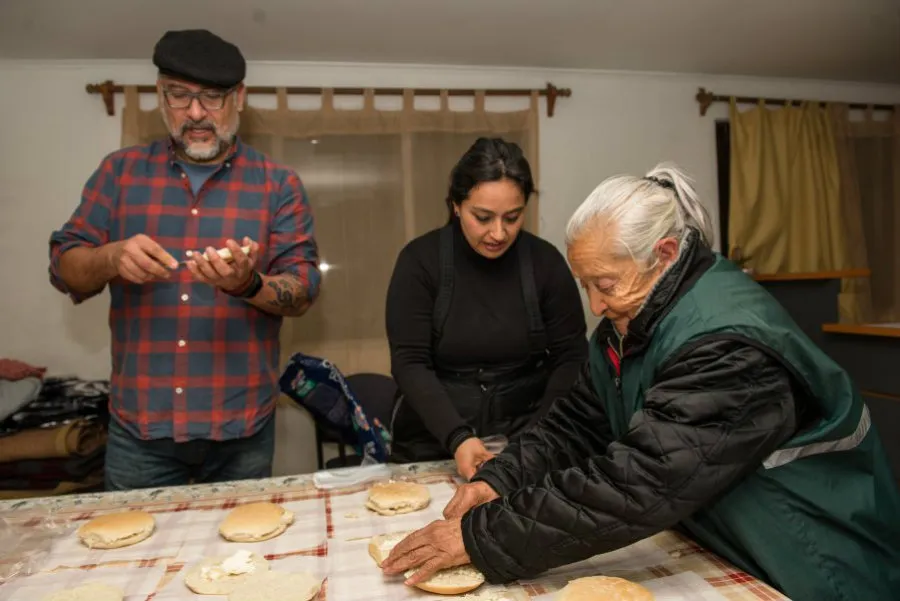
Santiago, Chile, Sep 18, 2018 / 12:06 am (ACI Prensa).- Every Wednesday night, 87-year-old Elena Donaire goes out onto the streets of Santiago, Chile, to meet the homeless and attend to their needs.

For 40 years, Donaire has taken part in the “Street Route” of the Hogar de Cristo (Christ’s Home), an organization that includes numerous outreach programs and facilities to help the poor.

Donaire starts her evening by fixing sandwiches, boiling water and organizing the warm clothing that she will give to the people she encounters on the streets. When everything is ready, the volunteers leave in their van.

Donaire is often the first to get out of the van to begin serving. Many of the homeless people on the streets of Santiago know her and greet her by the affectionate title “Dear Mama.” The other volunteers call her by the nickname “Grandma.”

In an interview with the Archdiocese of Santiago’s communications office, Donaire explained that her mission has its origin in her friendship with Saint Alberto Hurtado.

Known in Chile as Padre Hurtado, the Jesuit priest, author and lawyer founded Christ’s Home, a network of homeless shelters that also included trade schools, rehabilitation centers, and other facilities to serve the poor.

He was beatified in 1994 by Pope John Paul II and canonized in 2005 by Pope Benedict XVI.

Before Hurtado died in 1952, Donaire said she had “promised him to continue serving the people just as he did.”

“That’s the biggest reason I have to continue helping – it’s a joy for me,” Donaire said. “I am going out on the street until he calls me from above. I know that if he were alive, he would be here on the street helping along with me, I would like to be at his side.”

Remembering the Jesuit saint, Donaire said that “he didn’t smile a lot, but when it was an occasion for smiling, he was always there with us. He enjoyed sharing with the people, especially the children, he treated them with such love and affection that it still moves me to this day to remember those moments. I have never met a person as good and committed as he was.”

For Donaire, who lives alone in a small house and works selling clothes in a street market, “It doesn’t matter if it’s raining, or cold, there are no excuses for not going out on Wednesdays.”

“I anxiously wait for [the other volunteers] to come and pick me up for the simple reason that I want to be with these people. I like them and they make me happy. I know their stories and they tell me them.”

She acknowledged that she sometimes feels bad that she cannot do more to help the homeless people she encounters on the streets.

“I know I am going home to a house, I’m going to get a good night’s sleep, and I see that these people aren’t going to,” she said.

Still, she stressed the importance of doing what one can to help those in need.

“Help your brothers on the street,” she encouraged. “Many times, it’s enough just to talk with them, to listen to them, to find out how they are doing. I assure you that [they] feel happier just to share their troubles with someone. We all have commitments or things to do, but making an effort doesn’t cost anything.”


This article was originally published by our sister agency, ACI Prensa. It has been translated and adapted by CNA.

[…]