No Picture
News Briefs

Pope names new archbishops in Peru, Mexico

January 25, 2019 CNA Daily News 0

Vatican City, Jan 25, 2019 / 07:42 am (CNA/EWTN News).- Pope Francis Friday appointed the next archbishops of two metropolitan sees – Fr. Carlos Castillo Mattasoglio was named to Lima, Peru and Archbishop Jose Antonio Fernandez Hurtado to Tlalnep… […]

No Picture
News Briefs

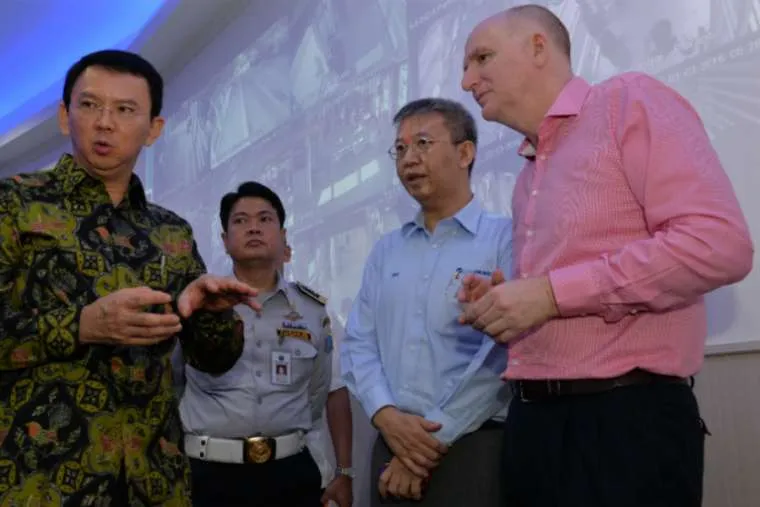
Christian politician completes two-year sentence for blasphemy in Indonesia

January 24, 2019 CNA Daily News 1

Jakarta, Indonesia, Jan 25, 2019 / 12:00 am (CNA).- An Indonesian Christian, the former governor of Jakarta was released from jail on Thursday completing a two-year long sentence for alleged blasphemy against Islam.

Basuki Tjahaja Purnama, a Chinese Christian, was Jakarta’s governor from 2014 to 2017. He was sentenced to prison that year, after being convicted of blasphemy after he charged that his opponents in his reelection race misused a Quranic verse about Muslims being ruled by non-Muslims.  

A video of his comments with inaccurate subtitles was later released. Hundreds of Muslim protestors gathered outside the court and called for his imprisonment.

Similar demonstrations of 150,000 people had twice occurred against the governor. The protests were largely supported by the Islamic Defenders Front, a group that has previously been involved with violence against Christians and Shia Muslim groups.

“He’s back. My dad’s a free man! Thank you everyone for the support,” his son, Nicholas Sean wrote on Instagram, after Purnama’s release.

Human Rights Watch reported on Jan. 23 that Purnama’s case has highlighted the decline of the country’s freedom of speech and religious tolerance. Violation of a 1965 blasphemy law, which can lead to a jail sentence of up to five years, has been used to punish religious minorities in the predominantly Muslim country, the NGO said.

“[Purnama’s] unjust conviction is a reminder that minorities in Indonesia are at risk so long as the abusive blasphemy law remains in place,” said Elaine Pearson of Human Rights Watch.

Before his release, Purnama issued a letter on Instagram apologizing for any distress his comments may have caused. According to Bloomberg, in the letter, he thanked God for his prison sentence as a time to reflect on his future in politics.

“I am very grateful to God, the creator of heaven and earth, for being imprisoned. If I were re-elected in the gubernatorial election, I would have been a man who controlled the City Hall, but in here I learned to control myself forever,” he said.

Reuters reported that the former governor said he will not pursue politics at this time. Rather, Purnama said he is thinking about running a talk show and his family oil business.

Blasphemy laws can carry serious penalties in countries around the world. In Sudan and Saudi Arabia, corporal punishment, such as whipping, can be the punishment for violating blasphemy laws. In Russia and Kazakhstan, correctional labor has been prescribed as punishment for blasphemy.

A USCIRF study found in 2017 that Iran, Pakistan, Yemen, Somalia, Qatar, and Egypt have some of the world’s most severe blasphemy laws.

Asia Bibi, a Catholic mother-of-five, was acquitted in 2018 of a blasphemy conviction eight years after she was initially sentenced to death in Pakistan. The country has never officially carried out an execution under the blasphemy law, but accusations alone have inspired mob and vigilante violence.

“Blasphemy laws are a way for governments to deny their citizens – and particularly those of minority religions – the basic human rights to freedom of religion or belief and freedom of expression,” Dr. Tenzin Dorjee, chairman of the U.S. Commission on International Religious Freedom, said in a statement last October.


[…]

No Picture
News Briefs

Two-thirds of US bishops do not believe women should be ordained deacons

January 24, 2019 CNA Daily News 6

Washington D.C., Jan 24, 2019 / 05:19 pm (CNA/EWTN News).- A survey of bishops in the US released this week found that among respondents, 41 percent believe it theoretically possible to ordain women as deacons, and only 33 percent believe this should be allowed.

The survey released by the Center for Applied Research in the Apostolate at Georgetown University (CARA) was sent in September 2018 to 192 bishops, of whom 108 responded, resulting in a margin of sampling error of plus or minus 6.25 percentage points.

The responses regarding the possibility of female diaconal ordination and whether it ought to occur suggest that eight percent of bishops in the US might believe it possible, yet not believe it should be authorized.

Diocesan deacon directors were also surveyed by CARA. Of the 186 deacon directors invited to participate, 133 responded, leading of a margin of error of 4.55 percentage points.

Asked if they believe the USCCB would implement the sacramental ordination of women as deacons were it authorized by the Holy See, 79 percent of bishops and 72 percent of deacon directors responded in the affirmative. Of bishops, 54 percent said they would consider implementation in their own local Church, and 62 percent of deacon directors believed their ordinary would do so.

Twenty-seven percent of bishop and deacon director respondents believe the Church will authorize the sacramental ordination of women as deacons.

Among the bishops, 97 percent agreed strongly or somewhat that their diocese is committed to increasing women’s involvement in ecclesial leadership; 86 percent of deacon directors affirmed this.

Asked if it would be helpful to have women deacons in liturgy, word, and charity ministries, most of the bishops responded in the affirmative for each category. Most deacon directors responded affirmatively as well, and all of the deacon directors said women deacons serving in charity ministries would be somewhat or very helpful.

It is to be held definitively that priestly ordination is reserved only to men.

The question of female deacons has recently resurfaced after Pope Francis appointed in August 2016 a commission to look into the historical role of deaconesses in the early Church.

Non-sacramentally ordained deaconesses were part of the early Church, although it is not entirely clear what their role was.

In June 2018, Cardinal Luis Ladaria, prefect of the Congregation for the Doctrine of the Faith and head of the commission, clarified that “the Holy Father did not ask us to study whether or not women can be deaconesses…but rather, [he asked us] to try to say in a clear way what the problems are and what the situation was in the ancient Church on this point of the women’s diaconate.”

Francis has acknowledged that the subject of deaconesses has already been studied by the Church, including a 2002 document on the diaconate from the International Theological Commission, an advisory body to the Congregation for the Doctrine of the Faith.

The document, which gave a thorough historical context of the role of deaconesses in the ancient Church, overwhelmingly concluded that female deacons in the early Church had not been equivalent to male deacons, and had neither a liturgical nor a sacramental function.

The ITC wrote: “a ministry of deaconesses did indeed exist, and that this developed unevenly in the different parts of the Church. It seems clear that this ministry was not perceived as simply the feminine equivalent of the masculine diaconate. At the very least it was an ecclesial function, exercised by women, sometimes mentioned together with that of sub-deacon in the lists of Church ministries.”

In his seminal 1982 work Deaconesses: An Historical Study, referenced several times by the ITC, Aime Martimort wrote that “the Christians of antiquity did not have a single, fixed idea of what deaconesses were supposed to be,” and that “the Greek and Eastern canonists of the Middle Ages were even less able than those of antiquity to know who and what deaconesses were.”

He added that “the continuity of a true ecclesiastical tradition was lacking in the case of deaconesses,” and that their institution “lasted only as long as adult baptisms were the norm” and that “it rapidly became obsolete.”

According to Martimort “the resemblance between the ordination rituals of the deacon and deaconess … should not deceive us,” and that “the various euchologies had already given fair warning that there were significant differences as well as resemblances.”

“During all the time when the institution of deaconesses was a living institution, both the discipline and the liturgy of the churches insisted upon a very clear distinction between deacons and deaconesses.”

Martimort concluded that “the real importance and efficaciousness of the role of women in the Church has always been vividly perceived in the consciousness of the hierarchy and of the faithful as much more braod than the historical role that deaconesses in fact played. And perhaps a proposal based on an ‘archeological’ institution might even obscure the fact that the call to serve the Church is urgently addressed today to all women, especially in the area of the transmission of Faith and works of charity.”

[…]

No Picture
News Briefs

Venezuelan Army besieged hundreds of protesters in Maturin cathedral

January 24, 2019 CNA Daily News 0

Maturin, Venezuela, Jan 24, 2019 / 02:45 pm (ACI Prensa).- As opposition marches were held across Venezuela Wednesday, at least 700 opposition supporters were trapped in Maturin’s Cathedral of Our Lady of Mount Carmel for several hours, besieged by the Venezuelan Army.

The Jan. 23 marches were convoked by the National Assembly, Venezuela’s democratically elected legislature, which is controlled by the opposition. At one of these marches in Caracas, Juan Guaido, head of the National Assembly, declared himself interim president, calling leader Nicolas Maduro illegitimate.

Tens of thousands of Venezuelans marched in support of the opposition, and security forces met some of the protesters with tear gas. Local NGOs have said 14 people were shot dead during protests Jan. 22-23.

Bishop Enrique Pérez Lavado of Maturin reported that seminarians, priests, and some 700 people participating in the demonstation were besieged in the cathedral, with the military “trying to break their way inside,” according to the Venezuelan bishops’ conference on Twitter.

Soon after, Bishop Pérez reported that the soldiers had surrounded the church, with more than a thousand opposition demonstrators inside: “The National Bolivarian Army is guarding the entrances to Our Lady of Mount Carmel Cathedral where there are more than a thousand opposition supporters.”

<blockquote class=”twitter-tweet” data-lang=”en”><p lang=”es” dir=”ltr”><a href=”https://twitter.com/hashtag/23Ene?src=hash&amp;ref_src=twsrc%5Etfw”>#23Ene</a> El Ejército Nacional Bolivariano custodia entradas de la Catedral Nuestra Señora del Carmen de <a href=”https://twitter.com/hashtag/Matur%C3%ADn?src=hash&amp;ref_src=twsrc%5Etfw”>#Maturín</a> donde se encuentran más de mil personas afectas a la oposición. 3:55pm vía <a href=”https://twitter.com/radiofeyalegria?ref_src=twsrc%5Etfw”>@radiofeyalegria</a> <a href=”https://t.co/iydOadNw8w”>pic.twitter.com/iydOadNw8w</a></p>&mdash; CEV (@CEVmedios) <a href=”https://twitter.com/CEVmedios/status/1088179870482554887?ref_src=twsrc%5Etfw”>January 23, 2019</a></blockquote>
<script async src=”https://platform.twitter.com/widgets.js” charset=”utf-8″></script>

According to a report on Twitter by Radio Fe y Alegría, government supporters were also inside the cathedral. The station said that Fr. Samael Gamboa negotiated with the security forces for the people to leave in groups, “to guarantee their human rights.”

The people took refuge in the cathedral due to repression by the regime’s security forces and by pro-government groups.

During the protests, a group of demonstrators set fire to the headquarters of the ruling United Socialist Party in Maturín.

“After more than three hours trapped inside the Maturín cathedral, the group of opposition supporters managed to begin leaving” at 5:00 pm, Radio Fe y Alegría reported.

The opposition marches were supported by the Venezuelan bishops, some of whom participated. The marches marked the anniversary of a 1958 coup which overthrew dictator Marcos Perez Jimenez.

Guaido has pledged a transitional government and free elections. He has been recognized by the US, UK, Canada, Colombia, Brazil, Peru, Ecuador, and Costa Rica.

Since Maduro succeeded Hugo Chávez as president of Venezuela in 2013, Venezuela has been marred by violence and social upheaval. Under the socialist government, the country has seen severe shortages and hyperinflation, and millions have emigrated.

Earlier this month, the bishops called illegitimate Maduro’s swearing in for a second term as president. Maduro won a May 2018 presidential election which was boycotted by the opposition and has been rejected by much of the international community.

Alessandro Gisotti, interim Holy See press officer, said Jan. 24 that Pope Francis “is praying for the victims and for all the people of Venezuela,” and that “the Holy See supports all efforts that help save the population from further suffering”.


This article was originally published by our sister agency, ACI Prensa. It has been translated and adapted by CNA.

[…]