No Picture
News Briefs

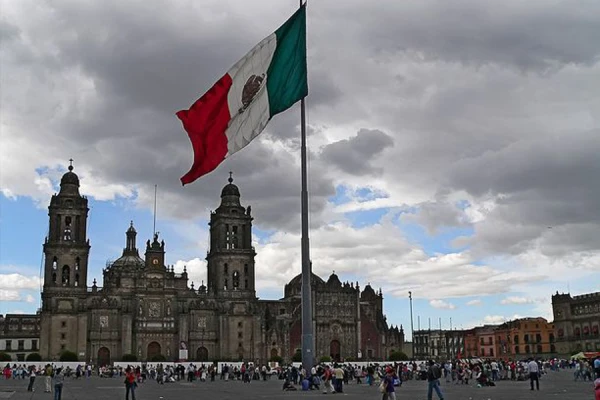
Mexican priest: ‘From Spain we received … the true faith’

April 4, 2019 CNA Daily News 3

Mexico City, Mexico, Apr 4, 2019 / 02:10 pm (CNA).- Fr. Hugo Valdemar, the canon penitentiary of the Archdiocese of Mexico, said Monday that through Spanish missionaries we have received from Spain “the greatest thing we Mexicans have, the true faith.”

Mexican president Andrés Manuel López Obrador wrote last month to Pope Francis and the King of Spain, Felipe VI, asking for an apology for the abuses committed during conquest of Mexico by Spanish Catholics in the 16th century.

Spain dismissed López Obrador’s request, while the Vatican recalled that Pope Francis, as well as his predecessors, have asked forgiveness for the “many and grave sins” committed during the conquest of the Americas.

In his April 1 column at the Mexican publication Contra Réplica, Fr. Valdemar noted that “we cannot fall into an historical Manecheism without doing ourselves profound harm: that the good ones were the original peoples, almost in the state of original grace, and the bad ones were the Spanish conquistadors who came to destroy great cultures.”

“The historic truth is very complex, the truth is that the Spaniards didn’t make the conquest but the indigenous did, the peoples subjugated by the Aztec empire, tired of the cruelty and exploitation they were subjected to.”

“This resulted in entire peoples such as the Tlaxcaltecas joining the handful of 200 Spaniards, along with other subjugated peoples joining together, to make possible what just the Spanish alone could never had done,” he said.

The priest acknowledged that “there is no doubt that there were also excesses in planting the faith, but in reality, the Church and the missionaries were the great protectors of the indigenous peoples.”

“Thanks to them, their dignity as persons was recognized, they were freed from slavery, their culture was protected and above all, thanks to the Spanish Catholic Church the greatest gift came to us, faith in Jesus Christ, the sole savior of men, and Our Lady of Guadalupe appeared, the model and star of evangelization, as John Paul II called her.”

Fr. Valdemar stressed that “it’s of no use to nurse and dwell on the wounds of the past, and the Nobel laureate in literature Octavio Paz has already spoken of the national trauma of not being able to properly integrate our dual origin: indigenous and Spanish.”

“From Spain we received through extraordinary missionaries such as Pedro de Gante, Motolinia, Fray Juan de Zumárraga, and Tata Vasco de Quiroga, the greatest thing we Mexicans have, the true faith, faith in Jesus Christ, and therefore access to eternal salvation, in addition to this very beautiful language we speak, Castilian Spanish, the suppression of the diabolical barbarism of human sacrifices and the darkness of idolatry, access to a superior culture, the occidental, of which we form a part today, and on the other hand we retain many of the values of the indigenous world, hospitality, a strong social sense and a sense of belonging, and the legacy of the monuments they left which today we show with pride to the millions of tourists who visit us.”

[…]

No Picture
News Briefs

Pope Francis to host ‘spiritual retreat’ for leaders of war-torn South Sudan

April 4, 2019 CNA Daily News 0

Vatican City, Apr 4, 2019 / 12:23 pm (CNA).- The Vatican will host a “spiritual retreat” for South Sudan’s president and opposition leader as they navigate the peace process in the war torn country, a Vatican spokesman confirmed Wednesday.

Following a five-year civil war and a tenuous peace deal signed in September, the South Sudanese President Salva Kiir and opposition leader Riek Machar will meet in Rome April 10.

“It will be a spiritual moment and above all an invitation to realize the responsibility that political leaders and authorities have,” Vatican Secretary of State Cardinal Pietro Parolin said April 3.

Parolin confirmed that Pope Francis will also be present and participate in the retreat.

Pope Francis previously discussed the implementation of the peace agreement and the return of refugees with the South Sudanese President Salva Kiir during a private audience on March 16.

The following week, Vatican Secretary for Relations with States, Archbishop Paul Gallagher,  traveled to South Sudan, where he and a Vatican delegation visited a refugee camp outside the South Sudanese capital.

The years-long civil war has left 2.1 million people displaced within South Sudan, and another 2.5 million refugees in neighboring countries, according to the United Nations.

Gallagher also met with the bishops of South Sudan, who have been outspoken in their serious concerns about the peace agreement signed September 12, calling the treaty “fatally flawed” because it does not address the root causes of the conflict.

“Parties are not creating conditions sustainable for peace which would thereby prevent the outbreak or relapse of violent conflict again,” the bishops wrote in a statement released in March.

In his meeting with Kiir, Pope Francis once again expressed his wish to someday visit South Sudan as “a sign of closeness to the population and encouragement for the peace process,” the Vatican said. A prior trip to the war torn country was cancelled in 2017 due to security concerns.

Hundreds of thousands of people were killed in South Sudan’s civil war, which began shortly after South Sudan became an independent country in 2011. The fighting primarily took place between those forces loyal to President Salva Kiir and rebel groups led by Riek Machar, the former vice president.

Pope Francis called on Catholics to pray for South Sudan in his general audience last week. “It’s good for us to stop for a while and think about hungry children,” he said March 27.

“We think of the children who are in countries at war: the starving children of Yemen, the hungry children in Syria, the hungry children in many countries where there is no bread, in South Sudan. We think of these children and thinking of them we say together, aloud, the prayer: ‘Father, give us this day our daily bread’,” Pope Francis said.

[…]

No Picture
News Briefs

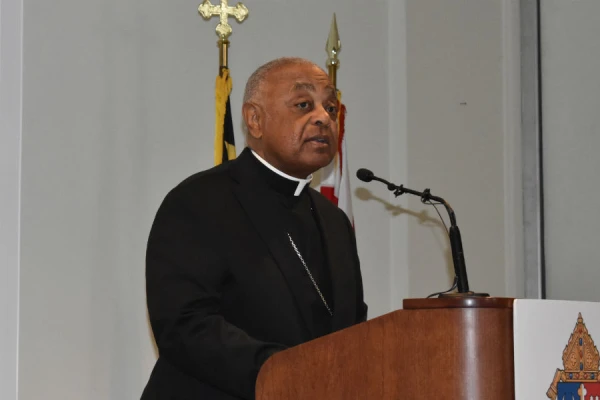
Gregory promises DC Catholics ‘I will always tell you the truth’

April 4, 2019 CNA Daily News 1

Washington D.C., Apr 4, 2019 / 11:40 am (CNA).- Archbishop Wilton Gregory made an uncompromising commitment to transparency during his introduction to the faithful of Washington, DC, at a press conference Thursday.


“First of all, I believe that the only way I can serve this local archdiocese is by telling you the truth,” said Gregory at his formal introduction as the next Archbishop of Washington on April 4.


Gregory’s appointment, which was first reported by CNA last week, was officially announced by the Vatican on Thursday.


The new archbishop pledged to be transparent and open in all matters, even when that means that he may admit that sometimes he is not entirely sure of something.


“Transparency includes sharing what you do know, and it also acknowledges that ‘that’s not something that I’m sure of’ or ‘I simply don’t know,’” he said. But, Gregory noted, “I will always tell you the truth as I understand it.”


Greogry’s pledge comes as the archdiocese is still reeling from the recent laicization of its former leader, Theodore McCarrick. McCarrick was removed from the clerical state in February after being found guilty of numerous grave offenses, including the sexual abuse of minors and adults. McCarrick led the archdiocese from 2000 until 2006.


McCarrick resigned from the College of Cardinals in July 2018 after allegations of sexual abuse of minors became public. Since then, it was revealed that multiple dioceses had paid settlements to men alleging sexual misconduct by McCarrick while they were studying in seminaries.


None of McCarrick’s abuse allegations date from his time in Washington.


The revelations about McCarrick’s conduct prompted questions about what his successor in Washington, Cardinal Donald Wuerl, knew about the allegations and what, if anything, he did in response. Over the last months of his tenure in Washington, following CNA reports that he first heard allegations against McCarrick in 2004, Wuerl subsequently had to clarify what he knew, when he knew it, and when he, apparently, forgot it.


Wuerl’s resignation was accepted by the Vatican in October 2018. Since then, he has served as the apostolic administrator of the archdiocese. He was present Thursday at the press conference, and introduced Gregory as someone with exemplary pastoral abilities, intellectual gifts, and leadership skills.


In response to a question from the Washington Post, Gregory praised Wuerl, but also acknowledged that his predecessor had made mistakes, for which he has atoned.


“I know [Wuerl] is a gentleman, he works very hard for the Church, he acknowledges he’s made mistakes,” said Gregory.


“That’s a sign of the integrity of the man.”


Gregory said that if a situation ever arises where he would have to account for a mistake made by Wuerl, he would do that. The archbishop decried a culture of clericalism that resulted in what he called a “circling of the wagons” to protect members of the clergy and prevent accountability by bishops.


“I think this moment has shown the folly of that approach to episcopal governance and episcopal collegiality,” said Gregory.


Gregory also spoke about his time leading the United States Conference of Catholic Bishops from 2001 until 2004, at the beginning of the sexual abuse crisis in the American Church. He said that during his time as president of the USCCB he was able to meet with Pope St. John Paul II, and he informed him about the extent of the crisis in the United States.


“[The Pope] looked at me and says ‘are you sure?’,” Gregory recounted. “I said ‘Holy Father, I am sure, and there is more.'”


It was this experience, Gregory explained, that will set the tone for his time again leading an institution grappling with a serious crisis.


“I walked away from my time as president knowing this one thing: that I told them the truth as best as I could. And that’s what I will do with the Archdiocese of Washington.”

[…]

No Picture
News Briefs

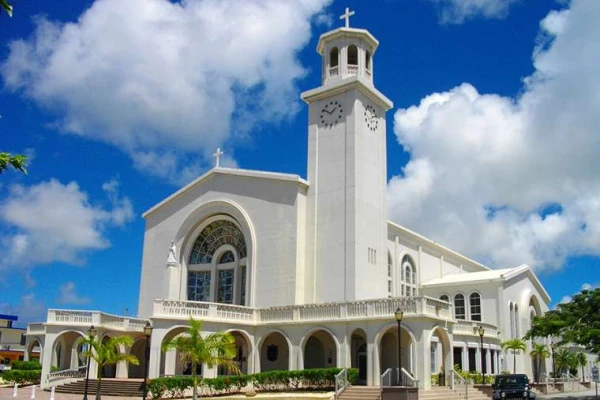
CDF upholds guilty verdict of Guam archbishop for abuse of minors

April 4, 2019 CNA Daily News 1

Vatican City, Apr 4, 2019 / 04:26 am (CNA).- The Congregation for the Doctrine of the Faith announced Thursday that, following an appeal, the Vatican’s court has upheld last year’s verdict finding an archbishop in Guam guilty of abuse of minors.

A release from the CDF April 4 said that Archbishop Anthony Apuron, 73, was found “guilty of delicts against the Sixth Commandment with minors.”

The decision, made February 7, is considered final.

Apuron was sentenced to privation of the office of Archbishop of Agana and forbidden from using the insignia attached to the rank of bishop, such as the mitre and ring. He is also forbidden from living within the jurisdiction of the archdiocese.

He was not removed from ministry or from the clerical state, nor has he been assigned to live in prayer and penance.

Apuron was in March 2018 found guilty of “certain” unspecified charges and sentenced to be removed and prohibited from living within the Archdiocese of Agana. He immediately filed an appeal.

The CDF did not, at the time, state the charges for which the archbishop was found guilty. Sources close to the case told CNA at the time that the archbishop was found guilty of a minority of the allegations leveled against him.

Having been found guilty of sexual abuse of minors, the penalty leveled against him is unusual – often a cleric found guilty of such crimes would be “laicized,” or removed from the clerical state, sources told CNA last year.

Sources also noted that the archbishop has seemingly maintained his ecclesiastical faculties, and though restricted from residence in Guam, is apparently able to exercise ministry as a priest.

A source close to the case told CNA that the penalty is “a complete contradiction” to the sentence.

The source said that if the archbishop is guilty of sexual abuse against minors, “justice would demand the strongest possible penalty,” adding “this punishment maintains the status quo.”  

One expert suggested to CNA that the five-judge panel may have been divided on the archbishop’s guilt, which could explain the disparity between a guilty verdict and an unusually light sanction.

One source questioned whether pressure to quickly resolve the matter might have influenced the sentence.

Pope Francis told journalists in August 2018 that he was personally considering the archbishop’s appeal and bypassing the traditional “giuria” — the council of bishops that make up a tribunal — because Apuron’s situation was a “very difficult case.”

Instead, Pope Francis said he “took it upon myself” and created a commission of canonists to assist him with the case.

Apuron has maintained his innocence of all the allegations leveled against him.

Apuron was relieved of his pastoral and administrative authority by Pope Francis in 2016, in the wake of the allegations, and was effectively replaced by Coadjutor Archbishop Michael Byrnes, formerly of Detroit.

The canonical trial against Apuron began in October 2016, with Cardinal Burke appointed by Pope Francis as the trial’s presiding judge. Byrnes told reporters that the Vatican reached a decision on the case in October 2017.

Sources questioned why the CDF waited until March 2018 to finalize sentences apparently completed in mid-2017.

One source close to the Archdiocese of Agana in Guam questioned whether Archbishop Byrnes pushed the Vatican to release the sentence in order to resolve public concern about the matter in Guam.

However, the source questioned whether Byrnes has been appropriately advised on the matter. “Most of the people who were opposed to [Apuron] in terms of governance” have become advisers to Byrnes, the source said.

“The curial advice Byrnes is receiving is institutionally and personally opposed to Apuron.”

The most recent allegation against Apuron was made in January 2018 by the archbishop’s nephew, Mark Apuron. He filed a lawsuit Jan. 10, 2018 claiming that his uncle raped him in a Church bathroom in 1989 or 1990. This was the fifth lawsuit to accuse the archbishop of sexual abuse of minors during his time as a pastor and bishop.

The archbishop denied the allegations in a statement Jan. 18, 2018 writing, “God is my witness: I deny all allegations of sexual abuse made against me, including this last one,” according to Guam Pacific Daily News.

In addition to this claim, Apuron also faced four other accusations from former altar boys, who charged the archbishop with abuse in the 1970s when he served as a parish priest in Agat.

The first allegations against the archbishop were made public in May 2016. Mark’s attorney, David Lujan, said that his client was too ashamed and embarrassed to tell his family about the alleged abuse until recently.


CNA staff contributed to this report.

[…]

No Picture
News Briefs

How this priest came to celebrate Mass on the set of ‘Unplanned’

April 3, 2019 CNA Daily News 0

Stillwater, Oklahoma, Apr 4, 2019 / 12:28 am (CNA).- When a film crew arrived in the small college town of Stillwater, Oklahoma last spring, few residents realized exactly what kind of movie the crew was making.

The film, which residents soon learned was called “Redeemed,” was rather vaguely described as being “based on a true story of a woman’s journey and God’s redeeming love and forgiveness,” according to local media.

The most tightly-controlled and top secret film set in the town, however, offered some clues about the film’s subject matter. The film crew transformed a nondescript building on the edge of downtown into a replica of a Planned Parenthood abortion clinic.

Father Brian O’Brien, pastor of St. Francis Xavier Church in Stillwater, told CNA that he noticed some changes in his congregation after the filming of “Redeemed” began.

“I started to notice a few more people at Sunday Mass, just some people I hadn’t seen before, and they were there all the time, coming to daily Mass,” he said.

“And so eventually I connected with them, and they told me they were in town for the movie. Some of them were in the movie, some of them were the producers, writers.”

What Fr. O’Brien already knew was that the film known as “Redeemed” was actually “Unplanned,” the true story of former Planned Parenthood clinic director Abby Johnson, who eventually converted to Catholicism and became a leader in the pro-life movement.

Bishop David Konderla of the Diocese of Tulsa had called O’Brien last March to tell him that “Unplanned” was coming to Stillwater, and personally asked him to give any “spiritual support” that he could.

The filmmakers kept the film’s true subject matter— abortion— under wraps during filming, to allay any potential pro-abortion protests during the film’s production.

Did the people of Stillwater realize it was a pro-life movie?

“There was a general sense that that’s what it was. People did not know the full extent,” O’Brien said.

Although not everyone who worked on “Unplanned” was Catholic, O’Brien said he met one day with the group who had been coming to his parish, and they asked him not only if he would like to visit and bless the movie set, but also to celebrate Mass there. He agreed to all of it.

“And so what ended up happening over the course of April and May, spring of 2018, I would go over super early in the morning before they started filming for the day and celebrate Mass on the set,” he said.

“It was early, and the goal was to have Mass before what was typically a 12- or 14- hour filming session.”

He said the other thing he did was a simple blessing of each set every time the film crew moved to different locations around Stillwater.

The directors of “Unplanned” have been open about the fact that several bizarre incidents took place during filming involving cast and crew, including a near-death experience involving the film’s lead actress, Ashley Bratcher.

“What was interesting is that the cast and crew, all throughout filming, reported kind of strange happenings,” O’Brien said.

“The goal was to offer God’s blessings upon this project and see if we could prevent some of that.”

Though the time O’Brien spent on-site was not very long, he said he enjoyed sitting on the set while the crew was filming scenes for the movie, and to support two of the film’s co-directors, Cary Solomon and Chuck Konzelman, both Catholics.

“It was on the set where I met lots of the other pastors of other churches, so I think they put out a call to any church that was sympathetic to the pro-life cause and said, ‘come,’” O’Brien said.

The broader population, meanwhile, was told little about the movie until later in production.

“We only announced it here to our people at church when they needed extras for what I think is the final scene, kind of an aerial shot of a bunch of people at the park,” the priest said.

“They needed extras for that, so we invited all of our people to go, and a lot of people did.”

Now that “Unplanned” is out in theaters, O’Brien said his parish is doing a lot of promotion for the film. They have already bought out two theaters and expect about 200 people to come to see the movie all together.

Sheryl Lacy, operations manager for St. Francis Xavier Parish, told CNA that she helped to encourage people to come and be extras in the film, even those from communities outside Stillwater.

“It was exciting being able to say it was happening in my hometown, but it was quiet, no one talked about it because not a lot of people knew about it,” she said.

[…]

No Picture
News Briefs

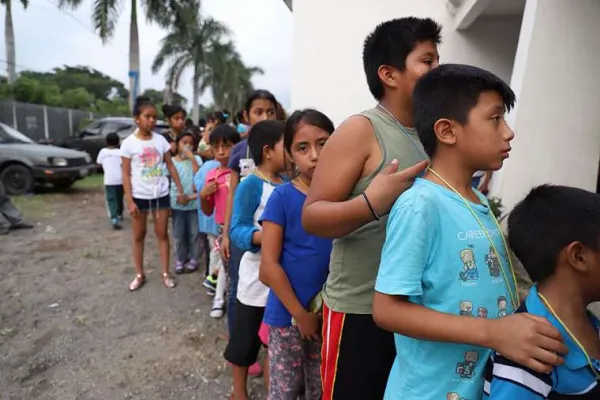
Cutting Central American aid will make matters worse, critics say

April 3, 2019 CNA Daily News 0

Washington D.C., Apr 3, 2019 / 07:00 pm (CNA).- While the United States threatens to cut funding to Central America in response to immigration issues, critics say the cutbacks will only aggravate concerns about immigration and illegal border crossings.

U.S. President Donald Trump said Saturday that roughly $500 million will be cut from aid going to Guatemala, El Salvador, and Honduras.

The plan has received pushback from social service organizations, including Catholic Relief Services.

Sean Callahan, president and CEO of CRS, decried the decision in a statement on April 2.

“We oppose the administration’s decision to cancel foreign assistance for the Northern Triangle of Central America. With bipartisan support, targeted U.S. assistance has improved prosperity for the poor and vulnerable in Central America,” the statement said.

In a press release on Tuesday, Department of State spokesman Robert Palladino clarified that the budget cuts would impact money allocated for in 2017 and 2018 but not yet distributed.

He said it is Trump’s obligation to ensure secure U.S. borders of the United States, and that foreign aid programs have failed to deter immigration or asylum claims.  

“The President’s direction to end foreign assistance programs impacts approximately $450 million in Fiscal Year 2018 allocations. And the State Department along with the United States Agency for International Development currently are evaluating the impact on Fiscal Year 2017 funds.”

“These programs have not effectively prevented illegal immigration from coming to the United States, and they’ve not achieved the desired results,” he added.  

Catholic Relief Services, which expects to lose $38 million in program funding, said immigration will increase if funding is cut to the Northern Triangle of Central America.

“Such programs, implemented by agencies like CRS, have reduced poverty and food insecurity and helped address the underlying causes of violence and migration. Redirecting these funds will undermine long-term U.S. policy goals, lay waste to key progress gained, and exacerbate migration to our border,” CRS said.

Rick Jones, a policy adviser for CRS in El Salvador, told the Associated Press that the lack of funding would harm mental health and crime prevention programs.

The budget cut “will be sending the message, ‘Help is not on the way … and you’re going to be left on your own,’” Jones told the AP.

“And basically people left on their own are going to be more desperate and more people are going to leave,” he said.

Vicki Gass, Oxfam America senior policy adviser for Central America and Mexico, told reporters that the cutbacks would “foster the same instability that is making people flee in the first place,”

Dozens of other charity aid programs and political projects will also be impacted.

Foreign aid in Central America aims to fund violence prevention, economic growth, social development, human rights and good governance, and borders and drug control. In 2017 and 2018, Guatemala received the most funding, followed by Honduras, and then El Salvador.

“Our brothers and sisters in Central America are vulnerable to food insecurity, violence and unemployment. We must continue to work together to ensure all families and communities can reach their fullest potential,” said Callahan.


[…]