No Picture
News Briefs

Brunei implements law punishing adultery, sodomy with death penalty

April 3, 2019 CNA Daily News 2

Bandar Seri Begawan, Brunei, Apr 3, 2019 / 06:01 pm (CNA).- Brunei implemented Wednesday a sharia penal code that punishes such crimes as adultery, sodomy, rape, and blasphemy of Muhammad with the death penalty.

“Brunei Darussalam has always been practising a dual legal system, one that is based on the Syariah Law and the other on Common Law,” Brunei’s prime minister’s office said March 30.

“In fully implementing the Syariah Penal Code Order (SPCO) 2013 from 3rd April 2019, both systems will continue to run in parallel to maintain peace and order and preserve religion, life, family and individuals regardless of gender, nationality, race and faith.”

It noted that its sharia law, “apart from criminalizing and deterring acts that are against the teachings of Islam … also aims to educate, respect and protect the legitimate rights of all individuals, society or nationality of any faiths and race.”

Brunei is a country of 2,200 square miles located entirely on the island of Borneo. It is an absolute monarchy led by Sultan Hassanal Bolkiah, and about two-thirds of the population is Muslim.

The country had already begun adopting sharia for Muslims in 2013.

The sharia penal code includes differing punishments for Muslims and non-Muslims, and adults and minors.

Under the newly-implemented code, lesbian sex will be penalized with a fine up to $40,000, whipping up to 40 strokes, or up to 10 years imprisonment; and theft with amputation.

Those who encourage Muslims to apostasize will be subject to a fine and imprisonment, as will those who persuade someone having no religion to become a believer of a religion other than Islam.

It punishes anyone who commits qatl (homicide) on a fetus by intentionally causing its miscarriage will be punished with diya (monetary compensation to the child’s heirs) and with up to 15 years imprisonment.

As the code was put into force, Hassanal Bolkiah said that “I want to see Islamic teachings in this country grow stronger.”

Sodomy was already criminalized, and previously carried a punishment of up to 10 years imprisonment.

Capital punishment was already a punishment for some crimes, though Brunei has not executed any offenders since 1957. The burden of proof to carry out the death penalty is particularly high, requiring several competent, adult Muslim witnesses of the crime in most cases.

The Catholic Church has consistently taught that the state has the authority to use the death penalty, in cases of “absolute necessity,” though with the qualification that the Church considered such situations to be extremely rare.

St. John Paul II said that “the dignity of human life must never be taken away, even in the case of someone who has done great evil.” He also spoke of his desire for a consensus to end the death penalty, which he called “cruel and unnecessary.”

And Benedict XVI exhorted world leaders to make “every effort to eliminate the death penalty” and said that ending capital punishment was an essential part of “conforming penal law both to the human dignity of prisoners and the effective maintenance of public order.”

In a 1986 letter to the bishops on the pastoral care of homosexual persons, the Congregation for the Doctrine of the Faith stated that “it is deplorable that homosexual persons have been and are the object of violent malice in speech or in action … but  the proper reaction to crimes committed against homosexual persons should not be to claim that the homosexual condition is not disordered.”

“When civil legislation is introduced to protect behavior to which no one has any conceivable right, neither the Church nor society at large should be surprised when other distorted notions and practices gain ground, and irrational and violent reactions increase,” the congregation stated.

In 2003, the U.S. Supreme Court struck down a Texan anti-sodomy law in the case Lawrence v. Texas, on the basis of the right to due process.

Reacting to that decision, Bishop Wilton Gregory, then the Bishop of Belleville and president of the US Conference of Catholic Bishops, said the court “has chosen to view homosexual behavior between consenting adults as a matter of privacy. However, human sexuality cannot be viewed this way. Sexual activity has profound social consequences which are not limited to those immediately engaged in sexual acts.”

He added that “The Catholic Church teaches, in agreement with other faith traditions and with what were once the norms generally accepted by society, that sexual activity belongs to the marital relationship between one man and one woman in fidelity to each other. This relationship is the basis of the family which is the basic unit of society. Respect for the purpose of human sexuality and the family needs to be reaffirmed in our society; and anything which reduces respect for them – such as yesterday’s Supreme Court decision – is to be deplored.”


[…]

No Picture
News Briefs

Why aren’t Americans having sex? It’s complicated

April 3, 2019 CNA Daily News 0

Chicago, Ill., Apr 3, 2019 / 04:17 pm (CNA).- A new survey by the University of Chicago has left researchers speculating about why American adults are having less sex than in years past.

Data from the 2018 General Social Survey found that 23% of American adults had not had sex in the past year, an all-time high.

Broken down by age, the survey found that young people were largely driving the decrease in sex. Respondents between the ages of 18 and 29 were more than twice as likely to report not having sex in the past year than were those in their 30s or 40s.

While fewer than 10% of 18-29 year olds reported no sex in 2008, that share had risen to 23% one decade later.

Dr. Jean Twenge, author of “iGen: Why Today’s Super-Connected Kids Are Growing Up Less Rebellious, More Tolerant, Less Happy — and Completely Unprepared for Adulthood,” suggested several factors that may be playing a role in the decline in sexual activity.

She told the Washington Post that fewer people in their 20s have a live-in partner than in past generations. She pointed to declines in labor force participation among young men, which has been tied to a decrease in stable relationships.

Technology may also be a factor, said Twenge, who is a psychology professor at San Diego State University. The rise of social media and streaming video mean there are screens frequently competing for people’s attention, which was not the case in previous generations.

Dr. Brad Wilcox, director of the National Marriage Project at the University of Virginia, agreed that “screen culture” is at least partly responsible for the decline in sex among millennials.

“Young Americans are spending lots of time binging on Netflix, playing video games, and traversing social media. These things tend to reduce opportunities for socializing… and having sex in real life,” he told CNA.

He also stressed the importance of marriage in understanding the survey results.

“The sex recession is driven to a large degree by declines in marriage—especially among young adults. Very few married Americans don’t have sex, and quite a few unmarried Americans don’t have sex,” he said.

An article by the Institute for Family Studies last November noted, “Today, there are fewer Americans married, and more Americans single, than at any point in at least the past 140 years.”

A decline in marriage rates is correlated with a decline in the frequency of sexual activity among adults age 25-34, the article said. Unmarried adults in that category are far more likely to say they have had not sex at all in the past year than are their married peers.

Experts have further suggested widespread anxiety and depression, environmental hormone disrupters, and concerns over sexual misconduct in the wake of the #MeToo movement as possible factors in the decline in sexual activity.

The General Social Survey also found a significant gender disparity in results reported by young people. In 2008, the numbers of men and women ages 18-30 who had gone a year without sex both hovered around 10%. In 2018, 18% of women in this age group said they had not had sex in the past year, compared to 28% of men.

In her comments to the Washington Post, Twenge noted that more young men than women are living with their parents.

Pornography could also be playing a role. Pornhub, the most-visited pornography site in the U.S., has seen its daily visits triple from 2012 to 2017.

In a series of studies examining pornography use, “The Social Costs of Pornography: A Collection of Papers” published by the Witherspoon Institute, researchers found that those who viewed pornography became less satisfied with their sex lives, and that viewing porn just once can lead to feelings of dissatisfaction toward a human partner.

According to a 2012 article in Psychology Today by clinical psychologist Tyger Latham, Psy.D, erectile dysfunction, once considered an issue plaguing old men, is arising more in young men who rely heavily on pornography to become sexually aroused. A study by the Italian Society of Andrology and Sexual Medicine surveyed 28,000 men on their internet porn habits, and found that porn use over time led to a lower sex drive and an eventual inability to become aroused at all.

Pornography could also be contributing to the continuing decline in marriage rates.

Mark Regnerus, an associate professor of sociology at the University of Texas at Austin and a Catholic who has studied religion and sexual behavior, cautioned against assuming that correlation equals causation in such studies – but said that pornography use is likely part of a more complex reason for dropping marriage rates.

“We know that both things are occurring, but it’s difficult to establish a causal connection,” he told CNA in a 2015 e-mail interview. “A variety of things are contributing to the declining marriage rate.”

“I don’t think porn use necessarily causes that, but contributes to it (together with diminished earnings power, diminished confidence, etc.),” he added. “To be sure, porn use doesn’t help build confidence in men, something that’s pretty necessary (but not sufficient) to be considered marriageable. So I’d say porn use is a suspect here, but connecting the dots is hardly straightforward.”


[…]

No Picture
News Briefs

Alabama bill would ban all abortions except for ‘serious health risk’

April 3, 2019 CNA Daily News 1

Montgomery, Ala., Apr 3, 2019 / 10:26 am (CNA).- New legislation in Alabama would ban all abortions in the state, except in cases where the mother faces a “serious health risk.”

The bill, introduced in both the Alabama House and Senate April 2, would make it a felony for doctors to perform or attempt an abortion. Women would not be criminally culpable or civilly liable for receiving abortions.

The bill would include an exemption “in cases where abortion is necessary in order to prevent a serious health risk to the unborn child’s mother.”

It defines a serious health risk as a condition requiring an abortion “to avert [the mother’s] death or to avert serious risk of substantial physical impairment of a major bodily function.” It only includes emotional and mental illnesses if they have been diagnosed by a licensed psychiatrist and “there is reasonable medical judgment that she will engage in conduct that could result in her death or the death of her unborn child.”

Opponents have already pledged to challenge the legislation in court if it is enacted. However, its supporters say it could be the key to a reversal of the 1973 Roe v. Wade Supreme Court decision, which found a right to abortion nationwide.

Bishop Robert Baker of Birmingham said the legislation reflects “the strong commitment that the people of Alabama have to life.”

In an April 3 statement, the bishop praised the lawmakers’ efforts.

“I strongly support these bills and stand behind the efforts of these legislators to promote life and to, hopefully in the near future, eliminate this evil we know as abortion from within the boundaries of the State of Alabama; and, eventually, to make the killing of unborn children in our country something that is no longer viewed as anything but the horrendous and inhumane killing of the most innocent among us that it is,” he said.

Rep. Terri Collins (R-Decatur), sponsor of the House bill, said the legislation is a follow-up to 60 percent of Alabama voters approving Amendment 2 last November. That amendment changed Alabama’s constitution so that it explicitly “recognizes and supports the sanctity of unborn life and the rights of unborn children, most importantly the right to life in all manners and measures appropriate and lawful; and provides that the constitution of this state does not protect the right to abortion or require the funding of abortion.”

Although the amendment had no immediate effect due to the national applicability of Roe v. Wade, it would be significant if Roe were to be overturned, preventing a state-level legal ruling from finding a similar “right to abortion” in the Alabama constitution.

“With liberal states like New York rushing to approve radical late-term and post-birth abortions, passage of this bill will reflect the conservative beliefs, principles, and desires of the citizens of Alabama while, at the same time, providing a vehicle to revisit the constitutionally-flawed Roe v. Wade decision,” Collins said, according to AL.com.

“It is meant to actually use some of the same language that is addressed in Roe vs. Wade. So, hopefully it just completely takes it all the way to the Supreme Court eventually to overturn.”

Collin’s bill has the support of 65 co-sponsors, out of 104 lawmakers. The Senate version of the bill, sponsored by Sen. Greg Albritton, (R-Range), has 11 co-sponsors, of 35 senators, AL.com reported.

The Alabama legislation is among dozens of bills seeking to either expand or restrict legal abortion in states across the country, as changes on the Supreme Court have led to speculation that Roe v. Wade may be overturned.

In January, New York passed an expansive law declaring abortion to be a “fundamental human right,” broadening the legality of late-term abortions, and allowing non-physicians to perform abortions, as well as removing protections for babies born alive after a botched abortion.

A similar bill in Virginia failed in February after video circulated online of the bill’s proponents suggesting that it would allow abortion even during labor and that babies who survived an abortion attempt could be left to die of exposure.

Other states, including Mississippi, Kentucky, Tennessee and Georgia, have passed or are considering bills that would ban abortion once the unborn baby’s heartbeat can be detected, usually around six weeks into pregnancy.

Several states have also passed “trigger bills” that would ban abortion if Roe v. Wade were to be overturned by the Supreme Court, placing the question of legal abortion back with the states.

Randall Marshall, executive director of Alabama’s American Civil Liberties Union, told WHNT 19 that the new bill would not hold up in court and would cost taxpayers a significant amount of money in legal fees.

Collins responded to this criticism by saying, “We think this is the bill that could overturn, what I consider to be a bad law, then it’s well worth spending the money.”

In addition to Amendment 2 last fall, Alabama has made several attempts to pass pro-life legislation in recent years.

Last August, a federal appeals court ruled against a state law that would have banned a second-trimester abortion procedure, known as “dialation and evacuation.”

The previous year, a federal judge struck down an Alabama law requiring more scrutiny for minors who seek an abortion without parental consent.

The state is still considered to be one of the most restrictive in terms of abortion law. Alabama requires that women be given counseling and an ultrasound prior to having an abortion, though it is optional for the woman to view the ultrasound image. It also has restrictions on the health insurance coverage of elective abortions that are not performed for reasons of life endangerment, rape or incest.

[…]

No Picture
News Briefs

During Tennessee ‘Sex Week,’ FOCUS volunteers a Catholic view on sexuality

April 2, 2019 CNA Daily News 1

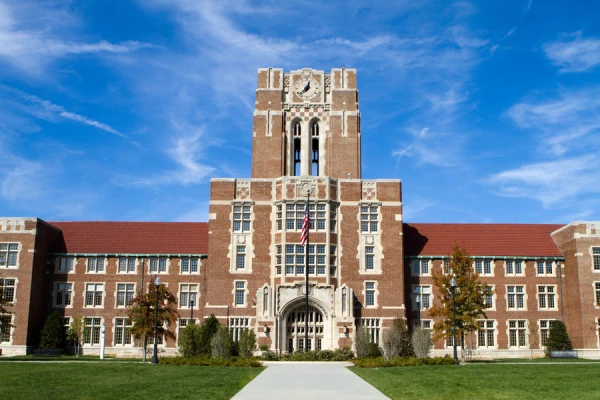
Knoxville, Tenn., Apr 2, 2019 / 07:00 pm (CNA).- During an annual week of controversial sex-ed events at a Tennessee college, the Fellowship of Catholic University Students has organized an alternative event based on a Catholic view of human sexuality.  

A student group at the University of Tennessee-Knoxville has hosted “Sex Week” on its campus since 2013. Organizers bill it as “a week of free, comprehensive sex education events.” This year’s program includes a drag show, a cabaret, and free HIV testing, according to the organizers’ website.

Kara Logan, a FOCUS alum and doctoral student in theology at Ave Maria University, offered an alternative talk April 2 entitled “How to have Worthwhile Sex: An Alternative View.”

She based her talk on the teachings of St. John Paul II, and his series of addresses on human sexuality that have come to be known as the Theology of the Body.  

Logan told CNA in an interview before the talk that she hopes to help students understand that the so-called “sexual revolution” of the 20th century hasn’t brought with it the happiness and  fulfilment that it promised.

“I think we just want them to see that this ‘doing whatever we want’ [attitude], sexual promiscuity, all these things— they’re just not fulfilling,” Logan told CNA.

“We’re not finding happiness here. And if I can just show them the beauty of the Theology of the Body, the beauty of true love, and of sacrifice, of making a gift to the other and not reducing the other person to an object of use, that would be great. That would be the main thing.”

Logan said she plans to share statistics with the students about the negative effects of hooking up, pornography, contraception and other common practices that society consider part of normal sexual expression.

“The hookup culture is really making young adults less social; they’re more anxious,” she noted.

“The number one reason women go off of oral contraception is because she’s depressed…People who take oral contraception are significantly more depressed than women who aren’t.”

She said she hopes to help the students understand what it means in the Theology of the Body to “give a gift of yourself,” which is rooted in self-mastery and self-possession.

“The heart knows what it’s called to be…that there’s still a call to be a gift, but we’re battling it now because of concupiscence, because of sin,” she said.

“Christ comes to restore the human heart, to fix it…and he shows us, too, that true love is to die to one’s self for the sake of the beloved.”

Logan said that she hopes to show the students that it’s possible to live out the Theology of the Body and be fulfilled in a meaningful way, as opposed to the “lie that you can do whatever you want, or that you don’t really have any meaning, or that Catholicism is just a set of rules to enslave us.”

The concept of “Sex Week” was first introduced at Yale University in the early 2000s. Attendance at the Sex Week events at UTK has ranged from 1,650 participants to more than 3,500, according to Inside HigherEd.

Sex Week at UTK has been controversial ever since its inception in 2013, when it was revealed that student fees were going to fund controversial activities, including a condom scavenger hunt.

Sex Week is not unique to UTK’s campus— other public and private institutions across the country hold similar events— but Tennessee legislators have called the week a “national embarrassment” and have moved to exclude the event from using public funding. University administrators have said that they have done as much as they can to tone down the event without violating the group’s First Amendment rights.

The Tennessee state comptroller released a 269-page report in February about the use of public funds for Sex Week, which detailed the fact that university departments and programs originally committed over $11,000 in funds for Sex Week.

The university chancellor ultimately withdrew the public funds before the 2013 event, and the organizers of UTK’s Sex Week have had to use other funding sources, such as online crowdsource funding, for subsequent years’ events.

[…]

No Picture
News Briefs

Bishop asks Nicaraguans not to take justice into their own hands

April 2, 2019 CNA Daily News 0

Managua, Nicaragua, Apr 2, 2019 / 06:37 pm (CNA).- Bishop Silvio José Báez, auxiliary of Managua, Nicaragua, called on people of the country not to take justice into their own hands, following violence last week by paramilitary and police forces against peaceful protectors.

“With violence we kill the future, and when there are people who pick up a rifle to take away another’s life, they are tearing away a piece of Nicaragua’s future,” Báez said during Mass on Sunday at St. Joseph’s church in the Sabana Grande area.

“But take care, neither should we fall into the temptation of wanting to take justice into our own hands,” he continued. “We would be entering into a spiral of violence in which we would all perish. The price of pain and death would be very high, we have to avoid that.”

Anti-government protests in Nicaragua began in April 2018. They resulted in more than 300 deaths, and the country’s bishops mediated on-again, off-again peace talks until they broke down in June.

A new round of dialogue began Feb. 27 at the INCAE Business School in Managua.

On March 30, paramilitaries and police attacked a group of people who were demonstrating against the government. One paramilitary member entered the local shopping center and began shooting protesters. The local press reported there were at least three wounded.

The incident occurred after accords signed March 29 between the government and the opposition Civic Alliance allowed for peaceful protest.

The police justified their actions in a statement blaming “violent groups” that had invaded “private property” and “disrupted the public order.” However, the Civic Alliance denounced the “new repression” and asserted that the regime had violated the accords.

Cardinal Leopoldo Brenes, the archbishop of Managua, lamented the violence in a March 30 press release. He called on the faithful to pray diligently for peace in the country.

Regarding the accords, Bishop Báez said “the documents which stipulate the agreements are pieces of paper which have no life. We have to give them life ourselves with political will, personal integrity, and the responsibility of fulfilling what was agreed upon.”

Meanwhile, debate continues over the fate of hundreds of political prisoners in the country.

The Blue and White National Unity opposition group called for “flash pickets” and honking car horns this week to “blow the whistle” and demand from the government justice and freedom for the prisoners.

The AP reported March 29 that the government had agreed to the “definitive” release of hundreds of people considered political prisoners and the cancellation of judicial proceedings against them. The International Committee of the Red Cross is to facilitate the release and propose to both parties an updated list of prisoners.

Nicaragua’s crisis began last year after President Daniel Ortega announced social security and pension reforms. The changes were soon abandoned in the face of widespread, vocal opposition, but protests only intensified after more than 40 protestors were killed by security forces.

The pension reforms which triggered the unrest were modest, but protests quickly turned to Ortega’s authoritarian bent.

Ortega has been president of Nicaragua since 2007, and oversaw the abolition of presidential term limits in 2014.

The Church has suggested that elections, which are not scheduled until 2021, be held in 2019, but Ortega has ruled this out.

Ortega was a leader in the Sandinista National Liberation Front, which had ousted the Somoza dictatorship in 1979 and fought US-backed right-wing counterrevolutionaries during the 1980s. Ortega was also leader of Nicaragua from 1979 to 1990.


[…]