No Picture
News Briefs

After adding major abortion expansions, Mass. lawmakers send budget bill to governor

December 7, 2020 CNA Daily News 0

CNA Staff, Dec 8, 2020 / 12:21 am (CNA).- Legislators have sent to the Massachusetts governor a $46.2 billion full-year budget plan that includes provisions to expand access to abortion, additions which have drawn strong pro-life criticism.

An amendment to the budget bill would allow 16-year-olds to obtain an abortion without parental consent, a change from the current age of 18 years. Minors under the age of 16 could obtain a judicial bypass waiver to get an abortion without parental consent. A waiver could be granted via teleconference, according to the bill’s sponsor, State House News Service reported.

The provisions would also allow abortions after 24 weeks into pregnancy, even to the point of birth, for diagnosed fatal anomalies. Under the proposed amendment, physician assistants, nurse practitioners, and nurse midwives could perform abortions.

Despite Democratic leaders’ statements appearing to reject major policy riders, the budget bill includes these and other abortion provisions. Also included is some of the language of the “Roe Act,” a 2019 proposal to maintain legal abortion if Roe v. Wade and other pro-abortion precedents were to be overturned by the U.S. Supreme Court.

The abortion proposals did not draw much comment in the Senate session, though Republican lawmakers were critical of it elsewhere, the news site MassLive reports.

House Minority Leader Brad Jones criticized the use of the budget process to pass an abortion amendment.

“I don’t care what side of the issue you’re on, this being done as part of the budget process in a lame duck session, under the cover of darkness, in the midst of a pandemic is wrong,” Jones said last month, according to State House News Service.

Democratic State Sen. Marc Pacheco, who opposed the budget bill, speculated that Republican Gov. Baker could return the bill to lawmakers with amendments and further extend debate on the bill, the Boston Globe reports.

Baker is a pro-abortion Republican. The Planned Parenthood Advocacy Fund was neutral in the governor’s 2018 reelection campaign, and it is not clear whether he will run for a third term in 2022.

However, he voiced disapproval of the proposed Roe Act’s abortion expansion last year.

“I don’t support late-term abortions,” Baker said. “I support current law here in Massachusetts.”

In 2017 the governor pledged state funds would make up any shortfalls in cuts to Planned Parenthood’s federal funding. In 2018 he challenged the U.S. Department of Health and Human Services’ Protect Life Rule, which blocks recipients of Title X family planning funds from performing or making referrals for abortions. He also approved the repeal of a 19th century law that criminalized abortion.

The Massachusetts Catholic Conference had sought to rally voters to ask their senators to vote against the budget amendment. On Nov. 11 the conference said amendment would “expand abortion access in the Commonwealth well beyond what is enshrined in state law.” Under the changes, abortion “would remain an option under certain circumstances for the full term of the pregnancy.”

The conference stressed that “the Catholic Church teaches that life itself starts at conception and ends with natural death.”

The Catholic conference criticized the proposed changes to parental consent law, arguing that “a 16 or 17 year old girl would be deprived of the guidance and support of an adult at the time of making this life changing decision.”

While the measure does require “life-saving equipment” to be present in the room when an abortion is performed past 24 weeks, the conference suggested this is a toothless requirement. The amendment’s language is “nuanced enough that the physician would not be required to use the equipment” if a baby survived an abortion attempt.

In addition, the bill calls for life-saving equipment to be in the room when a doctor performs a legal late-term abortion, but only says the equipment is to “enable” the doctor to safe the life of a baby surviving an abortion. Pro-life groups have warned that the language allows “passive infanticide” by not specifically requiring a doctor to save the infant’s life.

The amendment to the larger budget bill was adopted by the state House by a 108-49 vote, State House News Service reported. A dozen Democrats voted against the amendment, while one Republican voted for it. On Nov. 18, the state Senate passed amendment 180 by a vote of 33-7.

Though the full budget bill passed the House, it did not have enough votes to prevent a veto.

Michael New, a visiting professor of political science and social research at The Catholic University of America, testified against the Roe Act’s proposal to reduce the age of consent. The current law, he estimated, has saved 10,000 to 44,000 lives from abortion.

In his review of 16 peer-reviewed studies, every one “finds that state-level parental involvement laws reduce the in-state abortion rate for minors,” he said in his testimony.



[…]

No Picture
News Briefs

Indonesian Catholic bishops call for justice in local elections

December 7, 2020 CNA Daily News 0

CNA Staff, Dec 7, 2020 / 05:07 pm (CNA).- The bishops of Indonesia urged Catholics to participate in the upcoming local elections by voting for Catholics who honor the common good while fighting unjust practices.

The Indonesian Bishops’ Conference (KWI) issued an exhortation on Dec. 4, asking people to vote for candidates who avoid corruption and represent national values, UCA News reported.

The exhortation was signed by Archbishop Vincensius Sensi Potokota of Ende, who serves as chairman of the KWI’s Commission for the Laity, and Father Paulus Christian Siswantoko, executive secretary of the commission.

The Indonesian province, district and municipal elections will take place on Dec. 9. They were previously set for Sept. 23, but were postponed due to the coronavirus pandemic.

The two-page statement encouraged Catholics to vote for candidates whose political platform upholds the five principles of Pancasila – Indonesia’s official philosophy. The principles refer to an individual’s belief in one God, a fair society, a united country, democracy, and social justice.

“Catholics should vote for… candidates who have adequate national insights, who accept pluralism, and who treat people from different religious and ethnic backgrounds in a fair way,” the bishops’ conference said, according to UCA News.

“The candidates should also have the courage to fight against any form of extremism, thuggery, and intolerance which adversely affects people’s lives.”

The bishops also asked Catholic voters to refrain from unfair practices, such as vote-buying, fake news, bigotry, and hate speech. They said these practices have tainted the country’s elections in the past and “are against the noble values of democracy.”

“We hope Catholics, particularly, and people, generally, will play a significant role in creating a peaceful situation and ensure the elections can be conducted in a just way,” they said.

UCA News reported that Eusabius Binsasi, a Catholic layman who serves as chief of the North Central Timor district, said he would abide by the bishops’ exhortation. Binsasi is running for office in the East Nusa Tenggara province.

“All elections should be dignified. In my campaign, I always reminded local people that selling their vote and underhand tactics by political rivals do not benefit them in the long run,” he said.


[…]

No Picture
News Briefs

US Supreme Court urged to protect KY religious schools from shutdown

December 7, 2020 CNA Daily News 1

CNA Staff, Dec 7, 2020 / 04:37 pm (CNA).- An order shuttering in-person education until Jan. 4 in Kentucky amid rising COVID-19 cases amounts to religious discrimination, the US Supreme Court has been told in amici curiae briefs.

Kentucky Gov. Andy Beshear (D) temporarily halted in-person learning in the state by executive order.

The order, which applies to both public and private schools, allows for elementary schools in “red” zones (counties with 25 or more new coronavirus cases a day) to reopen as long as they are following state public health guidance.

Danville Christian Academy sued over the order.

A federal district judge had ruled Nov. 25 that Beshear’s order could not apply to private religious schools because it infringed on their First Amendment rights. On Nov. 29, a federal appeals court overturned that decision, upholding Beshear’s original order.

Danville Christian Academy has asked the US Supreme Court to temporarily suspend the executive order, while its appeal is pending.

Several groups have submitted amici curiae briefs in the case in support of Danville Christian Academy.

Thirty-eight Republican Senators – including Senate Majority Leader Mitch McConnell and Sen. Rand Paul, both of Kentucky – filed one such brief Dec. 4.

“COVID-19 is undoubtedly a serious health threat, but the Constitution applies even in difficult times. This Court should again remind Governors across the Country that shutdown orders cannot trample Constitutional rights,” the Senators stated in their amicus brief.

The state’s attorney general and treasurer have also indicated their support for Danville Christian Academy.

The Becket Fund for Religious Liberty submitted an amicus curiae brief, arguing not only “That movie theaters and horse tracks are open for business, but religious schools cannot open, is reason enough to vacate the Sixth Circuit’s stay,” but also that Beshear’s executive order is subject to strict scrutiny because it interferes “with the right of parents under the Free Exercise Clause to direct ‘the religious upbringing and education of their children’”.

Alliance Defending Freedom’s senior counsel, John Bursch, and other ADF attorneys filed an amicus curiae brief on behalf of 17 Christian schools in Kentucky.

“The Kentucky governor’s order allows movie theaters, indoor event venues, gyms, childcare centers, and professional offices to operate, but private Christian schools cannot, even when they comply with all recommended public health and safety guidelines. That’s why we are asking (the) high court to put a stop to the governor’s unconstitutional edict,” Bursch said Dec. 4.

“Government discriminatory treatment of religion must end. Now,” the ADF brief in Danville Christian Academy v. Beshear states.

“In the nine months since the COVID-19 pandemic began, state executives have consistently imposed more severe burdens on religious conduct than comparable secular activities. They do so without any showing that religious activities present a greater COVID-19 risk than their secular comparators,” ADF added.

“Instead, governments have consistently favored commerce over religion and—often with a judicial seal of approval—have cloaked their disparate treatment of religious worship and education in terms like ‘emergency police powers’ and ‘substantial discretion.’”

Religious schools and churches have also submitted briefs in support of Danville Christian Academy, while a group of church-state scholars wrote one in defense of Beshear.

Beshear defended his order, citing health risks and the order’s equal treatment of public and private schools. “Kentucky is in the midst of a deadly third wave of the coronavirus. We have taken the necessary actions to slow the growth in cases and save the lives of our fellow Kentuckians,” Beshear said in a Dec. 4 statement, reported by the Courier Journal.

“In the most recent executive order regarding schools, every school is treated equally and each is asked to do its part over a limited period of time to slow the spread of the virus. The effectiveness of these actions requires everyone to take part, and anyone or any entity that tries to be the exception lessens the effectiveness of the steps,” he added.

Bursch pointed to the U.S. Supreme Court’s decision in late November, which ruled that New York Gov. Andrew Cuomo’s restrictions on religious services during the coronavirus pandemic were a violation of the First Amendment’s protection of free religious exercise.

“As the U.S. Supreme Court said in its recent order halting Gov. Andrew Cuomo’s executive order in New York, ‘even in a pandemic,’ the First Amendment is not ‘put away and forgotten,” Bursch stated.

The federal appeals court which ruled to uphold Beshear’s order said that the case was “distinguishable” from Cuomo’s order, since the Kentucky order applied to both religious and public schools, the Courier Journal reported. 

The case also comes shortly after the four bishops of Kentucky announced in late November that they will continue holding in-person Masses, despite Beshear’s order for all places of worship to halt in-person services until Dec. 13.

Schools throughout the United States have grappled with what to do about in-person learning after the coronavirus pandemic caused nationwide shutdowns last March. Though the country saw a dip in coronavirus cases over the summer, recent surges this fall, shortly after classes resumed, have caused some schools to close again, and some states to reinstate lockdowns or stay-at-home orders.

Catholic schools have worked to put extensive health and safety regulations in place, including mandatory masking and social distancing, and virtual options for families who choose to keep their children at home. Some Catholic school leaders and bishops have argued that children have a right to in-person learning, which can help to ensure the quality of their education and to prevent their social isolation.

Some Catholic schools, such as those in Baltimore, have seen spikes in enrollment this fall because they are offering in-person learning more consistently than area public schools.


[…]

No Picture
News Briefs

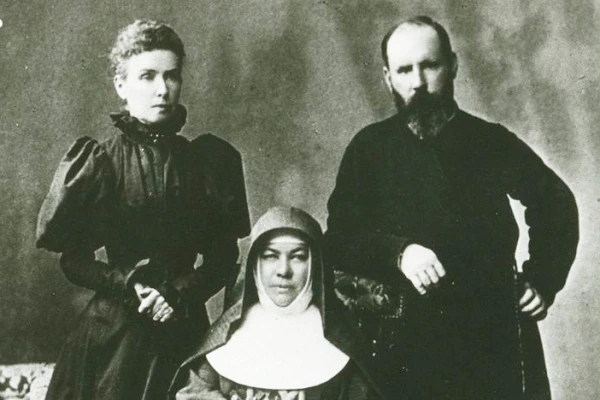
Australia celebrates 10th anniversary of St. Mary MacKillop’s canonization

December 7, 2020 CNA Daily News 1

Rome Newsroom, Dec 7, 2020 / 09:30 am (CNA).- Australia is celebrating the 10th anniversary this year of the canonization of the country’s first and only saint, St. Mary MacKillop.

The pioneering religious sister founded the Josephite sisters who brought schools and orphanages to the Australian outback in the 19th century despite facing numerous challenges.

“What she stood for really encapsulates the values and spirit of Australia, and this is why her appeal goes much beyond just that of the Catholic community,” the Australian Ambassador to the Holy See Chiara Porro told EWTN News.

The Australian ambassador hosted a webinar to celebrate the life of St. Mary MacKillop on Dec. 4. She said that the Australian saint provides lessons in leadership for women leaders in the Church today.

“Mary MacKillop used to say: ‘Never see a need without doing something about it.’ And that was really what inspired her life. She went out of her way to work with those on the margins of society and set up schools for the poor, for the indigenous population who at the time were very desolate and had no hope,” Porro said.

“I think for me what it shows is the role of these women, religious women, in addressing some of the most important needs of society today and particularly during times of crisis where the poorest always suffer the most.”

MacKillop was the first of eight children born of Scottish immigrants in what is now Melbourne in 1842 at a time when the European settlement in Australia had been established for a little more than 50 years. Her father had studied for the priesthood in Rome for seven years before migrating to Australia where he met her mother who had arrived from Scotland less than two years earlier.

The family faced continuous economic difficulties and had to move frequently. The postulator of MacKillop’s cause for sainthood, Sr. Maria Casey, described the conditions at the time:

“Poverty was rife especially in country areas, religious discrimination was widespread, the plight of the aboriginal people was deplorable, unemployment was common-place and communication was difficult in the extreme. … The Church had few priests to serve its people who were scattered around rural areas and, as a rule, were experiencing poverty. Education was limited and virtually non-existent in rural areas,” Casey said at the webinar.

“From a young age, Saint Mary had increasingly felt the call to live as a religious sister but she still had the obligation to care for her family, a burden she undertook from when she was 16 to 25.”

Mary dreamed of the possibility of offering free education for Australia’s Catholic rural poor, and with the help of her spiritual director and mentor she developed a plan for a congregation of sisters to aid those in need in Australia’s vast rural areas.

She began the order’s work with a school in a stable in the small town of Penola, Australia in 1866. Taking the religious name St. Mary of the Cross, MacKillop founded what would go on to be the Congregation of the Sisters of St. Joseph of the Sacred Heart.

Her sisters went on to establish many schools and orphanages across Australia, including in the “bush” areas where hardship was common.

“Travel over any distance was for the fearless and tough. Roads were merely tracks through the bush, travel by steamer was not for the faint-hearted and trains were rare. Mary used all means to visit her sisters,” Sr. Casey said.

As an innovator and as a woman in the 19th century, MacKillop encountered many challenges, including from inside the Church.

“Mary envisaged the sisters being governed centrally by one superior and being free to go wherever there was a need anywhere in the colonies. … The system of governance was contrary to that experienced in most European religious congregations of the time and was the cause of disputes with some of the bishops as the fledgling Institute expanded,” her postulator said.

“A complex set of circumstances led to the Bishop of Adelaide, who was once her friend and benefactor, excommunicating Mary in September 22, 1871 for supposed disobedience. This excommunication was invalid and unjustified in the light of later information. Mary accepted the excommunication and the dismissal of many of her sisters with serenity and peace. The Bishop revoked the sentence before his death less than six months later.”

By the time of MacKillop’s death in 1909 there were 650 sisters in her congregation ministering in all Australian states and in New Zealand.

Today, the “Josephites” have extended their ministry to Ireland, Peru, East Timor, Scotland and Brazil.

St. Mary Mackillop was remembered at an event in Rome co-hosted by the Australian and U.K. Embassies to the Holy See, which also honored another innovative female Catholic leader, Blessed Mary Ward, who founded the Congregation of Jesus and the Institute of the Blessed Virgin Mary in England in the early 17th century.

The undersecretary of Vatican Congregation for Institutes of Consecrated Life and Societies of Apostolic Life, Sr. Carmen Ros Nortes, said at the webinar that both Catholic women founded religious institutes that were “born from an inspiration of the Spirit that seeks to renew the Church.”

“If we ask from where Mary MacKillop and Mary Ward received this vision of the future and the inner strength to realize it, we can only say that the Spirit blows where it wills, and that God has his time for everything,” Sr. Carmen said.

“There are men and women designated as instruments of Providence in times of great historical crisis.”


[…]