No Picture
News Briefs

Labor Department strengthens religious freedom rule

December 8, 2020 CNA Daily News 0

CNA Staff, Dec 8, 2020 / 10:00 am (CNA).- The Labor Department (DOL) finalized a rule on Monday that allows faith-based government contractors to make employment decisions based on their religious beliefs.

The rule clarifies existing protections for faith-based contractors that date back to the Johnson era. It allows them to hire only people of a certain faith without regard to an anti-discrimination requirement of the government.

Exempt contractors can also make employment decisions based on an employee’s “acceptance of or adherence to religious tenets.”

The final rule retains most of the proposed rule, with some alterations regarding the scope of the religious exemption, DOL said.

Religion, according to the rule, includes “religious belief” as well as “all aspects of religious observance and practice.”

Eligible religious groups are not limited to churches and similar bodies, DOL said, but can be “a corporation, association, educational institution, society, school, college, university, or institution of learning” that is “organized for a religious purpose.”

The rule also says that “the contractor must engage in activity consistent with, and in furtherance of, its religious purpose” and is exempt when it “makes it reasonably clear to the public that it has a religious purpose.”

The agency says it would not challenge a group’s “sincere” claim of religious character, but a “sincere” claim must be more substantial than a group adding “a religious purpose to its documents after it becomes aware of potential discrimination liability or government scrutiny.”

Eligible contractors would not necessarily be non-profits, as some religious groups may operate small stores or could be entities such as hospitals, the agency said. However, any for-profit group would need to present “strong evidence” of their religious character, DOL said.

The group First Liberty Institute welcomed the new rule on Monday.

“Religious organizations should never be forced to abandon their religious identity and mission in order to be eligible to partner with the federal government,” said Stephanie Taub, Senior Counsel at First Liberty Institute. 

There were more than 109,000 comments on the proposed rule, according to the Office of Federal Contract Compliance Programs.

“When a religious group hires people of the same religion to carry out their mission, it’s not ‘discrimination,’ it’s common sense,” said Luke Goodrich, senior counsel and vice president of the Becket Fund for Religious Liberty, to CNA when the rule was first proposed in Aug., 2019.

“And when the government refuses to work with religious groups that do the best job of caring for the needy, it’s not ‘equality,’ it’s nonsense,” he added. 

In May, the agency issued broad new religious freedom protections for federal employees and faith-based grant recipients, including by implementing religious freedom into the daily operations of the agency and establishing “reasonable religious accommodations” for employees and applicants.

Under the guidance, religious groups had to have equal access to federal grants as their secular counterparts.


[…]

No Picture
News Briefs

Pope Francis: the Immaculate Conception is ‘one of the wonders of the story of salvation’

December 8, 2020 CNA Daily News 2

Vatican City, Dec 8, 2020 / 06:20 am (CNA).- The Immaculate Conception is “one of the wonders of the story of salvation,” Pope Francis said in his Angelus address Tuesday.

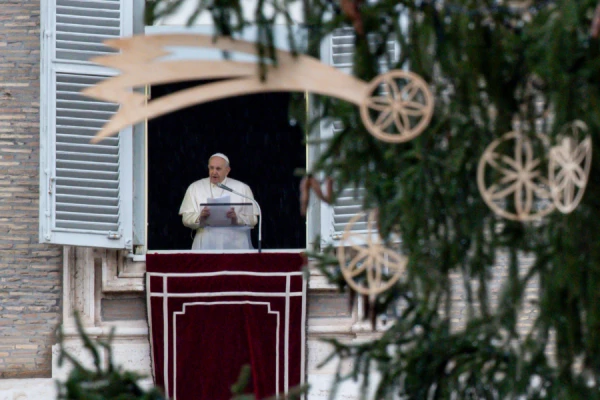
Speaking from a window overlooking St. Peter’s Square Dec. 8, the Solemnity of the Immaculate Conception, the pope encouraged Catholics to entrust themselves to Mary, seeking purity and holiness.

He said: “The uncontaminated beauty of our Mother is incomparable, but at the same time it attracts us. Let us entrust ourselves to her and say ‘no’ to sin and ‘yes’ to Grace once and for all.”

It is customary for the pope to lead the Angelus prayer not only on Sundays, but also on Marian solemnities. In his address, the pope reflected on the meaning of the Immaculate Conception. 

“Today’s liturgical feast celebrates one of the wonders of the story of salvation: the Immaculate Conception of the Virgin Mary. Even she was saved by Christ, but in an extraordinary way, because God wanted that the mother of His Son not be touched by the misery of sin from the moment of her conception,” he said.

“And so, for the entire course of her earthly life, Mary was free from any stain of sin, she was the ‘full of grace’ (Luke 1:28), as the angel called her. She was favored by a singular action of the Holy Spirit so as to always remain in perfect relationship with her Son, Jesus. Rather, she was Jesus’s disciple: His Mother and disciple. But there was no sin in her.”

Citing the hymn that opens St. Paul’s Letter to the Ephesians, the pope said that we too are created by God for the “fullness of holiness” granted to Mary from the beginning. 

“And what Mary had from the beginning will be ours in the end, after we have passed through the purifying ‘bath’ of God’s grace,” he said. 

“What opens the gates of paradise to us is God’s grace, received by us with faithfulness.” 

Yet even the most innocent person is marked by original sin, he said, and therefore must engage in a lifelong struggle against its consequences. Lest we be discouraged, we should remember that the thief who was crucified beside Jesus “is the first person we are sure entered paradise,” the pope noted.

He continued: “But be careful. It does not pay to be clever — to continually postpone a serious evaluation of one’s own life, taking advantage of the Lord’s patience. He is patient. He waits for us, He is always ready to give us grace. We may be able to deceive people, but not God; He knows our hearts better than we ourselves do.” 

“Let us take advantage of the present moment! This, yes, is the Christian sense of seizing the day. To not enjoy life in each passing moment — no, this is the worldly sense. But to seize today, to say ‘no’ to evil and ‘yes’ to God, to open oneself to His grace.”

The pope said that the “journey of conversion” begins with seeking God’s forgiveness in the Sacrament of Reconciliation. We must then seek to repair the harm we have done to others.

“And this, for us, is the path for becoming ‘holy and immaculate,’” he explained. 

After the Angelus, the Holy Father greeted pilgrims in the square below, which was wet following a rainy morning. He singled out an Italian group holding a banner proclaiming “L’Immacolata vincerà” (“The Immaculate will triumph”). The group, inspired by the spirituality of St. Maximilian Kolbe, has brought the banner to St. Peter’s Square for the Angelus since the 1990s. 

“They are great, they are always here!” the pope commented.

He continued: “As you know, this afternoon the traditional veneration of the Immaculate Conception in Piazza di Spagna will not take place, to avoid the risk of a crowd gathering, as disposed by the civil authorities, whom we need to obey.” 

“But this does not keep us from offering our Mother the flowers that she enjoys the most: prayer, penance, a heart open to grace.”

The pope recalled that that morning he had made a private visit to the statue of the Immaculate Conception in Rome’s Piazza di Spagna and then celebrated Mass at the Basilica of St. Mary Major.

“I wish everyone a happy feast day. And, please do not forget to pray for me,” he said.


[…]

No Picture
News Briefs

Pope Francis proclaims Year of St. Joseph

December 8, 2020 CNA Daily News 4

Vatican City, Dec 8, 2020 / 04:08 am (CNA).- Pope Francis announced a Year of St. Joseph Tuesday in honor of the 150th anniversary of the saint’s proclamation as patron of the Universal Church. 

The year begins Dec. 8, 2020, and concludes on Dec. 8, 2021, according to a decree authorized by the pope. 

The decree said that Francis had established a Year of St. Joseph so that “every member of the faithful, following his example, may strengthen their life of faith daily in the complete fulfillment of God’s will.” 

It added that the pope had granted special indulgences to mark the year. 

The Dec. 8 decree was issued by the Apostolic Penitentiary, the dicastery of the Roman Curia that oversees indulgences, and signed by the Major Penitentiary, Cardinal Mauro Piacenza, and the Regent, Msgr. Krzysztof Nykiel.

In addition to the decree, Francis issued an apostolic letter Tuesday dedicated to the foster father of Jesus.  

“Each of us can discover in Joseph — the man who goes unnoticed, a daily, discreet and hidden presence — an intercessor, a support and a guide in times of trouble,” he wrote in the letter, entitled Patris Corde (“With a father’s heart”) and dated Dec. 8.

“St. Joseph reminds us that those who appear hidden or in the shadows can play an incomparable role in the history of salvation.”

Pope Pius IX proclaimed St. Joseph patron of the Universal Church on Dec. 8, 1870, in the decree Quemadmodum Deus.

In its decree Tuesday, the Apostolic Penitentiary said that, “to reaffirm the universality of St. Joseph’s patronage in the Church,” it would grant a plenary indulgence to Catholics who recite any approved prayer or act of piety in honor of St. Joseph, especially on March 19, the saint’s solemnity, and May 1, the Feast of St. Joseph the Worker.  

Other notable days for the plenary indulgence are the Feast of the Holy Family on Dec. 29, St. Joseph’s Sunday in the Byzantine tradition, the 19th of each month and every Wednesday, a day dedicated to the saint in the Latin tradition.

The Apostolic Penitentiary added: “In the current context of health emergency, the gift of the plenary indulgence is particularly extended to the elderly, the sick, the dying and all those who for legitimate reasons are unable to leave the house, who, with a soul detached from any sin and with the intention of fulfilling, as soon as possible, the three usual conditions, in their own home or where the impediment keeps them, recite an act of piety in honor of St. Joseph, comfort of the sick and patron of a happy death, offering with trust in God the pains and discomforts of their life.”

The three conditions for receiving a plenary indulgence are sacramental confession, the reception of Holy Communion and prayer for the pope’s intentions.

Pope Francis has promoted devotion to St. Joseph throughout his pontificate. 

He began his petrine ministry on March 19, 2013, the Solemnity of St. Joseph, and dedicated the homily at his inauguration Mass to the saint.

“In the Gospels, St. Joseph appears as a strong and courageous man, a working man, yet in his heart we see great tenderness, which is not the virtue of the weak but rather a sign of strength of spirit and a capacity for concern, for compassion, for genuine openness to others, for love,” he said.

His coat of arms features a spikenard, which is associated with St. Joseph in Hispanic iconographic tradition.

On May 1, 2013, the pope authorized a decree instructing that St. Joseph’s name be inserted into Eucharistic Prayers II, III, and IV.

During an apostolic visit to the Philippines in 2015, the pope explained why he kept an image of the saint on his desk. 

“I would also like to tell you something very personal,” he said. “I have great love for St. Joseph, because he is a man of silence and strength.” 

“On my table I have an image of St. Joseph sleeping. Even when he is asleep, he is taking care of the Church! Yes! We know that he can do that. So when I have a problem, a difficulty, I write a little note and I put it underneath St. Joseph, so that he can dream about it! In other words I tell him: pray for this problem!”

At his general audience on March 18 this year, he urged Catholics to turn to St. Joseph in times of adversity. 

“In life, at work and within the family, through joys and sorrows, he always sought and loved the Lord, deserving the Scriptures’ eulogy that described him as a just and wise man,” he said

“Always invoke him, especially in difficult times and entrust your life to this great saint.”

The pope concluded his new apostolic letter by urging Catholics to pray to St. Joseph for “the grace of graces: our conversion.” 

He ended the text with a prayer: “Hail, Guardian of the Redeemer, Spouse of the Blessed Virgin Mary. To you God entrusted his only Son; in you Mary placed her trust; with you Christ became man. Blessed Joseph, to us too, show yourself a father and guide us in the path of life. Obtain for us grace, mercy and courage, and defend us from every evil. Amen.”


[…]