Los Angeles, Calif., Aug 16, 2017 / 06:02 am (CNA/EWTN News).- The 100th birthday of Blessed Oscar Romero was a time for Los Angelenos to reflect on the martyred Salvadoran bishop’s virtues and how his vision can be made a reality today.
“One hundred years after his birth, Blessed Oscar Romero still inspires us for his humility and courage – for his love for the poor and his witness of solidarity and service to others, even to the point of laying down his life,” Archbishop Jose Gomez said at an Aug. 13 Mass at Our Lady of the Angels Cathedral marking the centenary of Romero’s birth.
“Our brother, Blessed Oscar, had a vision for a new society – the society that God wants – a society in which God’s gifts are shared by everyone, and not only the few,” he continued. “We want to carry that vision forward in our own times, and in our own society.”
Archbishop Oscar Romero of San Salvador, El Salvador was born Aug. 15, 1917.
Amid El Salvador’s bloody civil war, the archbishop preached the importance of Christian love. At a time when government-aligned death squads would kill and abduct opponents of the government, he was a strong critic of government violence against the poor, human rights violations, and corruption, despite many death threats.
He was assassinated March 24, 1980 while celebrating Mass in a hospital chapel in San Salvador. Right-wing death squads are suspected in his death.
Pope Francis declared Archbishop Romero a martyr in February 2015, then beatified him in May 2015.
There were three relics of the slain archbishop at the Mass in Los Angeles: the microphone he used to celebrate Mass at the San Salvador cathedral; an autographed photograph he gave to a woman religious who assisted him and was present the day he was murdered; and a piece of cloth with his blood from the day he was assassinated. Many Salvadorans were in attendance.
Archbishop Gomez told the congregation: “we want to ask this great saint to help all of us to live with new faith, new hope and new love.”
“We ask him to intercede for us – to give us courage to continue his project, his ‘revolution of love’,” the archbishop continued, saying that Romero “walked in the company of Jesus and in the company of his people.” He served his people “with a pastor’s love, with a father’s love”
“God gives each of us a mission. It is not just for bishops, like Monseñor Romero,” said the Los Angeles archbishop. “Each one of us, in our own way, is called to build the Kingdom of God.”
Archbishop Gomez cited Romero’s own words: “Let each one of you, in your own vocation – nun, married person, bishop, priest, high-school or university student, workman, laborer, market woman – each one in your own place live the faith intensely and feel that in your surroundings you are a true microphone of God.”
The archbishop emphasized the need for “total confidence in God” despite times of troubles and trials, as in the Gospels when the apostles were at sea in a powerful storm. Even when they saw Jesus approaching on the water, they think he is a ghost.
“We can get anxious about our future or worrying about the things in our lives, that we can think that God is not there for us. But he is,” said Archbishop Gomez. St. Peter was fine as long as he kept his eyes on Jesus, but began to sink when he thought about his human limitations and the storms around him.
Despite the struggles and challenges Romero faced, he kept his eyes on Jesus Christ.
“Let us carry the Gospel message of love and mercy, truth and justice into every corner of our world,” said the archbishop. He invoked the patron of El Salvador, Our Lady of Peace, asking that she guide her children “to know the freedom, justice and peace that Blessed Oscar Romero gave his life for.”
The archbishop voiced prayers for those in El Salvador who suffer violence, and those who live in poverty throughout Central America and Latin America, especially for those in Venezuela.
If you value the news and views Catholic World Report provides, please consider donating to support our efforts. Your contribution will help us continue to make CWR available to all readers worldwide for free, without a subscription. Thank you for your generosity!
Click here for more information on donating to CWR. Click here to sign up for our newsletter.
Denver, Colo., Jan 11, 2018 / 07:00 pm (CNA/EWTN News).- A Boulder abortion clinic is accused of malpractice, after allegedly leaving nearly two inches of a fetus’ skull inside a patient’s uterus during a late-term abortion, apparently forc… […]
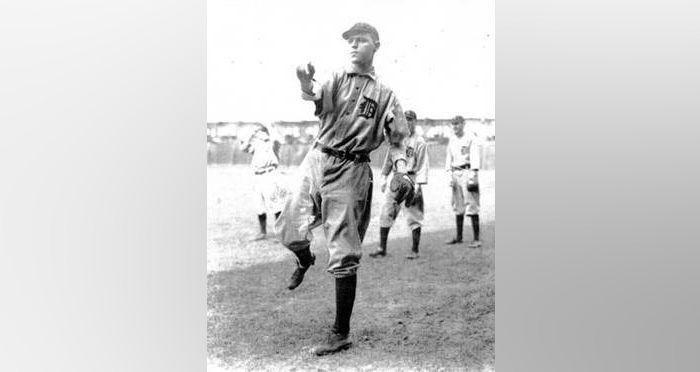
This photo of Father Allan Travers was featured in the local newspaper after his pitching “performance” for the Detroit Tigers against the Philadelphia A’s on May 18, 1912. The photo featured the caption “strikebreaker,” which worried Travers’ mother, since there was a street trolley strike in Philadelphia earlier in the month, and she didn’t want her son caught in the confusion. / Photo credit: Public domain
Detroit, Mich., Jul 23, 2023 / 08:00 am (CNA).
The worst pitcher ever to take the mound for the Detroit Tigers became a Catholic priest.
Granted, Allan Travers was already on the path to the priesthood before suiting up for Detroit on May 18, 1912. But his story — and place in baseball history — is the prime example of being in the right place at the right time (or the wrong place at the wrong time).
Travers played in only one game, but one was enough to show that God had plans for him that didn’t involve the big leagues.
The story begins, as most stories of Tigers lore do, with Ty Cobb.
The Tigers were in New York on May 15 to play the Highlanders (the precursor to the Yankees). Cobb was playing in the outfield when he was verbally abused by a New York fan who was using profanity and racial slurs to describe Cobb’s play.
Cobb — never known for keeping his cool — stormed into the stands and unleashed a volley of punches on the fan. Tigers players rushed to the scene of the chaos, yelling at Cobb to lay off the man, who was missing one hand and three fingers on his other hand after suffering an industrial accident.
Cobb didn’t care and continued the barrage.
Ban Johnson, president of the American League, happened to be at the game, checking on the family-friendly excitement of what was turning into America’s pastime.
Having one of the league’s star players beat up a disabled spectator didn’t jibe well with Johnson’s vision for baseball, so Cobb was suspended indefinitely.
The Tigers felt Cobb’s punishment was unfair, so the players voted to strike until Cobb was reinstated for the club’s next game in three days against the two-time defending World Series champion Philadelphia Athletics.
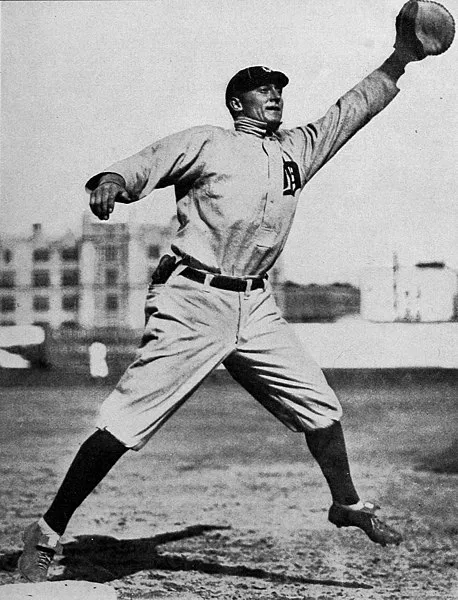
Detroit Tigers legend Ty Cobb is pictured in 1911. Not one to keep his cool, Cobb launched himself into the stands to attack a fan who insulted him in 1912, resulting in a league suspension and sparking his teammates to strike in protest. Credit: Public domain
Johnson called the Tigers’ bluff, informing then Tigers owner Frank Navin the team would face a $5,000 fine for every game Detroit forfeited.
Navin needed to field a team, and quick, so he and Tigers manager Hughie Jennings collaborated with Athletics owner/manager Connie Mack to field a team of players to take the field.
This was well before the age of expansive minor league rosters — or commercial airlines, for that matter — so it wasn’t as though the Tigers could call up the farm team in Toledo and get them to Philadelphia in time to play the A’s. Instead, scouting was done the old-fashioned way, spreading word throughout town, asking who wanted to play baseball.
And this is where Aloysius Joseph “Allan” Travers, the student manager on the St. Joseph’s College baseball team, comes into the story.
Jennings worked with a friend of his, Joe Nolan, a sportswriter for The Philadelphia Bulletin,to field a team. Nolan knew Travers, a junior at St. Joseph’s who lived in Philadelphia, from the time the A’s fielded a second-stringer team to play St. Joseph’s College.
Nolan asked Travers to find 10-12 amateur players in the area who could suit up for the Tigers in case the Tiger players followed through on their strike threats. The idea was that the amateurs would never actually take the field; rather, it was just a tactic to get Jennings’ “real” players on the field.
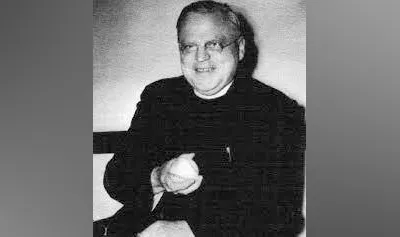
Father Allan Travers, SJ, was a priest who taught at St. Joseph’s College (now St. Joseph’s University) in Philadelphia. But in 1913, while a student at St. Joseph, he was the improbable pitcher for the Detroit Tigers, where he secured a bizarre spot in baseball history. Credit: Public domain
Travers rounded up eight players who were free that day and enticed by the $25 Navin offered to each player.
Jennings had his team of strike-breakers, as requested by Navin.
When the umpire called “play ball,” the Tiger regulars took the field, but when the umpire spotted Cobb and told him to take a seat, the rest of the team walked out and took off their uniforms.
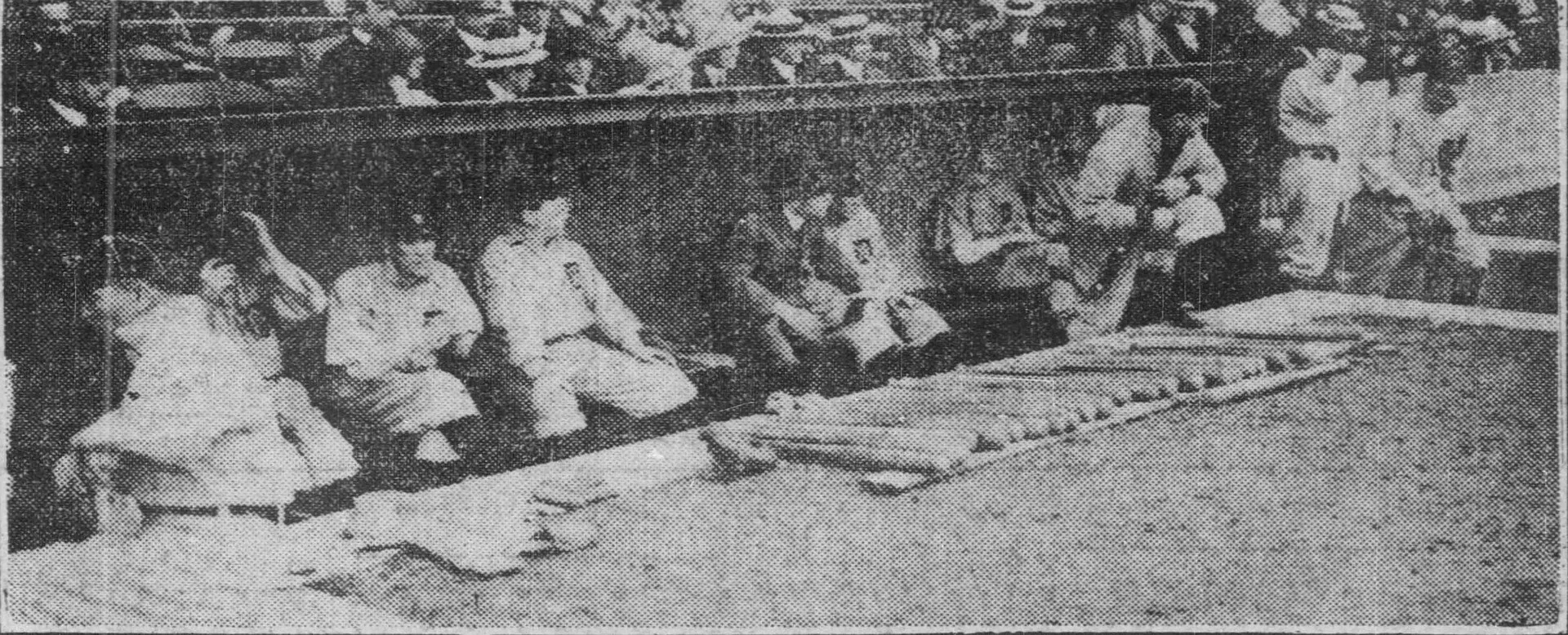
The strike-breakers would have to play after all. They were ushered into the locker room and donned the Tigers’ gray uniforms (this was in the days before names were on the back of uniforms). Two bench coaches joined the group to offer the squad some big league experience.
The question was, who would pitch?
There were no takers at first, so Navin offered an extra $25. Travers volunteered; $50 was good money for a college kid in 1912. There was one small problem — Travers had never played organized ball.
He was the assistant manager on the college baseball team, tasked with keeping stats and writing game summaries.
But there he was, the college student with plans to join the seminary after graduation, pitching before 20,000 fans at Shibe Park against the two-time defending World Series champions. A modern David versus Goliath, a plucky underdog story.
This time Goliath won.
Travers did as well as one would expect the assistant manager of a college baseball team to do against professionals. He pitched a complete game, surrendering 24 runs on 26 hits (both American League records), walking seven and striking out one. He got an MLB strikeout — they can’t take that away from him.
But the 15.75 ERA leaves a mark. He also batted 0-for-3 at the plate.
Travers’ time in the major leagues was abrupt. After the 24-2 shellacking the A’s put on the strikebreaking Tigers, Cobb persuaded his teammates to end the strike before the team’s upcoming series against the Washington Senators.
Travers’ calling was the priesthood, not pitching.
After graduating from St. Joseph’s College in 1913, he joined the Society of Jesus, studying at St. Andrew on the Hudson in New York and Woodstock College in Maryland. He was ordained a priest in 1926, making him the only priest ever to play in a Major League game.
His ministry took him to teaching positions at St. Francis Xavier High School in Manhattan and St. Joseph’s Prep and St. Joseph’s College in Philadelphia.
Father Travers didn’t speak about his baseball exploits, but he did give an interview about his bizarre start for the Tigers.
“About noon when Nolan told me about the strike of Detroit, he told me the club would be fined and might lose its franchise if 12 players didn’t show up,” Travers told sportswriter Red Smith. “He told me to round up as many fellows as I could. We never thought we’d play a game.”
The replacement Detroit Tigers are pictured in the dugout against the Philadelphia A’s on May 18, 1912. Photo credit: Public domain
The priest said Jennings told him to avoid throwing fastballs to “avoid getting killed out there,” but the A’s didn’t hold back, even resorting to bunting when they found out the third baseman had never played baseball before.
“I fed ‘em nothing but slow stuff after Frank Baker almost hit one out of the park on me, which fortunately went foul,” Travers said. “I was doing fine until they started bunting. The guy playing third base had never played baseball before. I just didn’t get any support. I threw a beautiful slow ball and the A’s were just hitting easy flies. Trouble was, no one could catch them.”
Curious enough, the only “fame” Travers got from his start was his picture in the newspaper with the word “Strikebreaker” printed above. There was a trolley strike in Philadelphia that month, and Travers’ mother was worried for her son’s safety because people might suspect he was a scab.
Travers didn’t like talking about his baseball “career” with his students, and his story is not well known, save for a few baseball history blogs.
He did sign a ball from that fateful day that wound up in the collection of Ada, Michigan, resident Steve Nagengast, who claims to have the largest collection of Tigers autographs. Nagengast was featured in the Detroit News, and the anecdote about Travers piqued Detroit Catholic’s interest.
Travers didn’t have the greatest impact on Tigers history. But the $5,000-per-game fine the Tigers faced for each game the club forfeited would have been devastating, especially in an era when professional teams folded and changed towns all the time.
So who knows.
Father Travers’ one-game career might have just saved the Tigers.



Leave a Reply