

There are books one reads in a single sitting, index finger atremble to turn to the next page.
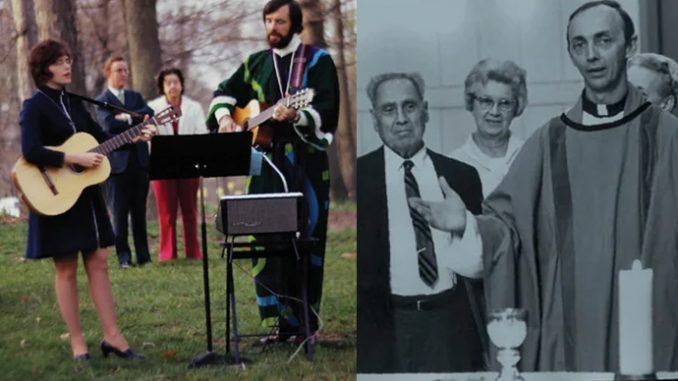
Hanael Bianchi’s A Liberal Revolution is such a book.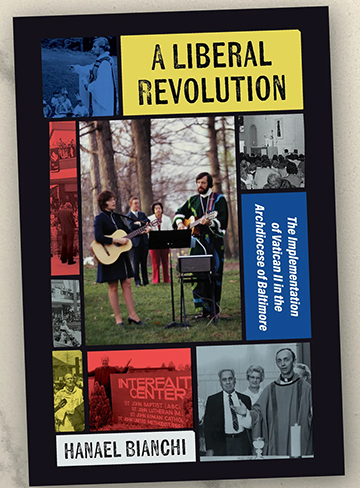
For Catholics who were subjected to the liturgy and catechesis of the 1970s yet could see all around them glimmers of the way things had been before the shipwreck, any work that helps answer the question “what happened here?” fills a need. One wants to know how such a catastrophic a period in the life of the Church came to pass. For most of the 1980s and 1990s, we were told that councils take a while to bear fruit and that we ought to be patient. Over sixty years on, the argument retains partisans, much as Parkay margarine and Sanka maintain their grip on the same generation.
For those who prefer actual butter and coffee, however, Bianchi, in his painstaking reconstruction of the precise steps taken to implement Vatican II in the archdiocese of Baltimore, joins the cohort of scholars who have researched the causes of the collapse and how it unfolded in specific sectors of the Church: Stephen Bullivant on the USA and the UK;1 Fr. Joseph Becker on the Jesuits;2 Fr. Mitchell on the loss of Catholic consensus at the Catholic University of America (the “Curran affair”);3 Guillaume Cuchet on the effondrement of the practice of the faith in France.4 One might add Kenneth Jones’s indictment-by-statistics of the sudden and startling drop in all leading indicators of Catholic life in the USA.5
All agree that it began during the last months of Vatican II, and it happened in its name; there remains only to explain who did it and how.
Bianchi explicitly shares their historiographical agenda when he says: “The pressing question for scholars. . . is why this decline occurred so rapidly in the years following the Council” (p. 4). Bianchi and these other scholars do not breezily invoke “the modernists” or “the Freemasons”: they name names, they provide the dates and locations of the meetings in which decisions took place, and they track the inevitable drops in attendance at the Sacraments, the vocations crisis, the departures from the priesthood and religious life–the whole mournful litany.
Bianchi’s book focuses on the Archdiocese of Baltimore under Archbishop Lawrence Shehan (1961–1974). Like many Conciliar bishops, he was ultimately betrayed by the very reforming machine he had naively set in motion. While this local church and its shepherd present (as any place would) their own particularities, Catholics of any diocese in the West will here recognize the outlook of the enthusiastic reformers and the steps they took to implement their vision. It was, remarkably and sadly, the same everywhere: a vanguard of young priests took control and left their stamp on the Church (particularly the liturgy), never once attributing the damage they were causing to their own program.
Like the other authors mentioned above, Bianchi is even-handed. He reports that, initially, many of the faithful gave a positive reception to the more obvious reforms that followed Vatican II, particularly to the use of vernacular in the Mass (p. 76). He quotes the optimism of Archbishop Shehan on the first page: “The Second Vatican Council is at once the symbol and the cause of our present special hope” (p. 1). He also tracks the eventual boredom and widespread confusion that spread once the novelty of the switch to English (and the other changes leading to a new Missal in 1969) had worn off.
The same applies to the early attempts at what we today would call “synodality.” At the time, it manifested itself in the proliferation of “councils” (Parish Councils, Area Councils, the Council of Catholic Men, the Archdiocesan Pastoral Council, the National Pastoral Council, etc.). These ultimately disaffected the laity and ended up being mere hosts to the parasitical and revolutionary “Call to Action” conference of 1976.
There will be more such books to cover other ecclesiastical regions in this country and elsewhere; Bianchi sees his work as part of an effort to provide a “comprehensive study” to trace “the decline of the American Church through local sources” (p. 5). He just happens to have started with Baltimore. It should be said that his access to protected archival material enriches his book with granular evidence that will be difficult to ignore. Readers will not be surprised to learn (from sources external to it) that Dr. Bianchi spent ten years researching A Liberal Revolution.
The two most noteworthy contributions of this book to our understanding of the collapse are that its leaders were a new breed of priests,6 and a formidable, money-devouring, and oppressive bureaucracy grew up to implement and maintain their outlook even long after they had left the priesthood, retired, or died.7
Without going into any further detail–do buy and read the book–I should only add that the three chapters dealing with the establishment and metastatic growth of a new Church bureaucracy predicated on the promotion of the new paradigm (pp. 165–232) go a long way to explaining why it is so difficult, even today, for any well-meaning person to right the ship.
For an example of the kind of ecclesiastical-bureaucratic pressure that seems designed to discourage good men in their pursuit of sound religion, I heartily recommend David Sonnier’s book (also from the excellent Os Justi Press) on the administrative roadblocks put in the way of permission for the pre-conciliar Mass in the U.S. military.8 It can serve as a companion to Bianchi’s book.
I look forward to more of the same. If there is to be a proper reception of the last Council, there must also be, in the name of truth and charity, a proper repudiation of how it was manipulated or subverted.
A Liberal Revolution. The Implementation of Vatican II in the Archdiocese of Baltimore
By Hanael Bianchi
Lincoln, Nebraska: Os Justi Press, 2026
Hardcover/Softcover/Ebook, 241 pages
Endnotes:
1 Stephen Bullivant, Mass Exodus: Catholic Disaffiliation in Britain and America since Vatican II (Oxford University Press, 2019).
2 Joseph Becker, SJ, The Re-Formed Jesuits. Vol.1, A History of Changes in Jesuit Formation During the Decade 1965-1975 (Ignatius Press, 1992).
3 Peter Mitchell, The Coup at Catholic University: The 1968 Revolution in American Catholic Education (Ignatius Press, 2015).
4 Guillaume Cuchet, Comment notre monde a cessé d’être chrétien. Anatomie d’un effondrement (Éditions Points, 2020). See our review at Catholic World Report (13 September 2022) reprinted in Peter Kwasniewski ed., Sixty Years After: Catholic Writers Assess the Legacy of Vatican II (Angelico, 2022), 134–141.
5 Kenneth C. Jones, Index of Leading Catholic Indicators: The Church since Vatican II
(Oriens, 2003).
6 A novel set in France at the time gives a fair portrait of what made these “new priests” tick: Michel de Saint-Pierre, Les Nouveaux prêtres (La table ronde, 1964).
7 It is worth stressing that one U.S. diocese, Lincoln in Nebraska, averted the crisis when its new bishop, Glennon P. Flavin (bishop of Lincoln 1967-1992), upon arrival, kicked out of his diocese the dozen reform-minded priests who were agitating for just the policies that Baltimore, and nearly every other diocese, adopted. Priestly vocations soared among the young men of the diocese, and young women flooded the two orders of teaching sisters that this manful bishop founded. Weekly Mass attendance in the diocese remains at pre-conciliar levels. The Lincoln case indicates that the post-conciliar period might have been quite different if more bishops had taken such surgical action. The collapse was not inevitable and cannot be blamed on The World; it can, however, be blamed on those Church leaders who opened their windows to it.
8 David Sonnier, Rites and Wrongs. One Man’s Struggle for the Latin Mass in the U.S. Army (Os Justi, 2026).
If you value the news and views Catholic World Report provides, please consider donating to support our efforts. Your contribution will help us continue to make CWR available to all readers worldwide for free, without a subscription. Thank you for your generosity!
Click here for more information on donating to CWR. Click here to sign up for our newsletter.


Thank you for this article on the follow up to VII. As other analyses have indicated, however, the problem is not the “consequences,” or that “it was wrongly implemented,” etc. but V II itself. See among others
—In The Murky Waters of Vatican II by Atila Sinke Guimaraes (2008)
https://www.amazon.com/Murky-Waters-Vatican-II/dp/0972651675
—Cardinal Alfredo Ottaviani:
A Brief Critical Study of the Novus Ordo Missae
“The Ottaviani Intervention”
https://angeluspress.org/blogs/catholic-doctrine/a-brief-critical-study-of-the-novus-ordo-missae
“Cardinal Alfredo Ottaviani was a prominent leader of the curial conservatives during the Second Vatican Council and authored a strong critique of the post-conciliar liturgical changes, known as the Short Critical Examination of the Ordines promulgated by authority of Pope Paul VI (often called the Ottaviani Intervention).
• Ottaviani served as the Prefect of the Holy Office (now the Congregation for the Doctrine of the Faith) and was known for his opposition to theological modernism and his defense of traditional Catholic doctrine.
• He vigorously debated liberal bishops on issues such as religious liberty and the Mystical Body of Christ, arguing that the Council’s directions risked compromising the faith.
The document argues that the revised liturgy, promulgated by the apostolic constitution Missale Romanum in April 1969, represents a striking departure from the Catholic theology of the Mass as defined by the Council of Trent. Key criticisms include:
• Theological Deviations: The study claims the new rites obscure the Real Presence of Christ, minimize the sacrificial nature of the Mass, and lack clear definitions of its ends.
• Structural Changes: It objects to the definition of the Mass as a “sacred assembly” and the introduction of multiple Eucharistic Prayers, arguing these innovations compromise traditional doctrine.
• Omissions: The study highlights the removal of references to Purgatory, the Apostles Peter and Paul, and the traditional invocation of the Holy Spirit (Veni Sanctificator).
Pope Paul VI requested an examination by the Congregation for the Doctrine of the Faith, which responded in November 1969 that the study contained affirmations that were “superficial, exaggerated, inexact, emotional and false.” Despite this, the document remains a central reference for traditionalist critics of the post-Vatican II liturgy. “
—“Another significant critic was Archbishop Marcel Lefebvre, who founded the schismatic Society of Saint Pius X (SSPX) and argued that the Council represented a rupture with tradition, though Ottaviani remained within the Church’s communion while offering his critiques.
The Short Critical Study of the New Order of Mass (also known as the Ottaviani Intervention) is a 1969 document that critiques the liturgical reforms introduced by Pope Paul VI. Authored by a group of Roman theologians led by Michel-Louis Guérard des Lauriers under the direction of Archbishop Marcel Lefebvre, the study was presented to the Pope by retired Cardinals Alfredo Ottaviani and Antonio Bacci.”
Larry Chapp is NOT going to like this one 😕
Why not? Larry has written quite a bit about how badly Vatican II was often implemented and how insane stuff was pushed in the name of the Council.
Furthermore, he had to deal directly with that stuff while working on his PhD in the 1970s and then later as a theology professor.
Thanks for the clarification. My sense was that he seems to defend V2.
He does. Like myself, he believes that many, if not most, of the post-conciliar problems and issues were not due to the Council or its documents, but to a combination of factors: bad agents, poor leadership (beginning with Paul VI, in my opinion), poor to rotten implementation, widespread social and cultural upheaval in the West, the sexual revolution, etc.
“poor to rotten implementation”
Frankly, that should have been anticipated. If the devil can quote Scripture to his own ends, imagine what he can do with anything else.
What happened was a collapse for some of us. For the rest a calming exhilaration of deliverance from doctrinal strictures and condemnation. A good, the accent on the efficacy of free will, a detriment in the fundamental option espoused by Karl Rahner. Among others Josef Fuchs, Schillebeeckx.
Schillebeeckx’ major premise of A God bent toward humanity in compassion, not a God who demanded suffering and death as recompense for sin. That God’s cause is the human cause.
Soft guitars, emotive songs, the sensational hit San Francisco. “If you go to San Francisco be sure to wear a flower in your hair”. This developed alongside “a new breed of priests, and a formidable, money-devouring, and oppressive bureaucracy grew up to implement and maintain their outlook even long after they had left the priesthood, retired, or died”(J Pepino).
For the few of us who emerged from darkness and found heaven in what preceded the collapse, our mission daunting, our faith tried in adversity. No easy option presented itself in the face of commitment or death.
Although my conversion of life to my baptismal faith was experienced in the new liturgy as offered by Msgr Joseph Frey Confraternity of the Precious Blood in Brooklyn, New York.
Frey, a strong adherent to the ancient liturgy, transferred his devotion to the new. It was his transformation of elements of the old to the new that was largely responsible for my love of the Mass in its new form despite imperfections that were later corrected by Benedict XVI.
This was a Mass that spoke directly to the people as experienced by Susanne.
Validity within lived experience, captivating historical and very instructive.
There is a marked difference between the ancient Latin Mass offered by Trappists, for example which I experienced at St Joseph’s Abbey Spencer MA, and the rushed, incoherent cacophony of sound common to most diocesan priests, who seemed to offer Mass with the intent of finishing as soon as possible.
We used to have a Precious Blood priest too until the order recalled him back. He was a lovely man.
Having grown up in the Church during these times in a neighboring diocese to Baltimore, I remain perplexed at the cries of “confusion” from folks who were not there. We were not confused. We were worshipful and joyful. We received the sacraments and prayed. The supposed “boredom” with the vernacular is silly. What was boring was the back of the priest mumbling in a dead language. You can still find such Masses if you prefer. The majority don’t.
There are very few to find!
That’s really bitter.
H
Suzanne Lee: just as we suspected all along. ..
The “majority” (by far) stopped attending Mass altogether. Your emotional word salad provides no answer to the collapse of vocations, the collapse of religious orders, the disappearance of Catholic schools, the closing of parishes, and the Catholic population’s embrace of contraception, abortion and divorce. Catholics post-Vatican II were very quickly indistinguishable from Protestants.
And notice that those still faithful to VII, do not engage with the Cardinal Ottaviani Intervention, which examines the problems of Theological Deviations, Structural Changes and Omissions.
The consequences that you list, which are real and devastating for the CC, are ascribed to “bad implementations” of VII.
And no engagement with the detailed Guimaraes critique of the Murky Waters of VII.
I don’t have to answer for any of that, Tim. I’m giving my experience to counter the (false) narrative in the article.
You say: “What was boring was the back of the priest mumbling in a dead language.”
I ask: What language does God use to speak to you?, What does God look like?, Do you see his back or his face?
If He spoke in a language you didn’t know, would you learn it? Why or why not?
If you could not see him, would that bore you? Why or why not?
“What was boring was the back of the priest mumbling in a dead language.”
Wow, so much contempt for the holy mass that perfectly expressed the true faith. No wonder modern Catholics no longer believe in the sacrificial nature of the mass or the Eucharist if they don’t believe the priest is standing in the place of Christ at the alter.
The Church which was in the world but not part of it moved 180 degrees and fully entered the world, abandoned all tradition and quickly came to rest on the rocky shoreline with fewer and fewer survivors…
Habits and the lived witness of the same in society were cast off for a more “middle class” look…
The long cherished music and art of the Church gave way to the trash of “pop culture”…
Noviciates filled up and then emptied, never to be filled again…
The stability of the faith collapsed…
The Church failed and is failing because the mission of the Church was to educate the faithful in the faith…and the Church never fulfilled that responsibility or obligation.
Except for academic “nerds”, who still reads the collected writing of the Father and Doctors of the Church in the original Latin and Greek?
Who actually studies the history of the Church so as to understand and see how everything has changed from the original Church of the first four centuries to what it has now become?
The Church that accompanied the European colonizers, that promoted the Crusades, that gave rise to the Spanish Inquisition, that created the “holy Roman Empire” and used the military might of the same to Christianize Europe and the world, has never really been the “ekklesia” (those called from the world to be in it but not of it…)/ the “church” of Jesus the Christ of the New Testament…
The Church was called to fulfill the call of the Beatitudes, not build cathedrals and amass material wealth…
The Second Vatican Council and then interpretation of the same that led to excess and license were simply the last straw…and the camel died.
The Boomers watch as it fell and have remained the stalwarts that are still holding on but we are a dying generation and as we reach for the tradition we lost, we are Excommunicated and labeled as heretics, schismatics…
Thank God, Father, Son and Holy Spirit, for the Eastern Orthodox Church, the maintainers, Keepers of the tradition.
Yours in Christ.
“…for the Eastern Orthodox Church, the maintainers, Keepers of the tradition.”
Hmmm. Then why is it that there is such a wide and problematic range of opinions among Orthodox bishops and priests when it comes to contraception, divorce, and even divorce? And what about medical ethics?
I admire much about Eastern Orthodox; my sister and her husband are converts (from Evangelicalism) to Orthodoxy.
But saying the Orthodox Churches are “the maintainers” is, to put it nicely, unconvincing. Especially when some of those very churches hate each other. But I digress.
As a boomer who “actually studies the history of the Church so as to understand and see how everything has changed from the original Church of the first four centuries,” are we to conclude from your comments that you approve the torching of Notre Dame Cathedral?
And about your, yes, important perspective, a broader perspective is that religions echoing your complaint of a fourth-century apostasy are Mormonism and Islam. In a fallen world, Christian history will always be a feat of clay, so to speak.
“The Church that accompanied the European colonizers, that promoted the Crusades, that gave rise to the Spanish Inquisition…”
It might be a good idea to follow your own counsel about studying history. The Spanish Inquisition was the appropriate and necessary response to hold Muslims and Jews responsible for the atrocities they committed against Christians in Spain, atrocities they were trying to hide by false conversions when Christians took over.
Yes. And for those who still believe the myths about the Catholic Spnish Inquistion, this documentary from the British Broadcastin Corporation (BBC), a bastion of wokeness no less, and which includes learned examanitations of the subject by a top Jewish scholar, is a must.
It debunks the black legend of the Spanish Inquistion thoroughly.
And it has a very humorous opening taken from British comedy.
Among many other things, we learn that in its centuries of existence, the SI actually killed significantly fewer people than did the reigns of King Henry VIII and Elizabeth I!
• King Henry VIII of England executed tens of thousands of people under English law, a number that far exceeds the total death toll of the Inquisition.
• Under Queen Elizabeth I, historical records indicate that approximately 1,000 Catholics were killed within a single decade, a rate that surpassed the annual execution average of the Inquisition.
• The Spanish Inquisition (1478–1834) is estimated by modern historians to have executed approximately 3,000 to 5,000 people over its 356-year existence.
https://www.youtube.com/watch?v=CY-pS6iLFuc&t=3s
Where are you getting those figures for deaths under the Tudors? Perhaps you’re counting casualties from the various “risings,” like the Pilgrimage of Grace? Catholic Queen Mary Tudor had about 200 heretics burnt at the stake in her five year reign.
The purpose of the Spanish Inquisition was to uncover false Jewish converts, people who continued to practice Judaism or even maintain Jewish customs after baptism. It should be pointed out that thousands of Jews were forcibly converted after an outbreak of antiSemitic violence in 1391, so their descendants might not have the most sincere attachment to Catholicism. The Inquisition did not prosecute actual observant Jews or Muslims. It did go after Christian heretics, immoral and superstitious persons but not witches. Henry Kamen and Louis Monter are excellent historians on the Spanish Inquisition. (The Portuguese, Roman, Venetian, and medieval Inquisitions are separate issues.)
Thanks for this review.
Also the comments by Oscar (11:48 a.m.).
“Omissions: The [Ottaviani] study highlights the removal of references to Purgatory . . . ”
That might explain why everyone goes directly to heaven these days.
On July 25, 1968 Pope Paul VI published “Humanae Vitae” reaffirming moral theology but, days before, nineteen priests of the Archdiocese of Washington DC already had publicly dissented in the secular press. Cardinal O’Boyle imposed penalties, including suspensions from ministry for some, but in 1971 the Congregation for the Clergy negotiated, instead, lifting of the penalties.
One upshot has been that dissenters know that they can do so with impunity (George Weigel, “The Courage to be Catholic,” 2002).
In 1971, Cardinal Wright, head of the Congregation, favorably quoted the words of some at the 1948 Lambeth Conference who opposed the 1930 Lambeth Conference approving contraceptive practices:
“It is, to say the least, suspicious that the age in which contraception has won its way is not one which has been conspicuously successful in managing its sexual life. Is it possible that, by claiming the right to manipulate his physical processes in this manner, man may, without knowing it, be stepping over the boundary between the world of Christian marriage and what one might call the world of Aphrodite, the world of sterile eroticism?” (Cited in Wright, “Reflections on the Third Anniversary of a Controverted Encyclical,” St. Louis: Central Bureau Press, 1971).
Can we connect the dots between the “Truce of 1968” and much fluidity in current synodality…. Where poster child Fr. James Martin is awarded a set and photo-ops, and where the “Theology of the Body” (1979-85), the “Catechism” (1992/94), and the 1993 “Veritatis Splendor” (educating about the fallacies of the Fundamental Option, proportionalism and consequentialism) seem to be blacklisted, and where “expert” Study Group #9 insinuates living experience as a substitute for moral theology.
Over sixty years on, the argument retains partisans, much as Parkay margarine and Sanka maintain their grip on the same generation.
Okay, I nearly spit my drink through my nose.
Which nostril, left or right?
More on Bishop Glennon P. Flavin, please.
Where did he get his insight? How was he able to act so decisively and in opposition to the going groupthink?
Much more can be said in praise of that excellent bishop, who lay the groundwork for his successors.
Having had a good look at the way things were going in Saint Louis, where he was a Monsignor, he decided on a simple policy: strict obedience to the official line taken by the Pope (Paul VI). On the one hand, this immunized him against any truce with “the Spirit of Vatican II.” On the other hand, it led him to forbid keeping the former missal once the Novus Ordo was promulgated: he considered any desire to keep the old Mass to be as disobedient as the desire to stage a clown Mass or have altar girls.
The red flag should have been when the Church started throwing the teachings on salvation as articulated by Fr. Leonard Feeney, St. Alphonsus De Liquori, etc., under the bus in favor of the heretical teachings of Hans Urs von Balthasar. WHAT ABOUT SALVATION? https://share.google/6xeSiQQMv19y1sCY7